
Henri Susskind (1868-1929)
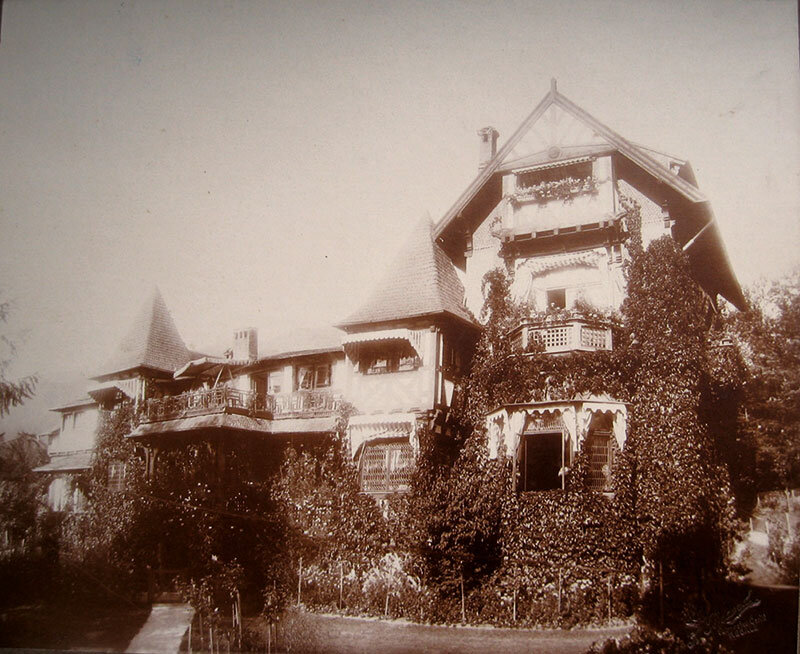
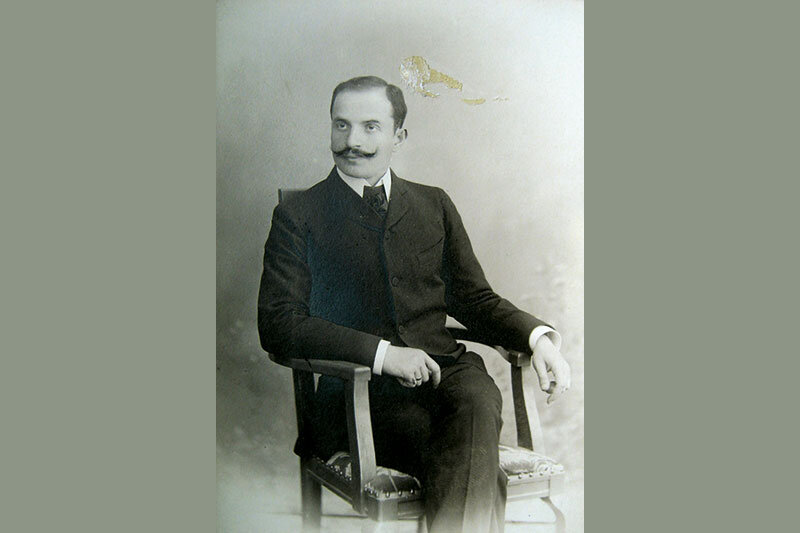
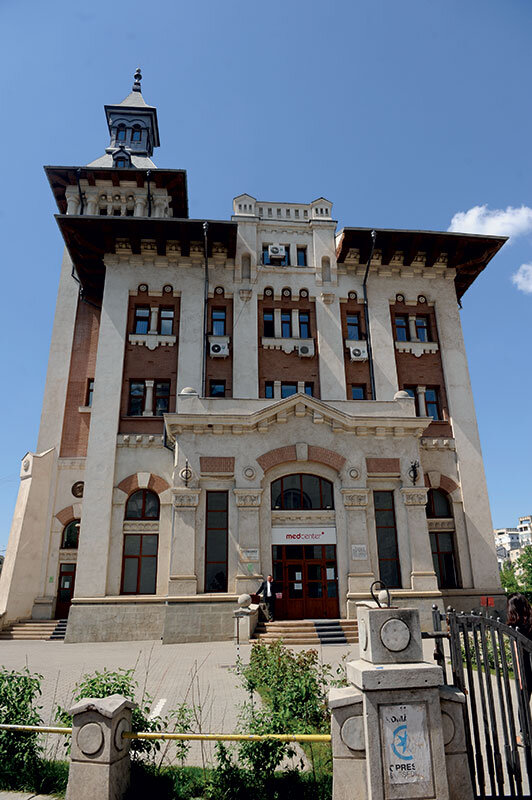
An architect less well known today, he is the author of buildings such as Vama Antredepozite in Iași, Take Ionescu's villa in Sinaia, Pompiliu Eliade's house in Bucharest and the Faculty of Biology on Splaiul Independenței
The Swiss Baron1 Henri Susskind2 was born in Vienna on December 15, 1868, where he did part of his studies, which he then continued in Zürich, where he received his architect's diploma in 1900, after having already obtained his engineer's diploma. In Vienna, he met "the beautiful Miss Paulina, daughter of General Ioan Vasiliu Năsturel, who stole the young architect's heart"3, and they were married on November 18, 1895 in Bucharest. The architect became a Romanian citizen in 1902, settling in the Romanian capital. Henri Susskind and Paulina Năsturel had two daughters, Henrietta and Marietta.
Thanks to the notes Henrietta left at the Romanian Academy Library, Cabinet de Stampe, we learn that Susskind initially worked in Lecomte du Noüy's architectural office.
His first constructions, on his own account, were in Sinaia: Villa Mihai Haret, Villa Testiban, the restoration of Villa Căprița, the rebuilding of the Strunga Customs House, and Take Ionescu's Villa Negoiul.
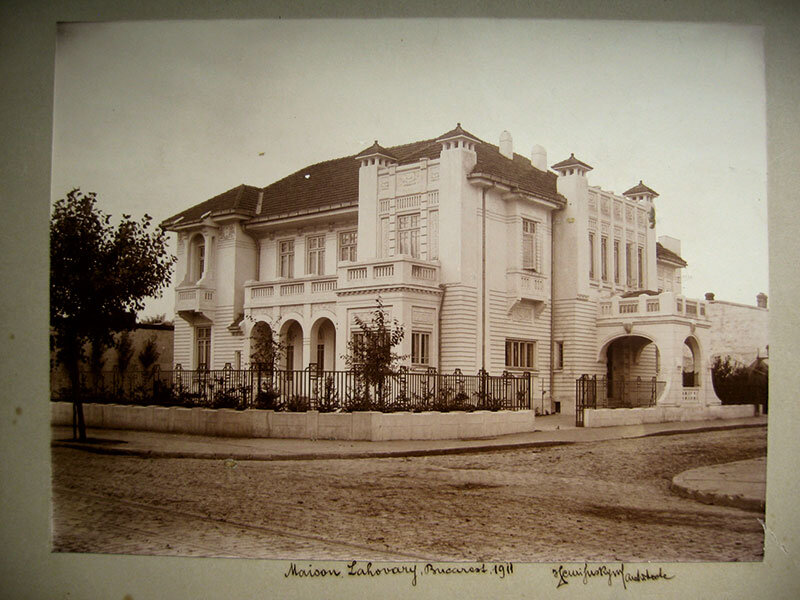
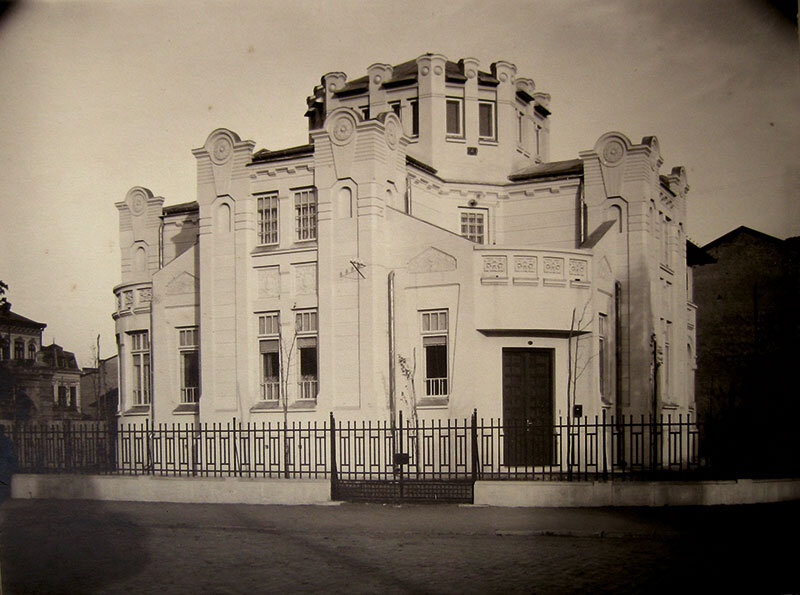
In Bucharest he started to execute works in 1905. To date, the following have been identified: the house of Dr. Mirinescu - 54 Spătarului Street, Pompiliu Eliade house - 74 Splaiul Independenței, Scarlat Lahovary house - Calea Dorobanți, corner with Grigore Alexandrescu Street, destroyed by bombing in 1944, Silviu Costinescu engineer's house, Icoanei Street, no. 56, corner with Dacia Boulevard, the house of engineer Petre Oteteleșanu, 15, Grigore Mora Street, his house at 10, Ecaterina Teodoroiu Street (probably rebuilt after his death), the house of Professor Brătilă (unidentified), the house of Alexandru Davila, Calea Victoriei (unidentified), the house of Dr. Papolian (unidentified). Of all these, perhaps the best known building in Bucharest is Pompiliu Eliade's house on Splaiul Independenței, 74, atypical of the architectural landscape of Bucharest. The story of the house is told by Mrs. Silvia Colfescu.4
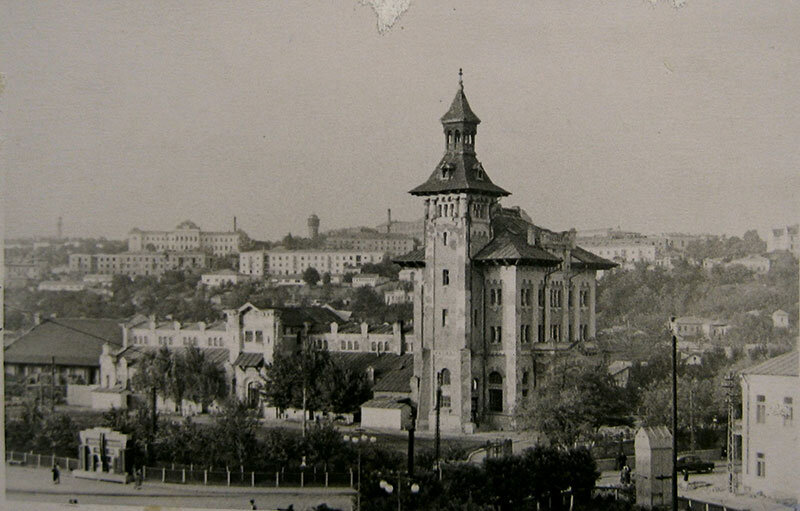
In a short time, the architect began to receive large projects such as: the Antredepozite building in Iași, a work begun in 1906, and in 1908, the headquarters of the Financial Administration in Râmnicu-Vâlcea, the current court building. In 1914, he drew up a preliminary design for the construction of the Palace of Justice in Giurgiu, which was never executed.
In her notes, Henrietta Susskind also refers to the Athénée Palace Hotel. The newspaper L'Independance Roumaine, published in 1912, reported the inauguration as follows: "A new hotel was opened yesterday in the center of the capital, on Calea Victoriei, opposite the garden of the Romanian Athenaeum. It is a monumental construction and at the same time a beautiful work of architecture. The hotel is called the Athénée Palace and is owned by the Society of Great Hotels. French architect Choltus from Paris was commissioned to execute the plans. As he was unable to supervise the work and was unable to move about because of his many occupations, he turned to our compatriot, the well-known architect H. Susskind, who modified the preliminary plan and gave the present form to the facade of the hotel, as well as all the ornamental details, both inside and outside."
The article in L'Independance Roumaine is supported by a letter, authenticated on October 14, 1912, between E. Choltus, 58b Avenue de Wagram, Paris, and H. Susskind, 8 Rue Tunsu, Bucharest. "Mr. Choltus étant chargé des plans, détails, devis descriptifs et supervision des travaux des travaux d'un hotel à Bucarest pour le compte. Mr. Th. Pradeau, contractor, 201 Bd. Malesherbes, Paris, instructs Mr. Susskind, who agrees to complete this matter on behalf of Mr. Choltus, with regard to all details and descriptive estimates to be supplied and the supervision of the work of all the trades, Mr. Susskind declaring that he is familiar with all the architectural details that remain to be done. Mr. Choltus will pay a lump sum of 60 thousand francs. Mr. Susskind will receive 40% of shares in the company, the rest in cash."5
Among the large-scale projects realized in Bucharest is the Institute of Physiology and Morphology, the current seat of the Faculty of Biology, Splaiul Independenței 91-95. Take Ionescu, then Minister of Instruction and Religious Affairs, appointed H. Susskind to realize the preliminary design of the Institute of Physiology and Morphology. Construction began in 1914, work resumed in 1919, and the final acceptance took place in 1927.
Henri Susskind also designed industrial buildings, being employed from April 1920 as the architect of the Chitila Sugar Manufacturing Company, being responsible for all necessary construction and reconstruction.
He died suddenly on February 20, 1929, in his home at 8 Tunsului Street, now Ecaterina Teodoroiu 10.
NOTES:
1. Magda Ghinea, the architect's granddaughter, is the owner of the family tree that attests the noble title of the architect Henri Süsskind, Povești ale doamnelor din București, Victoria Dragu Dimitriu, Cu Magda Ghinea, Povești din lada de zestre, Editura Vremea, București, 2004, p. 250
2. The architect's name appears in various sources spelled differently - Sousskind, Süsskind or Susskind
3. Povești ale doamnelor din București, Victoria Dragu Dimitriu, With Magda Ghinea, Povești din lada de zestre, Editura Vremea, București, 2004, p. 261
4. http://silviacolfescu.blogspot.com/2011/02/casa-de-pe-chei-casa-pompiliu-eliade.html
5. Arhiva Henri Süsskind A.2710, Biblioteca Academiei Române, Cabinetul de Manuscrise
Bibliography
Arhitectul Henri Susskind și sa activitate profesionale, Însemnările Henriettei Susskind culese în memoria dell'arhitectului, Biblioteca Academiei Române, Cabinetul de Stampe, Arhiva Henri Susskind A. 2710, Biblioteca Academiei Române,
Cabinetul de Manuscrise, Povești ale doamnelor din București, Victoria Dragu Dimitriu, With Magda Ghinea, Povești din lada de zestre, Editura Vremea, Bucharest, 2004, p. 247-272