
Cluj / Mass
MASS's discourse is laconic, but it has a lot to say. With each project, in the rarefied space of ideas or in the juicy reality of new peripheries, the concept reveals and fructifies the source of meaning-generating connections.
Atelier MASS was formed in 2011, by the association of four former university colleagues. After finishing their studies, the first years of practice were an adjustment to the pragmatic approach to architecture, a pace for which school does not prepare you. For a couple of years, the natural search for our own path and the desire to try our own strengths emerged. We have found ourselves in the competitions we have participated in together, in our shared interest in projects that don't confine us to routine.
We are convinced that good communication and collaboration with those in other fields is necessary for high performance solutions. We are also involved in various activities connected, in an obvious or subtle way, to the field of architecture.
Researching the Romanian urban environment and identifying types of small-scale interventions to improve its quality is one of our permanent concerns. Through the Minimass association, we participate in cultural projects such as "Superbia", which studies the evolution and improvement of new urban peripheries.
Team: Silviu Aldea, Marius Cătălin Moga, Camelia Sisak, Sisak Tamás Year of foundation: 2011 Address: Cluj-Napoca, str. Napoca, nr. 2-4, ap. 16-17 Contact: atelier.mass@gmail.com / Tel: 0364.142.651
Temporary arrangement TransilvaniaFest
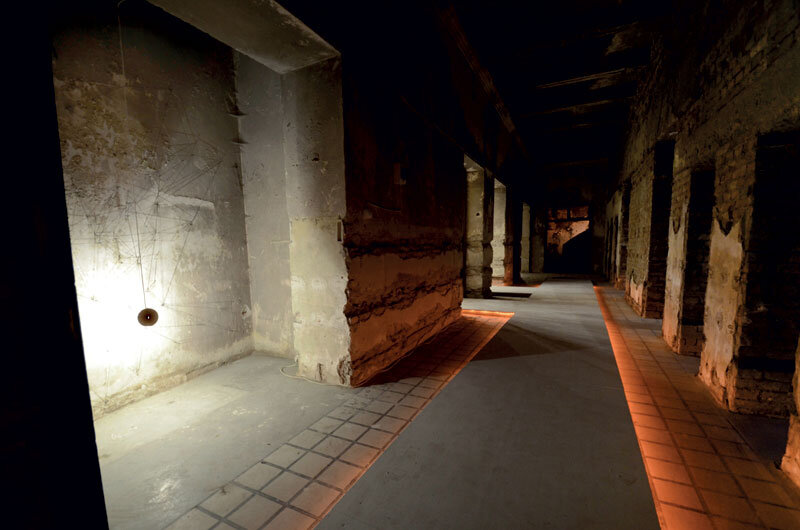
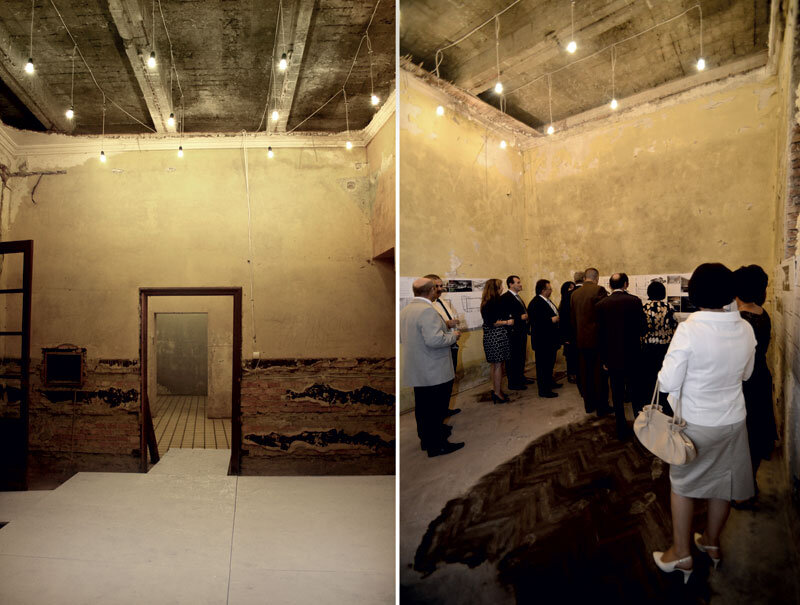
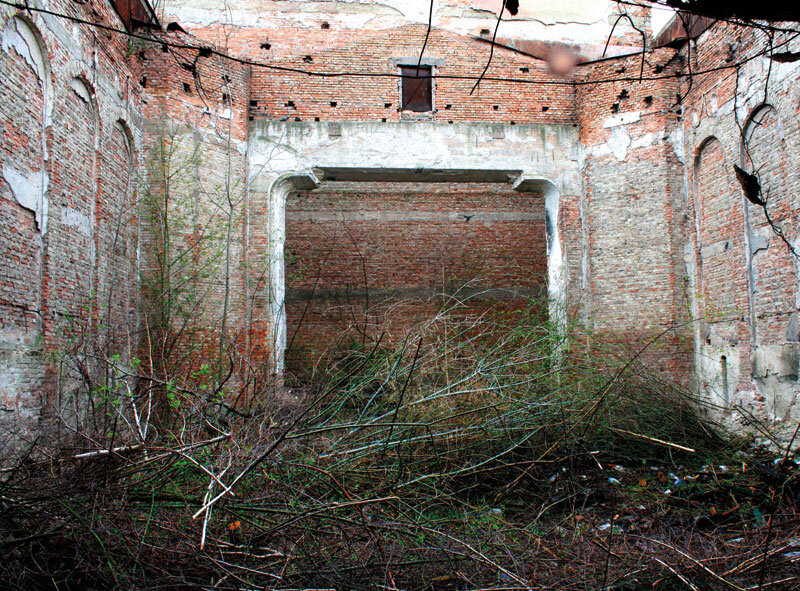
With the project in Blaj, we tackled the issue of a wide and thorny cultural-historical reality: the architectural heritage in an advanced state of degradation.
The Cultural Palace in Blaj is just one of many examples of conscious and willful neglect of prestigious buildings in Transylvania. The valuable heritage built before the socialist system, an uncomfortable witness of the historical evolution in relation to the "new epoch", was scheduled to perish.
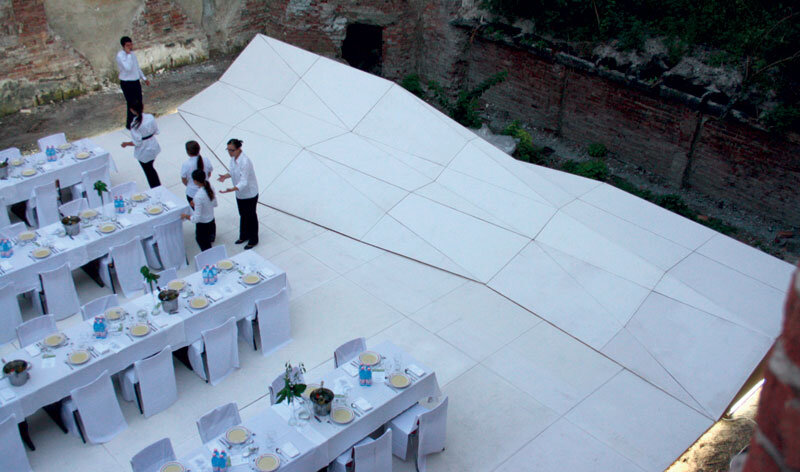
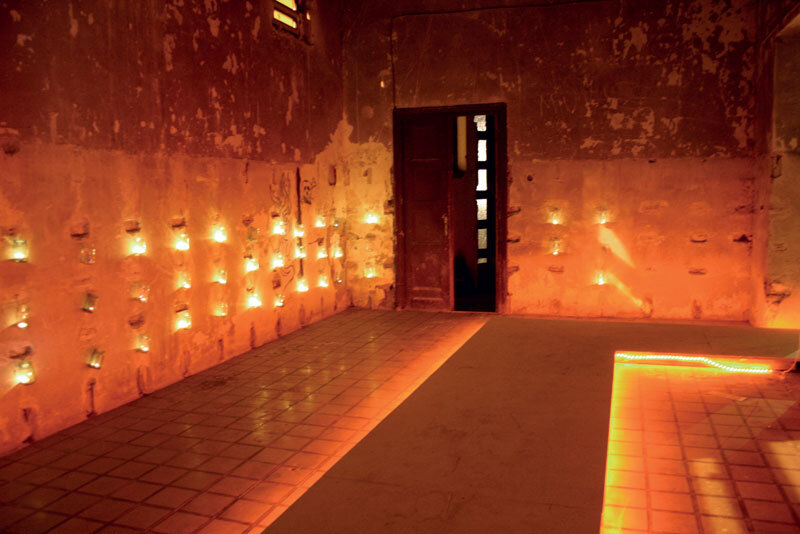
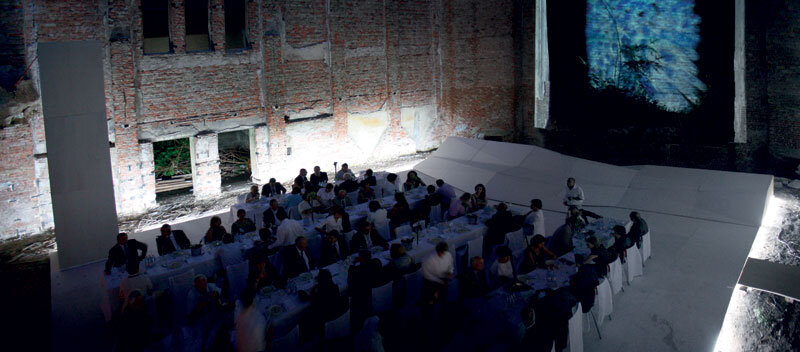
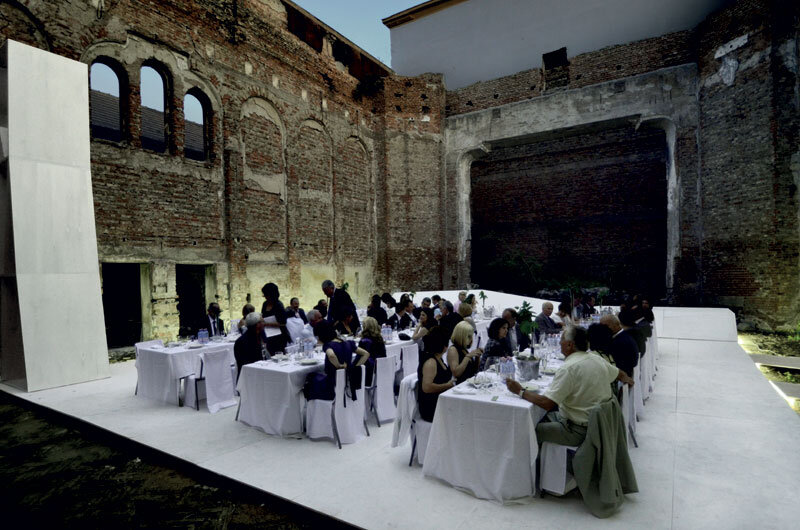
The temporary activation of the derelict palace invokes a magical regaining of its lost identity. Opposed to the reprehensible abandonment, the cultural event initiates an ideological rehabilitation of the space dismantled by recent history and paves the way for the architectural competition launched by the organizers. The main aim is to sensitize the public to the irreversible phenomenon of the dissolution of heritage values. Assuming the precariousness of the post-crisis situation, alternative, temporary models of functionalization of the spaces are proposed, pending viable solutions.
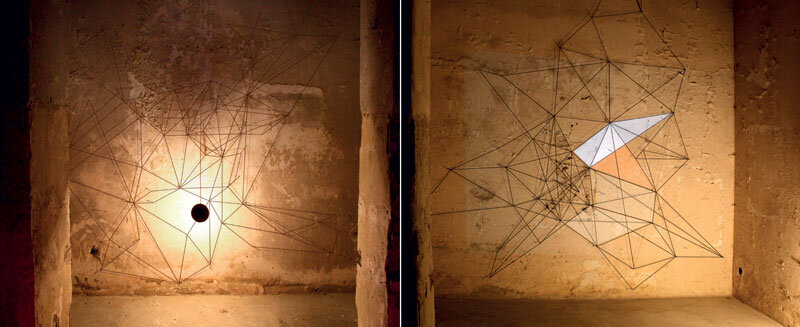
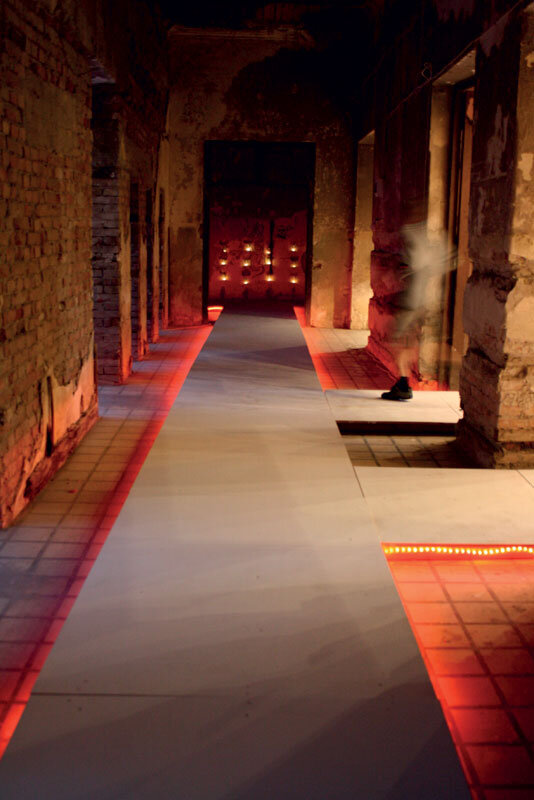
The concept of the interior design acquires its strength from the contrast between the festive elegance of temporary insertion and the blackness of the traumatic past. The elements of language supported by technical elements literally and figuratively accuse the detachment of the event from the fallen context. The perimeter light traces a new space of reference, the limestone surface, elevated and detached from the frame, describes and assures a path, affirms a healing ritual.
"The materialization of the project was marked by technical and financial limitations and the difficulty of organizing teams of totally inexperienced volunteers. We had to be effectively involved in the realization of the project and, surprisingly, the hazard of the site and the uncertainty that persisted until the end turned into a totally pleasant surprise. The physical (not just intellectual) experience of the concrete birth of architecture offers a feeling of satisfaction that is hard to quantify."( Camelia Sisak)
Location: Blaj Cultural Palace
Blaj, jud. Alba
Theme/Function: Temporary installation TransilvaniaFest
Design/Execution: 2011
Project team: Silviu Aldea, Marius Cătălin Moga, Camelia Sisak, Sisak Tamás
Papillon Café
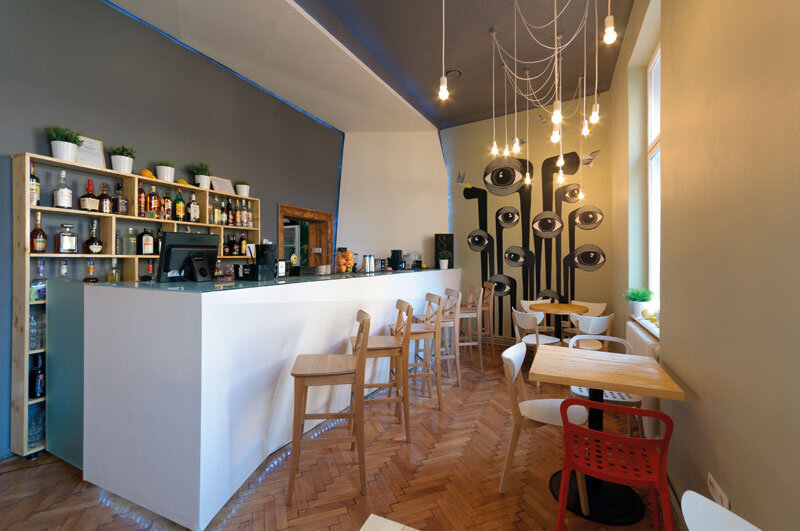
Competition in an increasingly abundant market, that of cafes (as in retail or hotel design) creates opportunities not only for consumers, but also for the architect/designer/artist increasingly in demand in interior design. Visual identity is becoming an essential part of appeal and a marketing tool, and this produces two effects: the demand for creative design and simultaneously its consumption.
And when dealing with young, early-stage investors with limited resources, imagination is additionally stretched to find inexpensive solutions and low-tech maneuvers without compromising the final image. These difficulties can be overcome by a good dialog between the elements of the trinomial beneficiary-architect-executor, the enthusiasm and involvement of the parties, and a willingness to experiment.
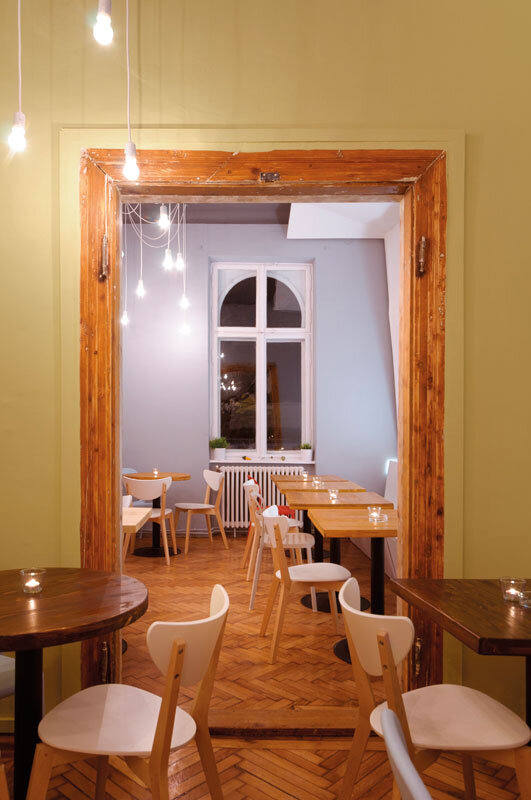
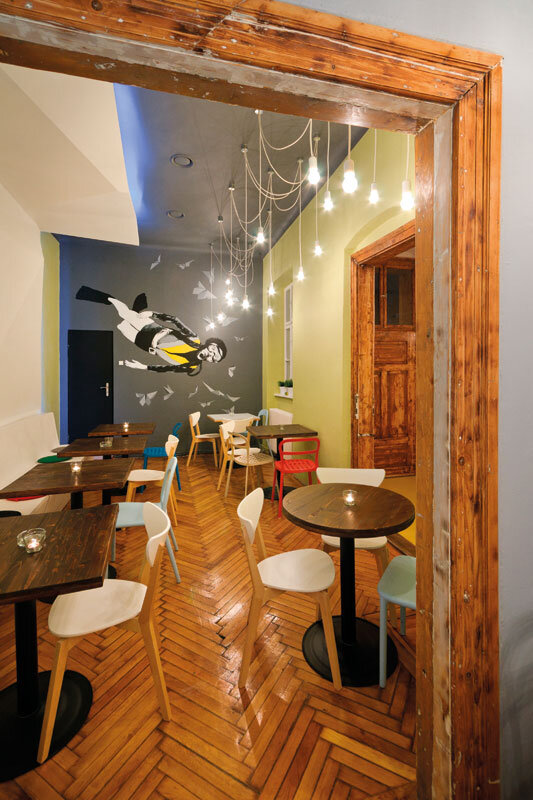
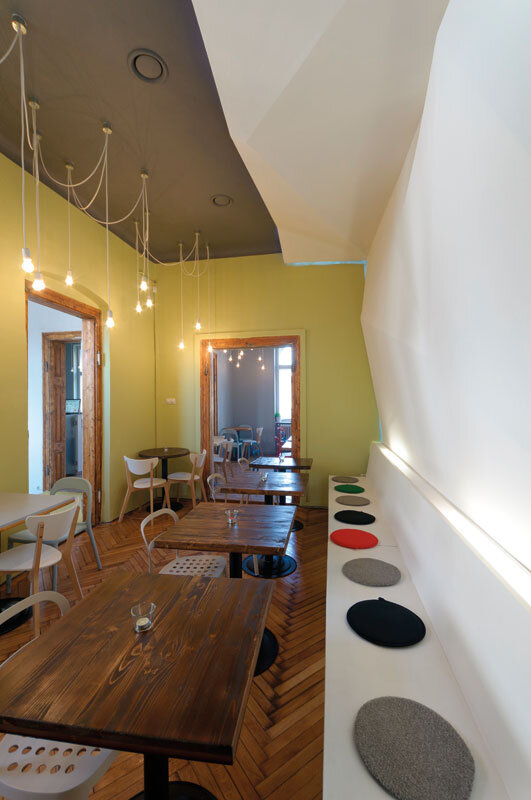
The papillon (butterfly) concept proposed by the beneficiaries had no visual reference associated with it, just a name that they had become attached to and an idea of the target audience: "people like us", which meant a youthful and relaxed atmosphere.
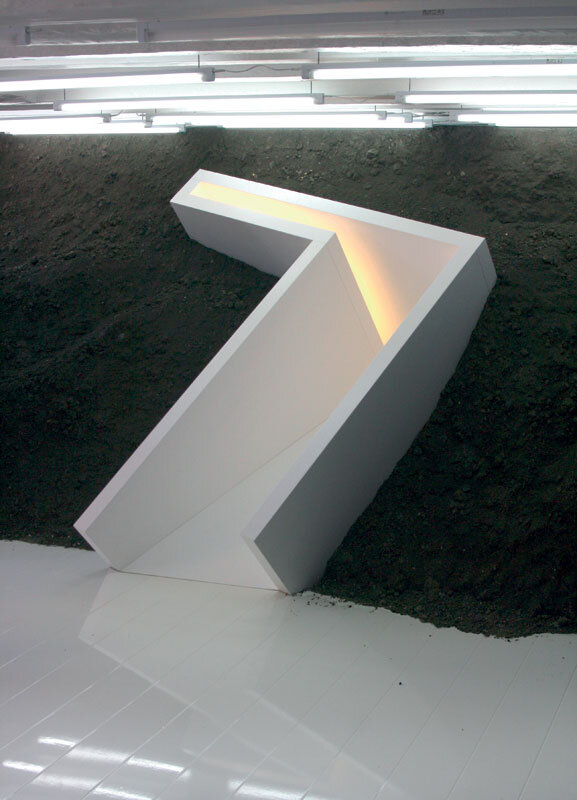
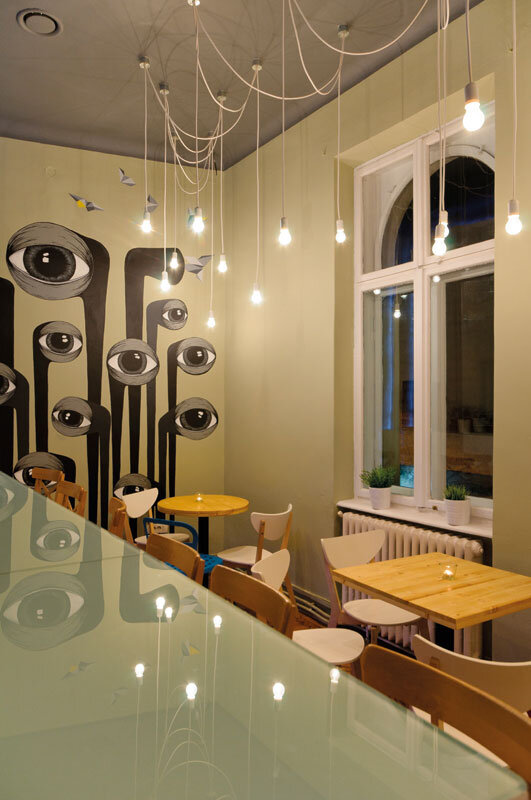
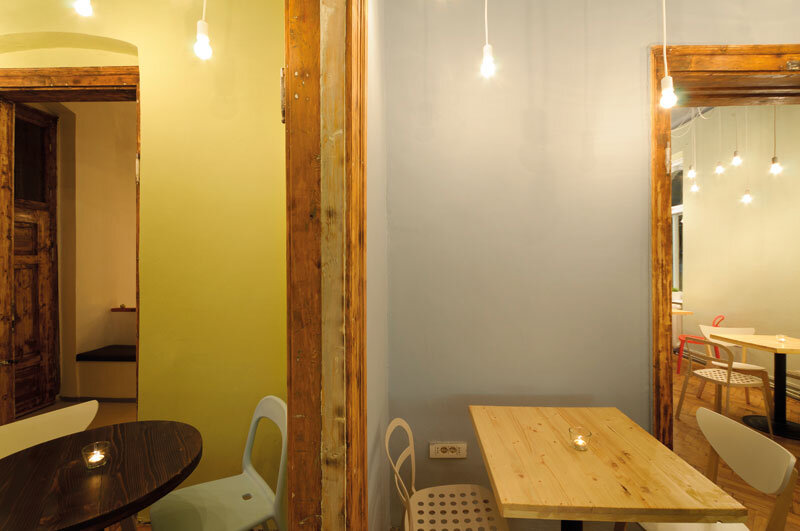
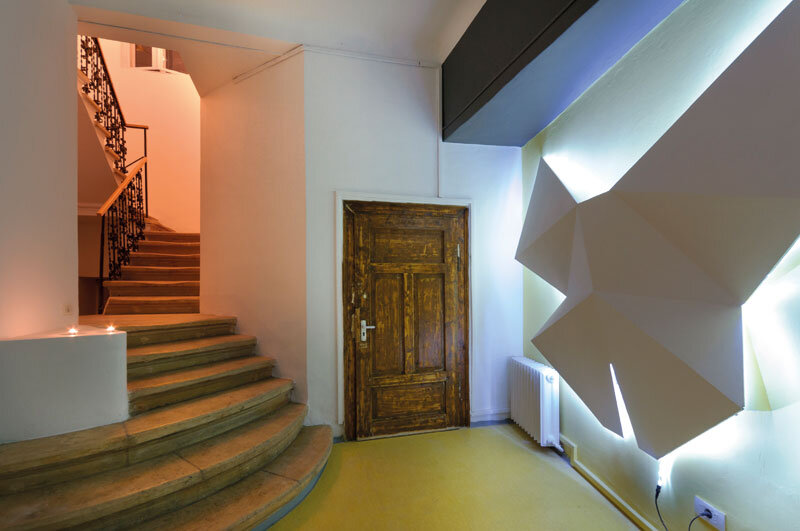
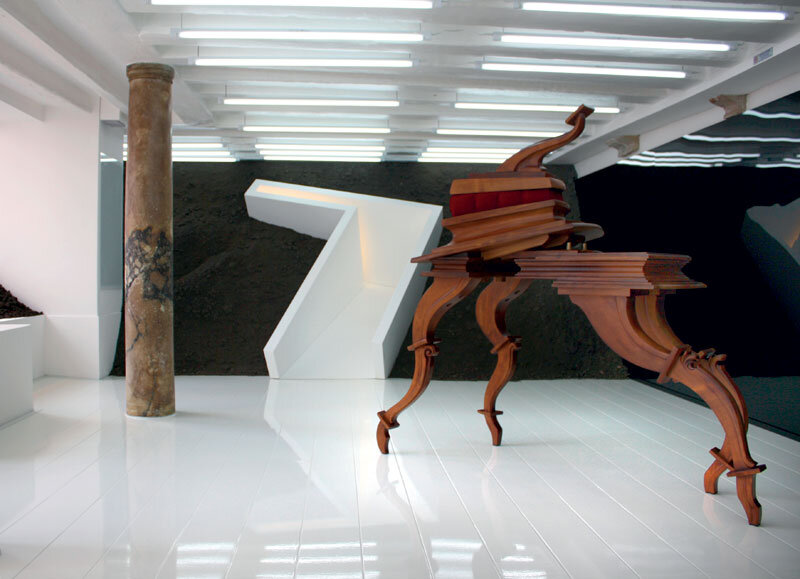
The interior design is based on approaching the notion of the butterfly from a less commercial and cute position. Thus the papillon is not associated with flowers and cuteness, but with an alternative interpretation: the white, ephemeral moth, attracted by electric light. A series of images invoked by this interpretation created the plastic language of the interior design: white abstract geometry, folded surfaces, apparent incandescent light bulbs, the idea of an insect, etc.
Location: Cluj-Napoca
Function: café
Execution/design: 2011
Surface: 100 square meters
Team: Silviu Aldea, Marius Cătălin Moga, Camelia Sisak, Sisak Tamás
Central University Library enlargement competition
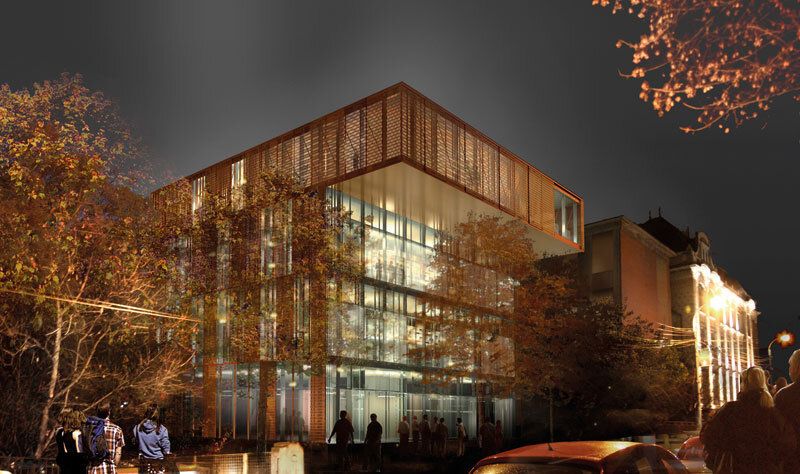
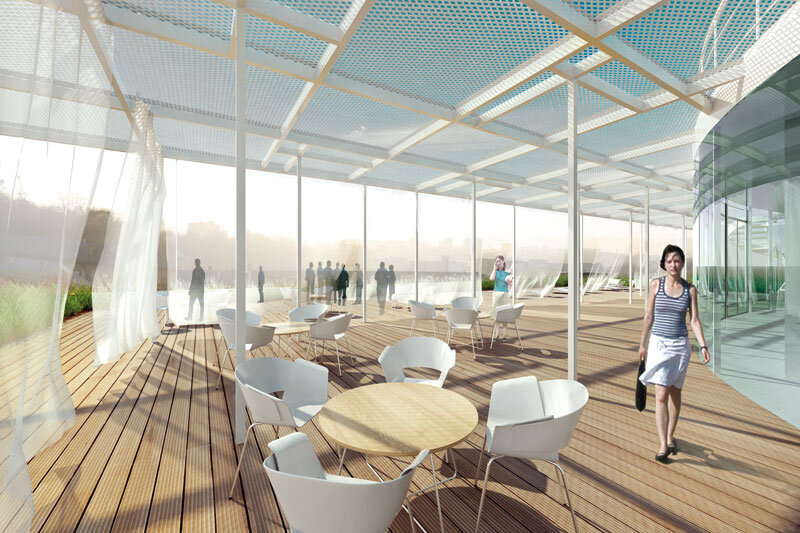
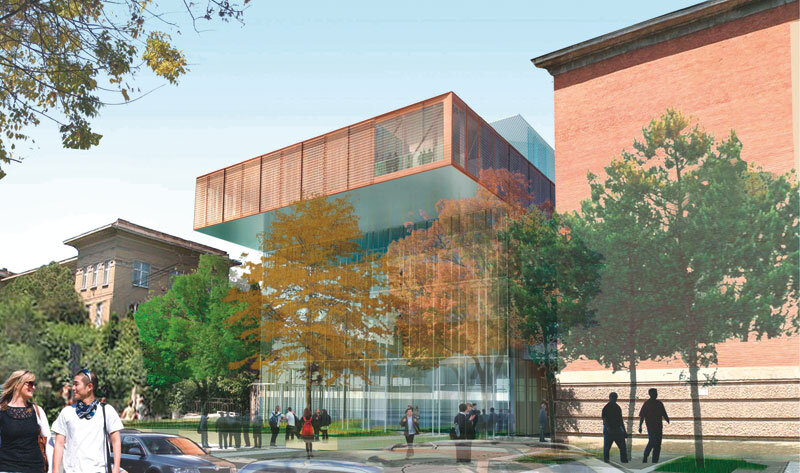
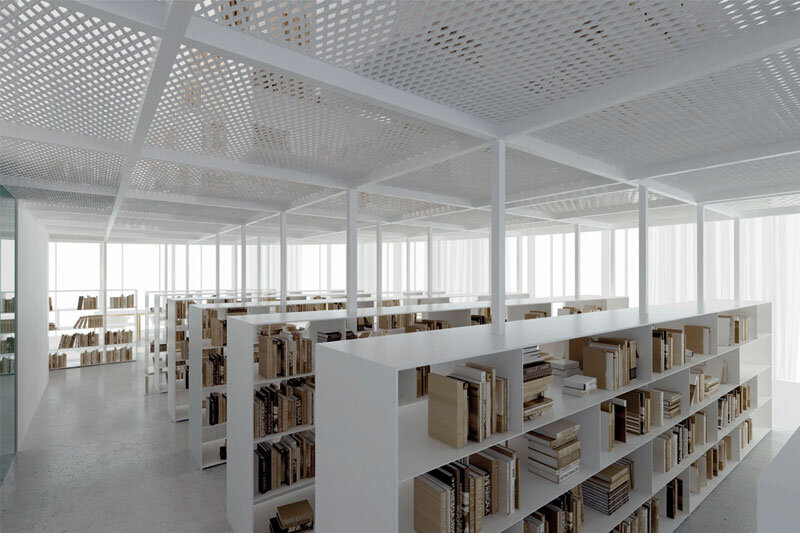
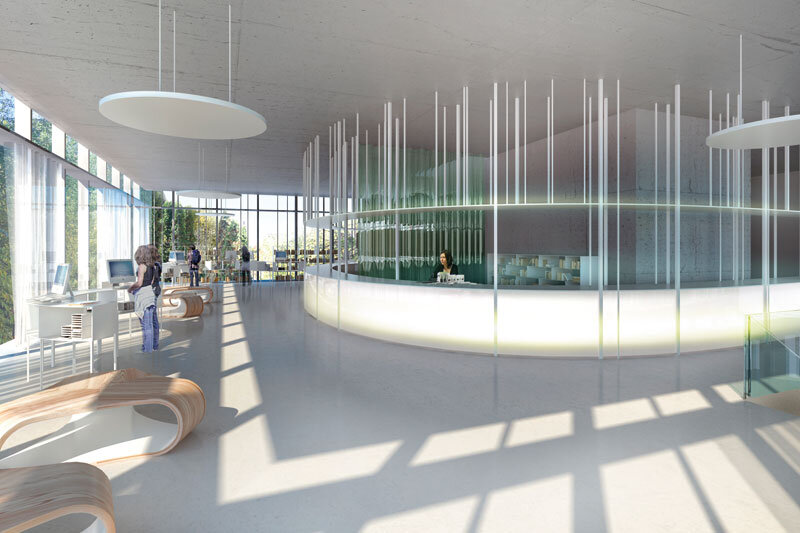
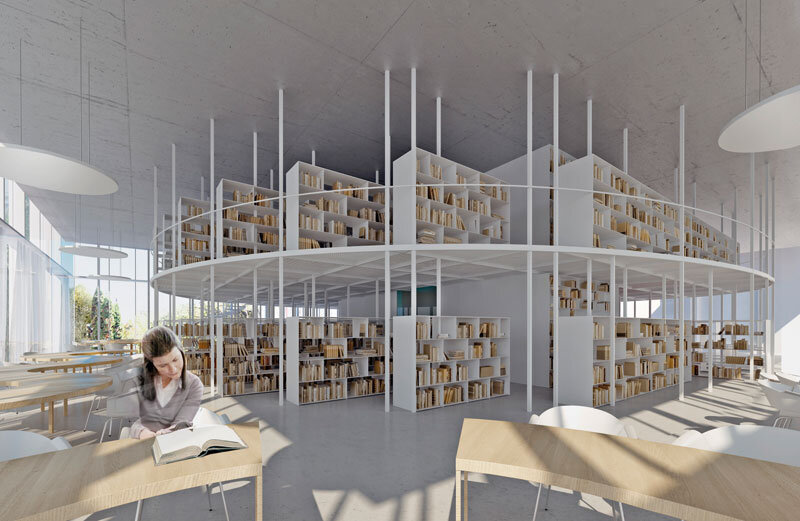
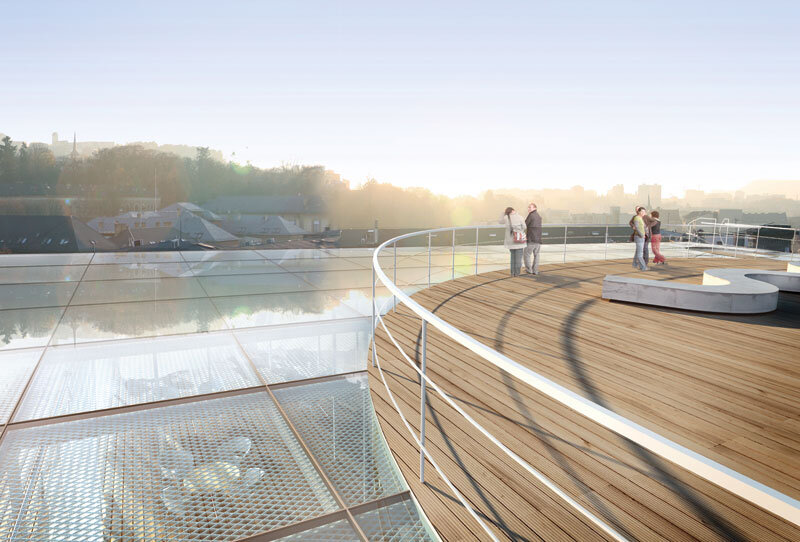
The project proposes a reflection and a critique of volume in architecture in favor of space. Thus, the solution has been thought from the inside out, focusing on the spatial qualities of light, temporal processes, as well as the implications for the construction of such a program and its possible future routes.
The library is primarily a space with its own time. The communication of information is done without words, in deep silence and through an individual gesture. Silence, concentration, duration and stillness favor experiences of the passage of time. The movement of light, climatic changes (fog, mist, rain, snow), the setting of the sun, seasonal colors and densities of vegetation become tangible spatial sensations.
By working with natural light, the project creates a neutral and serene setting in which light colors and smooth surfaces amplify the state of light and propagate it towards the core of the building. Through fully glazed facades, the large spaces become receptors: white resonance boxes of temporal phenomena. According to the photometric simulations on the building model, the densification of the part occurs with decreasing light, but also with decreasing architectural scale. This densification allows the realization of minimized structures that create a diaphanous and rhythmic scenography in dialogue with the exterior vegetation.
On the other hand, the architectural programme also requires a reflection on the problematic future of the library, which is called into question by the era of digitization and new virtual environments. It is therefore a question of a body that can be adapted to new functional needs, of a volume that can be completely restructured with little effort.
The solution gives rise to a discussion on the essential elements of architecture: space, light and time. Time mediates the relationship between the first two constituents, and together they generate an architecture purged of surpluses, a space of essences, a minimal architecture.
Location: Cluj-Napoca
Function: Warehouse with free access to the shelf, BCU "Lucian Blaga"
Project: 2010
Team: Silviu Aldea, Kiss Zoltán, Sisak Tamás; visualization Mihai Pricop
Competition - Multifunctional office/sports center
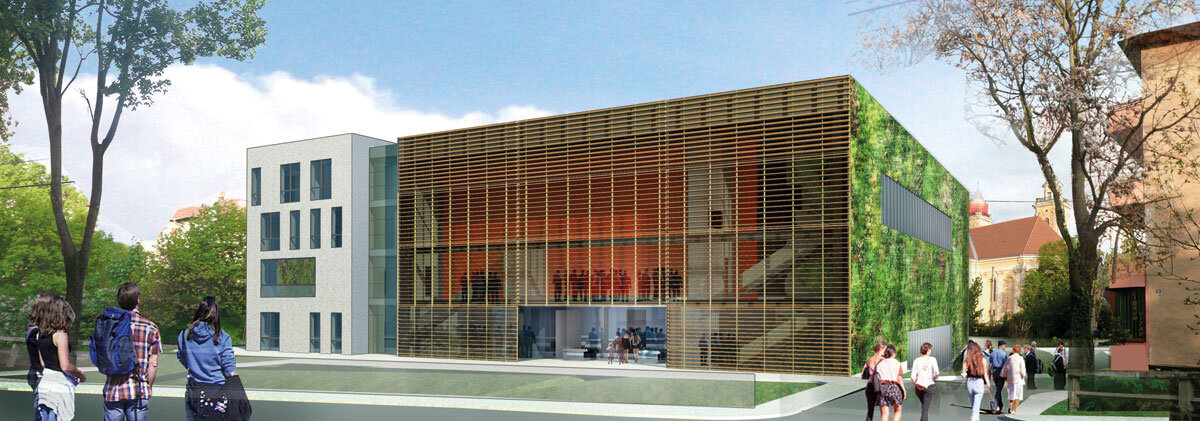
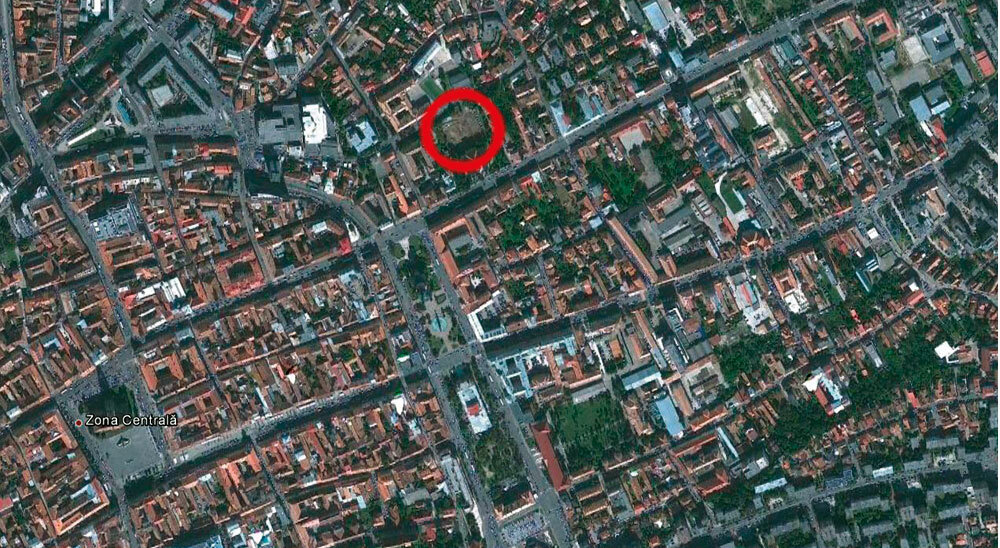
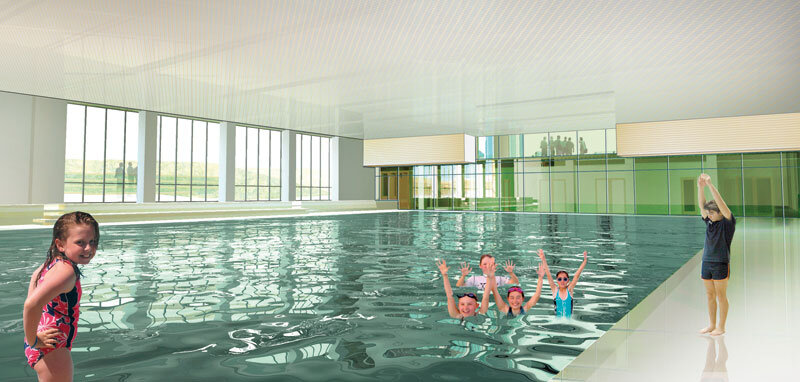
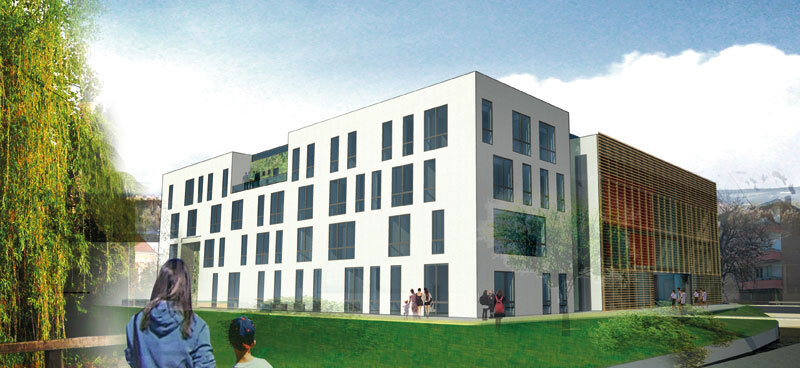
How do we inscribe a building in a fairly unitary volumetric context, in relation to which the functional requirements of the competition theme seem exaggerated and oversized? In this project, volumetric and contextual integration considerations were prioritized over surprising functional solutions. The proposal emphasizes the mixed character of the built context of public functions and low-density collective housing, while at the same time providing as much green space as possible. We have focused on the articulation in the main façade of the two functional units and the openness to the street, the environment and users.
Sport is a necessity for the balanced development of children, and the building is accessible, attractive and friendly for both practitioners and spectators. This attitude is apparent in the façades and, in particular, in the idea of the outdoor steps in front of the polo pool which can serve as an extension of the indoor steps or simply as a semi-public space to observe the activity inside through the generous glazing. Two streetball courts can be located on the roof, one accessible to office staff and one to the public from the courtyard.
The area occupied by the building is reclaimed for vegetation on its facades, and the inner courtyard brings light and fresh air to the offices and basement parking. Vegetation also appears in the loggias of the office building which, together with modular windows in various combinations, fragment and diversify the volume.
Location: Cluj-Napoca Function: Offices for ISJ, polo and handball hall for children Project: 2010 Team: Sisak Tamás, Miruna Marinescu
Gosta-Serlachius Competition
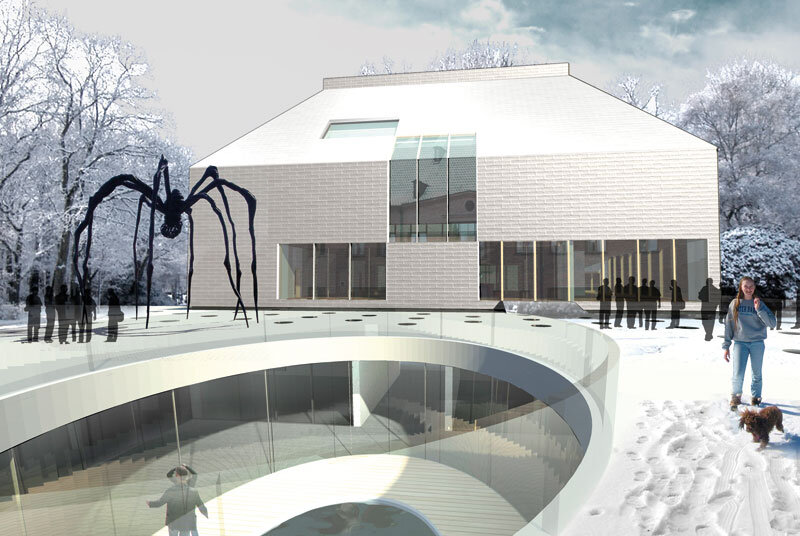
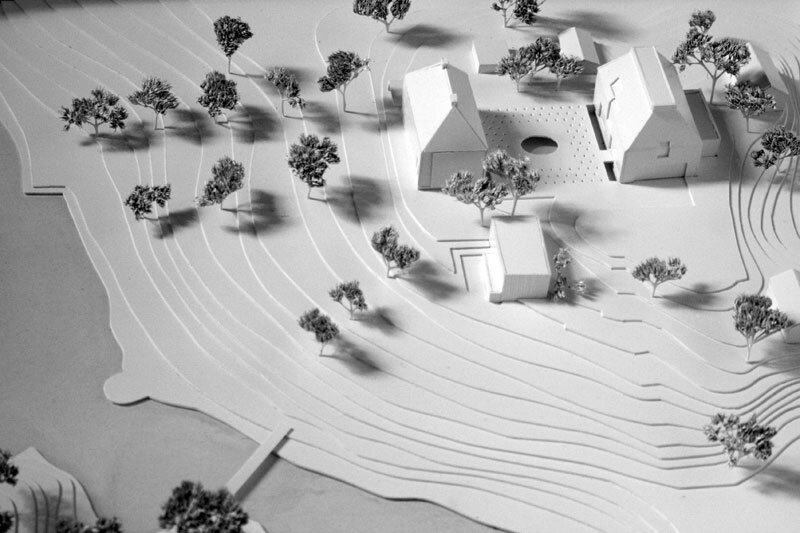
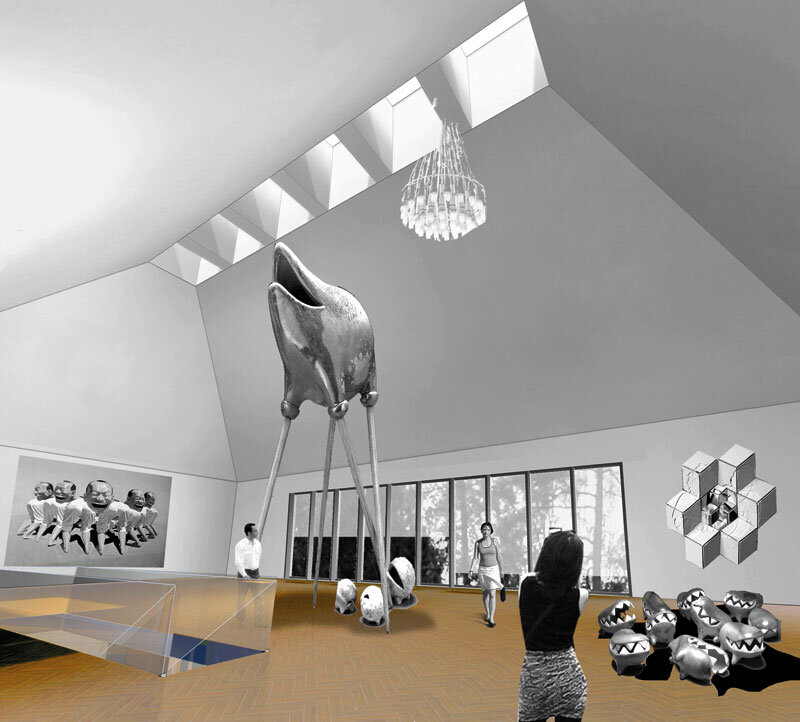
The competition was held in March 2011 for the extension of the Gösta Serlachius Museum, which houses the largest private collection of paintings in northern Europe. The brief was to create new entrance areas, permanent and touring exhibition spaces and annexes, totaling 5,000 square meters. The site is located in a landscape specific to Finland, with the emphasis on discreet intervention and respect for the natural setting and the existing buildings, the most prominent of which is the 1930s exposed brick mansion.
Starting from the reduced scale and the pavilion character of the existing buildings loosely arranged in the park, the proposed solution emphasizes the spatial quality of the landscape. The footprint of the new museum building has a minimal impact on the existing vegetation, developing mostly on the cobbled area in front of the mansion. The layout of the main museum volume reinforces the N-S-S compositional axis, which gives character to the entire park. The extension reiterates in an archetypal volume the silhouette of the Serlachius Mansion and establishes a formal dialog between the two.
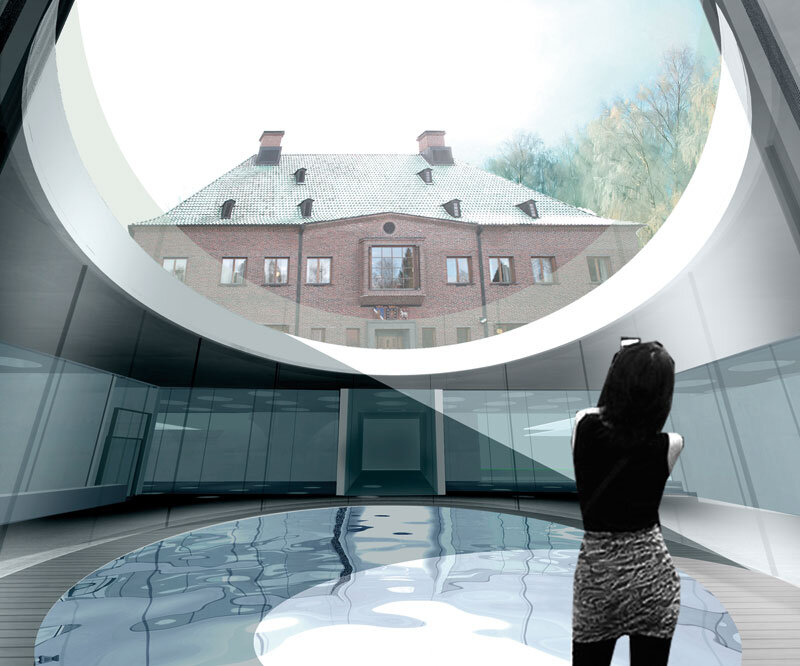
The new building (which contains the main entrance) and the old one (the end of the museum route) delimit a 'courtyard of honor', a mineral platform - a support for the various activities connected with the interior exhibitions. Numerous circular glass slabs embedded in the paving, a large elliptical patio and two skylight basins create a discreet setting for this public space, which changes its character as evening falls.
The proposed volume, apparently monolithic, opens out from the entrance foyer towards the conference room and then towards the landscape, creating a sensation of luminous passage. The same opening onto the landscape appears on the upper level in the traveling exhibition hall, through the adjacent terrace, where the exhibits sit under the open sky in the discreet shade of the building.
The elliptical shape of the patio is designed in trompe l'oeil, focusing the attention of visitors from the underground hallway towards the mansion building. The patio is also home to a tranquil water feature that distributes light and enhances weather phenomena. The symmetry of the functional scheme induces a sense of order, easy orientation and serenity. Generous horizontal spaces blend like a classical composition with contemporary architecture.
Location: Maenttae (Finland) Function: Museum extension Design year: 2011 Team: Silviu Aldea, Marius Cătălin Moga, Camelia Sisak, Sisak Tamás; Collaborator: Oana Cărean
SUPERBIA Workshop
Superbia is a project that captures an ongoing process of discovery of the new Romanian suburbia starting with the Venice Biennale 2010 and continuing with the workshop held last year. From the simple observation of a new phenomenon of frenetic real estate development and the detached illustration of a contrast between invested/pretentious interiors and the raw outdoor environment, we have come to a concrete discussion on how these developments have been realized and what can be done in the current situation to improve them.
More than 10 years ago, when Cluj's current PUG came into force (1999), the city's intravilanul was increased by about 50%, i.e. around 2,000 hectares of new land (mostly agricultural and pasture land). For 10 years, until 2009, these new territories were gradually and increasingly rapidly conquered by housing, commercial and industrial zones. These massive developments gave rise to the phenomenon of Sprawl, defined throughout the country by uneven density and a profound lack of infrastructure.
Sprawl has not only developed within the urban sprawl of large cities, but has also engulfed (swallowed up) neighboring settlements, villages and communes. This situation is easily observable in the commune of Floresti near Cluj, the case study of our workshop. Florești is a special case because of the scale of the real estate development phenomenon, with the population almost tripling in the last 8 years, from about 7,000 inhabitants in 2003 to almost 20,000 inhabitants. The resulting urban fabric comprises a mix of housing of all sizes and for a wide range of users: crowded blocks of flats, townhouses, shopping centers, agricultural land, landscape remnants. It is only now, after several years, that users are beginning to face the real problems of living in the 'suburbs' and to realize the deprivation of the environment in which they live. Another specific aspect of Florești commune is that the new inhabitants feel that they are Cluj inhabitants and support a way of life dependent on the city of Cluj, but the problems they face are the responsibility of the local administration, and the only way to solve them is to become active/urban actors within the commune.
The workshop started in 2011 aims to set a precedent for a consistent way to directly address the needs of the people living there. This endeavor is coupled with the attempt to bring into the general culture of every inhabitant the notion and importance of public space, common space and the role that the new community can play as an urban actor. The demarche was a punctual one, focused on a symptomatic area of the suburbs, with a concrete result and the possibility of implementation.
The ideas varied in the way they were approached, very easily achievable one-off interventions, multi-year development strategies or events involving a community in the making, even wider than the one in the area under study. In an intermediary phase, all the proposals were discussed with representatives of the inhabitants and the local administration, namely the mayor of Floresti. The resulting exhibition formed the basis of a public consultation and it is hoped that, in a later phase, an attempt will be made to implement them with the help of the inhabitants of Floresti.
This workshop was realized by the SUPERBIA team and the Romanian Order of Architects in collaboration with the Faculty of Sociology and Social Work, the Association of Architecture Students and Atelier MASS. Partners of the event were Florești Town Hall and the architecture portal ArhiForum.
Location: Florești, jud. Cluj Function: cultural project Project application: 2011-2012 Team: Moga Marius Cătălin, Sisak Camelia, Sisak Tamás
Read the full article in the special issue of ARHITECTURA magazine dedicated to Cluj