
Cluj / RAUM
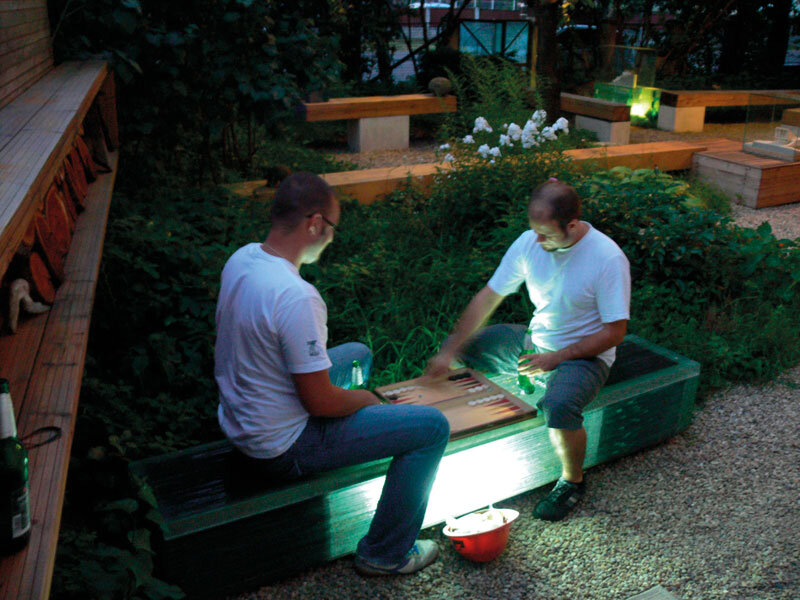
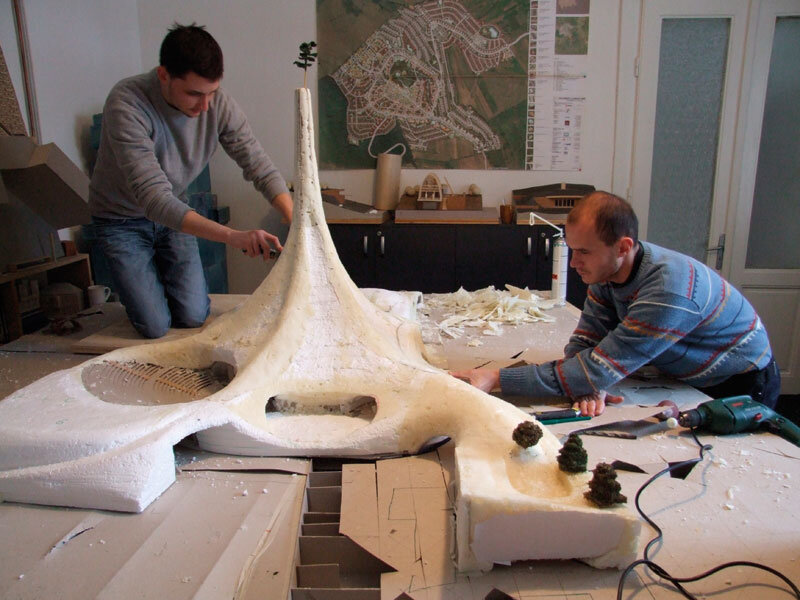
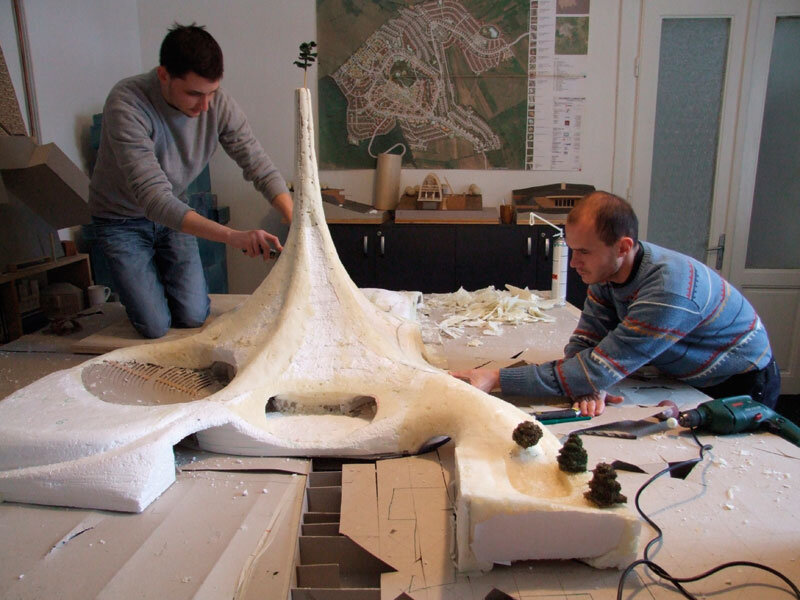
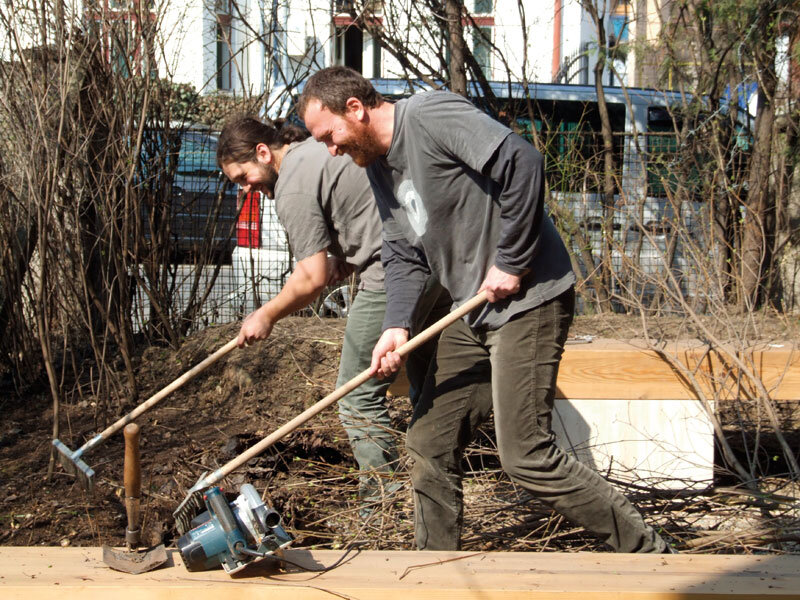
Consistent in promoting what we believe should be normality and naturalness, in direct relation with the quality of the local specificity (climatic, geographic, social and cultural), the RAUM team intervenes punctually, concretizing its vision.
Through our work we try to bring man back into symbiosis with the environment as the main and priority determinant in architecture. We are concerned neither with the (didactic) compositional concept, nor with volumetry as a goal. The contemporary man is trapped in the post-industrial artificial world, and the autochthonous - the man to whom we address ourselves in particular - is too often lost on the wrong path, due to ignorance and lack of positive example. We believe that it is the duty of the responsible architect to pave the way to the rediscovery of nature as a resource and source of regeneration, and to the rediscovery of the qualities that are still preserved in the vernacular (rural and urban), often spontaneously constituted. We believe that these two indivisible principles, once applied, can bring about a profound, structural and reassuring restoration in daily existence and mentality.
RAUM Team: Horațiu Răcășan, Gabriel Răcășan, Andrei Köves, Loredana Tripon, Alexandru Mociran, Melania Lipan Year founded: 2003 Address: 41 Octavian Goga str., Cluj-Napoca Contact: www.be.net/RAUM
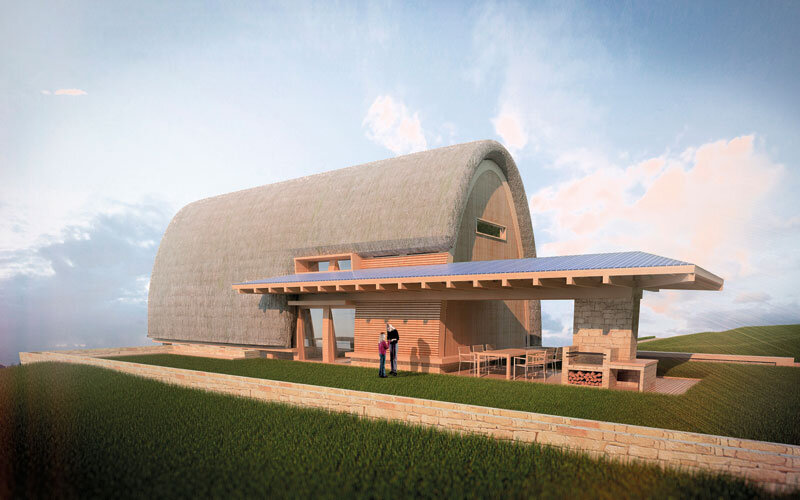
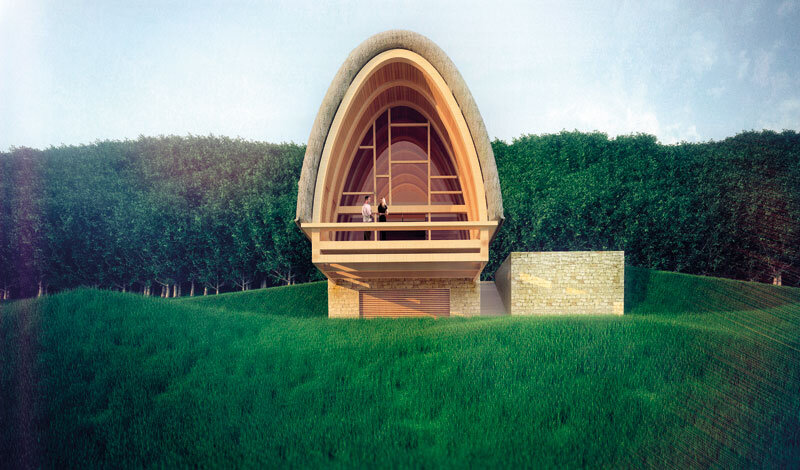

House with reed
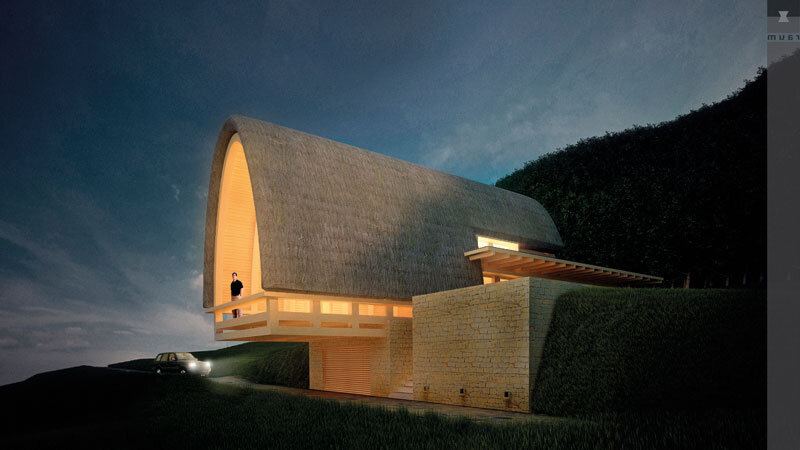
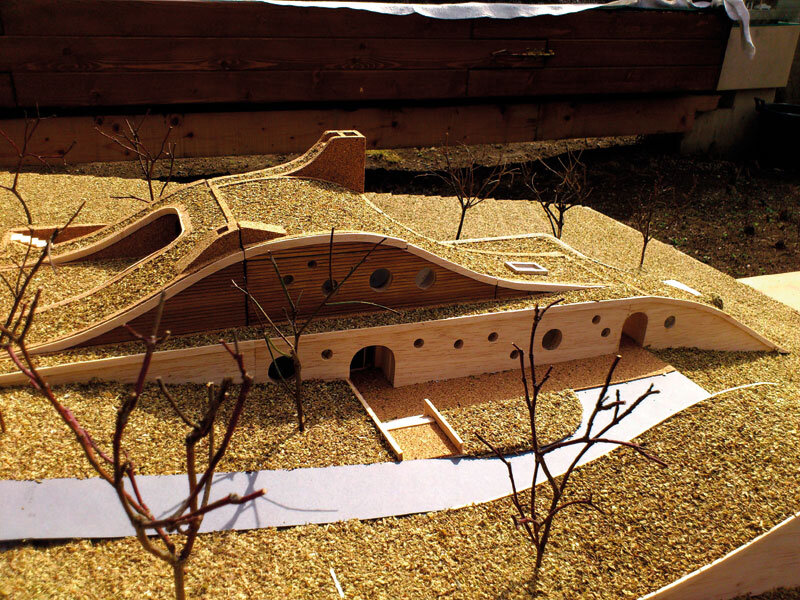
This house, located in a pseudorural environment, is the result of many years of thoughts, reiterated and left to "ferment" for a long time. It aims to provide a home for a couple who have nothing to prove and just want to be left alone, to live a normal life - at some distance from the urban pace.
The architect's aim was to use readily available rural resources and contemporary technologies (renewable energy, recycling, etc.) for the actual construction, aiming not for technological, conceptual or other performance, but for a balance between nature and man.
A few elements and a few skilled craftsmen will be involved in the realization of this approach:
- the reed "ogive" roof, realized by Mircea Telecan from Sălicea, jud. Cluj; - the lamellar wooden ribs of the roof's ogive - Szalayi Márton from Izvorul Crișului, jud. Cluj; - stratified wood carpentry and wooden plywood - made by Țucu Dragu-Covriga from Florești, jud. Cluj; - wool thermal insulation - made by Flaviu Moraru from Așchileu Mic, jud. Cluj; - volcanic stone/tufa - stonemason Szabo Laszlo, Chidea Quarry, Chidea, jud. Cluj; - installations - solar/photovoltaic panels, energy storage, waste water recycling - Florin Popa from Becaș, jud. Cluj; - builder and masonry/betoons - Sami Șina from Valea Drăganului, jud. Bihor.
Location: Sălicea village, jud. Cluj Destination: single-family house Design/execution: 2005-2010 Design team. Horațiu Răcășan, stud.-arh. Alexandra Țîmpău Resistance: eng. Dan Turda Installations: eng. Popa Florin Nicolae Visualization: stud.-arch. Vlad Moldovan Layout: stud.-arh. Horațiu Dicoi
MME House
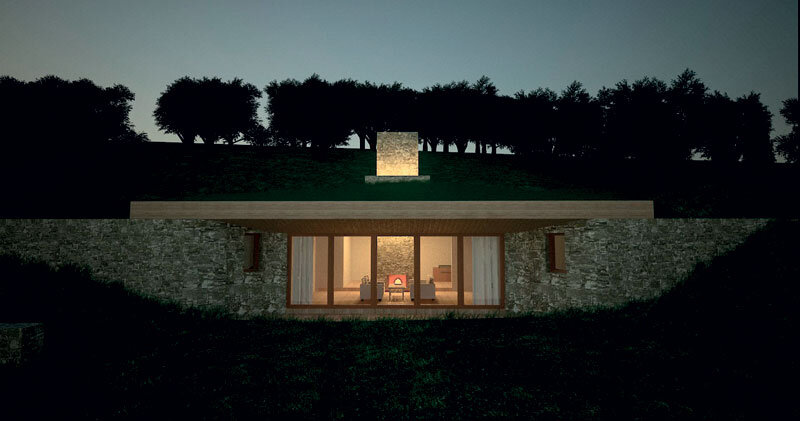
The site is located in the municipality of Petreștii de Jos, near the edge of the forest. The proposed house utilizes the natural slope of the land, facing with its main opening towards the Turzii Gorges, to the southeast. The view inspires the central stained-glass window, and the immediate neighborhoods allow the insertion of a human "den", hidden in the landscape, restrained in front of nature and decent in its temporal becoming.
The architect's intention is to facilitate the symbiosis between human life and the rhythm of nature, without one negatively influencing the other. We also intended this to happen discreetly and without waste (of any kind). Everything is designed to be recyclable or "assimilable" over time by nature (if humans ever leave this place).
Location: Petreștii de Jos, jud. Cluj Destination: Single-family house Design/Execution: 2006-2007 Design team: arch. Horațiu Răcășan, stud.-arh. Adrian Pop Visualization: stud.-arh. Vlad Moldovan
Edwards House
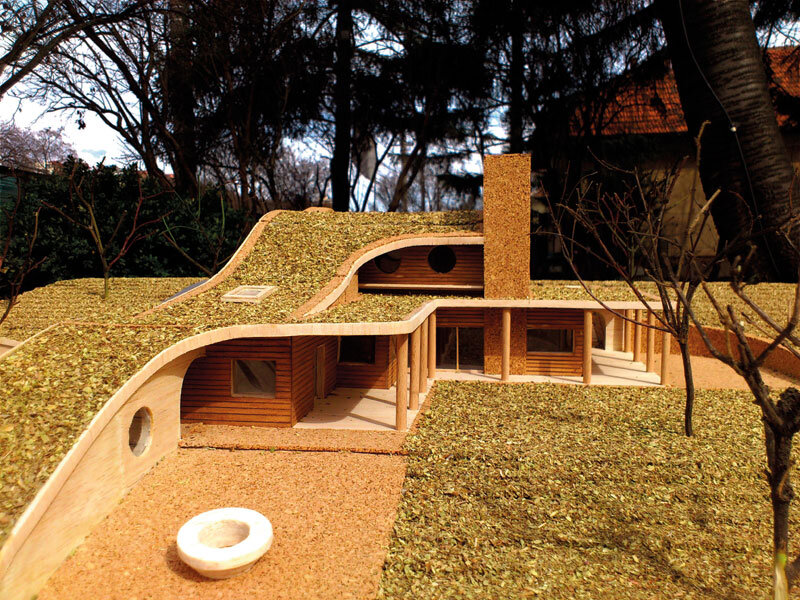
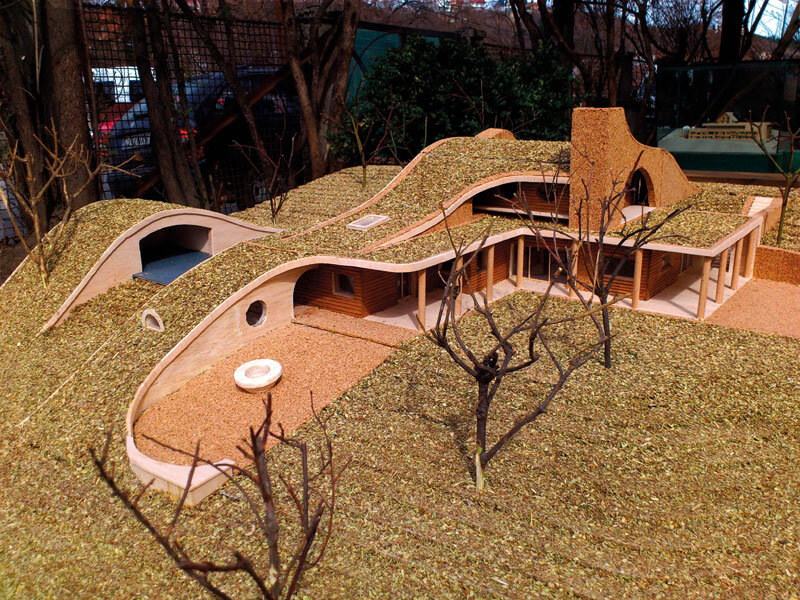
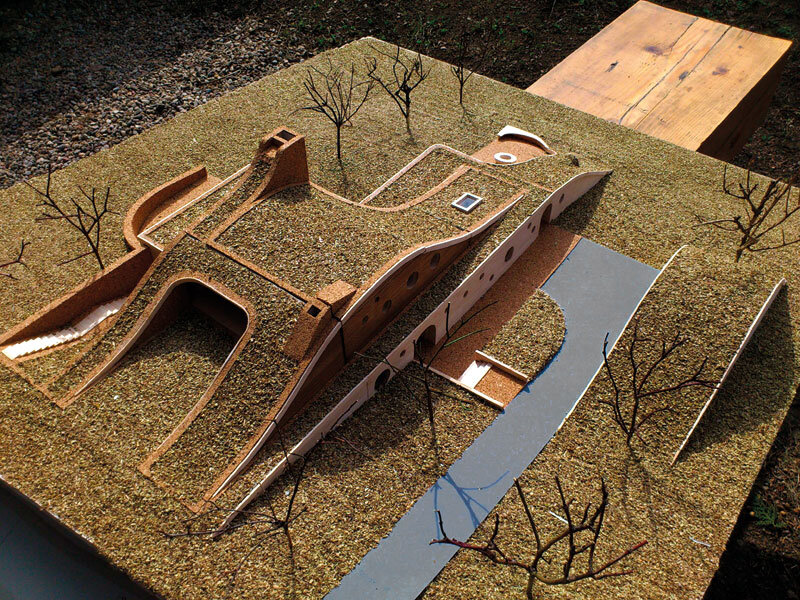
On the western slope of an unbuilt hill on the outskirts of Cluj (Colonia Șopor) a couple with artistic-ecological concerns set out to materialize in their own house the landmarks that mark their existence.
The "struggle between the architect and the beneficiary" was made much easier, as both parties wanted to achieve a symbiosis between human intervention and nature. Consequently, the house will have:
- minimum concrete (foundations, retaining wall) - maximum use of materials of natural origin (superstructure - laminated wood, walls - compacted hemp, stone - volcanic tuff) - maximum integration into the landscape - reduced energy consumption (50% less than usual) - vegetated roof/vegetated-agricultural facades on the ground floor - renewable energy sources (solar and photovoltaic panels) - recycling "in situ" of household waste/garbage.
Location: Colonia Șopor, intravilan Cluj-Napoca, jud. Cluj Function: eco-friendly single-family residence Design/execution: 2011-2012 Design team: Horațiu Răcășan, Andrei Köves, Vlad Cărăbaș, Loredana Tripon, Alexandru Mociran Layout: Alexandru Stoica, Alexandru Mociran, Andrei Köves, Melania Lipan
Amfiteatru residential complex

The proposal for the residential complex is located on the southern slope of the Hoia Hill, in a natural hollow on the western edge of Cluj.
The particularities of the site (maximum sunshine, steep slope, morphology of the land, possibilities of access/linkage to infrastructure as well as the neighborhoods) in conjunction with the theme of the beneficiary and the set of values promoted by our team led us to the adopted solution.
Thus, on the studied land it was intended to start the construction of a residential complex with all the facilities related to the standards of European civilization at the beginning of the 21st century. It will consist of three groups of buildings arranged in terraces on a common garage connecting them underground. In the proposed ground layout, the buildings are configured around a park, two squares and numerous pedestrian walkways designed to crystallize a community. The small neighborhood also contains all the facilities that are complementary to the residential program, elements necessary for normal living: commercial spaces, medical offices, underground and above-ground parking, bicycle parking, a bakery, a restaurant, a restaurant, a kindergarten, a fitness room, bicycle and jogging paths, etc. Our objective is to offer a peaceful, clean and safe living environment to a dense community in a pleasant environment. This approach is aimed at the ordinary man who grew up in a block of flats, whose needs and dreams we are trying to materialize through this project.
Location: loc. Florești, jud. Cluj, South slope, Dealul Hoia Function: 200 apartments residential complex /CUT 1.4 POT 35% Land area /Ad: 18.863 sq.m /28.347 sq.m Design /Execution: 2008-2009/- Design team: Architecture: project coordinator: arch. Horațiu Răcășan, designers: arh. Ion Andreca, arh. Dragoș Ciorobâtcă; arh. Demeter Kinga, arh. Perdi Levente, arh. Anamaria Popa, arh. Mark Sztahura, stud.-arh. Radu Mărginean Installations: SC Das Engineering Group SRL Strength: SC CSR Structural Design SRL Strength consultant: SC Lamina SRL Visualization: Vlad Moldovan
"Corneliu Coposu" Pedestrian Walkway
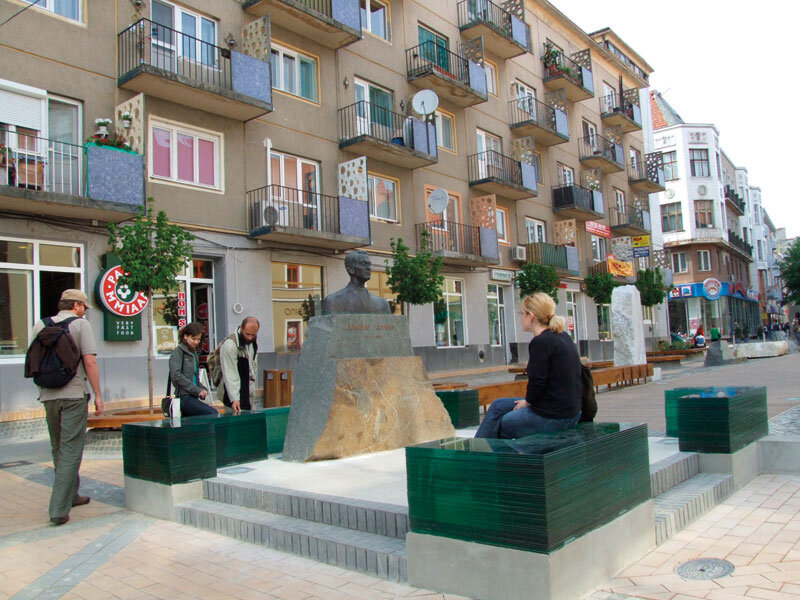
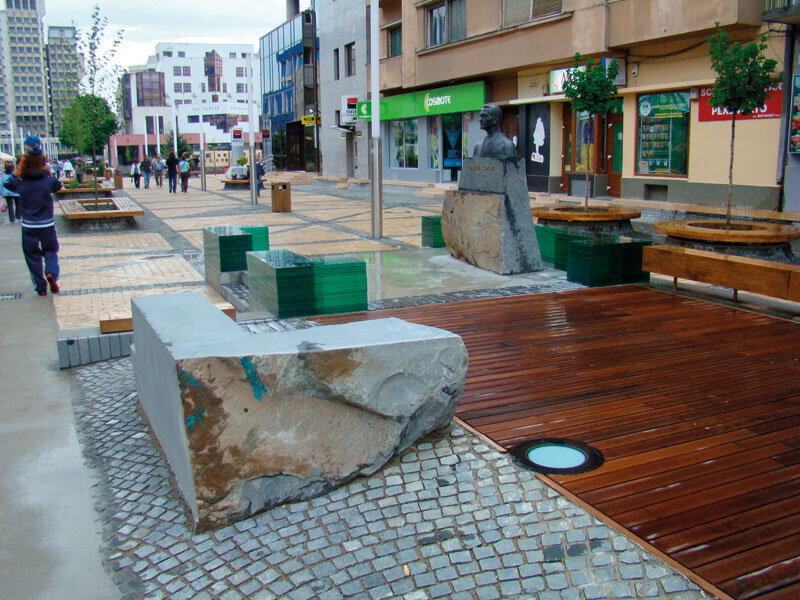
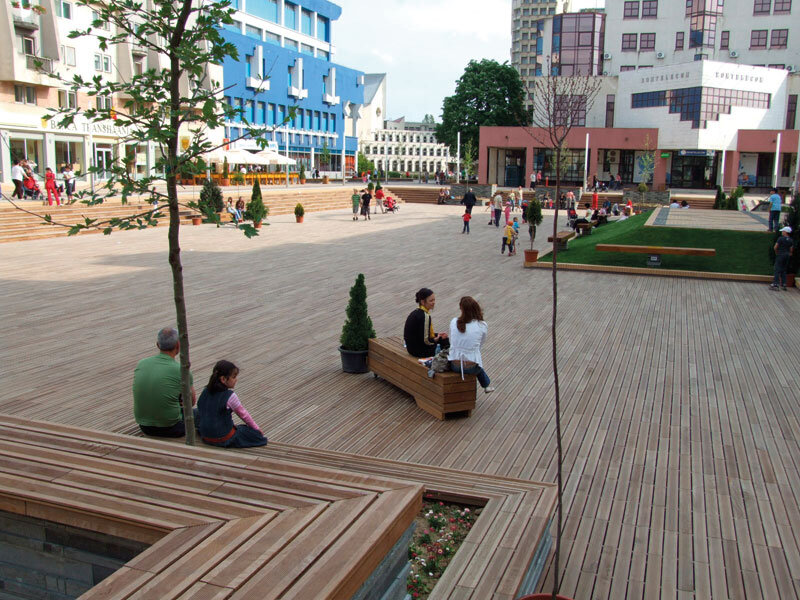
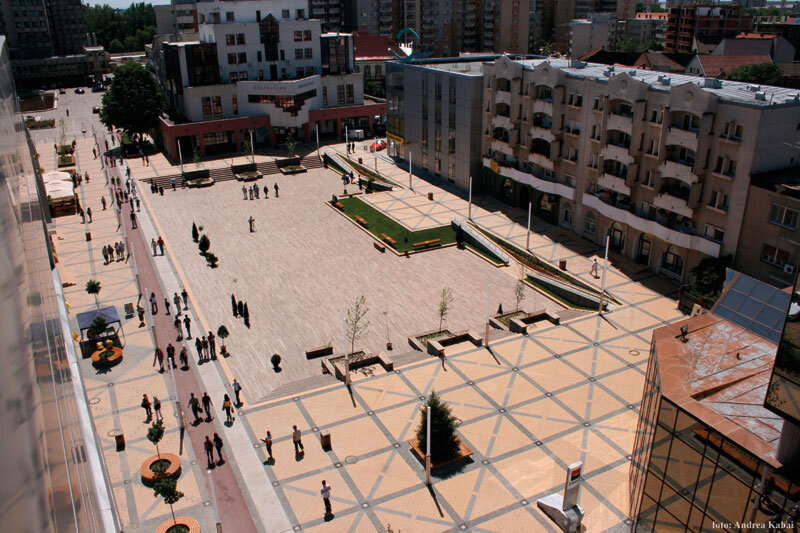
Often, only with more openness to people and less obsession with reinventing the fire, we manage to achieve configurations that bring direct joy and pleasant surprises to many people, including ourselves.
The goal set by our team for this project was quality urban space - familiar and novel at the same time, and the tactile rediscovery of space. Using quality natural materials (andesite, yellow klinker, ipe wood, oak, etc.), based on a clear regulatory path and a natural, balanced dose of street furniture, evening light, vegetation, we tried, by assembling them, "crafting" them together, to create a space for everyone. We hope that the result of our work will be perceived by the people of Sătmăren as a place where they feel at home, a place where they feel they belong to a community and where each generation can find itself in its own way. We are glad to see that this place is already being assimilated by the locals and used appropriately.
Location: Satu-Mare Civic Center Function: landscaped public space/pedestrian Design/Execution: 2005 - public competition launched by Satu Mare City Hall/finalized - 2008 Design team: Architecture: Horațiu Răcășan, Ion Andreca, Bakos Ferencz, Daniel Barna, Radu Roșca, Flaminiu Taloș, Emilia Țugui Landscape: Carmen Bărbat Installations: Instal DAS SRL - eng. Alexandra Stoica Resistance: SC Lamina SRL - eng. Dan Turda Layout: Anamaria Baciu, Benedek-Andir Teodora, Horațiu Dicoi, Cristian Hudrea, Radu Mărginean
Green facade
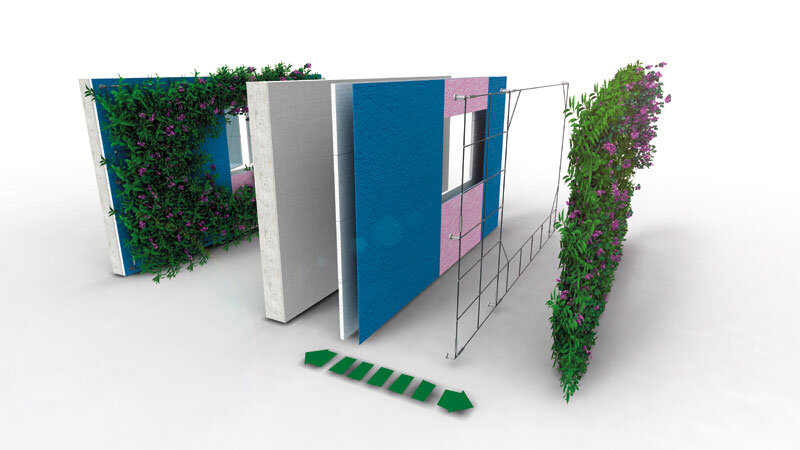
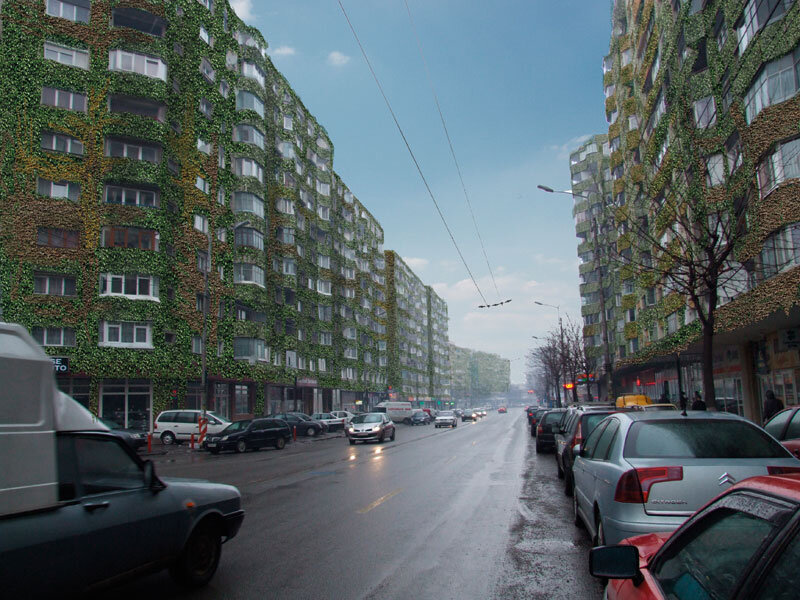
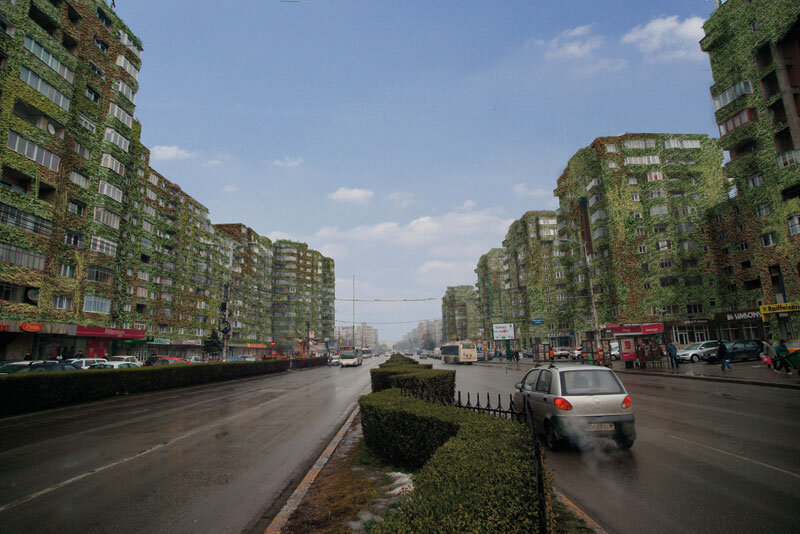
Covering the envelope of a building with a layer of vegetation + organic thermal insulation (compacted wool or hemp) has concrete and significant advantages in terms of thermal and sound insulation of the building, as well as prolonging the life of building elements exposed to the outside environment. By greening the facades, the system contributes to improving air quality, fixing carbon dioxide and releasing oxygen into the atmosphere, normalizing humidity, reducing ambient temperature, fixing dust.
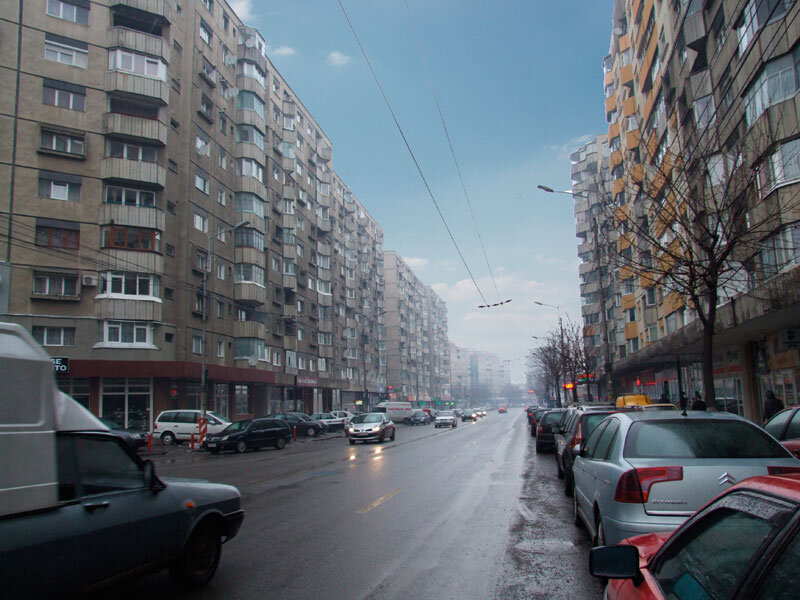
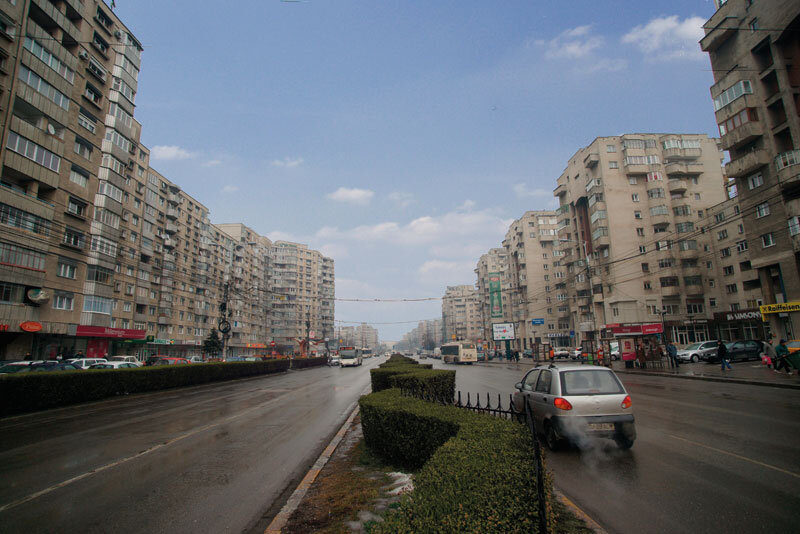
Calculations show that green facades + organic thermal insulation play an important role in increasing the energy performance of buildings, so that this new system can successfully replace the "polystyrene" of blocks at comparative prices. With green facades, dormitory districts made up of blocks and spaces without landmarks can aspire to an identity. Numerous combinations of different plants and flowers in varying proportions can be created for each individual block, as chosen by the residents, making it easier for them to identify with the place where they live and to participate in its upkeep and beautification.
It is important to know that the vegetated areas of a block of flats have a similar effect to an average-sized park.
Research on vegetated tires for housing blocks Study period: 2010-2012 Documentation/research/design team: Andrei Köves, Darius Mârț, Maria Stancu Visualizations: Vlad Moldovan, Melania Lipan Coordinator: Horațiu Răcășan
Read the full article in the special issue of ARHITECTURA magazine dedicated to Cluj