
Cluj / SKBD
The SKBD group professes an approach with a clear discourse. Materialized in architectural objects or in cultural concepts, the discourse clarifies and organizes the fragmentary and often contradictory thematic framework, preparing the leap towards the rarefied area of essential expression. The houses inspired by vernacular archetypes (the Dincă house) or the minimalist expression fueled by the arid actuality of the crisis (the Meda house) reveal a trenchantly asserted, recognizable accuracy. As explorers of prolific connections, SKBD operate with sensitivity and confidence in the realm of contemporary art. With an affectivity well tempered by the avatars of memory (at the Dumbrăveni museum) or with a poignant tragicomic expression (in the Grivei-take-away installation), the group charges tensions and then de-tenses through paradoxical, talc-filled resolutions. With the humor and vivacity of the reinvented Grivei, SKBD mark inventive territory in their own way.
Team: Tiberiu Bucșa, Ioana Pagu, Kim Attila, Adriana Diaconu Year established: 2006 Address: 18 Tipografiei Street, Cluj-Napoca Contact: office@skbd.ro / www.skbd.ro
Armenian Community Museum
Playful and spicy, SKBD's approach goes to the essence on the right path. Nurtured from the source, their projects grow naturally and vigorously, transforming diffuse data of reality into attitudes and ideas with maximum impact.
CONTEXT/PREMISES:
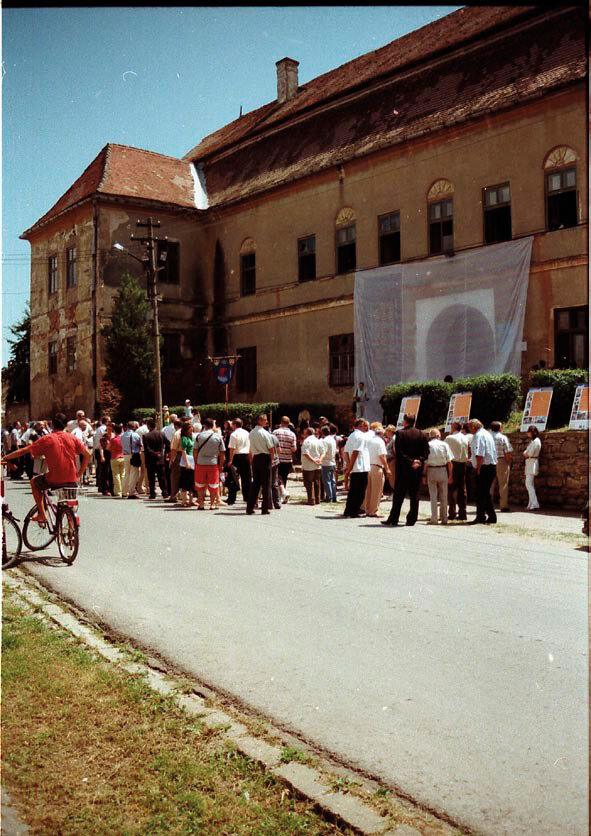
The National Network of Museums in Romania concessions the Appafy Castle in Dumbrăveni from the local administration to start a public-private partnership project.
The long-term aim is the full rehabilitation of the building and the development of a "project incubator" on minority issues, thus providing a boost for the development of the local community.
Phase 1 - current - involves two phases: the rehabilitation of the entrance space and the first three rooms (project realized and executed by Transylvania Trust) and the start-up of an exhibition in this space (project presented).
Thematic data: 12 exhibits - first donations from locals; three screens - database with interactive applications corresponding to the three thematic rooms: history/private life/religion.
CONCEPT:
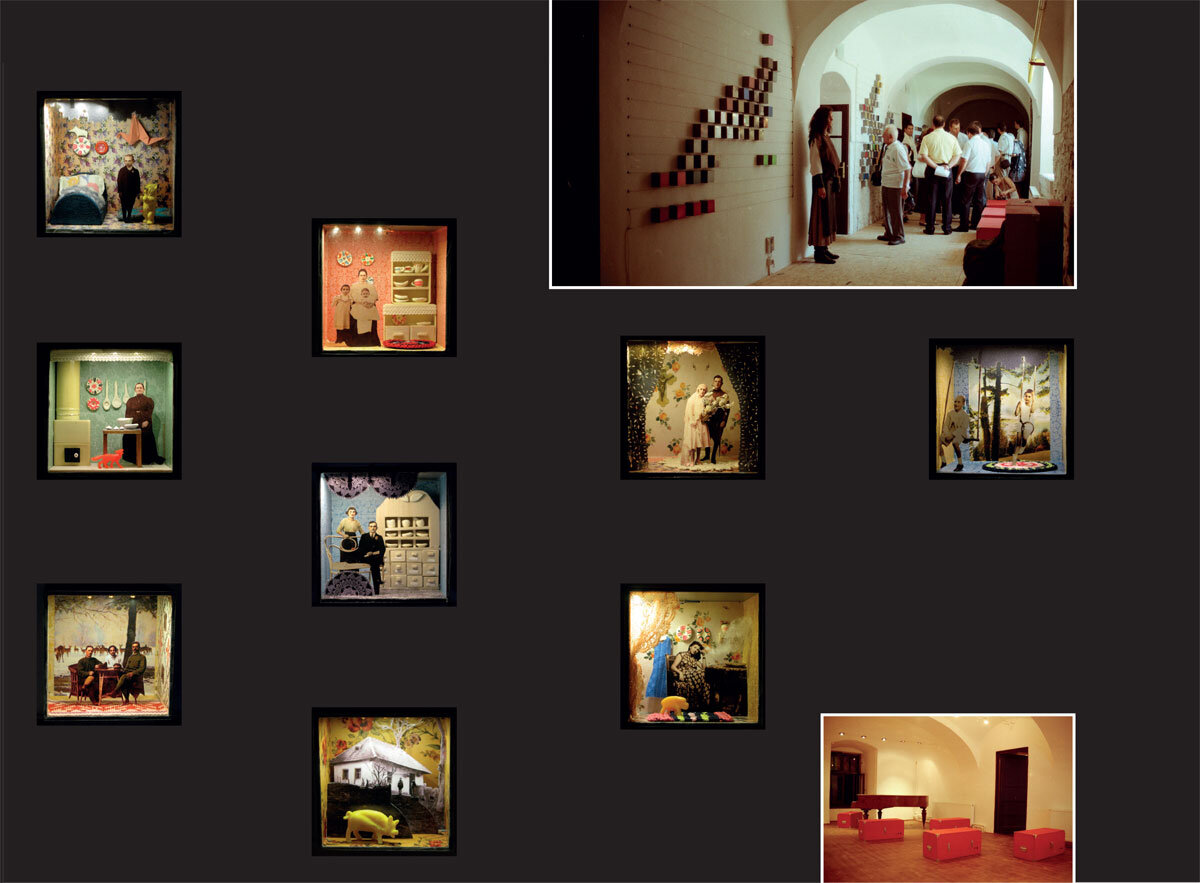
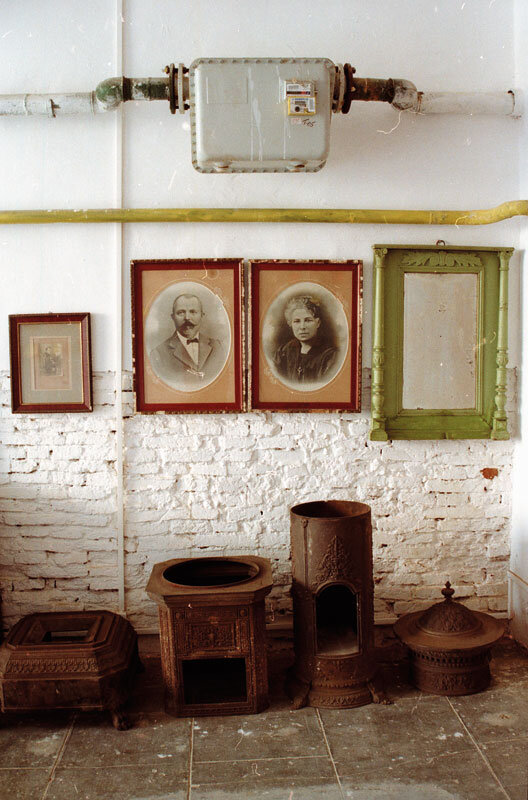
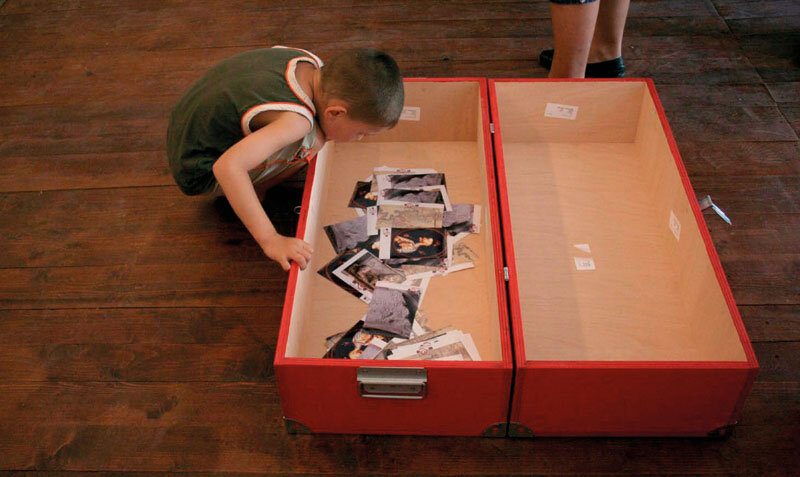
Tier 1: simulation of the provisional state - boxes/chests, symbol of migration and pilot-stage of the collection. The boxes become a container for exhibits and displays, a substitute for objects of furniture (chair, reception table) or an invitation to explore. They can contain photographs and postcards for visitors to take away as souvenirs.
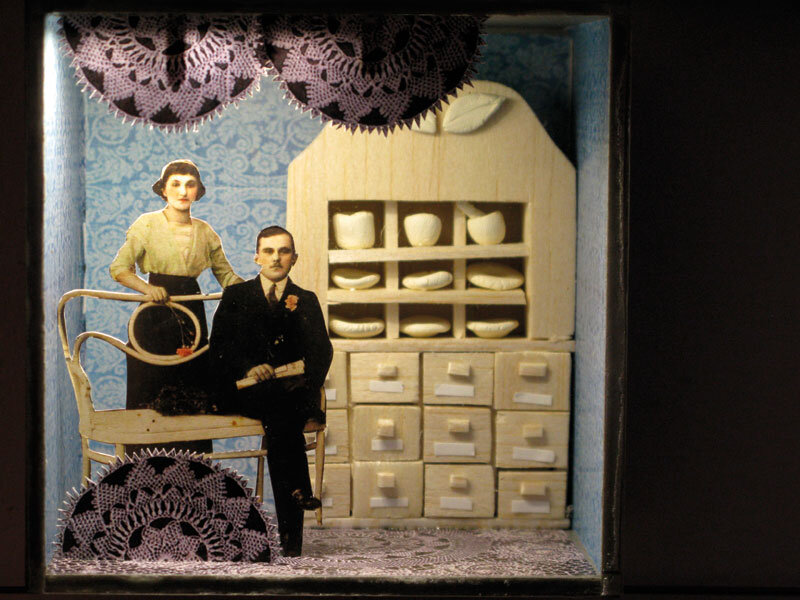
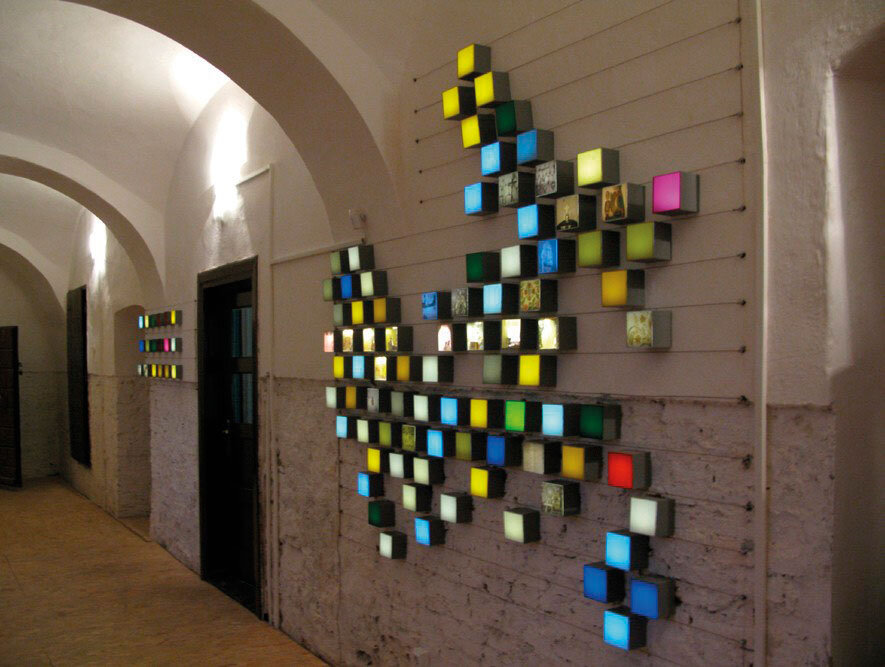
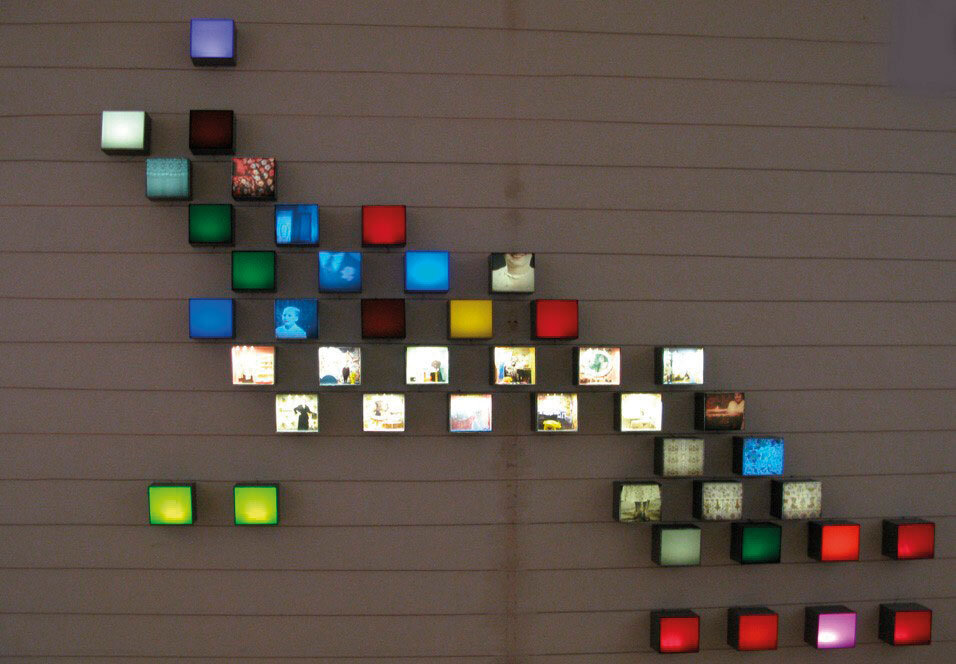
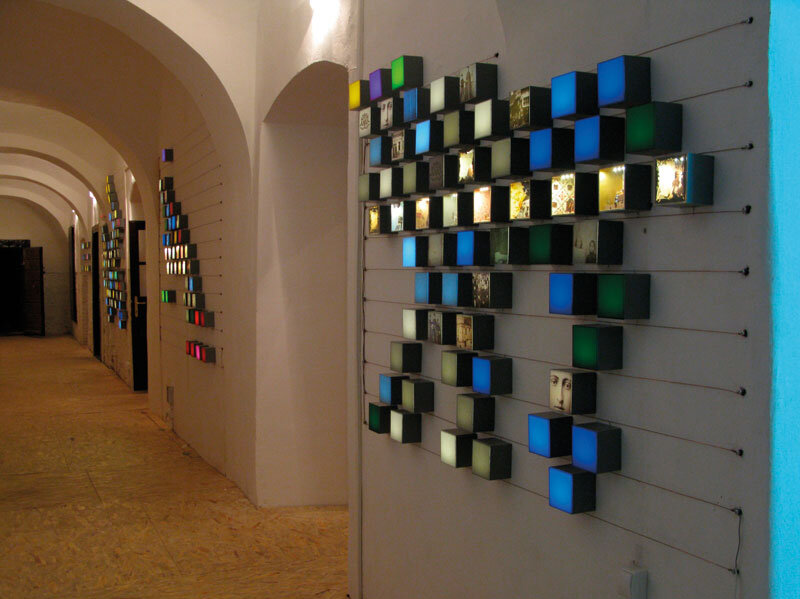
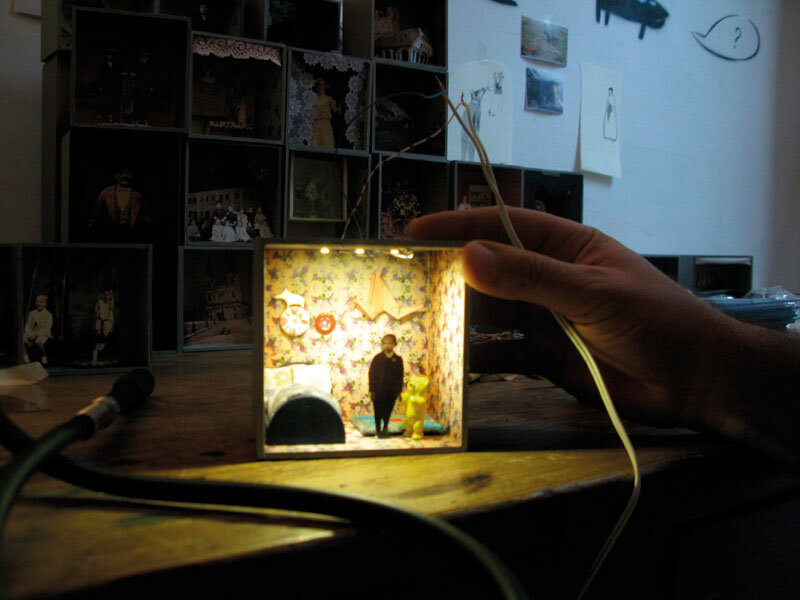
Tier 2: the memory boxes, the interface between the reception space and the exhibition halls becomes an installation of luminous boxes offering a window into memory, a playful collage, a sensitive exploration of the past.
Level 3: the rooms - symbol-space/virtual space. Each contains an object from the collection and a screen. Invites to information/recollection.
Location: Dumbrăveni Function: exhibition space Project/execution: 2010 / 2010 Team: Ana Botezatu, Tiberiu Bucșa, Elena Stoian, Ruxandra Berinde Landscaped area: 245 sq.m
Dincă House
Context/Premises:
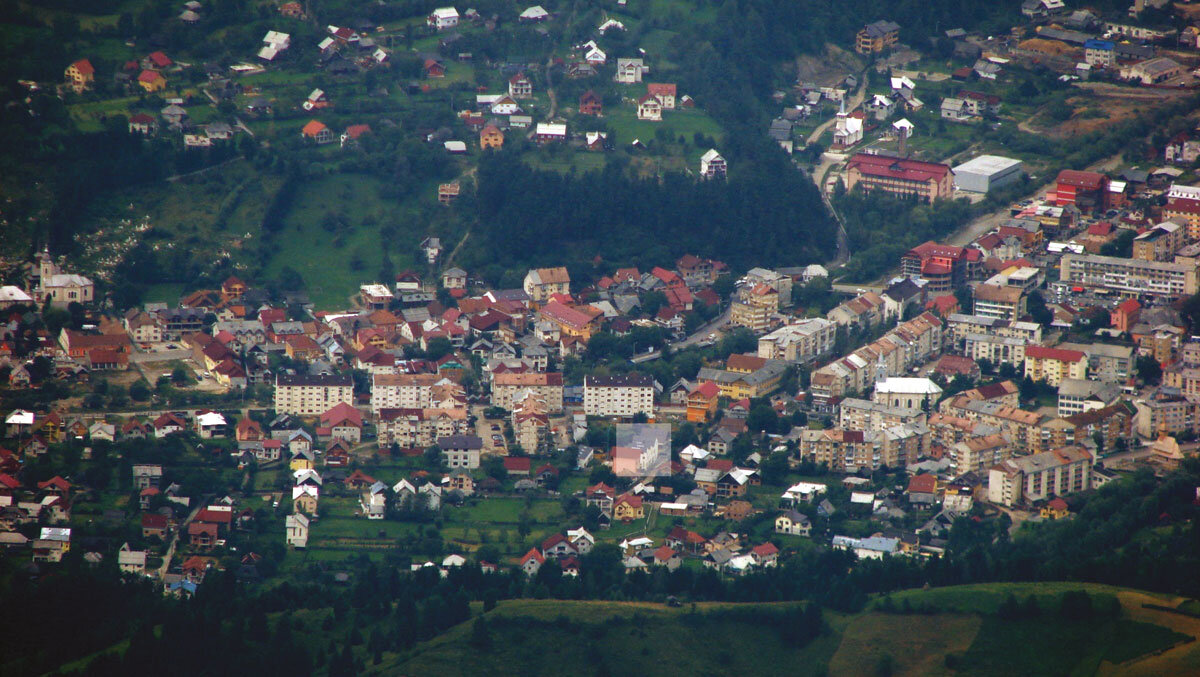
Borșa is a town in the north of the country, covering an area of about 47,000 ha and with a population of about 30,000 inhabitants, half of which are active in the European labor market.
The economic prosperity of recent years has been reflected in an increase in the number of "representative" buildings (individual dwellings, hostels, services), mainly in the "central" area (which provides the best visibility).
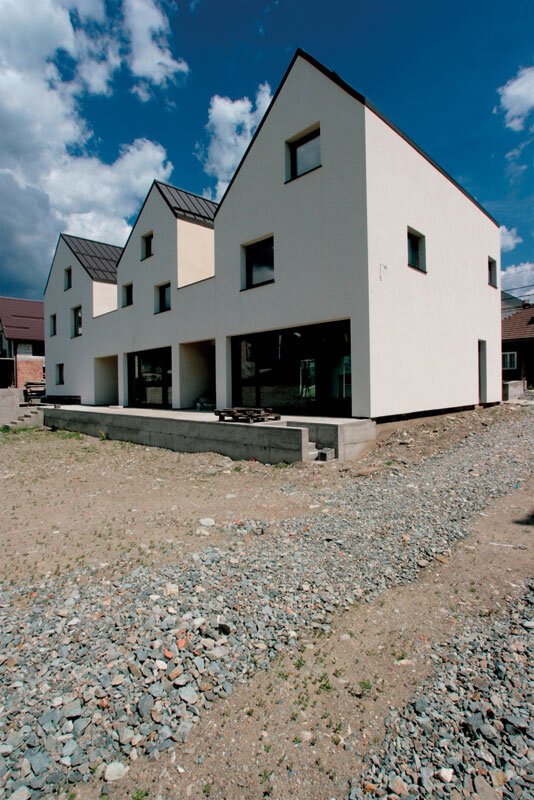
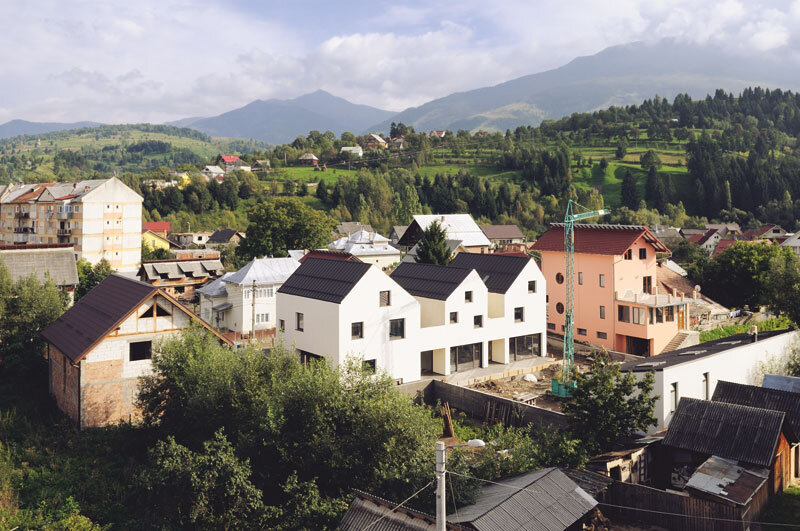
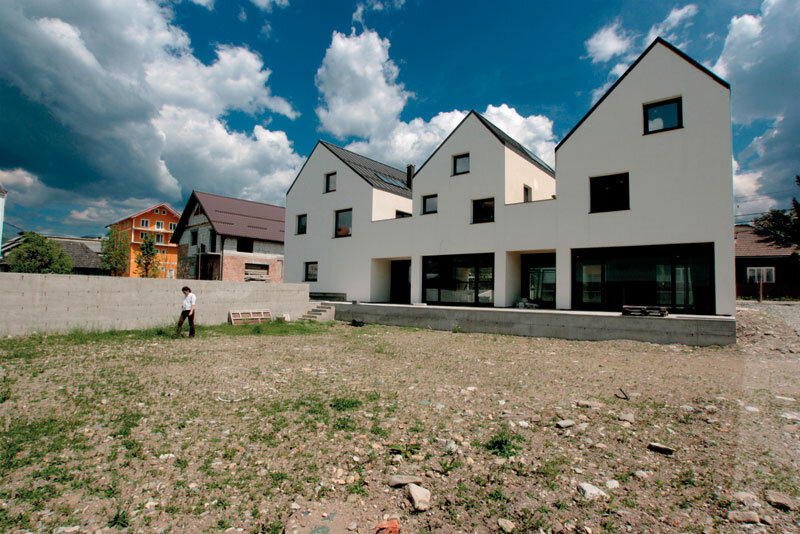
The project beneficiaries acquire three lots at kilometer 0 of the city. The land has a total area of about 1,200 square meters and is adjacent to rural dwellings, recently built villas and apartment blocks from the 80s. On these lots it is intended to build a house that should meet the functional and image needs of the beneficiary and his family.
Concept:
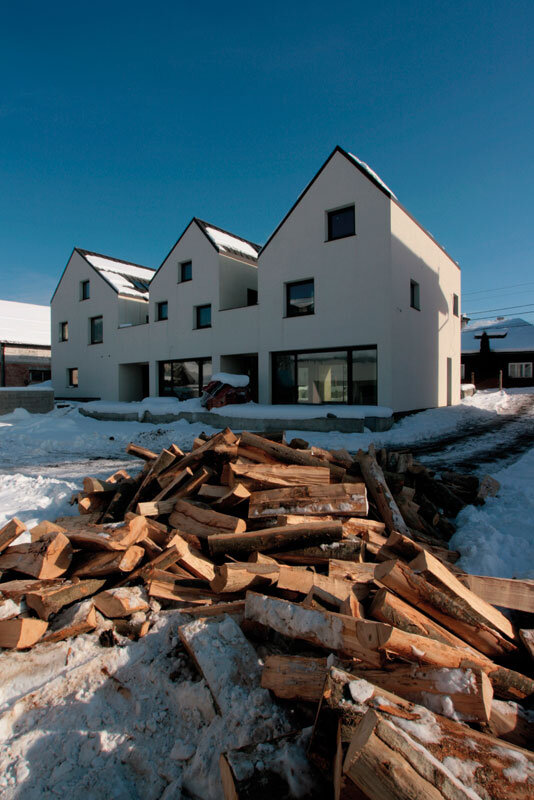
The solution speculates the existence of the three lots and mediates between the attachment to the traditional house image, the desire for "modernity" and the gauge derived from the theme. The house is developed along the street, with a repetitive layout (3-in-1), and the annex delimits a private courtyard, enclosing the lot on the rear boundary.
Location: Borșa, Maramureș County Function: 3-family dwelling Project team Architecture: Tiberiu Bucșa, Ioana Pagu, Ruxandra Berinde, Lucian Suvaina, Kim Attila, Adriana Diaconu Structure: Total Project Group / Csiki Laszlo Installations: Instal utilities / Kiss Cristian, Florin Popă Design/Execution: 2009 / 2010 Built area/built area: 264 sqm/684 sqm
Grivei - take-away installation
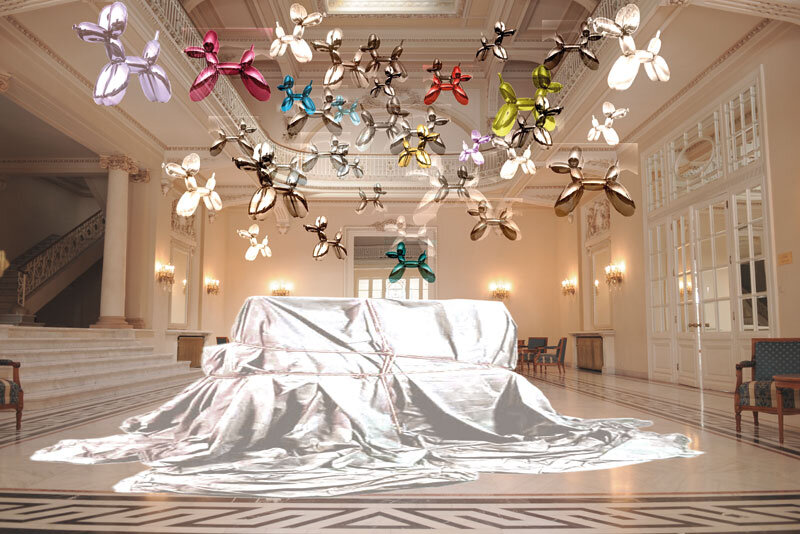
The festive moment of the OAR Ball has become, in recent years, an opportunity to convey a message to society. In 2011 the message was about the management of public space. The organizer of the event proposes a competition with invited guests for the design of the architects' ball. The event hosts 350 participants from 22 OHR branches, who party, debate and then return home carrying the message of the action: managing public space requires taking a stand.
Opportunities: Support - the possibility to spread the message through the participants; Impetus - the prom gift becomes a stimulus for taking action in the public space.
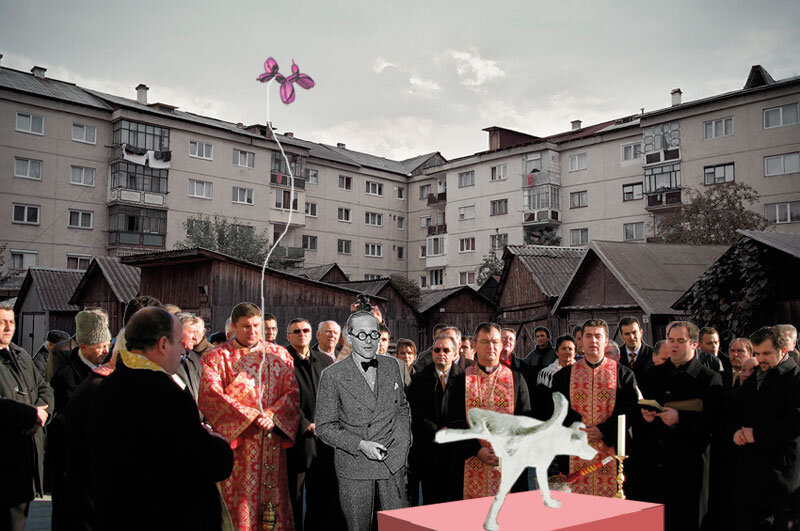
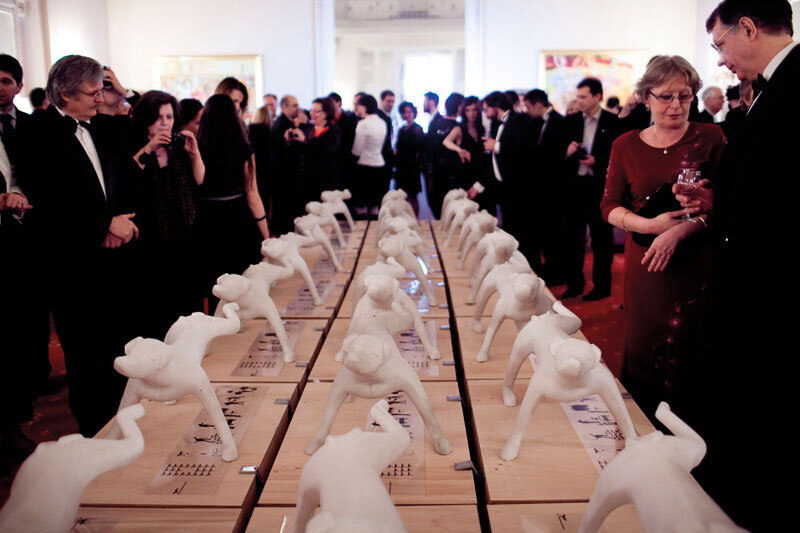
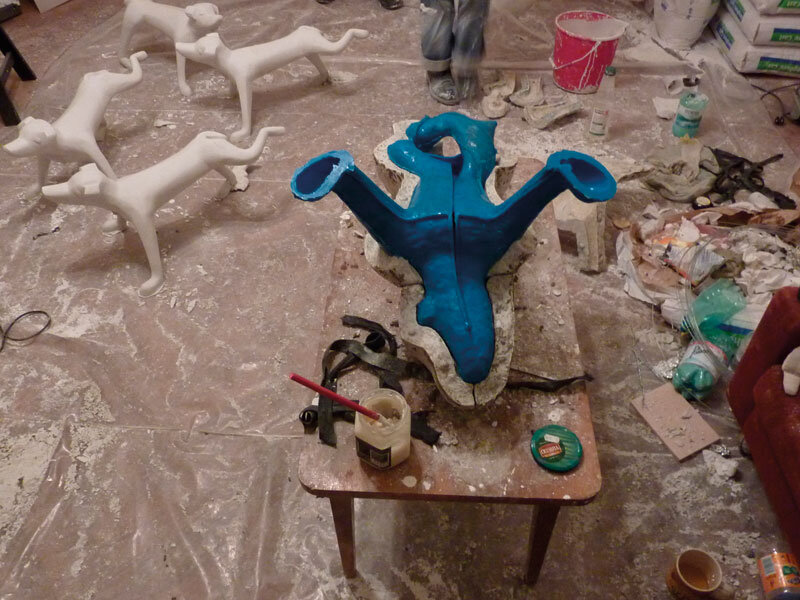
Strategy: The foyer of the Sinaia Casino is decorated with a take-away installation, which presents 22 plaster statues and 350 balloons to the ball guests. Each puppy will be adopted by an OAR branch; each balloon will leave with a participant. The event both seduces and solicits. Each branch identifies a public space, undertakes to rehabilitate it and give it back to the community following a competition of ideas. The festive moment marked by the "temporary monumental" brings together in spirit the guild, the administration, the press and the community, sensitized to the aim of reappropriating the public space.
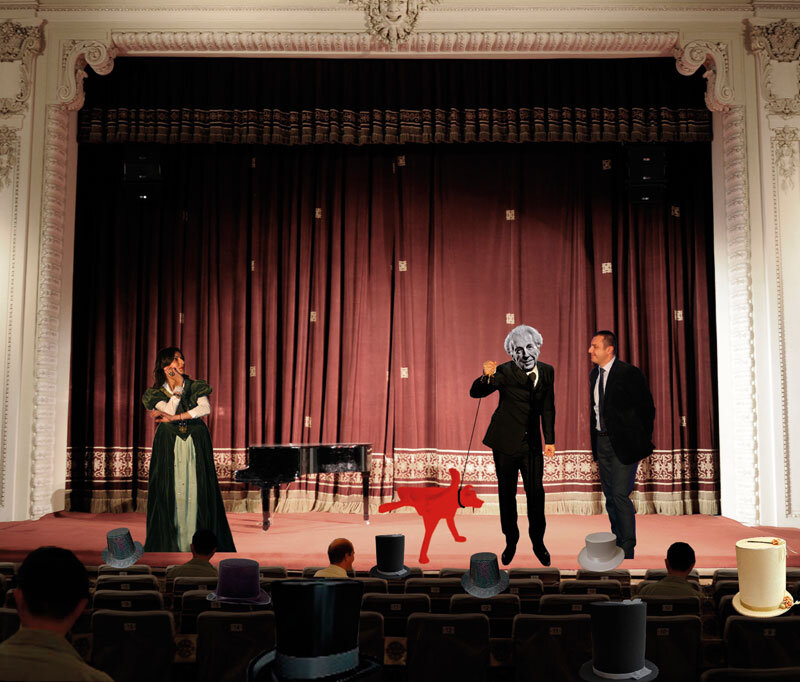
Significance of the object created: the physical form of the message - a stray dog made of plaster - has two connotations: on the one hand, it refers to the idea of the maidan (the quality of residual space that the public domain often has in our society), and on the other, through its gesture, it formulates a powerful and constructive concept of marking a territory.
Location: Sinaia/Cazinou Sinaia Function: Temporary arrangement/installation Team: Tiberiu Bucșa, Ioana Pagu, Ana Botezatu Collaborators: Kohl, Ana Bota, Arpad Debreczeni Project/Execution: 2011/2011
Read the full article in the special issue of ARHITECTURA magazine dedicated to Cluj