Lazarus House
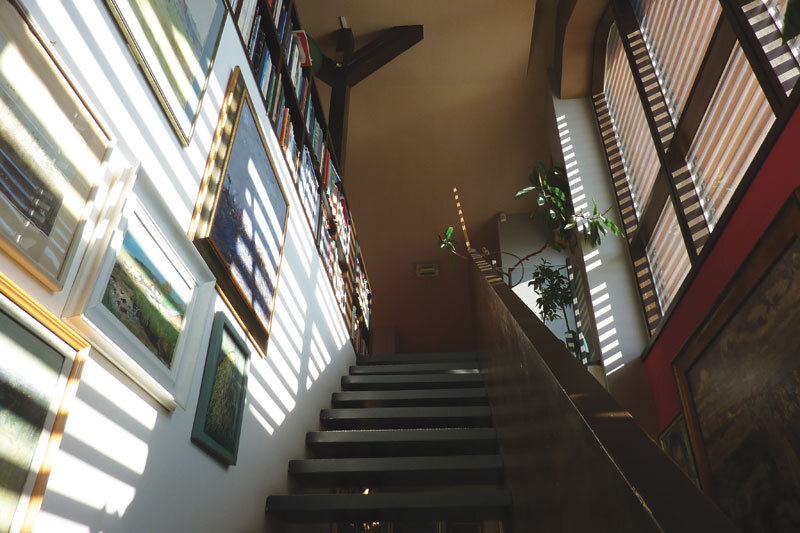
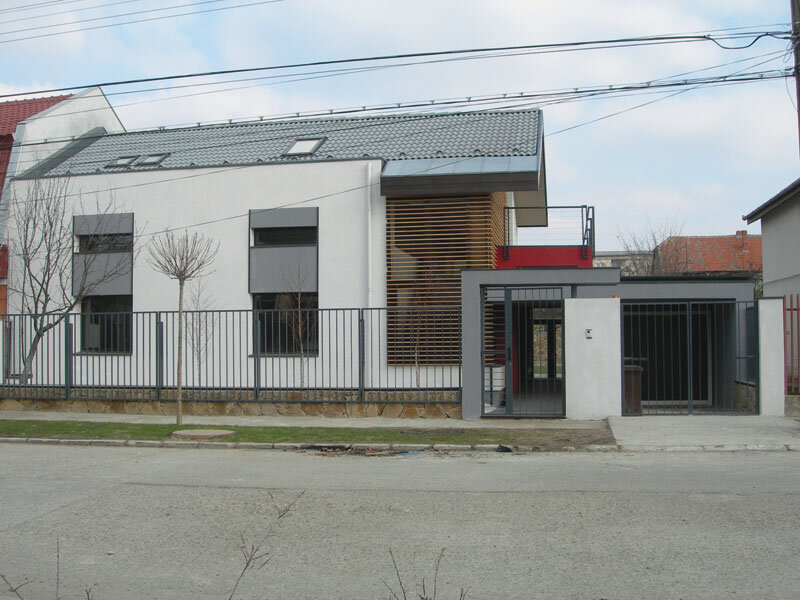
Just a few years before the start of the alteration works at Lazarus House (2004-2005), on the same street and only a few lots away, the Herczeg House was completed. The shock wave of this approach, in terms of infusing architectural quality into an existing banal building, was strongly received by the beneficiary, who consequently wanted a house 'just like this'. The final result, however, attempts a detachment from the original model, retaining only certain stylistic resonances, designed to pick up the generating wave and pass it on to future interventions in the area, in the sense of a possible unified development. The echoes are still to come.
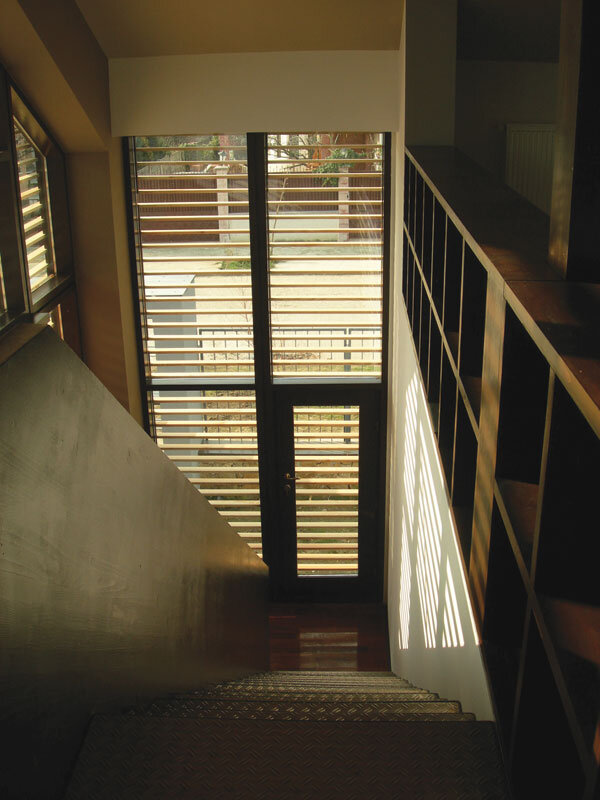
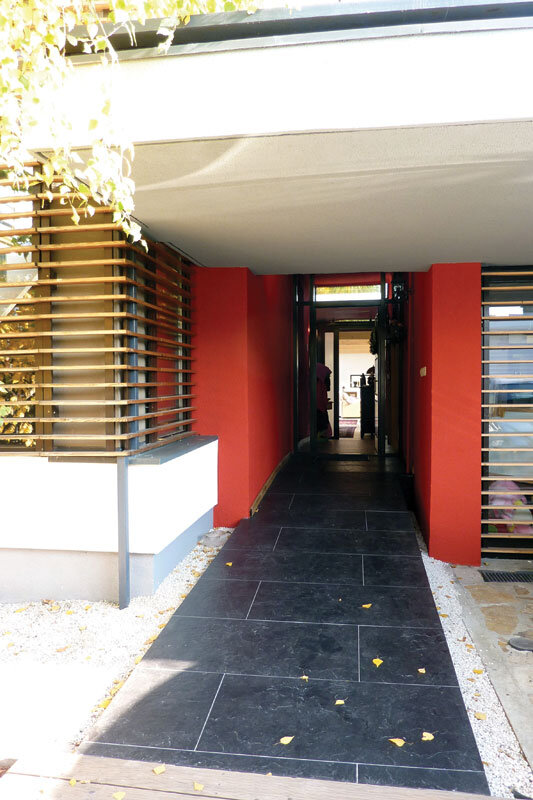
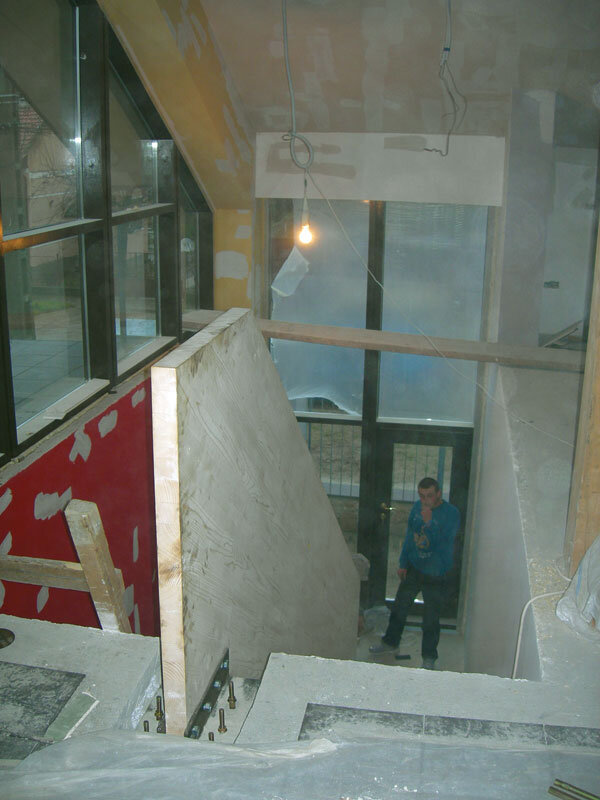
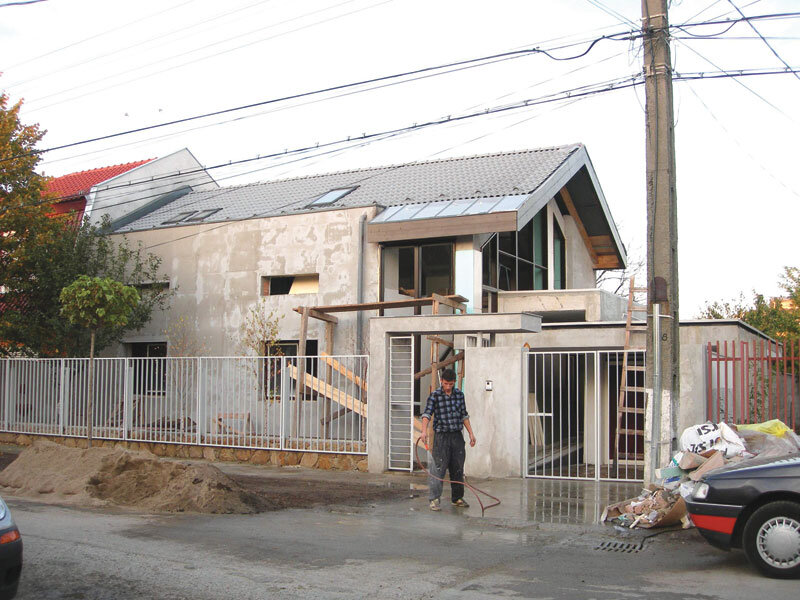
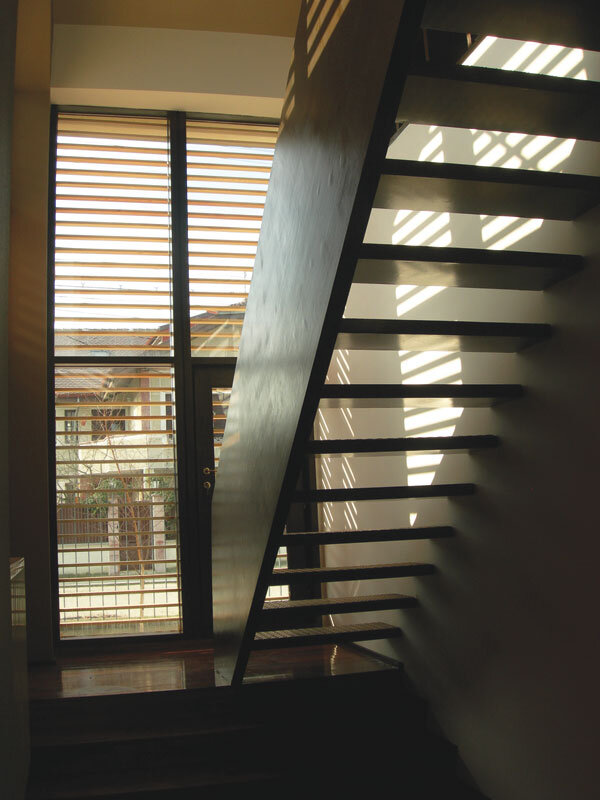
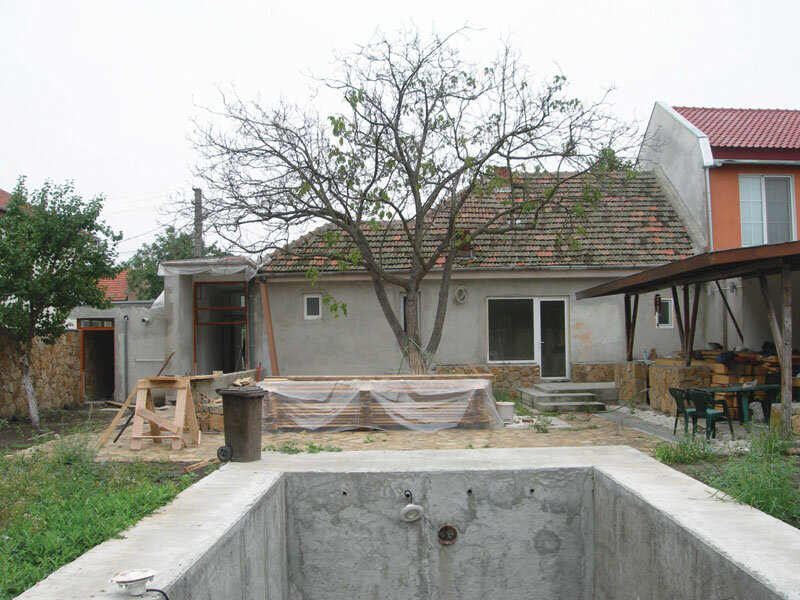
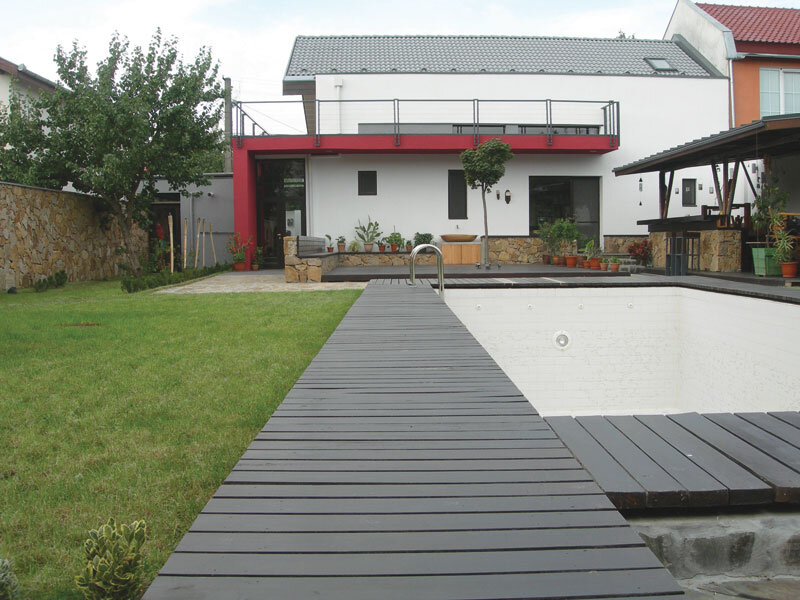
The existing ground-floor house on the site has been preserved up to the roof level. In the original spaces - two large rooms facing the street and three outbuildings facing the courtyard - the night area has been converted. The entrance hall, attached to the side of the house, was supplemented with vertical circulation space, thus closing in the rectangular outline of the house. The existing attic has been dismantled and the newly built attic has been converted into a generous, glazed, south-facing, living area. An additional garage and driveway were
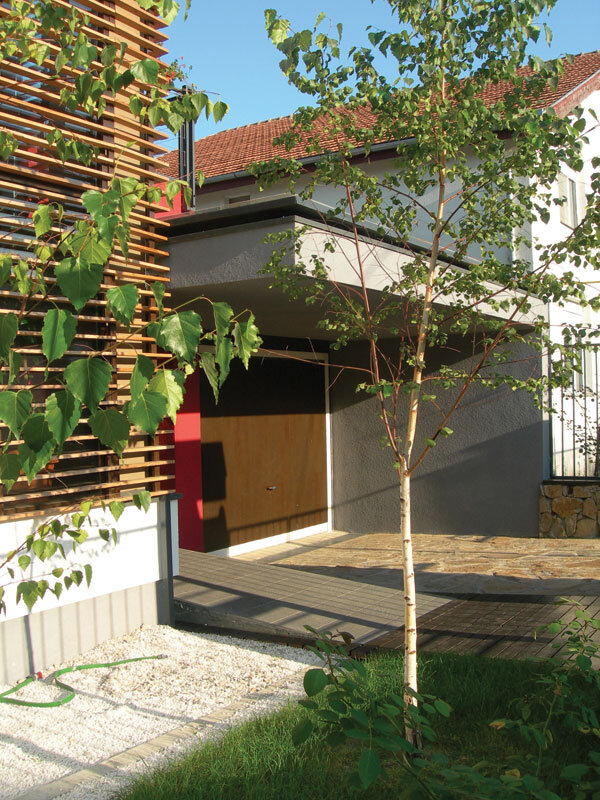
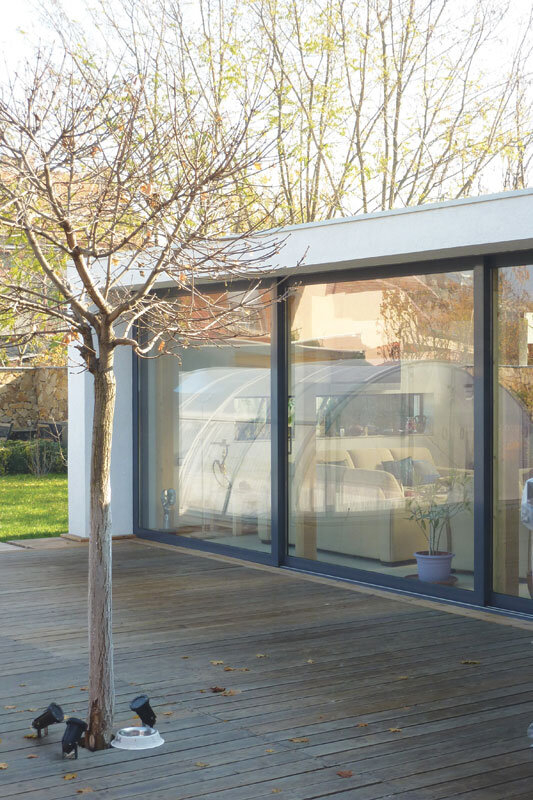
were included in the architectural composition, enclosing the entire width of the site. A wooden outbuilding was re-landscaped as a covered garden bar, a terrace and a de-covered swimming pool were placed behind the house, in the axis marked by a walnut tree that was intended as the compositional center of interest, but did not survive the site works. The back courtyard was conceived as an outdoor living room, an intimate relaxation space away from the hustle and bustle of the city.
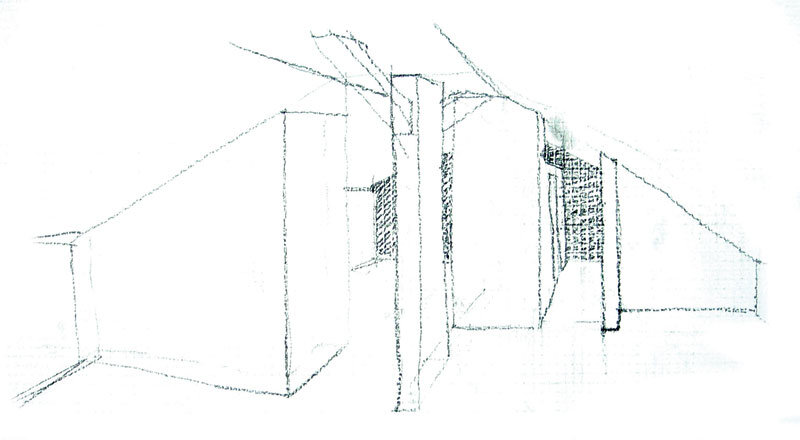
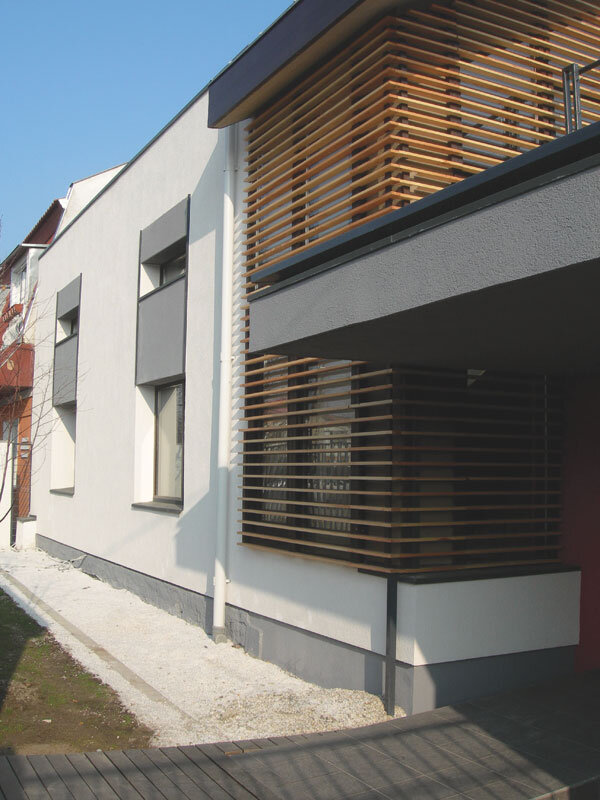
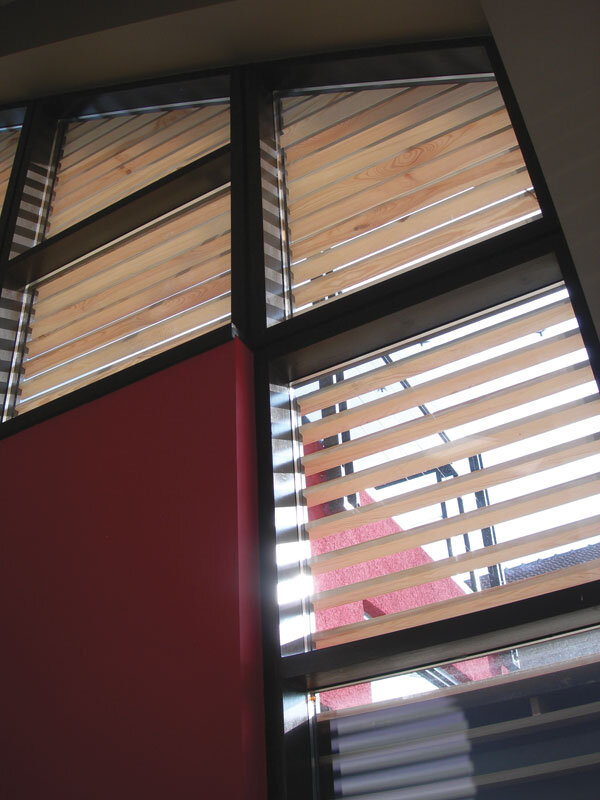
The elements assembled on the original dull and exclusively structural construction, paradoxically preserved unchanged even at the level of the voids in the facades, operate in the sense of dematerializing the existing background and opening it to the outside. The existing windows are taken over and compositionally integrated with those of the attic. The exterior walls of the ground floor are transformed into vertical planes and slide along the roof. The roof, in turn, is detached from the whole and extends above the access body, which is transformed volumetrically into the rear terrace at the attic level. The flat roof of the garage hovers over the entrance area. At the level of the rear courtyard, the landscaping of the garden finally takes up the vertical composition of the facades and dissipates it into the landscape. The materials used oscillate between the natural component of the courtyard, where natural stone was used for the fencing and paving, wood for the decking and bar, water and vegetation, and the artificial component of the house, treated in a dialog between white and gray, mediated by a deep red body or by the wooden trim to shade the newly added glazed areas.
Considered completed when the work was completed in 2005, the building underwent a second transformation in 2010 due to the need for additional living space for the beneficiary's new family situation.
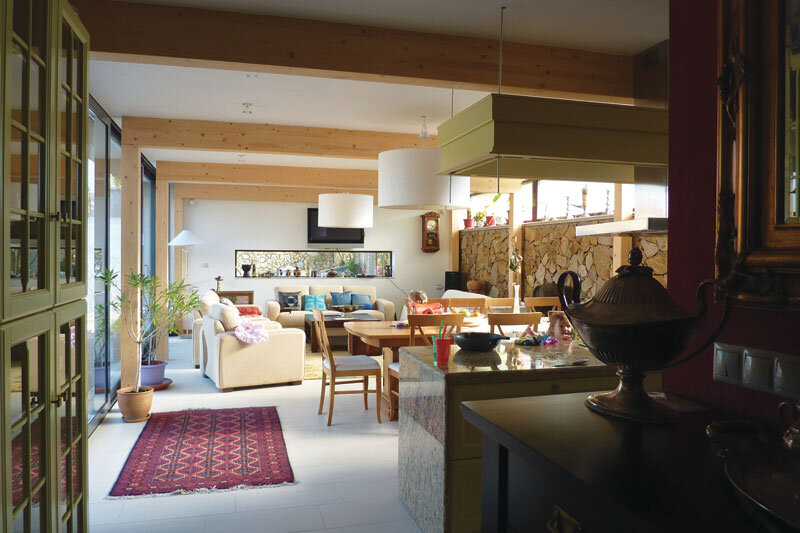
As a result, the design, which was not designed to allow for further development, was rethought, the living space at the attic level was converted into a second bedroom area and the living room with the generous kitchen was moved into a new building created in the garden.
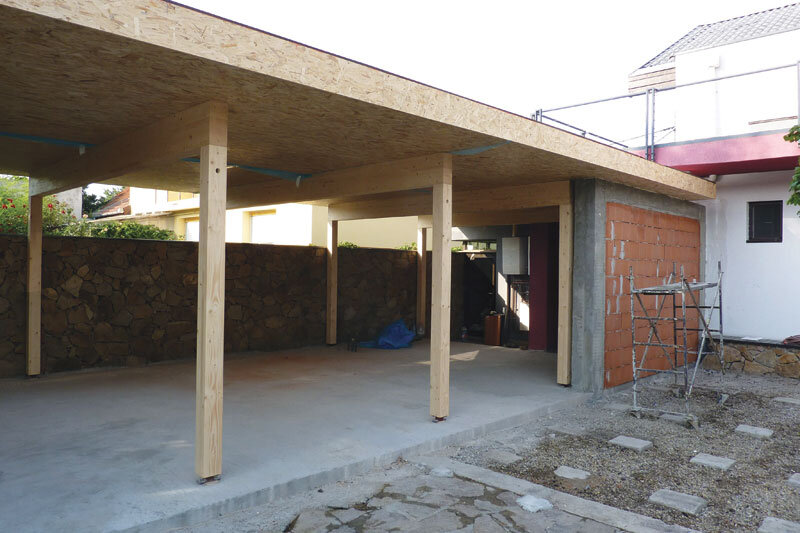
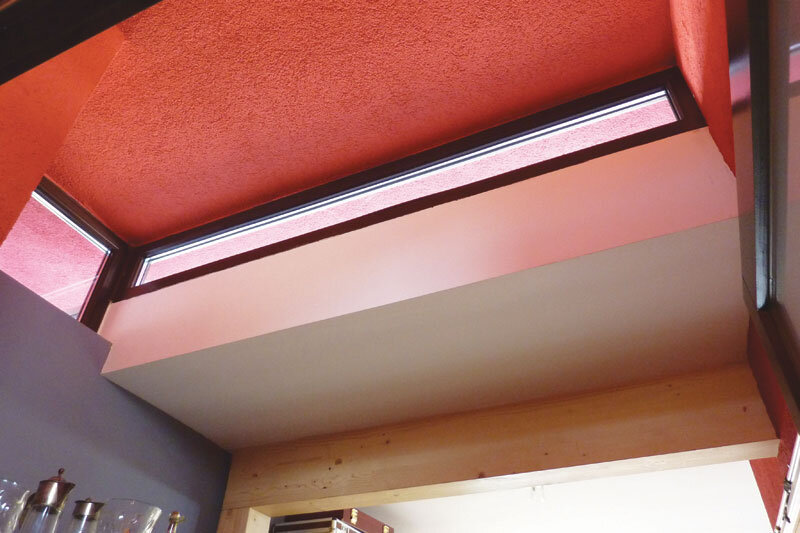
The location of the resulting second extension was set in the continuation of the access axis into the building, on the right property boundary, opposite the open-air bar and joined to it by a wood-panelled platform, resulting from some repair work to the finishes, which did not respect the original composition of the exterior terraces, but which was reintegrated into the ensemble by the new intervention. The same formal language used in the first phase of the transformation can be seen in the L-shape of the white wall-floor assembly, which rests on the layered timber frames, hovers over the other vertical enclosing planes or extends below the attic terrace slab. The stone wall, which was part of the existing fence, has been incorporated into the interior space and has been detached from the roof slab by means of a skylight along its full length. Continuing the texture of the exterior fence which it retains unchanged, it extends into the landscaping of the interior space, incorporating the proposed extension into the original composition.
Authors: arh. Constantin Șelariu, arh. Daradics Nandor - phase 1 arh. Constantin Șelariu - phase 2Structure: eng. Rodica Țunea - phase 1, Tehnica Schweiz - phase 2Project: Caius Lazăr Fulger House, attic and extensionDesign: 2003 - phase 1, 2010 - phase 2Construction: 2004-2005, 2010Office: Constantin Șelariu Individual Architectural Office Daradics Nandor Individual Architectural OfficeArea: 240 sqm - phase 1, 300 sqm - phase 2Original area: 95 sqm
Photos: Constantin Șelariu