Moldova / Cité de la musique - Lisbon, Portugal
stud.-arh. Denis Andreea Roman | tutor: prof. univ. dr. arh. Virgiliu Onofrei
The site is located on the right bank of the Tejo River, near the Belem area, a city nucleus in a former fishing area of Lisbon, nowadays disused. The location has a number of unique values in Lisbon, due to its openness to the ocean, being the area from which Henry the Navigator, Vasco da Gama and other Portuguese pioneers set out to explore the unknown.
The area was developed to meet the demands of the maritime function. Subsequently, the Portuguese Maritime School, the Operational Directorate of the Pedroucos Area, the General Directorate of the Ministry of the Navy, the Secondary School of Belem and Alges were built. The construction of the Champalimaud Research Center is the starting point of the urban redevelopment. A series of studies have been carried out to generate structuring ideas for the development of the area.
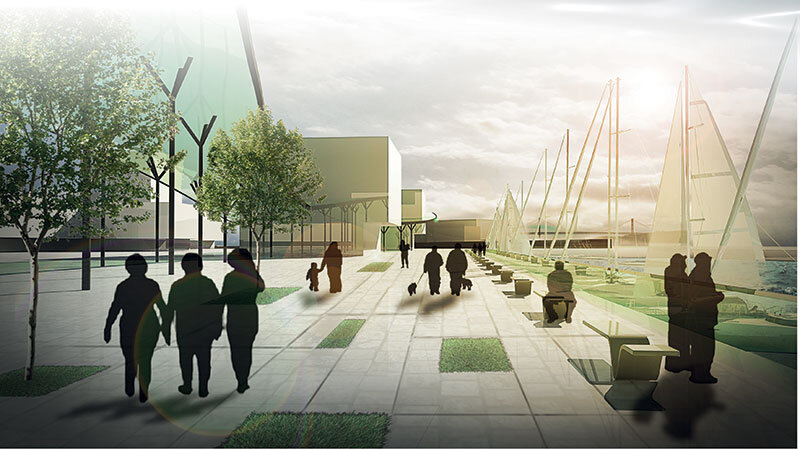
The proposed project aims to open up this area, which until now has been inaccessible to citizens, and transform it into a major public area equipped with programs to enhance the dialogue between the city and the river. The success of the urban redevelopment of the Oriente area through the construction of Expo '98 has confirmed the direction that the authorities need to take with regard to the former port areas. The strategy for the area aims
- Lisbon's international affirmation;
- enhancing Lisbon's identity as a multicultural city;
- sustainability.
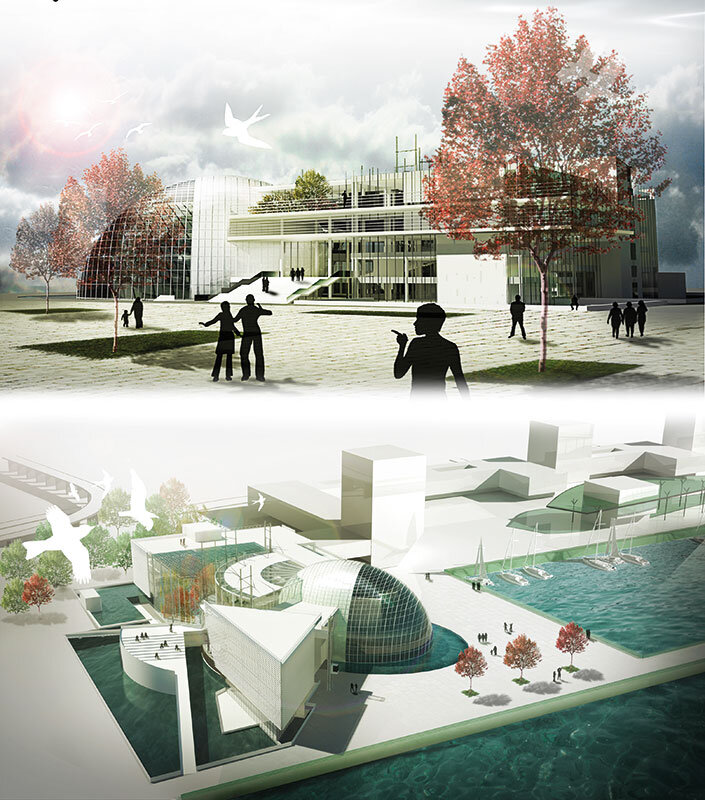
The urban planning approach of the area sought to relate the proposal to the existing fabric and to open the whole area to the river, in order to create a public space related to the water. The relationship with the city was made whole, the pedestrian route starting from the 25 April Bridge with Cidade da Música square as its terminus.
From the volumetric point of view we have emphasized the square that connects with the science center and the square that develops in connection with Cidade da Música. The route maintains constant contact with the energy and dynamics of the water.
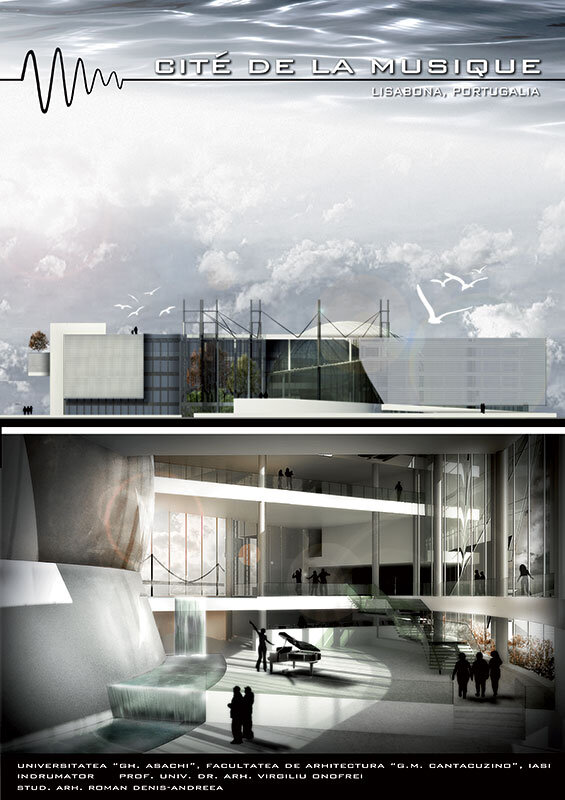
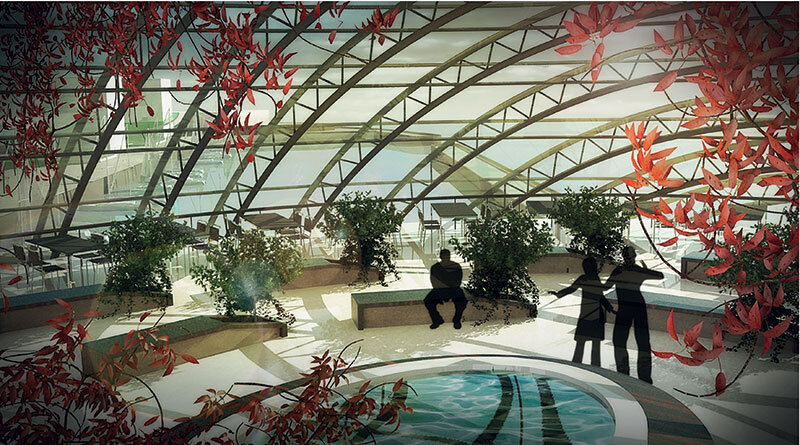
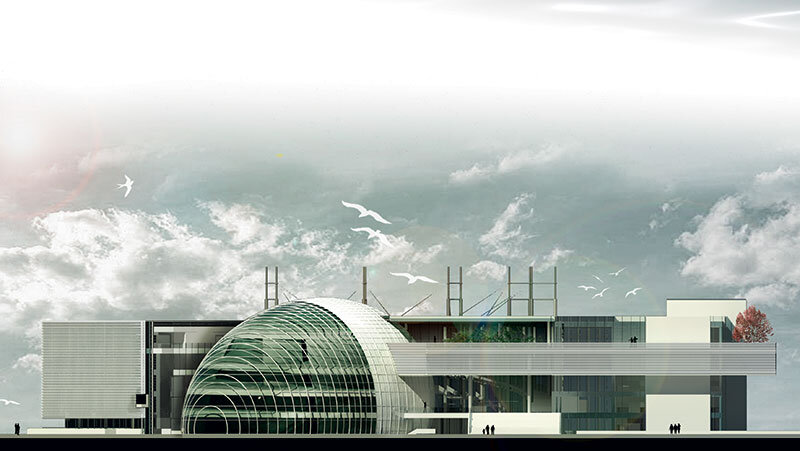
The ensemble is composed according to the main directions of the site towards the city, the river and the ocean. The solution is intended to be an open gateway to the world, which, through sound and music, connects the city of Lisbon with the other cultural centers of the world.
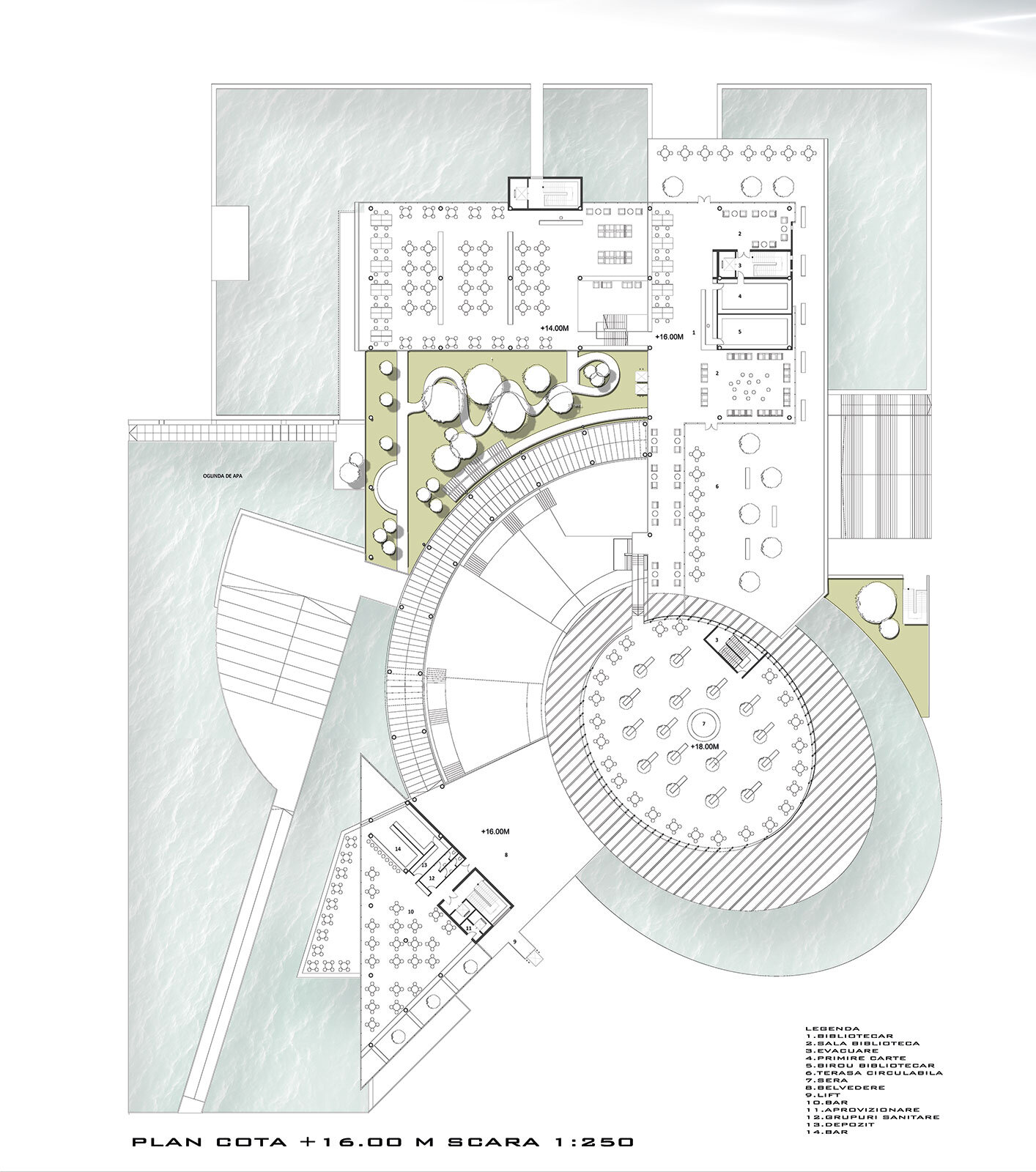
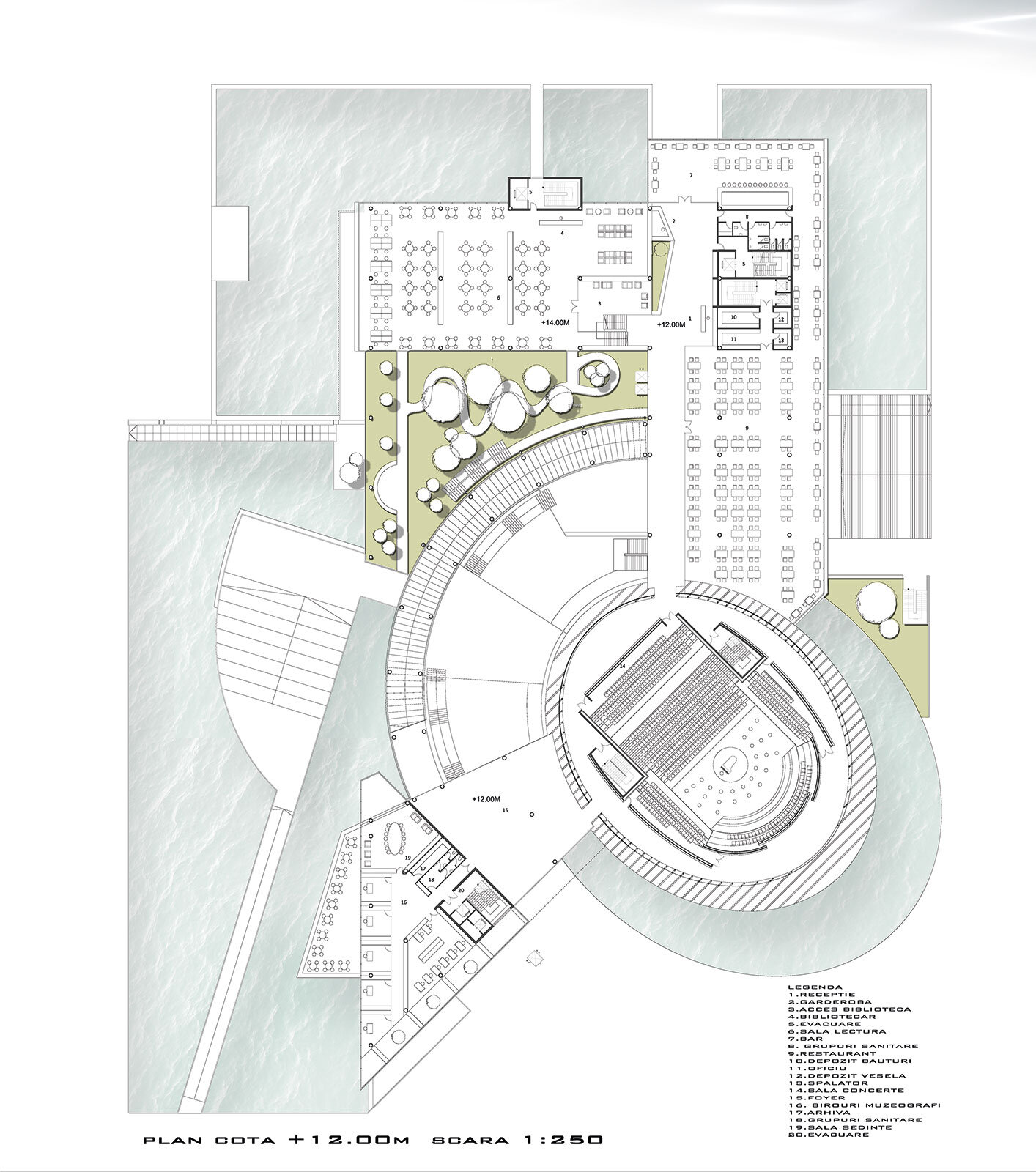
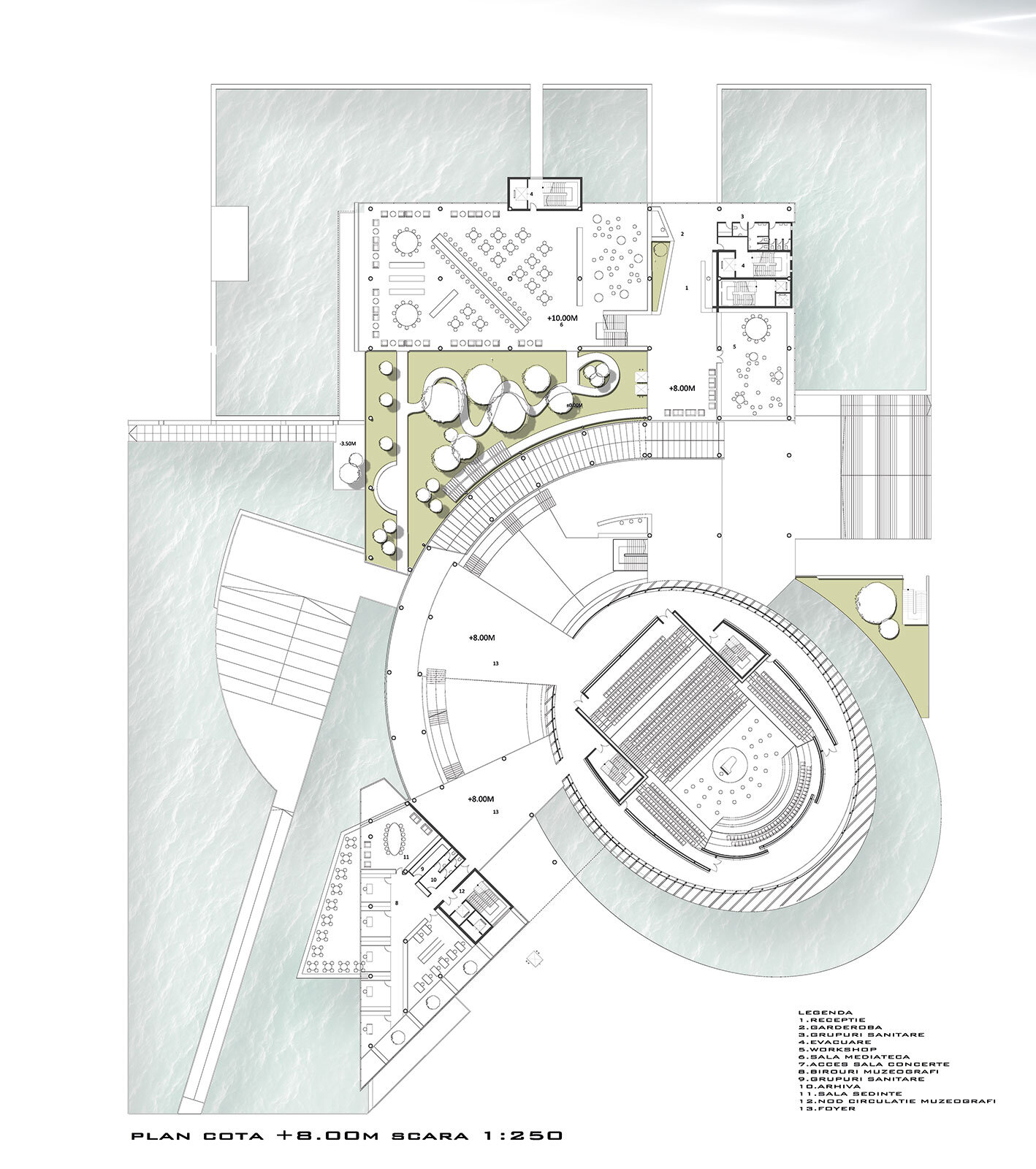
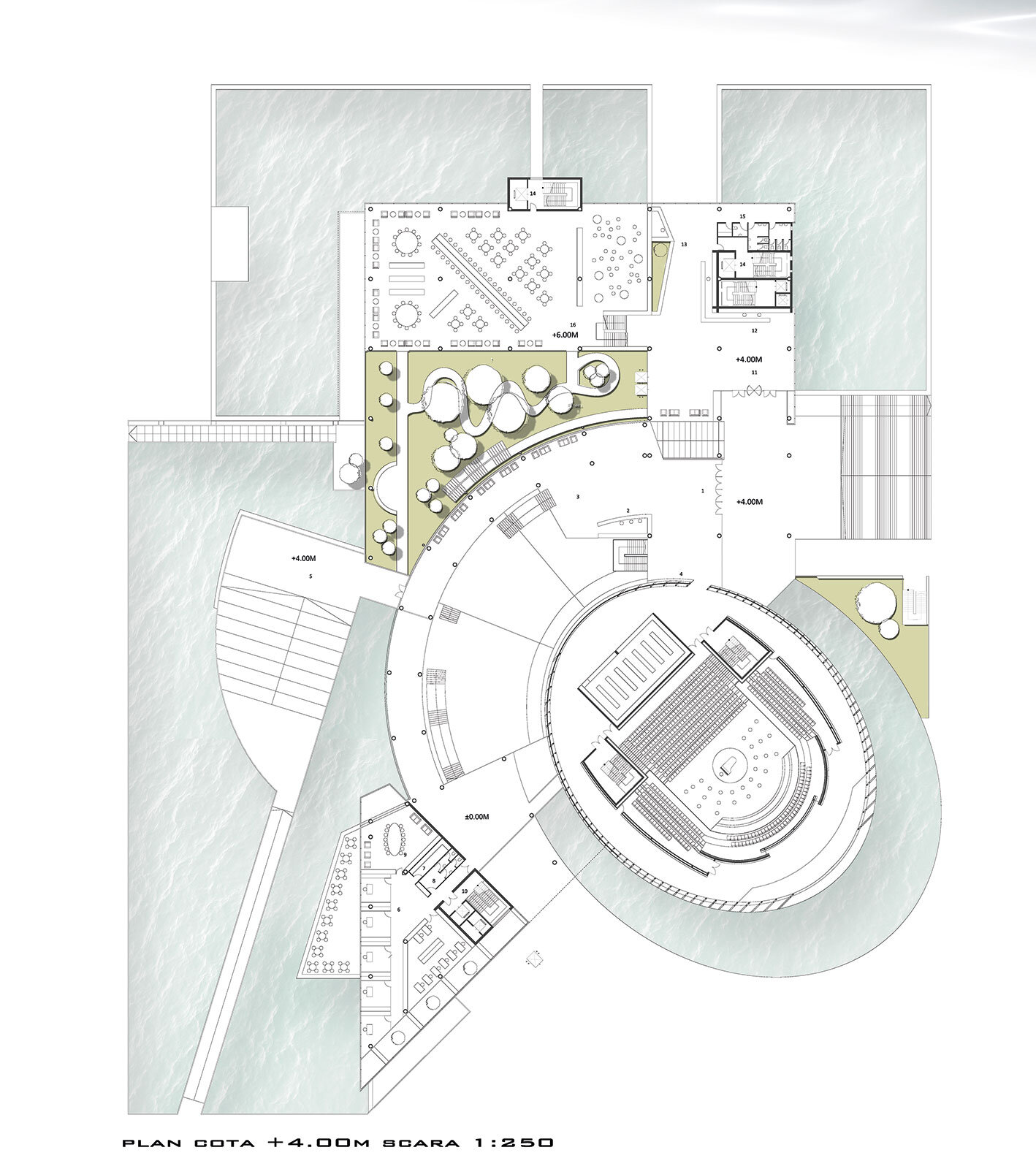
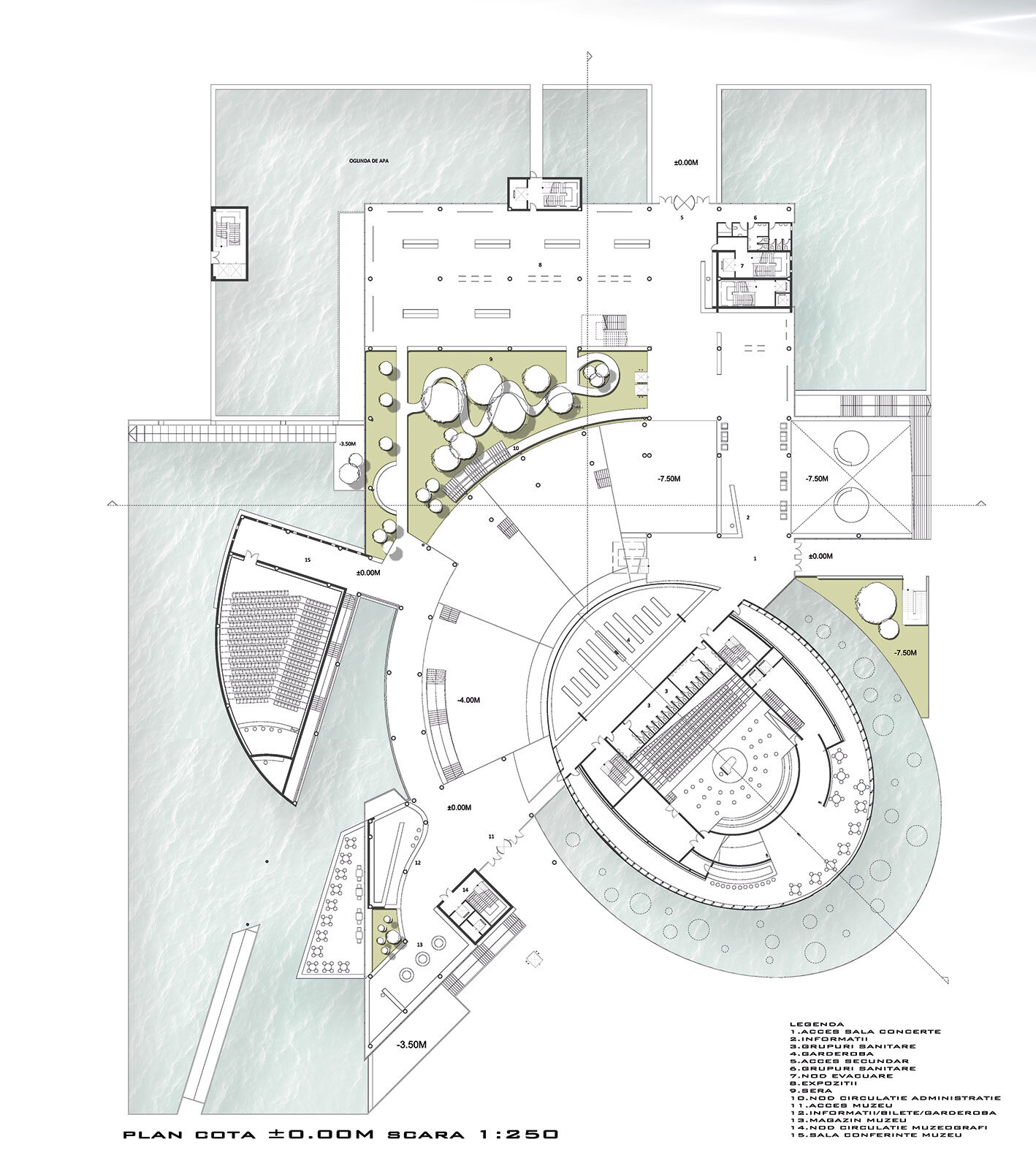
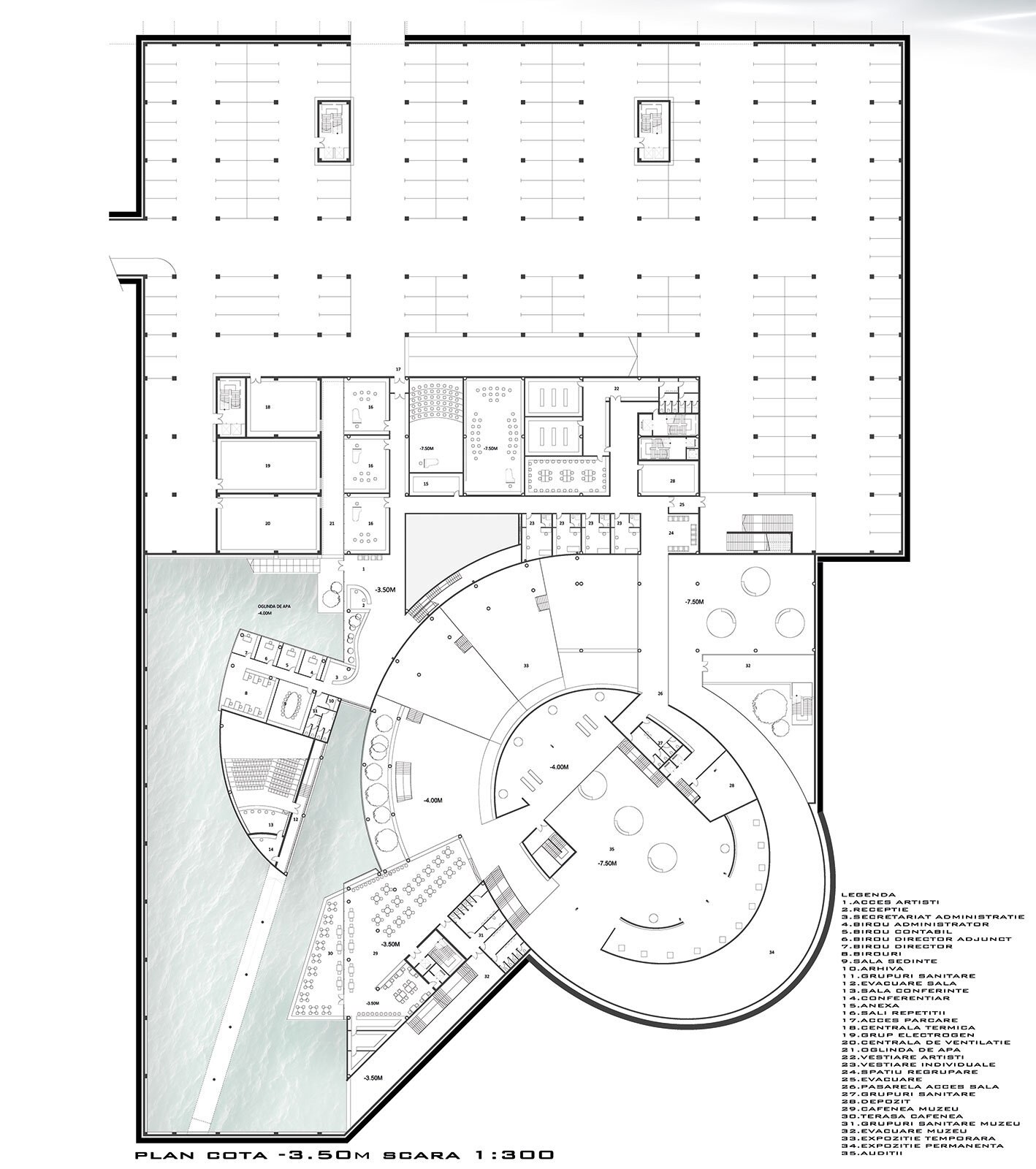
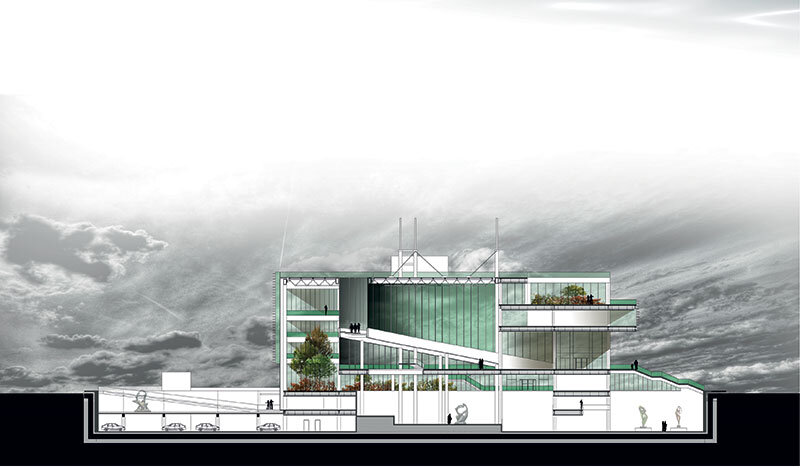
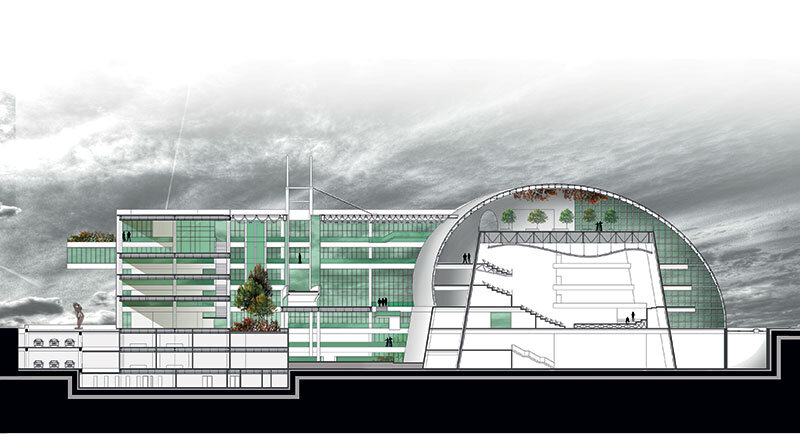
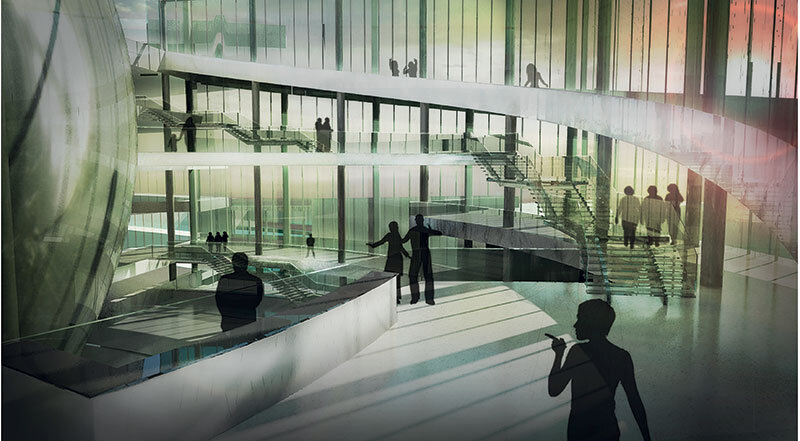
The composition is determined by an ascending path around the main concert hall, starting at ±0.00 and ending in a belvedere at +16 m, open to the symbols of the city, the 25 April Bridge and the Christo Rei statue. The concert hall is detached from the rest of the volume, its ellipsoidal shape evoking the symbol of creation - the egg - the starting point of cosmogonic theories.
The major functions of the complex are well defined formally and compositionally, characterized by materiality; these are the educational and research part and the creative - performance part. The entire composition is subordinated to the concert hall.