Moldova / House of Music - Cluj-Napoca
stud.-arh. Daniel Șoltuzu supervisor: prof. univ. dr. arh. Virgiliu Onofrei
The program is predominantly cultural.
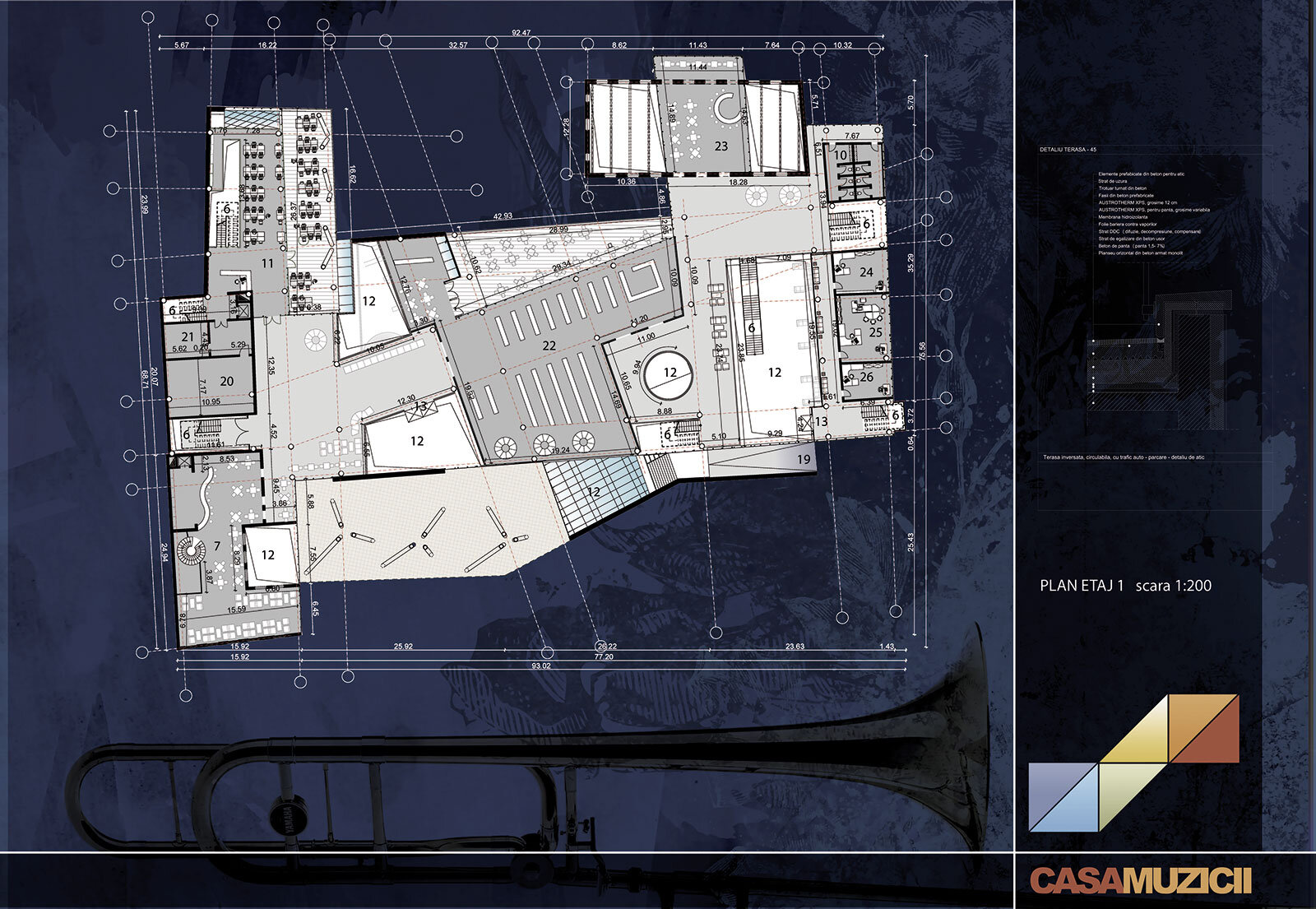
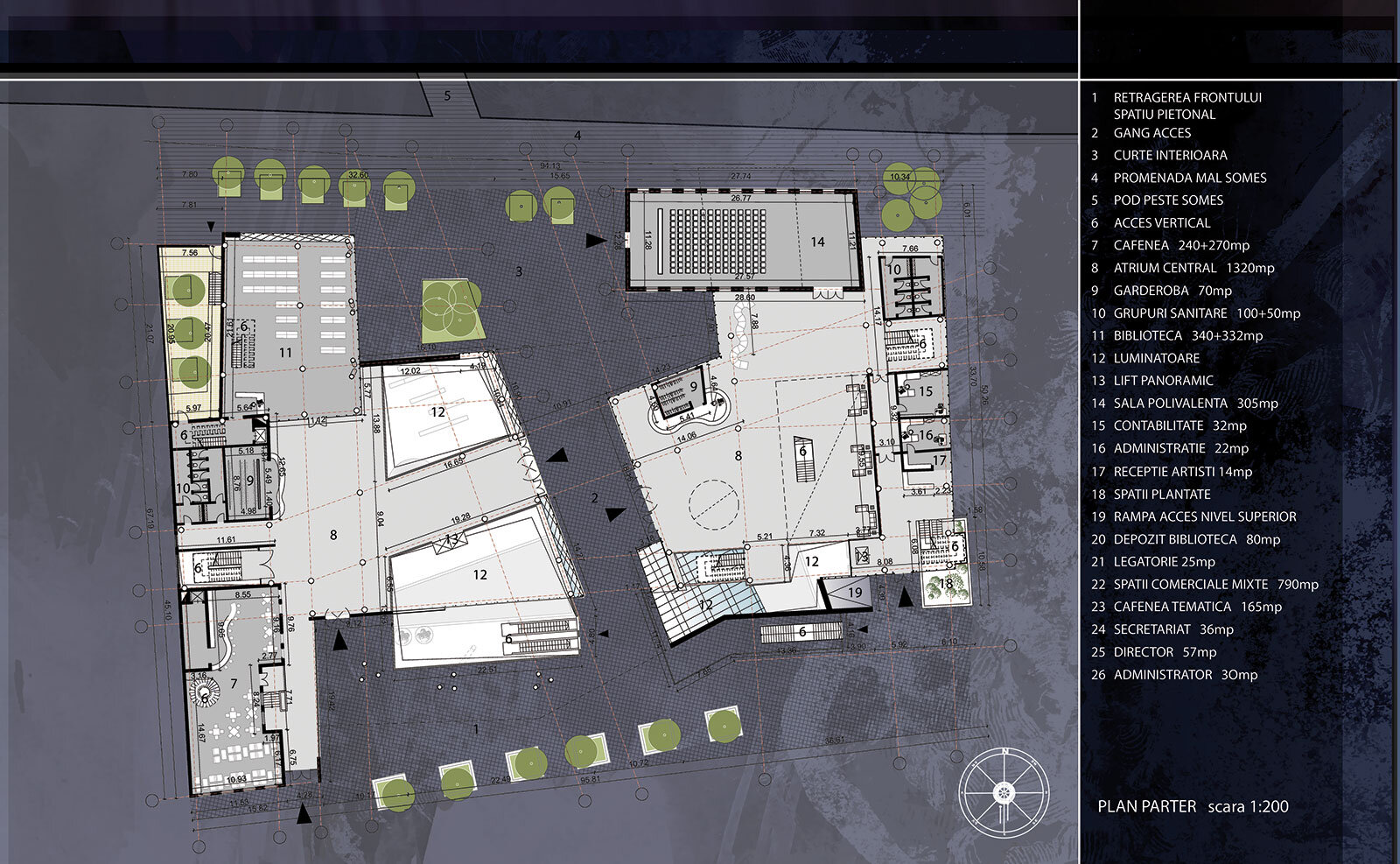
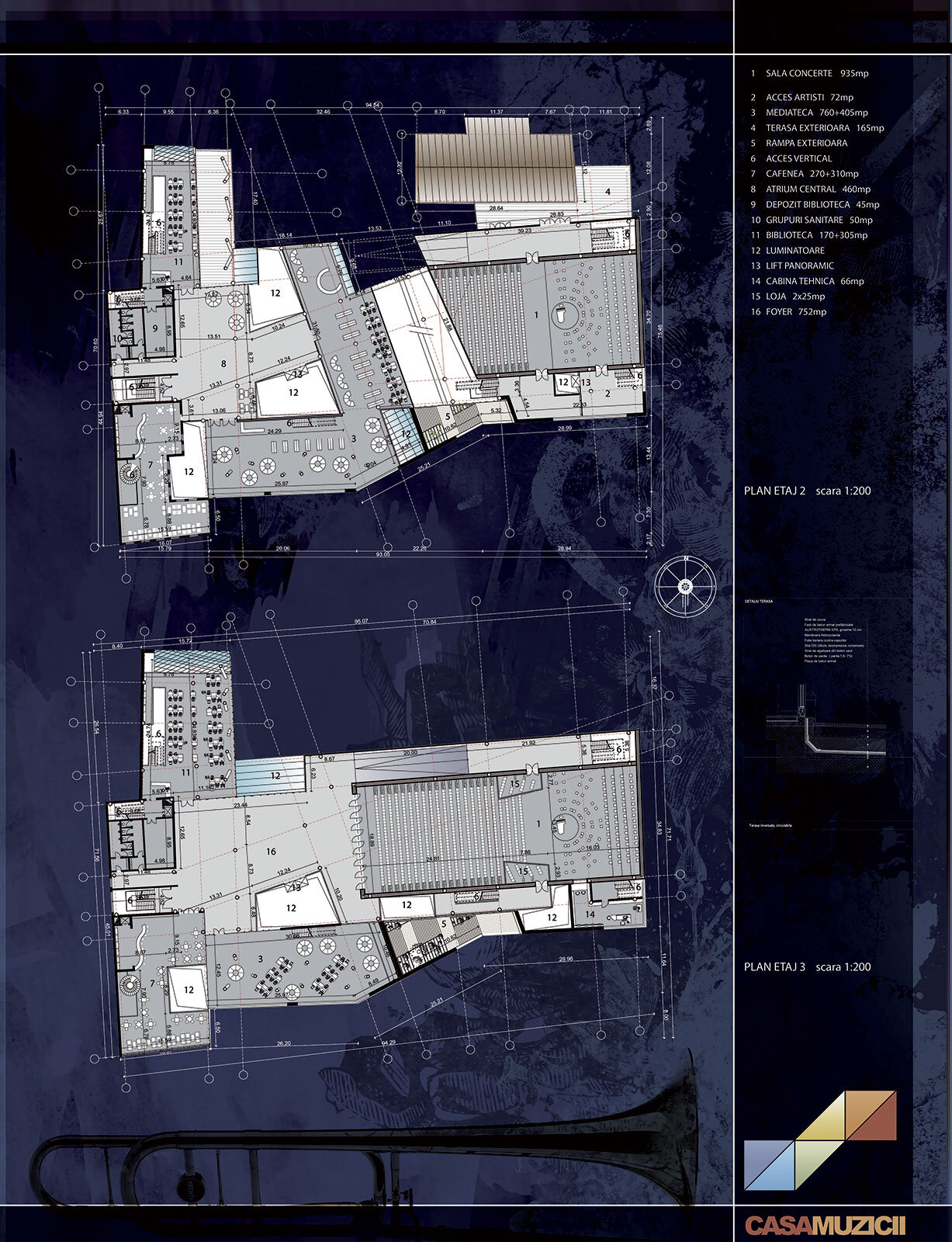
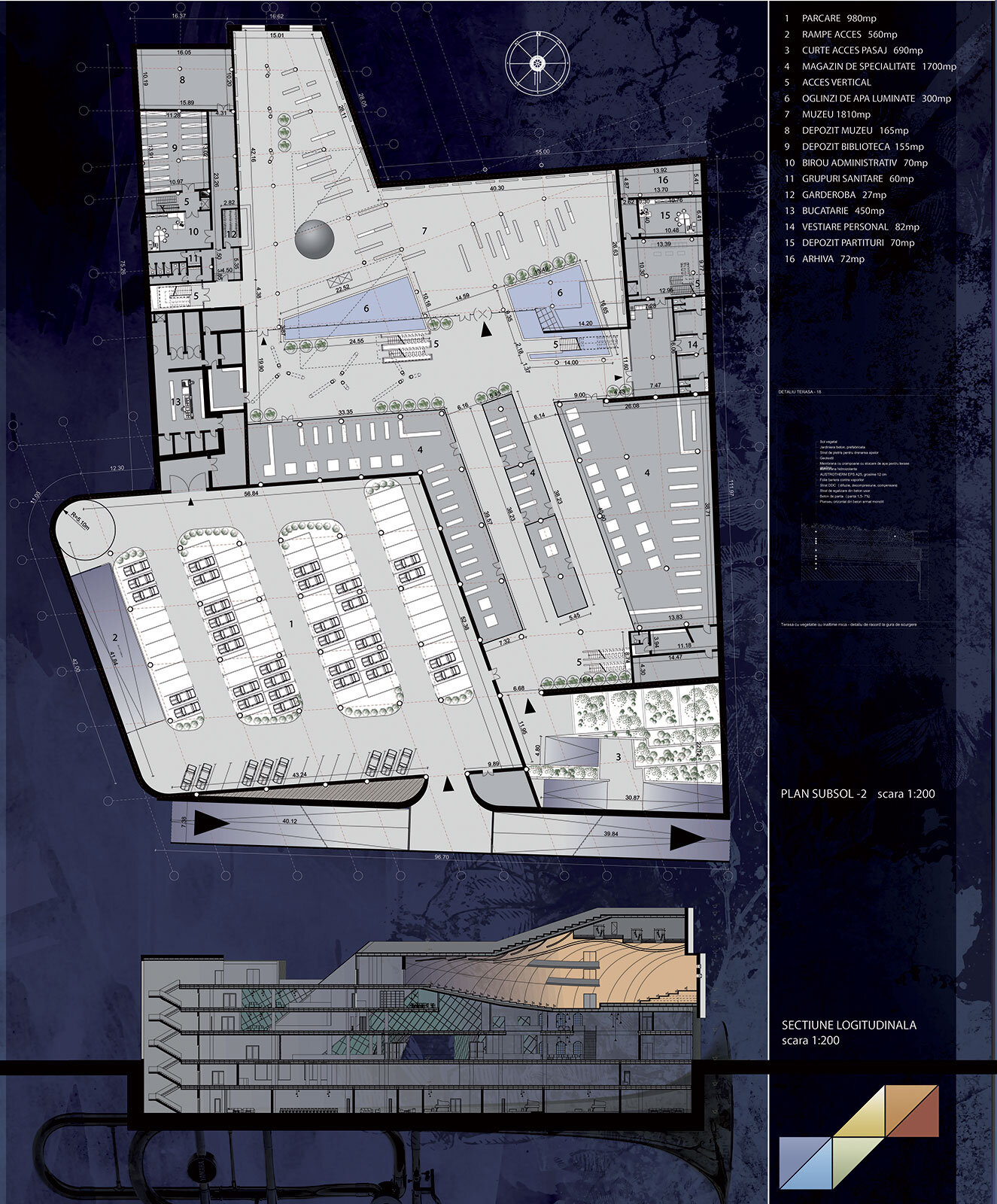
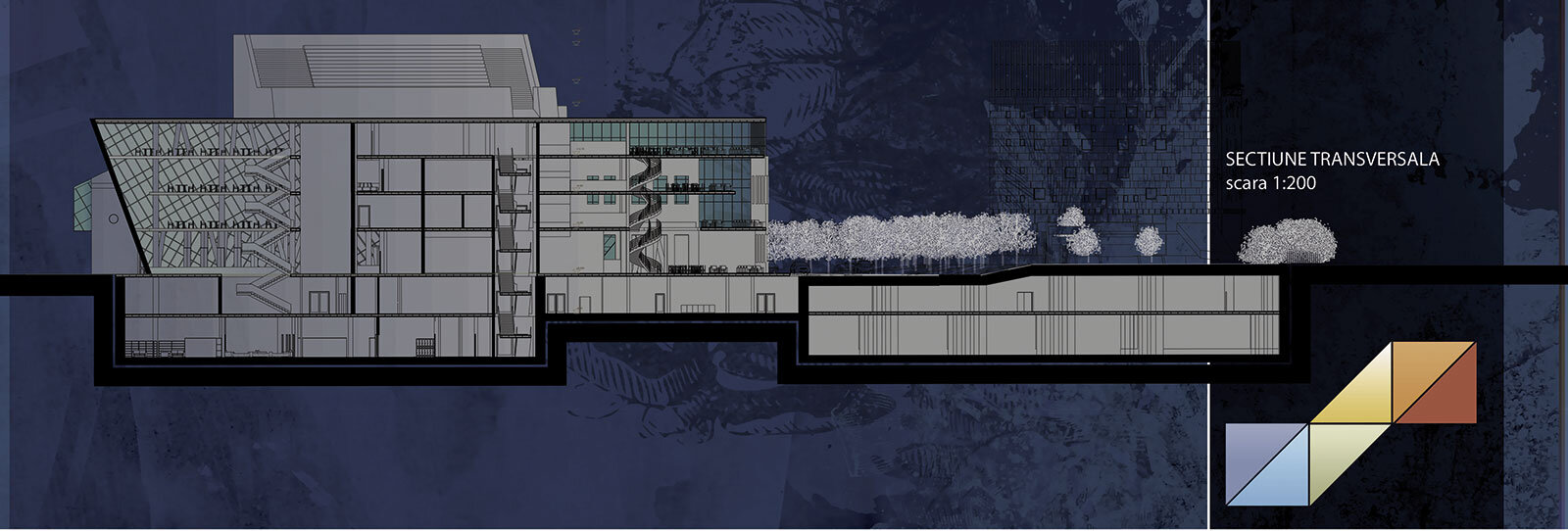
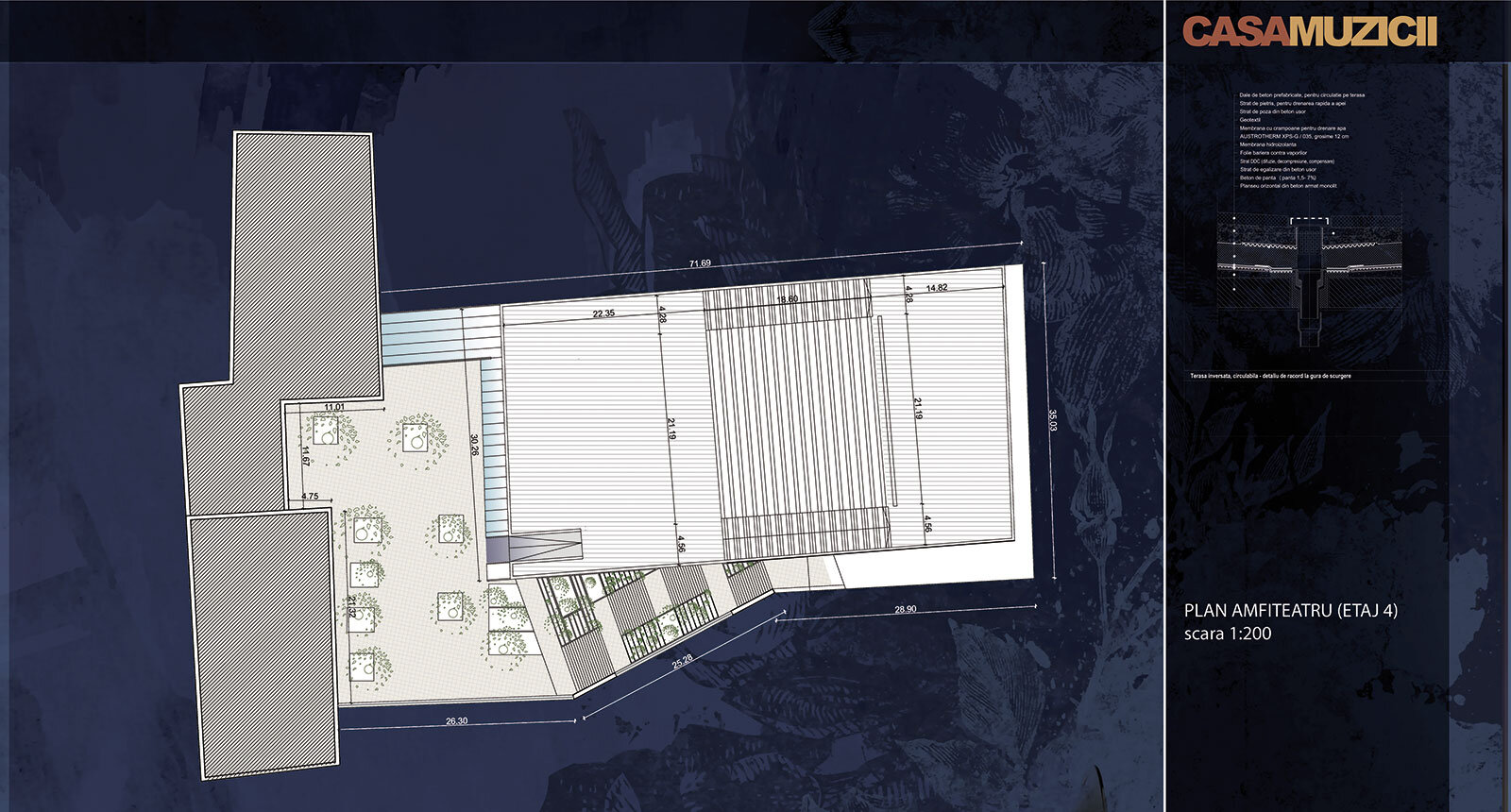
Functions of this nature are represented by two performance halls, one of which has 600 seats, a sound library, a library, a museum - dedicated to ethnomusicology, instruments and sound techniques, rehearsal rooms and workshop rooms. Alongside these, the House of Music also contains related spaces: cafes, bookshops and shops - as well as spaces with a strong social function and flexible organization of complementary activities: an outdoor amphitheatre and a multi-purpose hall.
Placing these functions together in the old center of Cluj, more than an exercise in architecture, landscaping and urban planning, represents a holistic approach to an architectural program dedicated to music, a program that aims to give the uninitiated, but also the educated, a broader spectrum of this art.
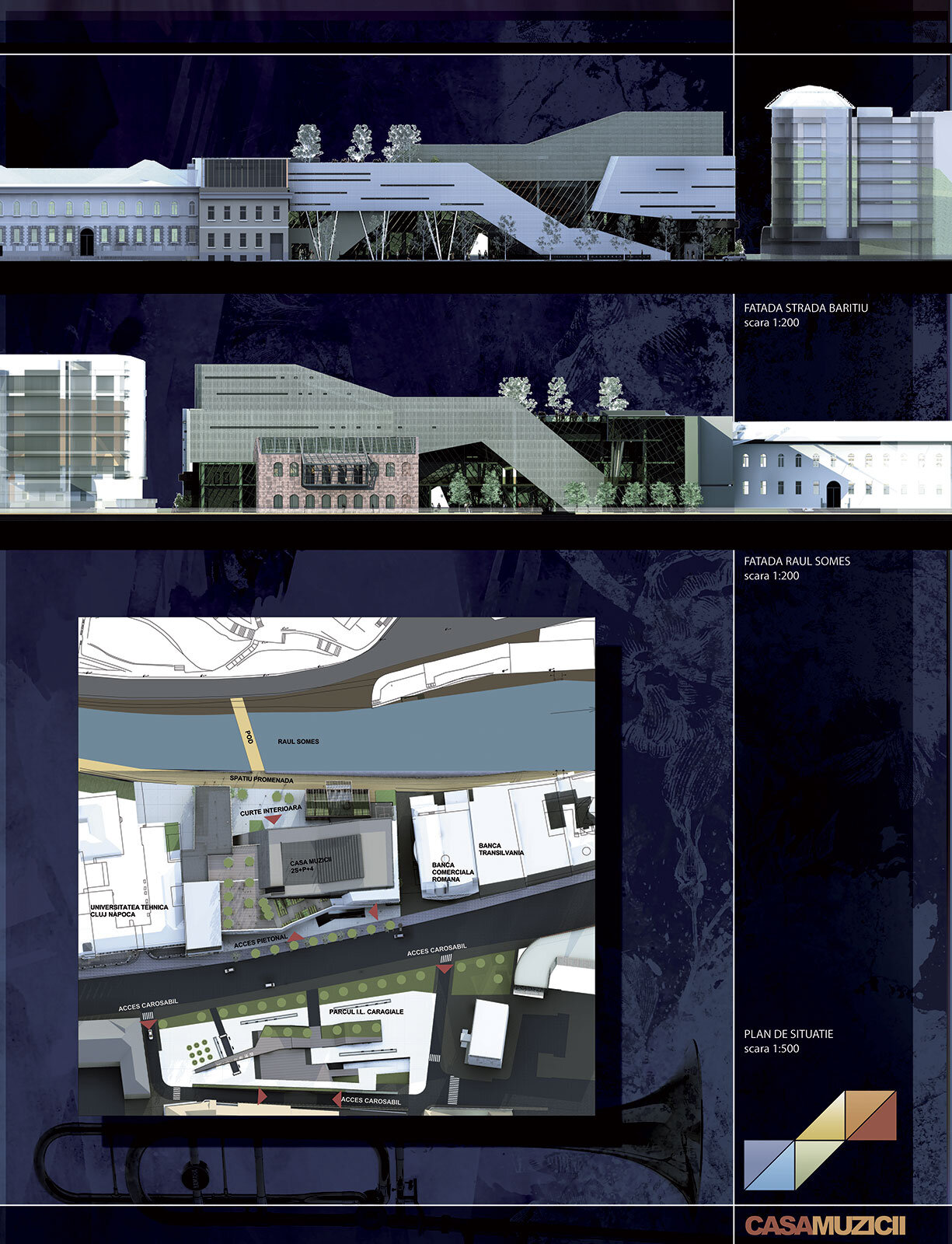
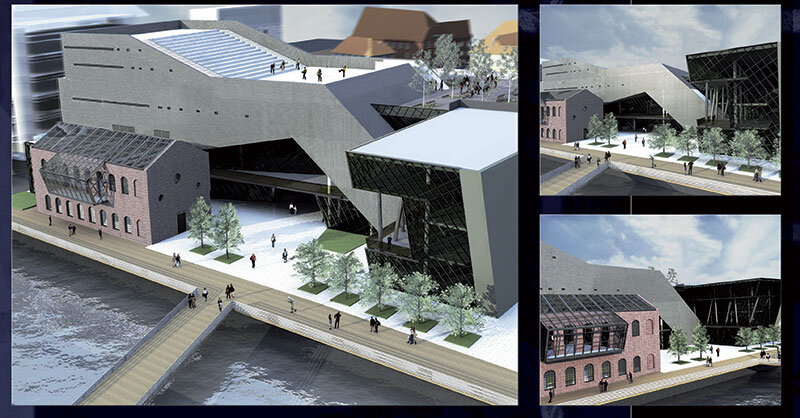
Located on the virtual axis of the spires of St. Michael's Church and the Franciscan Church, the House of Music is the end of the pedestrian walkway between Union Square - Casa Matei - Caragiale Park, but also provides a passage to the Citadel Road, thus evoking the former bridge - the bridge of the Germans, the natural link of this route to the highest place in the city.
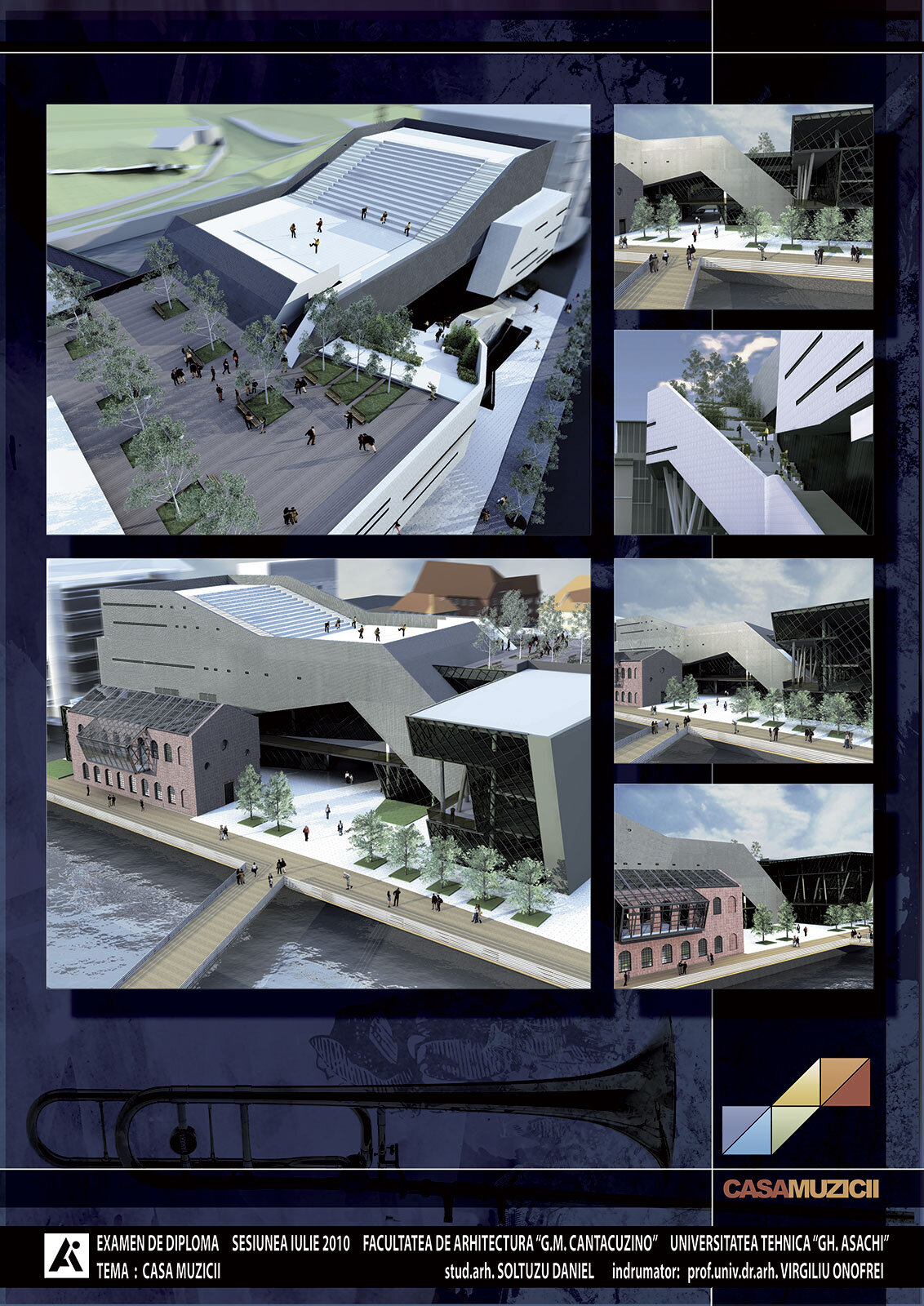
The newly created bridge and the walkway linking Caragiale Park to the inner courtyard and the access to the house are the main nodes that make it possible to extend the pedestrian walkway from Union Square - Museum Square to the view from the Citadel. This mediation offered by the House of Music is not a simple connector that facilitates the passage to another point of interest in the city, but is intended to be a resting place where passers-by can hear music or compose... once here, people can also experience, educate themselves or watch.
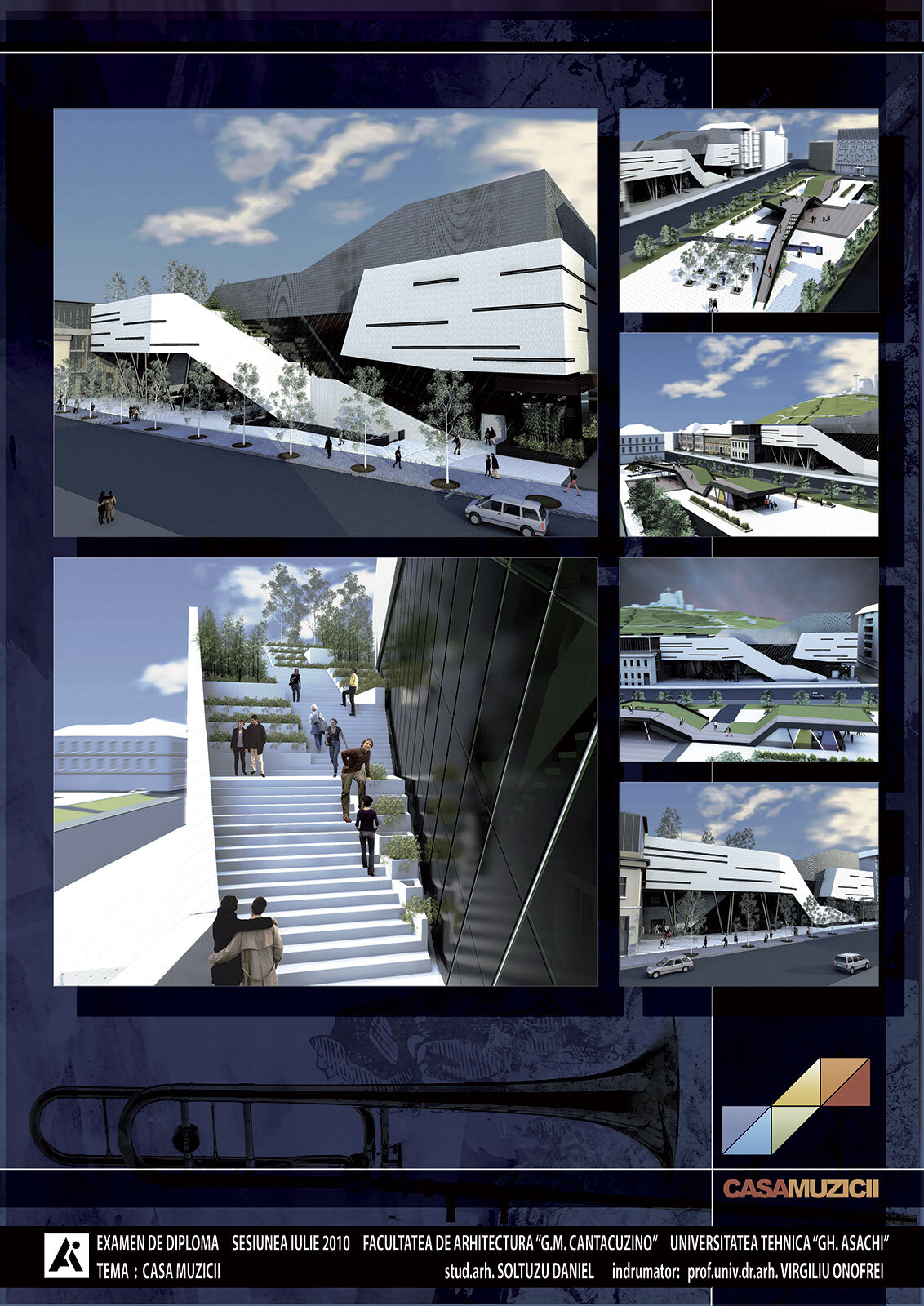
The external arrangements (Caragiale Park, the conversion of the old synagogue, the accessibility of the terrace, the amphitheatre raised above the level of the buildings and the interior courtyard) invite one to experience the life that will pulsate under the building's envelope, which will house a philharmonic, a museum, a library, a sound system, rehearsal rooms, multi-purpose spaces and leisure areas, to support the building's landmark function.
The contemporary architectural language seeks to integrate with the context through contrasting image and message.