
GARA Filaret - Creative Industries Center
In Bucharest there is a lack of spaces dedicated to the dialog between the creative industries. Therefore, alternatives have emerged such as squatting, taking possession of unconventional spaces and using them as spaces for expression and dialog.
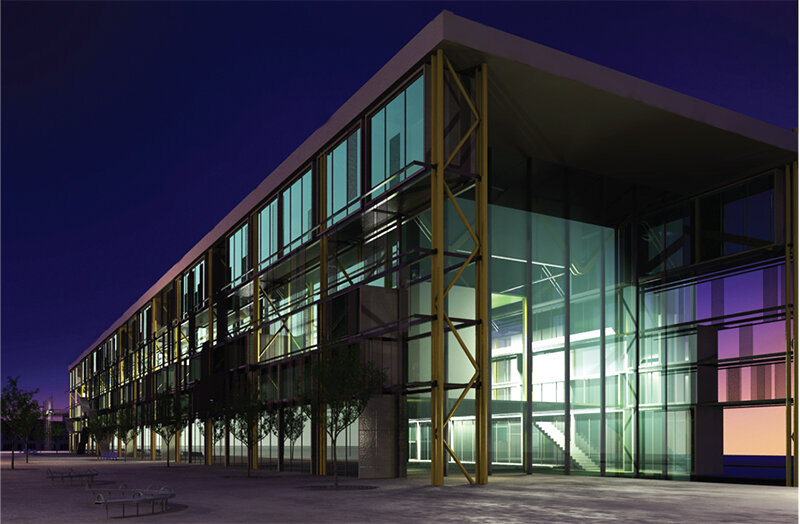
The site is in the city's central ring, but suffers from connectivity. Through a complex project for industrial zones, the problem of interconnectivity and their connectivity with the city center can be solved. Transforming the site from an area of polluting industry (industrial buildings and their annexes) into an area of creative industry means integrating the site into the city and opening it up to the human factor - as community and educational spaces. Throughout the site, the transformations have taken into account the memory of the place. The workers' housing estate becomes a university campus, and the former production halls - a center for creative industries.
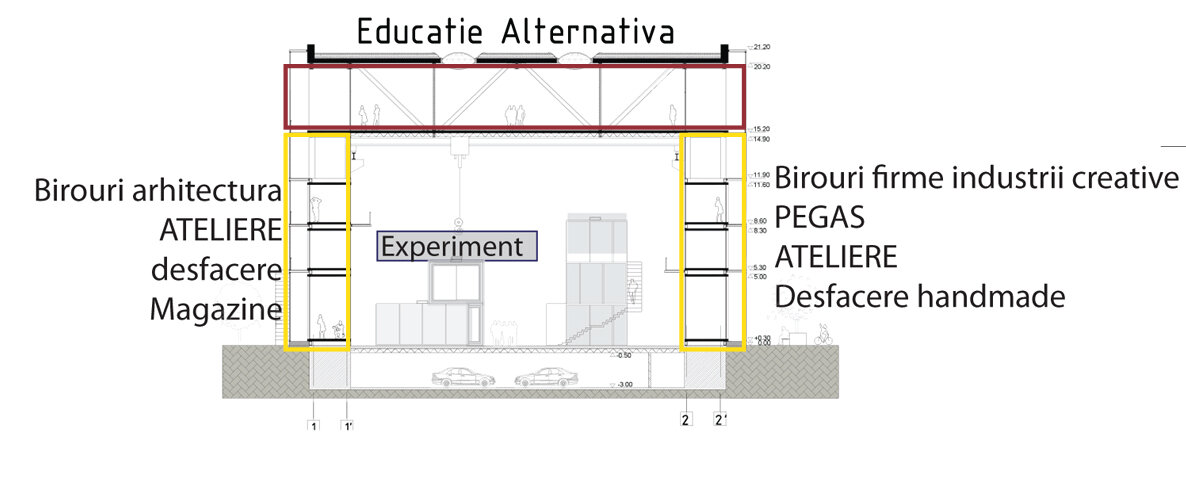
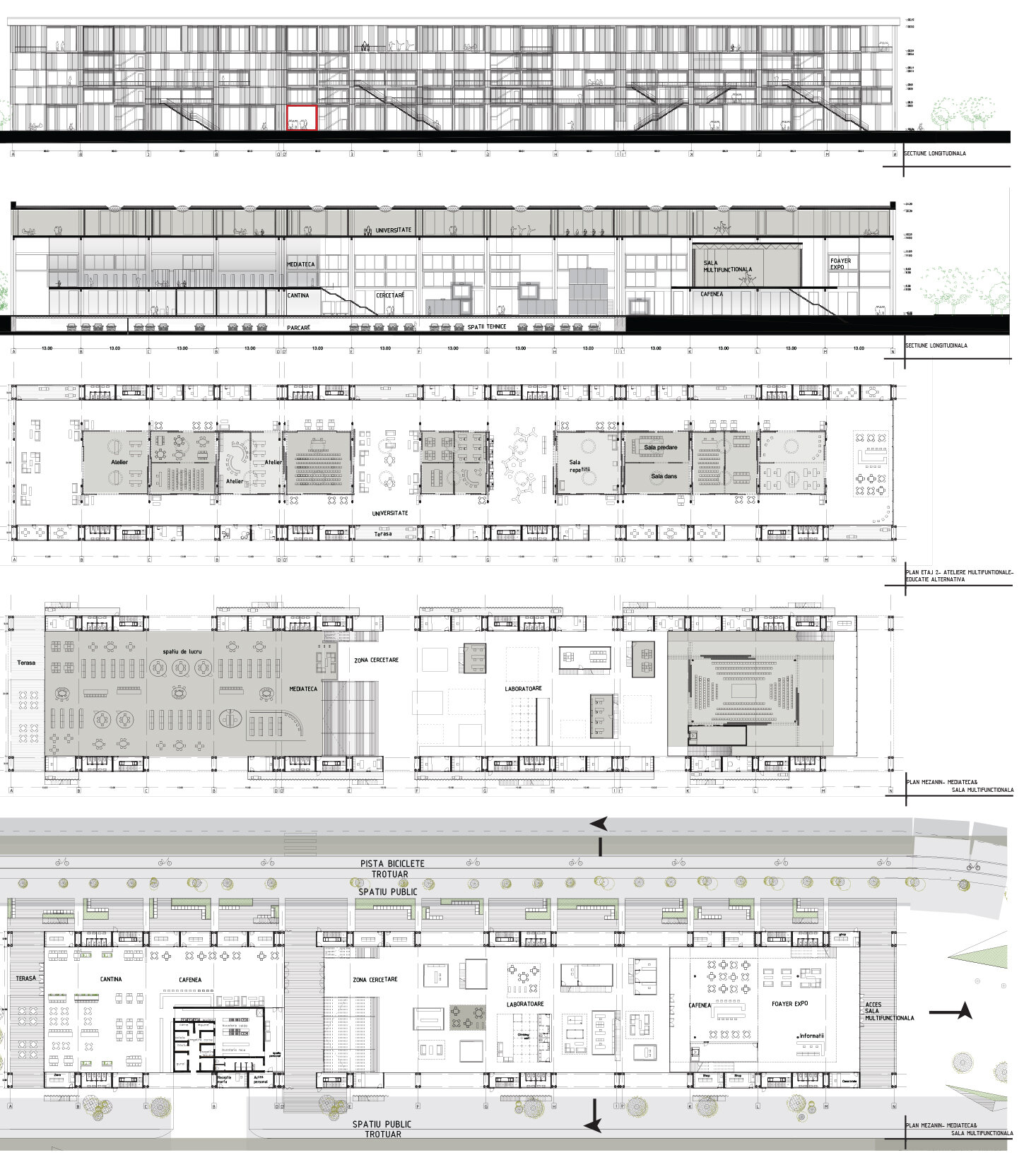
My image of the creative industry is a close connection between 3 areas: Alternative Education_Experiment_Practice.
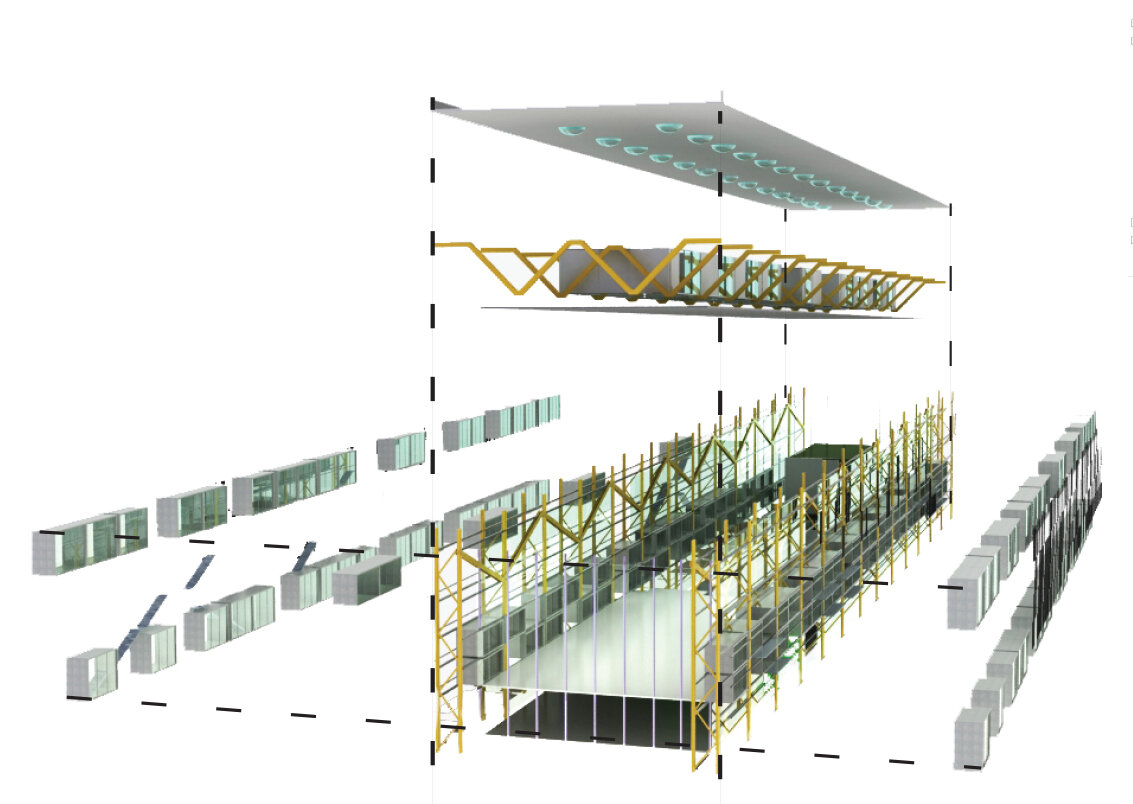
That's why they are connected into one creative macrohalls. On a metal macrostructure are placed cells which, inside, accommodate labs, and outside - offices and shops, which are moved by means of the crane.
*Def. = Creative industries are those economic activities concerned with the generation or exploitation of knowledge and information. Alternatively, they are referred to as cultural industries or areas of the creative economy. According to Howkins, the creative industries are: advertising, architecture, art, crafts, design, fashion, fashion, film, music, performing arts, publishing, research and development, software, games and toys, TV & radio, video games.