
Argument on topic: Public space
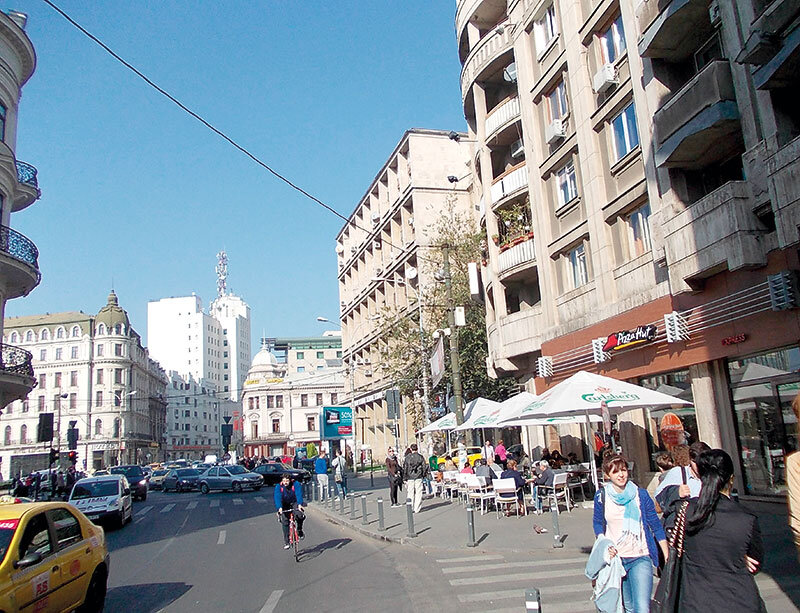
Public space is a concept, a phrase that can be extended and semantically shifted in many ways, which makes it difficult to interpret precisely because the range of meanings that accompany it is so broad. Hence the wealth of perspectives, approaches and theoretical interpretations that attempt to capture its multidimensionality. It cannot be reduced to one or other of its qualities, without losing its substance and meaning, except for analytical or purely practical reasons.
On the one hand, public space is a concept used in architecture and urban planning, but it is also a concept of philosophy and political sociology. The most interesting analogy that captures its true nature is that of a field, a term borrowed from physics. From this perspective, the public space can be a field of interaction in which spatial, socio-political and cultural relations are manifested and develop. It is, above all, an evolving system, constantly being updated.
What is more, information space, a form of manifestation of public space, a virtual hypostasis of it, through its vectors of propagation - the media, telephony, the Internet - is superimposed by a dense network on private space, in a frantic attempt to replace it. But this tendency to expand public space contributes to its fragmentation.
It is both a real, material and symbolic entity.
If it is understood solely as a topographical entity with a variable geometry, public space is characterized by its materiality, its forms determined by its legal status, the way it is used and the type of activities carried out. It brings together all the places belonging to the public domain, accessible to the inhabitants but subject to regulation. It reveals its attributes more clearly, by comparison, within the binomial in which it exists and is associated: public space and private space. These are differentiated by morphospatial patterns with their own features, by distinct types and forms of communication, by different requirements, and by the way they are managed and owned.
Public space is structured by social law1 , private space - according to individual values, mentalities, demands and practices.
What distinguishes it from private space is the fact that it belongs to and is subject to the social conventions, mentalities and customs of the communities that use it. Public space is a space of cultural confrontation. It is also a place for communication and participation, but there is a wide variety of attitudes and behaviors among those who use it. The way in which it is managed, used and assimilated can enhance its strengths or reveal its weaknesses, which often prove toxic for others and the community.
A private space can reverse its status and become public, despite its legal status, as long as it is accessible to all. Conversely, there is the possibility of misappropriation of public space, often practiced in the private interest. An expression of exag exaggerated and aggressive individualism, of rapacity or deviant behavior, this phenomenon often occurs when public space has no identity, is not used or is not responsibly managed.
The area of overlap between public and private space is flexible and constantly negotiated. When it is identified, configured and shaped in the specific forms of the intermediary space and accompanied by consecutive thresholds, it guarantees, through the transitional spaces thus determined, the existence of both public and private spaces without altering their qualities. Where they exist, transitional spaces generate community sociability and are characterized by controlled accessibility, mixed use and, as a rule, private management.
The public space is also a symbolic space of memory and continuity of urban life. The image that a community has of a space expresses the way in which it is perceived and fixed in the community consciousness. Its character depends on the meanings it conveys to its users. This aspect has been analyzed by many authors. F. Choay, for example, to describe the evolution of urban space in a suggestive way, suggests that public space has been, in turn, a space of contact in the Middle Ages, a space of spectacle in the classical period, a space of circulation in the industrial age and a space of connection in our times2.
In terms of its political significance, public space is, as J. M. Besse observes, a form of collective action and political cohesion that has not always been regulated by the state. This form of action does not necessarily have a spatial expression3. J. Habermas proposes another political hypostasis for public space, that of an intermediary in the manifestation of the will of authority4, and J. Dewey represents it as an intermediary sphere between civil society and the state5.
Power relations and the exchange of ideas are political relations that ultimately manifest themselves in the public sphere. "The 'space between people', as H. Arendt called it, is where politics is born6, and the environment in which it materializes is the polis.
Many forms of political communication exist and manifest themselves in the public sphere. It is here that political discourse is made, debated and political action is taken. And it is also here that actions and events of the same character are carried out. In this context, the agora proves to be the first and most appropriate configuration of the material public space, being, par excellence, the bearer of the meanings of the social and political life of the city.
It is the space of public life, of social interactions, the environment for the development of sociability, civility and civic responsibility . But public space is also a stage for the roles that individuals conventionally play, in multiple keys, according to social and cultural codes. As R. Sennett7 observes, roles are all the more divided and the play, without being false or merely mimed, all the more impersonal, the wider, the more superficial and the more ephemeral the social contacts.
Unfortunately, not infrequently, and especially in recent times, public space is painted in gloomy perspectives. In the analysis of researchers, but also in the public perception, confirmed by interviews and sociological surveys, public space is shown to be alienating, exhausting, alien and anomic. The progressive alteration of its qualities can ultimately lead to the inhibition of attachment and affection, apathy and disinterest in others. In this scenario, as described by S. Millgram, the consequences are among the most damaging, leading to ignoring, filtering and blocking social interactions8.
P. Flichy's image, taken from Bosh's famous triptych, is eloquent: a society of strangers, in which individuals live surrounded and protected by the membrane of their own communication bubble9.
1. Sinescu, Călin - Spațiul public of political communication, Sfera Politicii no. 141, 2009.
2. Choay, Françoise - Espacements, Milan, Skira, 2003, p. 42-43.
3. Besse, Jean-Marc - L'espace public: espace politique et paysage familier, Rencontres de l'espace public, Lille, 2006.
4. Habermas, Jürgen - L'Espace public. Archéologie de la publicité comme dimension constitutive de la sphère bourgeoise, Paris, Payot, 1978.
5. Baume, Sandrine - L'espace public et la formation du peuple, La vie des Idées, 2009 apud Dewey, John Le Public et ses problèmes, Farrago, 2003.
6. Arendt, Hannah - The Human Condition, Chicago: University of Chicago Press, 1998.
7. Sennett, Richard - The Fall of Public Man, Knopf, 1977.
8. Milgram, Stanley - The experience of living in cities, Science 167:1461-8, 1970.
9. Patrice Flichy - Une Histoire de la communication moderne: espace public et vie privée, La Découverte, 1991. The idea of a personal space surrounding the individual is not new. According to E. Hall, people are born with a distancing mechanism from others that helps them control their social contacts. Conceptualized as a sphere that protects each individual, personal space varies in size according to the type of social relationship and situation. Boundaries become perceptible only when they are assaulted by various types of cultural and social contact. [Low, Setha M. and Lawrence-Zúñiga Denise (ed.) - Anthropology of Space and Place: Locating Culture, John Wiley & Sons, 2003, p. 4 apud Hall, Edward T. - Proxemics. Current Anthropology, 9(2), 1968, p. 83-95].