
Calea Victoriei - Scratched mirror
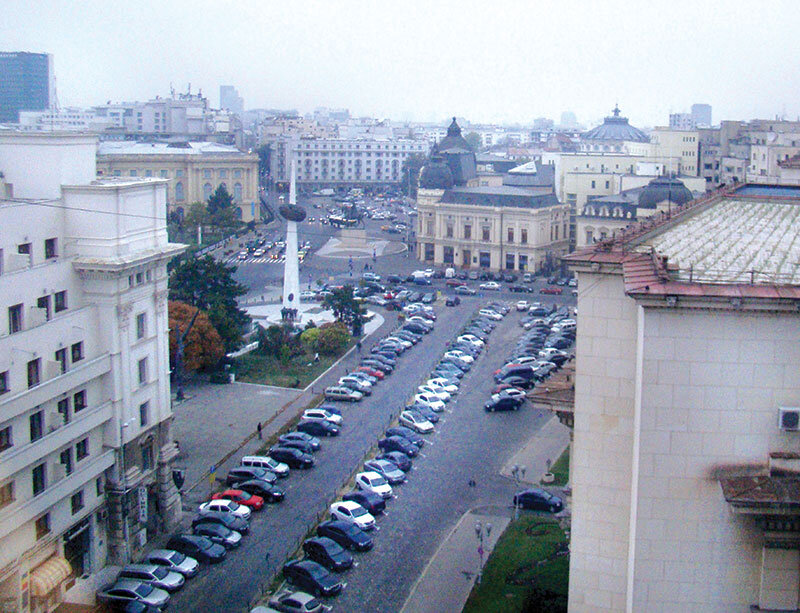
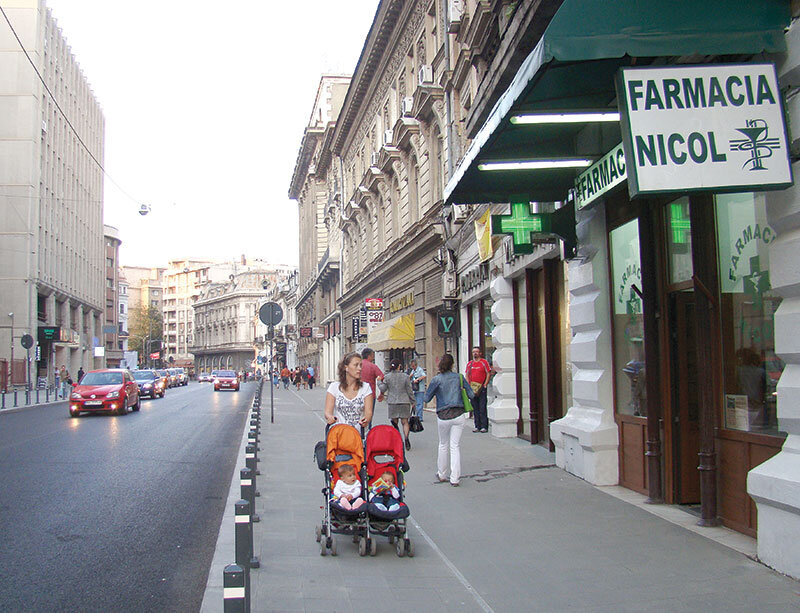
Our image is Calea Victoriei. Nothing shows us to the world and to ourselves more illuminating and possibly pleasing at the same time than it does. It is not deep in time, only three hundred years have passed since Constantin Brâncoveanu's decision to open a more direct road from the Princely Court to Targoviste. Towards the Ulița Mare - Mogoșoaiei Bridge, as it was then called, the interests of the wealthy and powerful of the time crowded in for housing and trade.
Alone and famous, it attracted so many people that, by the 1920s, it had become difficult to use and the authorities of the time decided to add the Lascăr Catargiu - General Magheru - Ion Brătianu boulevards, which in turn, through the quality of the public space and the architecture of the buildings that border them, became landmarks of Bucharest's identity. In addition to the new boulevard, attempts were also made to partially correct the medieval route of the Victoriei Way, to widen it and to replace buildings that were no longer considered to meet the needs of the times with more representative, more formal ones (the Royal Palace, the Post Office Palace, the CEC Palace, the Athenaeum, the Army House, etc.). With all the vigor and emphasis of the new boulevards, Calea Victoriei has remained the street of the heart of the people of Bucharest.
Calea Victoriei, forever in the making, with its mix of buildings of all ages, its diversity of heights and styles, its winding, winding, sometimes crooked, sometimes unexpectedly widened, is the street that best materializes the spirit of the city and has been used with joy by locals and also by those passing through who found it different from elsewhere in the world and, at the same time, very charming.
The Italian architect and professor Giuseppe Cinà, following a long and careful knowledge of our capital, writes: "Calea Victoriei is the landmark street of Bucharest and remains the richest artery in monuments and functions of national importance. It is also an anthology of symbolic places of Bucharest and of the country as a whole, both because of the historical events that took place here and because of the history represented by its buildings and open spaces; in the past, it was the tribune from which the country presented itself to the world"1. We must not delude ourselves and forget the sense of modesty. As the same author tells us: "...the Victory Lane does not lend itself to the attempt to extract a synthetic image with original aspects. The avenue does not, however, attain the status of the Champs Élysées in Paris or the Ramblas in Barcelona (to cite two of the most striking cases), which represent the city to which they belong to such an extent that they constitute a brand, a symbol of it. In the case of the Victory Way, the main stage of Bucharest's identity, it is easier to perceive its representative images through the fragmentary traces of time, chronicles and events than through the overall images, precisely because they are largely based on Western styles. The adherence to European culture has entailed many sacrifices in terms of severing the links with local tradition. Achieving this goal meant denying the pre-modern Ottoman city. The construction of identity is a fluctuating process, often resulting in relevant losses"2. Recognizing that in our attempt to be Europeans, copying Western models, which we have managed to copy, in a similar and sometimes indiscriminate way, more in detail than in the whole, we should perhaps cherish even more the Calea Victoriei, our mirror.
The pragmatic, individualistic spirit of the past years, seeking first and foremost to fulfill the desires of the powerful, of those who live the city and their own lives from their cars, has chosen from the many roles that this street can play in the life of the capital only that of a channel for road traffic. The sidewalks have disappeared, pedestrians have been banished, the shop windows intended for the attentive eye for detail have become futile. It's a street suddenly aged and impoverished by the hard times it has been through in the last forty years, and there's little reason to delay. If it has remained our mirror to the world, we must recognize that the image it now reflects of us is not exactly flattering.
Read the full text in issue 6/2012 of Arhitectura magazine.
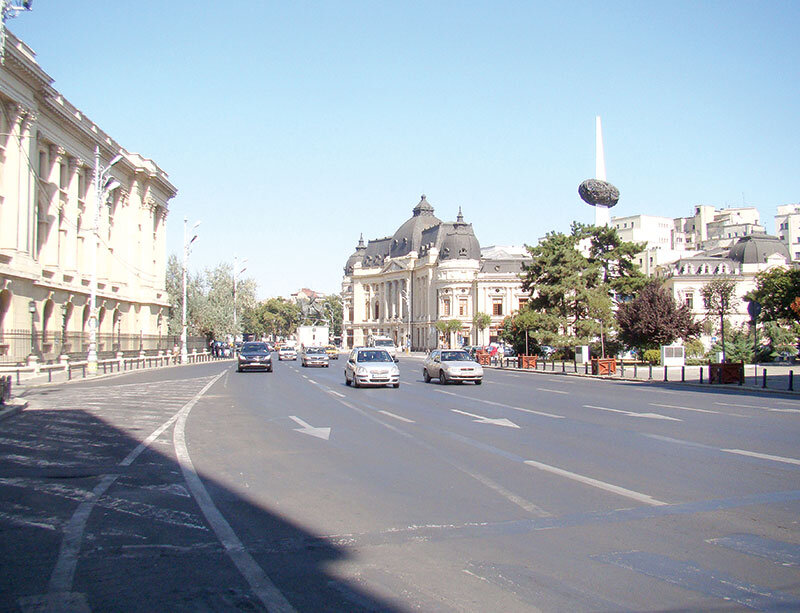
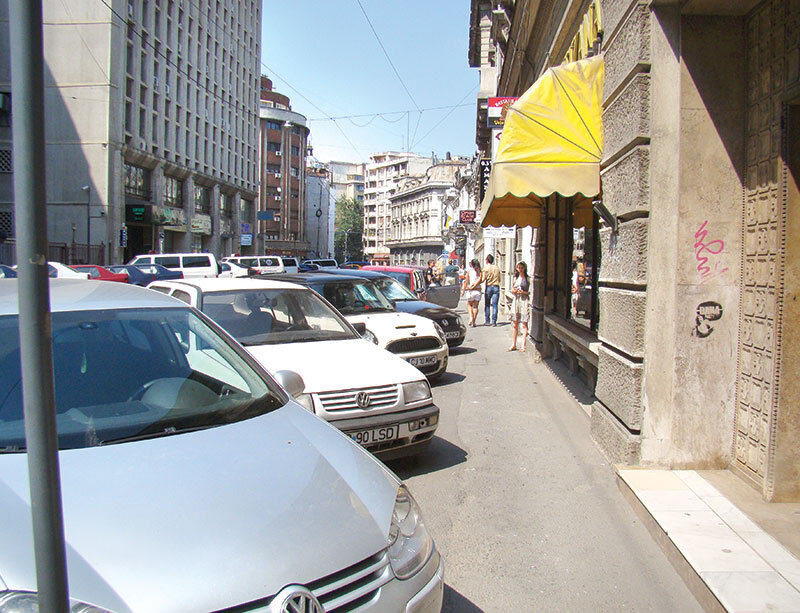
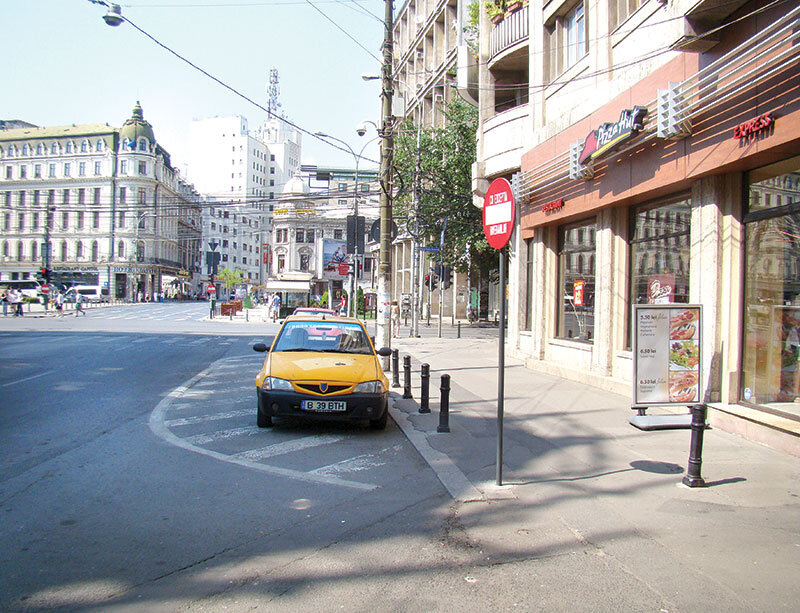
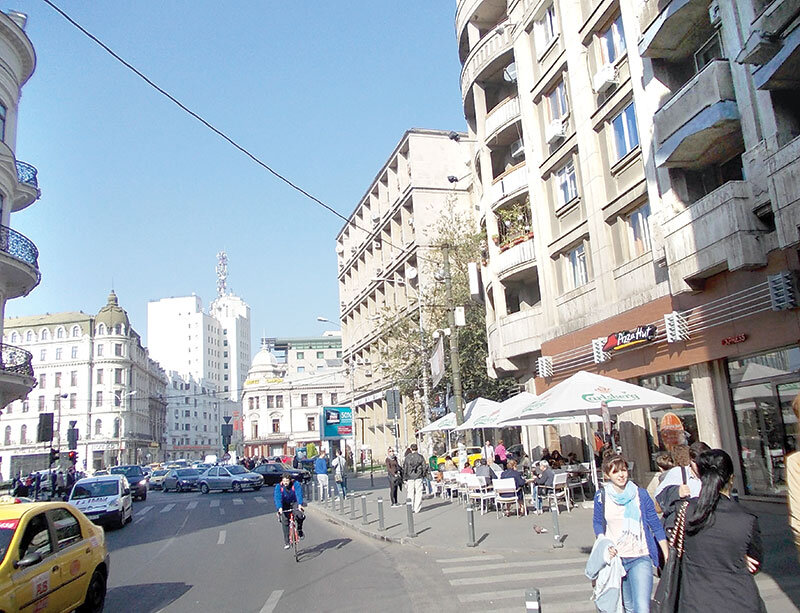
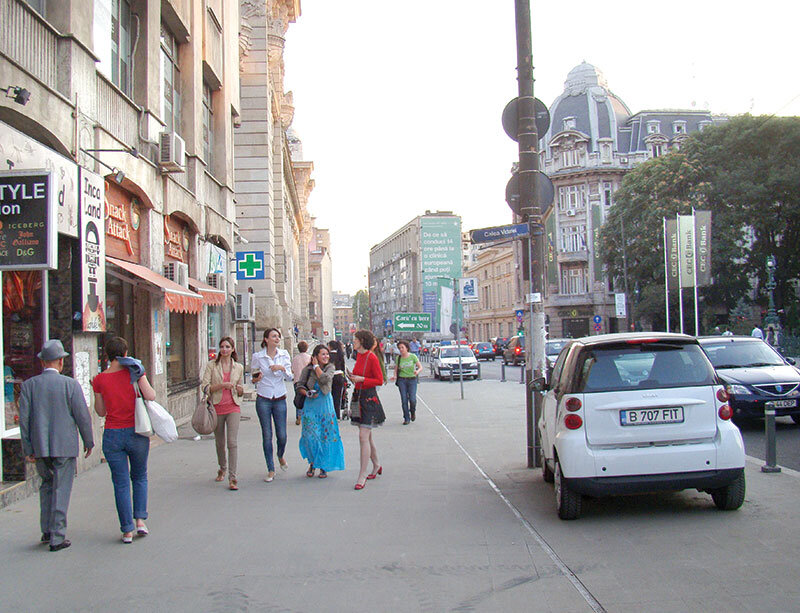
Photos Constantin Enache
NOTES:
1. Giuseppe Cinà - București de la sat la metropolă, identitate urbană și noi tendințe - Editura Capitel 2010, pg. 27
2. Giuseppe Cinà - București de la sat la metropolă, identitate urbană și noi tendințe - Editura Capitel 2010, pg. 29
Bibliography:
1. Giuseppe Cinà, București, de la sat la metropolă, Editura Capitel 2010.
2. Nicolae Lascu, Bulevardele Bucureștene, Simetria Publishing House, 2011.
3. Nicolae Șt. Noica, Catedrala Mântuirii Neamului - Istoria unui ideal, Basilica Publishing House, 2011.
4. Constantin Rădulescu-Motru, The Psychology of the Romanian People, Paideia Publishing House, 1998.
5. Sir Sacheverell Sitwell,Journey in Romania, Humanitas Publishing House, 2011.