Interviu / interview: Vlad Tenu
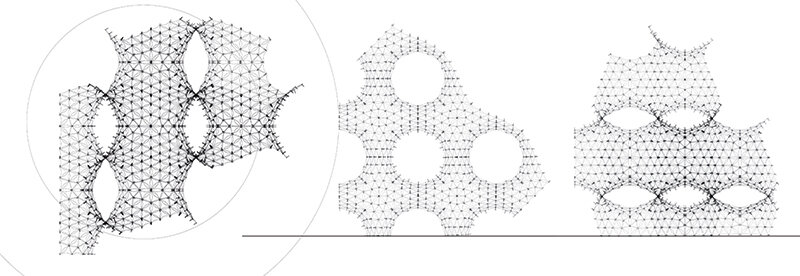
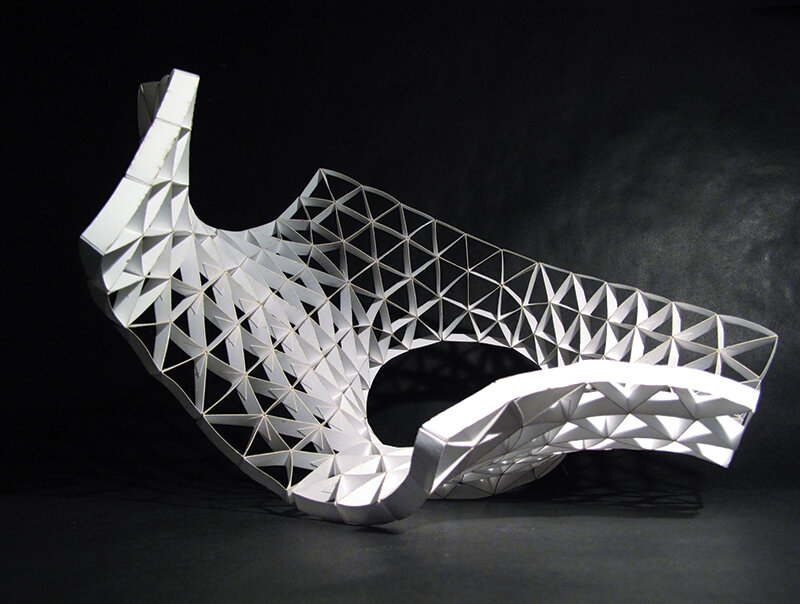
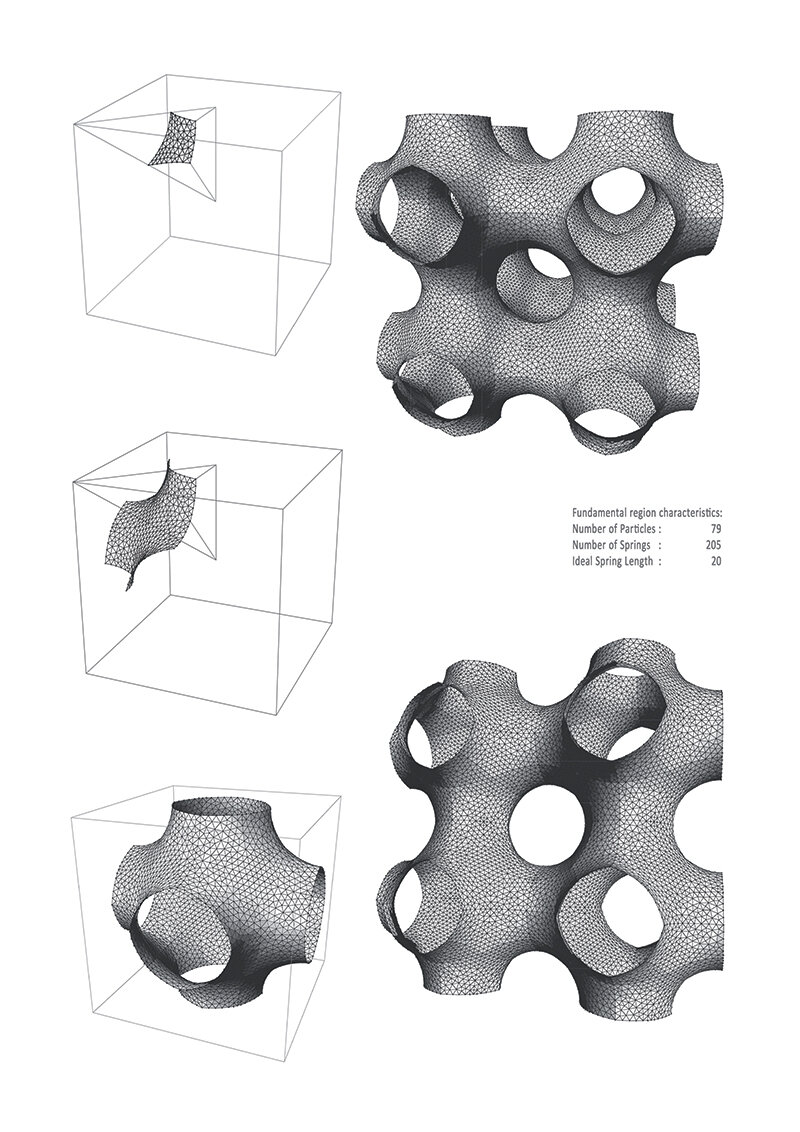
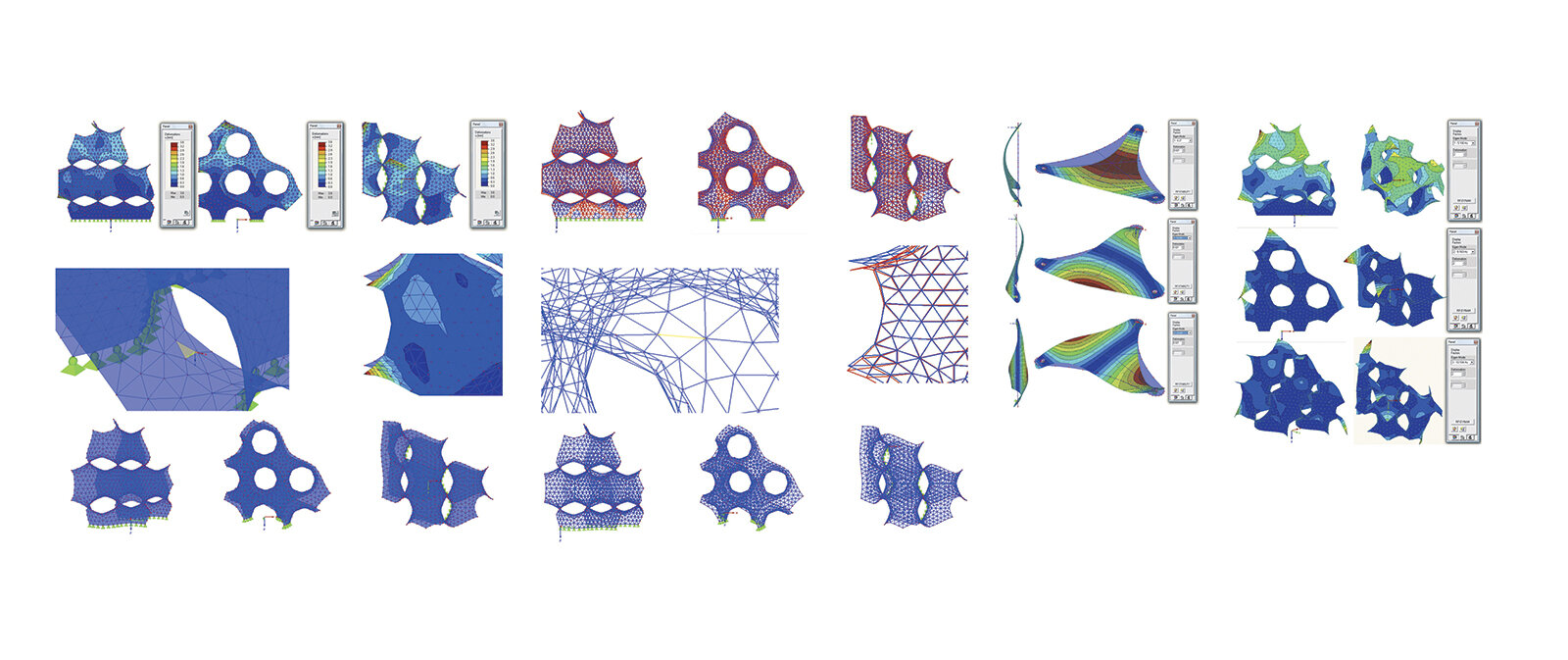
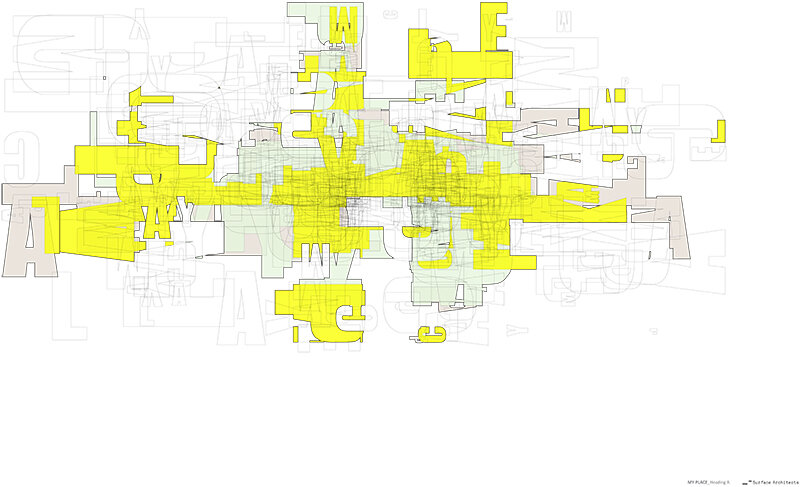
| Alina Nechifor: You studied architecture in Iasi, Lisbon and London - at the Bartlett School of Architecture, where you also teach; at the same time you work at SurfaceArchitects . I would like to know more about your professional career. What was your starting point? Vlad Tenu: Trying not to go into too much detail about how I came to study architecture, in terms of going to London, I think it all started with my time studying at the Faculty of Architecture in Lisbon. I had already become very passionate about architecture from Iași, but the interaction with the city, the school, my colleagues and teachers in Lisbon opened new perspectives for me, and winning the First Prize in the first phase of the Iberian PLADUR competition contributed a lot to that. I remember that at that time, in the spring of 2005, I attended a lecture by Axel Kilian (from MIT) presenting his CADenary project, which was my first memorable contact with computational design in relation to architecture. Subsequently, in parallel with my academic and professional work, I started to research more and more this field and its applications in architectural practice. This led me to discover similar projects and programs in London schools of architecture, namely the Architectural Association and the Bartlett. This is how I decided to temporarily interrupt working in an architectural practice and ended up studying Adaptive Achitecture & Computation at Bartlett in 2008, where I experimented with design research. It was a new, scientific way of approaching new topics that belong to the same category as adaptive architecture, digital ecology or morphogenesis for which I studied programming, geometry, worked with circuits, sensors, used digital fabrication methods and read books such as On growth and form (D'Arcy Thompson) or The self-made Tapestry (Phillip Ball). It was a relatively short professional break before starting at Surface Architects, but very interesting in terms of detachment from the creative process itself and the shaping of a personal critical stance towards the formalist tendencies of contemporary architecture. My work as an assistant lecturer at Bartlett maintained a constant interaction between the professional field and academic research and motivated me to continue in parallel the series of experiments started at Bartlett and to materialize them in various structures and installations, I refer to those under the title Minimal Complexities.A.N.: What is the creative process behind the research project "Minimal surfaces as self-organizing systems", which then generated the Minimal Complexitiesseries , the last prototype - Minimal Complexity 2011 - being the winner of the TEX_FAB REPEAT competition (2010) and exhibited this year at the London Festival of Architecture? V.T.: The Minimal Complexities series started with my dissertation paper "Minimal Surfaces as Self-Organizing Systems", which I had the chance to present at the ACADIA conference at the Cooper Union in New York in 2010. It is a research paper focused on methods for computational generation and digital fabrication of minimal surfaces. Starting from the analogy between minimal surfaces and the various shapes in which they are found in nature, such as soap bubbles, the project proposes a new alternative algorithmic method to generate these geometries by means of computational simulation of the latter. The creative part of the project is essentially the definition of the algorithm, a process rather than a final form. It is a process that can generate a family of three-dimensional shapes and is flexible by changing various parameters. The final tool is a custom program created with Processing, a programming language based on Java. The creative process behind the materialization of these virtual geometries, on the other hand, involved the design and testing of different manufacturing systems. From various paper mock-ups to the use of plastic or metal components, all elements were digitally fabricated. The final aluminum structure, built after winning the Tex-Fab competition, was a very interesting moment both in terms of the assembly process and the structural analysis performed by Buro Happold NY, which confirmed the stability and rigidity of this type of geometry. A.N.: What are the terms that define today's innovation in science and technology that you integrate into the architectural design process? Are there still uncertainties or has everything already been tested? V.T. : Architecture has always been at least a couple of decades behind other industries in terms of innovation at the technological level. I think we are living in an extremely interesting period in this respect where architects are having to research in collateral areas and push their own limits. It is a time when architects are starting to create new design or manufacturing systems that can be applied in other disciplines. In parallel with the evolution of technology and manufacturing and construction methods, I believe that innovation should already start to reflect a new way of thinking, a paradigm shift in architecture. Going beyond Neri Oxman's somewhat utopian scenarios of 3D-printed buildings, we are not very far from a robotized construction process or the realization of intelligent buildings, adaptable to environmental change. They will be able to function as self-sufficient "organisms" that can self-regenerate, constantly communicate with users or react to environmental factors. We are already witnessing a number of experiments, one example being the additive robotic construction process of Gramazio & Kohler, which, although on a small scale, is a confirmation of the immense possibilities in this direction. A defining element of these types of experiments in the current period is, I believe, the concept of 'open source', which has already created a very strong community, in terms of sharing results, publishing online the sources or programs and methods tested by each architect or designer. In current architectural design, the steps are still very small, but I think there are three directions in which to move forward and that I try to follow as much as possible in the office, depending on the project: the first would be at the software level, by transitioning from simple computer-aided representation to an informational design model either by using advanced techniques in 3D modeling, algorithms or various parametric design and optimization software; the second direction, closely related to the first, is related to the construction process itself, new materials and digitally assisted manufacturing systems and the third one concerns the interactive side of architecture, the integrated reactive, sensorial, responsive systems, which are intended to increase the performance of buildings by adding another, digital dimension to them, establishing a communication platform between the building and its users. A.N.: You said at your recent conference in Bucharest - "Digital design methods, the use of programming/scripting in digital architecture/design or manufacturing" - that, thanks to a common language, architecture is no longer a "one man show". So the architect is no longer working alone? And, following this point of view, what is the dynamic in a British architectural practice like the one you work in, Surface Architects? V.T. : I don't believe that architects have ever worked alone, architecture has always been a team profession. But I can say that, more and more, specialists from fields that until recently were foreign to architecture, such as computer science, cybernetics, electronics or even biology, are involved in the design and realization of buildings. Although the multidisciplinarity of the profession itself is under-understood, more and more layers are being added to it, adapting to the economic, environmental and sustainability or technological dimensions of the industry. The common language refers to the minimum knowledge to be mastered that makes the dialog between an architect and a programmer, for example, efficient and applicable in the design process. Surface Architects, set up by Richard Scott in 1999, is a highly interesting practice. Starting from a theoretical platform where architecture, music and philosophy have a symbiotic relationship, the thematic line of architectural experiments has varied over time according to the specifics of the projects and changes within the team. The two RIBA Awards, the AJ 40 under 40 or nominations for the YAYA (Young Architect of the Year Awards) are just a few of the office's achievements. I joined the team in early 2009 and have been involved in projects ranging from actual buildings, such as the recently completed UEL Reception Building, to algorithmic exercises, art objects, interactive installations or architectural design research and consultancy projects in the field of UK education; it is worth mentioning that the office was appointed as the lead consultant for the Building Schools for the Future program in Hull, UK. An illustrative example for their applications can be given by the MyPlace project, a cultural center for young people in Hull, in which several results of collateral experiments were incorporated, such as algorithmically realized compositions with typographic elements that were later transformed into graphic motifs and perforation patterns for the building's façade panels, which became an integral part of the center's visual identity. |
| Alina Nechifor: You have studied architecture in Iași, Lisbon, and London, at the Bartlett School of Architecture, where you now teach. You also work for the Surface Architects practice. Tell us more about the evolution of your professional career. What was the starting point?Vlad Tenu: Without going into any details about how I got into studying architecture, in regards to moving to London, I believe it all started while I was studying at the School of Architecture in Lisbon. I already had become very passionate about architecture during my studies in Iași, but the contact with the city, the school, the colleagues and professors from Lisbon opened new perspectives; winning the first prize for the initial phase of the Pladur iberic competition had a big influence as well. I remember that during that time, the spring of 2005, I have attended a lecture of Axel Kilian (MIT) in which he was presenting his project entitled CADenary, this being one of my first memorable contacts with computational design in relation with architecture. Following that, in parallel with my professional and academic activities, I began researching more and more on this field and its applications in the architectural design process. This way I have discovered the similar graduate programs of the architecture schools in London, such as Architectural Association and Bartlett. This is how I decided to pause the work in an architectural office and started studying Adaptive Architecture & Computation at the Bartlett in 2008, where I have started experimenting with design research. It was a new, scientific way of approaching subjects such as adaptive architecture, digital ecology or morphogenesis for which I got into studying programming, geometry, worked with circuit boards, sensors, using digital manufacturing techniques and reading books like On growth and form (D'Arcy Thompson) and The self-made Tapestry (Phillip Ball). It was a rather short break from the professional activity before starting work at Surface Architects, but very interesting in experiencing a slight detach from the creative work process and outlining a critical opinion on the contemporary architectural formalistic tendencies. Following this, the academic activity as a teaching assistant at the Bartlett has kept a constant interaction between the professional and academic fields, whilst motivating me to continue with several experiments that were initiated at the Bartlett and to materialize them into the Minimal Complexitiesseries.A.N.: How would you describe the creative process behind the "Minimal surfaces as self-organizing systems" research project that led to the Minimal Complexities series, whose latest prototype, Minimal Complexity 2011, was declared the winner of the TEX_FAB REPEAT (2010) competition and was exhibited at the London Festival of Architecture this year? V.T.: The Minimal Complexities series had the dissertation entitled "Minimal Surfaces as Self-Organizing Systems" as a starting point, a paper I was fortunate to present at the Acadia Conference, at the Cooper Union in New York in 2010. It is a research work focused on the computational form-finding and digital fabrication of minimal surfaces. Starting from the analogy between the minimal surfaces and the various forms under which they are found in nature (such as soap films), the project proposes a new alternative algorithmic method of generating these geometries. The creative side of this project is essentially defining the algorithm - as a process and not a final shape. It is a process that can generate families of three-dimensional shapes and it is flexible through changeable parameters. The final instrument is a personalized applet created with Processing, a Java based programming language. On the other hand, the creative process behind the materialization of these geometries consisted in conceiving and testing several fabrication systems. From paper models to plastic or metal components, all pieces have been digitally fabricated. The final aluminum structure, the one built as a result of winning the Tex-Fab competition, represented a very interesting moment from the assembly point of view as well as from the structural analysis perspective. Realized by Buro Happold NY, the finite element analysis confirmed the stability and rigidity given by such geometrical configuration. A.N.: What terms would define present-day innovation in the field of science and technology that you integrate into the architectural design process? Are there still gray areas or has everything already been tested? V.T.: Architecture has always been with at least a few decades behind other industries in terms of technological innovation. I believe we are living very interesting times from this point of view, as architects are determined to research in collateral fields as well and push their own boundaries. It is a moment in which, architects are actually the ones to create new systems of design and fabrication which are applicable to other industries. In parallel with the evolution of technology and the methods of fabrication and construction, I consider that already innovation has to reflect a new way of thinking, a paradigm shift in architecture. Relating to Neri Oxman's slightly utopian scenarios of 3D printing buildings, we are actually not that far from a robotic construction process or from creating intelligent buildings, adaptable to changes of the environment. These would be able to behave as self-sufficient "organisms" that can re-generate, constantly communicate with the users or react according to climatic factors. We are already assisting at several experiments, such as the robot assisted additive construction processes of Gramazio & Kohler, that are confirming the immense possibilities in this direction. One of the defining character of this kind of experiments is the open source concept, which lead to a very powerful community through sharing of the results, source codes or methods tested by every designer, architect or engineer. Within the current architectural design process the steps are still small, but I would define three directions to advance in, the ones that I am aiming to follow in the office, depending on the project: the first is at the software level, by passing from pure CAD representation to an informational model through advanced 3D modelling, algorithms or several parametric design or optimization tools; the second direction is referring to the construction process itself, to new materials and new digital manufacturing systems; the third one is related to the interactive side of architecture, to the embedded reactive or sensorial systems meant to augment the behavior of the buildings by adding another dimension, the digital one, as a communication platform between the building and the users. A.N.: At the lecture you recently gave in Bucharest, "Digital design methods, the use of programming/scripting in architecture/design or digital fabrication", you said that thanks to a shared language architecture is no longer a "one-man show". Consequently, does the architect no longer work alone? And following on from this point of view, what is the dynamic in a British architectural practice such as Surface Architects? V.T.: I do not believe that the architect has ever worked by himself, architecture has always been a team job. I would say though, that more and more specialists from different fields such as computer science, cybernetics or even biology are being implicated in the design and the realization of buildings. Even if the multidisciplinary character of architecture is already known, there are more and more layers added to it in order to adapt to the changing economical, ecologic and sustainability or technological factors of the industry. The common language would refer to the minimum amount of knowledge that makes the conversation between the architect and a programmer, for example, be efficient and directly applicable in the architectural design process. Surface Architects, founded by Richard Scott in 1999, is a practice with a very interesting activity. Having started with a theoretical platform in which architecture, music and philosophy are in a symbiotic connection, the themes of the architectural experiments have varied over the years in line with the projects' specifics or the dynamics in the team structure. The two RIBA Awards, the AJ 40 under 40 or the listings for the Young Architect of the Year Awards are only a few of the accomplishments of the office. I have joined the team in early 2009 and I have been involved in several projects, such as the UEL Reception Building - recently finalizalized, algorithmic exercises, art pieces, interactive instalations or research and design consultancy in the educational field; to mention the design champion status for the Building Schools for the Future programme in Hull, UK. A very illustrative example would be MyPlace, a proposal for a youth center in Hull, in which there were incorporated outcomes from several side experiments, such as agorithmic compositions using typographic elements. These have been transformed into graphic motifs or perforation patterns for the cladding panels of the building, as part of the visual identity and branding of the center. |