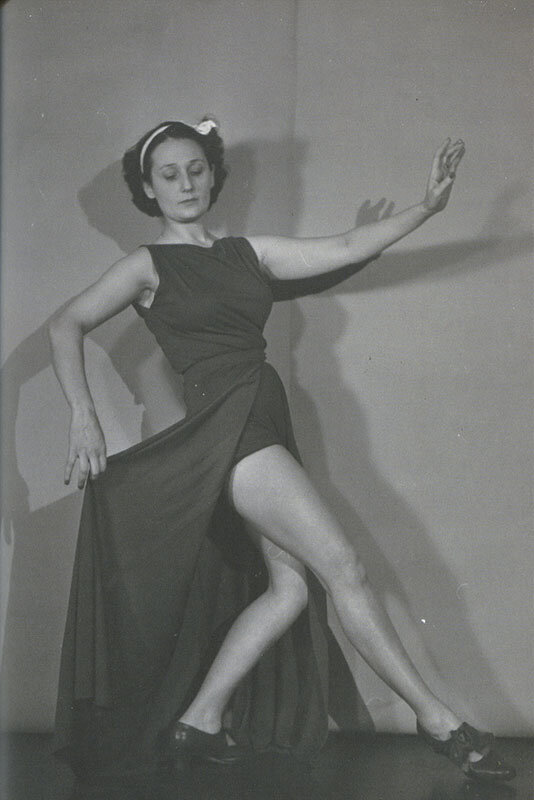
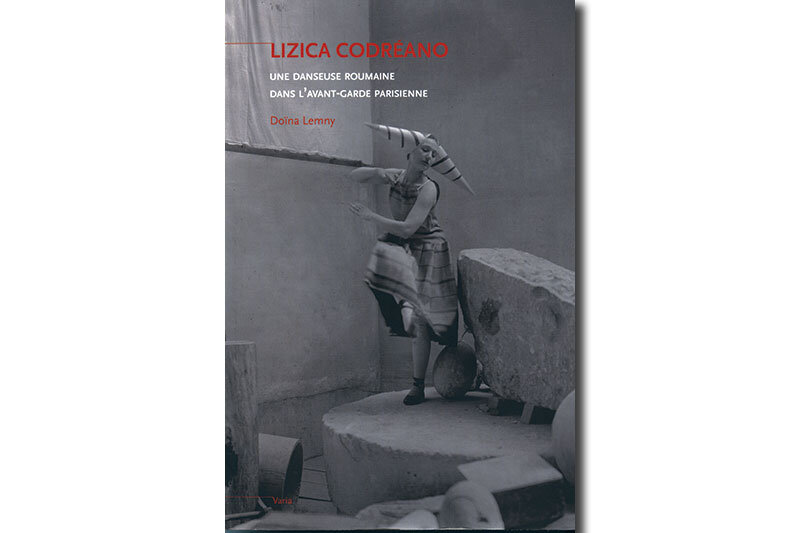
Lizica Codréano - A Romanian dancer in the Paris avant-garde Fage, 2011
My research into twentieth-century sculpture has led me to reflect on the artist's ability to capture and render movement. In an essay published in Ligeia magazine, January-June 2012, entitled "Brâncuși: "La sculpture nous fait danser", I propose an entire itinerary through 20th century sculpture to show the fascination of the greatest sculptors, from Rodin, Bourdelle and Brâncuși, through the entire avant-garde, with dance - the expression of bodily experience - and the dancer. While Rodin declared himself "powerless" to reproduce the mastery of the dancers from the Royal Ballet of Cambodia, who performed in Paris in 1906, other artists such as Bourdelle, Gaudier-Brzeska, Archipenko and Gonzalez sculpted dancers, capturing a particular movement, a particular gesture.
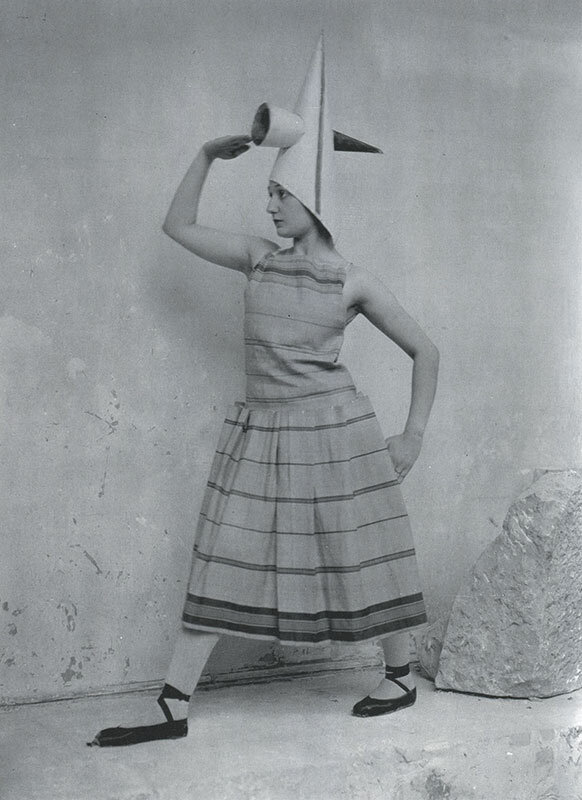
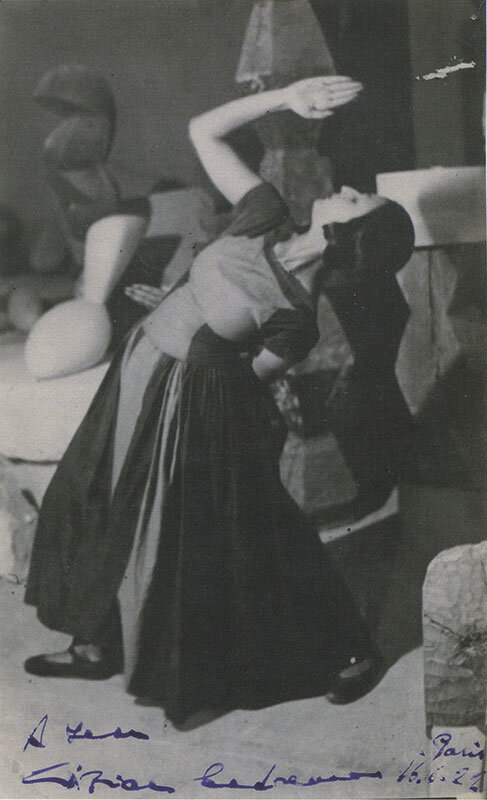
It seems curious to deal with the theme of dance in Brâncuși's work, when there is no known sculpture of a dancer. But what is important in the Romanian artist's work is that he "experienced" dance through careful observation: as early as the 1920s, his studio was frequented by young dancers who came to Paris to perfect their training. The artist - who at the time practiced photography and later film - recorded dance sequences on film, happy to capture a few moments of this spectacular ephemeral art. Among the many photographs, I identified a Romanian dancer, Lizica Codreanu, whose name also appears in correspondence with the sculptor.
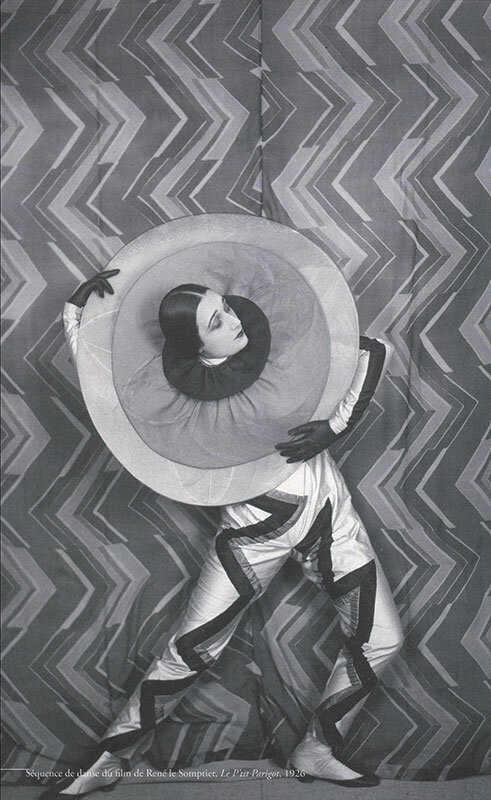
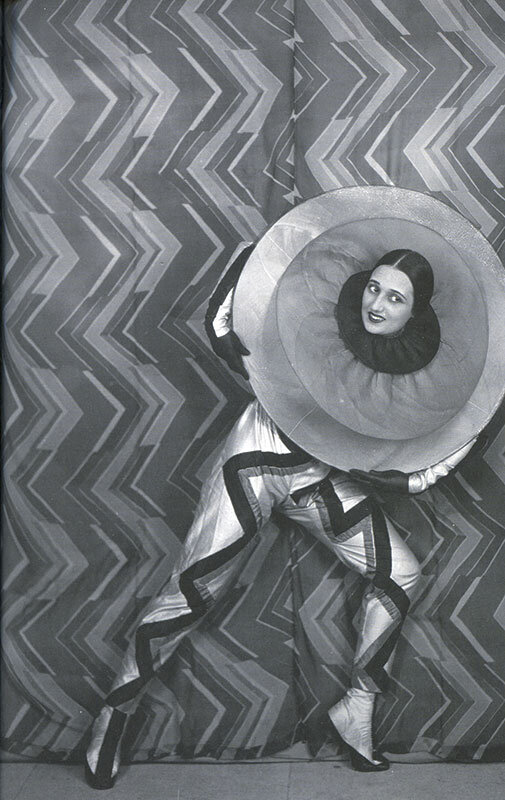
In 1995, on the occasion of the exhibition Le cinéma au rendez-vous des arts : France, années 20 et 30, the National Library of France published a catalog whose cover is illustrated with an image from René Le Somptier's 1926 film Le Petit Parigot. The illustration shows the same dancer, about whom even dance specialists didn't have much information. For me, however, the character was becoming extremely interesting, which is why I decided to follow in her footsteps, starting from the Brancusi archives and the personal archives - few in number - of her son, who was based in Paris.
The research proved fruitful, as I discovered that Lizica Codreanu had become very well known in Parisian avant-garde circles since her arrival in Paris in 1920. What is particularly striking is that the artist imposed her own personality from the very beginning and did not align herself with the ballet school for which she had come to Paris, but tried to assert her own ideas through improvisations and performances, which at that time marked a real change in the very conception of dance. At a certain point, she disappeared from the Parisian stage: through her marriage to the writer and journalist Jean Fontenoy, she interrupted her work to follow him on his missions to the Orient. Liza's experience of the Orient gave her the ideas to continue experimenting with body movement through a method that lies between art and medicine, yoga. Lizica practised yoga and when she returned to Paris, she opened a hatha-yoga practice where she "treated" numerous personalities from the international cultural world, including Hollyood stars and members of European princely families. Lizica's inventive approach to yoga as a psycho-somatic treatment, which she perfected in collaboration with doctors and the few specialists in the field.
For this journey, I had to research documents about the artistic atmosphere in Bucharest at the beginning of the 20th century, especially as there was no dance school at that time. The School of Fine Arts in Bucharest was just the starting point for these artists who, if they had the material means, took private dance classes and then went abroad to improve their skills. Thus, in the first part of the book, in the chapter "Bucarest, le rêve de la danse / Bucharest: dreams and dance projects", I have tried to recreate the atmosphere of the Romanian capital during this period, when young people full of dreams and aspirations, engaged in all kinds of cultural activities, thus contributing to the flourishing of the arts in Romania at the beginning of the century, which was really opening up to Europe.
The second chapter, 'Paris, le début d'une nouvelle vie / Paris: confrontation with the international scene', is richer in information and has enabled me to give an overview of the arts during the decade of Lizica's Parisian activities: from 1920 to 1928, based on her correspondence with figures of the Parisian avant-garde such as Sonia Delaunay, Fernand Léger, Tristan Tzara and others.
Brâncuși's studio, as a "laboratory" of modern art, is also presented here as the scene of the most daring performances in which the sculptor takes part directly, composing the costumes for his performance of Erik Satie's Gymnopedias, the composer, a good friend of the sculptor, watching with satisfaction as his musical pieces are staged.
With "L'Aventure orientale / The Oriental Adventure", I have brought a completely new insight into this little-known part of Lizica's life, since her marriage to Jean Fontenoy has led to her disappearance from the French artistic scene. Jean Fontenoy, a figure who has been overshadowed by French historians because of his collaboration with the Vichy regime, is back in the spotlight - a happy coincidence! - in a biography published by Stock (Gérard Guégan, Fontenoy ne reviendra plus, 2011) a few months before the publication of Lizica's biography. I did a careful search of the archives and historical works for this "troubled" period about which the artist's son had long been reluctant to speak. Instead, for the period of her return to Paris, when she opened her hatha-yoga practice and launched a real "fashion" with this method, I benefited from her personal archives and especially from a typed manuscript that Lizica had prepared, in collaboration with her assistant - later to become a well-known writer, Franco Lucentini - for a book about her practice. Interesting in terms of presenting the stage that hatha-yoga had reached at that time, but unfortunately insufficiently convincing in presenting Lizica's personal method, the book remained a manuscript that Romanian scholars have proposed to rework and translate into Romanian. Moreover, my book on Lizica Codreanu will be published in November 2012 in Romanian translation by Vellant Publishing House in Bucharest, and will benefit from the entire corpus of illustrations. The images, most of which are unpublished, were made available to me by Lizica Codreanu's son and grandson, the latter, Frédéric Fontenoy, a photographer, who is professionally looking after this precious collection.
Although Lizica Codreanu was not considered a dance star like Loïe Fuller, Isadora Duncan or Martha Graham, her creations contributed to the development of this art form, which had long remained trapped in rigid structures and which was renewing its methods at the beginning of the 20th century, when the young Romanian artist was embarking on this European adventure. Her name was familiar to the Parisian public in certain circles during the inter-war period, but was totally unknown to the Romanian public. That's why I thought it would be useful to recount her exceptional journey, which brought together several careers.