
The Possible City. Interventions in post-communist urban space
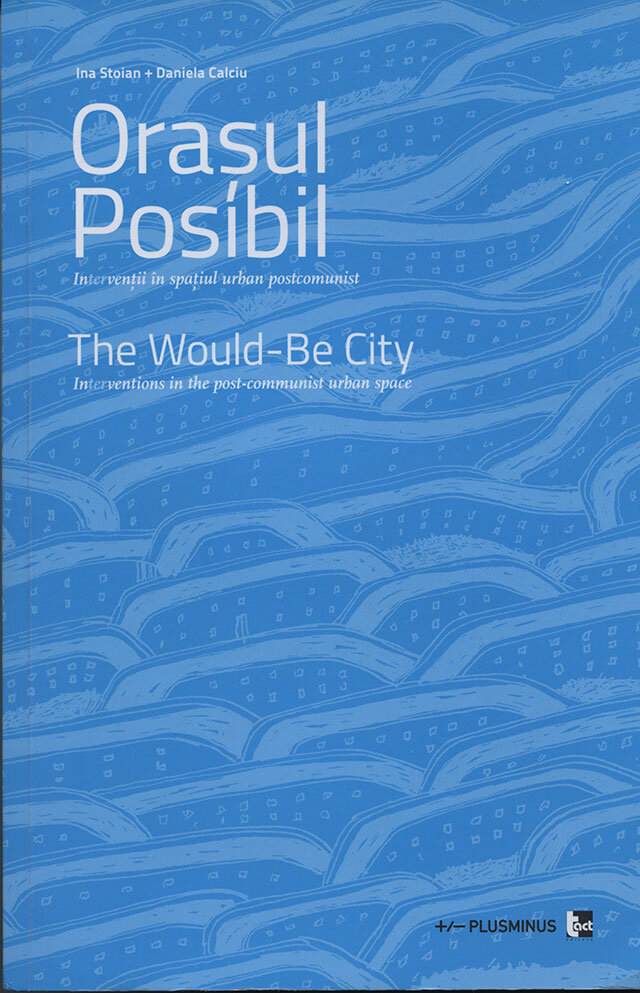
coord. Ina Stoian, Daniela Calciu, editura Tact, Cluj, 2012
The Possible City is a book of vitality, not because it is written by young authors, but because it is full of dreams and ideas. The book has only one aim: to highlight the beautiful.
Although, it is entitled The Possible City, the authors describe an objective post-communist Romania, they start from the archetypal post-communist city to create a new one, a city that capitalizes on natural resources, where space is appropriated to the needs of the community.
Communism in its form destroyed public space, the capacity for expression, the awareness of public space and people's trust, so the authors propose to break out of the communist imaginary by opening up and presenting the city in a new, for a moment undigestible form. However, the aim of the creative classes is not to conform to narrow visions or immediate financial interests, their aim is to give a new meaning to the present, to dream and create a future.
At the same time, the book is a handbook for novices in Romanian urban history and in contemporary trends in urban planning. The proposals put forward by the authors aim to adapt these trends to the local space in order to revitalize it.
An imaginative exercise such as this must come up with a proposal and not a solution, it must use the power of persuasion and example to be implemented, so the intervention that I consider immediately applicable is the block courtyard, on the one hand because at the moment it is the place that no one identifies with, it is the abandoned space, the slum, and on the other hand because it is easy to model.
In the authors' opinion, the block courtyard is the kind of space where experimentation is welcome and where change is many and rapid. Therefore, through a certain strangeness of its image, it can hold the promise of a playful experience and incite interaction so that all these block courtyards have the consistency of a post-communist city's cabinet of curiosities.
I believe that the whole purpose of the collective project Orașul Posibil is to quote George Matei Cantacuzino, which is also presented in the book: Our ideal is not to resemble anything, but to take from anywhere what can be useful to us and integrate it into a system of our own. This Romania must therefore be known and researched. This also means tracing all the sources that have been used by us up to now and all the elements that have contributed, with or without our will, to our formation so far. (Ciprian Pantea, sociologist)