
Transdisciplinarity and architecture - Cosmin Caciuc
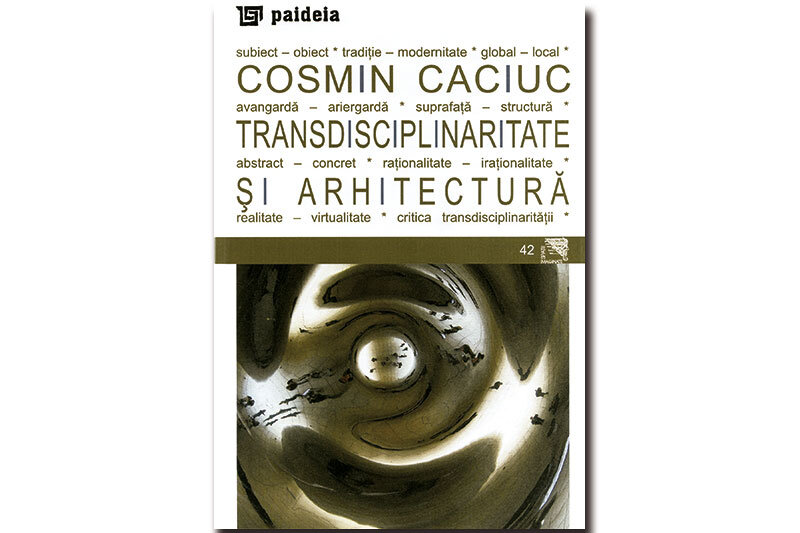
Paideia Publishing House, Bucharest, 2010
Identifying recent transformations of disciplinary boundaries in architecture, this study confronts theoretical discursive turbulence against the background of fundamental philosophical debates from 1970-2007, related to epistemology and hermeneutics.
At its core, the paper develops an analysis of implicit and explicit transdisciplinarity in architectural theory. At the implicit level, eight sub-chapters interpret the recent mediation between fundamental oppositions: subject and object, tradition and modernity, avant-garde and avant-garde, global and local, surface and structure, abstract concepts and concrete experiences, rationality and irrationality, reality and virtuality. At the explicit level, the "radical" perspectives of transdisciplinarity in architecture are compared with the "weakened" ones.
Transdisciplinarity responsibly harnesses the encyclopedization of knowledge and over-orthoretization in areas where architecture, the arts, the sciences and the humanities intersect and transform each other.
Its future depends on the integration of form and content, on maintaining creative tensions rather than conflicts over traditional fundamental oppositions, on mediating between oppositions and, above all, on activating an 'included third'.