
Arthur C. Danto - Transfiguring the Commonplace. A Philosophy of Art
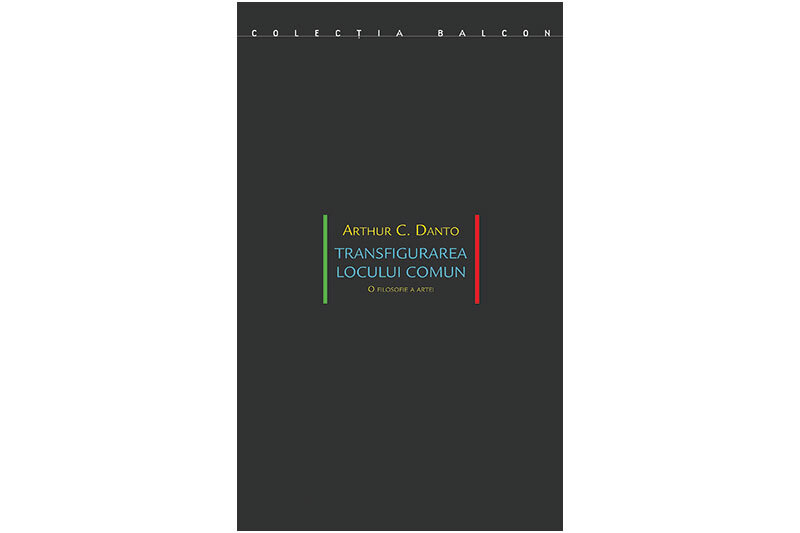
Editura IDEA Design & Print, Balcony Collection, Cluj, 2012
Here is a work that arrives, in a way, with a double delay: first, because the Romanian translation appears 31 years after the original version. Then, because the original itself has allowed itself a long gestation, whose beginnings coincide with the "state of philosophical intoxication" (as the author himself confesses), occasioned by the change of artistic paradigm produced by pop art, and whose conceptual horizon takes us even further back in time, to the moment of the historical avant-garde. In the second case we are dealing with a welcome delay: for it is written at the age of Arthur C.'s philosophical maturity. Danto's philosophical maturity, an age at which the arguments acquire maximum clarity and precision. At the same time, we are dealing with a work that owes immensely to the conditions of production of the art of the last century, art that Danto believes has become self-conscious, becoming its own philosophy. A book, then, as much about the revolutions of the art world as about the "end of art history," it undoubtedly does not resist the temptations of a unifying theory. Danto is in search of specific differences, of what might now explain the glaring injustice of contemporary art, the fact that certain objects we describe as "art" are no different in terms of perceptual examination from the objects of our everyday proximity. Equally, we wonder, along with the author, how is it that the former share the same ontological status as, for example, Renaissance canvases? And, given this state of affairs, why are we not all artists, even though each one of us could produce objects such as those often found in museums and art galleries?
(Vlad Morariu)