
Gilles Deleuze - Cinema 1. The moving-image
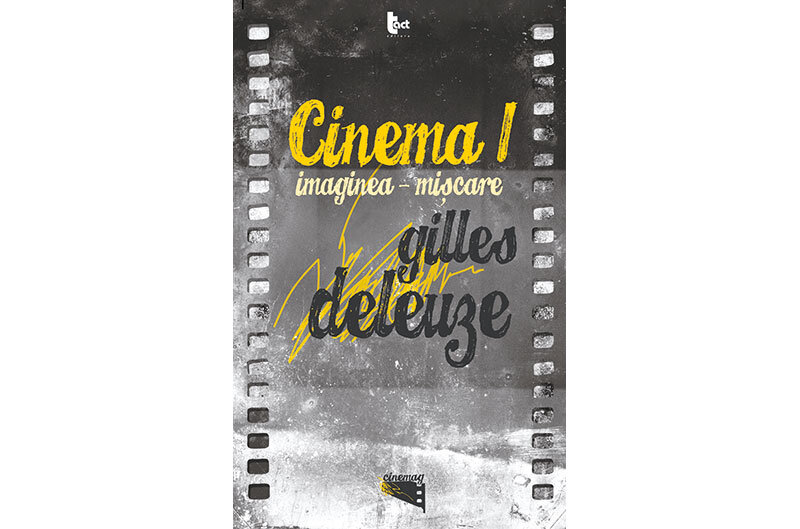
Tact Publishing House, Cinemag Collection, Cluj, 2012
Published in 1983, Cinema 1. The Moving Image, the first volume of the great synthesis on the art of film, apparently marked Gilles Deleuze's return to "classical" writing on his own, to "traditional", individual authoriality, after the great adventure in two with Félix Guattari, which had reached its climax with the publication in 1980 of the monumental tome Mille.
Plateaux , itself the second volume of a vast synthesis entitled Capitalism and Schizophrenia, an experiment in a different way of conceiving the Book and History. By concluding a two-part synthesis written in two parts in order to write a synthesis also in two parts, but apparently by himself, Gilles Deleuze was, however, only augmenting the "gang", the "pack", the "people", by realizing a "natural" history of man, or a "other metaphysics", the "other metaphysics", through his cinematic images, along with the whole pleiad of filmmakers and critics who have made the history of film. Thinking-together, the "collective assemblage of enunciation" thus multiplies its effectives explosively. Because Deleuze is not so much writing about authors or characters or concepts ("conceptual characters") as he is operating, acting, creating with them. At the limit, Deleuze writes with the World. In writing this book, Deleuze surprised, once again, everyone. Why precisely about the movie, through the movie, together with the movie? And what is this book really, as a genre? What does Deleuze pursue and achieve through it? Where is he "beating"? What is really at stake in this enterprise? These are the main questions to which all the exegetes have been striving unceasingly, from the book's publication to the present day (i.e. for over thirty years now), to answer, trying to think along with Deleuze and the "gang" he has assembled, the "people" he has constituted.
(Bogdan Ghiu)