
Collage City
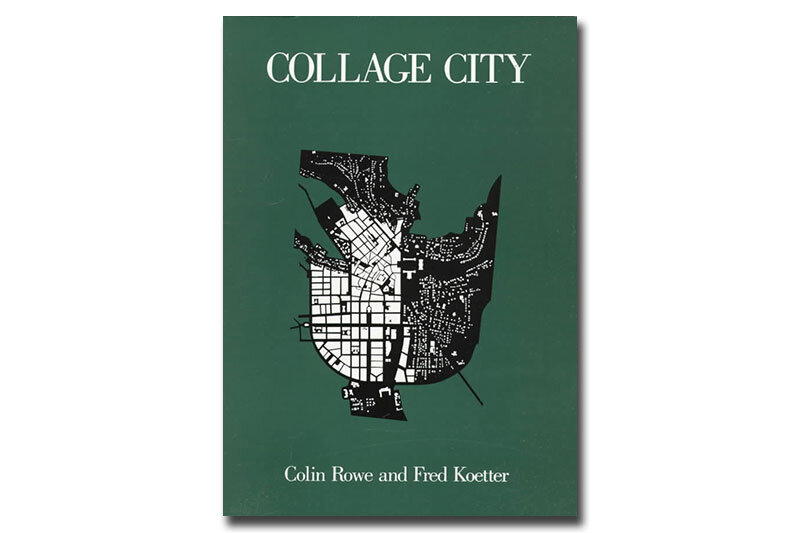
| Collage City, Colin Rowe & Fred Koetter's famous book, is to come out in Romanian version during the first half of November this year. The translation of this ground-breaking essay is the first title from a more comprehensive project initiated by Associate Professor Dr. Magda Teodorescu, who plans to translate several key books for the Romanian architects. Which is to say and borrowing Harold Bloom's concept of literary canon, the project considers the making of the canon of architectural books, that is, those books that have impacted the architectural thought lately. For this year the project has been granted funds from the National Cultural Endowment, and the book is to be published at "Ion Mincu" University Press. The translation has been done by a team coordinated by Associate Professor Dr. Magda Teodorescu. The committed members of this team are as follows: Assistent Arch. Dr. Miruna Stroe, Assitent Arch. Ilinca Constantinescu (doctoral student), and the 3rd year students Adina Ceară and Antonia Ivancu. We invite you to read a fragment from the chapter "After the millennium". |
| The famous book Collage City, written by Colin Rowe and Fred Koetter, will appear in Romanian translation in the first half of November 2013. The translation of this groundbreaking essay is the first title of a larger project, initiated by Prof. Dr. Magda Teodorescu, which aims at translating fundamental books for architects. Better said, and borrowing Harold Bloom's concept of literary canon, the project aims to create a canon of architectural books, i.e. those books with a great impact on architectural thinking.This year the project has received funding from the National Administration of Cultural Fund and will be published by the "Ion Mincu" University Publishing House. The translation, coordinated by Prof. Dr. Magda Teodorescu, is carried out by a team which includes assistant dr. dr. arh. Miruna Stroe, asist. drd. Ilinca Constantinescu and third year students Adina Ceară and Antonia Ivancu. We invite you to read an excerpt from the chapter "After the Millennium. |
Parousia of modern architecture. A welter of eschatological fantasies about an imminent, apocalyptic catastrophe, seasoned with others about the instantaneous emergence of the golden age of mankind. Crisis: the threat of damnation, the hope of salvation. Irresistible change that still requires human participation. New architecture and new urbanism as emblems of the New Jerusalem. Forms of corruption of the great culture. The fireworks of vanities. Self-transcendence towards a form of collectivized freedom. The architect, restored to virtue and fortified by the equivalent of religious experience, can now return to his primordial innocence.
This is to caricaturize, albeit without too much distortion, a complex of feelings that often lie just below the threshold of consciousness, feelings that are crucial to the formation of the consciousness of the modern movement.
Make me a little house in the valley, she said,
Un' to mourn and pray,
But don't destroy my palace towers,
So graceful and beautiful
that are built;
Perhaps someday I may return with others
When I purge myself of all the vines.
The sentiments which Tennyson, in his volume The Palace of Art (1832-'42) attributed to his own soul were more or less representative of the modern architect of the nineteen-twenties, and it is difficult sometimes to question their abstinence and moral dignity. But if 'a cottage in the valley' (un cottage ornée) can drastically lose its value as a symbol of innocence, then so can others.
And when, in the late nineteen-forties, modern architecture became formalized and institutionalized, the image of the modern town suffered accordingly. Modern architecture had no doubt arrived, but New Jerusalem was not exactly mainstream, and slowly there were signs that somewhere along the line something was not quite right. Modern architecture did not, ipso facto, lead to a better world; and as the equivalent fantasies contracted, out of the confused critical target there arose a certain confusion, which we would not be wrong to say affected the architect from then on. Was he no longer capable of seeing himself as the protagonist of a new cultural integration? Did he really need to see himself in this way? And if so, how?