
Sculpture - Architecture
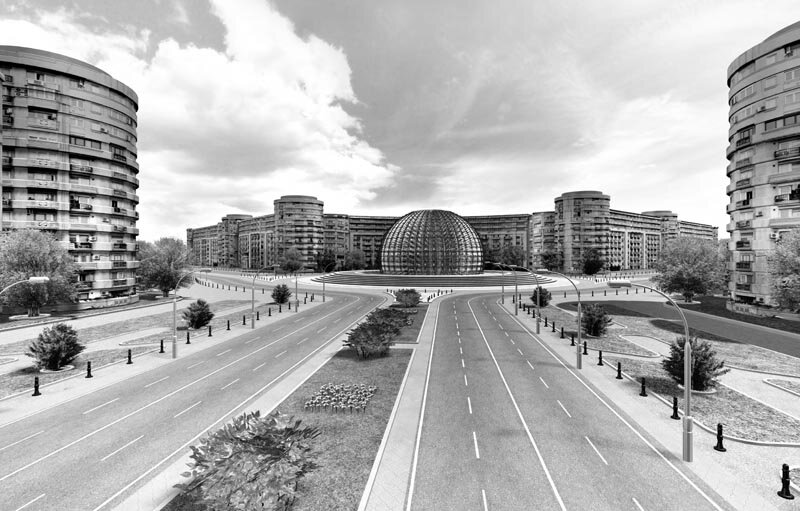
Ioan Bolborea proposes a unique symbiosis in Romania
"Even a vitriolic epoch is worthy of respect, for it is the work not only of men, but of mankind, and therefore of creative nature, which can be burdensome, but never absurd. If the age in which we live is oppressive, we have all the more a duty to love it, to fill it with our love, until we have mourned the heavy masses of matter concealing the light that shines beyond them" - Walther Rathenau's "Ou va le monde"1.
This is what artist Ioan Bolborea is doing. In a period that was not generous to artists and extremely poor in concrete means of expression, the sculptor Bolborea does not lose hope, finding reasons in himself to go further and raise his eyes to the beautiful things around him. Positive, full of love and understanding, even if it's not always easy, he manages not to hunch his shoulders under the question that, it seems, is no longer wiped from the lips of many of his colleagues - "What's the use?"... What good is it to talk to young people about truth when all around is a lie, what good is it to believe in culture when non-values flash on television screens, what good is it to build when so many people are found to tear down with the noise of unsaid words, what good is it to try to convince when so many people live with the feeling that they know it all... The denial that the vitriolic age we live in makes us feel acutely in many of our attempts brings us to the same rhetorical question - "What's the use?"... A certain researcher Jean Sulivan is the author of the term that incredibly clearly defines the problem of disgust with life, a new disease specific to modern man, "lacebunita".
Ioan Bolborea is a survivor, unchanging, immune to this disease, who - however tired of his daily battle to create fascinating and meaningful forms and to exhibit them in public spaces - looks at reality as it is, overcoming the trials he is subjected to, not allowing them to leave deep traces in his soul. He is the one who builds the wings of his dream from his thoughts, and it takes shape, fills with color and even materializes, flying higher and higher, smoother and more harmonious. In moments of doubt, of indecision, sculptor Ioan Bolborea acts! He does not indulge in long moments of analysis. He goes from practice to theory, from deeds to faith, so faith inspires his deeds. This is the secret of his success! "Do as if you believed, and you will end up believing in order to do" - wrote Miquel de Unamuno in his book "Diary"2.
In his foundry in Giulești, Ioan Bolborea is constantly battling with fire and huge chunks of matter. The way he looks at metal or stone, the way he touches them, the way he expresses his power through them define him as a man and as an artist. His strength is consumed in the handling of the heavy melting machines, but it never ends, because it is fed by cosmic power. Intuition and inspiration are the concepts he exhales through every pore of his skin, mind, soul, through gestures and words.
"Known as an artist creator of public monuments, Ioan Bolborea, modern in his sculptural manner, is a traditionalist by his ideational approach". Academician Răzvan Theodorescu makes this statement in one of his plastic chronicles about the responsible creations of his lifelong friend, after a review of his most important works - "The Infantrymen's Monument", "The Monument of Reconciliation", "Horia, Cloșca and Crișan", "Burebista" and others, emphasizing that they are dedicated to Romanian history "heroic, not event-related"3.
The most recent artistic achievement of the sculptor Ioan Bolborea is the prestigious work in front of the National Theater "I. L. Caragiale" in Bucharest, "Caragialiana", which has become an integral part of the street spectacle of our days, adorned with flags and placards by demonstrators, as a continuation of the same eternal caricature of political characters and conflicts. As the writer Ioan Grosan remarked - "We live, whether we like it or not, in I. L. Caragiale's zodiac: a zodiac that seems, for Romania, to be eternalizing"4. (...) (...)
Read the full text in issue 6/2013 of Arhitectura magazine
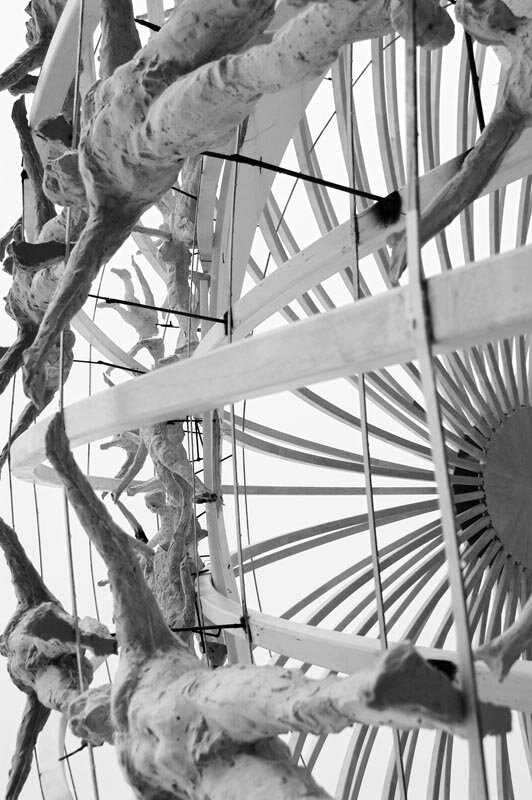
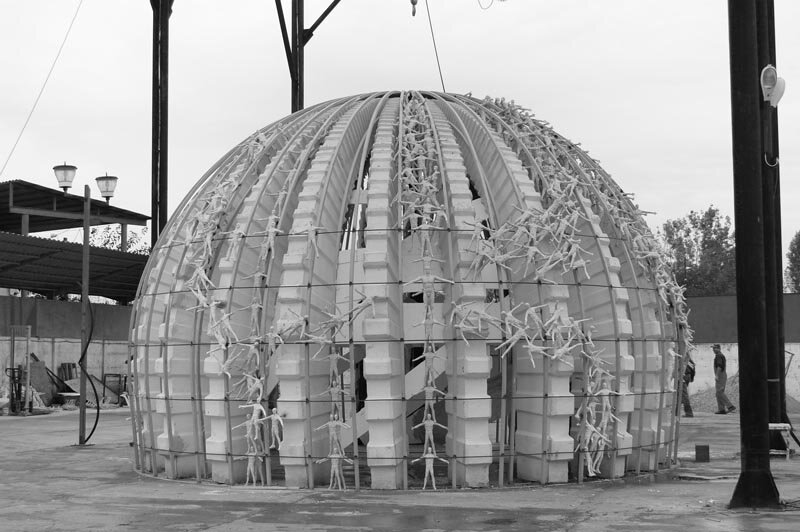
PHOTO:
Artist's personal archive
BIBLIOGRAPHY:
1 "Ou va le monde, by Walther Rathenau", BiblioBazaar Publishing House, 2008.
2 "Morning Light - The Spiritual Journal of Jean Sulivan", Gallimard, 1976.
3 "Jurnal intim", by Miquel de Unamuno, Polirom Publishing House, 2007.
4 Răzvan Theodorescu - article posted on www.bolborea.ro.