Innovation Center UC Anacleto Angelini, Santiago, Chile
Architecture:Elemental - Alejandro Aravena, Juan Cerda, Gonzalo Arteaga, Víctor Oddó, Diego Torres
Contributors: Samuel Gonçalves, Cristián Irarrázaval, Álvaro Ascoz, Natalie Ramirez, Christian Lavista, Suyin Chia, Pedro Hoffmann
Structure: Mario Alvarez - Sirve S.A.
Electrical: Carlos Gana - Ingenieria y Proyectos ICG y Cía. Ltda.
Mechanical: Sirve S.A.
Project Manager: Juan Cerda
Energy Efficiency: Bustamante y Encina Asesorías en Sustentabilidad
Independent revision: Gerardo Sepúlveda - S&C Revisores de Edificación
Installations: Vivanco y Vega Ltda., Gustavo Concha - A&P Ingeniería
Beneficiary: Grupo Angelini, Pontificia Universidad Católica de Chile
Surface: 455.351 square meters
Built area: 8.176 sq.m (building), 12.494 sq.m (parking lot)
Budget: 18 million USD
Design phase: 2011-2012
Construction phase: 2012-2014
Materials: reinforced concrete, steel, wood, reinforced concrete, steel, wood, glasstext
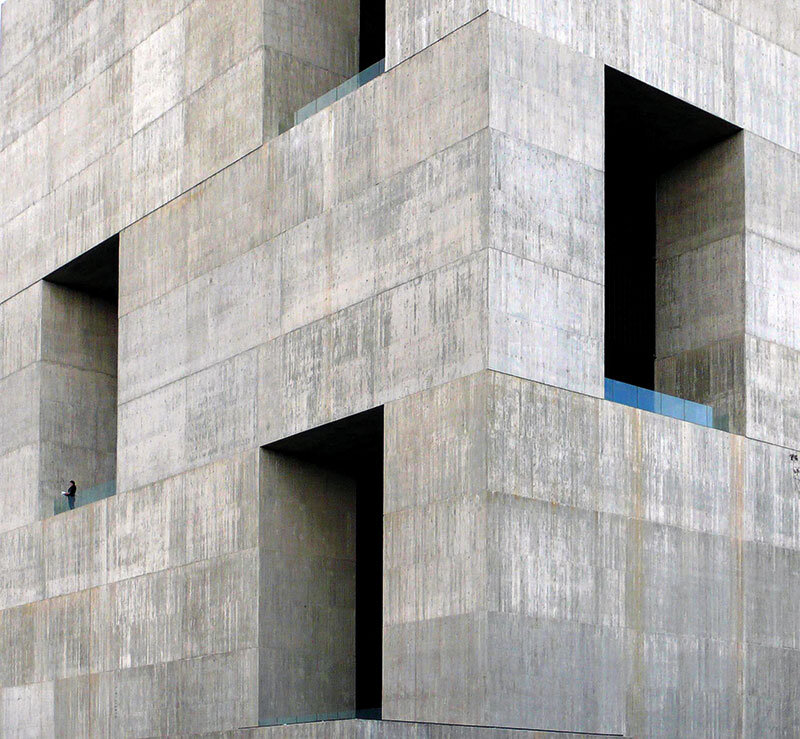
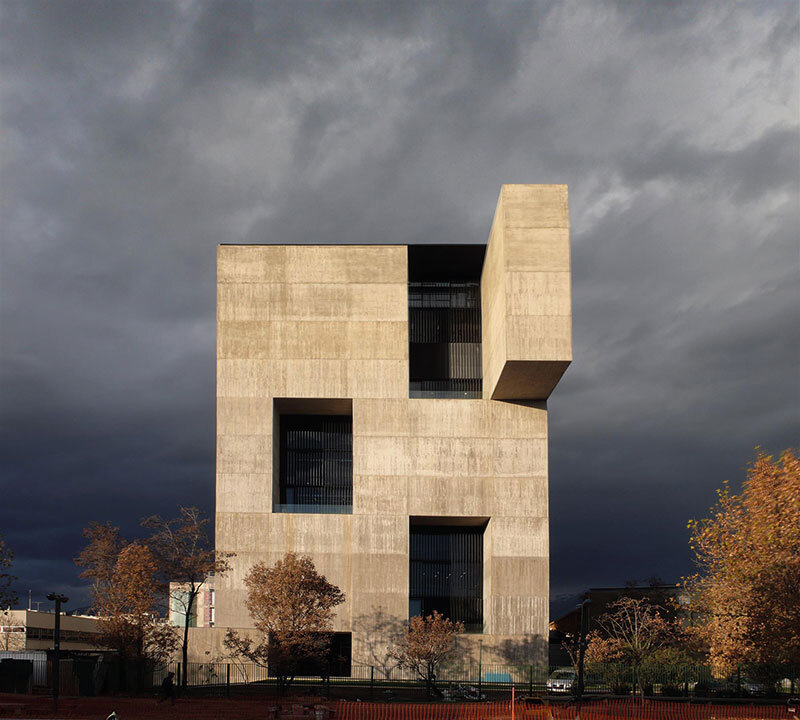
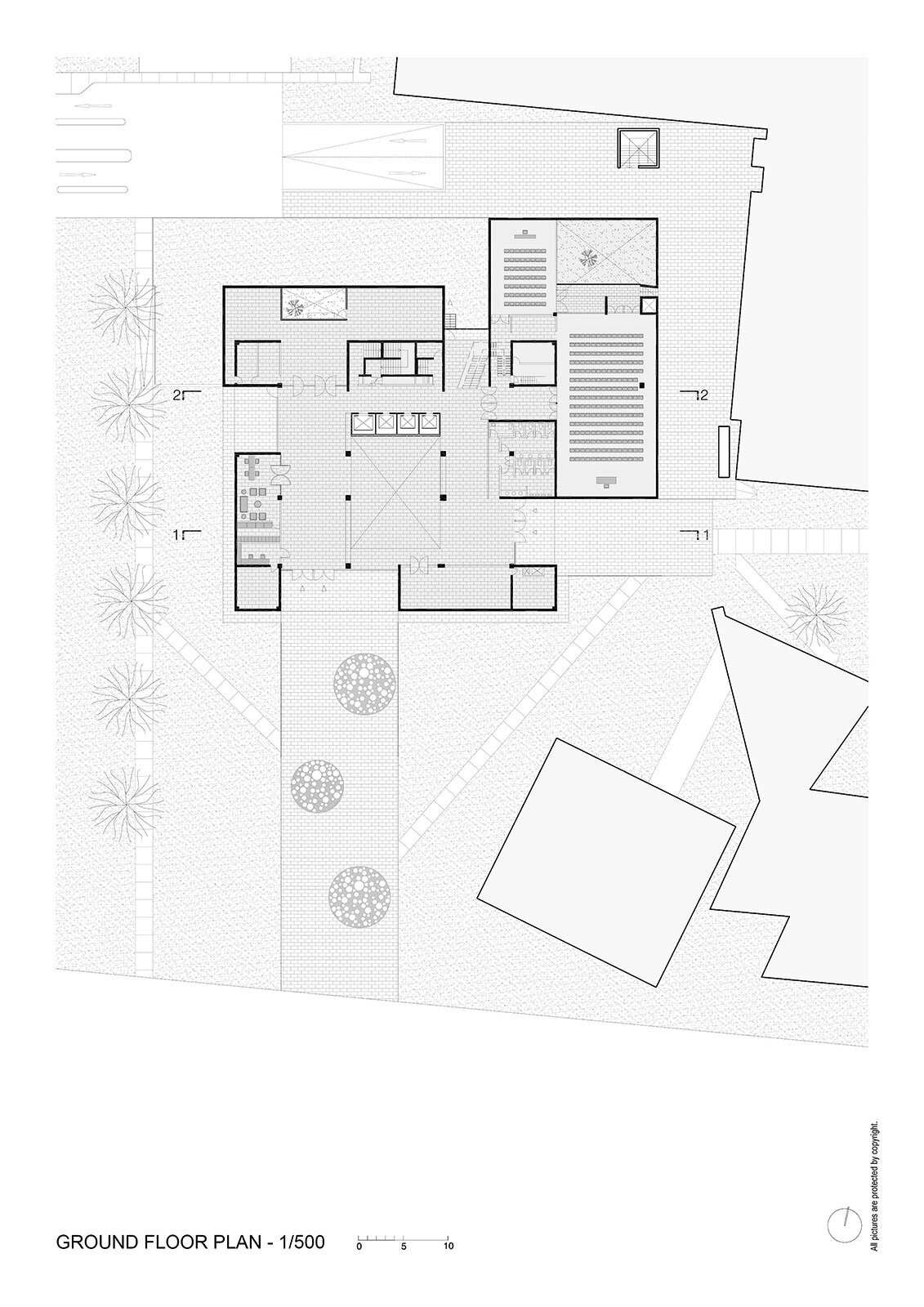
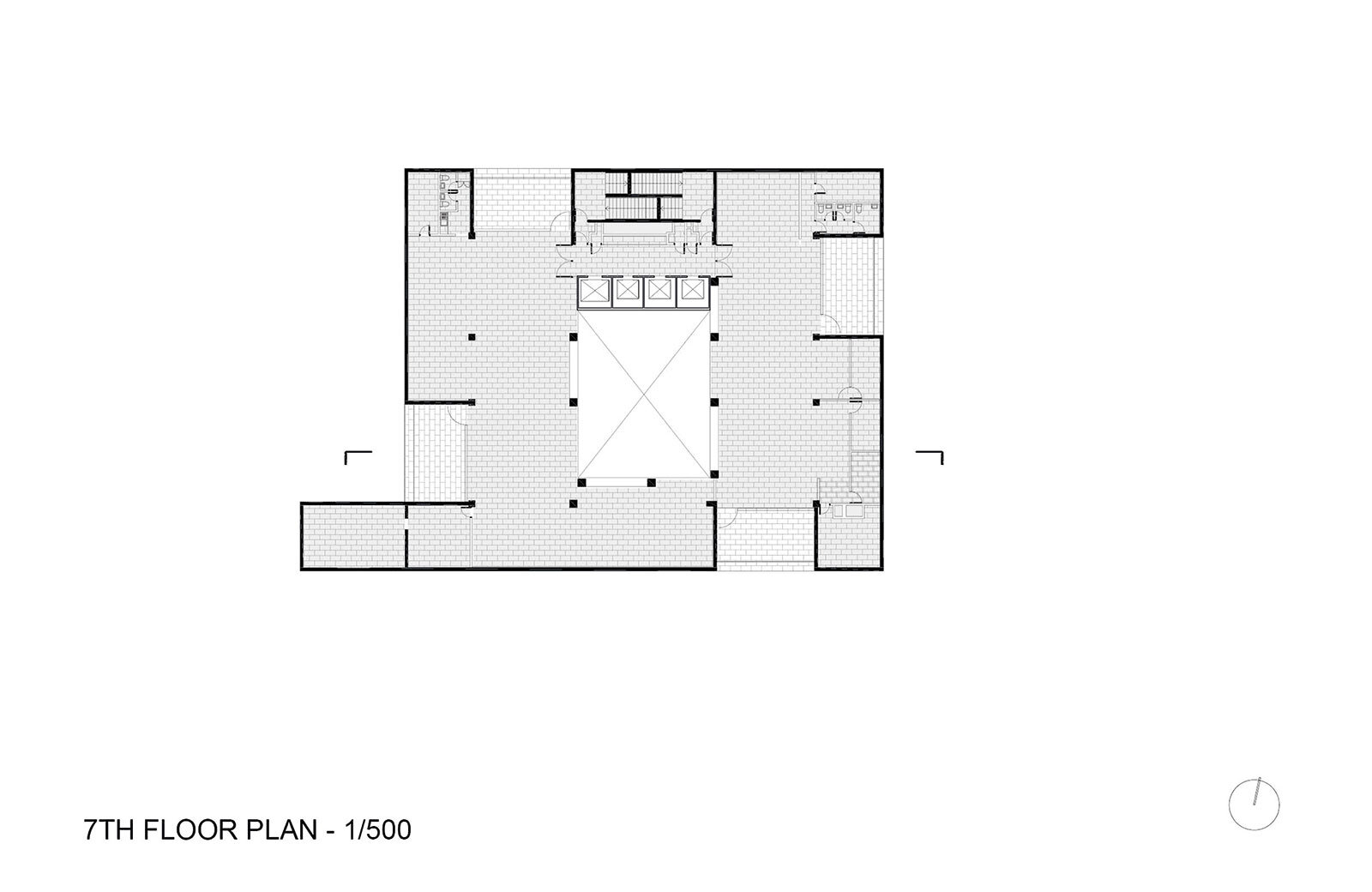
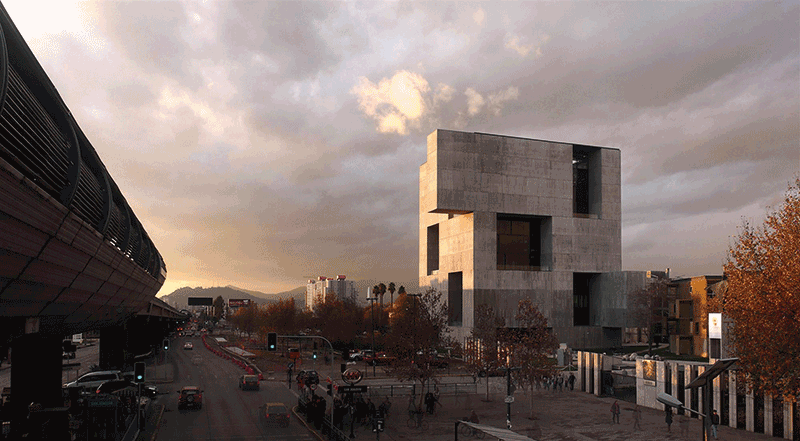
| In 2011, the Angelini Group decided to donate the necessary funds to create a center where companies, enterprises and, in general, demand could converge with researchers and excellence in academic knowledge creation. The aim was to contribute to the process of know-how transfer, identifying business opportunities, adding value to existing resources or registering patents in order to improve the competitiveness and therefore the development of the country. The Catholic University of Chile decided to host such a center and allocated land on the San Joaquin campus.To accommodate these objectives the proposal was to design a building in which at least four forms of work could be included: a matrix of formal and informal work, crossed by individual and collective ways of meeting people. In addition, we figured that face-to-face interaction is unbeatable when one wants to create knowledge, so we multiplied throughout the building the places where people could meet: from the elevator lobby, where a bench has been placed where you can sit if you happen to meet someone who has interesting information to share, to a transparent atrium where you can spy on what others are doing as they circulate vertically up and down the stairs that run the entire height of the building. Reversing the typical office space plan (replacing the opaque core with the transparent glass curtain perimeter with an open core with strategically perimeter open table) not only responded to the functional reasons, but amplified the environmental performance and passive character of the building. This construction had to meet the client's expectation of an innovation center with a "contemporary look". But the uncritical search for contemporaneity has populated the city of Santiago with glass towers which, due to the local desert climate conditions, have serious greenhouse effects indoors. Such towers consume large amounts of energy in air conditioning. The way to avoid unwanted heat supplements is not ultra-complicated; it is sufficient to place the building mass on the perimeter, arrange the glass in a recessed plane to prevent direct solar radiation and to allow ventilation. Thus we reduced from 120 kW/sqm/year (the consumption of a typical glass tower in Santiago) to 45 kW/sqm/year. Such an opaque facade was not only energy efficient, but also helped to diminish the extremely strong light that normally forces to protect interior workspaces with curtains and blinds, turning the initial theoretical transparency into mere rhetoric. In this sense, the response to the context was nothing other than the rigorous use of common sense. On the other hand, we thought that the greatest threat to an innovation center is wear and tear and moral, functional or stylistic inadequacy. Thus, the rejection of the glass facade was not only due to a professional responsibility to avoid extremely poor environmental performance, but also a search for a design that could stand the test of time. From a functional point of view, we thought that the best way to fight moral attrition was to design the building as infrastructure rather than architecture. A clear, straightforward and even difficult form is ultimately the most flexible way to allow for continuous change and renewal. Stylistically, we thought of using a strong, monolithic materiality and a rather strict geometry as a way to replace fashion with timelessness. |
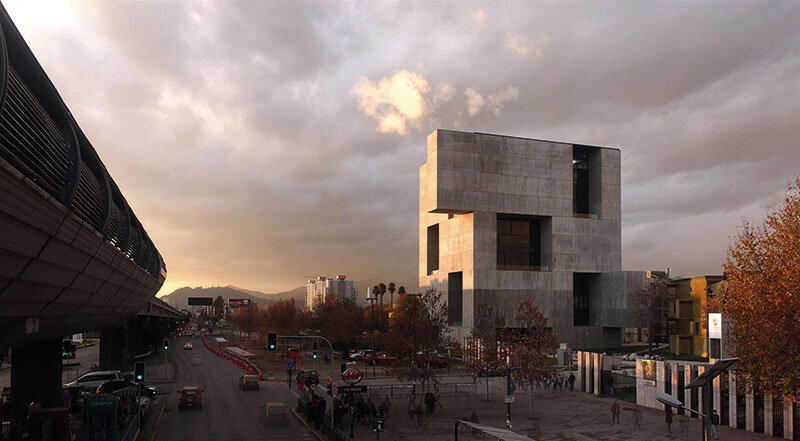
| In 2011, Angelini Group decided to donate the necessary funds to create a center where companies, businesses and more in general, demand, could converge with researchers and state of the art university knowledge creation. The aim was to contribute to the process of transferring know-how, identifying business opportunities, adding value to existing resources or registering patents in order to improve the country's competitiveness and consequently its development. Our proposal to accommodate such goals was to design a building in which at least 4 forms of work could be verified: a matrix of formal and informal work crossed by individual and collective ways of encountering people. In addition to that, we thought that face to face contact is unbeatable when one wants to create knowledge, so we multiplied throughout the building the places where people could meet: from the elevator's lobby with a bench where to sit if you happen to run into somebody that has interesting information to share, to a transparent atrium where you can sneak into what others are doing while circulating vertically, to elevated squares throughout the entire height of the building. The reversal of the typical office space floor plan (replacing the opaque core with transparent curtain wall glass perimeter by an open core with the mass strategically opened in the perimeter) responded not only to functional reasons but to the environmental performance and character of the building as well. This building had to respond to the client's expectation of having an innovation center with a "contemporary look", but the uncritical search for contemporariness has populated Santiago with glass towers that due to the desert climatic local condition have serious greenhouse effect in interiors. Such towers spend a huge amount of energy in air conditioning. The way to avoid undesired heat gains is not rocket science; it is enough to place the mass of the building on the perimeter, have recessed glasses to prevent direct sun radiation and allow for cross ventilation. By doing so we went from 120 kW/mp/year (the consumption of a typical glass tower in Santiago) to 45 kW/mp/year. Such an opaque facade was not only energetically efficient but also helped to dim the extremely strong light that normally forces to protect interior working spaces with curtains and blinds transforming in fact, the theoretical initial transparency into a mere rhetoric. In that sense the response to the context was nothing but the rigorous use of common sense. On the other hand, we thought that the biggest threat to an innovation center is obsolescence; functional and stylistic obsolescence. So the rejection of the glass facade was not only due to the professional responsibility of avoiding an extremely poor environmental performance, but also a search for a design that could stand the test of time. From a functional point of view, we thought the best way to fight obsolescence was to design the building as if it was an infrastructure more than architecture. A clear, direct and even tough form is in the end the most flexible way to allow for continuous change and renewal. From a stylistic point of view, we thought of using a rather strict geometry and strong monolithic materiality as a way to replace trendiness by timelessness. |