
Ascanio Damian's project was the School
Interview with Professor Emil Barbu Popescu, President of the "Ion Mincu" University of Architecture and Urbanism.
Simina Stan: Professor Doctor of Architecture, Arhitectura magazine is honored that you accepted the invitation to talk about Professor Ascanio Damian. Not knowing how to begin, when and how did you meet him?
Emil Barbu Popescu: I was a student in 1964, he was the rector and he was teaching at the workshop, in the senior years. I got to know him better between 1968-1973, as a student representative in the school's Governing Board, which met weekly. During Ascanio Damian's rectorate, we managed to organize the Pop Music Festival (1969-1971), we set up Club A. He was open to student initiatives. The democracy of the teacher-student relationship was maintained all the time, despite some earthquakes, nevertheless the dialog existed. It instilled in students this pride of being graduates of this school.
S.S.: What were Ascanio Da-mian's milestones/patterns? Have they remained the same throughout his life? Was Le Corbusier a landmark for Ascanio Damian?
E.B.P.: I think that he was a model for the modernist period in which a whole series of architects with a certain openness joined. It was the transition from imposed architecture, with a profoundly classicist tinge, to the modernist zone, which was of course influenced by Le Corbusier throughout Europe. Basically, the architecture of the coast in the 1960s is the answer to the modernist architecture practiced in Romania.
I don't remember being a disciple of Le Corbusier, but they certainly appreciated him, as the modernist breath of modernism was emerging in their generation. Among Romanian architects, he appreciated Haralamb H. Georgescu, Horia Creangă.
S.S.: Name representative works by the architect Ascanio Damian and explain your choice.
E.B.P.: His project was the School. He was a teacher and remained a consultant teacher until 2002, although he had retired in 1978. He rode his bicycle to school every day.
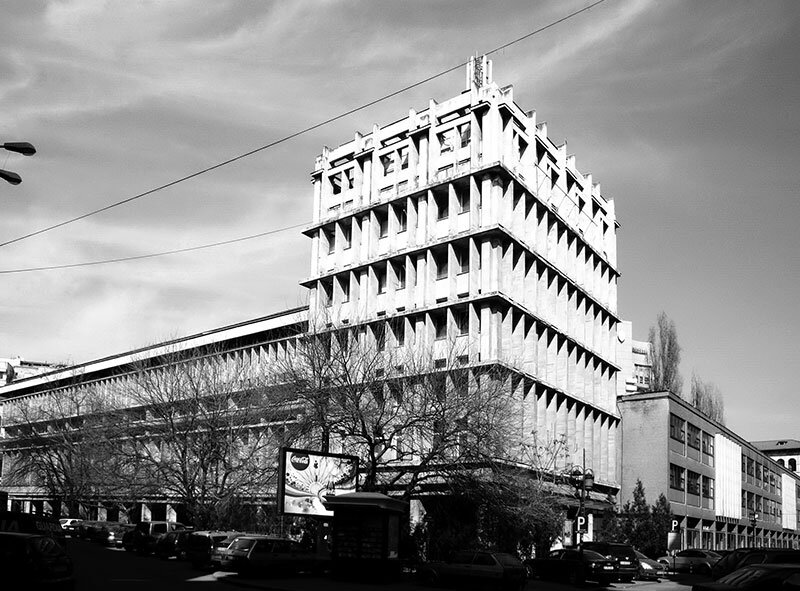
Architecturally, a spearhead is the ROMEXPO Pavilion, which very clearly expresses a professional thinking, an accuracy of conduct, a clarity and openness.
S.S.: How did the "Ion Mincu" Institute of Architecture evolve during the Damian rectorate (1959-1971)? What was preserved? What has changed?
E.B.P.: He made a categorical transition from one educational system to another, with an outward-looking approach, with Western and other influences, while preserving a certain area of Romanian tradition. He brought a whole series of reputable architects inside the faculty. The willingness to innovate and modernize, on the other hand, bringing in young architects, as well as established ones, is commendable. It managed to ignore the political criteria and implications of the time. It has not broken wings. It did not compromise. He showed courage.
S.S.: How did performance rugby and architecture come together?
E.B.P.: Ascanio Damian was the myth of the erudite rugby player, as he won four national championship titles with Sportul Studențesc and a fifth with the same team under the name of the University. He also played for Romania's national team (1934-1949) as an openside halfback or center, and later became president of the Romanian Rugby Federation. The rugby tradition in the School was started by him. He brought Nicu Pădureanu, coach of the national rugby team, to the Physical Education Department. In the 1960s, Arhitectura had a rugby team in the B division. Ascanio Damian passed on to future generations the idea of sport, which has now been lost. He is known for his involvement in the establishment of the faculty badminton and oisin teams.