
Housing, an old, familiar but impossible to abandon topic
The Housing Unit: a Well-known Old TopicImpossible to Abandon
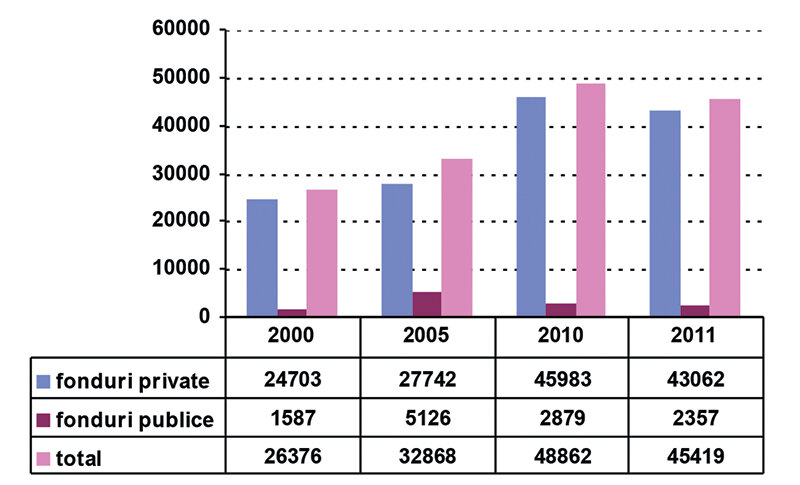
| Housing, in the context of the article, is brought before the reader's eyes as the contemplation of a material product integrated temporally, spatially, functionally, structurally, culturally and aesthetically. In spite of its complexity, housing still plays the same social role today as it has had throughout history, undergoing changes over time determined by technological developments, the materials used and the relationships established between the consumer of housing, its producer, the financier and the mechanism of public administration.Housing is the necessary condition for human development, and is a widely debated topic due to the way in which the state is involved, the way in which taxpayers' money is spent, the efficiency of production and social justice. Moreover, studies on housing actually lead to an understanding of society1. Housing has undergone significant changes in terms of housing standards, financing, the balance between social and private housing and the balance between owned and rented housing in the three post-World War II phases 1950-1970, 1970-1990 and 1990-present. Despite these changes, housing remains the main link between economic well-being and social structure. Quantitatively, more than 70% of urban space is housing - collective or individual. Qualitatively, if we follow the tourist trail, historic areas appear more attractive because of their heritage values - historical, cultural and aesthetic. But this indicator is not enough. If we consider the usefulness of neighborhoods where housing has complex attributes, such as convenient access to traffic, good quality and safe services and utilities, forms of recreation, then quality also refers to the dynamics and well-being of residents in general and by age groups in particular. The economic and cultural strength of certain eras, manifested in territorially differentiated ways, have enriched, through the development of technologies and construction materials, the capacity of housing to better meet the demand for housing and urban spatial constraints, but also to adapt to withstand natural hazards, mainly seismic. Housing, like any other architectural production, is analyzed and can be judged by the quality of its interior, private, and exterior, public, urban space. From this point of view, the space is a reflection of the designer's education and, through the geometric and stylistic values attributed to it, it contributes to the creation of a cultural heritage visible to the city's inhabitants and visitors. Housing, demographic dynamics and economic development In 2014, 54% of the world's population lived in urban areas, and the trend is rising towards 66% in 2050.2 In Romania, the urban population is 54% of the total number of inhabitants, of which 16.1%3 are over 65 years of age. Migration trends towards urban areas are not evenly distributed across the national territory, posing problems for local administrations, especially administrative and university centers, in ensuring access to housing (e.g. Timisoara, Cluj-Napoca, Iasi, Constanta, Pitesti, Craiova, Bucharest). Housing is an integral part of each nation's economy and culture. Housing is connected to other components of the economy closely linked to people's needs, demand and social processes, through the supply of land, infrastructure, building materials, technology, labor and finance4. Housing is a key component of the urban economy, particularly in central urban areas. Through direct investment and spending on related services, the housing sector contributes 12-18% to GDP. Considering the role of housing in the economy also calls for a design of fiscal policy to achieve programs for the construction and rehabilitation of the existing housing stock. Integrating fiscal policies into the content of a housing and land policy facilitates economic development in general and urban development in particular. The dynamics of the housing sector in Romania and its contribution to economic development compared to other European countries is modest. The causes are the reduced demand for housing, generated by migration, and the inability to pay the cost of purchasing or renting a dwelling. NSI 2011 territorial statistics illustrate the number of dwellings completed in the period 2000-2011 from public and private funds. Fig. 1 - Number of dwellings completed between 2000-2011 Dwelling, shelter, home or place where you are at home Article 25 of the Universal Declaration of Human Rights recognizes housing as part of everyone's right to live an adequate standard of living. The European Social Charter mentions in Article 16 the right of individuals and their families to have a dwelling. Paragraph 61 of the Istanbul Housing Agenda 1996 and subsequently of the Istanbul+5 meeting in 2001 identifies the necessary steps that governments should take to promote, protect and fulfill the right to adequate housing. The Convention on Economic, Social and Cultural Rights (ICESCR) in its Article 11 includes, in addition to the right to adequate housing, several essential aspects such as: security of tenure in all existing legal forms, ensuring housing conditions through the existence of services, facilities and infrastructure, and the possibility of access to housing. These international treaties refer to people, emphasizing their ability to buy or rent a home, to be able to continue to live in it, and identifying the role of the state in providing housing for disadvantaged groups. People may be financially stable, unemployed, poor, young people starting their careers, elderly or disabled. This implicitly raises two fundamental issues: 1. Investigating market mechanisms to analyze people's ability to access housing and employment and the length of time they can remain in housing and employment; 2. The need to develop a policy on social housing and related services for groups that cannot afford to buy or rent housing. The role of central and local government is important in the success of the research on the above two issues. While the central government aims at interventions that help the housing market to be complete and perfect - subsidies for people who cannot afford housing, housing standards that ensure environmental quality, health and building safety, local government through urban development plans identifies sites that are easily accessible, well-equipped with public services and recreation. Financial institutions are an important element in the housing sector. Loans and mortgages can help to increase direct investment in housing, or in services adjacent to housing, as long as they can provide financing under conditions of interest rate security for the lender and security and satisfactory returns for the borrower. In this context, it is important to monitor the performance of firms with expertise in protecting financial institutions against excessive lending risks. Housing, education and the architectural profession Buying a home is one of the most important investments made in a person's lifetime. Physical comfort, safety, socialization, contribution to the economic development of cities are some of the significant elements for which housing has an important role to play in the process of university education and professional training. The teaching curriculum takes on an integrated form, both in terms of knowledge and teamwork practice, directed towards the identification of housing need, the structure of needs according to age, housing in the context of family mobility, identification of the buyer's ability to pay, the efficiency of the producer, forms of housing finance and the relationship with the land use plan and urban planning regulations. The thematic dossier presents housing from various angles of interest and knowledge, and the authors of the articles that we propose for your perusal contribute to future discussions on housing, a subject that is old, familiar but impossible to abandon. Housing policy Housing is a fundamental right and a substantial public cost. How can it be negotiated politically in the long term? One answer has to be sought in the culture and management of central and local public administration, in the way politicians understand housing and its social and economic role. Housing and urban development The article and the case studies point to the place of housing in the framework of urban development and the importance of understanding physical and mental space - in the same concept. The interviews conducted and the two case studies emphasize that there are no recipes in defining a city, but offer the reader two extreme directions in which to delve. Living in heritage buildings The architectural heritage of various eras is today being rehabilitated and inhabited by people with diverse understandings and appreciations of culture in general and architecture in particular. How to ensure the transfer of the values of the past while ensuring the comfort of the present and what is the role of the architect is the testing territory that the article investigates. Housing from education to reality Housing has been a permanent quest between function and form. The history of architecture presents a sum of buildings, architects and schools of architecture that have contributed to the permanent understanding of the interplay between the material and the spiritual. The role that the dwelling plays today in the Romanian school of architecture is revealed through the presentation of contemporary architectural aspirations within the university curriculum. |
| NOTES: 1 Jim Kemeny, Housing and Social Theory, 1992. 2 United Nations, Department of Economic and Social Affairs, World Urbanization Prospects, 2014, Revision. 3 INS, Census of Population and Housing, 2011. 4 UN-HABITAT, 2010. |
| In the context of this article, the housing unit is presented to the reader as a material product integrated temporally, spatially, functionally, structurally, culturally and aesthetically. Despite its complexity, the housing unit still evinces the same social role it has possessed throughout history, namely to record the changes caused by technological developments, materials used and the relations established between the consumer of the housing unit, its manufacturer, its finan- cer and the public administration system.The housing unit is a pre-requisite of human development and is being widely debated from the perspective of state involvement, modality of spending taxpayers' money, efficiency of production and social justice. Moreover, the studies conducted on this topic have actually led to an understanding of society at large1. During its three stages after the Second World War - 1950-1970, 1970-1990 and 1990-present - the housing unit has witnessed significant changes in terms of housing standards, financing, established ratio between the social and the private dwelling, and ratio between the owned and the rented dwelling. Despite such changes, the dwelling still remains the main link between economic well-being and social structure. In terms of quantity, more than 70 % of all urban spaces are designed to function as housing units, whether collective or individual. In terms of quality, if we observe the tourist routes, historical areas appear to be more attractive because of their historical, cultural and aesthetic value. This indicator, however, does not suffice. If we analyze the degree of usefulness of certain districts in which the housing unit has complex features, such as convenient access to traffic, safe and good quality services and utilities, forms of recreation, then quality is also concerned with the dynamics and well-being of residents in general, as well as of the residents classified according to age groups. The economic and cultural force of certain eras, expressed differently according to the territory, has enriched, through the evolution of technologies and construction materials, the capacity of the housing unit to better address the demand for dwellings and certain urban spatial constraints, as well as its capacity to conform in order to withstand natural disasters, in particular earthquakes. The housing unit, like any other architectural production, can be analyzed and appreciated through the perspective of the interior private space and of the exterior public urban space. From this standpoint, space is the reflection of the designer's education, and the geometrical and stylistic values ascribed to the space contribute to the establishment of a cultural inheritance visible to the city dwellers and visitors. The Housing Unit, Demographic Dynamics and Economic Development In 2014, 54% of the world population is living in urban areas, and this trend is on the increase towards 66% in 20502. In Romania, the percentage of the urban population is 54% of the total number of inhabitants, 16.1%3 of which are more than 65 years old. Migratory trends towards the urban areas are not uniformly distributed on the national territory and raise issues for the local administrations, especially for administrative and university centers, when it comes to ensuring the proper conditions for access to housing (e.g. Timișoara, Cluj-Napoca, Iași, Constanța, Pitești, Craiova, București). The housing unit is an integral part of the economy and culture of every nation. It is connected with other components of the economy closely related to people's needs, to social demand and processes, through the offer of land, infrastructure, construction materials, technology, labor force and funding.4 The housing unit is a key component within the urban economy, especially in the central urban areas. Through its direct investments and its expenditure with related services, the housing sector's contribution to the GDP ranges between 12% and 18%. An analysis of the role of the housing unit in the economy also requires a certain type of fiscal policy, focused on the delivery of building programs and on the rehabilitation of the existing housing stock. The integration of the fiscal policies in the content of a specific housing and land policy facilitates economic development in general and urban development in particular. The dynamics of the housing sector in Romania and its contribution to the economic development, compared with other European states, is modest. The causes are the decrease in the demand for dwellings, generated by migration, and the incapacity to pay the purchase or rental cost for a dwelling. The territorial statistics of INS 2011 illustrate the number of dwellings completed in the period between 2000 and 2011 from public and private funds. Fig. 1 - Number of completed dwellings in the period between 2000 and 2011 The dwelling as a shelter, as domicile or as the place where you are at home Article 25 of the Universal Declaration of Human Rights recognizes the dwelling as a part of each and every human being's right to an adequate standard of living. Article 16 of the European Social Charter provides for the right of the individual and of his/her family to a dwelling. Paragraph 61 of the Istanbul 1996 Housing Agenda and subsequently the 2001 Istanbul+5 meeting identified the steps that governments must take in order to promote, protect and ensure the right of access to proper housing. Article 11 of the International Covenant on Economic, Social and Cultural Rights (ICESR) includes, in addition to the right of having a dwelling, several essential aspects such as: the safety of the right to possess a dwelling in all its current legal forms, providing the housing conditions by supplying the necessary services, equipment and infrastructure and the possibility to have access to a dwelling. International treatises focus on people, and on their capacity to purchase or rent a dwelling, to go on living in it, and on the role of the state in ensuring housing for disadvantaged groups. People may have a stable financial situation, they may be unemployed, destitute, young persons in the early stages of their career, elderly or disabled people. This gives gives rise to two fundamental aspects: 1. The research of the market mechanics to analyze the persons' capacity of access to housing and to a workplace and the duration of preservation thereof; 2. The need to draft a policy on social housing and the related services for the groups who cannot afford to buy or rent a dwelling. The role of the central and local administration is key to the success of any inquiry into the two aspects previously mentioned. While the central administration is focused on interventions contributing to a complete and perfect real estate market - granting subsidies to people who cannot afford a dwelling, eco-friendly housing standards, health and safety of construction works - the local administration, via the urban planning documents, identifies easily accessible sites provided with the necessary public infrastructure, general services and recreation facilities. An important element of the housing sector are financial investments. Loans and mortgage credits can contribute to an increase of direct investments in housing or housing-related services, as long as they can provide funding to ensure the interest rate to the creditor and in conditions of safety and satisfactory profit to the debtor. In this context, it is important to watch the performances of the companies skilled in protecting financial institutions against excessive risks when granting credits. The housing unit, architectural education and the architect's profession The purchase of a dwelling is one of the most important investments a person makes during his or her lifetime. The physical comfort, the safety, the framework of social relations, the contribution to the economic development of cities, all these are significant arguments in favor of the dwelling occupying an important place in the university education and vocational training process. The educational curricula takes on an integrated form, in terms of both knowledge and practice of team work, aiming to identify the housing needs, the structure of needs depending on age, the dwelling in the context of family mobility, the buyer's payment capacity, the producer's efficiency, the various forms taken by housing financing, and the relation with the land use plan and the urban planning regulations. The thematic brief presents the dwelling from various angles of interest and knowledge, the authors of the articles proposed for reading contributing to open future discussions on dwelling as an old, well-known topic which is nevertheless impossible to abandon. The Housing Policy The housing unit is a fundamental right and a substantial public cost. How can this be negotiated in the long run? The answer needs to be found in the culture and management of central and local public administrations, in the modality in which the political understands the issue of the dwelling and its social and economic role. The dwelling and urban development The article and the case studies underline the importance of the dwelling in the framework of the development of urban areas and the importance of understanding the physical and the mental space in the same concept. The interviews conducted and the two case studies emphasize the fact that there are no recipes in defining a city, and provide the reader with two extreme directions which he can analyse more thoroughly. Housing units in historically valuable buildings The architectural legacy of the various eras is nowadays rehabilitated and inhabited by people with diverse understandings of and appreciations for culture in general and architecture in particular. What the article sets out to investigate is how one can ensure the transfer of the values of the past while preserving the comfort of the present and what the architect's role is. The dwelling from education to reality The dwelling has been a permanent quest between function and form. The history of architecture depicts a sum of buildings, architects and architecture schools which have contributed to shaping a permanent understanding of the play between the material and the spiritual. The role currently played by the dwelling in the Romanian architecture school is revealed by presenting contemporary architectural aspirations in the content of the university curriculum. |
| NOTES:1 Jim Kemeny, Housing and Social Theory, 1992. 2 United Nations, Department of Economic and Social Affairs, World Urbanization Prospects, 2014 Revision. 3 INS, Census of population and housing, 2011. 4 UN-HABITAT, 2010. |