Diploma project: Lisbon Multimedia Center
Stud.-arh. Vlad POPA
Faculty of Architecture "G. M. Cantacuzino", Iași
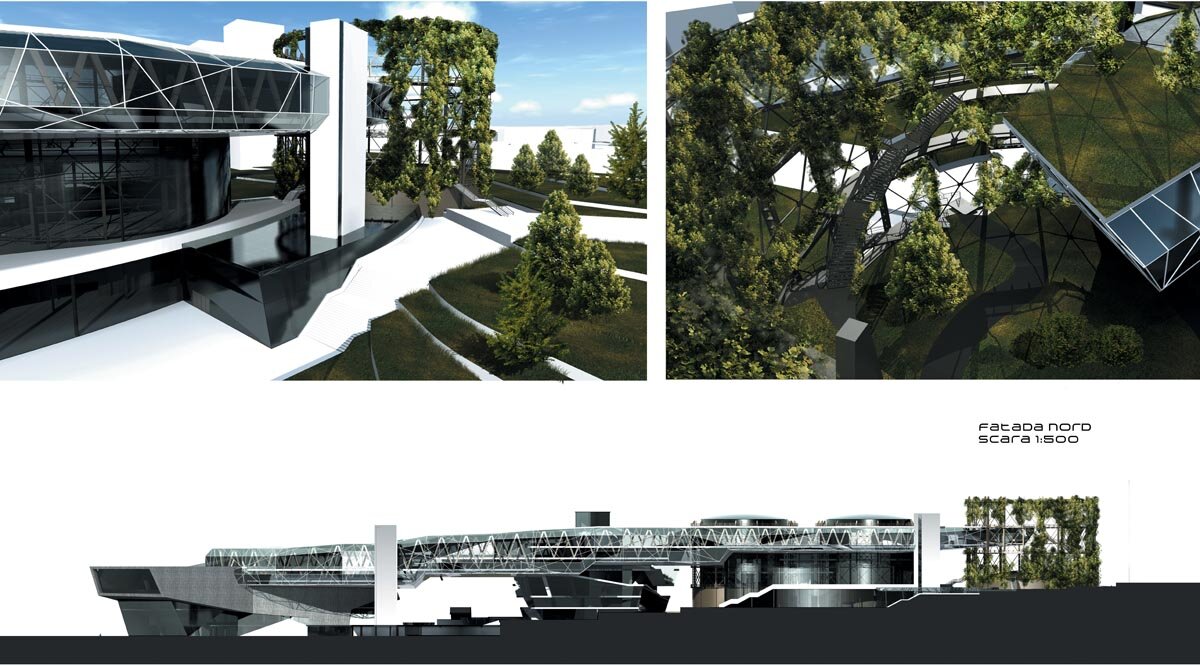
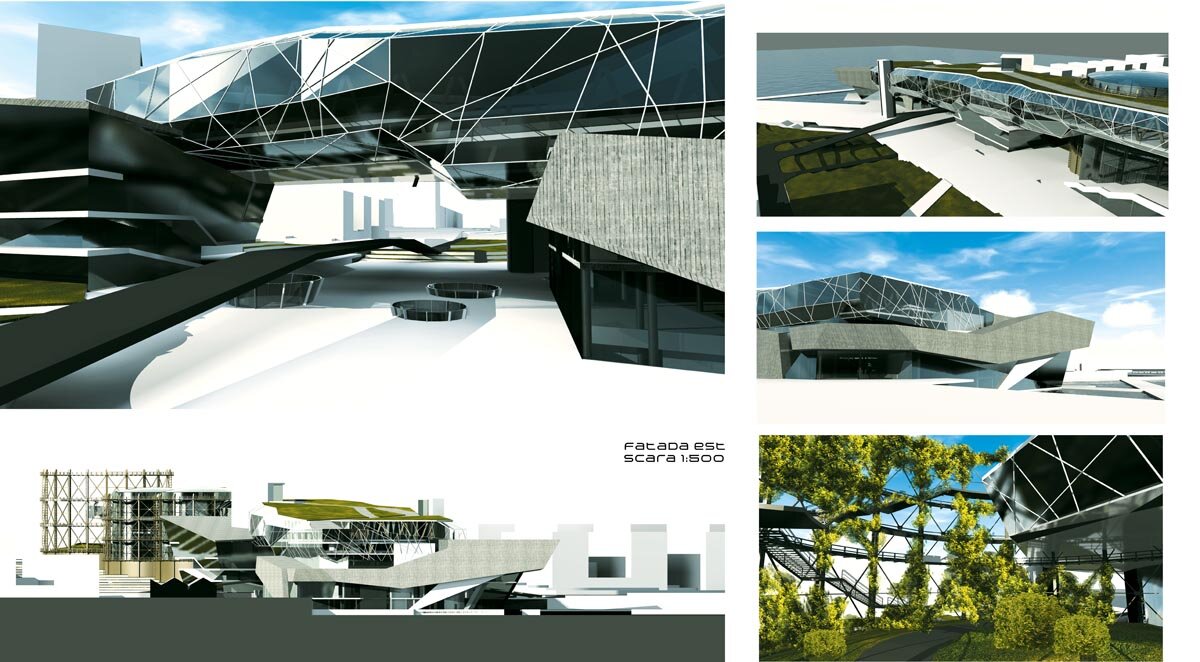
The compositional idea of the project is the result of the contemporary interpretation of the theme-program data, in close relation with the particular site conditions. As a consequence, a coherent structure is proposed, complexly integrated into the site, with the role of an architectural-urbanistic bridge able to fulfill a combination of functions: pole of cultural and social life, zonal revitalization and valorization of disused industrial buildings, interzonal connection and stimulating architectural path.
In today's world, people and their social interactions have a specific dynamic, their manifestation and evolution making it necessary to create a functional, healthy and expressive urban setting, a quality support for cultural emancipation and social participation. Hence the current development of large-scale programs of public spaces, spaces for socializing, where people can meet to socialize and exchange information and experiences, and for learning. Thus, the role of architecture as a means of linking space and human experience is affirmed, a role defined both by its utilitarian and constructive attributes, as well as by its informational, but above all aesthetic ones.
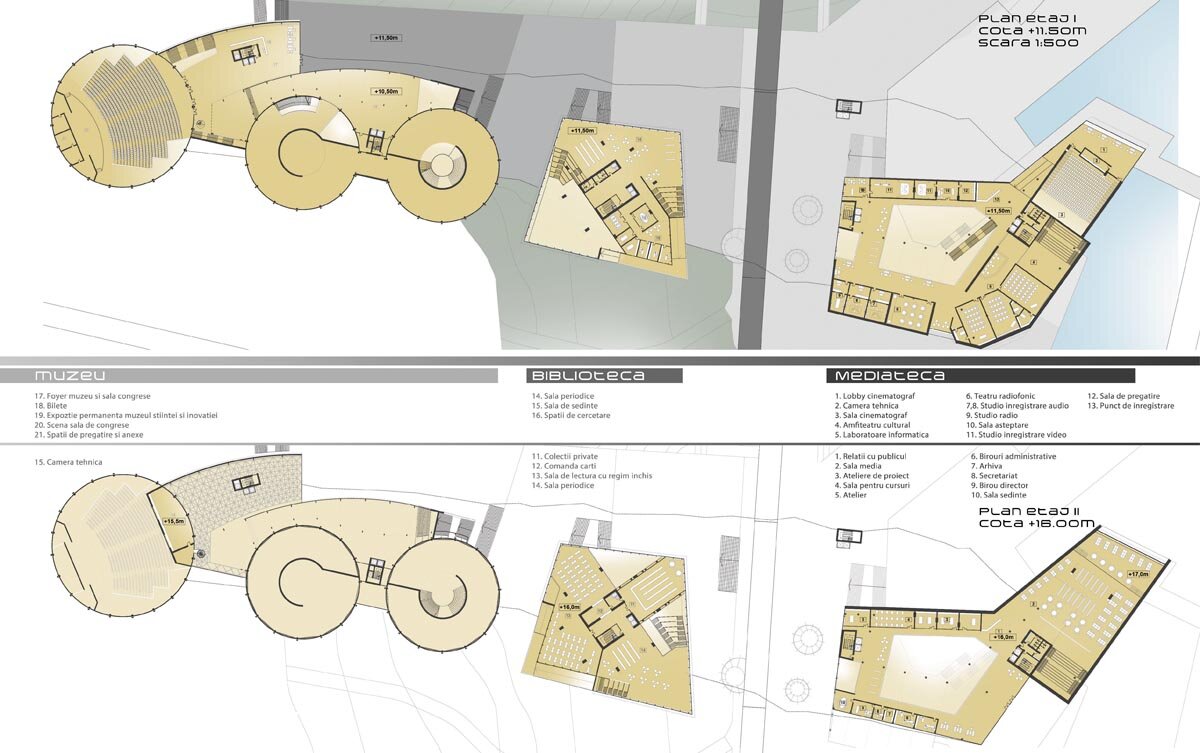
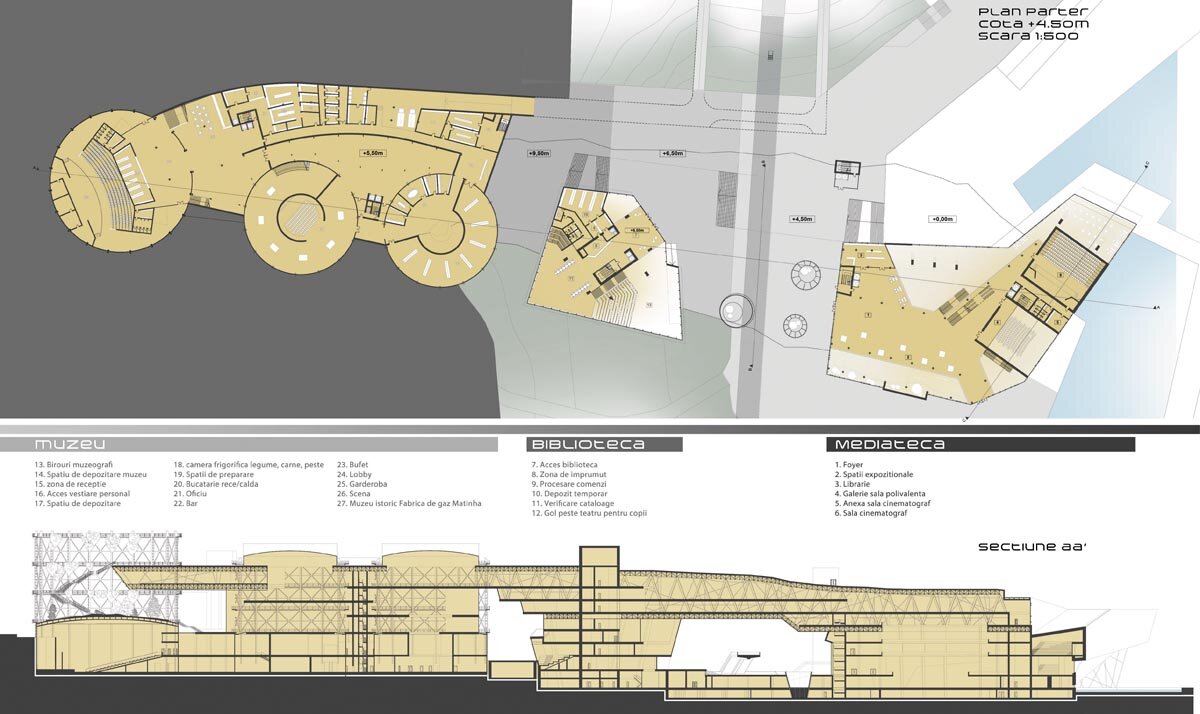
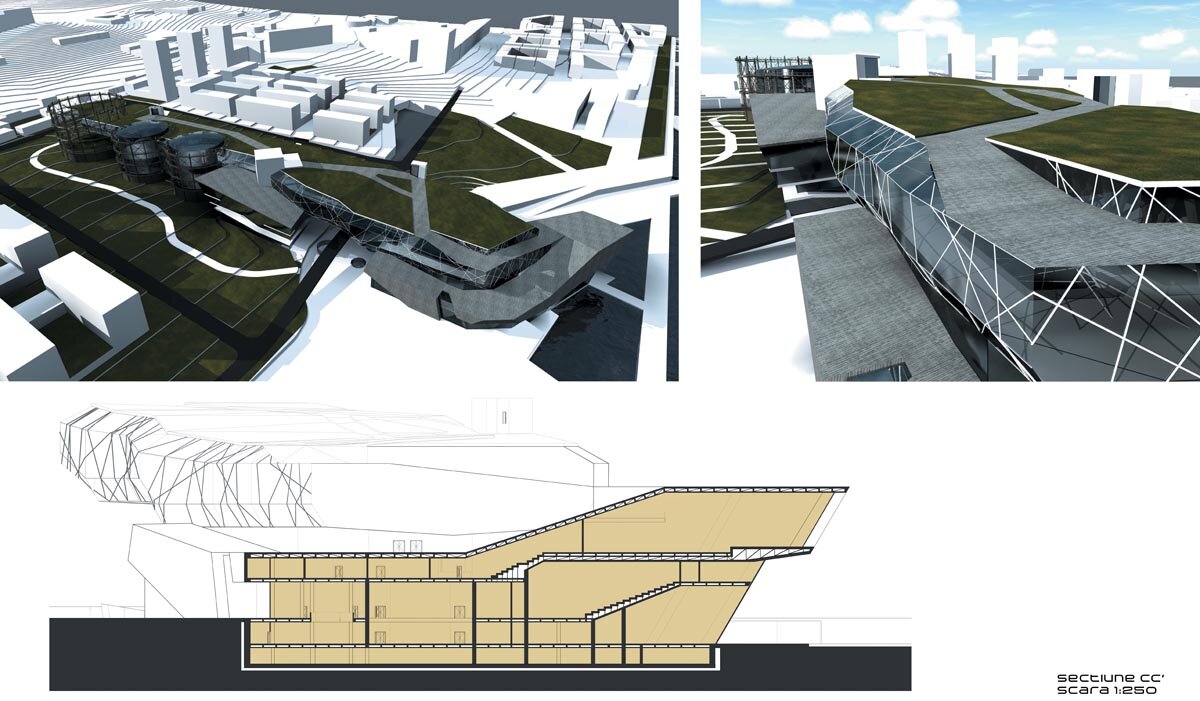
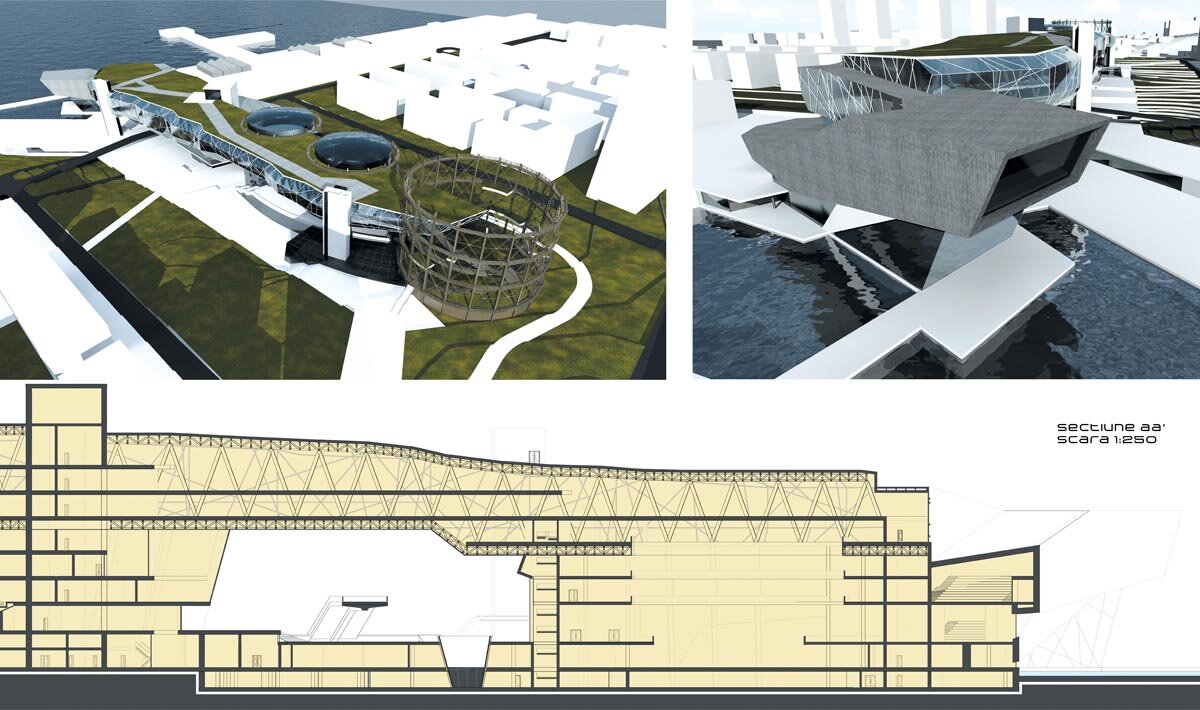
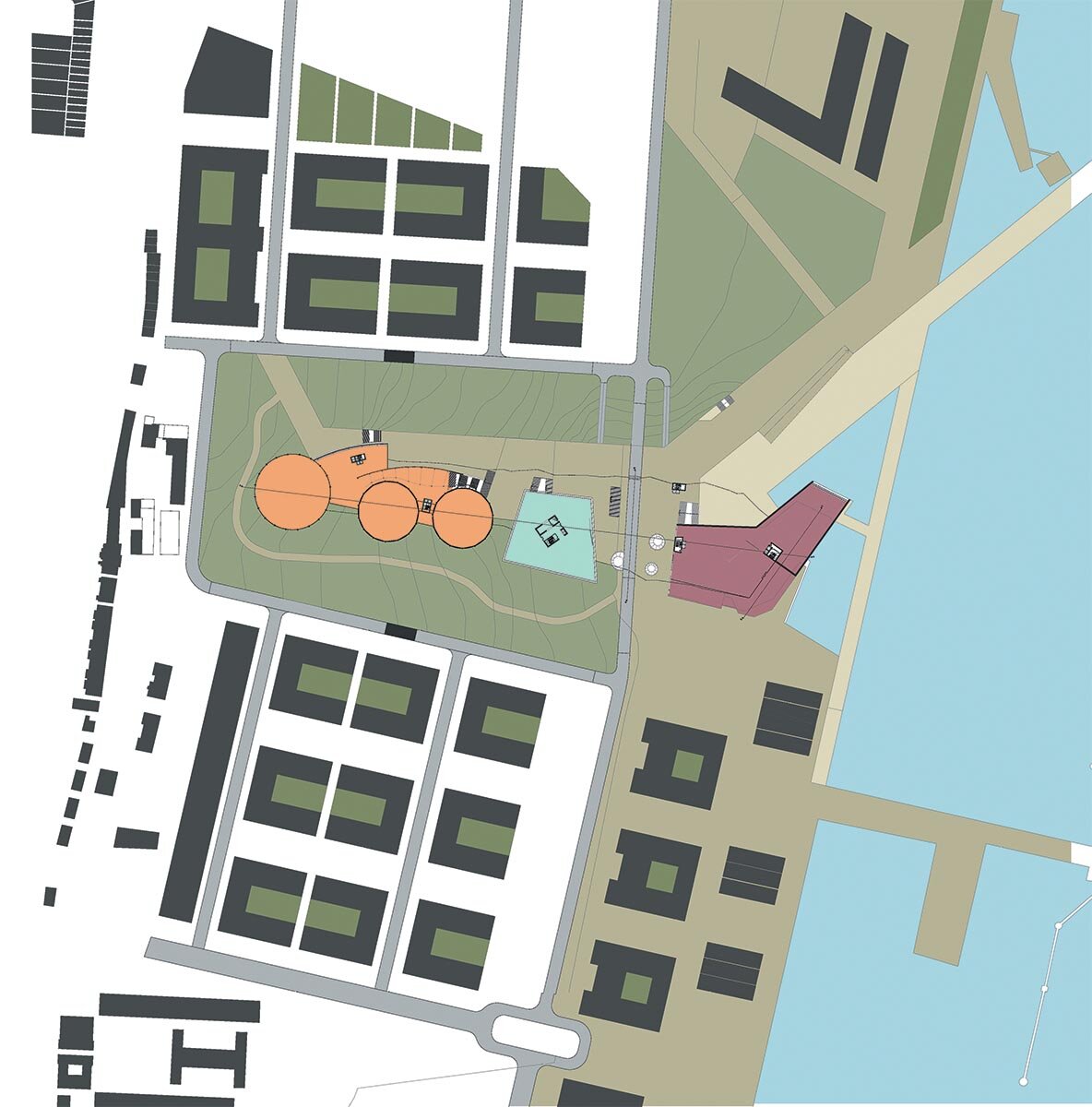
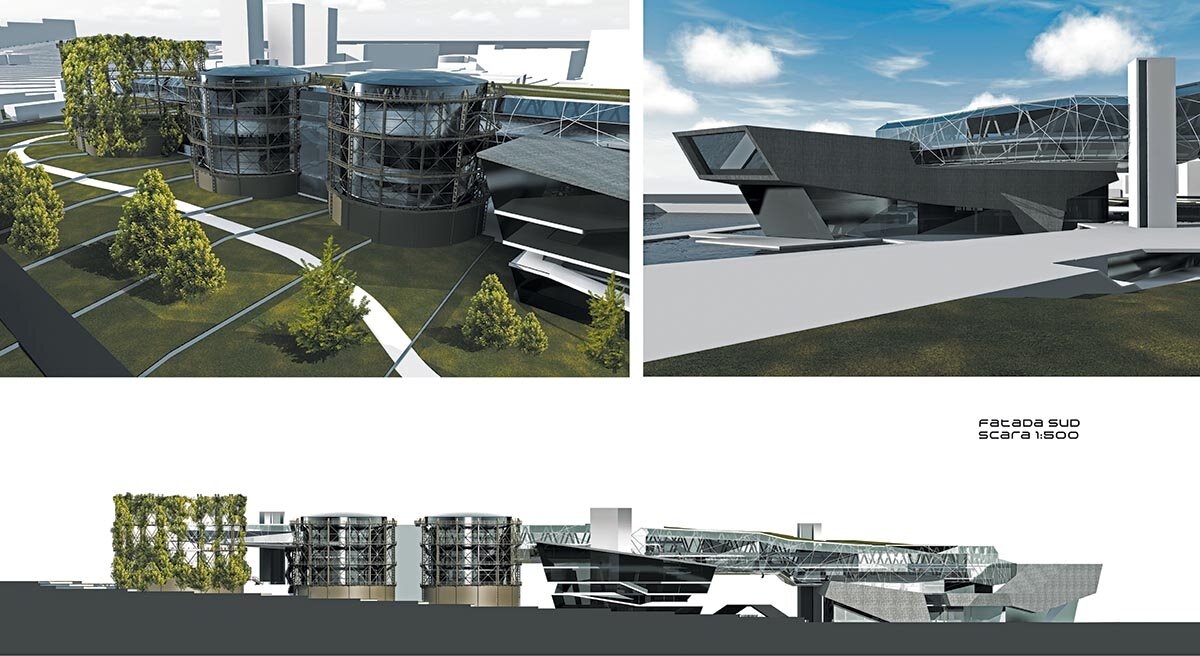
The multimedia center proposed in the project assimilates spaces that represent both a media library and a classical library, exhibition spaces and recreation areas - spaces for performances, in a polarizing framework that emphasizes the qualitative relationship between man and the built environment. The development of this complex of functions in the residential area of Lisbon's Oriente district proposes the revitalization and reconversion of the gasometer structures that remained after the dismantling of the Matinha Gas Factory, also creating a relationship between them and the esplanade that stretches along the Tajo estuary. Thus, the volume is sculpted by a series of paths that ascend from the estuary towards the structure destined for reconversion and draw traffic flows towards the interior of the complex without interrupting them. To this end, the major functions are clearly differentiated at the elevation of the landscaped site, but are connected by a unified platform on the upper floors. The media center, the library, the museum dedicated to the evolution of technology and the events hall, the last two occupying the gasometer structures, are successively outlined in the volumes. The course culminates in a garden that rises on the widest of these, submerging it in vegetation and at the same time linking it to the food functions on the upper floors and the green roof of the suspended volume. The interior links are realized through underground galleries - lit by glass cones that create small courtyards of light - and through the structure that appears suspended above the main volumes, the functions being clearly delineated by the circulation flows.
The proposed multimedia center thus becomes an urban node that brings together a series of public functions of interest to the Oriente and Lisbon in general, representing more than the rehabilitation of an area with high potential, which has so far failed to integrate into the economic and social-cultural development that the Portuguese capital has experienced in the early 21st century.
supervisor: prof. dr. dr. arh. Virgiliu ONOFREI