Sibiu, the stage city
Arhitectura magazine: Those who know the program of the Sibiu International Theatre Festival know that many performances take place in open public spaces, squares, streets, etc. In fact, street theatre has more and more professionals, followers and spectators all over the world. What impact have over 20 editions had on the perception, appreciation, development and use of public space and street theater in Sibiu? Are there any positive effects on the valorization of the architecture of the historic center?
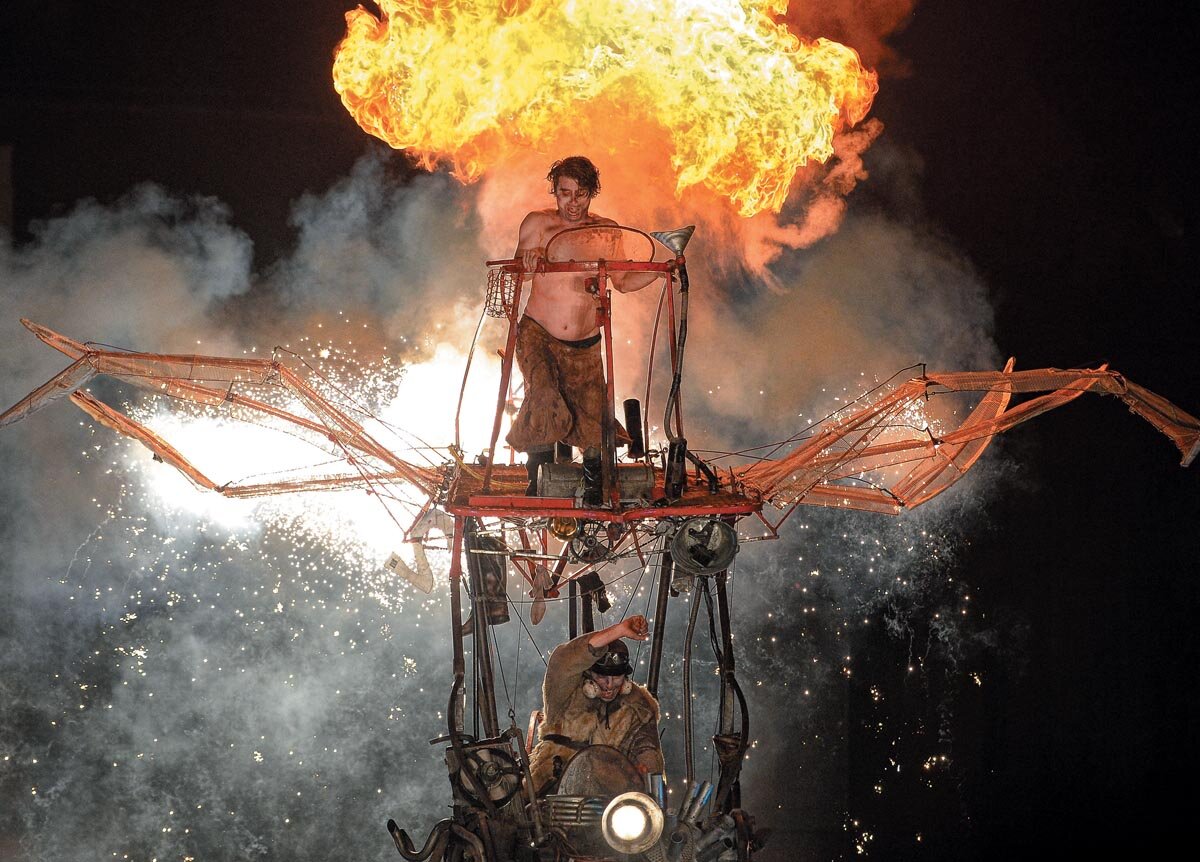
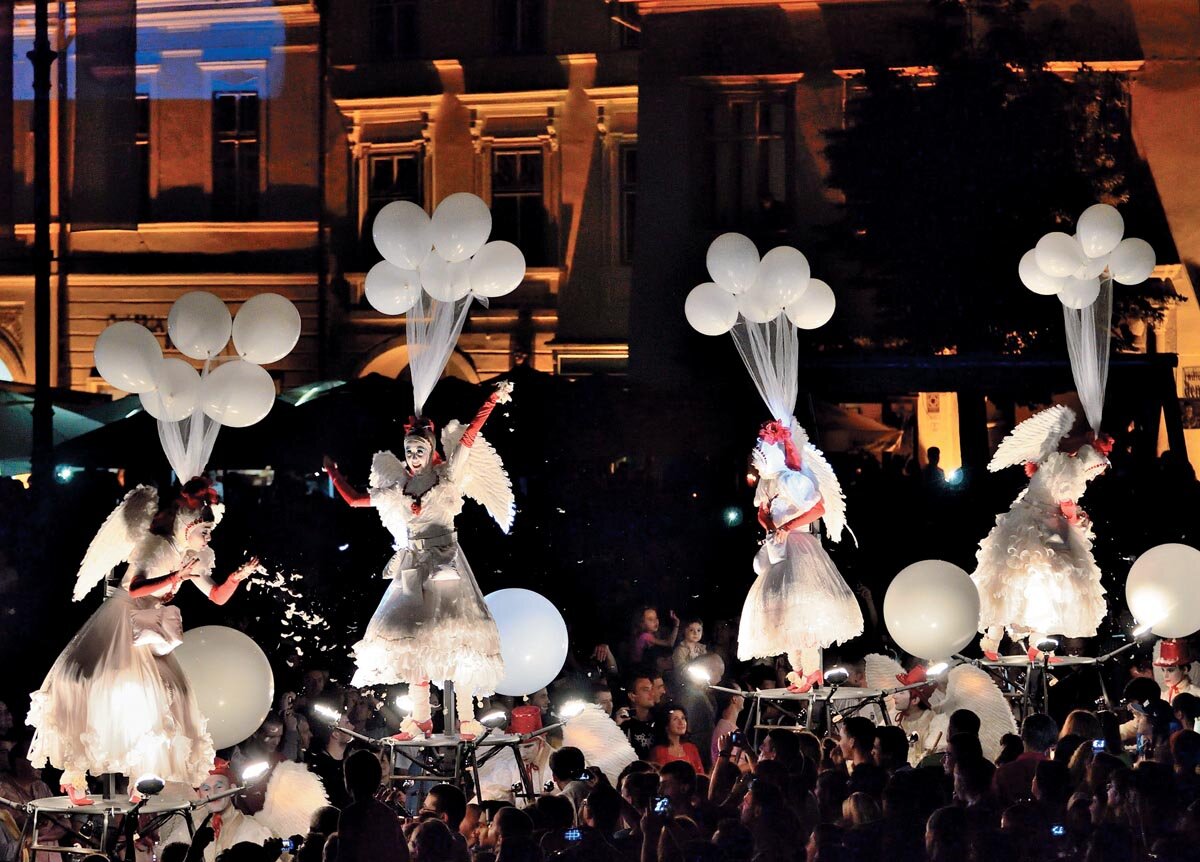
Constantin Chiriac: The section of performances in unconventional spaces in historical sites was a strategically developed section. When we changed the date of the festival from March 27, World Theatre Day, to the end of May-beginning of June and then to the middle of June, the change was primarily due to this vision. I have tried, over the years, to bring the area of excellence in street performing arts in such a way that audiences who are not in the habit of going to theaters can be immediately and profoundly marked by the quality, the emotion, the miracle of the event, and this emotional impact can last over time. Sibiu is probably one of the best examples in the world of how a community has been rehabilitated from every point of view through a cultural event. If we look at the program of each edition, from 1997 to 2015, year after year, the world's most important music companies, the world's most important marching bands, the world's most important artists have come to Sibiu and transformed this city. First of all because they have furnished the historic site in and around Sibiu, bringing these spaces to life and making them suddenly part of what a living architectural space is. The performances have also become reasons of attraction, having this richness of beauty and living over time. At the same time, the performances have had an impact in the development of the audience, that's how the new audience in Sibiu was formed. During an entire season, all the shows at the National Theater and the Theater School are 100% sold out, and we are talking about huge figures, 400 performances a year, 92 shows in the repertoire at the National Theater, another 18 at the Theater School. It is a strategy that we have developed, are developing and will develop because this section is a magnet and at the same time an extraordinary source of credibility for the whole festival, because it ensures the presence of around 65,000-70,000 spectators per day. An absolutely incredible figure!
R.A.: Year after year, you are looking for new spaces in functionally dismantled buildings for staging the performances of the "Radu Stanca" National Theatre in Sibiu and the productions of the theaters invited to the festival. Can we talk in Sibiu about an operation of rehabilitation of the built environment through theater?
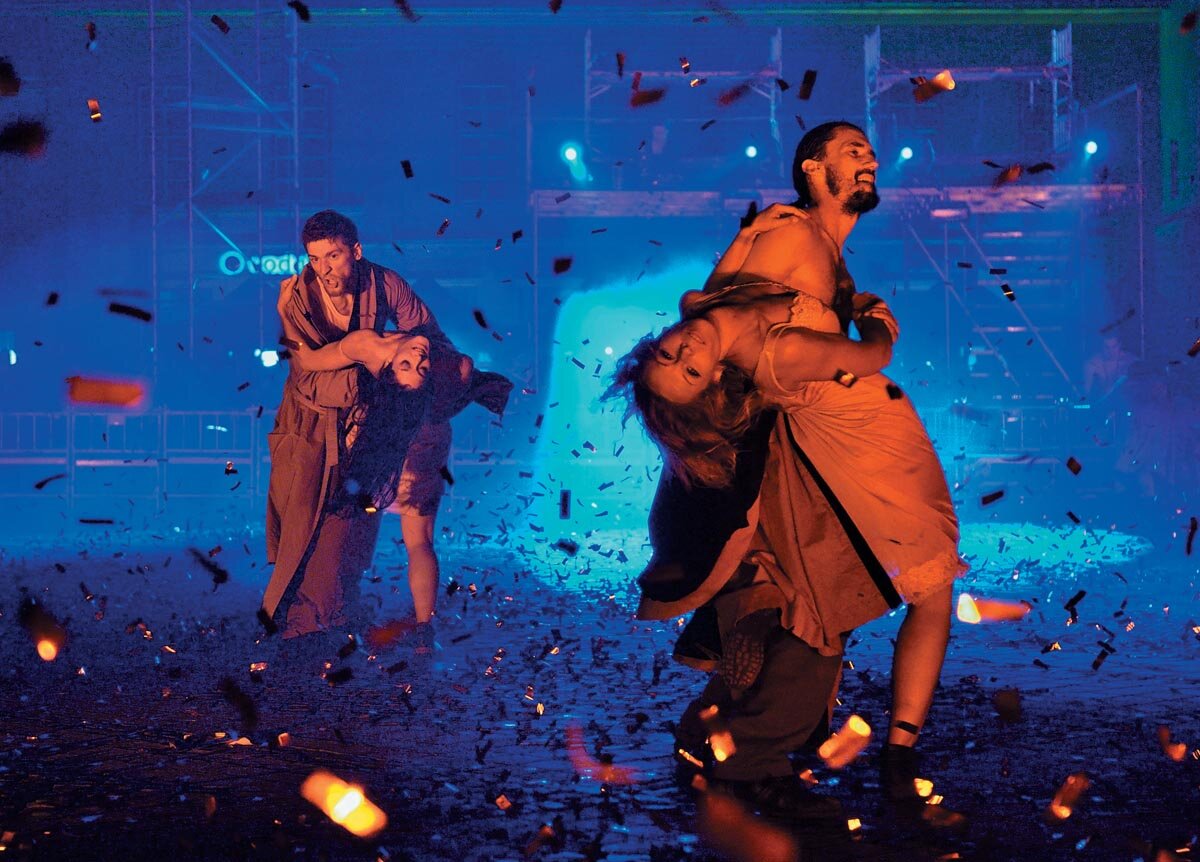
C.C.: The performing arts have conquered Sibiu. Moreover, the most important European project in this field in the last five years - Villes en scène / Cities on stage / Orașe pe scen - has developed on the model of Sibiu, a city that is a huge stage. During the festival we play in 67 venues. Virtually all the places of worship, Orthodox, Catholic, Protestant, Greek-Catholic churches, synagogues, all of them, including the Orthodox cathedral, host performances. At the same time, we have many underground spaces, industrial halls that we have furnished with performances under the zodiac of excellence. Romania's most important cultural brand, the show Faust made in 2007, especially for the agenda of the European Capital of Culture, I designed it for an industrial hall. Since it was born, it has been in two other halls rehabilitated in order to transform them into a performance space. The first kabuki show, brought to Romania by the famous Nakamura Kanzaburō company, came about thanks to the value of the show and the impact Faust has had in Romania and around the world, it has been performed at the most important festivals and its career continues. The value of the show brought the most important kabuki company in the world that wanted to perform in a disused and rehabilitated hall, the Hala Balanța. We're now building a new space for Faust at the Constructions SA halls, along with a special rehearsal space, which is huge, and another hall for the Lulu show. We intend to develop an open-air performing arts center in the same space, having a huge area there with two functional overhead cranes, trying to reconvert the industrial area into a social and cultural space. Also, countless clubs, bars, discos, nightclubs have been turned into performance spaces, because we started a special program, Young people, conquer the city, by encouraging the drama school and cultural management school to occupy these spaces with performances from the alternative area, bringing a new breath and credibility to their generation. We have transformed halls, courtyards, sports halls, trams, buses and other special spaces into performance spaces. These are initiatives that have turned Sibiu into a magnet for tourists, not only during the festival, but throughout the year, when Sibiu's cultural agenda works in an exemplary way.
R.A.: What stage are you at with the initiative to realize a new building of the National Theatre "Radu Stanca" in Sibiu? The Sibiu International Theatre Festival, one of the most prestigious in the world, can bring changes in the vision of the thematic-program, of the functions of a contemporary theater. Do you think that the experience you have gained as director of the TNRSS can change the architecture of the show?
C.C.: Absolutely. The concern is much older, because the scope of the theater and the festival in Sibiu goes far beyond the area of facilities. That's why there has been this huge expansion in the historical space, in the unconventional space, in alternative areas. Sibiu is thinking about a performing arts center together with a congress center, so that the city becomes not only a destination for cultural tourism but also a destination for business tourism. We are thinking about such a center in a different way from the way we think about performance spaces in Romania. We have already had several strategic meetings with major architectural firms, with very important architects and cultural managers in the world, Jean-Guy Lecat (France), Tetsuo Kondo (Tetsuo Kondo Architects, Japan), Dan Hanganu (Dan Hanganu Architectes, Canada) Maximilian and Daniel Zielinski (Foster and Partners, UK), we had a public debate during the 2014 edition of the Sibiu International Theater Festival, a PUZ was drafted, which was taken into the PUG. All in order to have a specification to put in competition for the biggest architectural houses in the world, with some special requirements: three performance halls, not very big, a 500-seater, a 350-seater and a 150-seater. They must be in line with the possibility of audience coverage at community level. Each stage of the new halls will have a rehearsal space of exactly the same size, so that the halls will no longer be occupied by rehearsals, but they will become a space for socializing, for projects, for presentations. At the same time, the stage that will correspond to the big hall, the 500-seat hall, will be a huge space, a space that very few performance halls in the world have. It will be 62 meters deep, 24 meters wide and 48 meters high, so it will be able to accommodate Cirque du Soleil and any big show, of any genre, from circus, opera, rock to interdisciplinary shows. The three performance halls will be designed in such a way that they can form a 3,000-5,000-seat hall, which can be used for the congress area and for big events. We are thinking of a performing arts area that can produce excellence in the field - a performing arts and cultural management research area, a doctoral area, a festival center, a performing arts fellowship center, a museum, a recovery area. So, a center that will become sufficient in itself, but also important for the further development of the city. All with an earth heating and solar energy formula, so that the running costs are covered from these facilities.