Announcement of the jury results of the national BAV 2016 competition
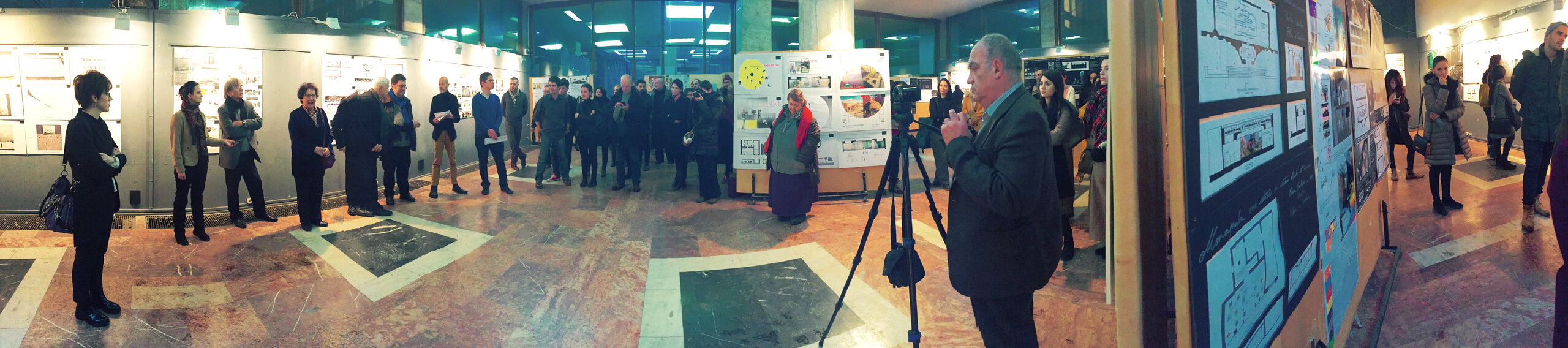
The event to announce the results of the jury for the Romanian participation in BAV 2016 (http://www.uarconcursuri.org/castigatori-bav16) was organized at the Exhibition Hall of UAUIM, in the presence of some of the jury members, the representative of the Ministry of Culture, Monica Morariu, unexpectedly, and the presidential advisor prof. dr. dr. arh. Sergiu Nistor and was opened, as host, by prof. dr. arh. Mircea Ochinciuc, organizer of the competition on behalf of the UAR. The magazine "Arhitectura", present at the event, took the members of the jury present to give their "warm" opinions about the competition, the projects and the Romanian pavilions in Venice, as foreshadowed in the winning project. Questions were asked about the organization of the competition and the problems of the jury, about the contestants' answers to the theme proposed by the General Director of BAV 2016, architect Alejandro Aravena - "Reporting from the Front", about the relationship between the proposed visions and concepts and the quality of the exhibition project, about what is important to convey to the public opinion about the project to be realized in Venice.
Dr. architect Viorica Curea, President of UAR, member of the jury
The Union of Romanian Architects was part of the team of the four partners that organized the Romanian participation in the 2016 Venice Architecture Biennale - together with the Ministry of Culture, the Ministry of Foreign Affairs, the Romanian Cultural Institute. UAR also had the honor, but also the responsibility of the competition to select the design of the pavilions in Venice that will represent Romania, in competition with countries from Europe and other continents. It is an important competition, with a difficult theme, as the competitors could see, but very interesting. The theme seemed confusing at first. There is a real struggle, architects don't just work in offices, they are confronted with society, politics, legislation. This struggle exists in our country - the beauty of the Carpathian forests that become stacks of wood, towns and historic centers whose heritage is being destroyed, disappearing. I also looked for another side of the profession of architect, creativity, keeping lucidity, but also the beautiful sides of life. Serious things can also be said with humor, as you will see in the winning design.
Architect Attila Kim, BAV 2016 commissioner, president of the jury
The theme invited discussion - you can talk about your own or global issues, but in the selected project a mirror is put in front of us, reflecting our automatisms, when we fail to take two steps back and examine things. The Venice Architecture Biennale is no longer a meeting place for architects, it is addressed to the general public who come with questions, and not necessarily about trends in architecture. The Biennale has a different purpose, maybe it's the first edition to introduce public dialog about architecture. My role in this jury was also from my position when I renovated the Giardini pavilion in Venice last year. Objectively, I looked at the level of the exhibition and noticed that in the winning project the focus was on the object, not on the spatial design, unlike other projects that were all about that. From the point of view of the general quality of the participation, we have to draw an alarm signal, the quality is not very high on the whole, there are offices in the country that could have made a contribution to the pavilion projects.
What I would like to convey is that the Venice Biennale Club will start its activities, which will bring together organizers, former exhibitors or former members of the juries of the competitions, both for the architecture and art sections. There will be an important meeting in February, with the presentation of projects selected by the jury. We hope to present the project that will be realized in Venice, and after the opening of the Biennale, and the reactions of the international press. The idea came from the need to discuss the Venice Biennale more. The problems of exhibiting in Venice need to be debated, including the bureaucracy that accompanies the realization and for which teams are not prepared when they win the competition. The Club should even develop support for exhibitors. The club will be based in the basement of the UAR headquarters on Dem Dobrescu Street (Piața Platului), provided by the Union.
Professor dr. architect Augustin Ioan, UAUIM, member of the jury
The level of the projects submitted must be put in relation to the theme, which was very political, very leftist, Mr. Hanganu said "South American". The theme led almost by itself to a type of approach that is not very popular in Romania, even in the area of urban, social NGO-ism, which is more reactive than conceptual. "Reporting from the Front" presupposed the existence of two opposing camps. The "political" ideas were not exemplary to the end, they were not supported, and the exhibition projects did not make it clear which "camp" they were on. However, I found it interesting to involve specialists other than architects. It's a gain. In a different competition formula of organizing the whole process of getting a winning project, it would be preferable to move it "upstream" by 2-3 months, in two phases, in the first phase to select a number of projects, then to communicate with the curators, to see what they want... time did not allow the jury to be very sure on the explicitness of the projects. I'm afraid the jury put "from him".... I was expecting maybe more from the competitors.
Professor Dr. Dan Sergiu Hanganu, Canada, member of the jury
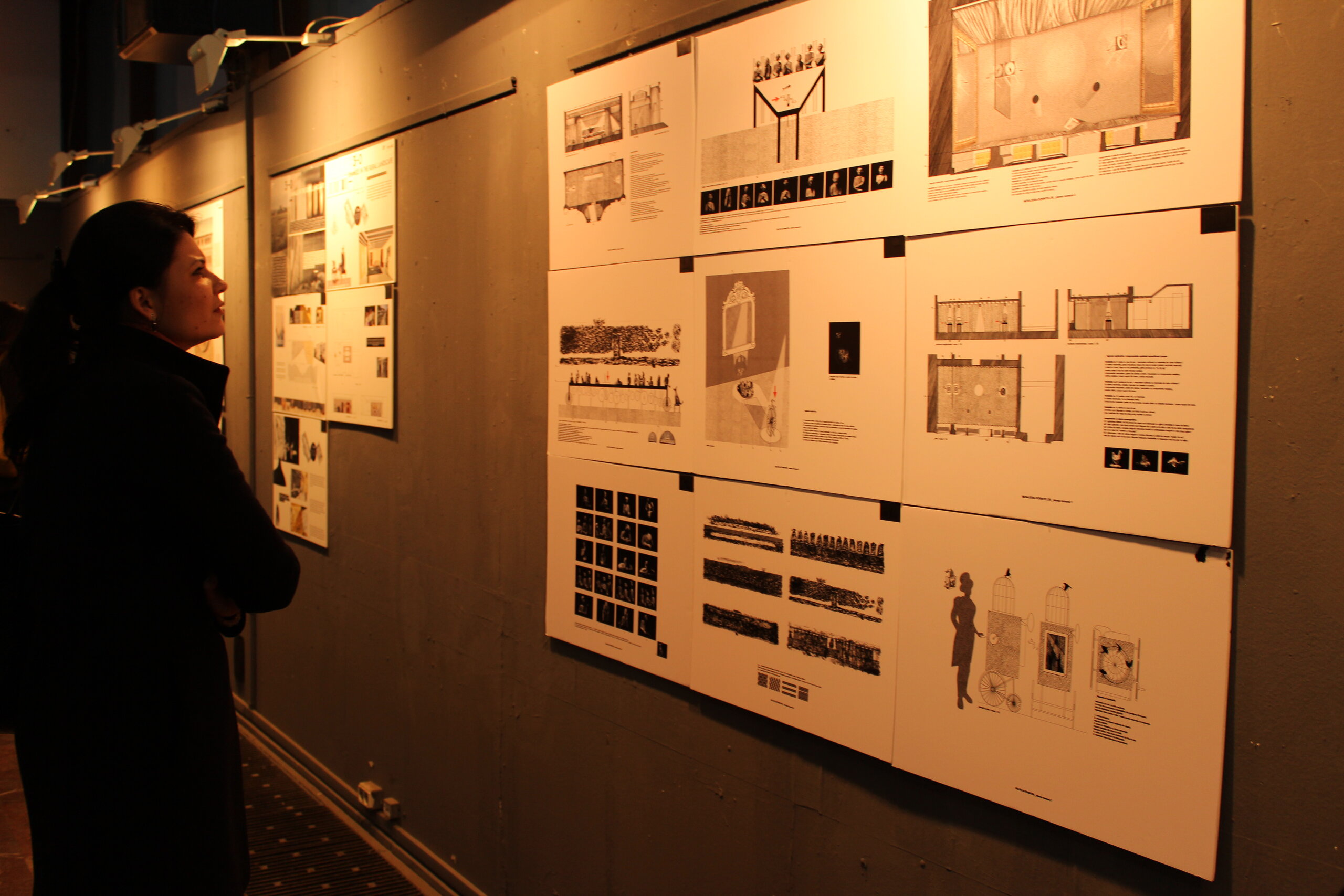
The theme goes beyond architecture. The typical South American theme suits the former communist countries, less so Western Europe or North America. Personally, I would like the winning team to think Romania is on top. Beyond the virtues of some people, the talent or skill of some professions, they represent a country. The message to convey through the BAV: the war is not over. They have the opportunity to attack the theme, to mark the confrontation. I hope to use the opportunity for participation in the general discussion and, secondly, to present ourselves, with our specificity. Someone has the courage in a way reminiscent of commedia dell'arte, New York, New York, vaudeville, Charlie Chaplin, laughing. The project that will represent us has the obligation of this message: visitors must see beyond the parade of animated, funny, cynical, sometimes grotesque, caricatural puppets, what is behind, coded. If the profound message is understood, the country will be won. People expect more than just a puppet show. The allegory is serious, a tragedy perhaps. Like in Jean Anouilh's play, L'Alouette (Jeanne d'Arc), when the director comes on stage and stops the burning at the stake... to end in a victorious key, with confidence that the world can be better... though around us it's not so much. I loved the pairing of an architect, a puppeteer and a graphic designer. Extraordinary! And I wish them well.
Dr. architect Andrei Șerbescu, UAUIM, member of the jury
If we talk about the participants' response to the competition in relation to architecture, the projects show a different approach to architecture. The question posed by the theme was different this time. There is an extremely social search, there is a diversity of ways in which architecture relates to the Biennial's theme, and the winners had the courage to spoil this "South American" perspective proposed by Aravena. The issue is very pressing, but they move it into a different register. There were projects with interesting answers and solutions, but their perspective was noticed and selected.