
What is a fabric? Concepts and Approaches in Modern Textile Design | What's a Fabric? Concepts and Approaches to Modern Textile Design
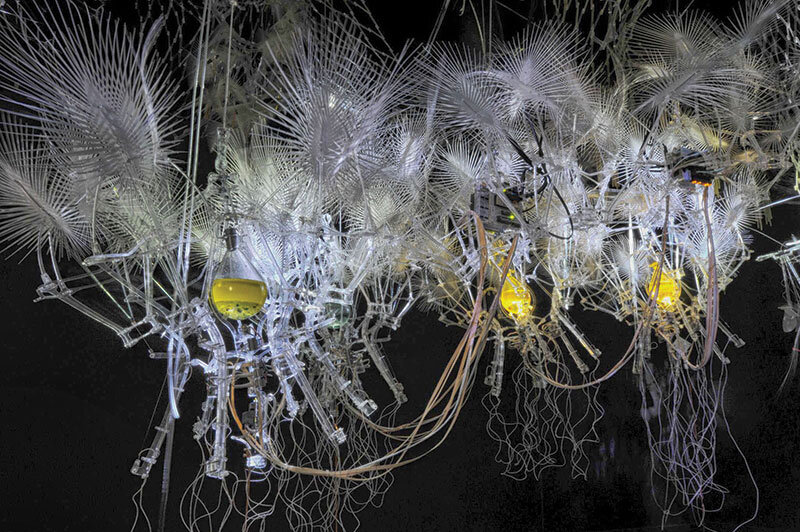
| If we are to talk about textiles, then fabric is par excellence the most concrete textile expression. Any woven or knitted product is a fabric, both in a physical and metaphorical sense1. Since, at the same time, the term 'fabric' is etymologically close, in some languages, to the notion of 'place of production', weaving can be considered as an expression of the act of making/producing in general. This is precisely why textiles are halfway between material and manufactured objects, a transitional form for the production of textile objects.Textiles are one of the oldest human technologies, but in many ways they can also be considered at the forefront of modern forms of production. The Industrial Revolution began with the improvement of the means of textile production: the spinning machine, the weaving machine, to be followed by the invention of the Jacquard loom. At the same time, current digital systems are indebted to the 1-0 system of the loom. This text reviews the ways in which weaving has been conceptualized in the modern era from the designers' point of view. Considering some referential figures of modern textile design, we can distinguish three different conceptions: that of the fabric-surface (decorative object, as defined by William Morris), the fabric-construction (as defended by Anni Albers), the fabric-membrane or interface (according to recent proposals made by Joanna Berzowska or Philip Beesley). Apart from their historical relevance, these concepts bear witness to technical and scientific developments and, not least, to paradigmatic shifts in the way we conceive of matter. |
| Read the full text in issue 3 / 2015 of Arhitectura Magazine |
| Notes: 1 See Oxford Dictionary: http://oxforddictionaries.com/. |
| When discussing textiles, fabric is by far the most tangible expression. All woven or knitted products are fabric, both in a physical and metaphorical sense1. Also, if we consider that fabric means a place of production (see fabriqué in French), then it is the expression of the act of making in general. Therefore, fabrics are halfway between matter and fabricated objects, a transitory form in view of producing textile objects.Textiles are one of the oldest human technology and they can also be considered in many respects avant-gardes of modern forms of production. The industrial revolution started with the improvements of textile production: spinning jenny and the flying shuttle, to be followed by the invention of Jacquard weaving machines. At the same time, our present day computation system is indebted to the 1-0 weaving system. The present text is looking at the ways in which the fabrics have been conceptualized in modern times by relying on designers' point of view. Taking into account some referential figures of modern textiles design, we have distinguished between three different conceptions: the fabric as surface (and object of decoration, as defined by William Morris), the fabric as construction (as defended by Anni Albers), the fabric as membrane or interface (as proposed more recently by Joanna Berzowska or Philip Beesley). Besides the historical relevance, these concepts testify of the technical and scientific advancements and last, but not least, of the paradigmatic changes that took place on the way we conceive the matter. |
| Read the full text in the print magazine |
| Notes: 1 See Oxford Dictionary: http://oxforddictionaries.com/. |