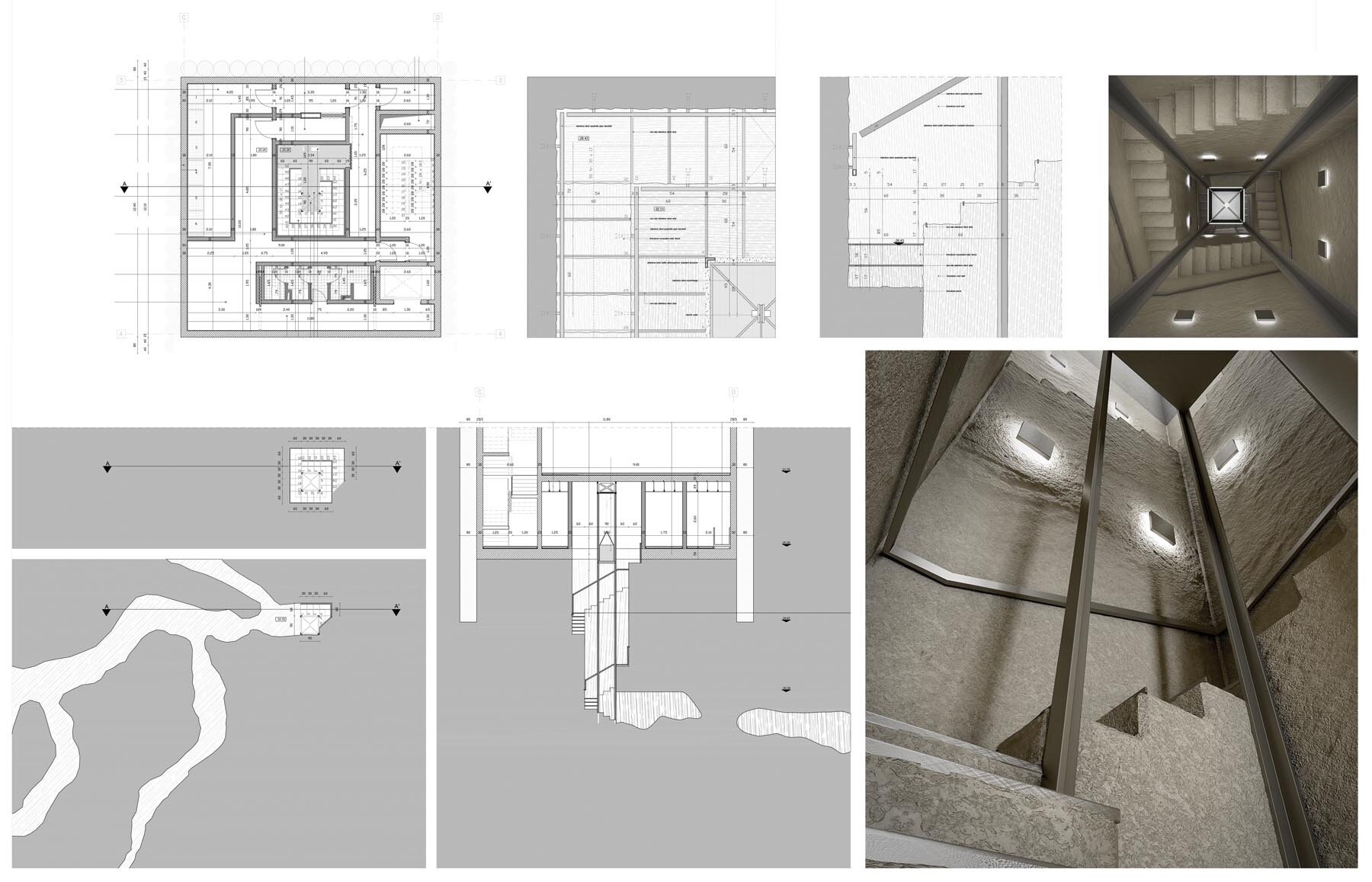
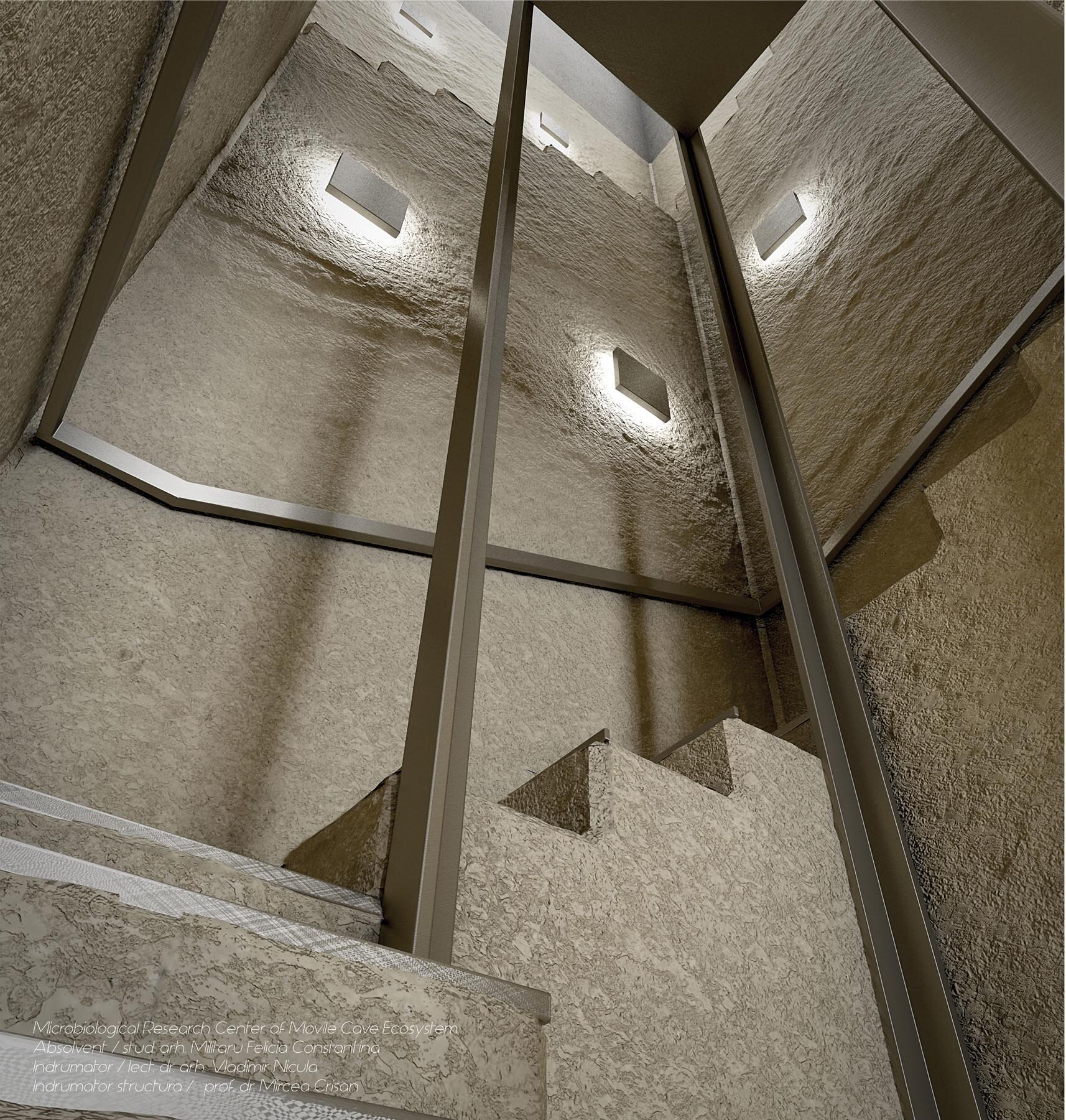
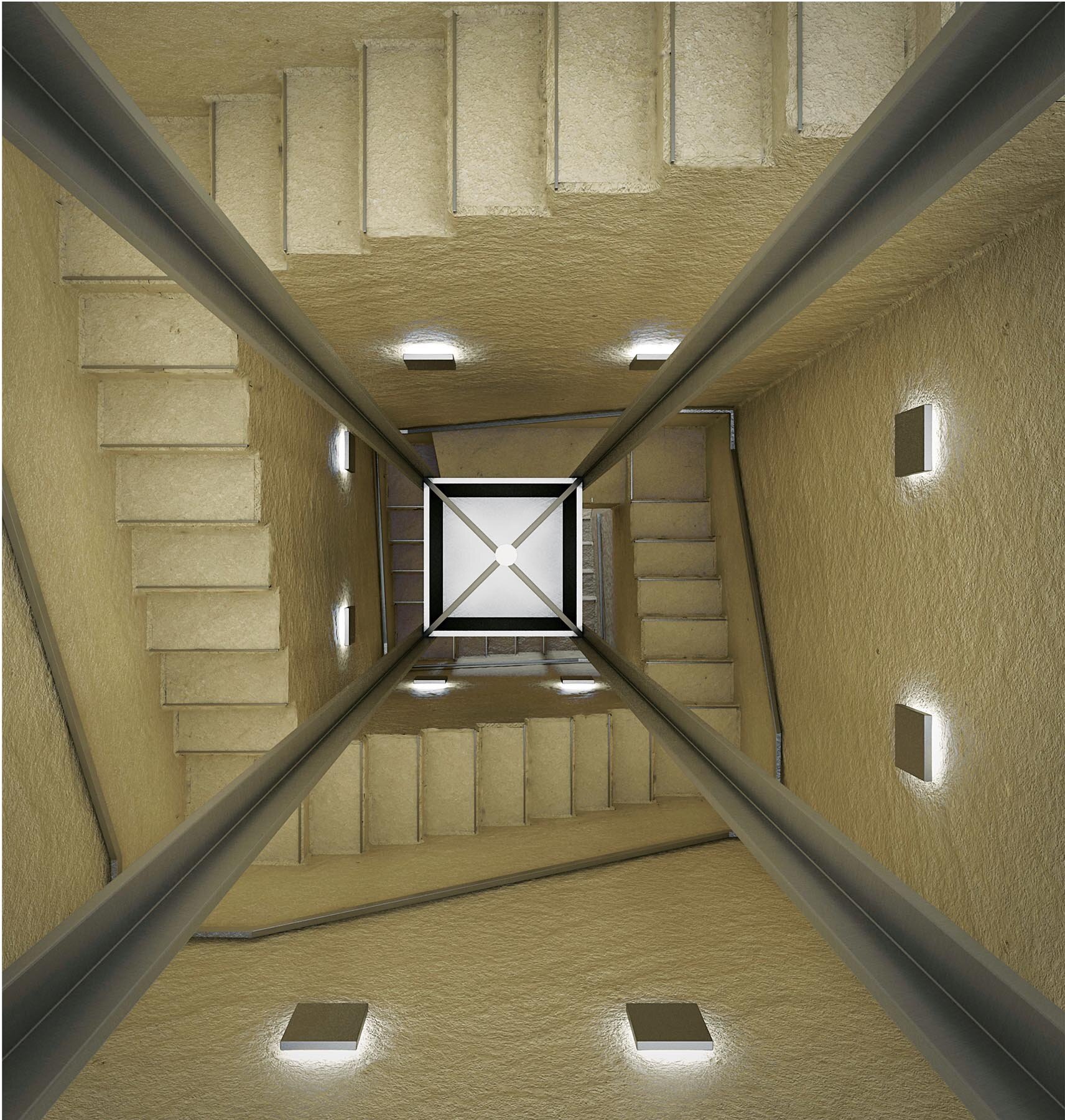
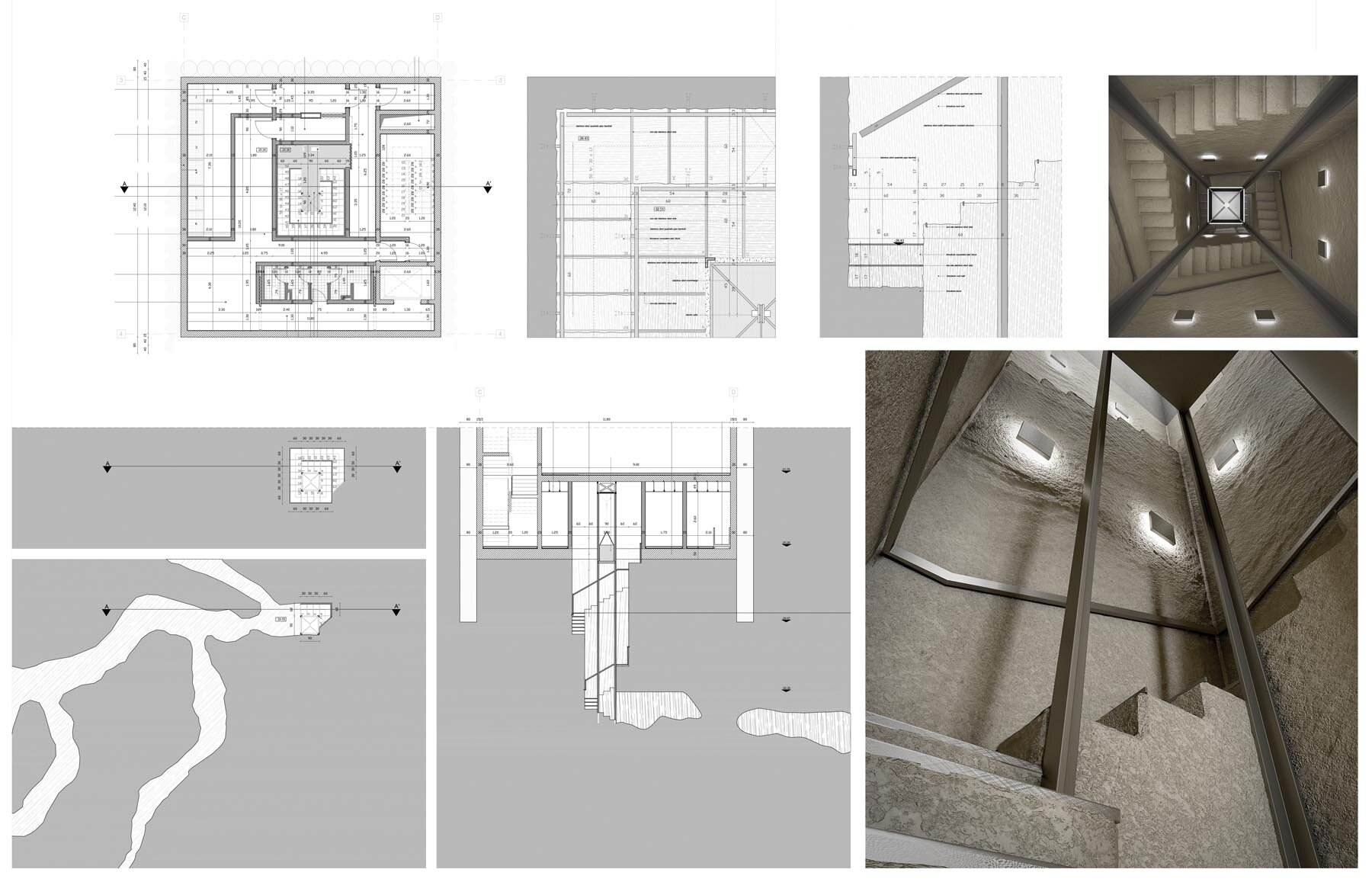
Diploma project: Center for microbiological research of the cave ecosystem "Movile"
stud.-arh. Felicia Militaru
Ion Mincu University of Architecture and Urbanism, Bucharest
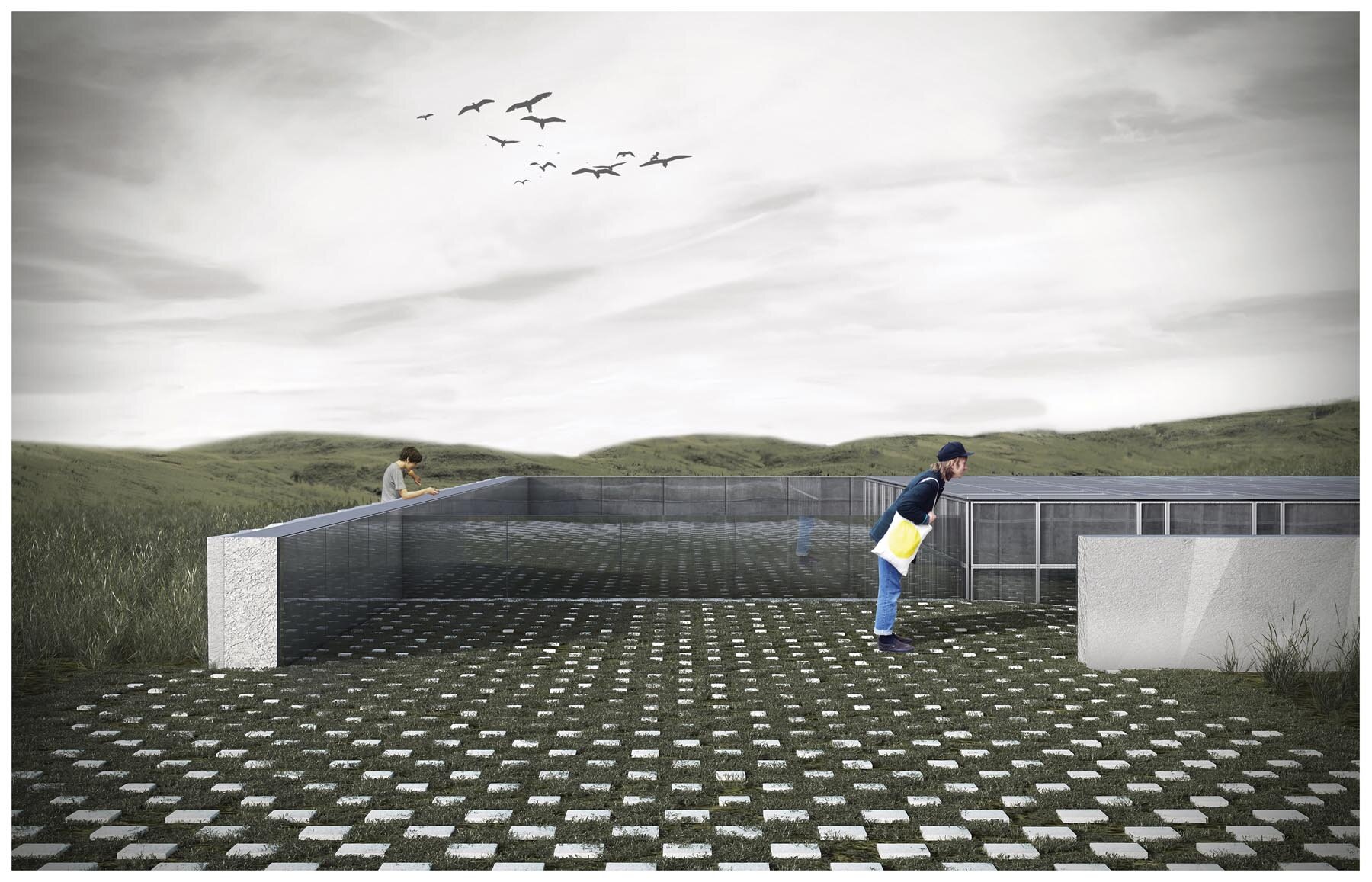
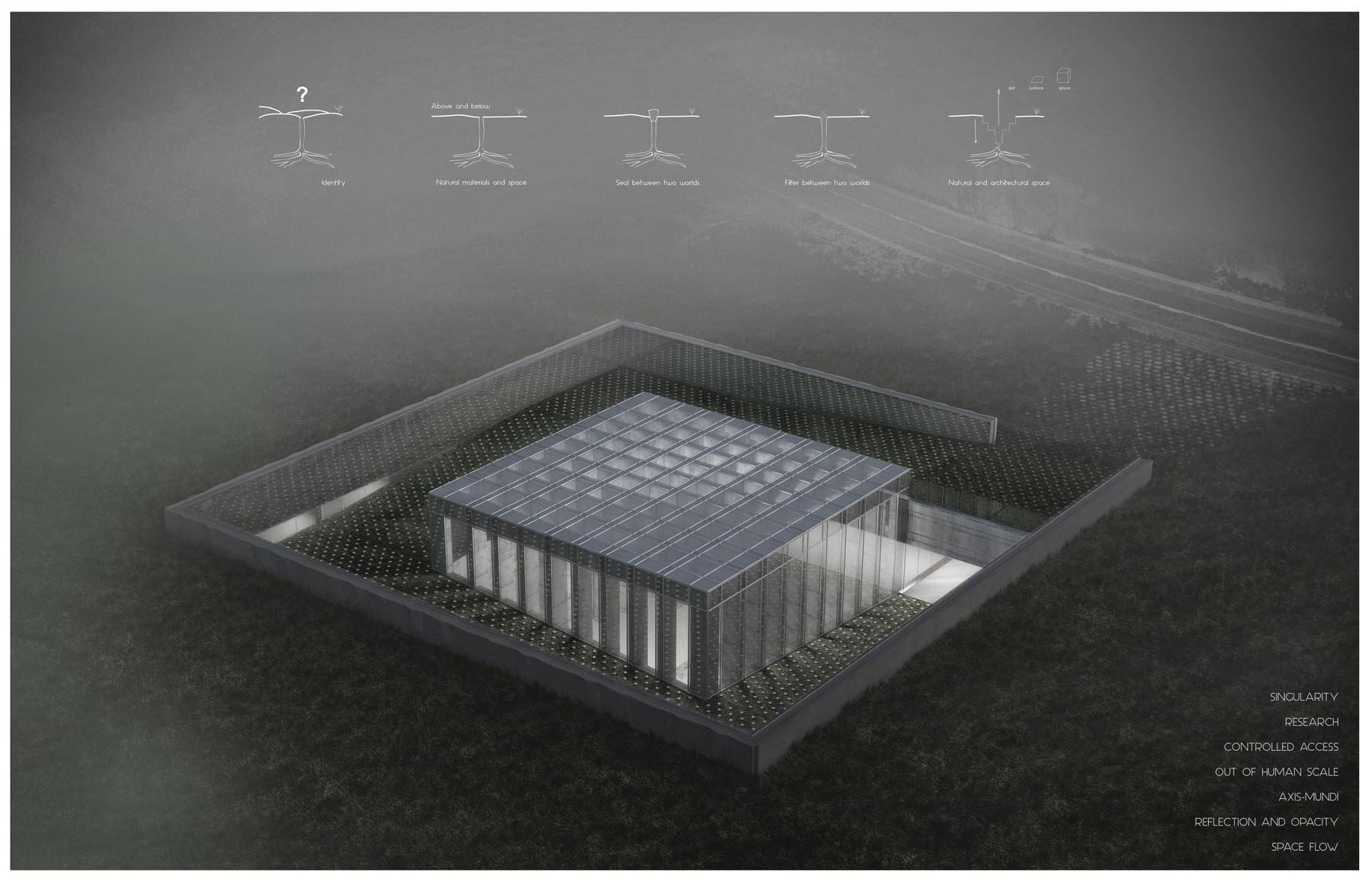
Non-architects often say of some architecture, in a partly ironic cliché, that it "looks like a spaceship". Well, that's exactly what Felicia Militaru's project is. Not from a constructive point of view, nor in terms of design, proposed materials or the aesthetics of the spaces, but, surprisingly, in terms of intention, in terms of purpose. And this is because the point of the Movile project is to open a gateway to an otherwise inaccessible world. The project is, in fact, a vehicle, static, it is true, a gateway, a passage to a hidden place, distant by its nature, hostile by the environment it contains and keeps encapsulated in the bowels of a network of underground caves. The project is also a means of traveling back in time, as the cave world of Movile has remained unchanged, untouched for millions of years when it was formed.
The Obanu Mare Reserve, under which the Movile cave is located, has a double importance for the scientific community. Situated in the immediate vicinity of the town of Mangalia, the reserve represents, on the surface, a particular geological ensemble - a series of limestone formations, small mounds forming a quasi-circular enclosure. Underneath, at a depth of about 30 meters, a network of galleries was accidentally discovered in 1986. These galleries are home to the strange world I mentioned above: more than 200 species adapted to living in an oxygen-poor environment, living creatures alien to any other ecosystem known on Earth. Beyond speculation about the resemblance between the cave environment and that of Mars, the uniqueness of the whole and its significance for microbiological study are undeniable.
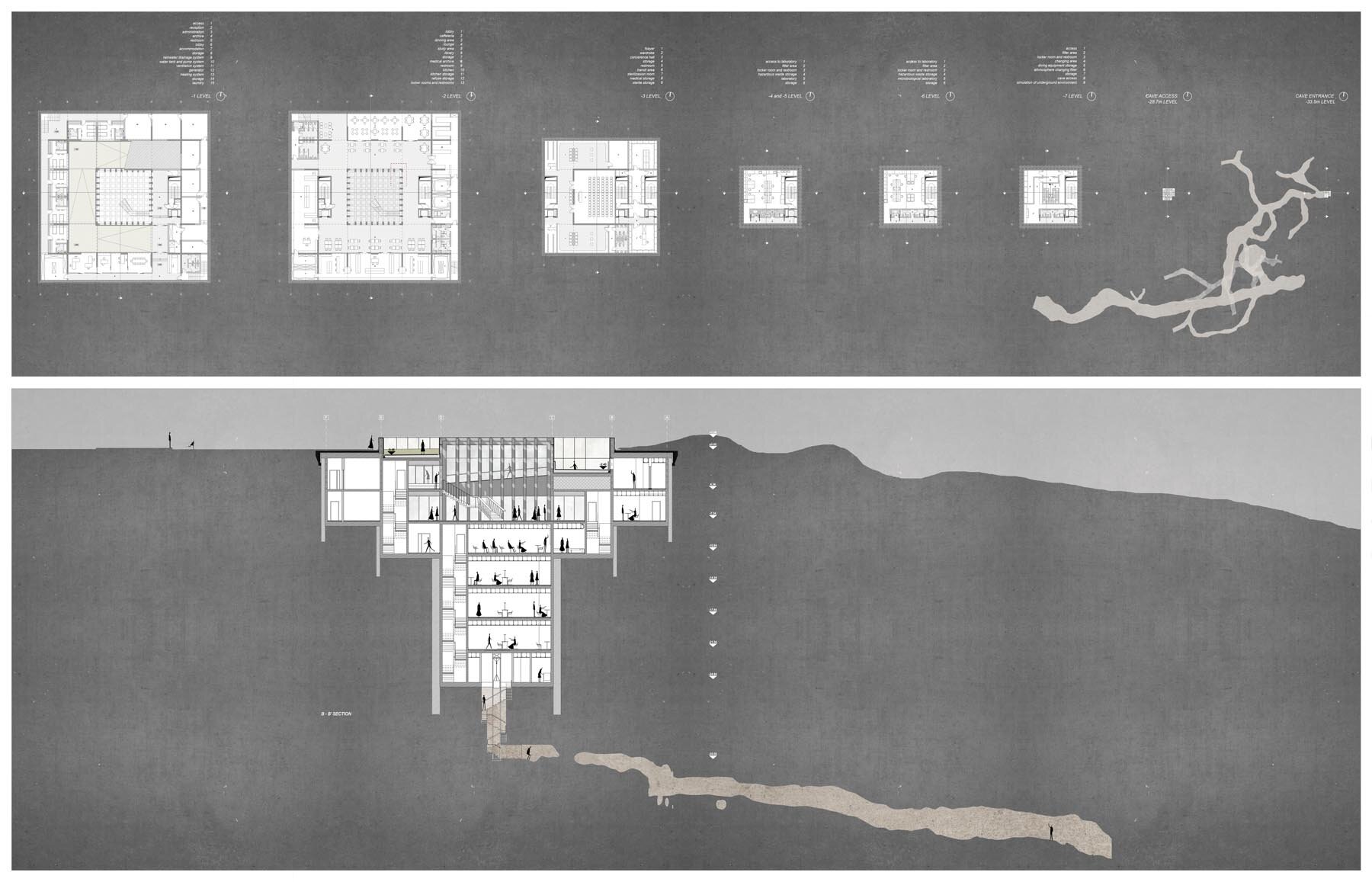
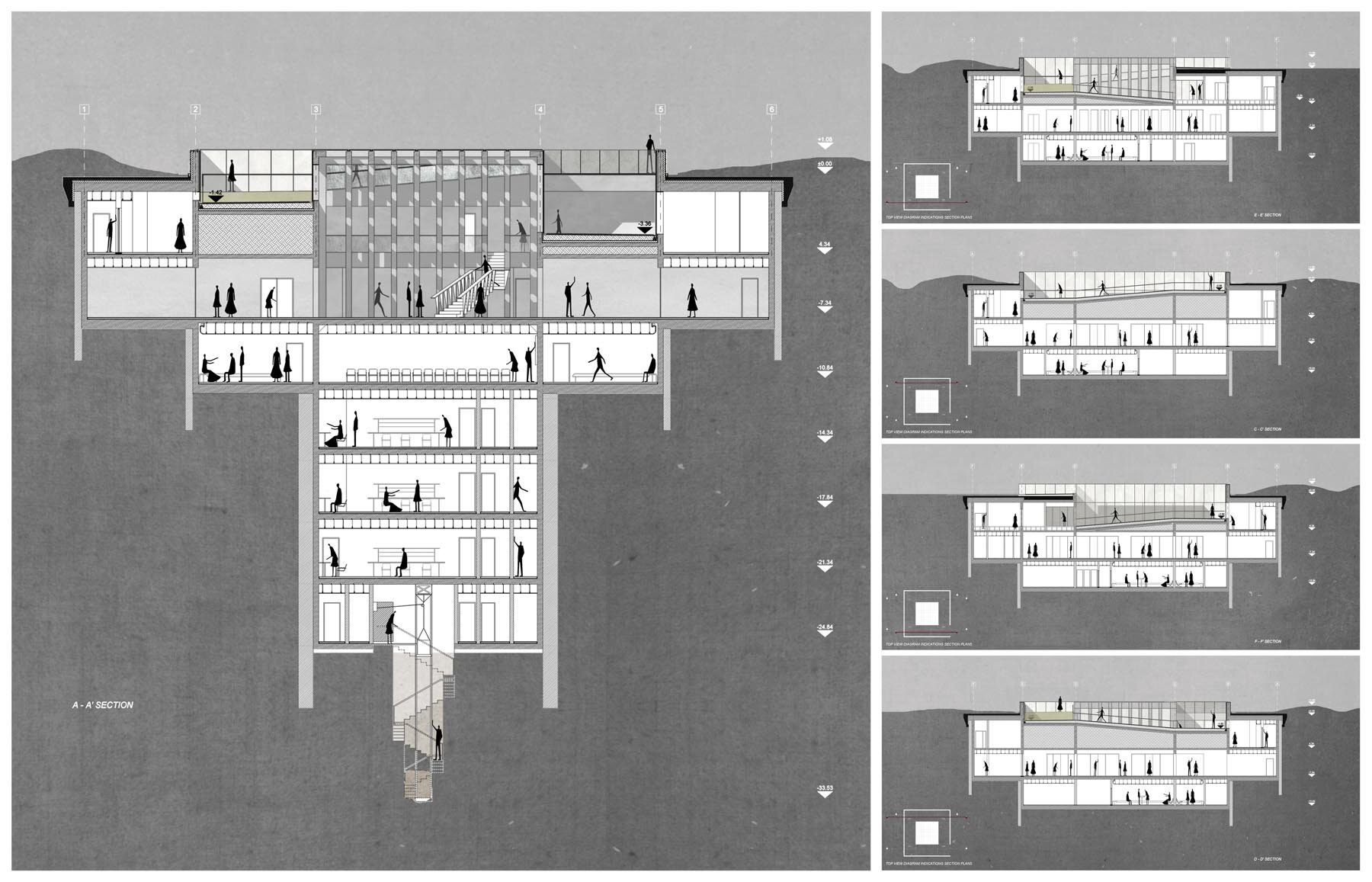
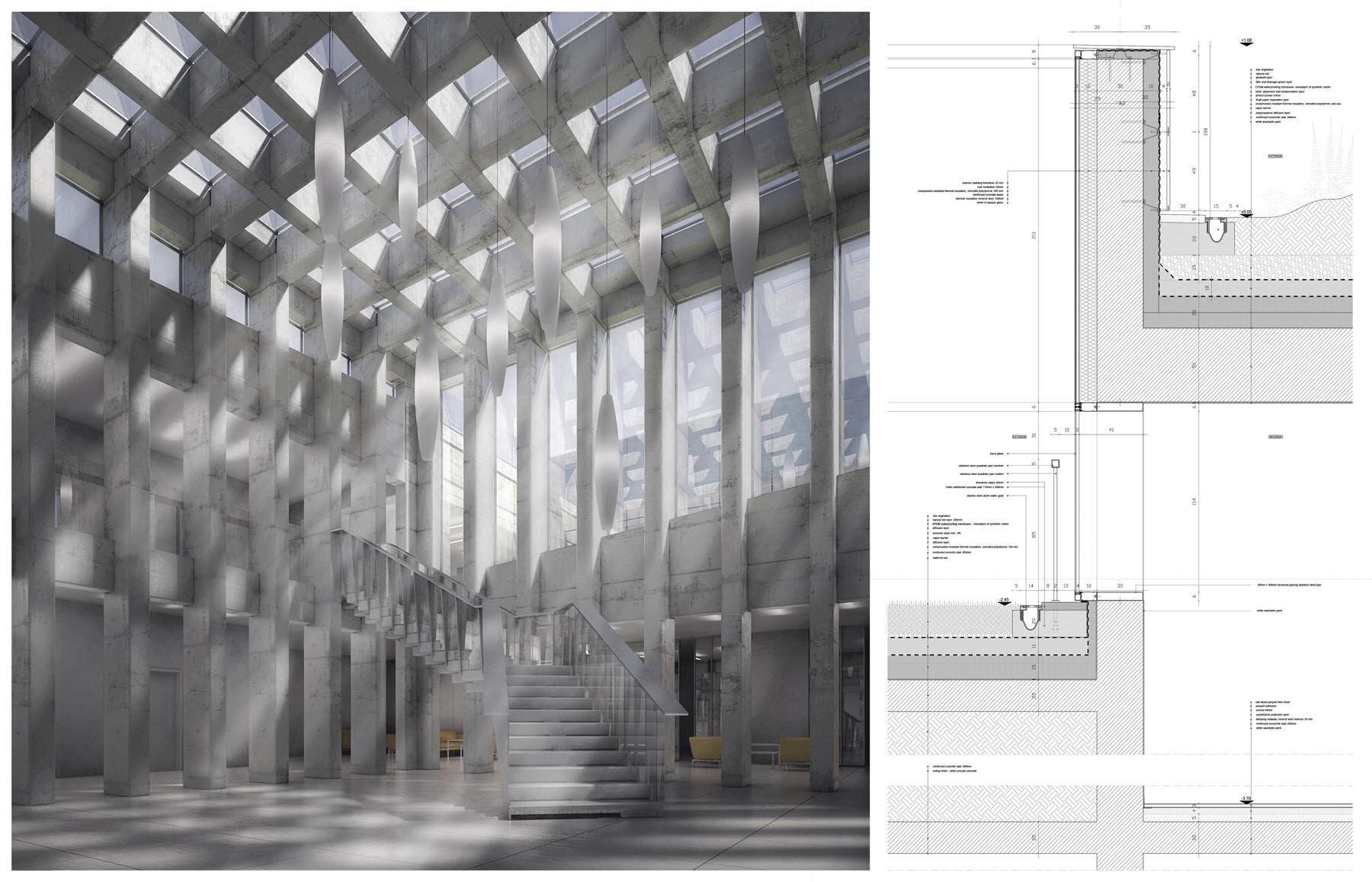
In this context, the desire to imagine an object that would establish contact between two worlds - the terrestrial, above ground, and the hidden, unknown, underground - arose, first as a curiosity, then as a fascination and finally as an exciting challenge. The link is naturally and clearly a vertical one, from top to bottom, in a succession of spaces that gradually make the transition and initiatory preparation for access to the space 'below'. Both the functions and their size are progressively transformed from the upper to the lower levels, in an inverted pyramid that filters and at the same time reduces light, accessibility and the number of users. The end of the route is defined in a radical way: only one person, a single researcher, equipped and prepared for this unique experience - a kind of "terrestrial astronaut" - can access the cave.
The gradual transformation is also intended to mediate between the scale of the above-ground landscape - the Oban enclosure - and that of the underground galleries - a space that has been formed, survives and must remain independent of any human act of construction or possession. As in the case of Cosmin Anghelache, with his project for the Balti Victims' Memorial in 2013, and with Felicia Militaru the mission of the tutor remains a secondary one, of guiding and calibrating some nuances of the project. What remains, however, as a vivid and bright memory, is the joy and, at the same time, the honor of being around a young man with such determination and talent.
Supervisor: head of works arh. Vladimir Nicula