Meșteshukar ButiQ. When craft meets contemporary... or from nostalgia to reality
Inaugurated as part of Romanian Design Week 2015, the Meșteshukar ButiQ shop was conceived to bring back to public attention an almost forgotten way of thinking and creating design objects - a return to the roots, where direct involvement governs both creation and production; where attention, time invested and care for the product are as important steps as the creative process.
Background
The Edgar Quinet Street concept store is part of the Meșteshukar ButiQ network of social economy enterprises. In the context of an increasingly technologized and mechanized economy, the network aims to rebuild the bridge between the skills of traditional Roma craftsmen and the needs of today's market, a revalorization of the Roma cultural heritage.
Beginnings
Intended to bring the art of traditional Roma craftsmanship to the forefront, the shop was to host small series of unique objects created by jewelry, weaving, leather and tailoring craftsmen together with international designers strongly anchored in the contemporary design platform.
Situated on the ground floor of a house in the center of Bucharest, the space we were to fit out over the course of a single month was shaped as a makeshift office space, defined by carpeting, double-glazing, stacked, crooked, plaster walls and zigzag-mounted radiators. Thus, the first and perhaps most difficult challenge of the project was clearing the space of all the makeshift layers of previous fittings. Mountains of cables, broken flexes in the carpet adhesive, and a lot of hard work crowned this first phase.
Once this chapter was over, the actual work of the interior design began; Nadja Zerunian, Peter Weisz (the designers involved in the realization of the products to be displayed in the store) and Megumi Ito were actively present throughout the creative and production process, and were involved in the whole process, heart and soul.
approach
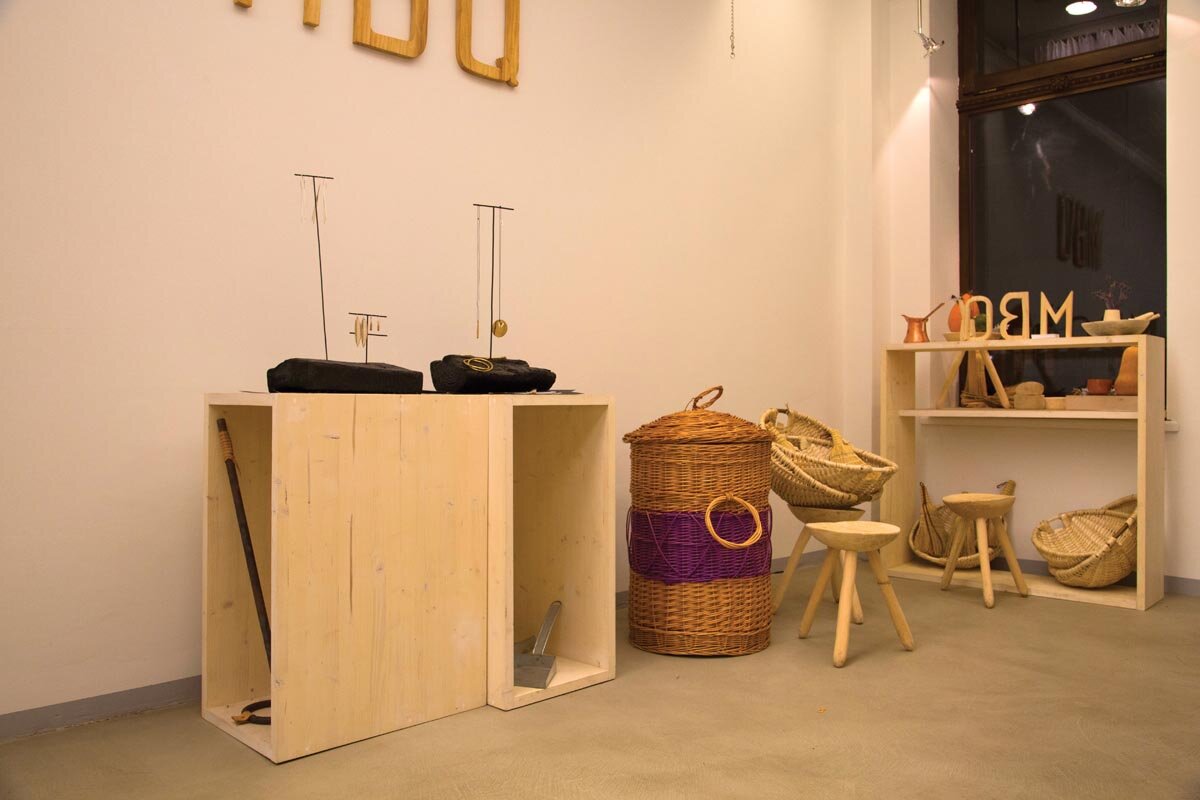
Our intention was to give craft objects a chance to present themselves as a pure expression, stripped as far as possible of preconceptions, in a context similar to an exhibition space. Thus, the proposal draws attention to the antithesis arising from the meeting of contemporary design and craftsmanship and serves both as a backdrop for highlighting small collections of carefully crafted objects and as a support in bringing them to the level of exhibits.
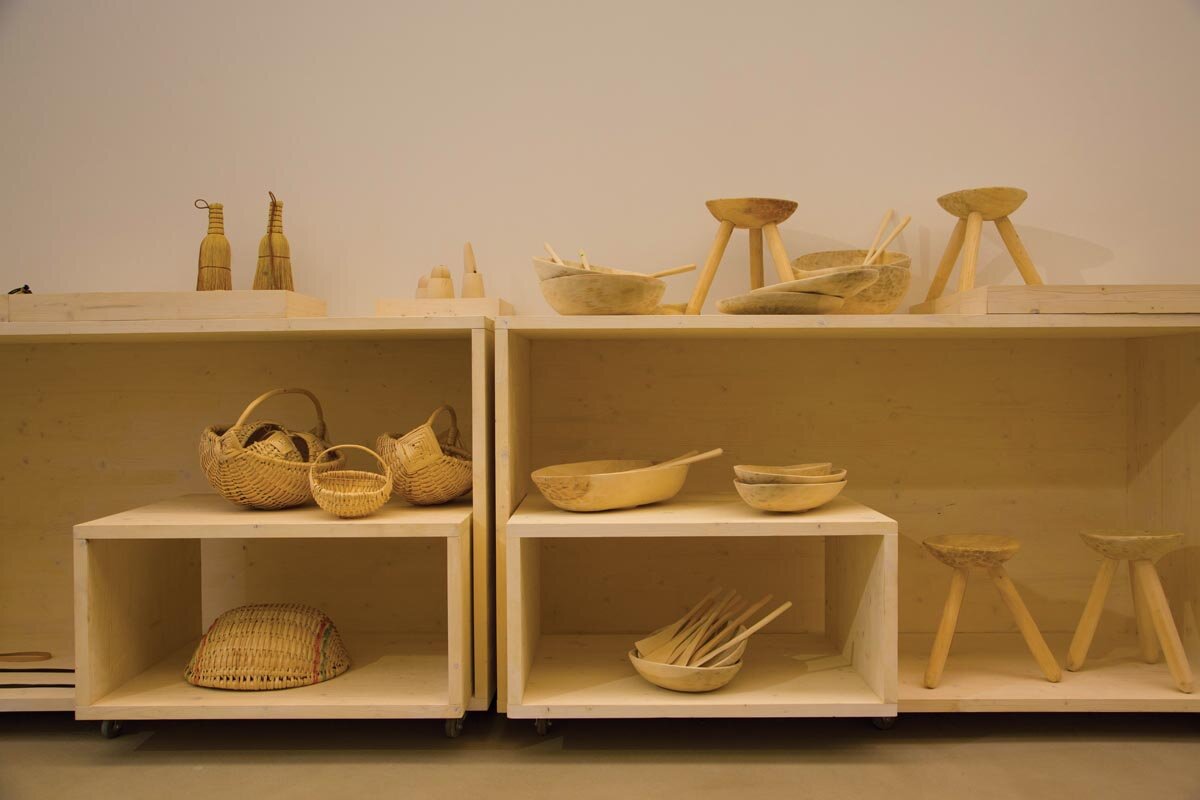
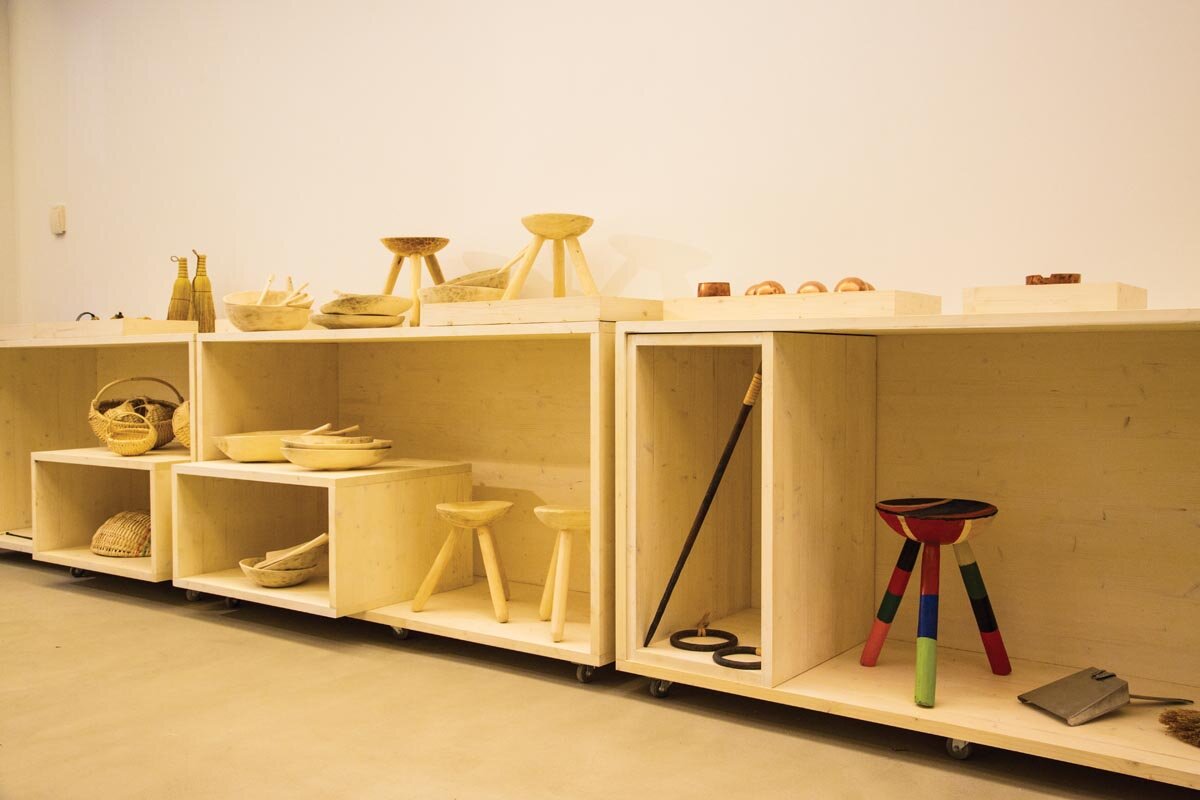
With this in mind, the interior is conceived entirely of simple, clean lines, where the parallelepipedal display fixtures have been designed to support the need to reconfigure the space - from shop, to exhibition or event space.
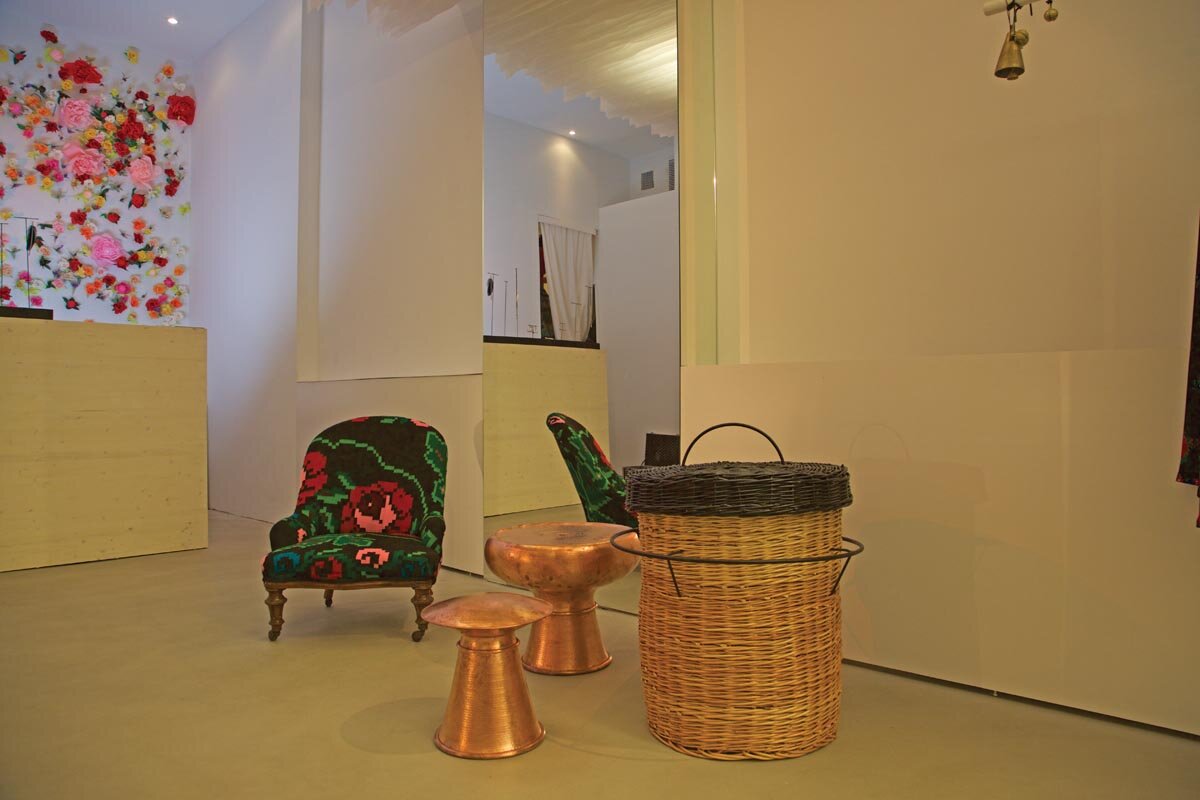
Characterized by a very strong longitudinal axis (only 4m wide and 15m long), the very narrow and long space, while far from ideal, was certainly one with personality. The solution was therefore designed to help emphasize and highlight this defining spatial characteristic. The arrangement of furniture, mirrors or hangers for clothing design objects all support this, along with the more than 140 linear meters of textile used in the ceiling. All these new lines/axes lead to the flower panel at the perspective end, the only point where the arrangement directly recalls Roma culture.
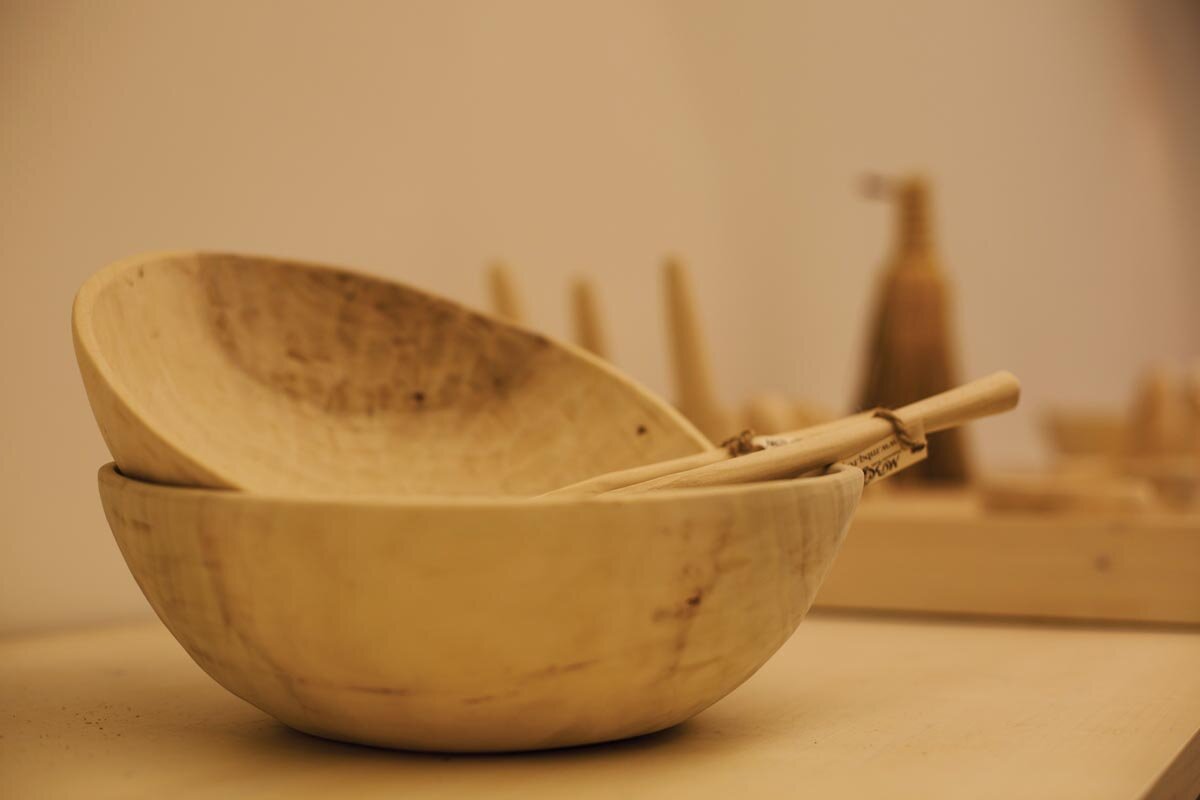
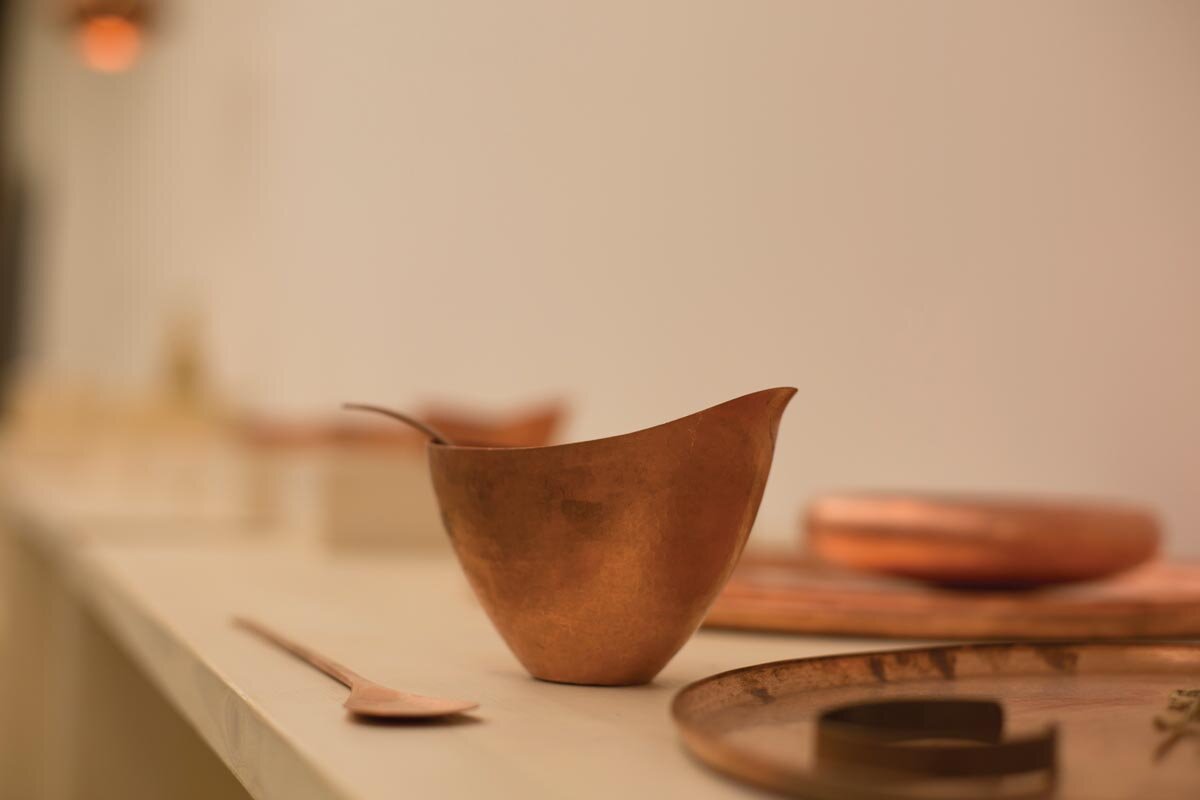
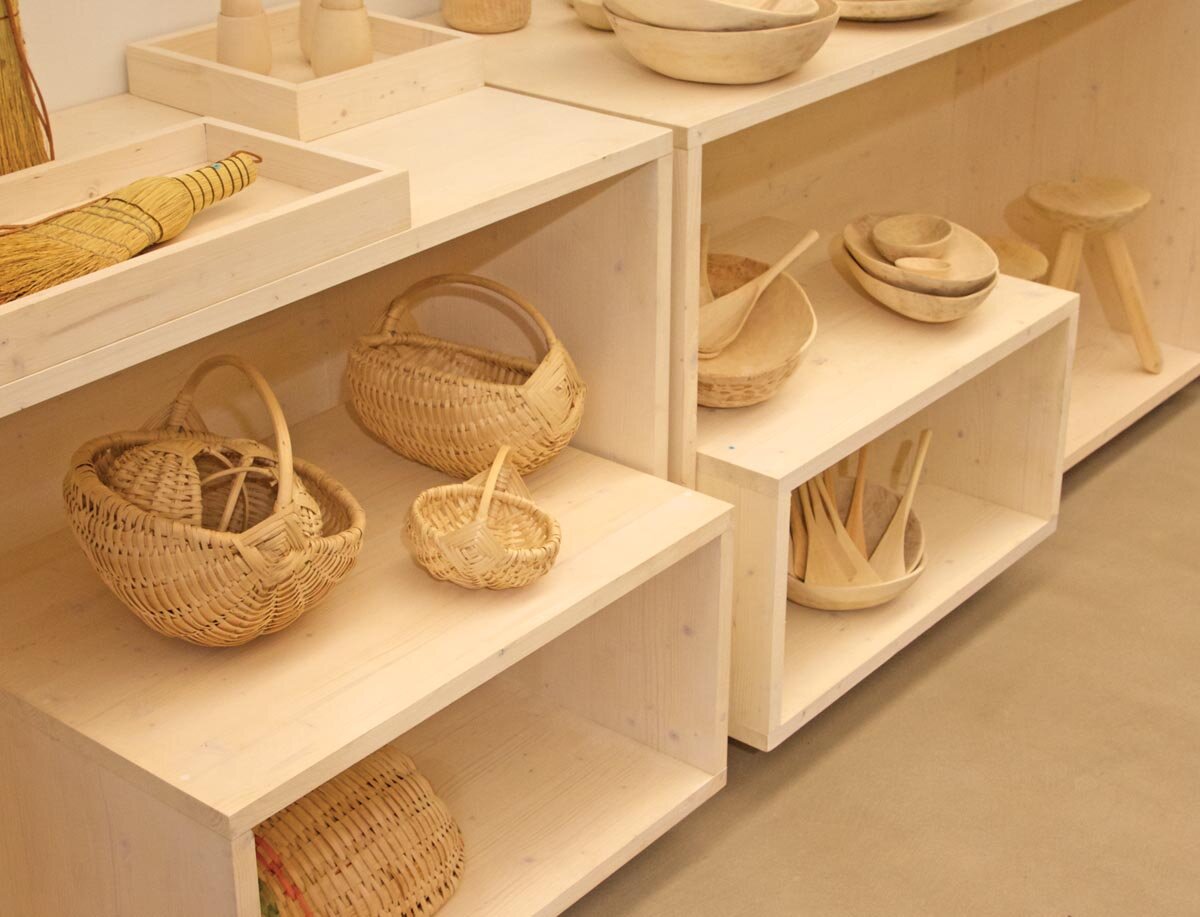
Designing the furniture for the exhibition was a challenge in that the products to be marketed encompassed a wide range of materials - from silver and copper to leather, wood and straw. It was necessary to group and separate them into categories, while bearing in mind that the flow of product series could vary at any time in terms of both quantity and materials. Thus, out of the need for a versatile display system, the modular wooden boxes took shape. Made in three different sizes, they can be positioned in a multitude of geometric shapes and patterns across the entire surface of the mobile furniture, creating a clear but discreet separation between the different types of products.
The atmosphere is built on a neutral color palette - light greys and pigmented shades of white, where carefully and subtly introduced accents of color appear punctually. The connection between spaces, the staircase and walls leading down to the basement and the exterior joinery are painted red, referencing the vibrant Roma culture.
A hit at both Romanian Design Week and Vienna Design Week, the MBQ-branded objects (home deco products, accessories and clothing design) have emerged over the past year from the collaboration of traditional Roma craftsmen with Nadja Zerunian, pro-bono advisor to the ERSTE Foundation's Roma Partnership, designer creative director for a number of international brands and co-founder of "zerunianandweisz", Peter Weisz, fashion designer, creative director and fashion design and co-founder of "zerunianandweisz", and Glimpt Studio, composed of Mattias Rask and Tor Palm, working in the area of product design in partnership with artisans from different corners of the world.
Designers: Samih Ahmad, Sabrina Ahmad, Mihaela Șerban.
Collaborators: Nadja Zerunian, Megumi Ito, Peter Weisz, Khalid Inayeh.
photo: Nicolae ANGHEL