Popular Cinema, Brasov
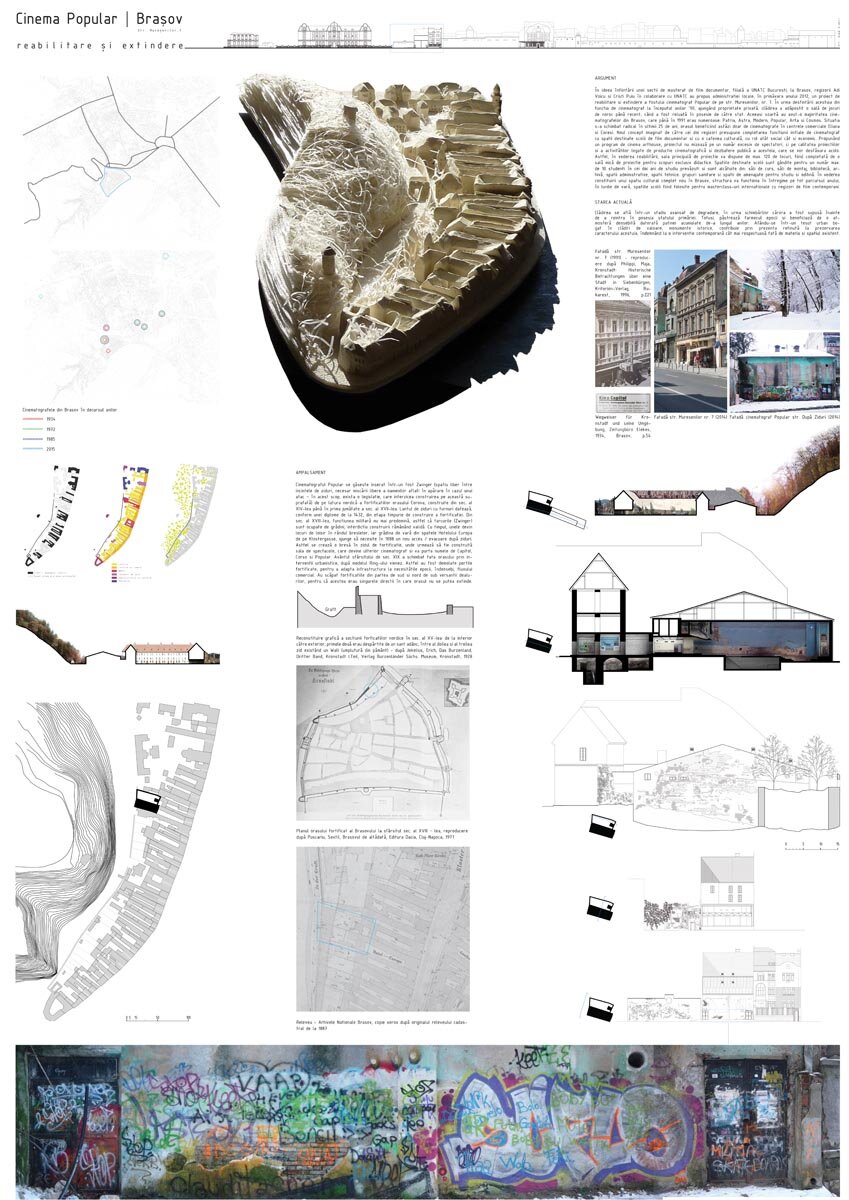
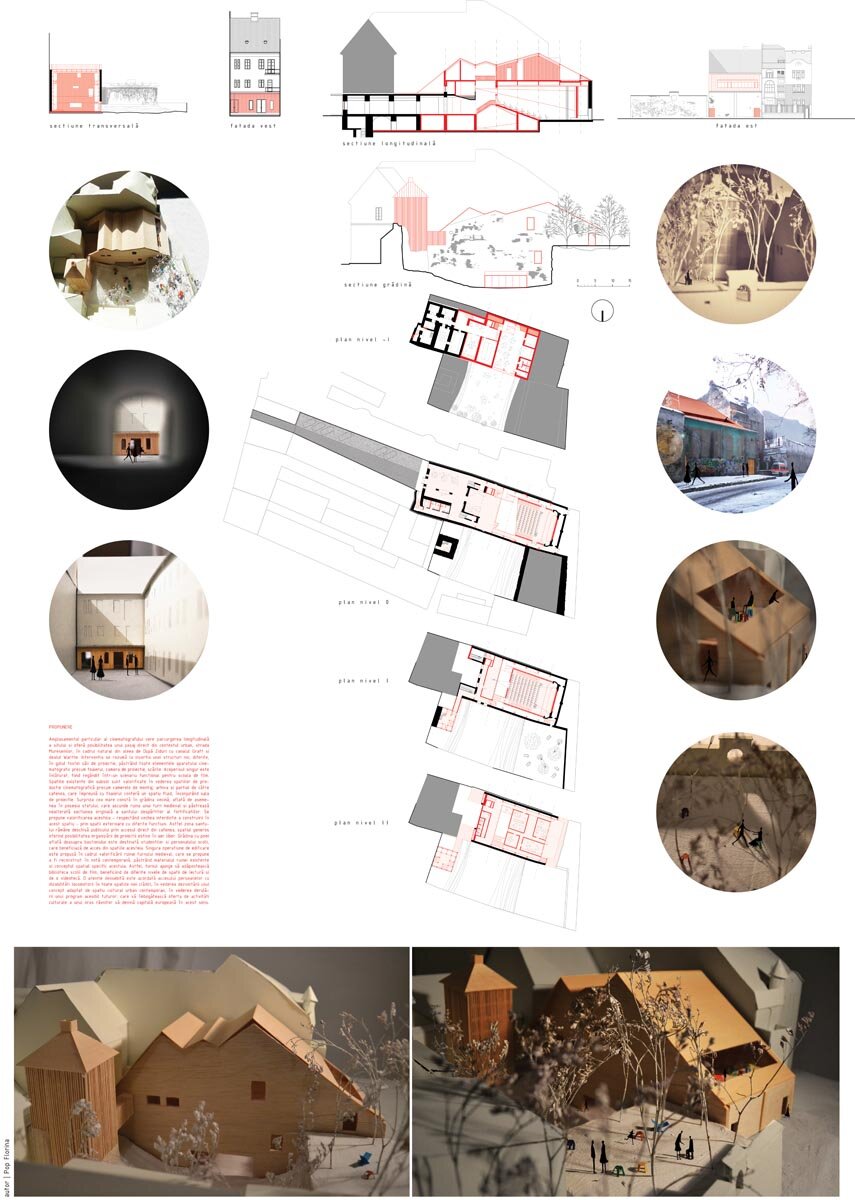
With the idea of setting up a documentary film master's program, a branch of UNATC Bucharest, in Brasov, directors Adi Voicu and Cristi Puiu, in collaboration with UNATC, proposed to the local administration, in the spring of 2012, a project for the rehabilitation and expansion of the former Popular Cinematograph on Str. Mureșenilor, nr. 7. After it was abolished as a movie theater in the early 1990s and became private property, the building housed a gambling hall until recently, when it was returned to state ownership. The same fate has befallen most of Brasov's cinemas, which until 1991 were numerous: Patria, Astra, Modern, Popular, Arta and Cosmos. The situation has changed radically in the last 25 years, and today the city only has cinemas in the Eliana and Coresi shopping centers. The new concept envisioned by the two film-makers is to complement the original function of the cinema with spaces for a documentary film school and a cultural café, with both a social and economic role. Proposing an arthouse cinema program, the project does not focus on an excessive number of spectators, but on the quality of the screenings and activities related to film production and its public debate that will take place there. Thus, for the refurbishment, the main screening room will have a maximum of 120 seats, supplemented by a small screening room for teaching purposes only. The school's premises are designed for a maximum of 10 students for the two years of study and comprise: classrooms, editing rooms, library, archives, administrative, technical and technical rooms, toilets and areas for study and rest. In order to create a completely new cultural space in Brasov, the structure will be fully operational all year round during the summer months, with the school's spaces being used for international masterclasses with contemporary film directors. The proposed solution comes in response to the above-mentioned theme and was developed as part of the author's diploma project, carried out under the guidance of conf. dr. arh. Ștefan Bâlici and presented at the Faculty of Architecture of UAUIM in March 2014.
Location
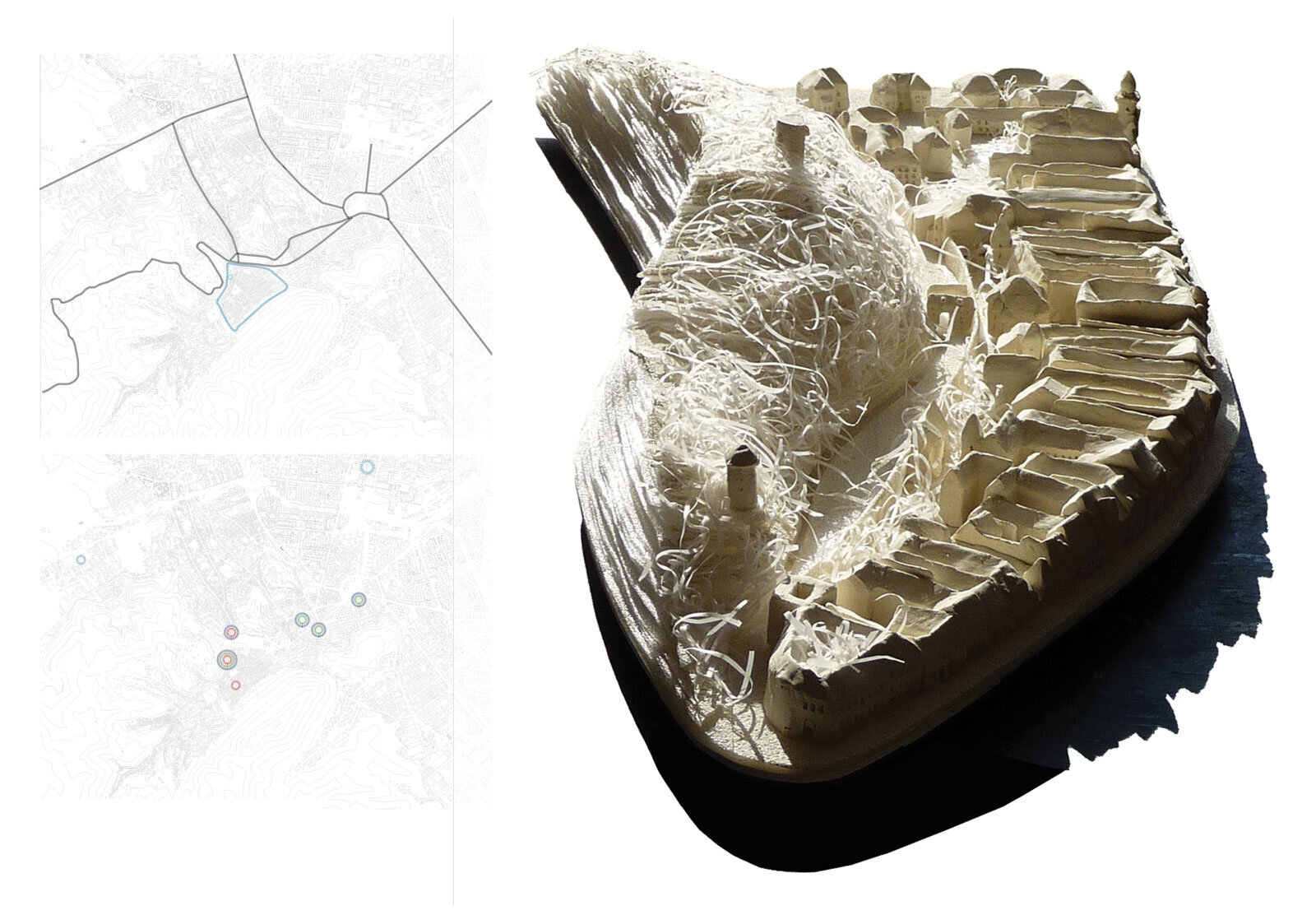
The People's Cinema is inserted in a former Zwinger (a free space between the wall enclosures, necessary for the free movement of defending people in case of an attack - for this purpose, there was a legislation prohibiting building on this area) on the northern side of the fortifications of the city of Corona, built from the 14th to the first half of the 17th century. The chain of walls with towers dates back, according to a document dating from 1432, to the early stage of the fortification's construction. From the 18th century onwards, the military function no longer predominated and theZwinger (Zwinger) was taken over by gardens, although the building ban remained in force. In the course of time, some of them became places of leisure for the guilds, and the summer garden behind the Hotel Europa on Klostergasse in 1888 required a new access/egress behind the walls. This created a breach in the fortification wall, where the auditorium was to be built, which later became a movie theater and was to be known in turn as the Capitol, the Corso and the Popular. The boom at the end of the century. The end of the 19th century changed the face of the city with urban interventions along the lines of the Viennese Ring. The fortified gates were demolished in order to adapt the infrastructure to the needs of the time, in particular the flow of trade. The fortifications to the south and north, under the hillsides, were removed, as they were the only directions in which the city could not expand. (...)
Read the full text in issue 6 / 2015 of Arhitectura magazine