
Interview with architect Miha Dešman, founder of studio DANS arhitekti in Ljubljana | Interview with architect Miha Dešman, founder of studio DANS arhitekti in Ljubljana
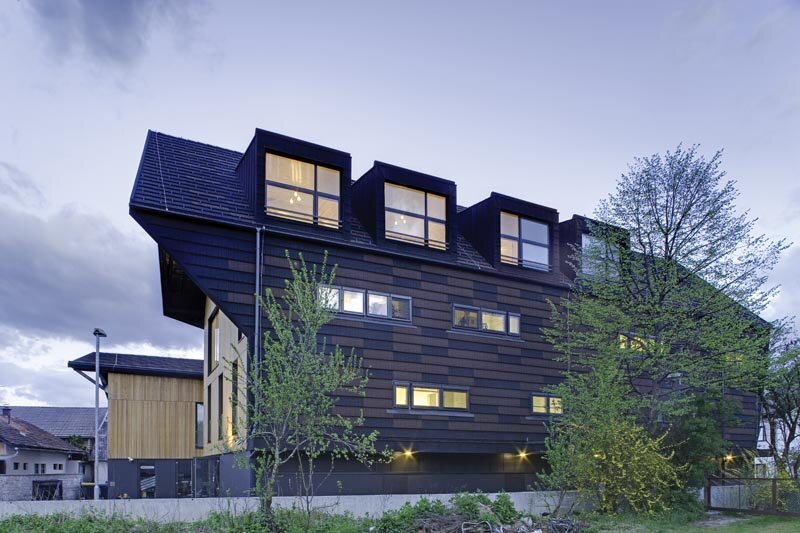
| DANS arhitekti was founded in 2004 by Rok Bogataj, Miha Dešman, Eva Fišer Berlot, Vlatka Ljubanović and Katarina Pirkmajer Dešman. Their works have received numerous awards and have been published in Slovenia and abroad. In December 2015, architects Katarina and Miha Dešman were the guests of the University of Architecture and Urbanism "Ion Mincu" in Bucharest, invited by the University of Architecture and Urbanism "Ion Mincu" in Bucharest, to give a lecture "Architecture as dialogue - recent Slovene architecture" and to open the exhibition organized together with the Slovenian Embassy "Five years of Slovene architecture". On this occasion, Miha Dešman gave an interview to the head of the working group, dr. dr. arh. Dragoș Dordea from UAUIM. |
| Dragoș Dordea: Where do you stand in relation to architectural theory - modern/ contemporary/ classical? Miha Dešman: I am very interested in the history of theory. It is not that our office would follow Alberti, but I like his expression, concinnitas, which means the correctness of architecture in all its components. But I am also thinking about what I believe is written on his medal - QUID TUM (QVID TVM) - WHAT IS TO BE DONE. And this doubt or uncertainty in all the phases of the project, all the questions that arise when you're dealing with the project, what's the right thing to do, what's the right thing to do, that's, I think, what we try to follow in our work. We are not so much concerned with the end product, we try to design the process. D. D.: What are the main directions your office is taking? In terms of architectural theory, what is the main trend in Slovenian architecture? M. D.: In our office, DANS arhitekti, we create spaces and culture in which we live, work and socialize. We consciously explore the relationship between people and the built environment, look for new ways of using space, and at the same time draw inspiration from archaic building principles, exploring the opportunities opened up by sustainable building and the possibility of creating pleasant living spaces. Whether we are designing public spaces or buildings where the focus is on engineering and technology, large spaces with large flows of people or intimate environments, we try to create different moods with the help of nuances and careful details. You know, our office is a composition of different people and also different generations, so we are always discussing and clarifying our ideas. Our work is not so easy, just responding to clients' requests or legislation, but we try to produce architecture that adds something new to the compendium of Slovenian architecture. This is very complex because in Slovenia we have this great tradition of fathers. These fathers are architects from the beginning of the 20th century, like Plečnik, Vurnik, Fabiani. From the modernist period, from the 1930s, there are Šubic, Costaperaria and the like. Interestingly, post-war architecture is epitomized by Edvard Ravnikar, who assisted Plečnik during his important works, such as the National Library in Ljubljana. He continued Plečnik's architecture, but not in form or language, but in concepts. We had modernist architecture, post-war modernism, which was in a language of international architecture, because Ravnikar also worked for a while in Le Corbusier's office in Paris. This was a very important fil rouge in architecture - there was always this dialog between generations. In the 60s, Ravnikar created a 'school' - he was a professor at the faculty and his assistants and students then followed his teaching and ideas and developed something that is now called the Ljubljana School of Architecture of the 60s. This led to different approaches, from the structuralist one of Savin Sever to a kind of, as Frampton says, critical regionalism. Our office tries to build on this background while exploring themes and ideas such as sustainability, new technologies and contemporary culture. |
| Read the full text in issue 6 / 2015 of Architecture Magazine |
| DANS arhitekti was set up in 2004 by Rok Bogataj, Miha Dešman, Eva Fišer Berlot, Vlatka Ljubanović and Katarina Pirkmajer Dešman. Their work has received numerous awards and was widely published in Slovenia and abroad. Katarina and Miha Dešman have been invited in December 2015 by the University of Architecture "Ion Mincu" in Bucharest to lecture on "Architecture as dialogue - recent Slovene architecture" and open the "Five years of Slovene architecture" exhibition, organized in cooperation with the Embassy of Slovenia. Assist. prof. prof. PhD Arch. Dragoș Dordea from the UAUIM seized the opportunity and interviewed Miha Dešman. |
| Dragoș Dordea: How do you relate yourself to the theory of architecture - contemporary/ modern/ classic? Miha Dešman: I am very much interested in the history of theory. It is not that our office is following Alberti, but I like his expression of concinnitas, which means the rightness of architecture in all its parts. But I also give a lot of thought to what I interpret it is written on his medal - QUID TUM (QVID TVM) - WHAT TO DO. This doubt or uncertainty in all phases of the project, all the questions that arise when dealing with the project, what to do, what is right to do? this is, I think, what we aim to accomplish in our work. We are not focused so much on the final product, as we try to design the process. D. D.: What are the main directions that your practice embraces? What is the main trend in Slovenian architecture in terms of architectural theory? M. D.: At DANS architects we create spaces and culture we live, work, feel and socialize in with each other. We are consciously exploring the relationship between people and built environment and think about innovative ways of using the space; in the same time, we draw from archaic building principles, explore the opportunities opened by sustainable construction, and the possibility of creating pleasant liveable spaces. Weather we design urban public spaces or facilities with focus on engineering and technology, large spaces with heavy flow of people or intimate ambiances, we try to create different moods through the use of nuances and careful details. Our office is a composition of different people and different generations, so we discuss and clarify ideas all the time. Our work is not so easy, especially when responding to clients' demands or legislation, but we try to produce architecture that adds something new to the compendium of Slovenian architecture. This is a very complex task, because in Slovenia we have this great tradition of "fathers". They are the architects from the beginning of the 20th Century, like Plečnik, Vurnik, Fabiani. From the modernist period of the 30s, there are Šubic, Costaperaria and some others also. The post-war architecture is interestingly embodied in the personality of Edvard Ravnikar, who assisted Plečnik during his important works, like the National Library in Ljubljana. We had modernist architecture, post-war modernism, which used the language of the international architecture, because Ravnikar had also worked in Le Corbusier's office in Paris for some time. In the 60s, Ravnikar ran a "school" - he was professor at the Faculty and his assistants and students followed his teaching and ideas and developed something that is now called the Ljubljana School of Architecture of the 60s. This led to different approaches, from the structuralism approach of Savin Sever to some kind of, critical regionalism, as Frampton says. Our office is trying to work in respect of these concepts, exploring in the same time new themes and ideas, like sustainability, new technologies and contemporary culture. |
| Read the full text in the print magazine |