
L a t a r y architecture
For many architects, designing in rural areas is of little interest. Among the main reasons would be: the small number of potential clients (who can afford to see the benefit of engaging an architect in the building process) and the modernist attitude that reduces "rural" to "archaic" and traditional architecture to a closed chapter with little relevance to today's comfort requirements. Another important reason is the reluctance most architects (still) share when it comes to working with traditional building materials and techniques. Also, current legislation is not supportive of traditional architecture, with building quality and safety standards leading to modern construction solutions that are not compatible with traditional ones.
These would be just some of the aspects of the issue presented below.
1. An example of built heritage destruction in rural areas (Mesendorf village, Brașov county)
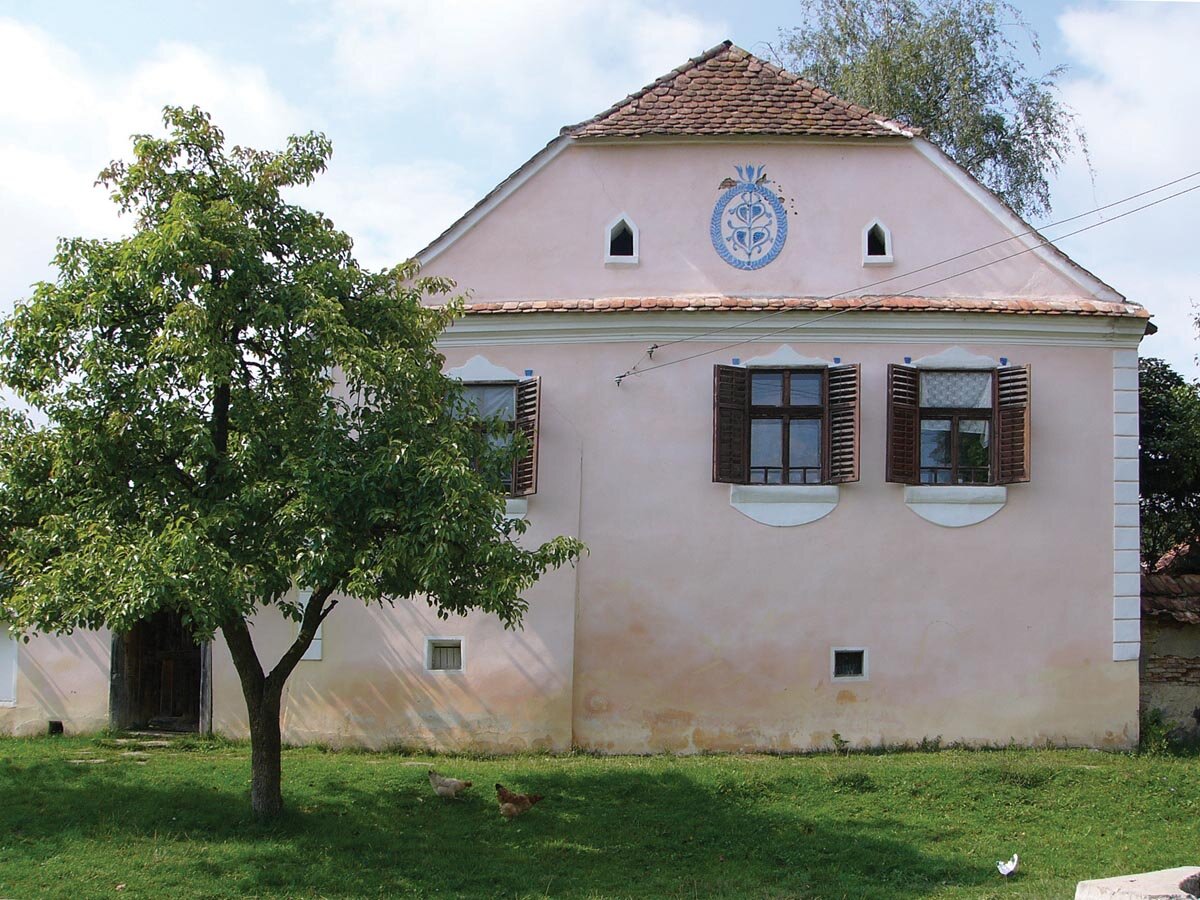
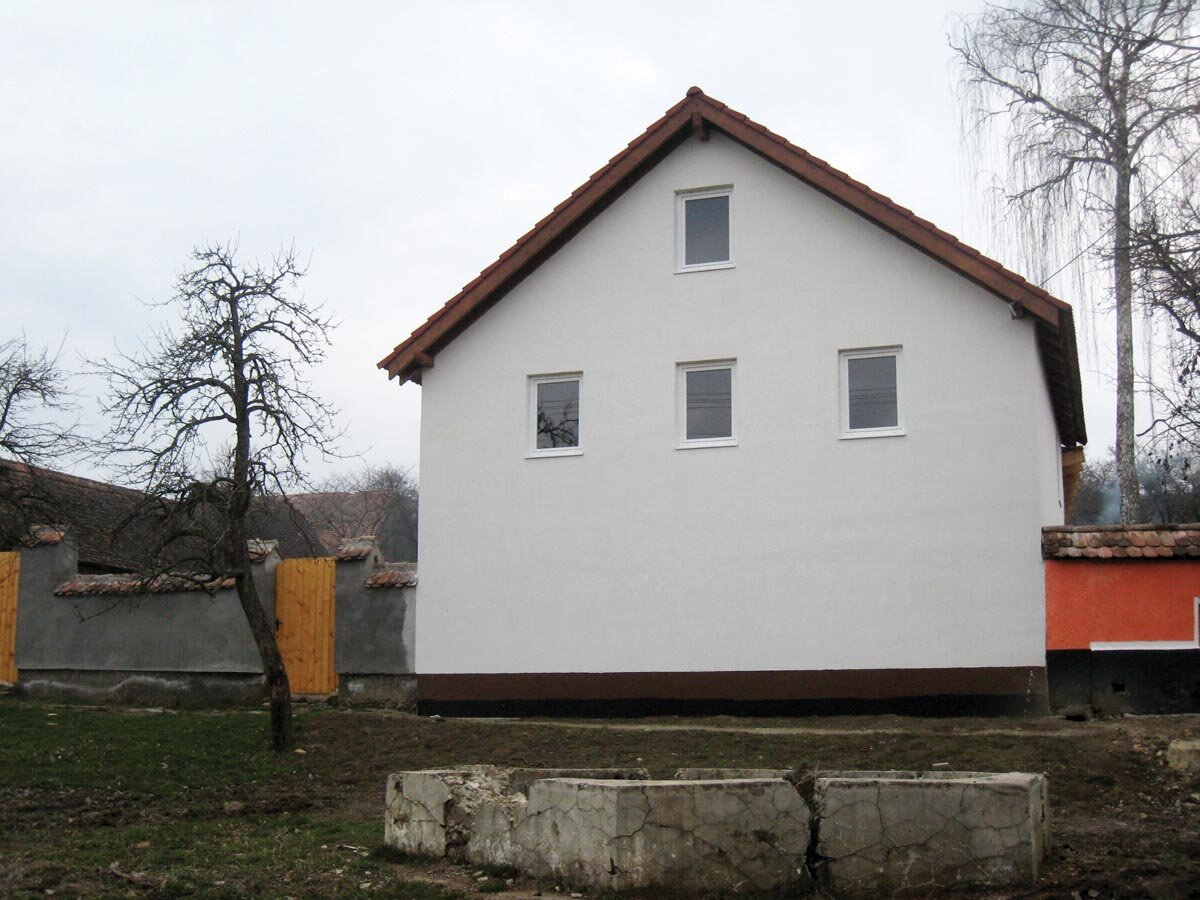
The traditional house, although part of a historical monument, was demolished and replaced by a new construction. The outbuildings have also completely disappeared. From the point of view of the authorities, the whole process was legal and the new construction is in keeping with the local character.
Continuity and contemporaneity. Tradition and innovation
While in urban areas it could be said, at least in theory, that vernacular architecture will cease to exist as a result of the regulations requiring any new construction or renovation of a building to be based on a project signed by an architect, in rural areas this is the case mainly for buildings with administrative functions or those with the status of historical monuments, and less so for most buildings used for residential purposes with associated programs (household annexes). At present, they are being demolished, built on and altered - processes which mainly reflect the wishes of the beneficiary who, in most cases, chooses to ignore the law and the context.
Up until the emergence of the modernist movement, vernacular architecture remained an illustration of the different stylistic fashions that succeeded one another or coexisted, while at the same time maintaining urban and constructional coherence, and falling within what we today call 'traditional architecture'. Traditional architecture is nothing more than the sublimation of the best constructive solutions found over time in a particular local context, a context that reflects, in the main, the physical geography of the place (landforms, soil, water regime, climate, flora and fauna, etc.), but also the socio-economic and political geography.
By analyzing the characteristics of the vernacular architecture of our times we realize that, although it continues to accurately reflect socio-economic and political geography, it relates too little to physical geography. This is mainly due to the paradigm shift that came with modernism, which chooses to ignore tradition in the name of progress and innovation, of aspirations for a better life.
2. Sustainable architecture means, first and foremost, capitalizing on what already exists.
An example of modernizing a traditional house.
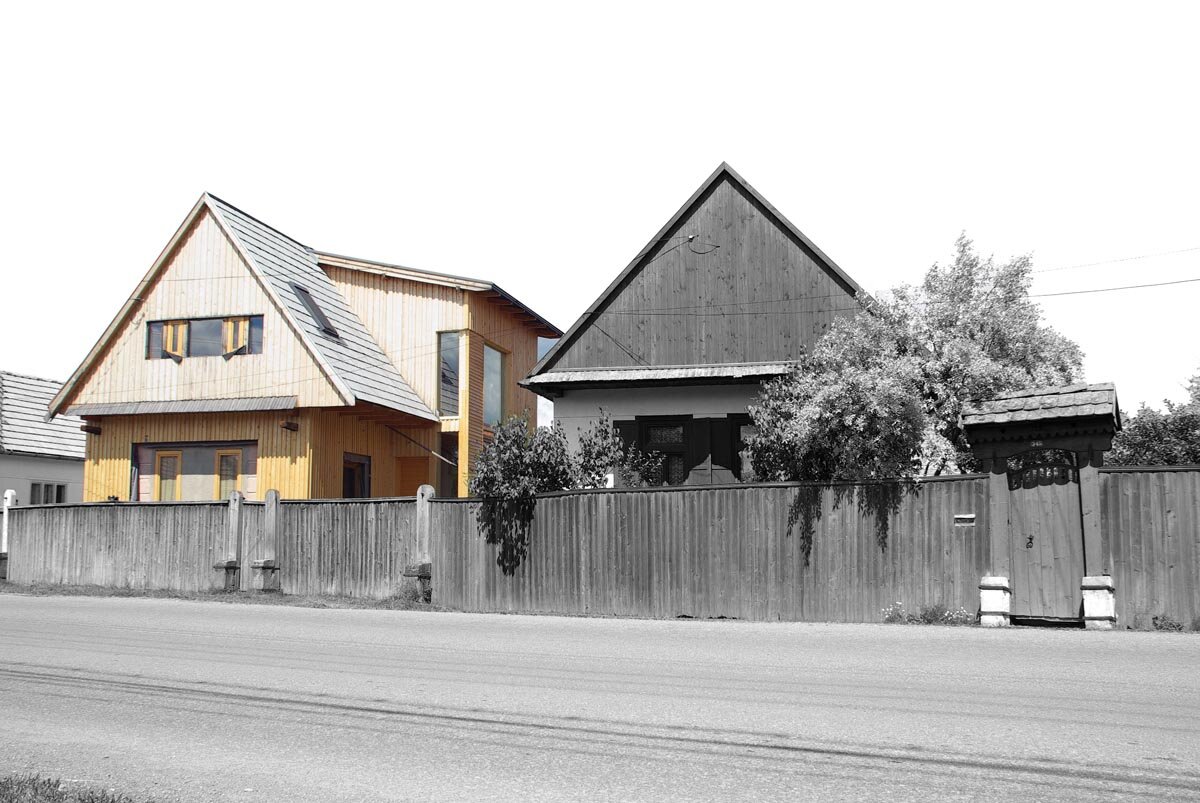
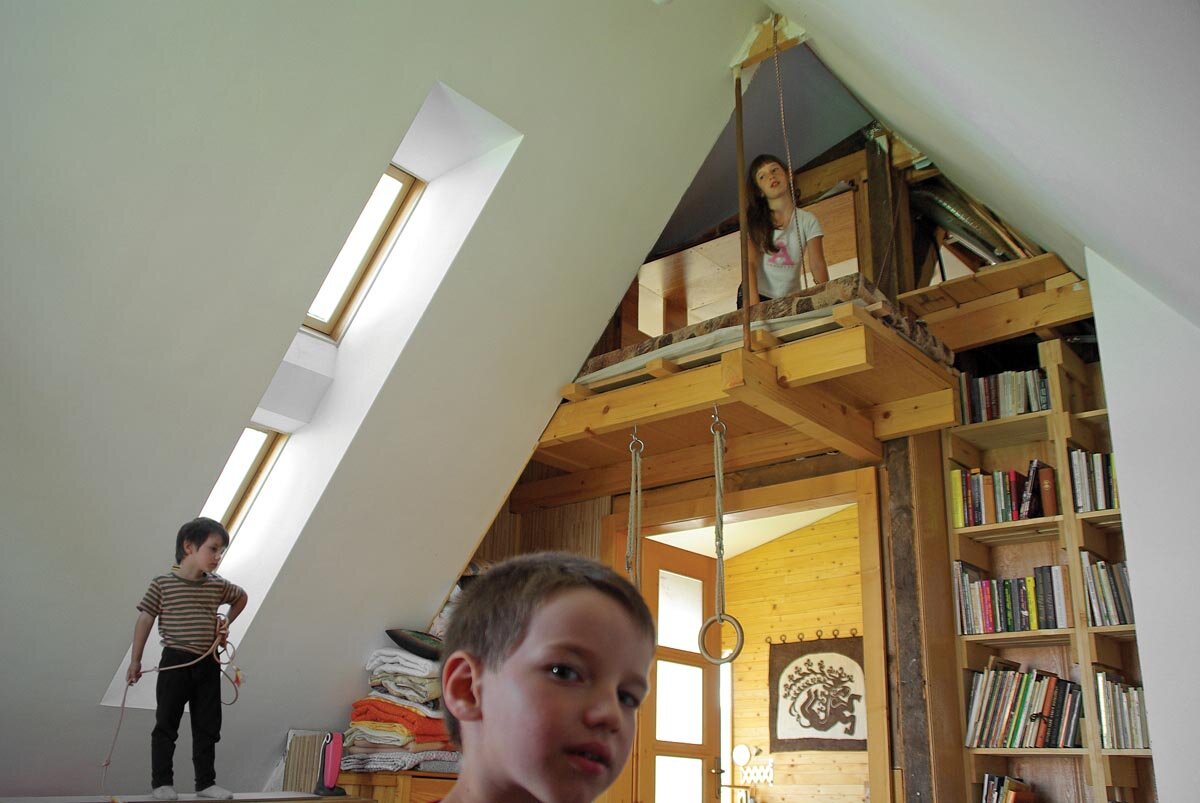
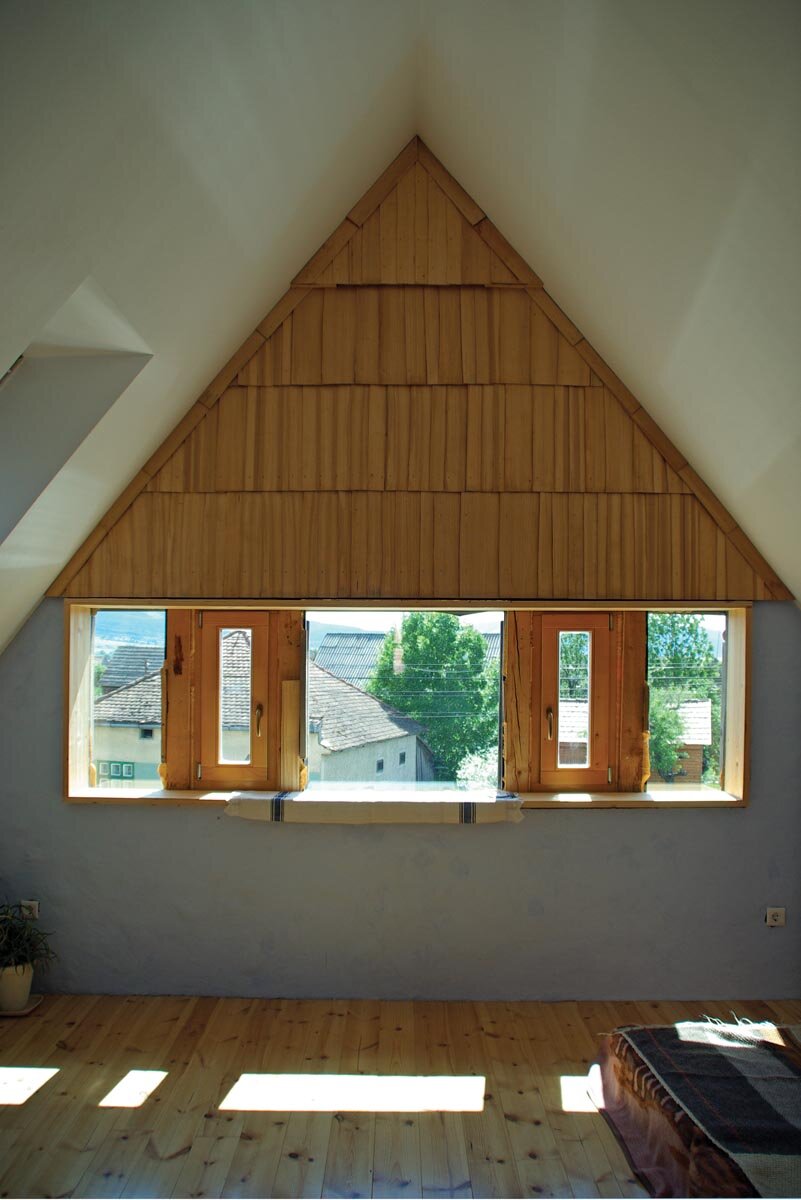
The beneficiary, who is also an architect (Köllő Miklós), has refitted a traditional house to meet the demands of an urban lifestyle, incorporating the original structure in a contemporary shell.
Read the full text in issue 1 / 2016 of Arhitectura magazine