
The royal court of Potlogi
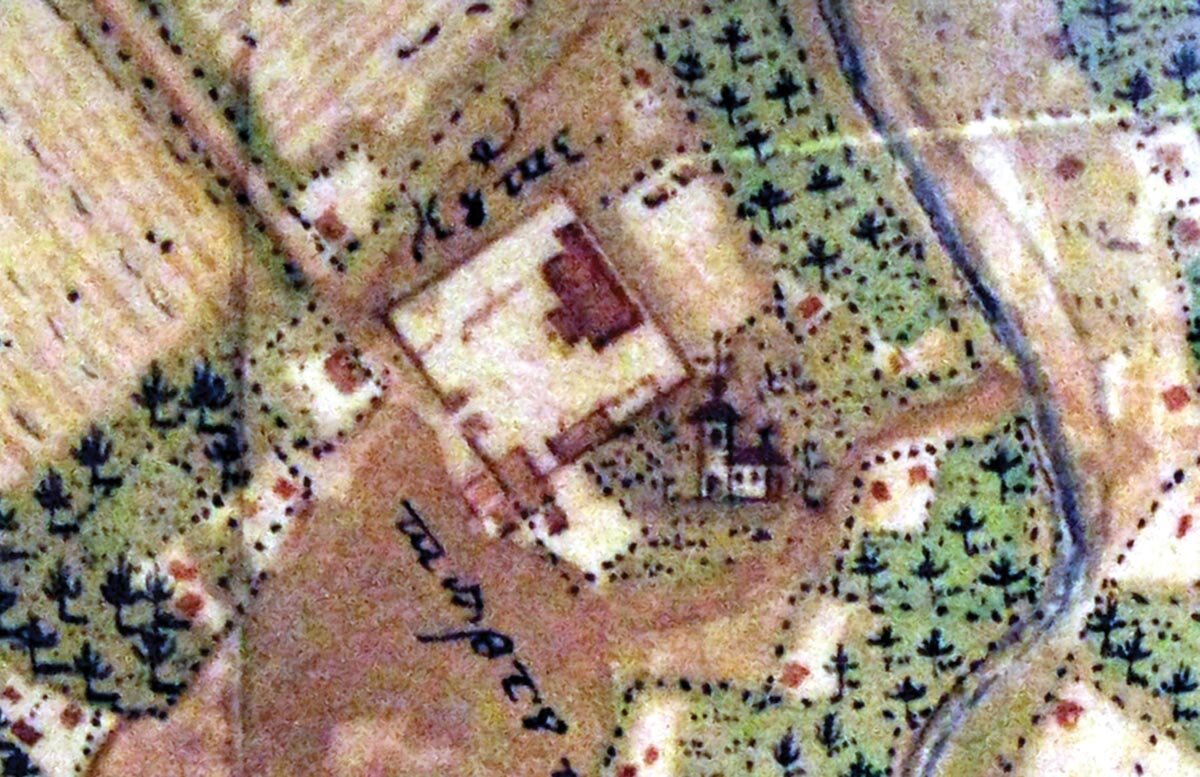
In 1698, the first court under the patronage of Constantin Brâncoveanu (1688-1714) was completed on the Potlogi estate. The prince's court houses1, intended by the prince for his eldest son, Constantine (b. 1683), marked a turning point in the evolution of residential architecture in Wallachia. An original synthesis and refinement of the quests and achievements that had preceded him, the Potlogii were the main model followed by the stately and boyar residential architecture throughout the following century. The prince's wide cultural openness, the experience acquired in his youth as a young man working as a foreman on the building sites of his Cantabrian relatives, as well as his inclination towards comfort and a certain type of courtly ritual all played an important role in the formation of an attitude reflected in the modernity of the conception of his first residential architectural foundation.
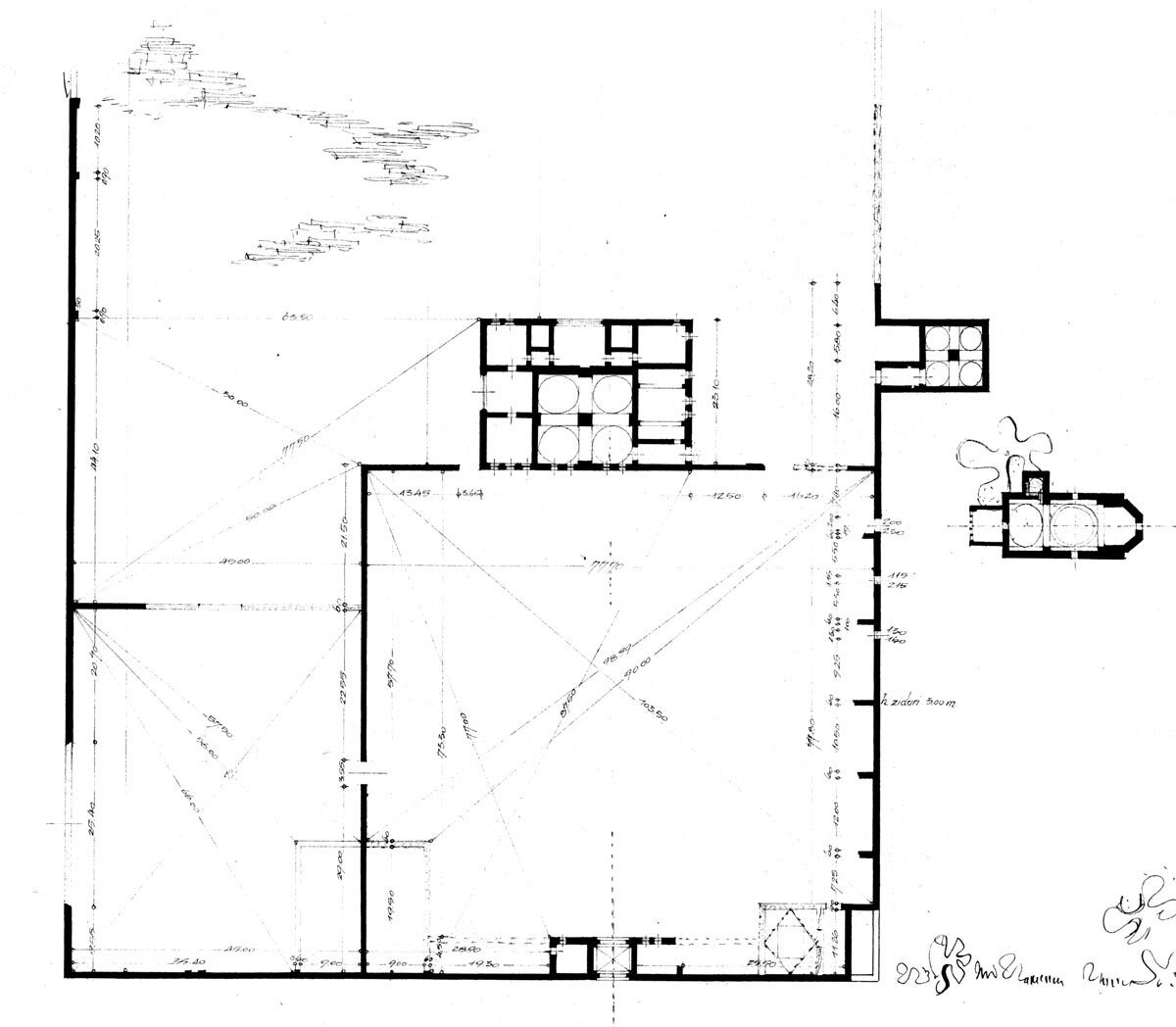
The composition of the ensemble (oriented in a south-north direction) is subordinate to the stately home, the general scheme, the manner of relation to the natural setting, and the detailed solutions are all tributary to concepts influenced by model albums or even by treatises on Western architecture, of which the prince or his close associates are very likely to have been aware2. The ensemble grouping the residence of the ruler and the household annexes is functionally organized in three courtyards enclosed entirely or partially by non-defensive walls: the reception courtyard (to the south), the courtyard of the household annexes (to the south-west) and the garden (to the north), bounded on one side by the course of the Gherghina River. Following the Potlogi model, the presence of water in the vicinity of the garden of the Brâncovenetian residences became a custom, the solutions at Mogoșoaia, Doicești and Tunari being similar. Underlining the secular character of the complex, the chapel dedicated to St. Dumitru, built before his accession to the throne in 1683, was left outside the enclosure.
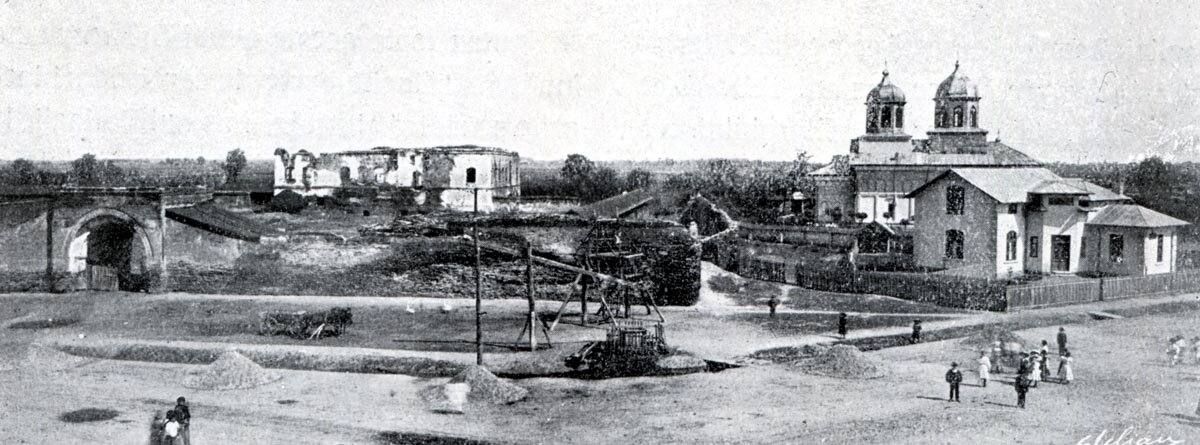
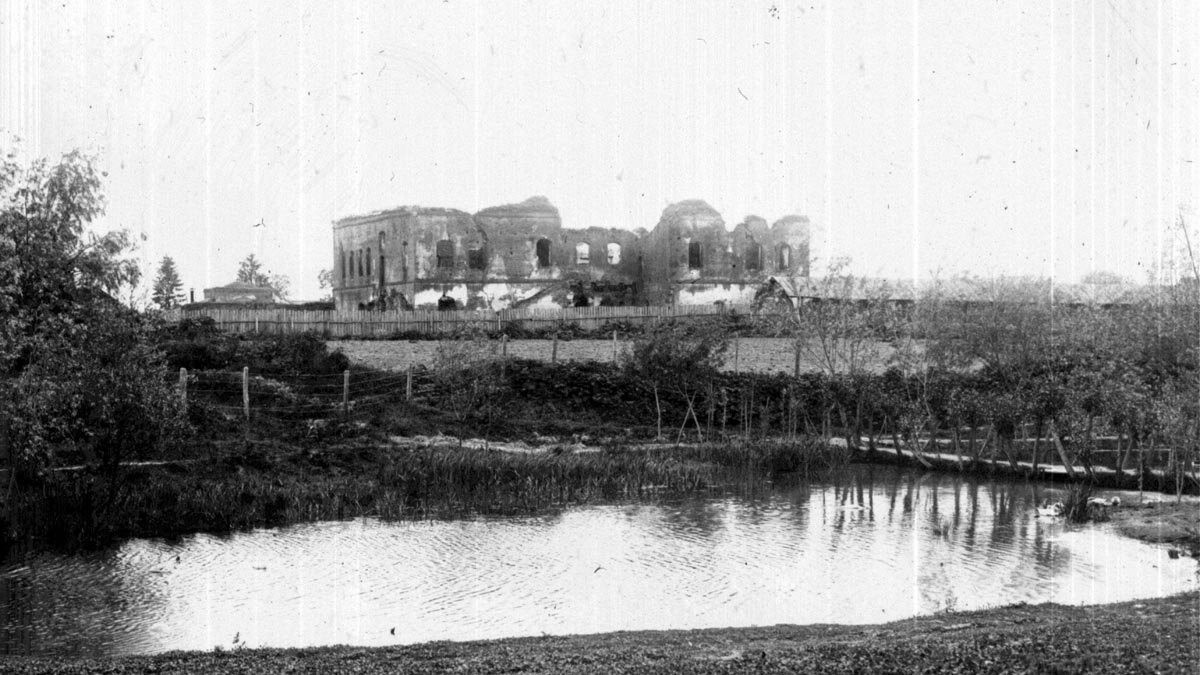
Looted and damaged at the beginning of the 18th century, after Brâncoveanu's death, the complex continued to deteriorate throughout the 19th century and the first half of the 20th century. During this long period, some of the outbuildings disappeared, while the prince's house became a ruin. Included on the provisional list of historical monuments in 1953, the palace was largely reconstructed (rather than restored) between 1954 and '59, following a project by architect Radu Udroiu, a member of the office headed by architect Ștefan Balș. Restoration work resumed in 1971, but was abandoned shortly afterwards when the D.M.I.3 was disbanded.
Views of Potlogi Palace from south and north (2014)
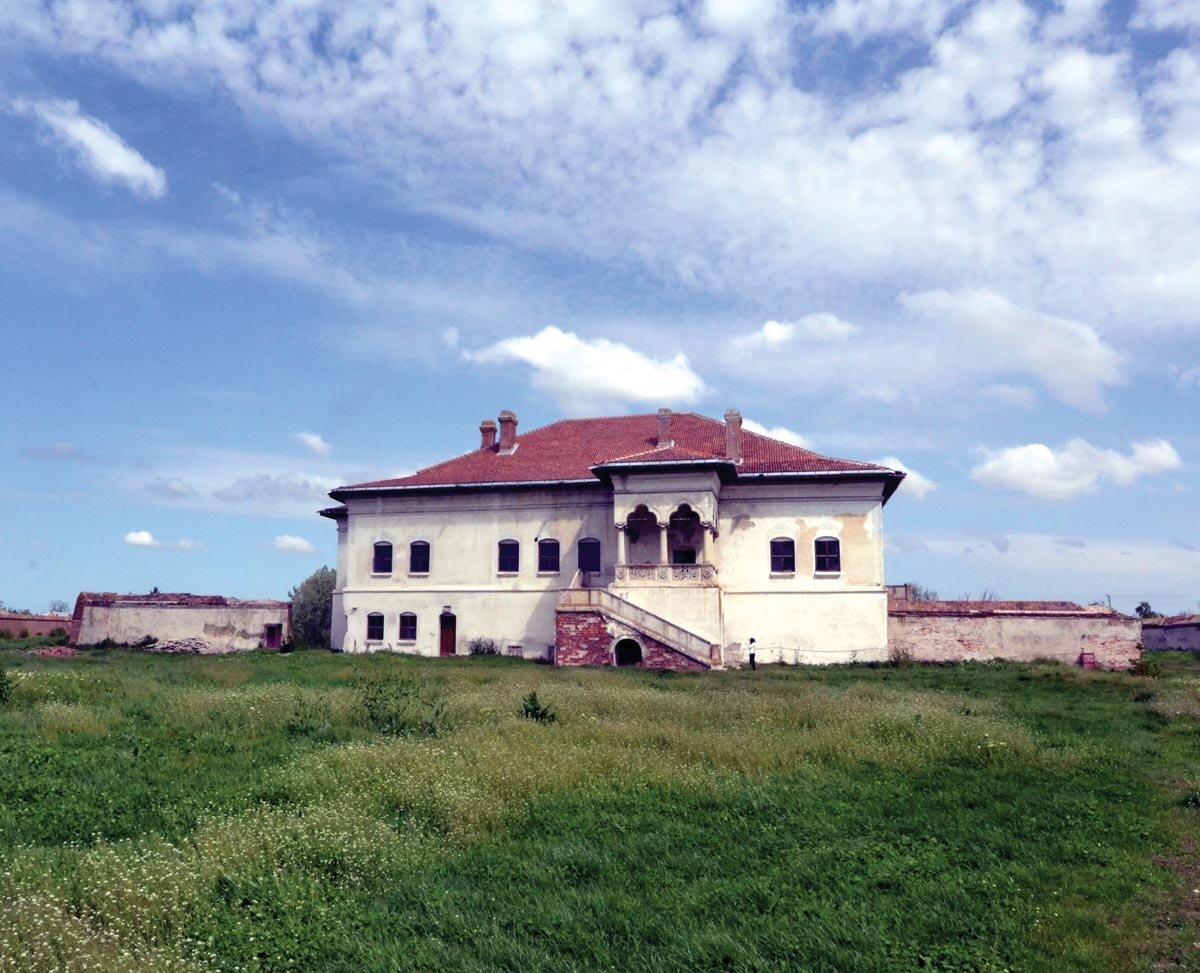
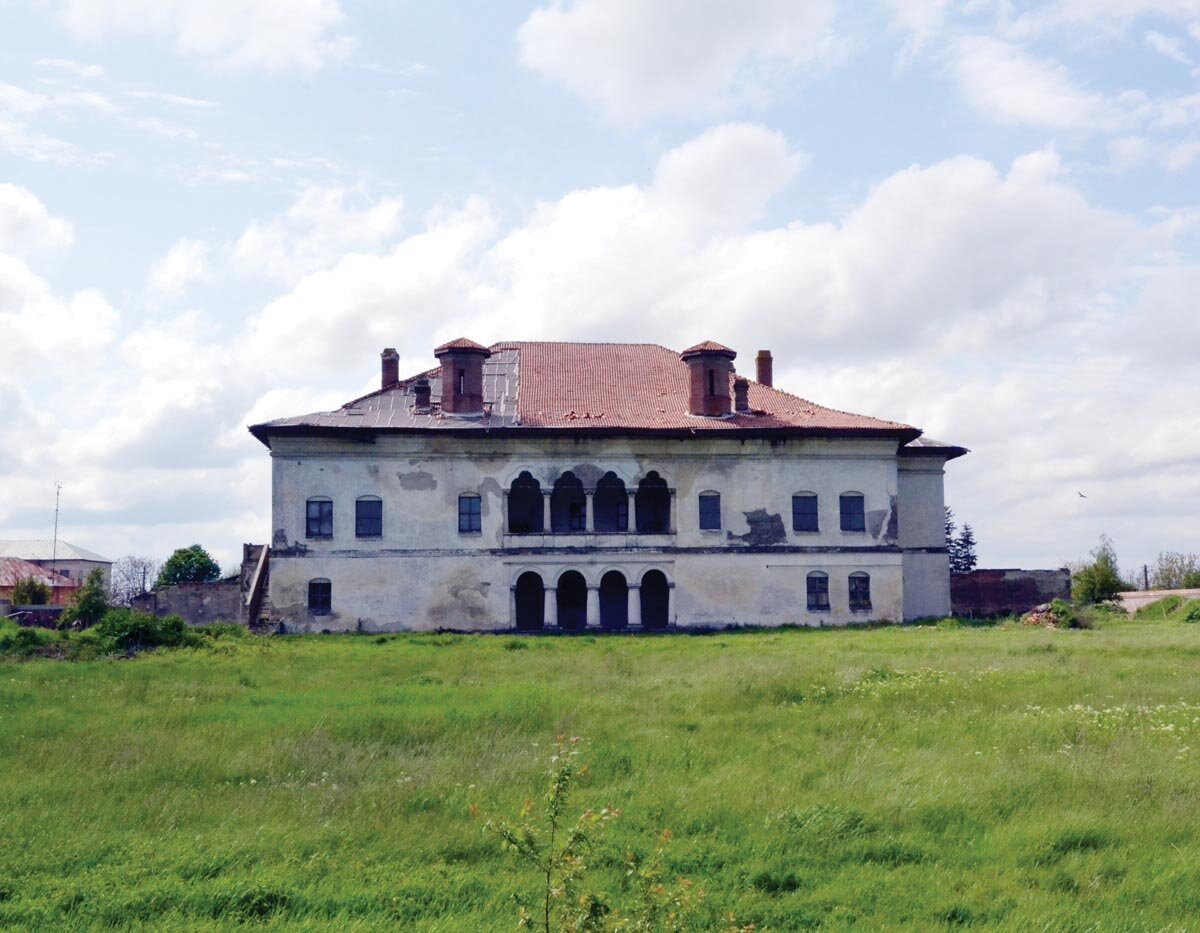
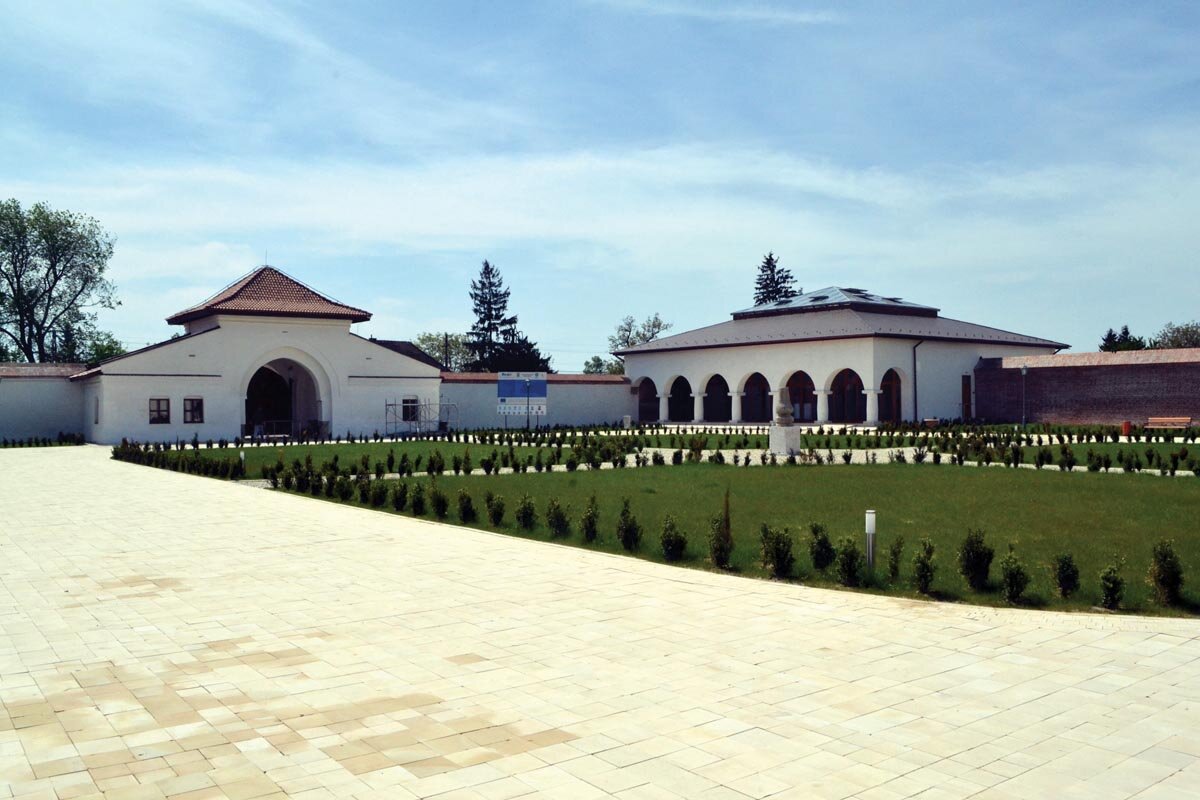
Views of the Potlogi ensemble: the palace from the south (top left), the access pavilion and the 'droșcăria' (top right), the 'servants' houses' and the 'cuhnia' (bottom left) and the palace seen from the northwest (bottom right), in 2016
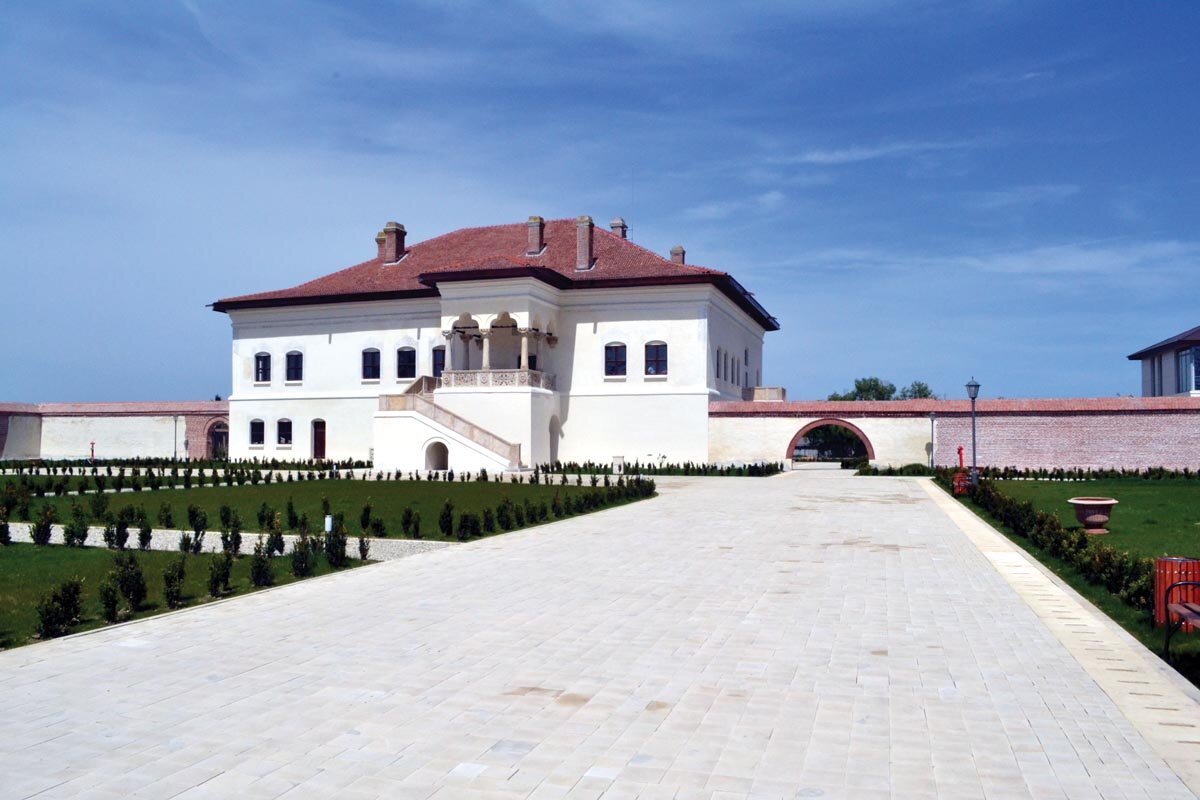
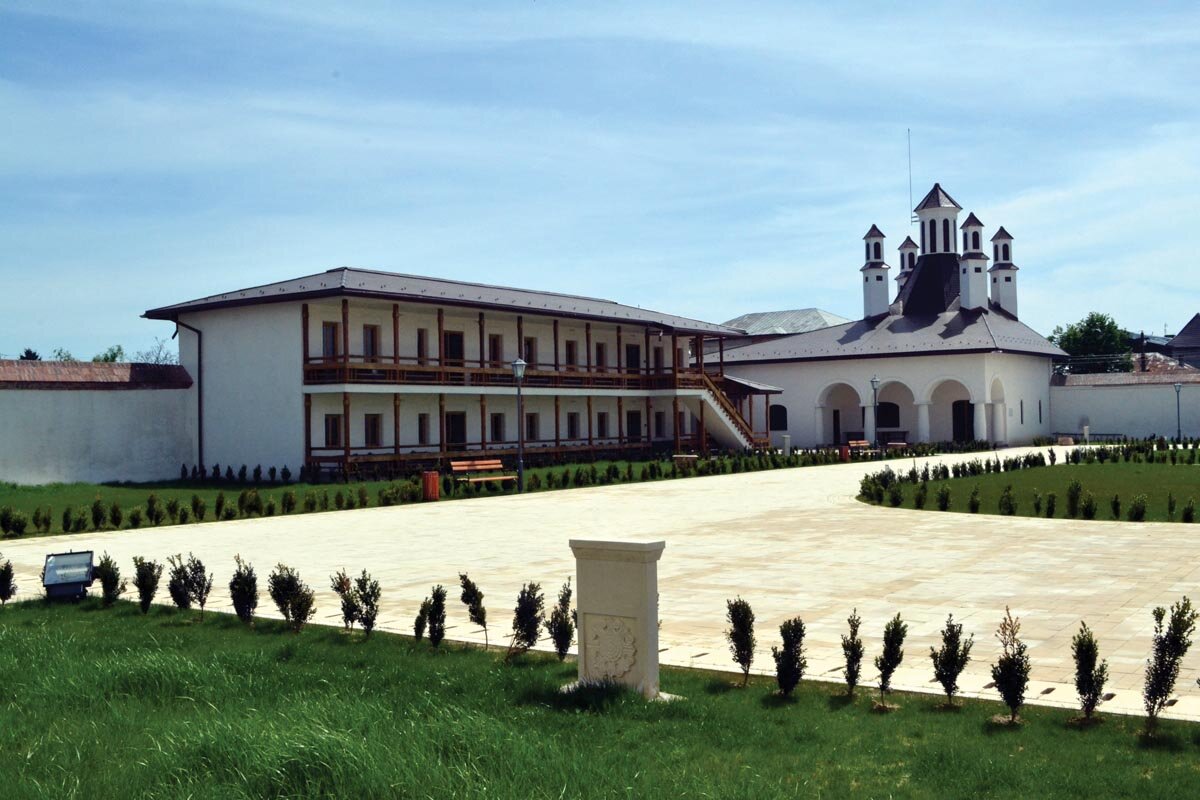
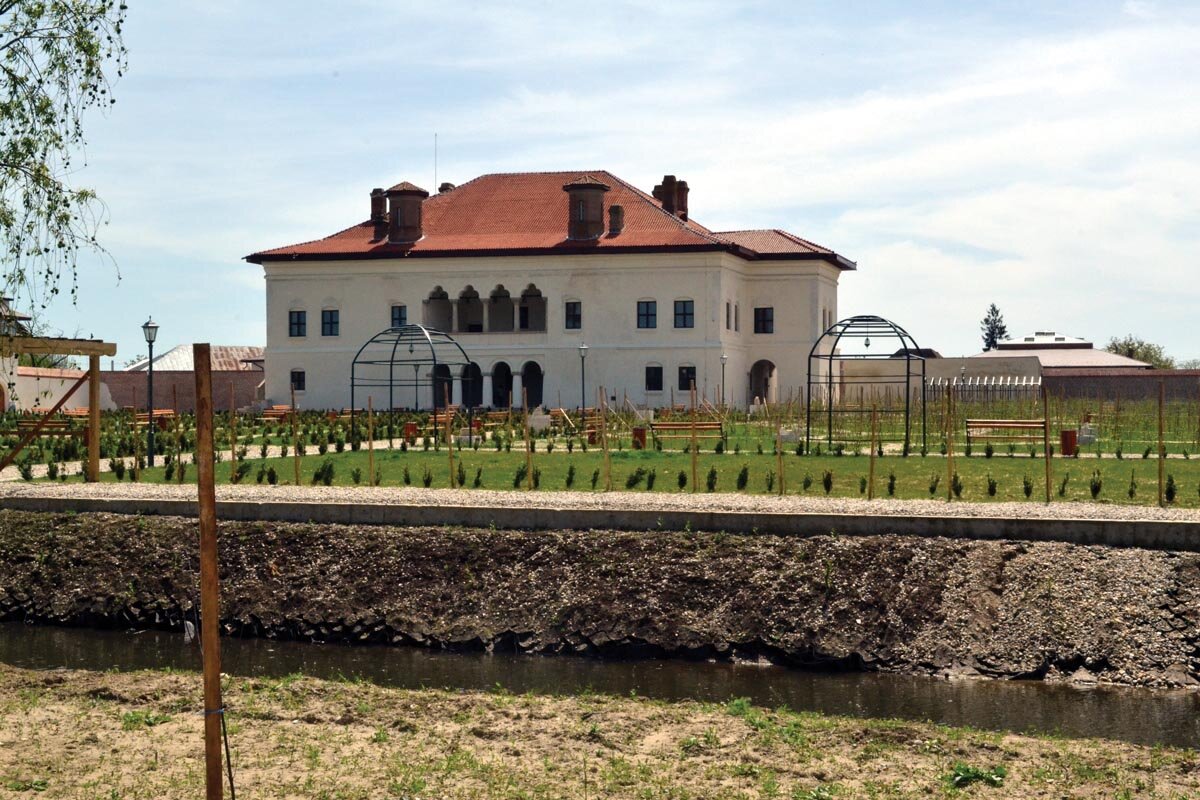
In spite of the substantial interventions that were carried out on the palace, no doubt undifferentiated from what was still preserved, the royal palace of Potlogi has preserved an image closer to what it had once been, compared to its counterpart in Mogoșoaia, which was substantially transformed during the works carried out, especially in the second half of the 19th century. Moreover, the concentration of interest on the ruler's residence, to the detriment of the buildings surrounding it, spared the ensemble from intrusions that could distort its coherence. It can therefore be said that the Potlogii remained, until recently, the most illustrative example of Brâncovenetian aulic architecture.
After a long period during which the palace - under the administration of the local authorities - was abandoned, continuing to fall into disrepair along with what was left of the courtyard complex, work was resumed after an ambitious project in 2010. In spite of its success with the general public, the exercise of using European money for "sustainable valorization" and putting the Potlogi Palace back on the cultural map - far from what could be called a restoration - has turned the picturesque Brancovan ensemble into an indigestible example for any discerning eye, into a vast exhibition of ineptly presented inventions, devoid of any historical foundation, into a string of banal contemporary architectures taking the place of the old annexes. However, at the entrance, to the left of the entrance, with disarming nonchalance, the visitor is officially informed, by means of signs, that inside he is about to discover the remains of late 17th century buildings: "ruins of the old house, c. 1680", "ruins of the rectory, 1698", "ruins of the servants' quarters, 1698", etc. The bright white palace, decorated inside with metal radiators, red and brown fire hydrants and painted concrete to imitate the old wooden structure, is the centerpiece of a vast scenic landscape that can easily remind you of the banal, electioneering decorations of some neighborhood parks.
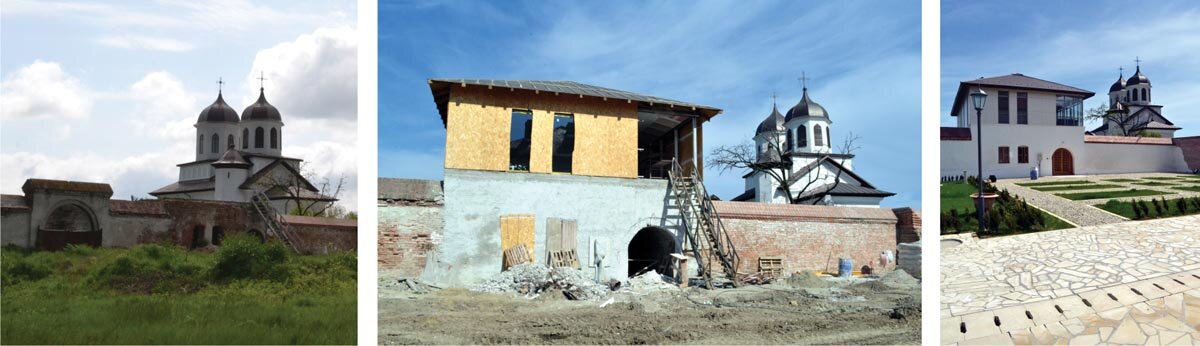
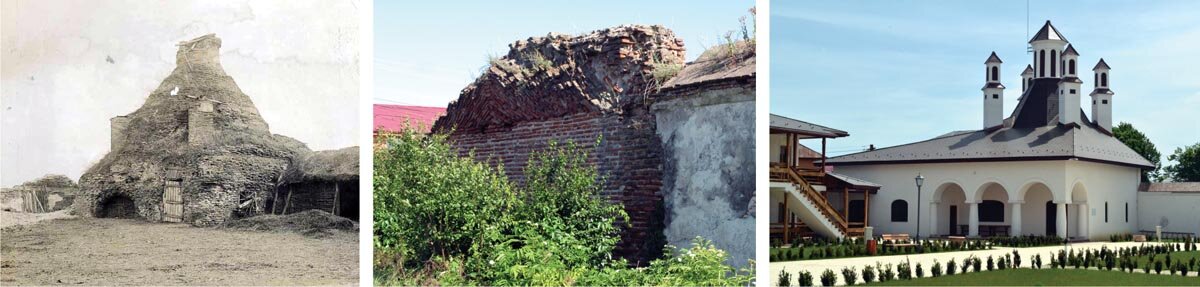
Without missing any of the positions once occupied by the outbuildings, recent interventions have replenished the ensemble by building a new cellar, a new droșcării (a bed or place where the royal calashes were kept and repaired), a new 'servants' house and a new house on the east wall, over the ruins of the cellars of the first dwelling at Potlogi. Probably inspired by the model at Mogoșoaia, the current Potlogi manor house, a solid construction of concrete and sheet metal, with perfectly drawn sharp edges, remains only a butaforie, replacing a construction whose original image is only vaguely suggested by the ruins photographed in the early years of the 20th century. The house used by the ruler during the construction of the palace (pre-1683), whose preserved cellars were considered by Ștefan Balș as the earliest example of the use of the four-pile vaulting system with a central pillar4, was also 'modernized' by the addition of a closed storey in OSB, fibre cement and metal joinery, crowned by a roof with a sheet metal roofing. The balance of the interventions is supported on the west side of the reception courtyard by the large volume of the droch, whose architecture is probably an attempt to recall its original function through the generous stained-glass window facing the reception courtyard.
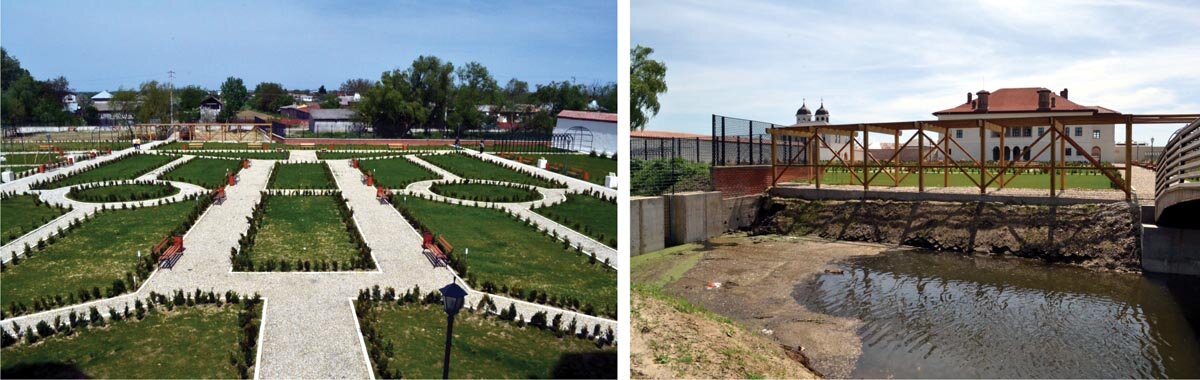
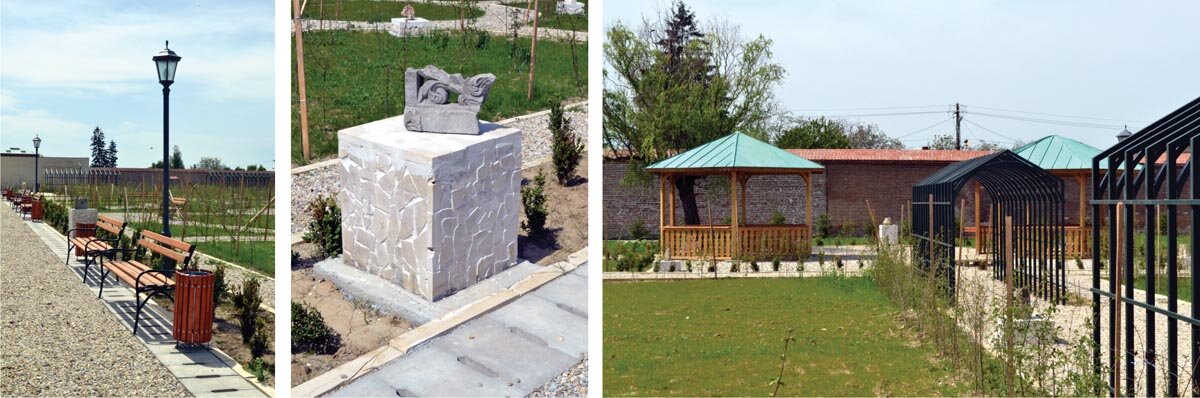
The layout of Brâncoveanu's gardens, designed by his many gardeners5 according to Western models, which included gazebos for "lounging and viewing", ended, in the Venetian style, with the water mirror of the pond. Until not so long ago, one could still guess or at least imagine something of this arrangement, today replaced by the rigid design of paths paved with crushed marble, bordered by channels covered with precast concrete, benches and standard bins. Framed by concrete blocks and partially enclosed by a wire-mesh fence, the pond can be glimpsed through the skeleton of a useless pergola that invites you to perch on the apparent brick parapet that correctly demarcates the plot.
A few years ago, Eugenia Greceanu concluded her description of the Brâncovenetian court at Potlogi on a subjective and direct note: "It would be desirable that the eventual millionaire who would choose to settle here, restoring to the ensemble at least the peace and protection of the time of the approx. 15 years of reign, not to consider himself superior in taste to Constantin Brancoveanu"6. So, unfortunately, before everyone's very eyes, at considerable expense7 and with the best of intentions, his expectations were disappointed.
NOTES:
1 The term palace (from the Latin palatium) appears for the first time at the beginning of the 18th century in the pisania of Brâncoveanu's residence at Mogoșoaia.
2 Anca Brătuleanu, "Hypotheses. De la "albumele de modele" la reședințele brâncovenești", in "B.C.M.I.", București, VI, nr. 1-2/ 1995, p. 9-10. Starting from the assumption that Brâncoveanu knew directly or through the intermediary of "albums of models" the work of Andrea Palladio, Anca Brătuleanu proposes a parallel reading of some of the ideas formulated in the treatise of the Italian architect and the foundations of the Wallachian ruler.
3 Dumitru Năstase, "Restaurarea monumentelor de arte medievală în Republica Populară Română", in "S.C.I.A.", Bucharest, Ed. Academiei R.P.R.R., no. 1/ 1960, p. 158, and Eugenia Greceanu, "Curțile lui Constantin Brâncoveanu", in Moștenirea Brâncovenească, Centrul Cultural Palatele Brâncovenești, Mogoșoaia, 2008, p. 65-66.
4 Ștefan Balș, Curtea Brâncovenească din Potlogi, Bucharest, Ed. Meridiane, 1968, p. 25.
5 Constantin C. Giurescu mentioned the name of Pecena Levin, whom he supposed to be the author of the drawing of the Brancovenetian gardens in Bucharest. He also mentioned the gardeners Toma and "Frâncul" (most probably an Italian), the latter being the chief gardener of the Prince at his court in Bucharest, with 20 other gardeners under his command. In addition to these, at the residence in Targoviste there were another 12 gardeners in the service of the ruler (Dolores Toma, Despre jardins și modul de lor de folos, Iași, Ed. Polirom, 2001, p. 22).
6 Eugenia Greceanu, op. cit., p. 71.
7 On the board placed on the construction site, for the interventions planned at Potlogi through the Regional Operational Program Sud-Muntenia, the estimated cost of the investment amounted to 42,809,489.34 lei.