Diploma project: Traditional crafts workshops at the Neamțu Manor House
stud.-arh. Alexandra Sinițaru
University of Architecture and Urbanism "Ion Mincu" Bucharest, 2014
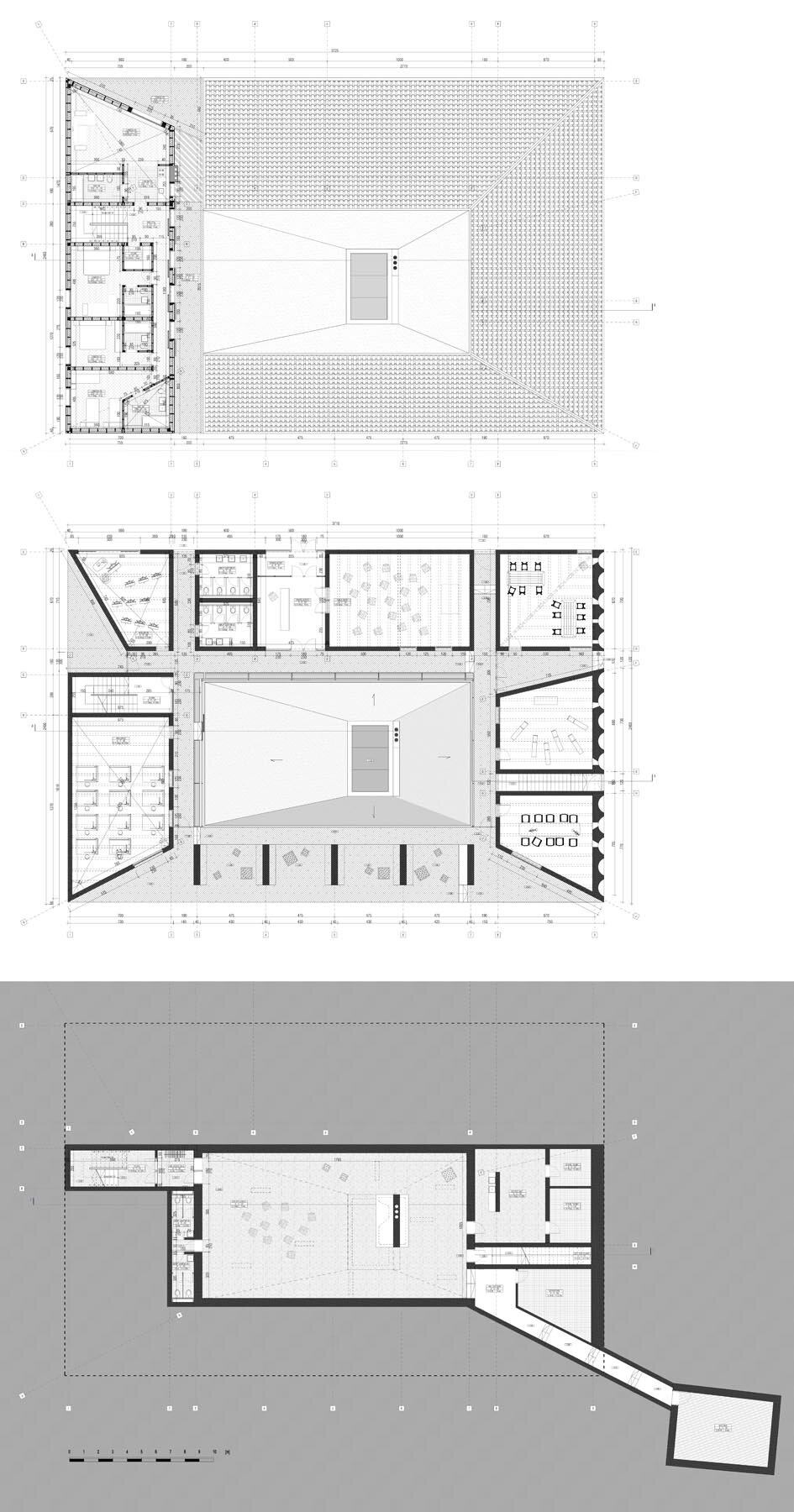
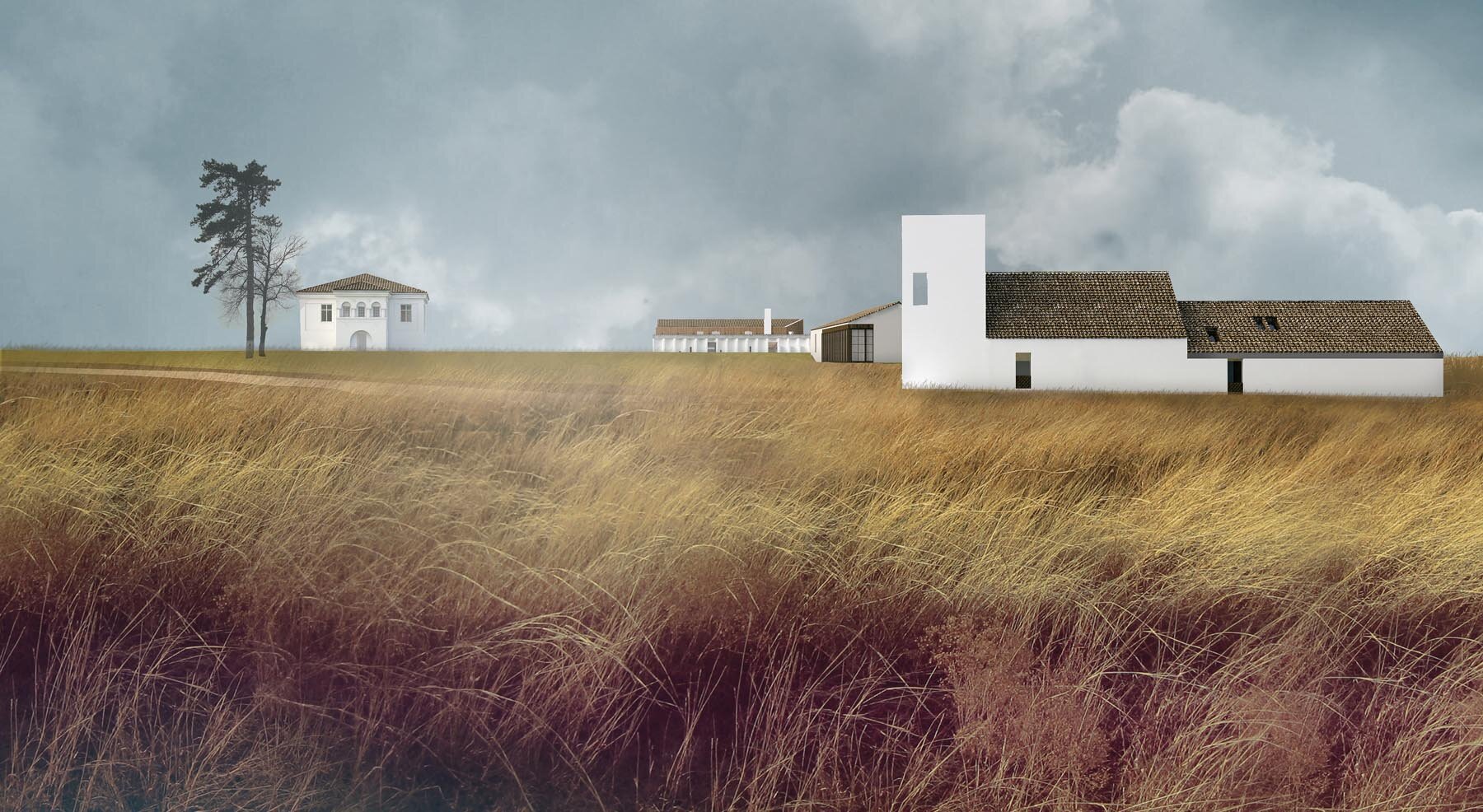
Workshops of traditional handicrafts, aims to recover the Neamțu Mansion, located in Olari village, Pârșcoveni commune, jud. Olt, from a multidisciplinary perspective, reactivating the place through a contemporary architectural intervention that would follow a restoration of the mansion, without falling into the trap of nostalgia and constraints, encouraging a contextual creativity with social implications. The objective of the project is not the restoration of the Neamțu mansion, but a contextual insertion of contemporary architecture.
A historical analysis shows how the identity of the place was influenced by the presence of manor houses in the courtyard of which intense cultural and handicraft activities took place. As it is not a valid attitude to take an element from the past without taking into account the economic and social changes of the present, it was preferred to adapt it to today's context: workshops accessible to the people of the village, as well as to students or tourists interested in preserving and spreading traditions, without falling into the craftsmanship.
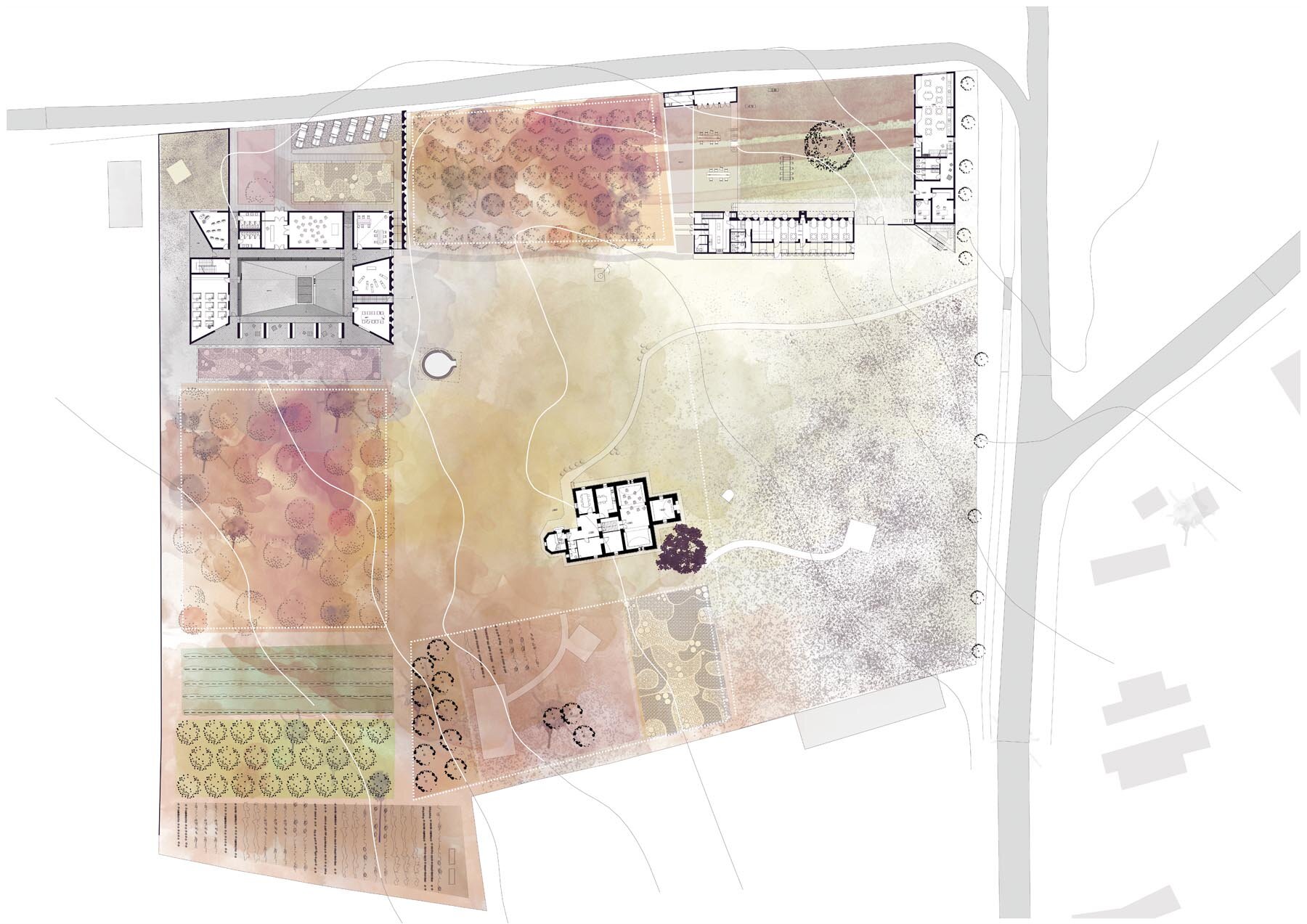
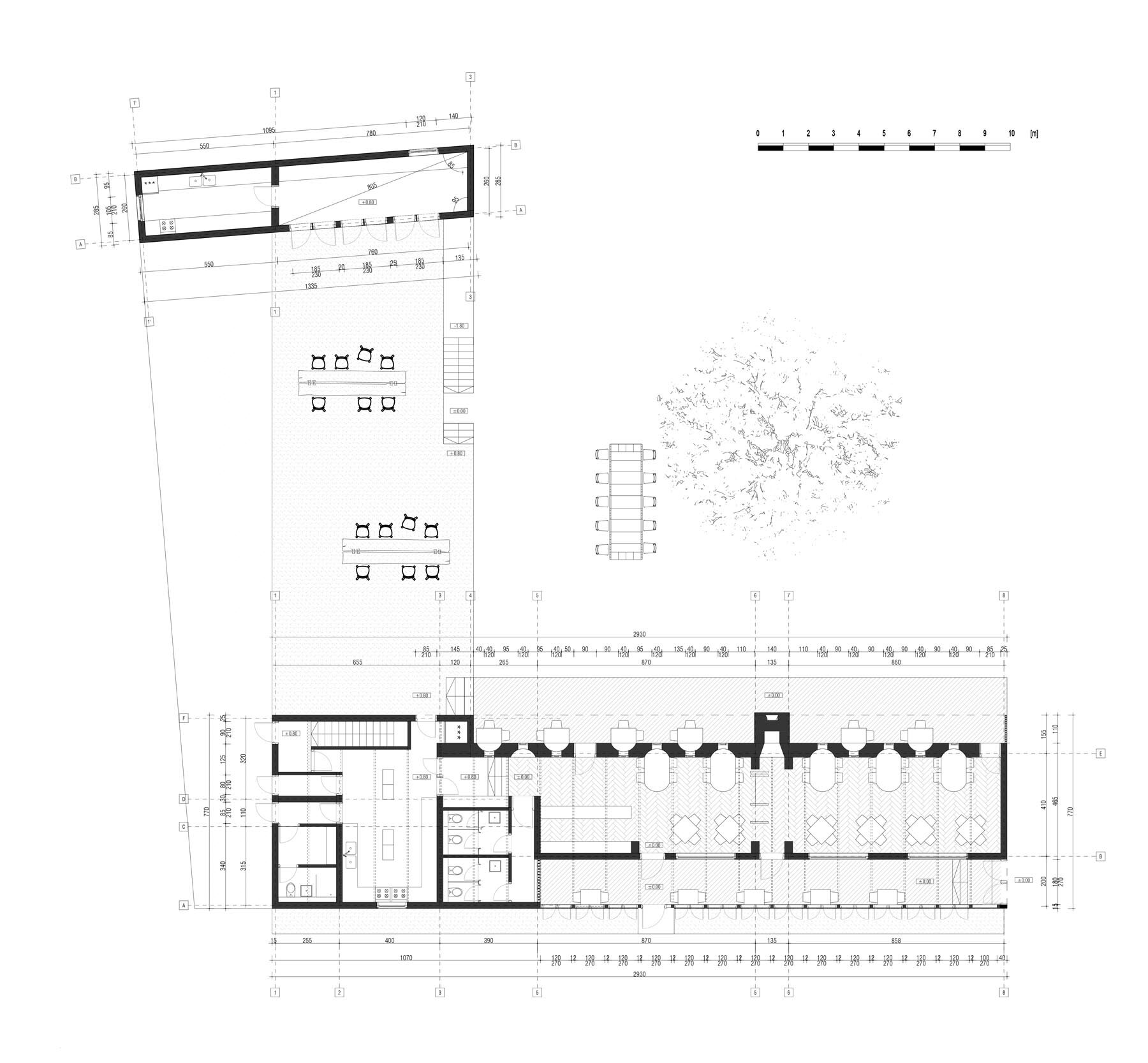
The first handy architectural gesture would be an intervention based on a typological reconstruction, i.e. the rebuilding of a typical Brâncovenetian courtyard. But history and tradition are not sufficient arguments for a quality architectural intervention. Instead, the return to the past has to be done in order to identify the essence, looking from a contemporary perspective. Therefore, the reconstruction of a Brâncovenetian courtyard is not a valid solution, as the context is different. If fortifications and enclosures were justified in the 18th century for reasons of defense, they are no longer justified today. However, it is possible to identify an element of potential that emerges from an investigation of the past, namely the enclosure-type solution. Thus, instead of copying an element from the past, the project reinterprets it to give it meaning in the present context.
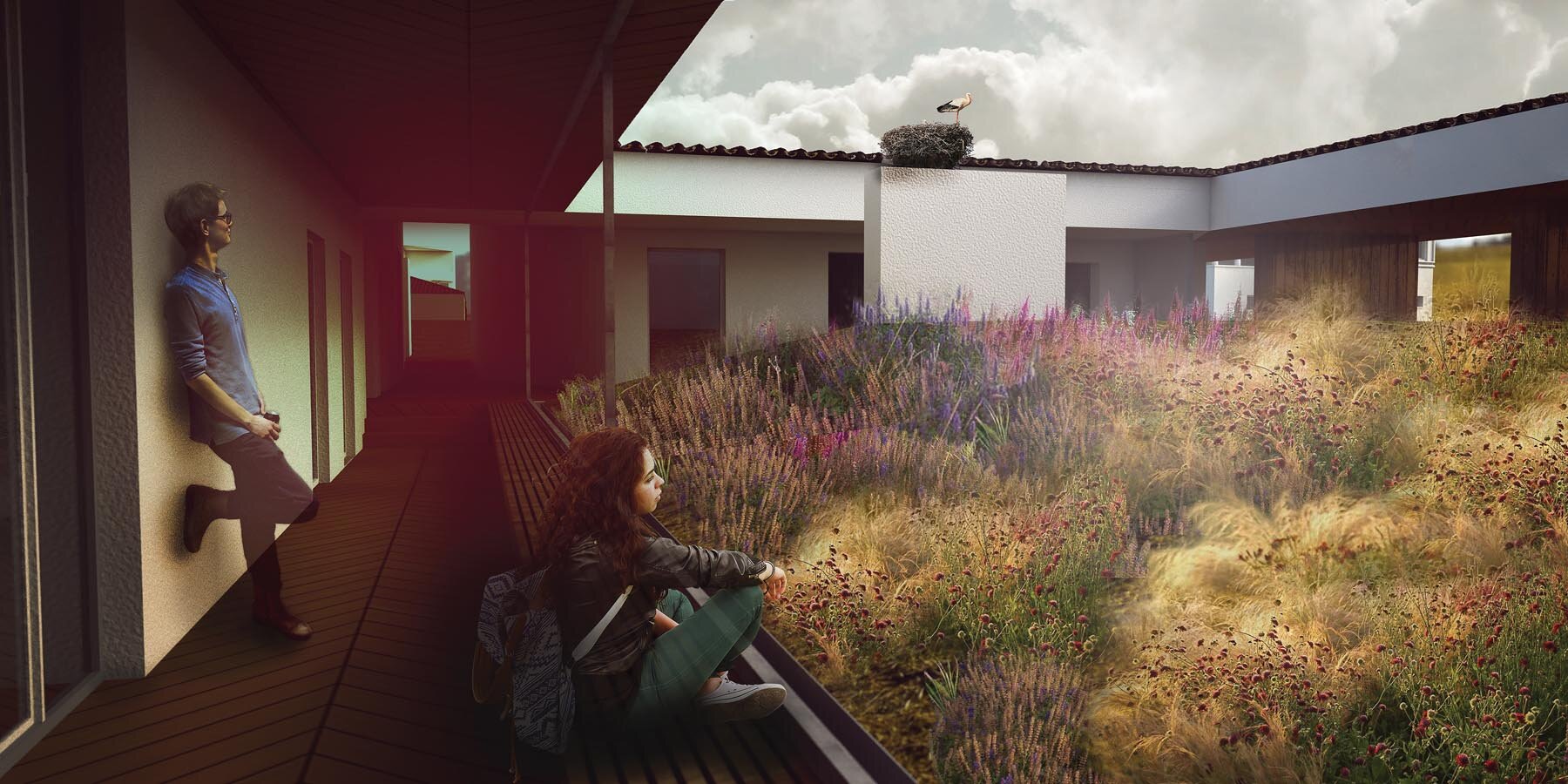
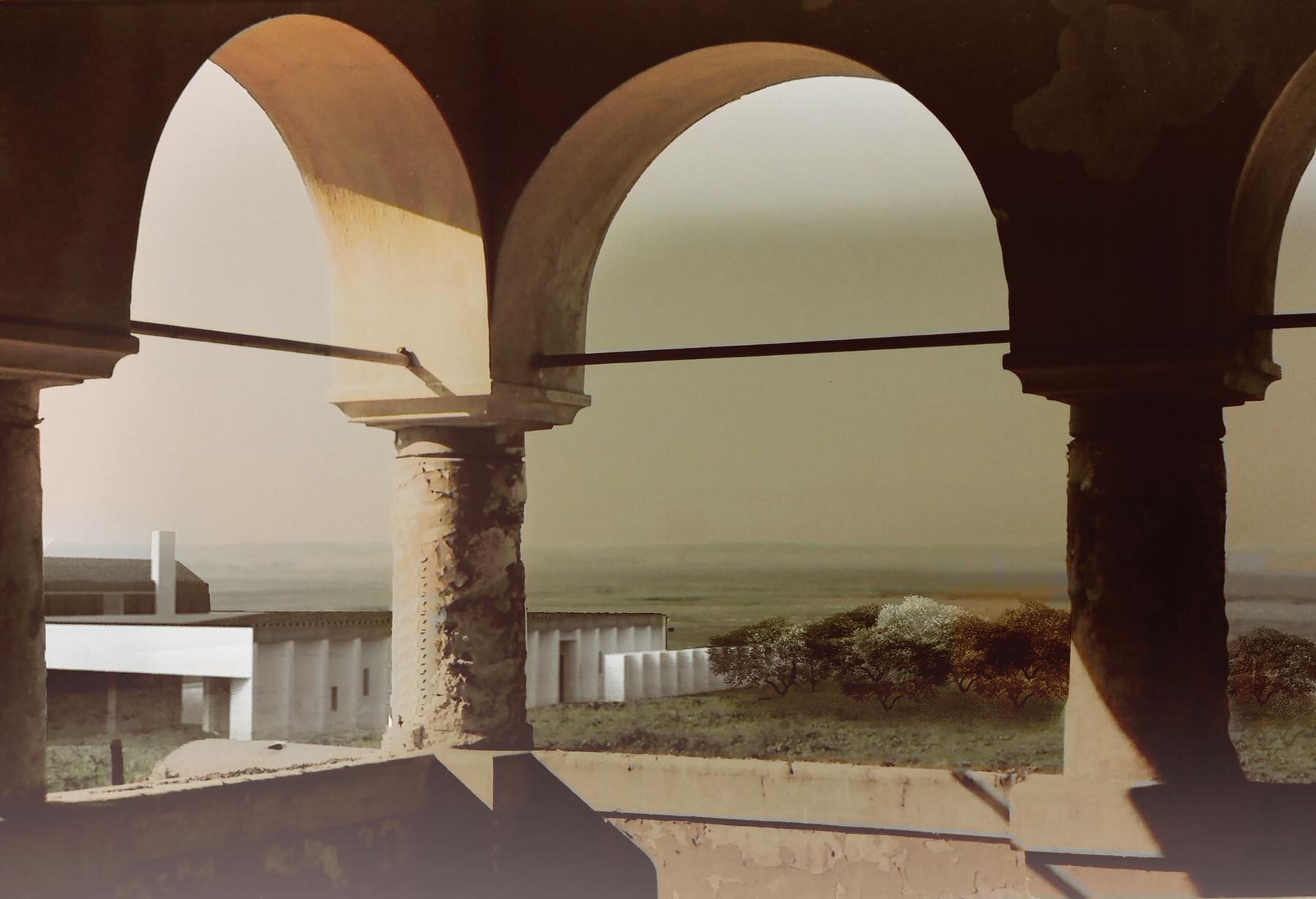
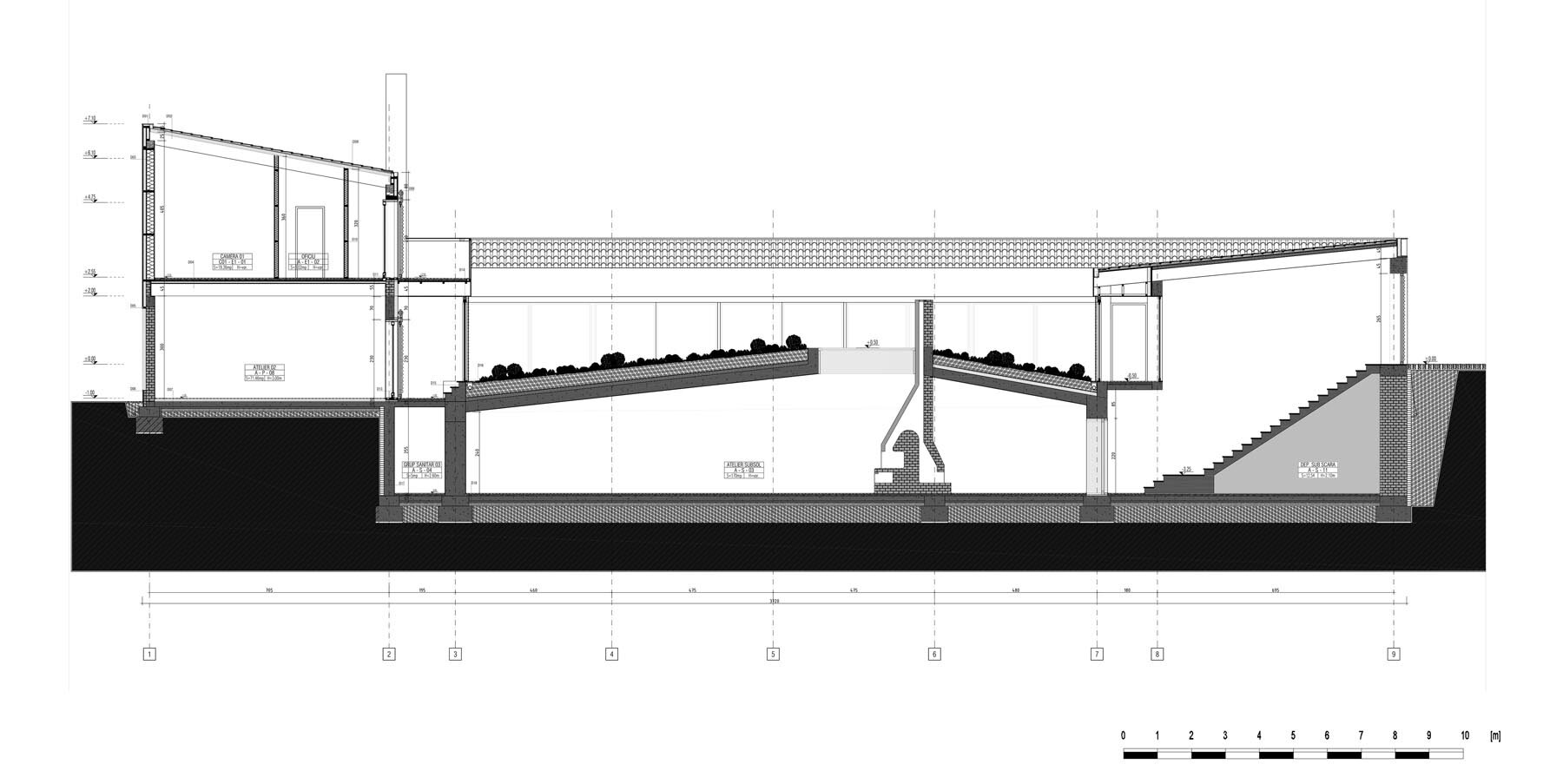
In the case of typical Brâncovenetian courtyards, the gardens are more open or more secluded, depending on their intended use. Such a courtyard has at least two important areas delimited by a wall: an area for the outbuildings and an area including the manor house and part of the garden. The project reinterprets the idea of separating the spaces by using different elements to achieve a similar effect: differences in level, the presence of vegetation or the use of transparent boundaries to define the different spaces. Vegetation was preferred to the wall as it is a natural element that allows a more fluid and unified perception of the enclosure. In addition, the new intervention takes into account the previous architectural intentions focused on opening onto the landscape through the loggias, so that the image of the lake is part of the site. Therefore, the most important vantage points have contributed to justify the positioning of the new intervention, chosen so as not to disturb the site-specific perception. At a certain level, the project seeks to control the perspectives in such a way as to create spaces that are gradually revealed rather than spaces that are immediately visible and understood. Gaps of different sizes frame the landscape to bring it inside the proposed spaces. By discouraging the sense of sight, other senses begin to be sensitized, focusing, for example, on listening to birdsong or the rustling of leaves.
Moreover, the manor is located at the highest point of the area, proclaiming its role as a central, important object. After analyzing previous architectural models, such as the courtyard of Potlogi, the importance of the compositional principles that lead to the perception of the manor house as the main object is evident. In order to further respect these principles, the new intervention does not overwhelm by monumentality, but prefers the approach of gradually revealing the elements.
An intelligent recovery acts from within the environment, based on a function that brings income and provides jobs. Involving collaboration, interdisciplinarity and community activity, a sustainable solution is for the local community to become aware of the benefits and values of heritage and to actively participate in the process.
supervisor: lecturer dr. arh. Dorin Ștefan Adam