
Unfolding Pavilion Curated Archives / Casa alle Zattere
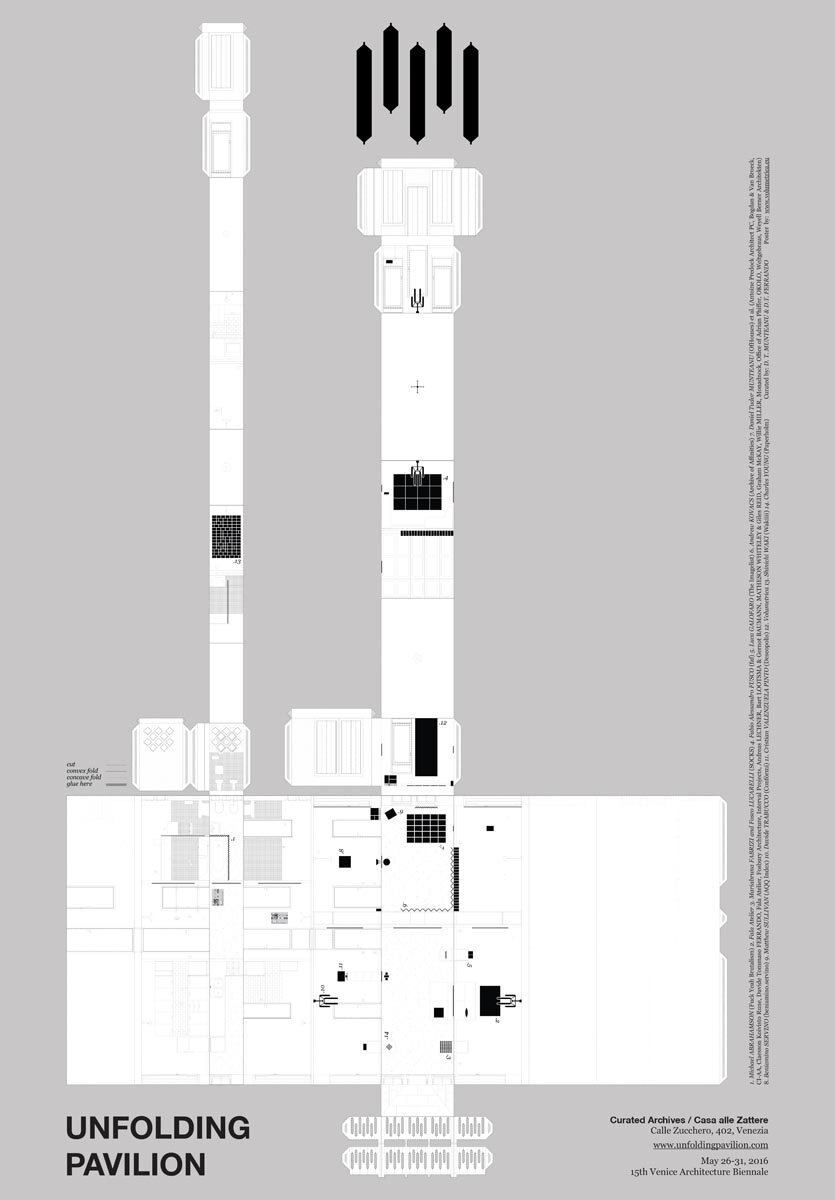
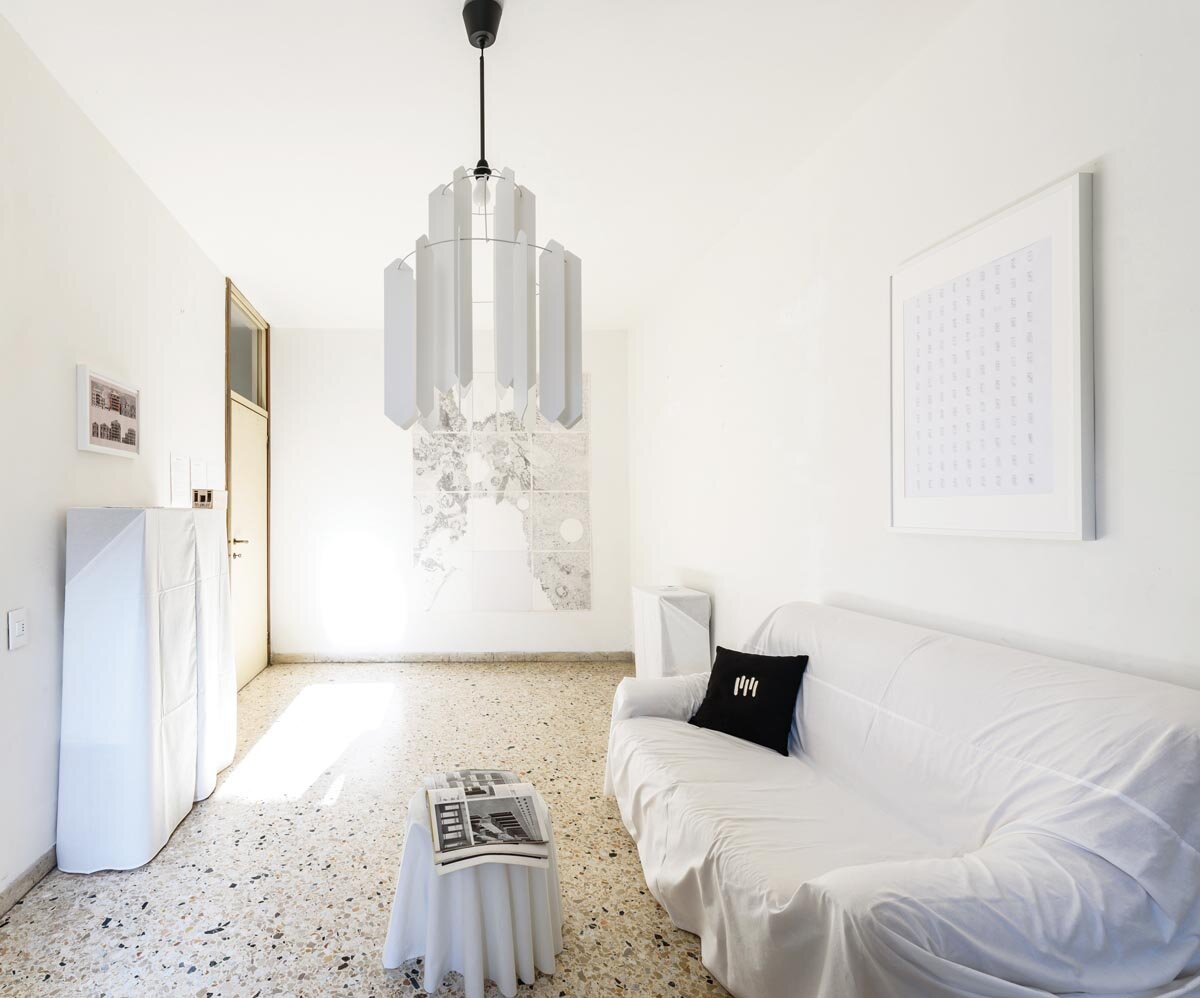
| In the initial phase of the Unfolding Pavilion project, a temporary exhibition organized in Venice in the opening days of the 15th International Architecture Biennale, we were not in the least interested in confronting the idea of Reporting from the Front. However, we soon realized that the dynamics of our actions had some points in common with Aravena's speech, and these revolved around a question we had to ask ourselves from the outset: how to organize an architectural exhibition in one of the most expensive cities in the world, at a time when gallery prices are dramatically increasing due to steep and concentrated demand, on a budget of only 2.000 euros and with no institutional support whatsoever...It all started in January 2016, when we decided to create a physical and virtual platform where we would prioritize a debate on an issue that was and still is highly relevant for us: the growing role of a new generation of online editorial projects, which we call curated archives, in the construction of contemporary architectural discourse. By the term "curated archives"1 we mean collections of constantly updated digital images, sharing one or more common themes, which are hosted on social networks such as Tumblr, Facebook or Instagram and which are mostly curated pro bono by self-proclaimed editors. The content of these visual atlases may be original or pre-existing, scanned or redistributed from other blogs, old or new, left as is or processed, commented on or not... We are dealing with drawings, collages, photos, GIFs or short videos that, once compiled, become interconnected fragments of their editors' imaginations, taking the form of reference lists published according to meticulously defined protocols. "Archive of Affinities", "SOCKS" or "OfHouses" are just three examples of this new phenomenon that is redefining the way images shape architectural thinking. Once the theme of the project was defined, the problem of finding a venue - a primarily economic one - immediately became acute, as we had to identify an alternative way to organize a temporary exhibition, much less expensive than renting a gallery. This is why we turned to Airbnb, in search of domestic spaces that could be temporarily converted into exhibition spaces, with Hans Ulrich Obrist's 1991 Kitchen Show project in mind. After more research, I discovered that a cheap and free apartment is available right in the famous Casa alle Zattere: a 1950s bourgeois apartment building on the Giudecca Canal, designed by Milanese architect Ignazio Gardella, whose unique facade was conceived as an atlas of architectural elements belonging to the urban landscape of Venice, reinterpreted and reassembled so as to engage in a contemporary dialog with its historical surroundings. Widely debated in the years following its construction, the Casa alle Zattere is well known to Italian architects, although few may have had the chance to visit its interior. Making this building available to the public for the first time in 60 years, and integrating it into the exhibition as a centerpiece, immediately became the central concerns of our project. |
| Read the full text in issue 2 / 2016 of Arhitectura Magazine |
| Note: 1 The term 'curated archives' first appeared in the discussions between Paula V. Álvarez and Davide T. Ferrando in the Editor Talks project. |
| In the initial phase of the project for the Unfolding Pavilion, a pop-up exhibition that took place in Venice during the opening days of the 15th Architecture Biennale, we weren't interested at all in confronting ourselves with the idea of Reporting from the Front. Nevertheless, we soon realized that the dynamics we were dealing with had several points in common with Aravena's discourse, all gravitating around one question we had to pose ourselves from the beginning: how to organize an architecture exhibition in one of the most expensive cities in the world, during the period in which the prices of its galleries skyrocket due to high and concentrated demand, with a budget of only 2,000 euros and no institutional support?It all started in January 2016, when we decided to work on a physical and virtual platform where to bring to the fore and discuss an issue that was - and still is - very relevant to us: the growing agency of a new generation of online editorial projects, which we call "curated archives", in the construction of contemporary architectural discourse. With the term "curated archives"1 we indicate constantly updated collections of digital images sharing one or more themes in common, which are usually based on social platforms such as Tumblr, Facebook or Instagram, and mostly curated pro bono by individuals or small groups of self-proclaimed editors. The contents published in these visual atlases can indifferently be original or preexisting, recent or old, left as found or manipulated, scanned from print or reblogged, commented on or not. They can be drawings, collages, photographs, animated gifs or short videos which, once gathered, become the interrelated fragments of their editors' imaginary, taking the form of lists of references published according to meticulously defined protocols. "Archive of Affinities", "Socks" or "OfHouses" are just three examples of this new phenomenon, which is redefining the way in which images shape architectural thinking. Once the theme of the project was defined, the issue of the location - which was first of all an economic issue - became immediately evident, as we had to find an alternative and less expensive way to host a pop-up exhibition than to rent a gallery. It is for this reason that we turned to AirBnb in search of domestic spaces that could be temporarily converted into exhibition venues, having of course in mind Hans Ulrich Obrist's 1991 "Kitchen Show". After some research, we found out that a cheap flat was available nothing less than in the Casa alle Zattere: a bourgeois 1950s apartment building on the Giudecca Canal designed by the Milanese architect Ignazio Gardella, whose unique facade was conceived as an atlas of architectural elements belonging to the urban landscape of Venice, reinterpreted and reassembled so to establish a contemporary dialog with its historical surroundings. Widely debated in the years following its construction, the Casa alle Zattere is well known among Italian architects, although few (if any) have ever had the chance to visit it from the inside. To open it up to the public for the first time in the past 60 years, and to make it a fundamental part of the exhibition, immediately became the core of our project. |
| Read the full text in the print magazine |
| NOTE1 The term "curated archives" first appeared during the discussions between Paula V. Álvarez and Davide T. Ferrando for the Editor Talks project. |
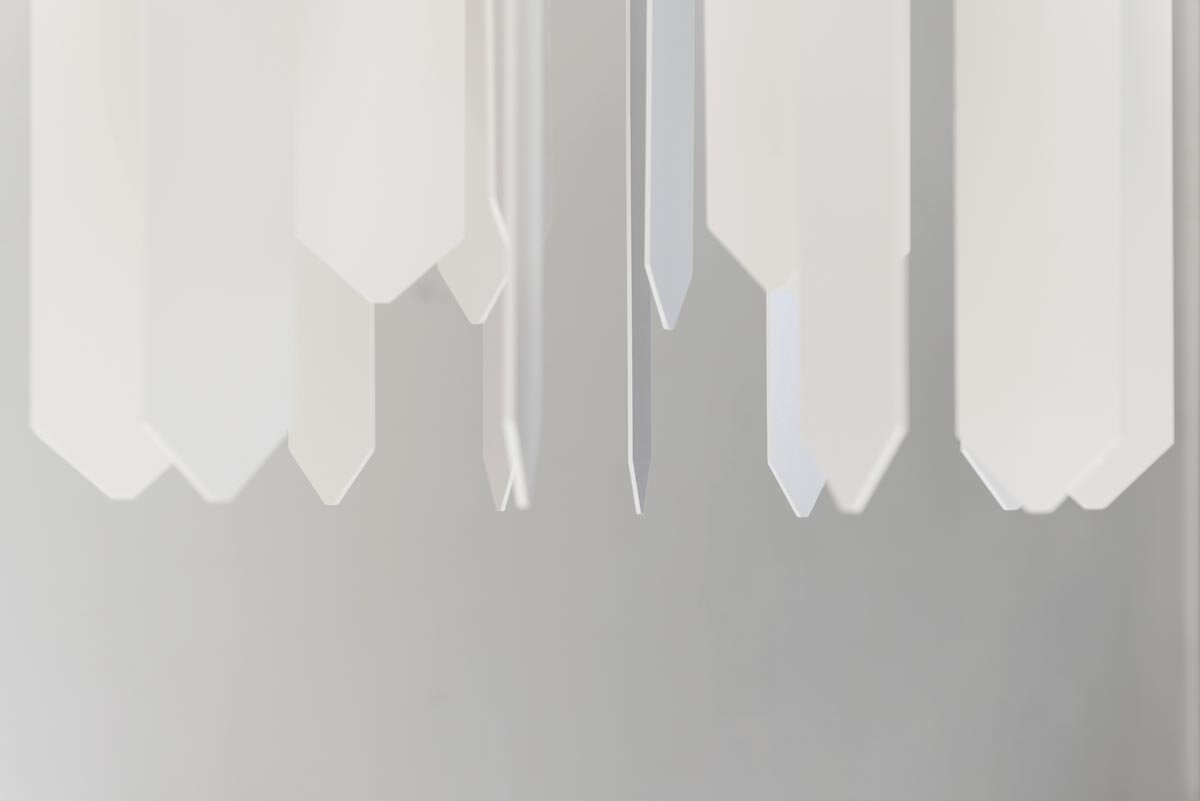
Curatori/ Curators: Daniel Tudor Munteanu, Davide Tommaso Ferrando
Production team/ Production: Daniel Tudor Munteanu, Davide Tommaso Ferrando, Ana Victoria Munteanu, Eliza Rabiniuc Mocanu, Magda Vieriu, Octavian Hrebenciuc, Chiara Buccolini, Anna Sanga, Alberto Sireci
Graphic design: Magda Vieriu & Octavian Hrebenciuc
Photography/ Photographs: Andrea Avezzù
Cercetare/ Research: Daniel Tudor Munteanu, Davide Tommaso Ferrando, Graham McKay, Annamaria Ciabatta