Diploma Project: The Urban Path - Museum of the Eneolithic Age, Deva
Stud.-arh. Fabian LUCA
Technical University Cluj-Napoca, Faculty of Architecture and Urbanism, 2016
Proposed urban route
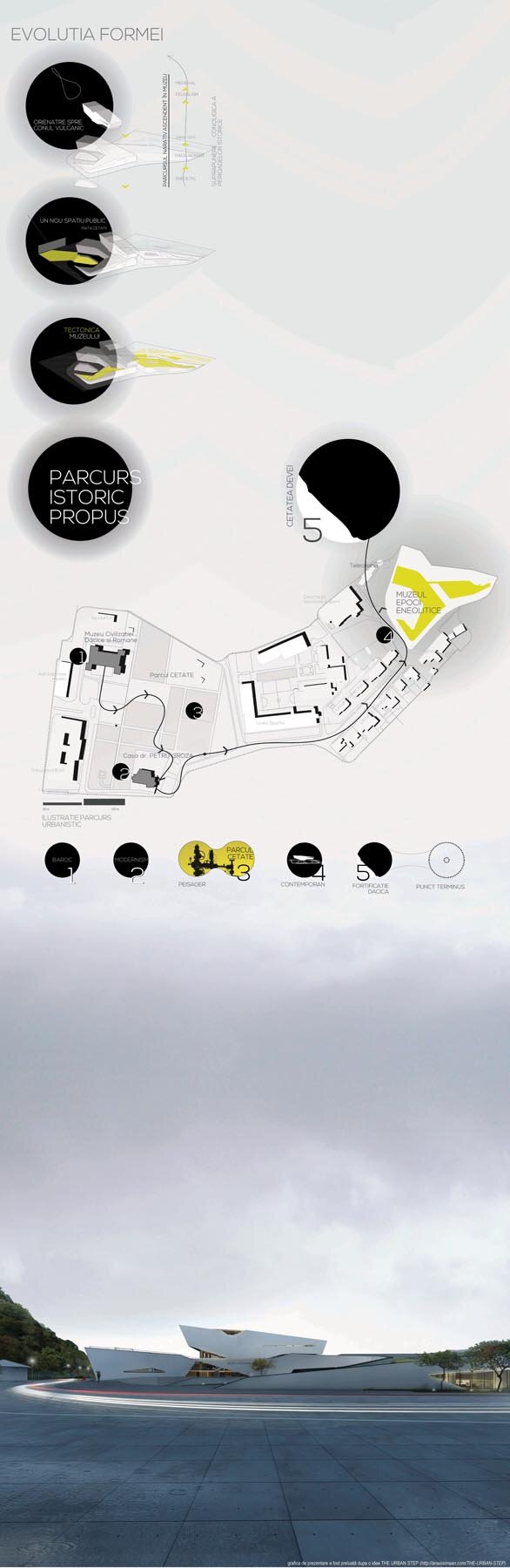
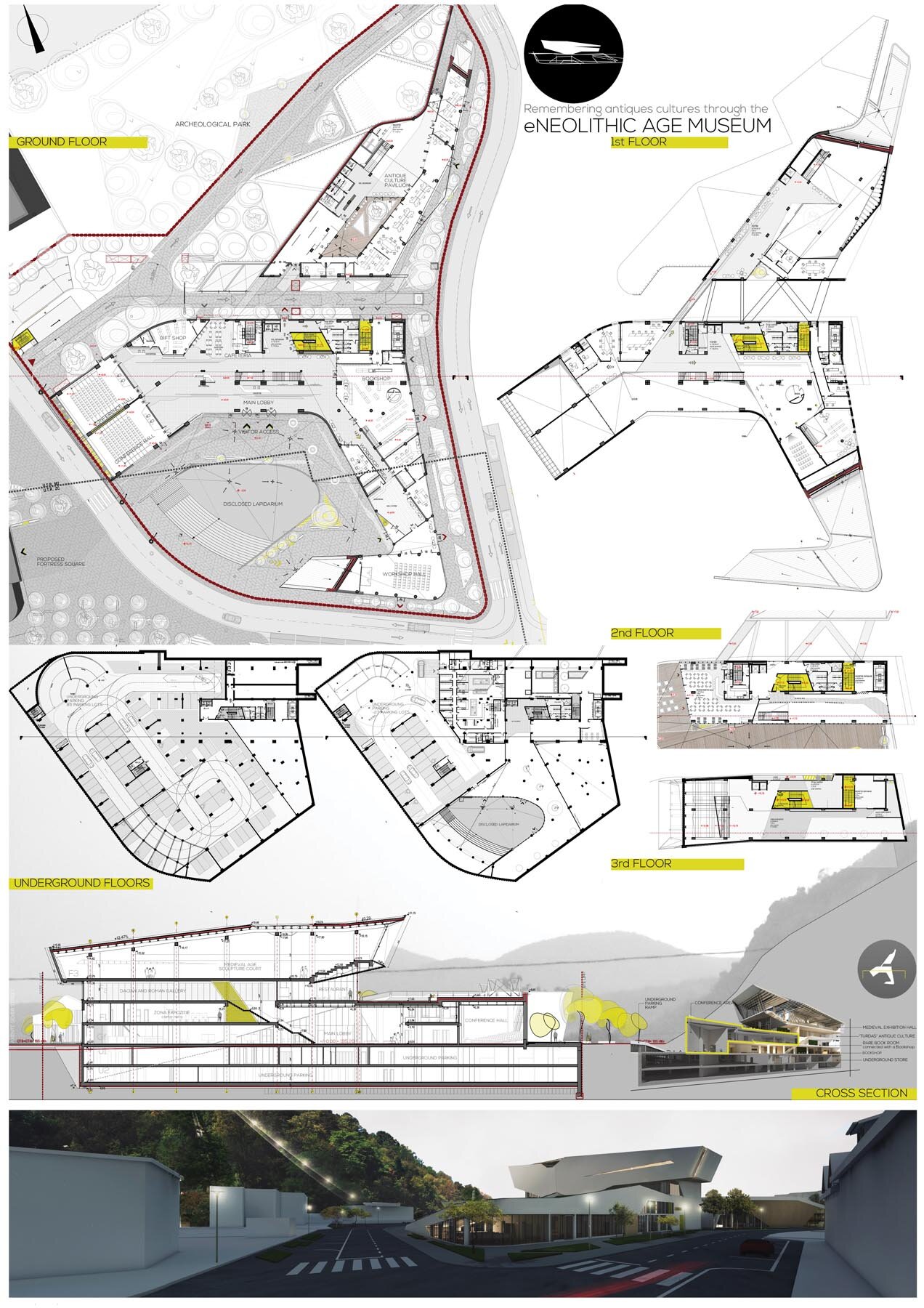
The development of the theme of the Eneolithic Age Museum takes the archaeological stratification of Deva and translates it into a narrative urbanistic path. Analyzing the circulation of tourists in the city, the route connects three monuments belonging to different epochs. The starting point is the Magna Curia, a baroque palace, followed by Petru Groza's residence (a modernist villa designed by Horia Creangă) and ending at the Cetatea Deva, a Dacian fortification. The Museum of the Eneolithic Epoch would be a tourist stop on this urban route.
Urban archaeology
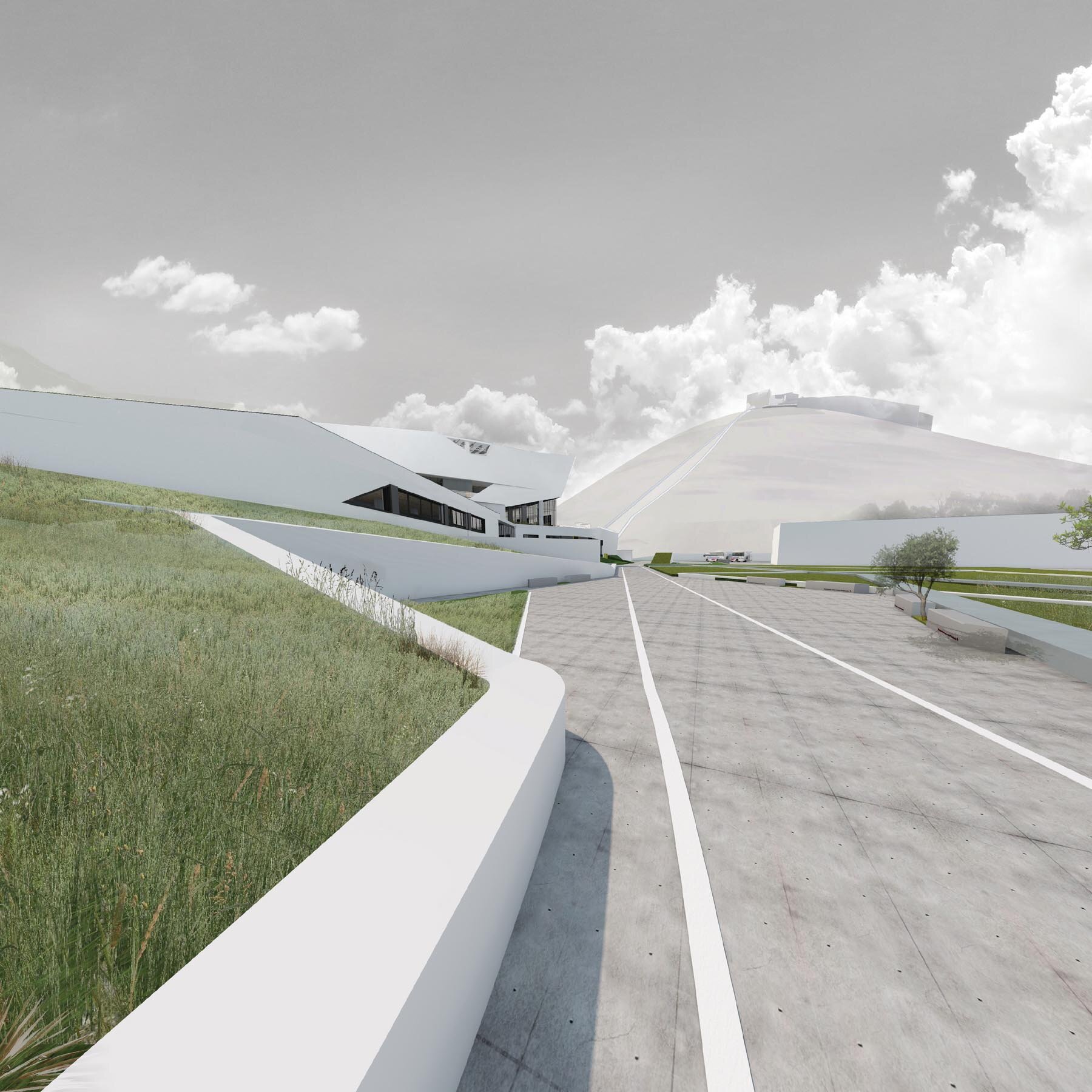
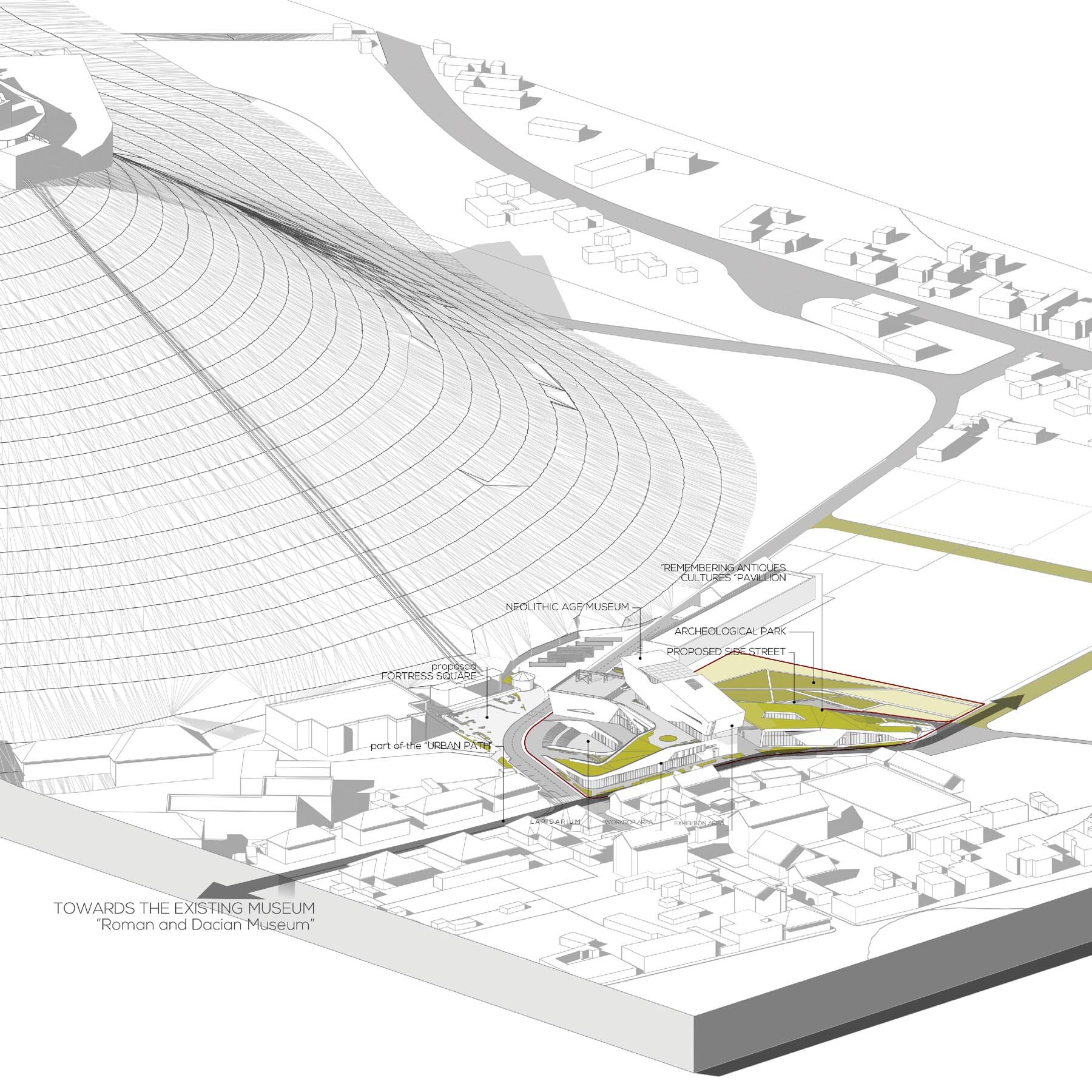
The first initiating filter of the urban itinerary leads the visitor to the Eneolithic Age Museum, which creates a scenography in the existing space. Here the Devei Citadel, the volcanic cone, and the cable car are used to form a new public space: the Citadel Square, which is linked to the proposed museum.
Museumization of the Eneolithic Age
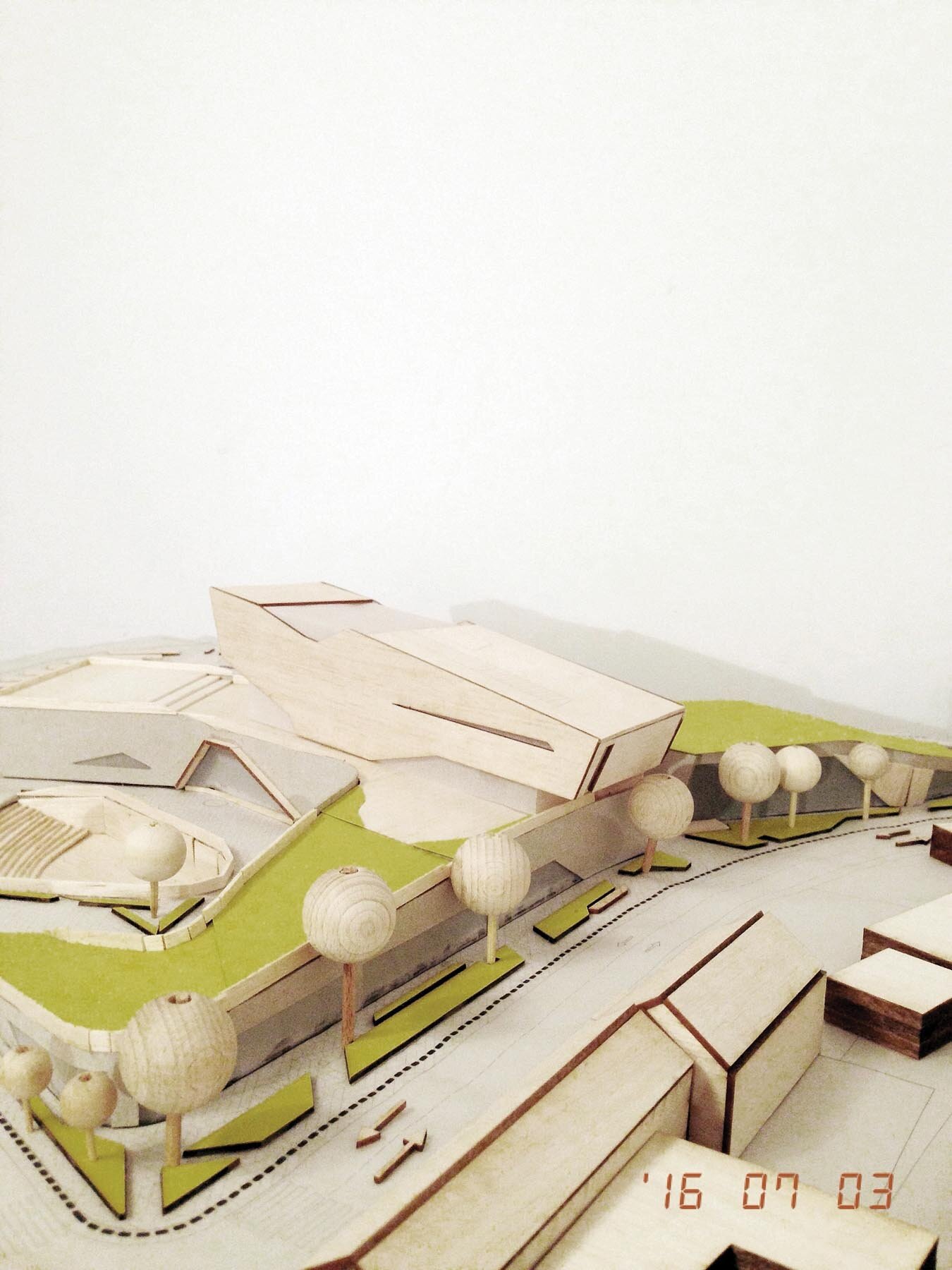
The proposed museum reiterates Eneolithic history in a contemporary architecture. To preserve the motif of the lapidarium (here incorporated into the museum), it merges with the lapidarium at the underground levels. Such spatial mediation develops into the public space through an urban scoop, an amorphous amphitheater.
Tectonics of the museum. A topographic architecture
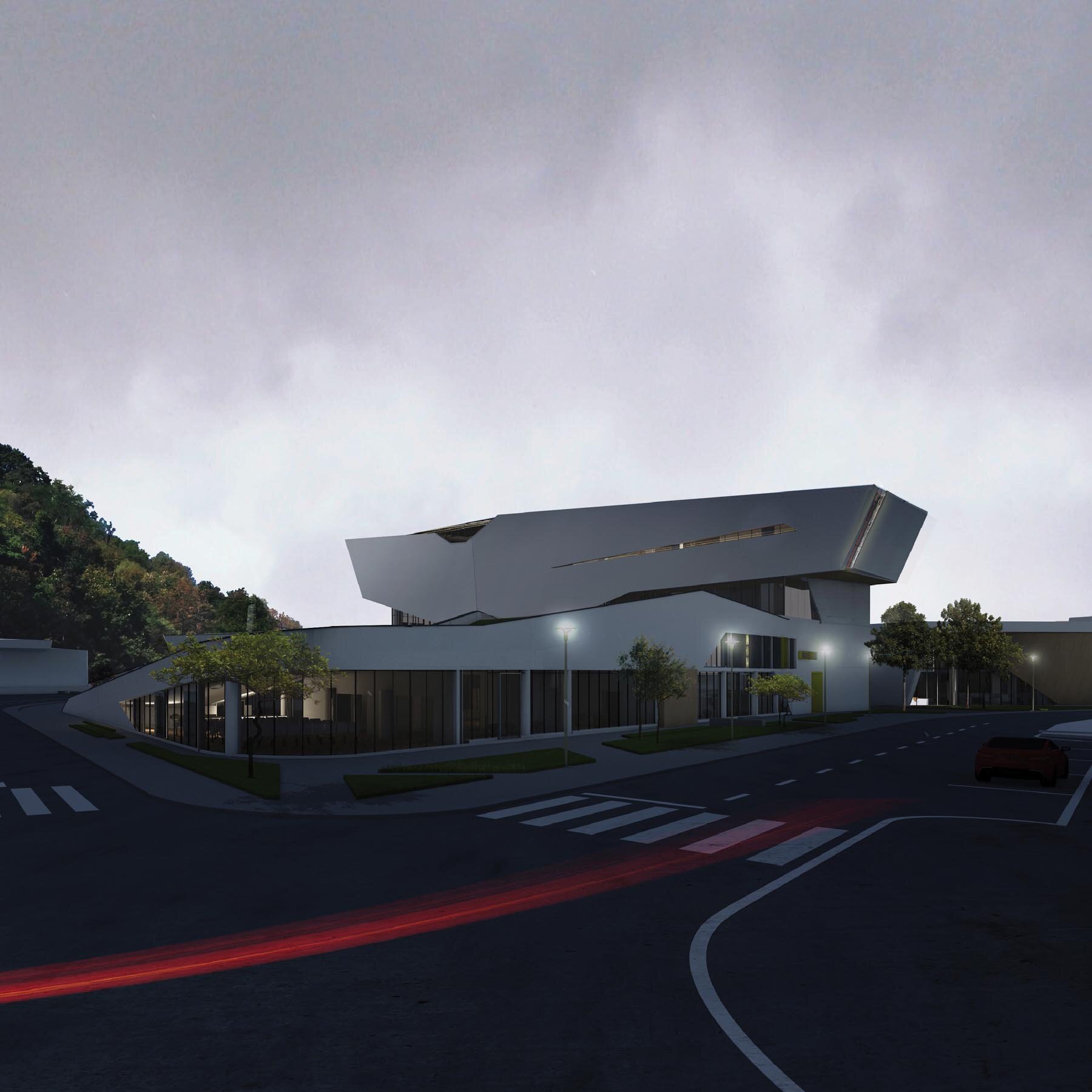
Here, architecture mediates between the densely built context and the proposed museum space. By climbing up the museum's enclosure, visitors pass through a filter of vegetation similar to an initiatory journey into the world of the musealization of a bygone era. The access from the outside to the panoramic terraces of the Eneolithic Age Museum is through a path similar to the atmosphere of mystical archaeology. The panoramic terraces arranged at different levels of perception are intended to inhale the landscape and, with it, a part of the county's ancient history.
Functional aspect of the museum
Public access is from the lapidarium on the basement level (a claustrophobic, dark space), and as the visitor moves upwards through the museum, the exhibition spaces become more glazed. The transparency of the exhibition galleries increases exponentially, culminating on the top level, where an enormous oblique curtain facade illuminates the statues of the medieval period.
Conclusion
Urban planners of the 21st century militate for as close an observation of the city as possible, which is why the museum proposed at the base of the Citadel of Deva is a manifesto of urban "acupuncture". This point in extremis is presented in the project as the only way to create a connection between the ruin-object and the visitor.
Advisor: conf. dr. arh. Dorina Vlad