Diploma project: Vocational retraining center
Stud.-arh. Sandra Nives-Șonei
Technical University Cluj-Napoca, Faculty of Architecture and Urbanism, 2016
The city of Hunedoara, the context of the diploma project, presents a high unemployment rate and an increasing demographic loss. Some of the city's inhabitants choose to go abroad in search of jobs. Those who move to another city to go to university prefer to settle there or go abroad themselves. Although the unemployment rate is high, there are job vacancies in the county and the surrounding area. According to the local action plans for vocational and technical education in the counties of the West Development Region 2013-2020, Hunedoara County and neighboring counties have a demand for graduates of vocational or industrial high schools. Although there are enough high schools with vocational education, the graduates are poorly trained and do not qualify for existing jobs. The diploma project program is the site of a vocational retraining center, as such a function can help to provide competent human resources for the firms in the area, decrease demographic loss and raise the economic level.
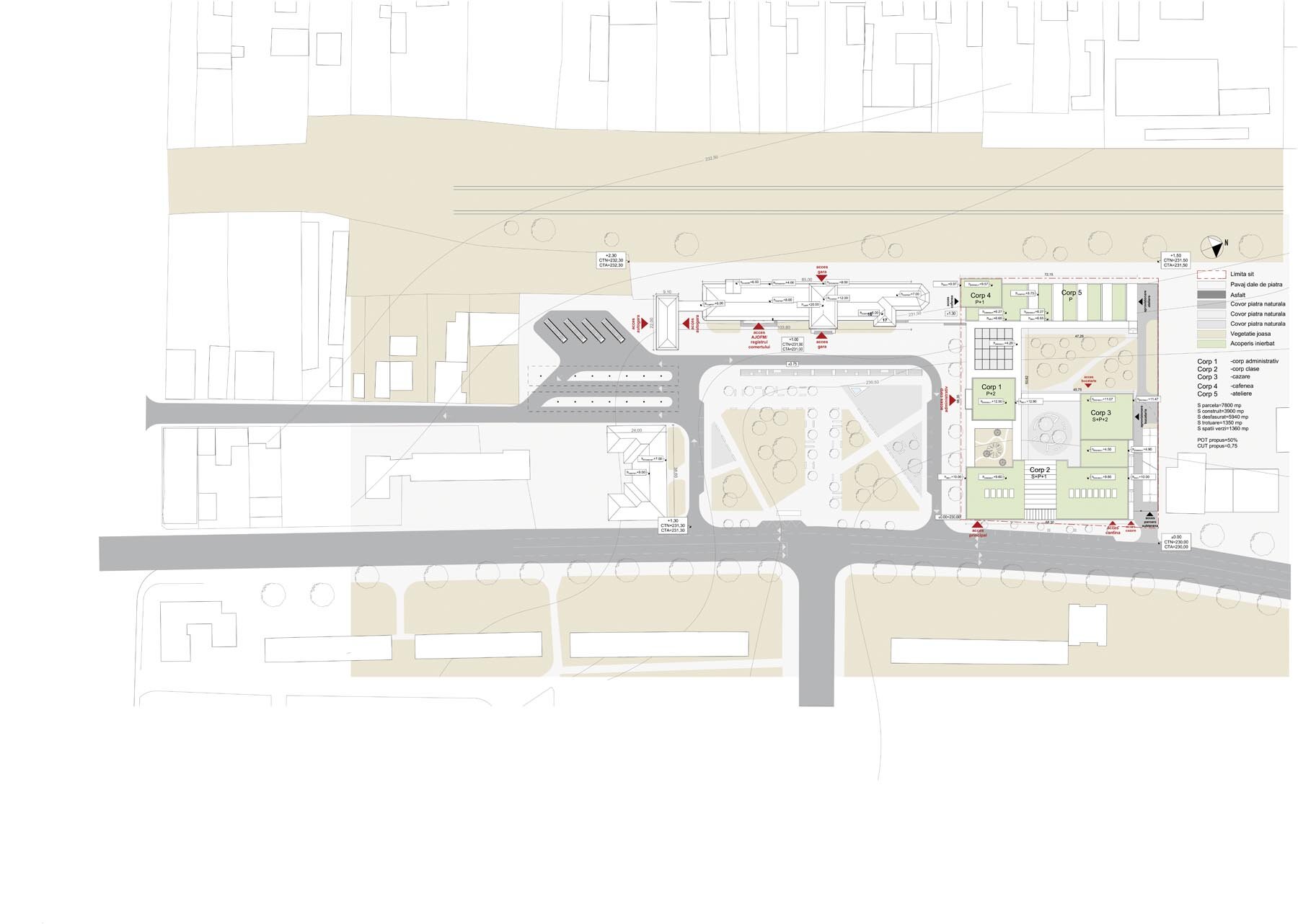
The choice of the project site was motivated by the need to revitalize the railway station square in Hunedoara as it presents great functional problems. Initially, the square was conceived as a green pocket of the Republicii Boulevard. The clock tower of the station could be seen from Avram Iancu Street as a perspective end. In 2006, the old bus station, an architecturally valuable building on the north side of the square, was closed and a new one was built in the same year, blocking the view of the tower. The green area was replaced by a bus parking lot. In front of the main entrance of the old bus station a supermarket was built and the front of the bus station was covered with a commercial banner. In front of the supermarket, the parking lot of the supermarket has been developed. The project aims to reconvert the old bus station into a vocational retraining center and to redevelop the market to bring it back to its original pocket form.
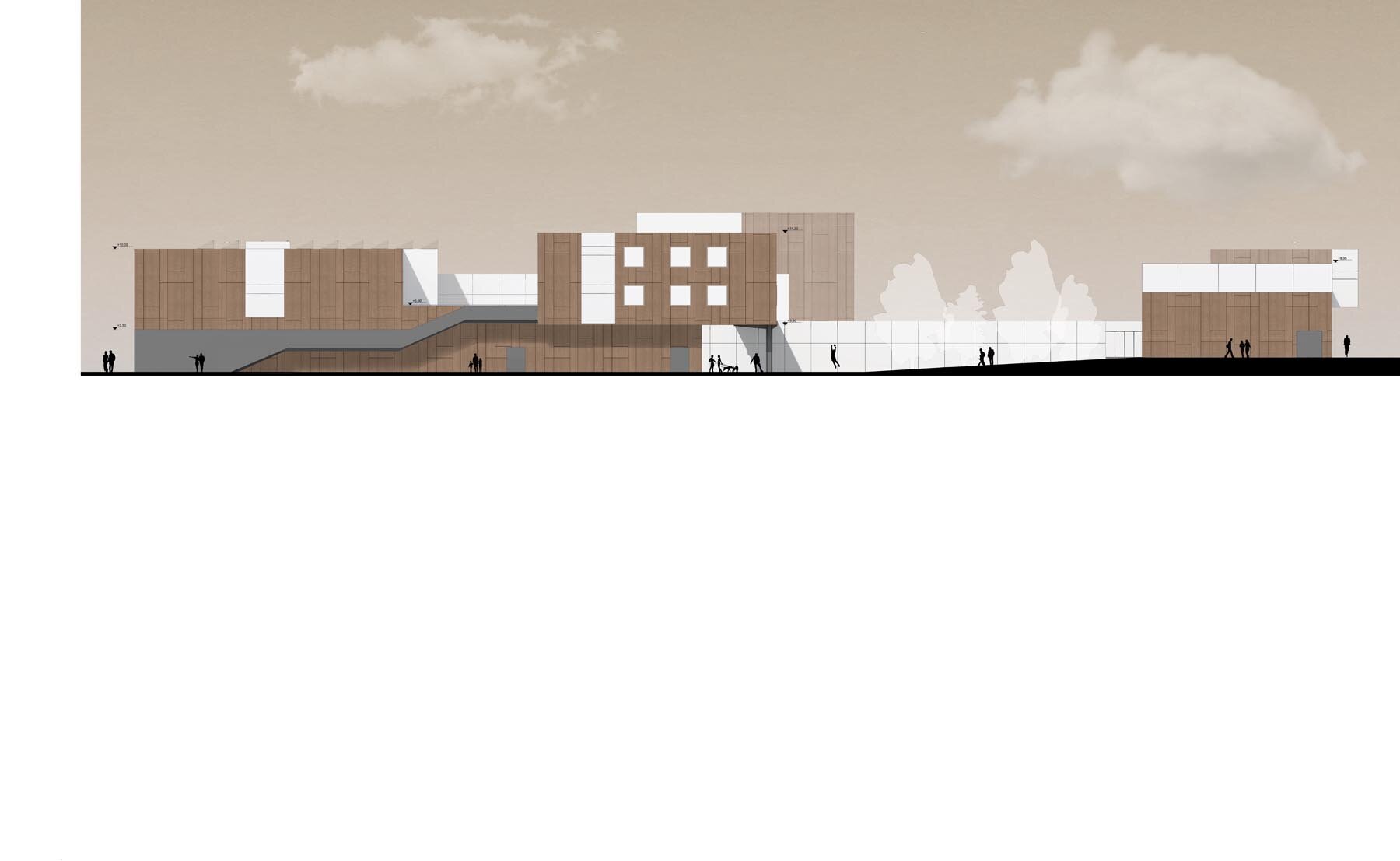
The site of the old bus station has a regular shape and is bordered by the train station square to the south, Republic Avenue to the east, the railroad corridor to the west and OMV to the north. On this site an ensemble with a capacity of 270 trainees and 30 teachers is proposed, composed of 5 buildings occupying the sides of the site, creating an inner courtyard. The skill areas offered by the center are mechanical, electrical, agriculture and construction, as these are among the most in-demand qualifications by employers at the moment. These may change in the future with flexibility in the design.
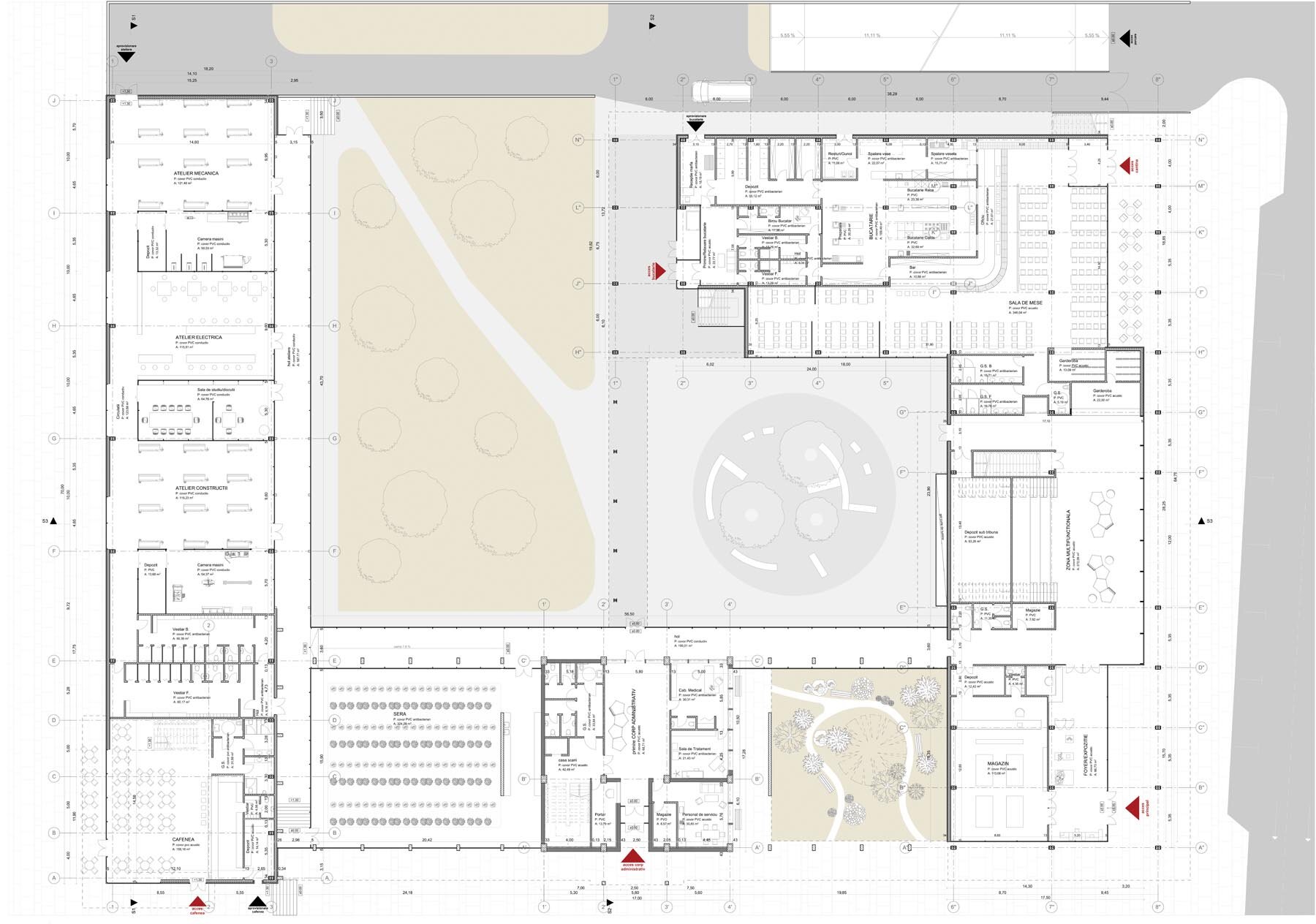
Above the bus station is the administrative building with the media library on the top level. This choice elevates the north front of the square and provides interesting perspectives to it for the administrative staff and visitors to the media library. The magazine room can be accessed from the terrace. The media library is public, becoming a new function within the city.
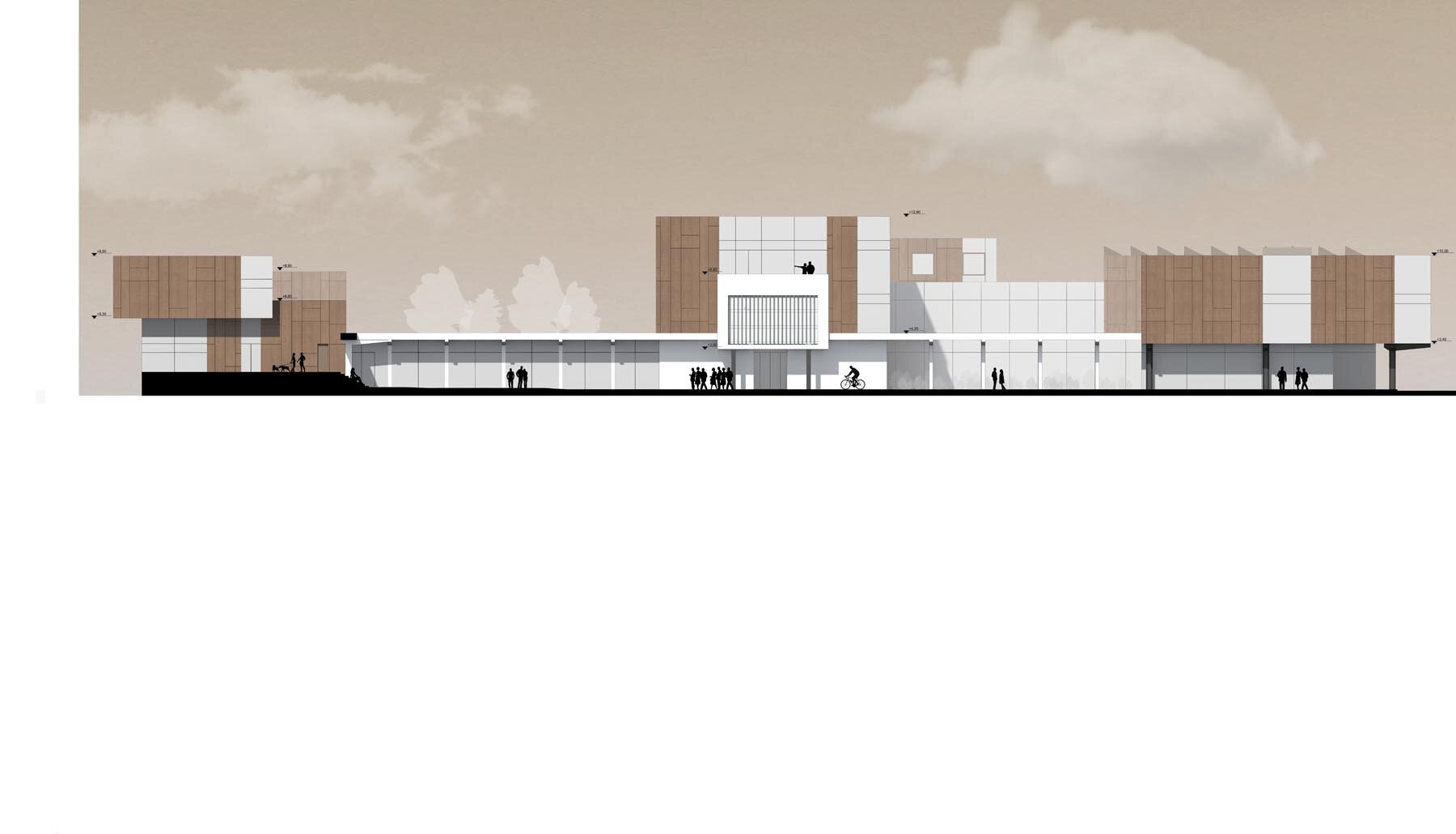
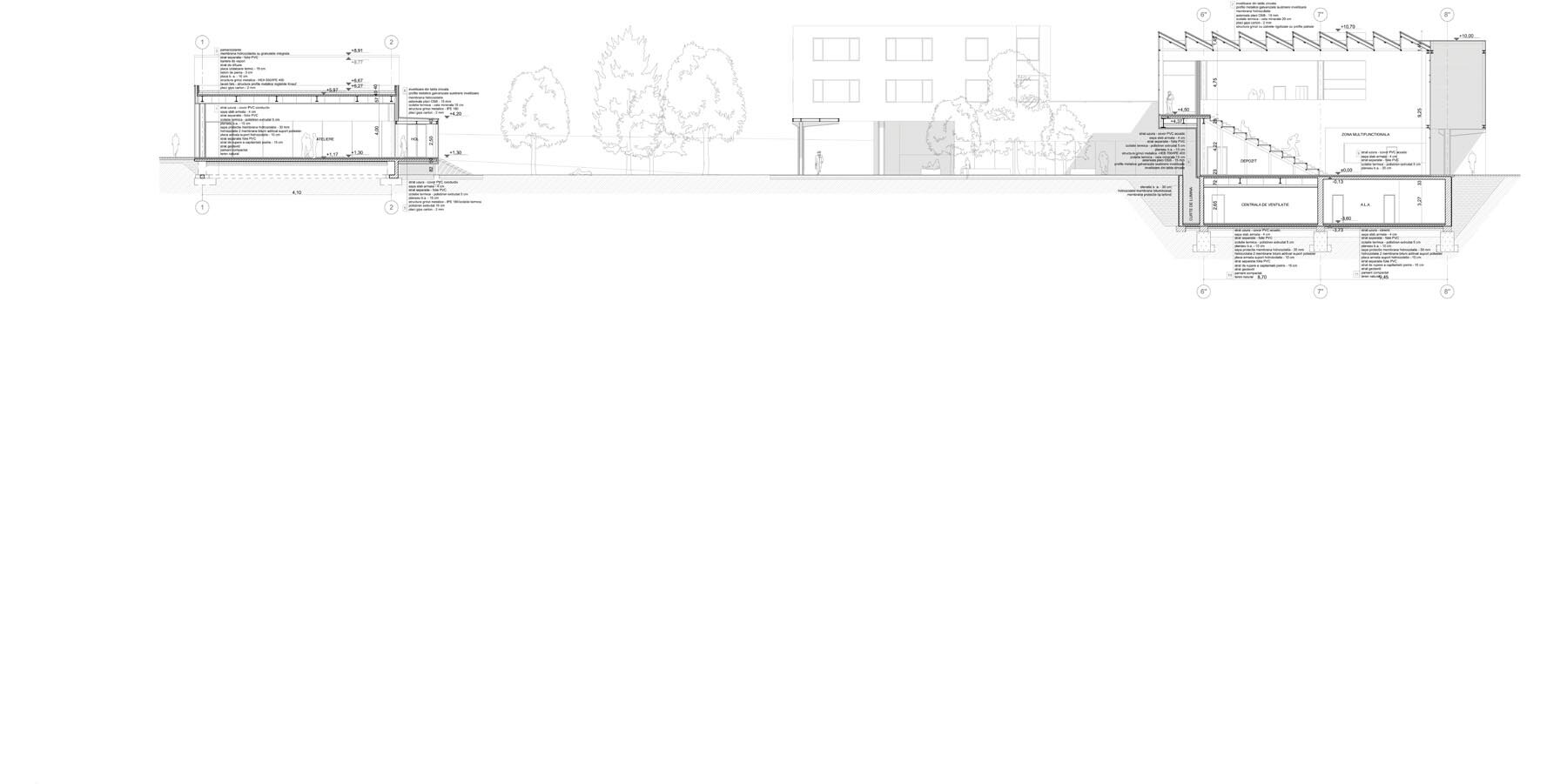
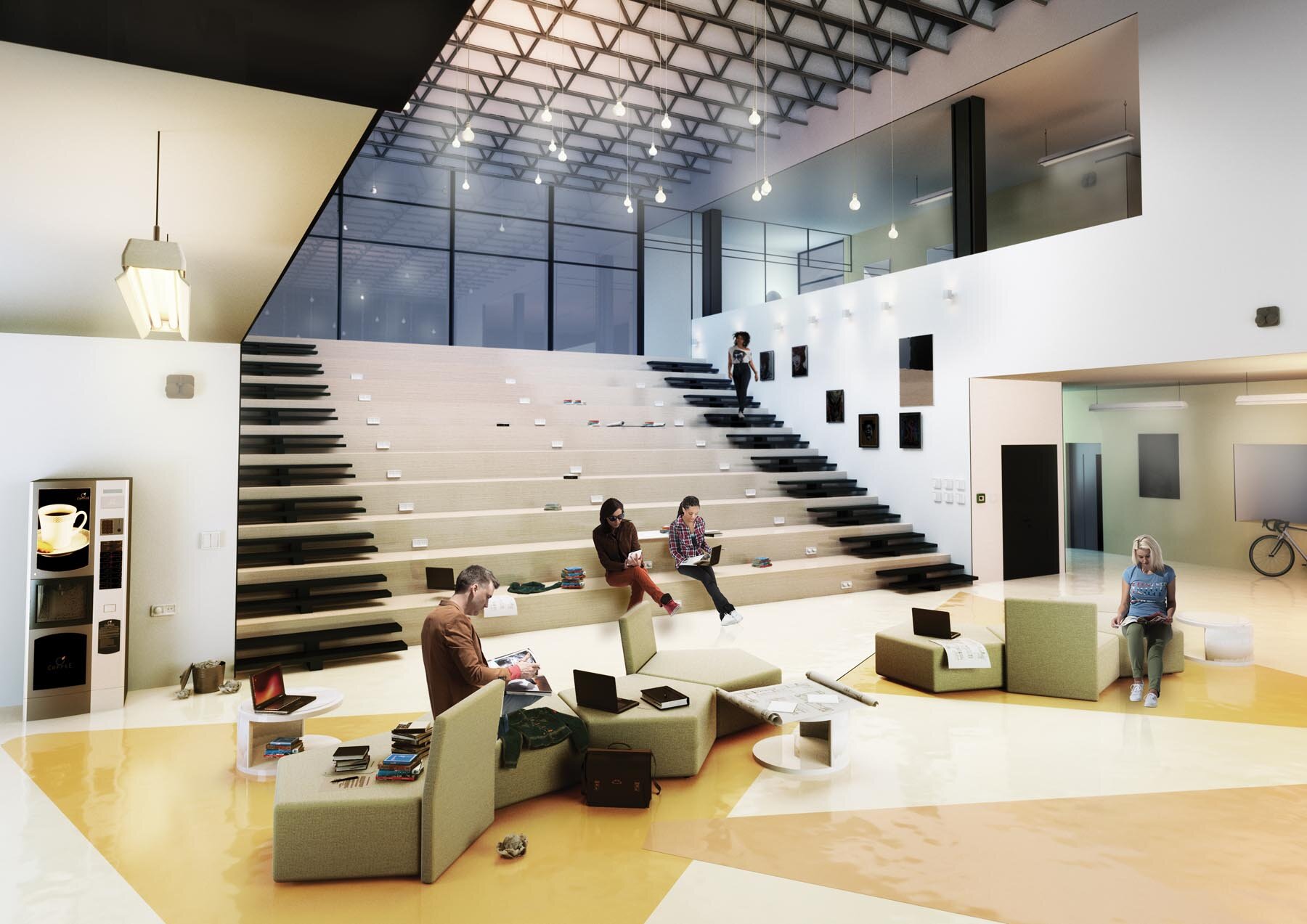
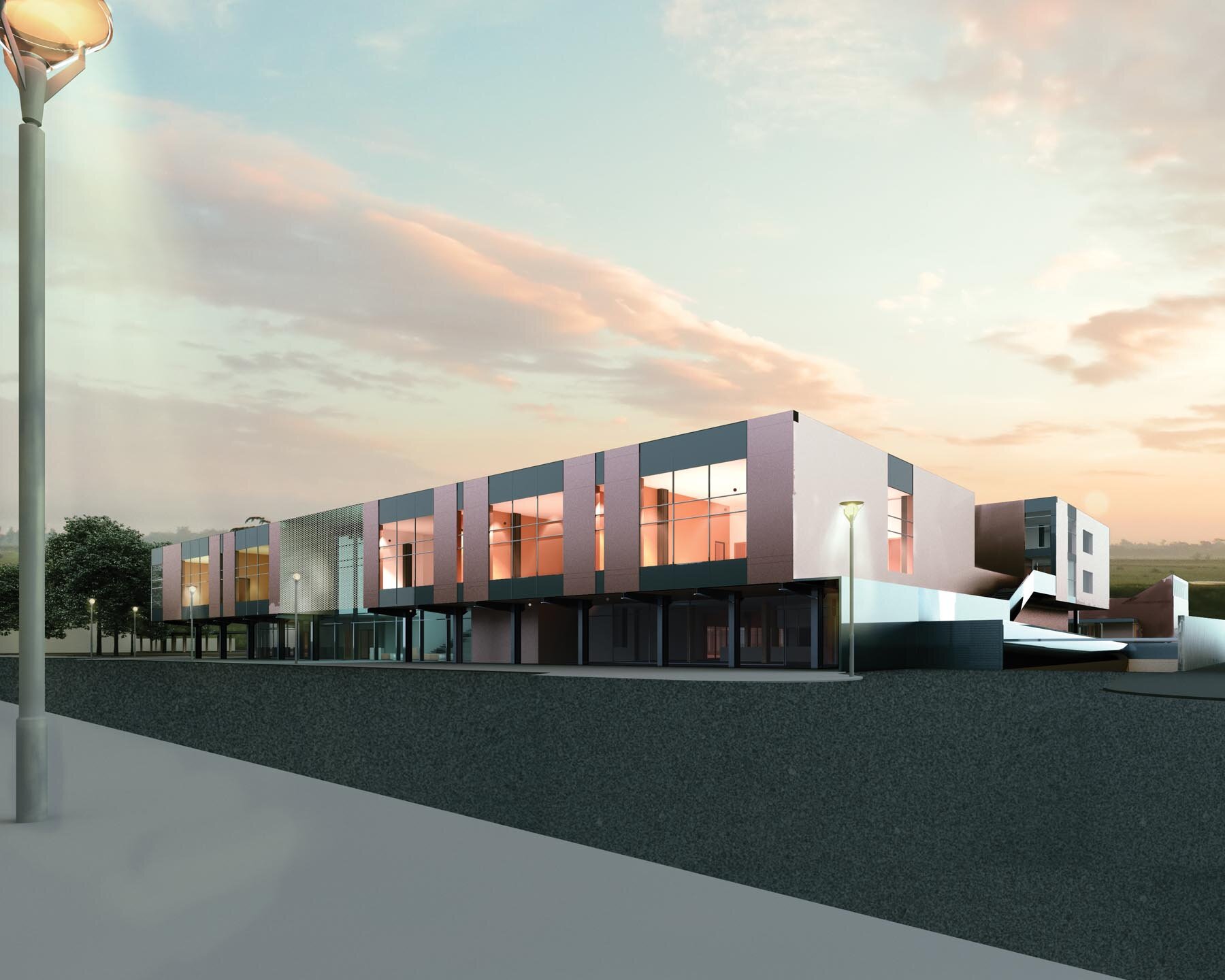
On the east side is located the building with classrooms, canteen and multifunctional hall. This building creates a porticoed front to the Republic Boulevard. The building can be accessed from the boulevard. A shop with various objects created by the learners is located at the entrance. The canteen operates separately from the ensemble, being a public food outlet in the city. The multi-purpose hall can be rented and used after hours for various events, as the connection to the upper floor of the classrooms can be closed with a sliding glass wall. Classrooms have sliding walls to provide the most flexible learning environment.
The assembly accommodation is located above the canteen. It has separate access from Republicii Boulevard. From the common area you can reach the green roof of the canteen.
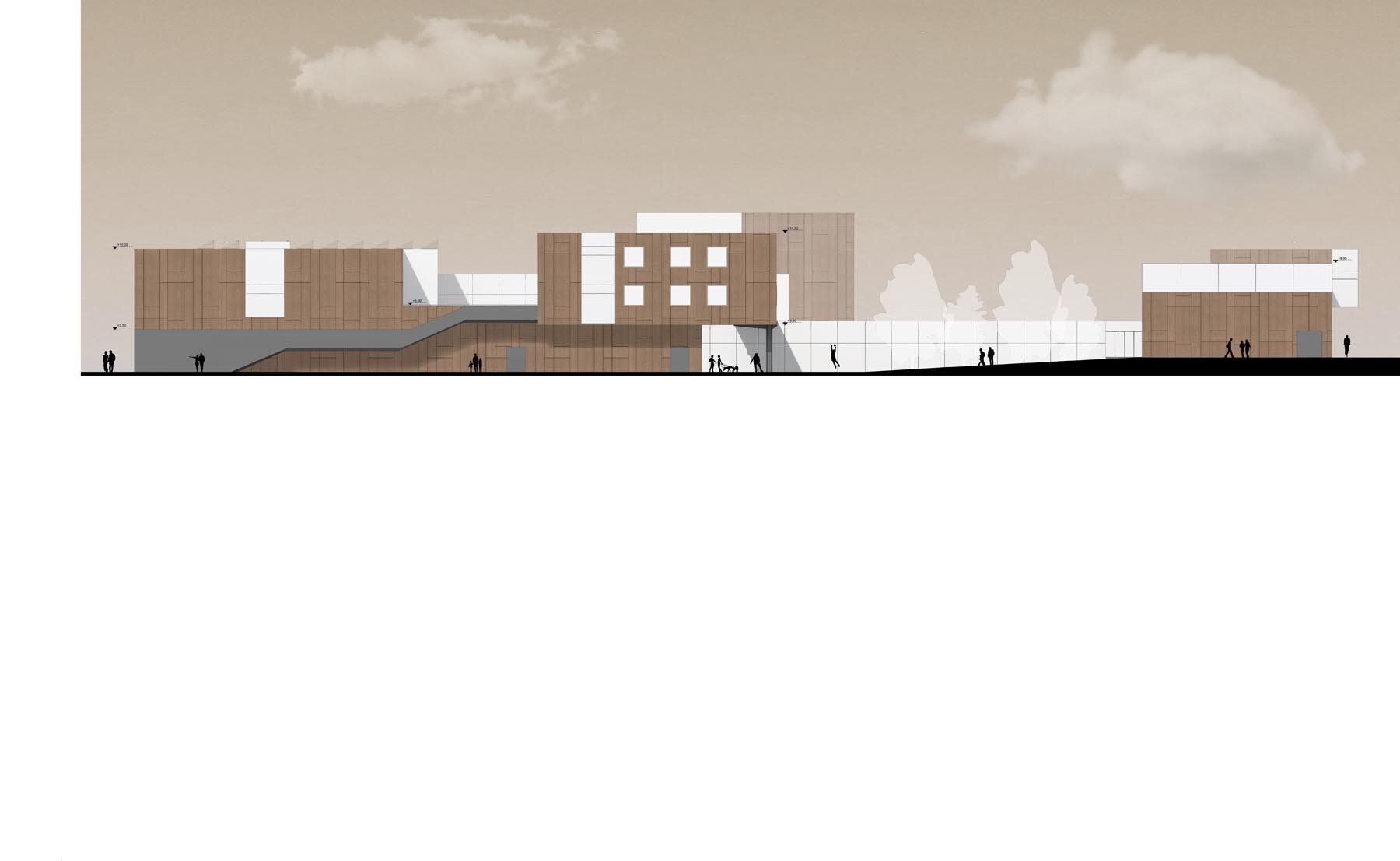
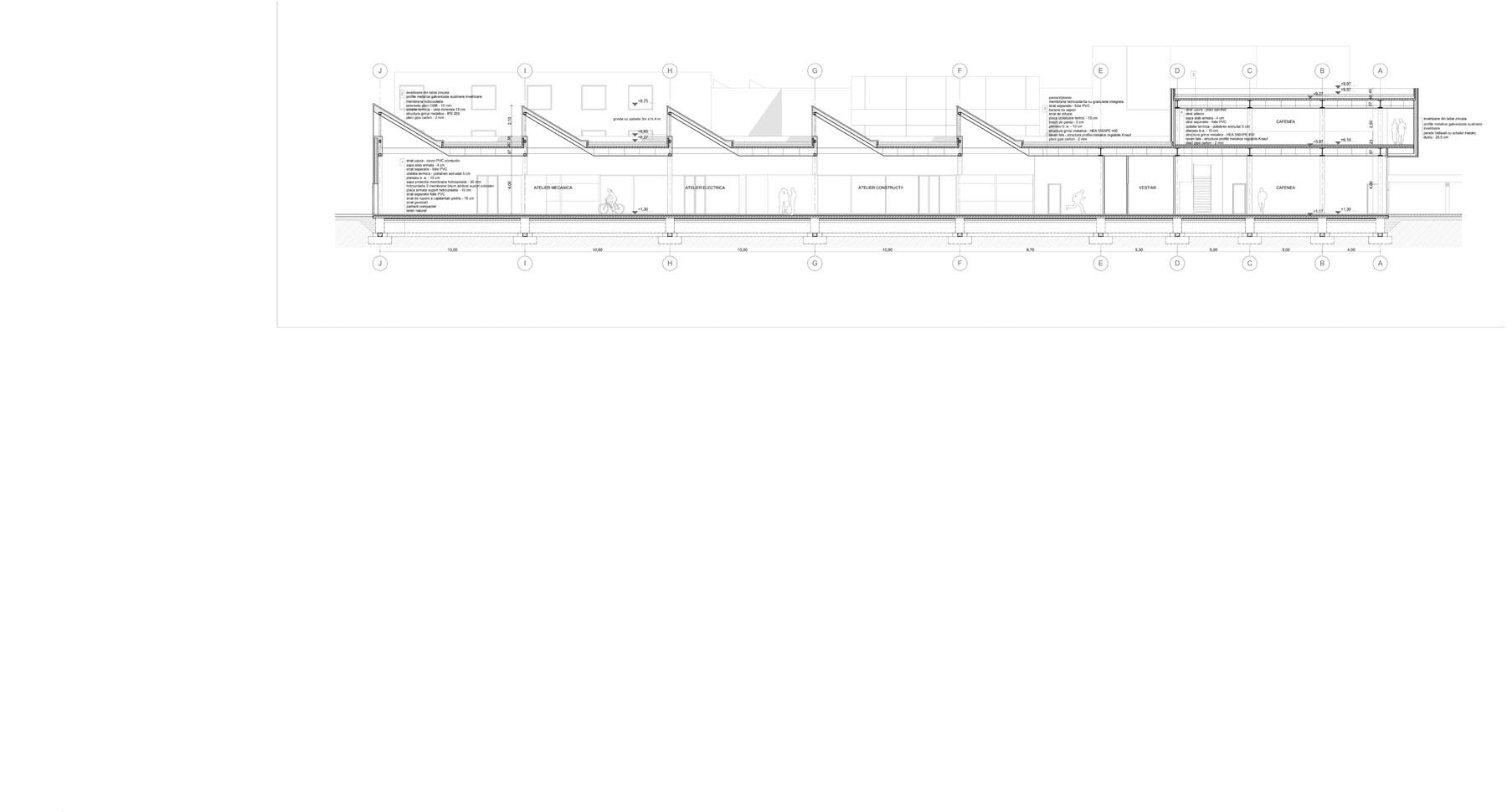
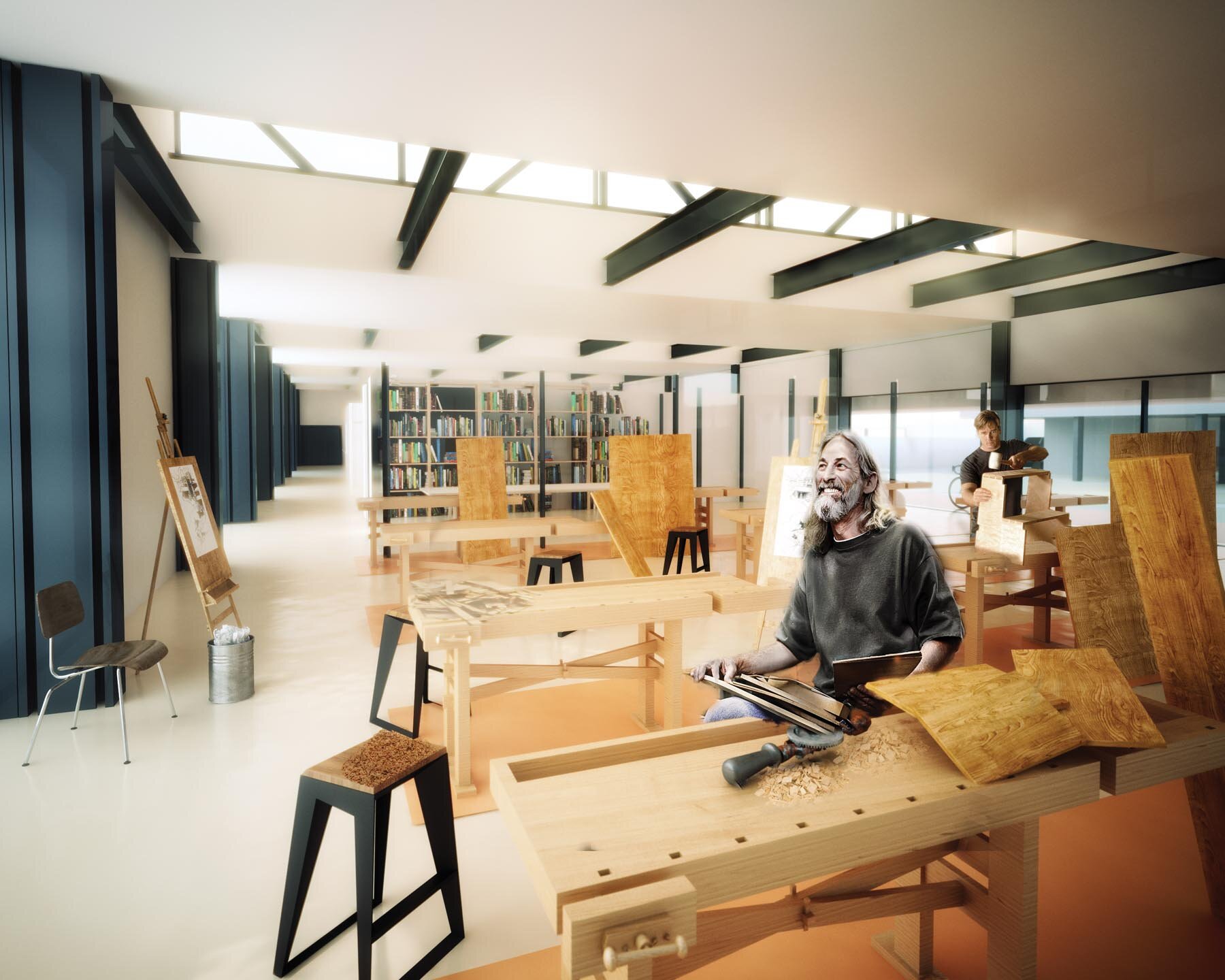
On the west side of the canteen, the workshops are located. It is a buffer between the railroad corridor and the complex. There are three workshops, mechanical, construction and electrical, but the space can easily be redeveloped and adapted for future functions. At the south end of the building, next to the station building, there is a café with an observation point.
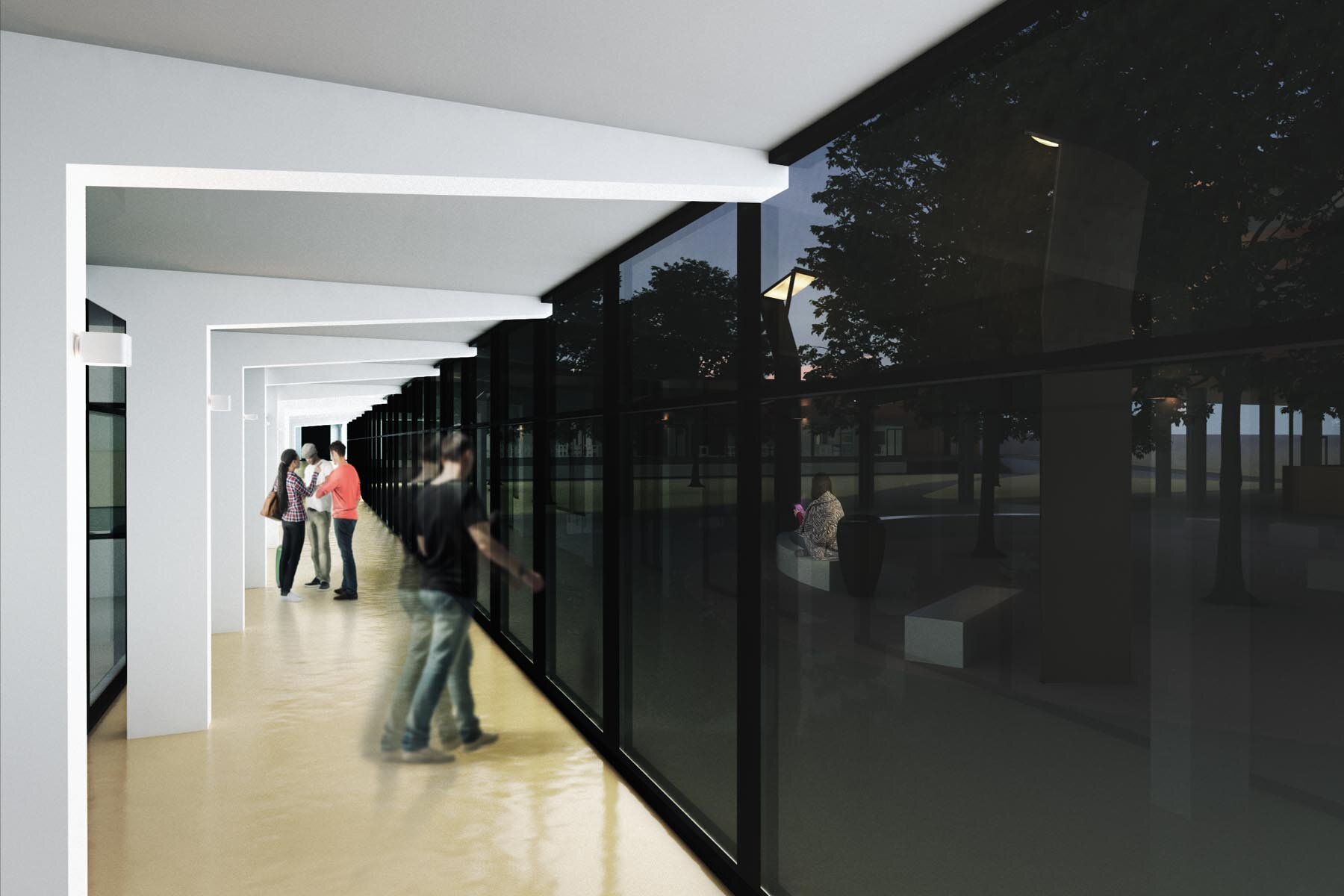
The old bus station has two green areas between the covered platforms. In the project, one of them became a greenhouse and the other a flower garden to serve as classrooms for agriculture classes. The dormers were enclosed and used as a link between workshops, administration and classrooms. The inner courtyard is divided into two areas, an orchard and a mineral area. The circulation links between the buildings provide views into all the green spaces, while being their boundaries and providing recreational opportunities for people passing through the complex.
All roofs are ventilated to reduce the heating of the buildings in summer, clean the air and create a new home for birds and insects.
Supervisor: senior project manager dr. dr. arh. Dana Julean