Diploma Project: Ateneu de Lisboa (Public Baths) - from historical enclave to activated and open urban fabric
Stud.-arh. Alexandru Cristian Beșliu
University of Architecture and Urbanism "Ion Mincu" Bucharest, 2016
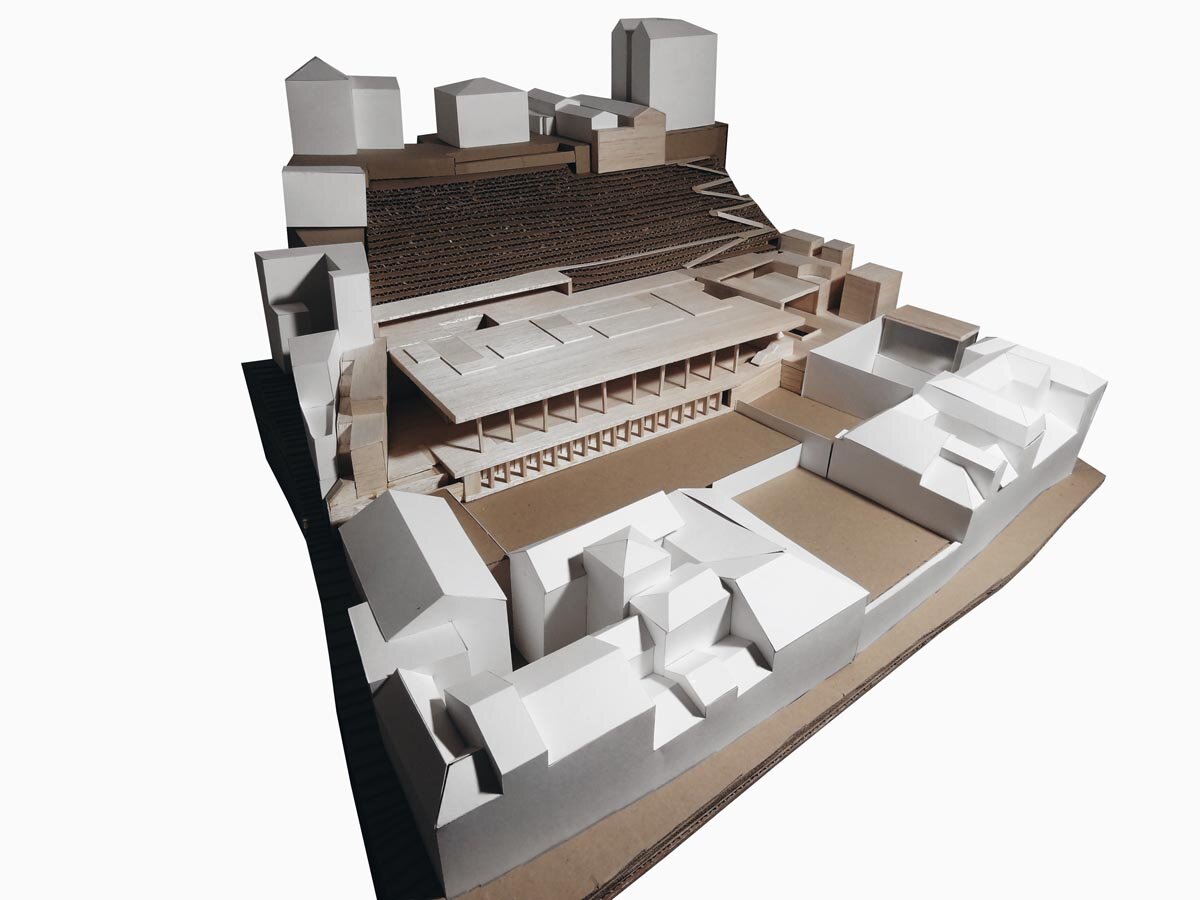
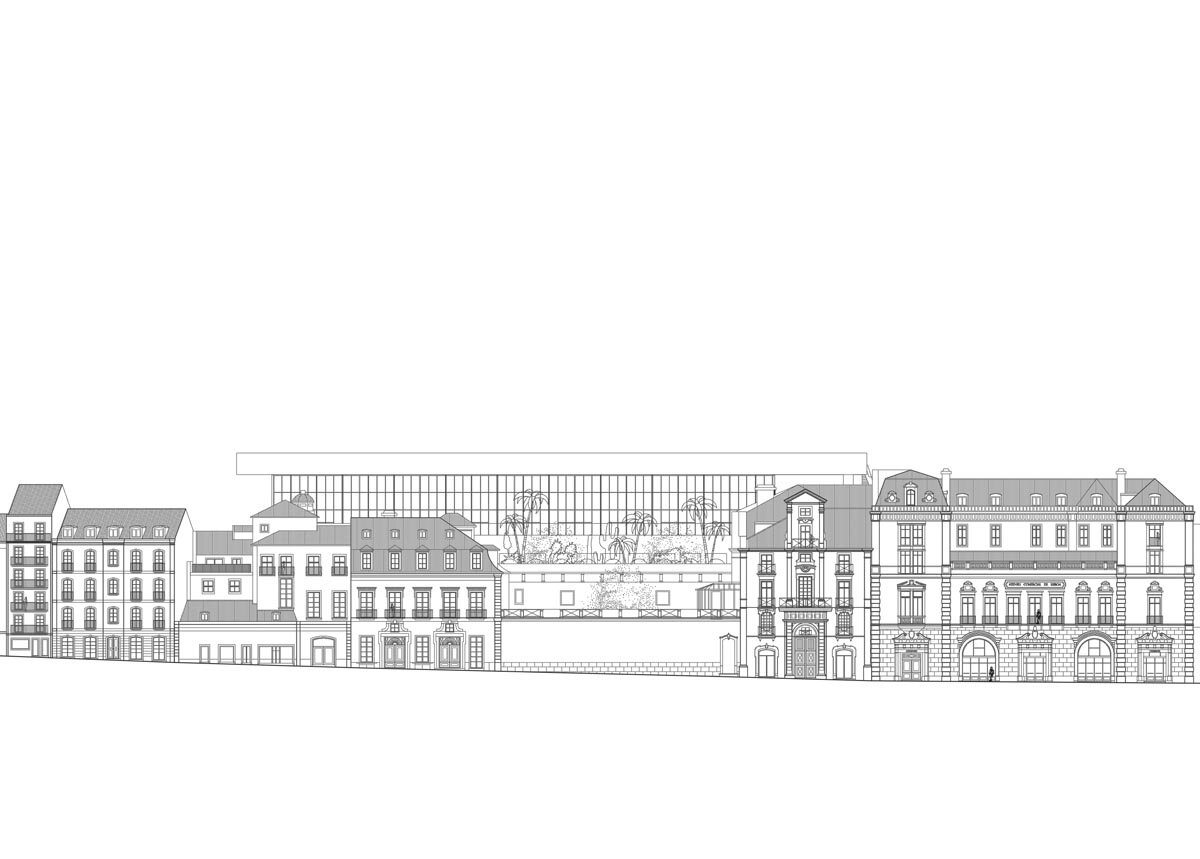
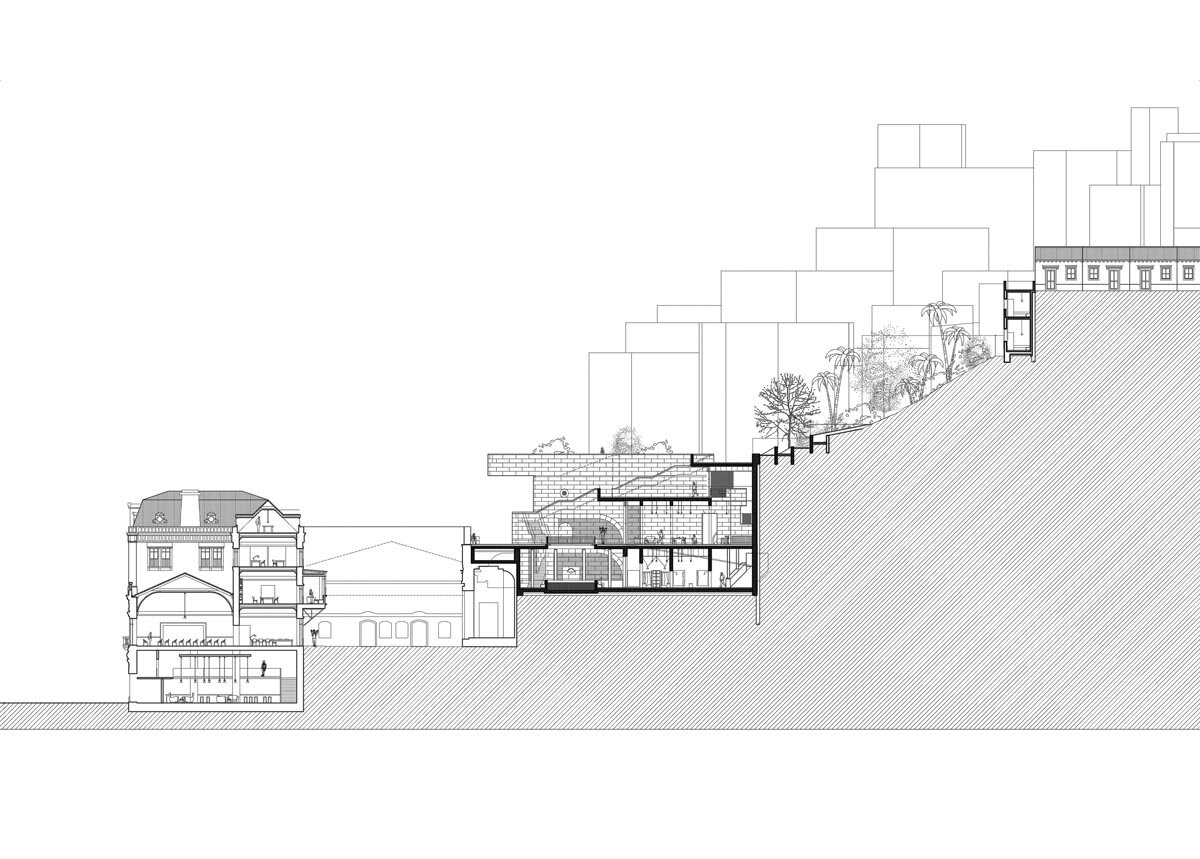
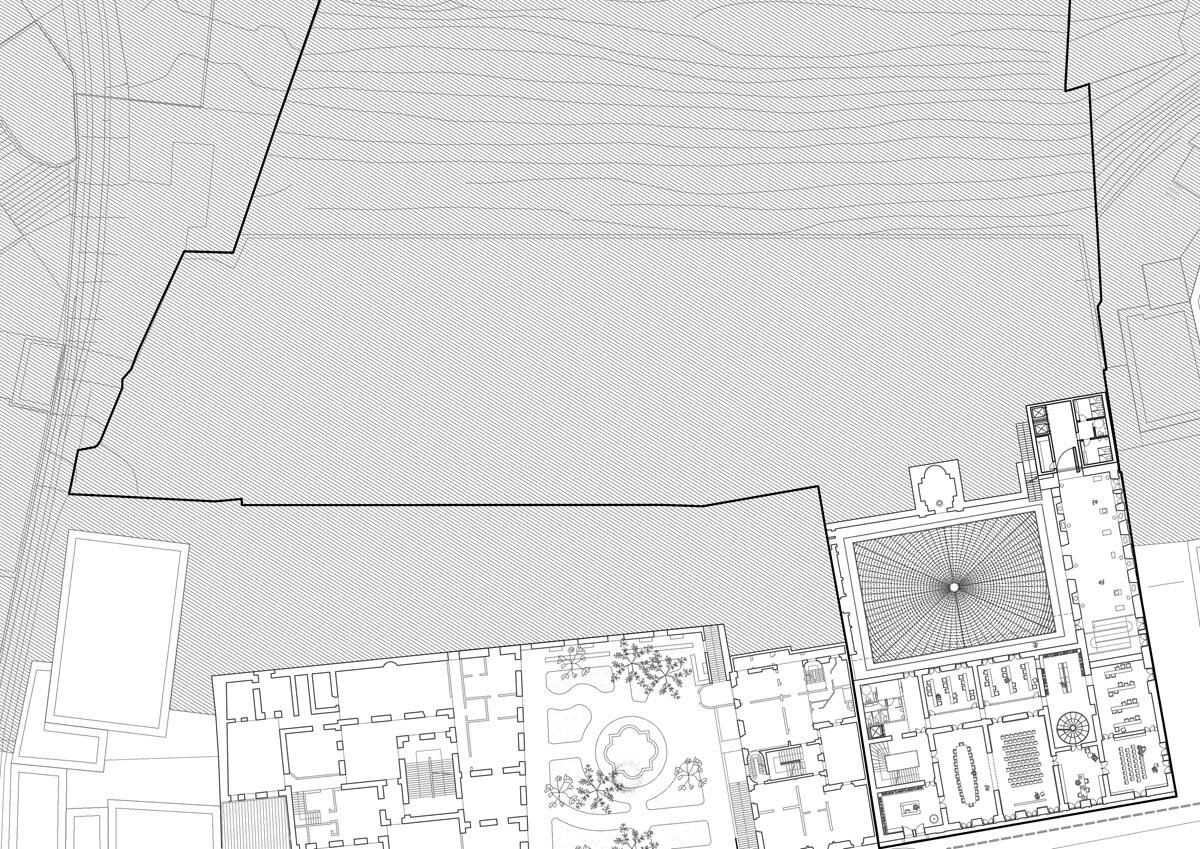
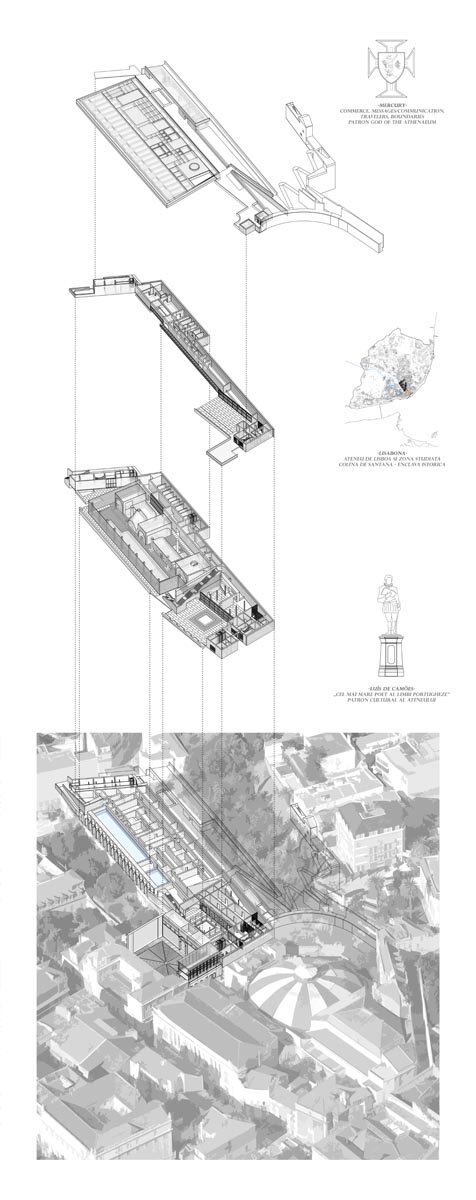
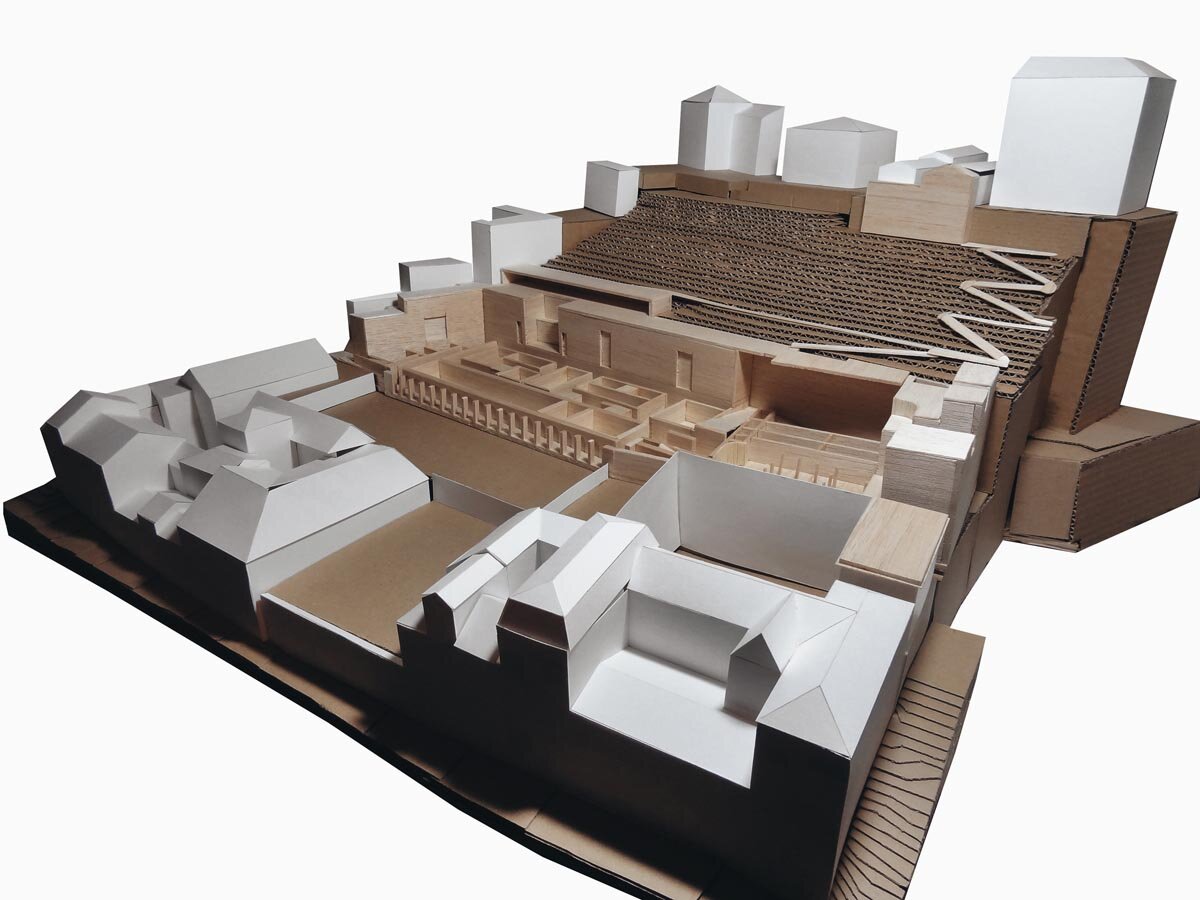
The curious presence of Santana Hill as an enclave in Lisbon's urban dynamics, despite its central position, and the historical and cultural importance of the Athenaeum, swept by its current accelerated state of decay, are the determining premises of the intervention, both as an architectural artifact of the city and as an important urban connector.
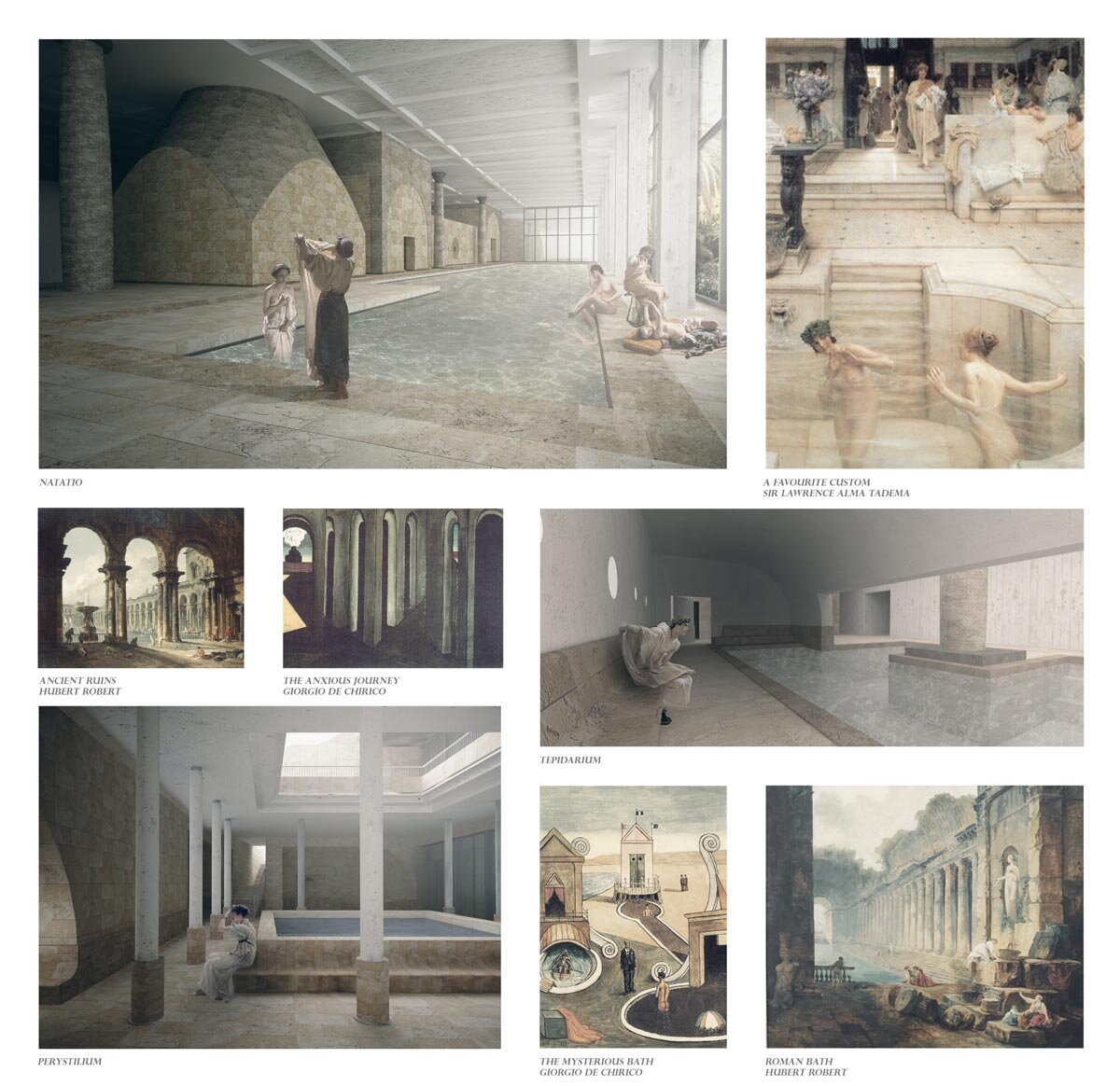
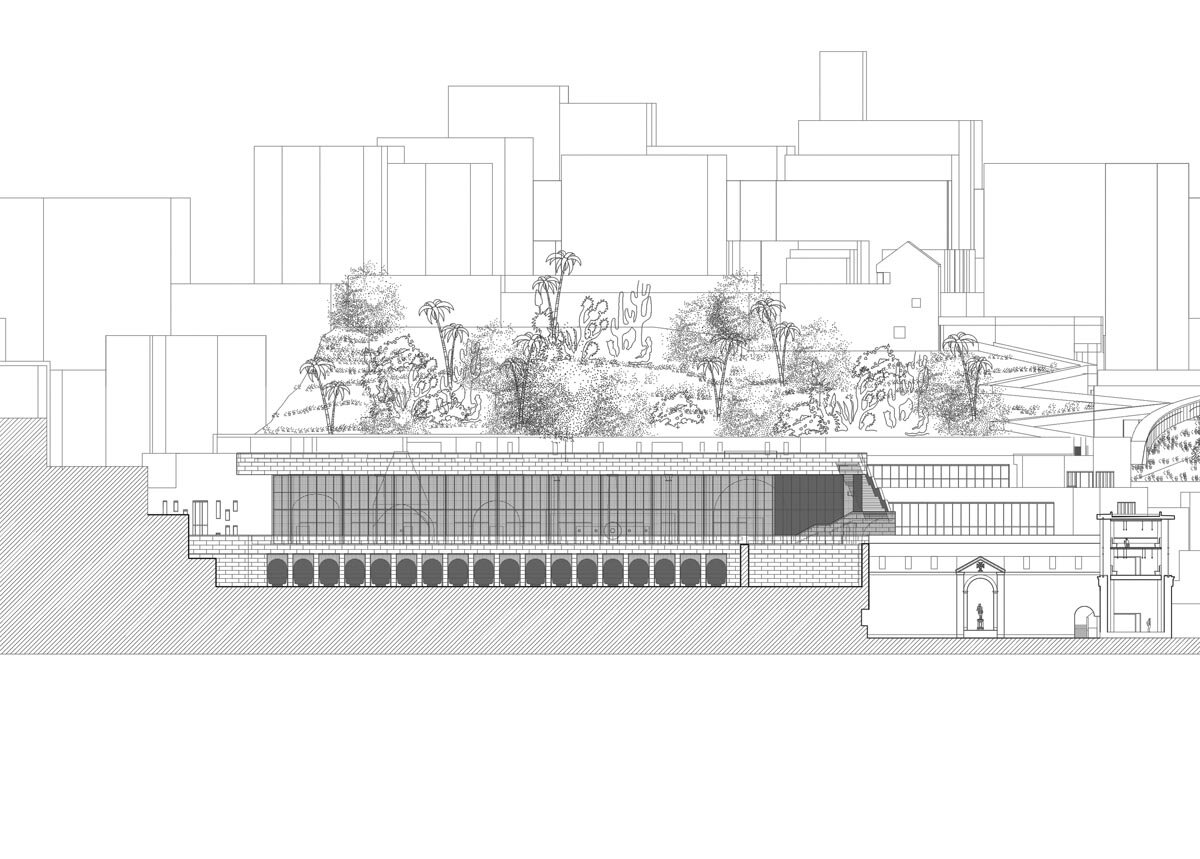
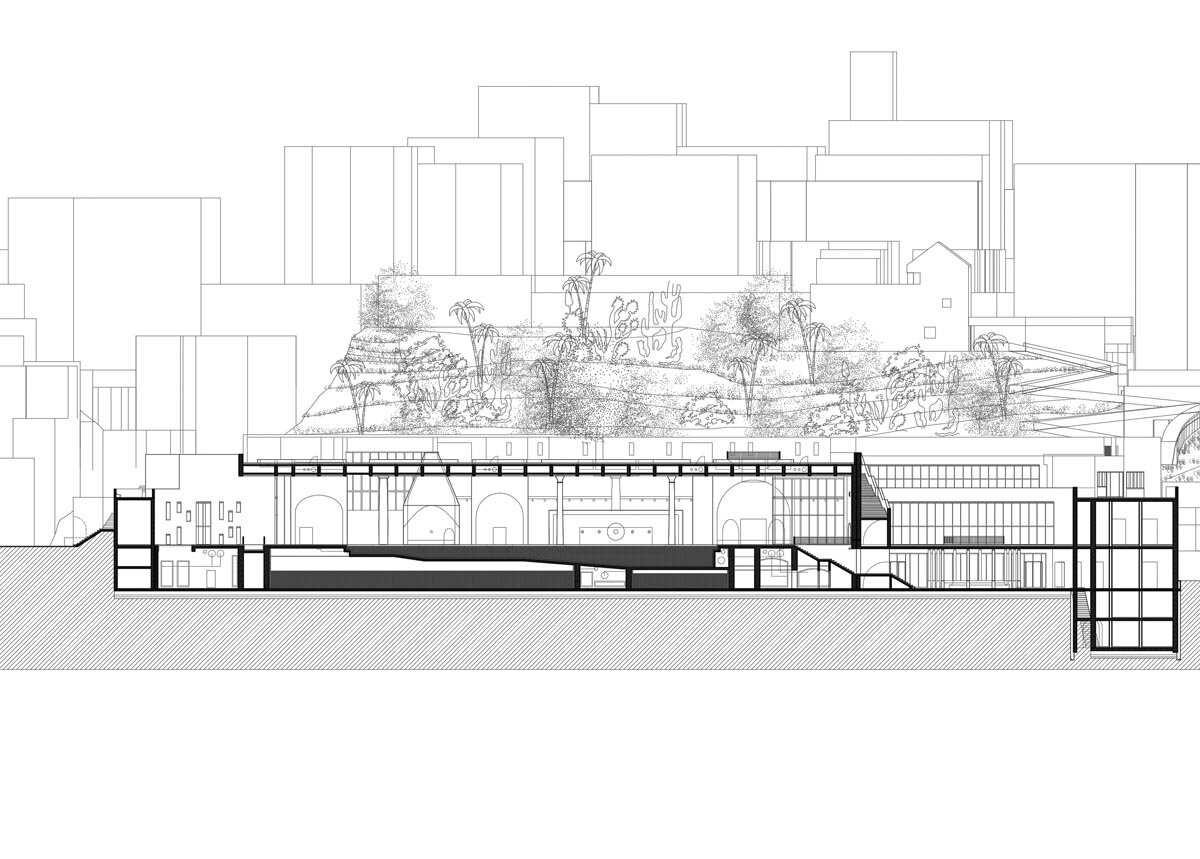
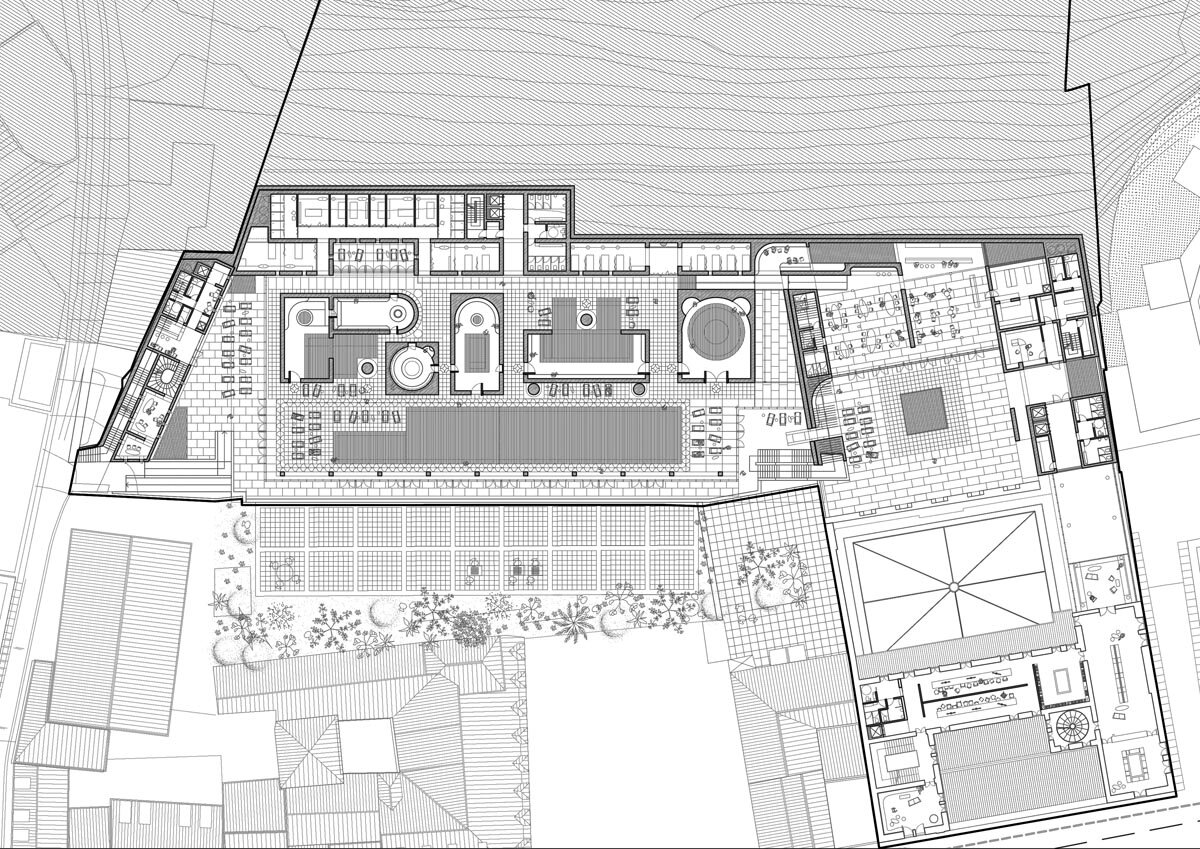
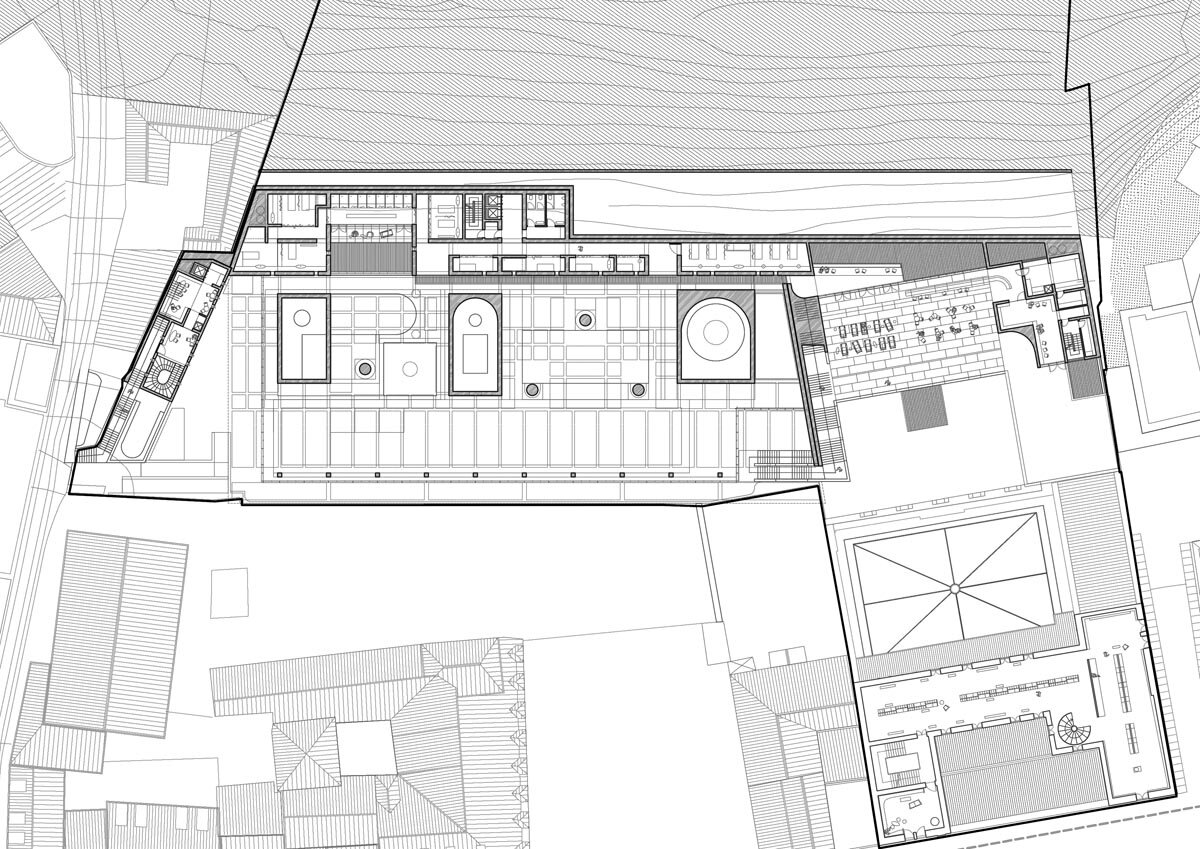
The architectural program is in line with the current urban development strategies coordinated by the municipality and focuses its efforts on the partial reactivation and supplementation of facilities that the Athenaeum already has, although they are out of use (swimming pool, gyms, etc.). The architectural expression emerges from the carefully studied dual character of the intervention: on the one hand, the solemn image, slightly abstract in its timelessness, of the ideal typological elements (architectural quotations), which become the "exhibits" of the project (the main rooms of the baths: tepidarium, caldarium, natatio, sudatio, laconicum; archetypal elements of architectural language: the peristyle, the portico, the column, etc.), and, on the other hand, what 'makes room' for these 'precious artifacts' in order to expose them as a 'stone tipis', panoramic, to the city (secondary spaces, annexed functions, urban circulation and routes, etc.).
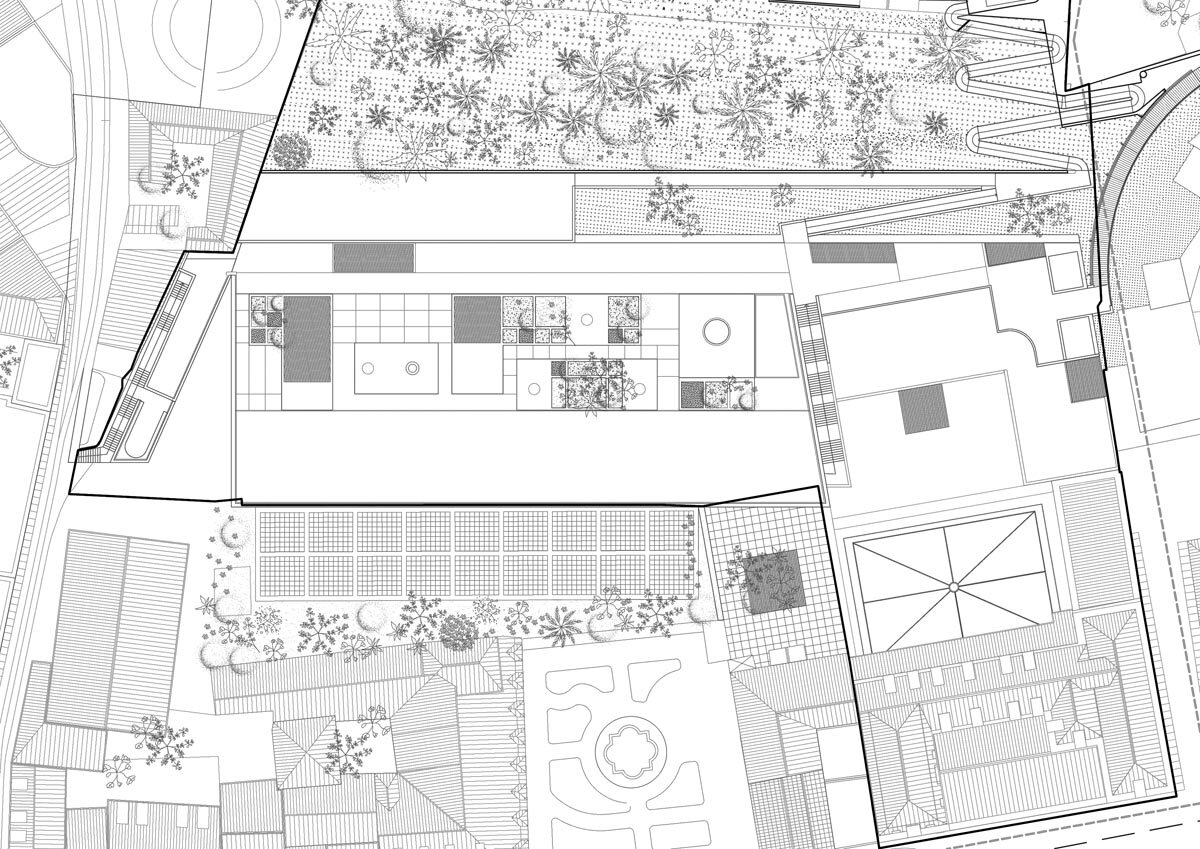
The main room of the baths is built as a reminder of the European architectural heritage whose common denominator, or rather its root, is the Roman Age (the period when public baths/thermal baths reached their excellence). This repository is, in fact, an 'architectural whim' that hovers uncertainly between the ruin collections of Giovanni Paolo Panini or Canaletto and the abstract scenographies of Giorgio de Chirico. But the public terrace covering the 'containing chamber' of the baths, the belvedere square (miradouro, Pt.), is deeply rooted in the local way of weaving the urban fabric and choreographs sublime contrasts in tandem with the matrix of narrow streets and the backdrop of the Athenaeum's wild, sloping garden.
More than a project that would merely respond to a specific contextual situation through an architectural program, the Public Baths of the Lisbon Athenaeum become a personal object of affective memory, a sketch of an architectural discourse that would later produce new theoretical research and new critical approaches to architecture and architectural theory, transcending a slight declared affinity with the theoretical works of Aldo Rossi, Kevin Lynch or Colin Rowe.
Supervisor: conf. dr. arh. Iulia Maria Stanciu