Diploma project. School to watch at home
Stud.-arh. Ileana Roxana Dan
University of Architecture and Urbanism "Ion Mincu" Bucharest, 2016
Five kilometers away from the city of Făgăraș, on the right bank of the Olt River, lies Șona - the native village of the painter Ștefan Câlția. This place is a permanent reference in most of his paintings, but also in the fascinating stories that the painter tries to convey. The love he has for the village and the local community is reflected in the way the artist tells of the history and evolution of the village, of the chance to recover customs and traditions, of nostalgia for a world long gone, and of hope for a time of change.
This project is about how change can happen, but at the same time it is also about how we can nostalgically preserve values that are beginning to be lost. The project outlines a tourism strategy aimed at reviving the community of Șona. The strategy, which is based on the principles of sustainable development, involves combining two models of tourism: community-based tourism (involving local people) and creative tourism (the tourist's desire to actively participate and learn about local crafts and customs).
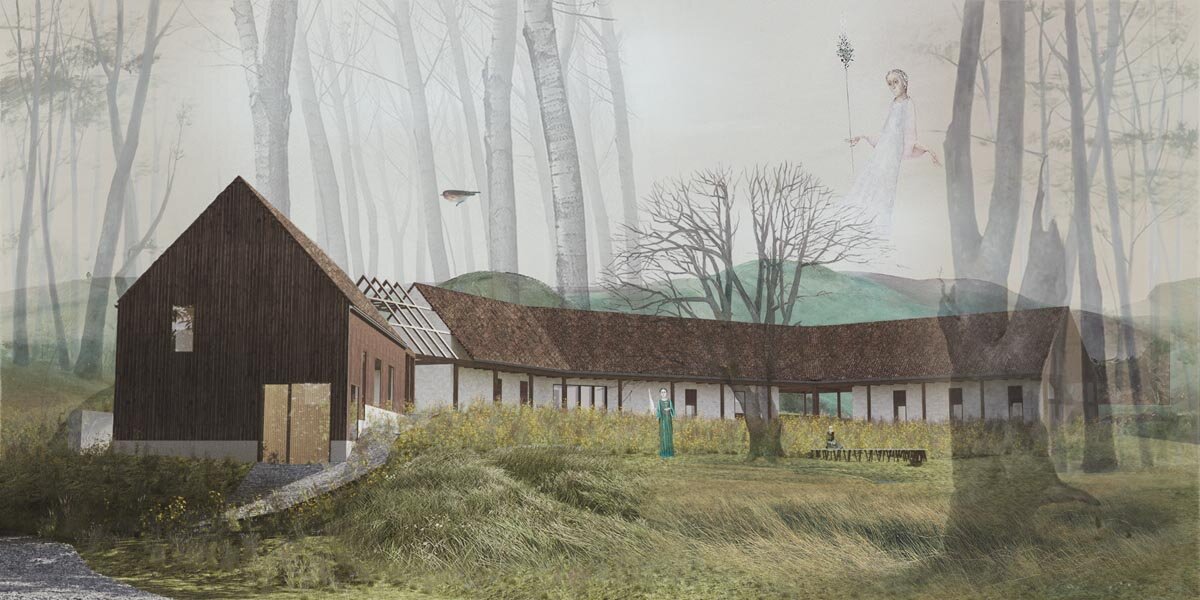
The success of this project is determined by a series of interventions that need to take place at village level. To this end, the project proposes a school - where the locals will carry out various handicraft activities - and a guest house to accommodate tourists who will participate in creative workshops at the school.
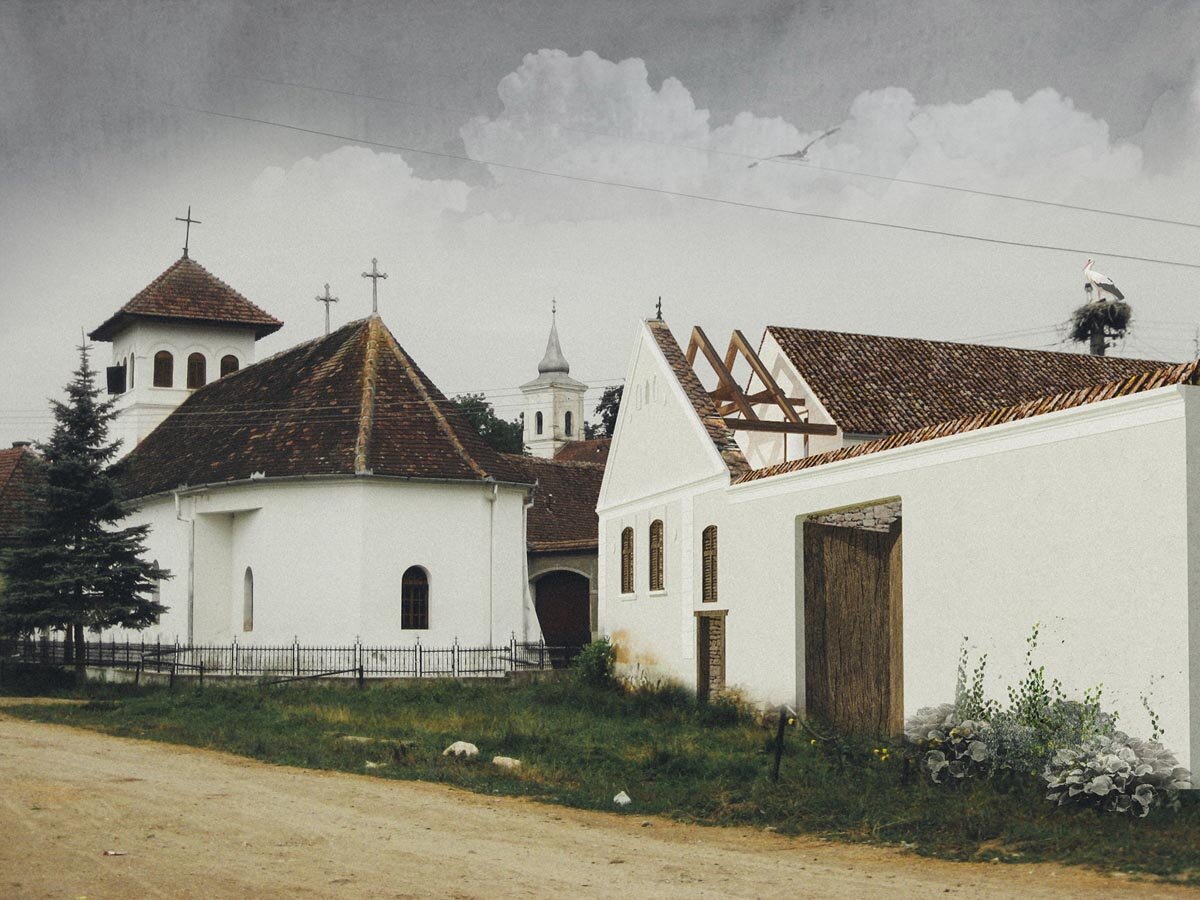
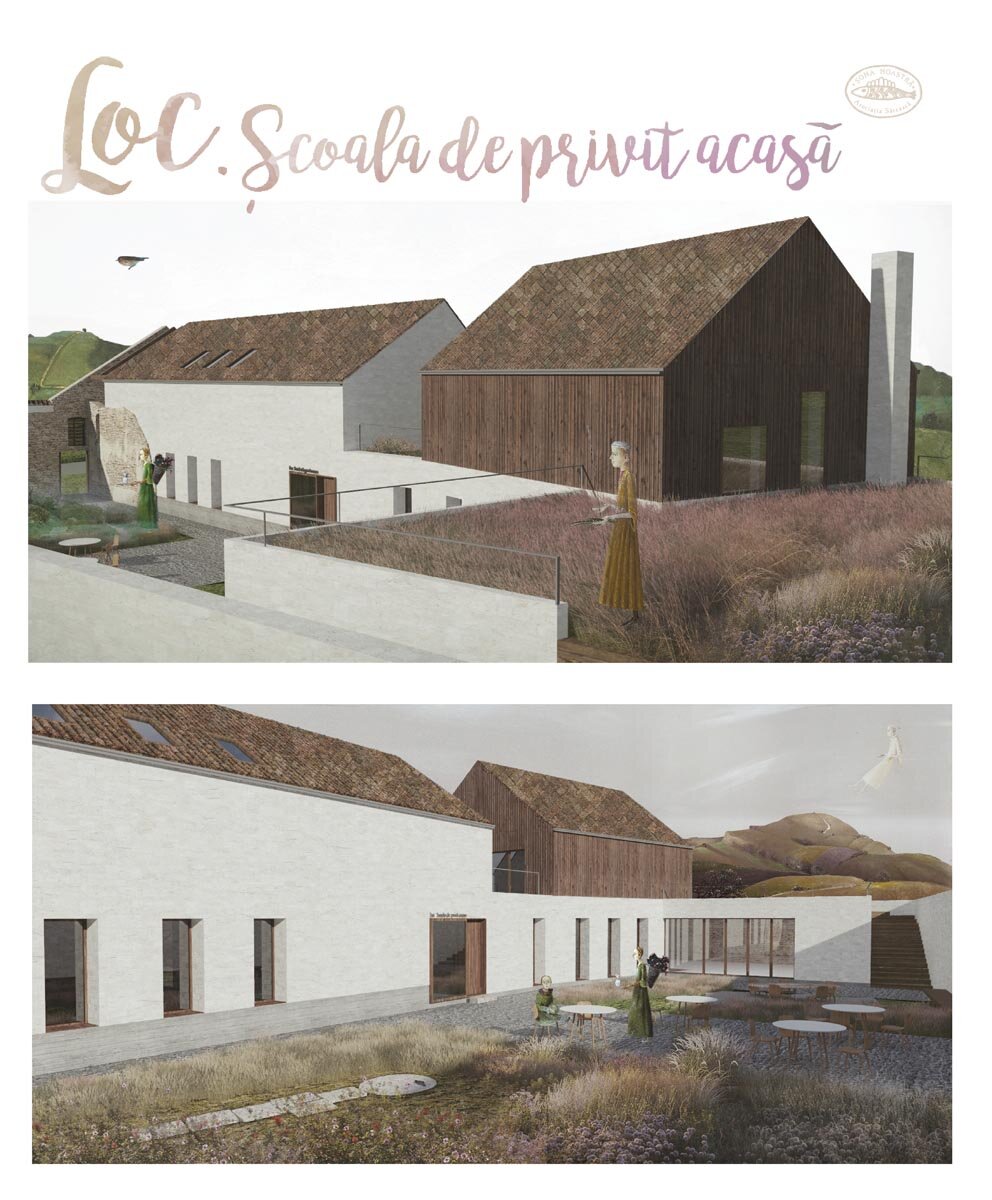
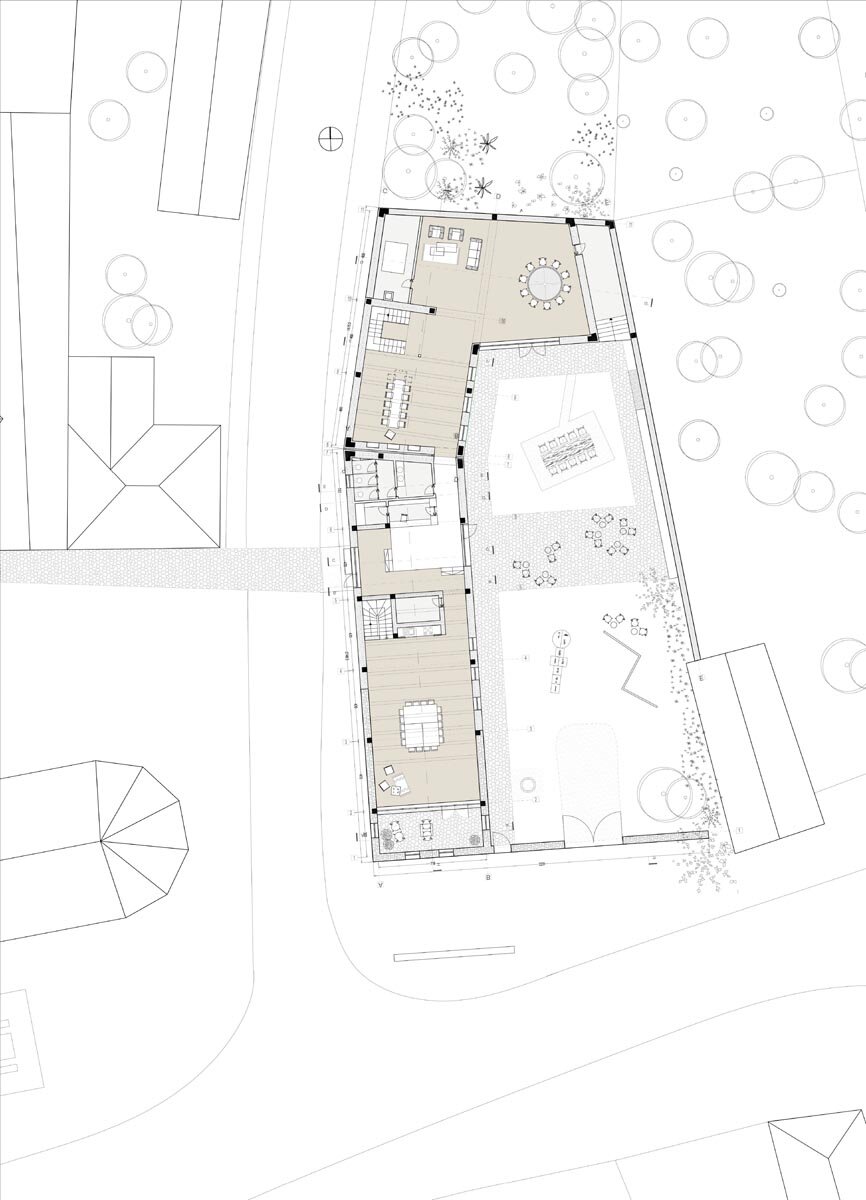
The school site was not chosen by chance. It is one of the village's most beautiful homesteads, located next to the church. It has visibly deteriorated in recent years and eventually collapsed, with only a facade of the house and a stone wall from the old stable still standing. A first intention was to save and integrate into the project these ruins that speak of the nostalgia of a forgotten world. The link between the public space surrounding the church and the schoolyard was proposed with the intention of creating a place for the community, a place where the community could gather as it used to...
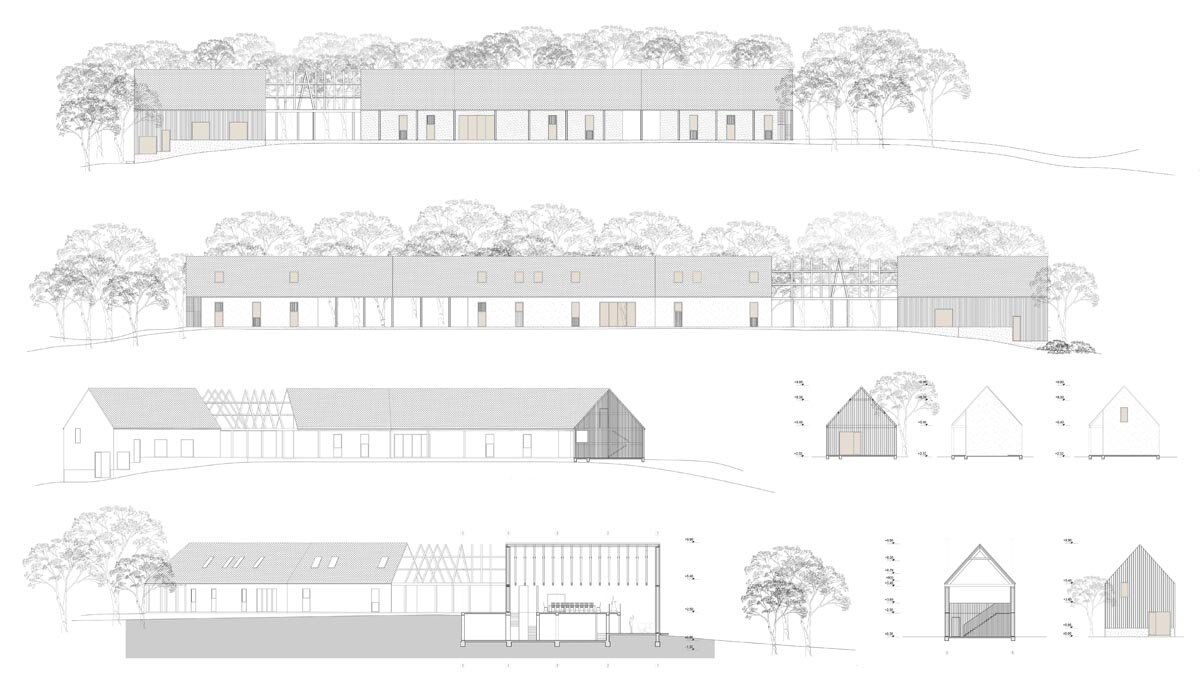
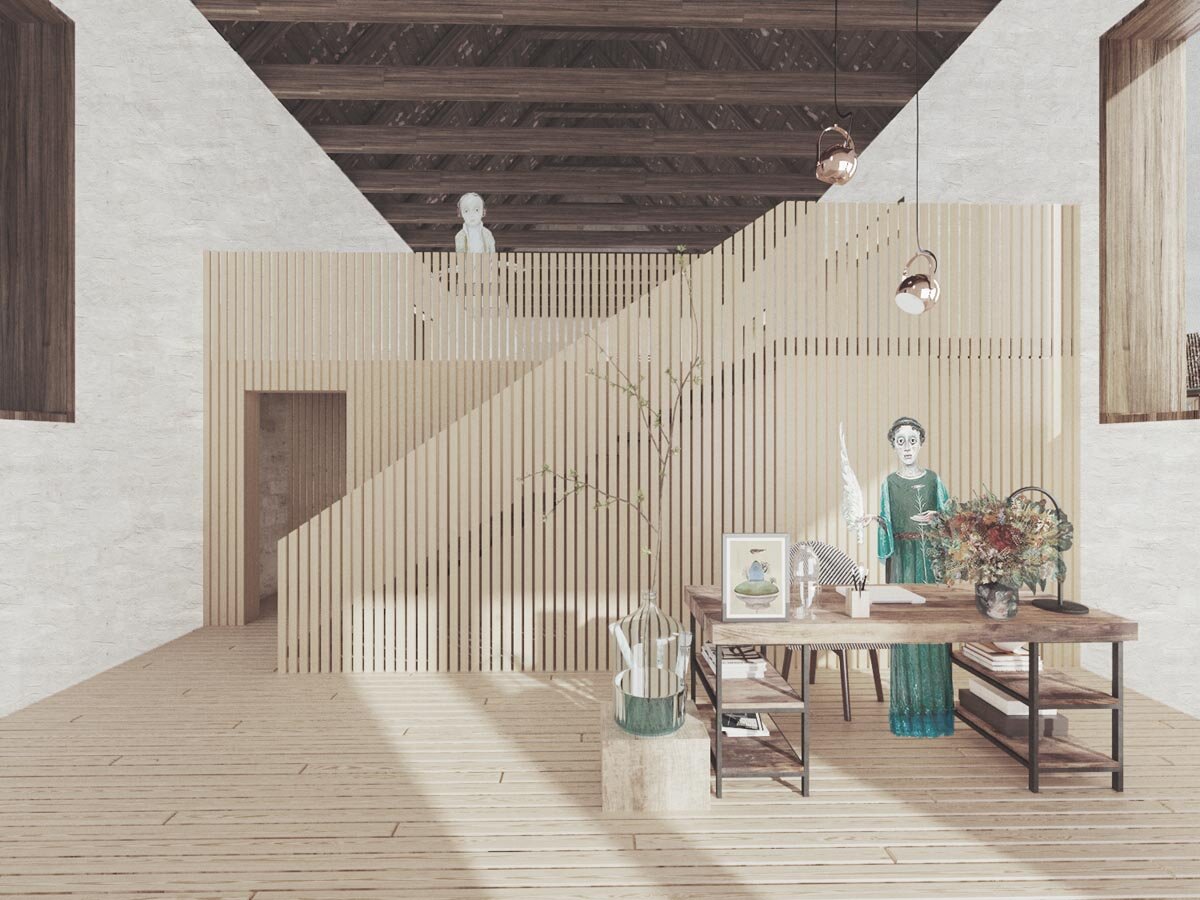
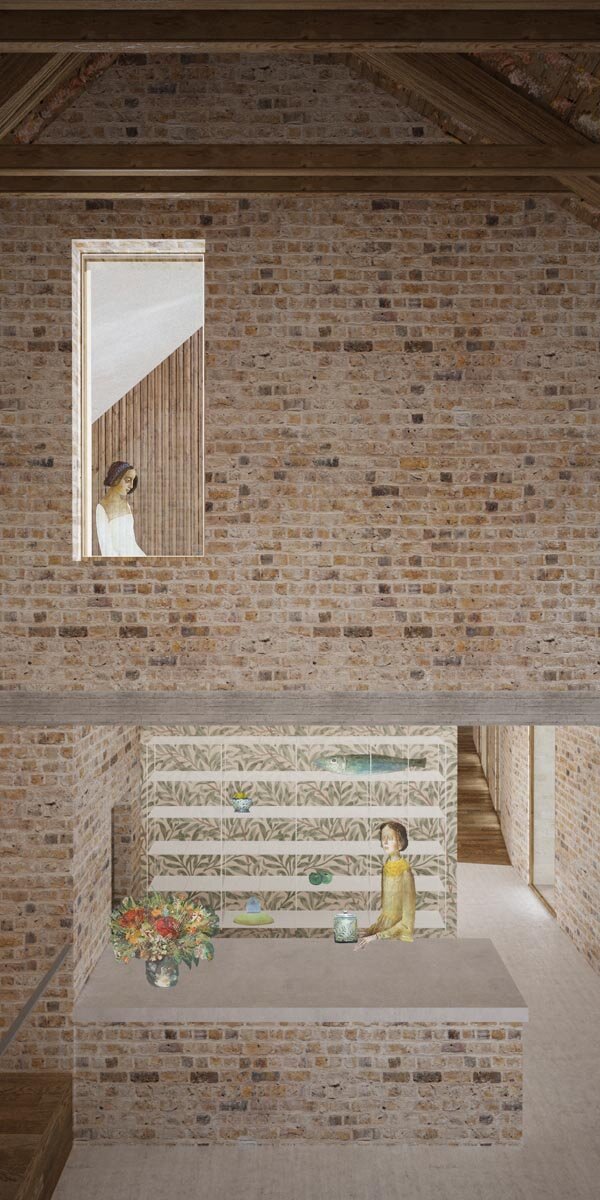
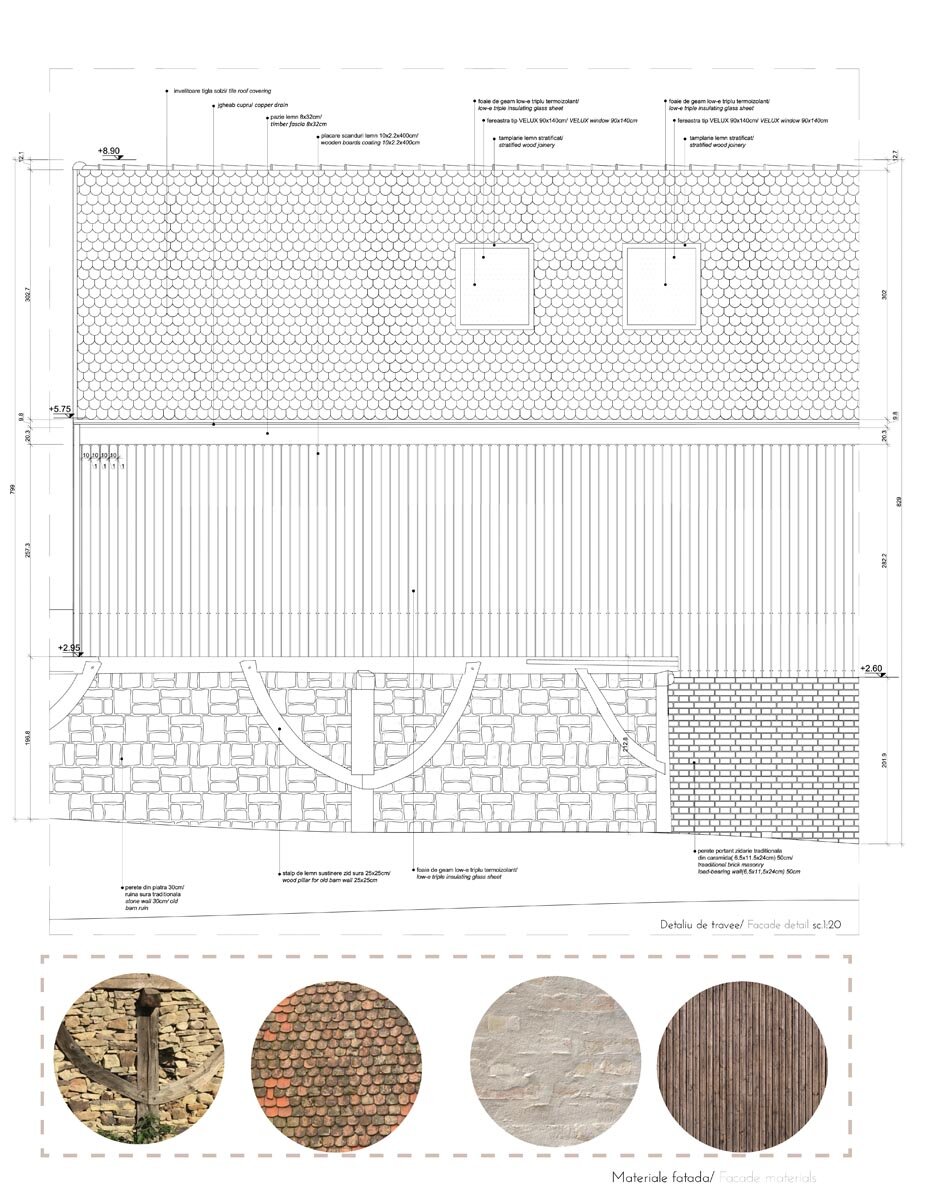
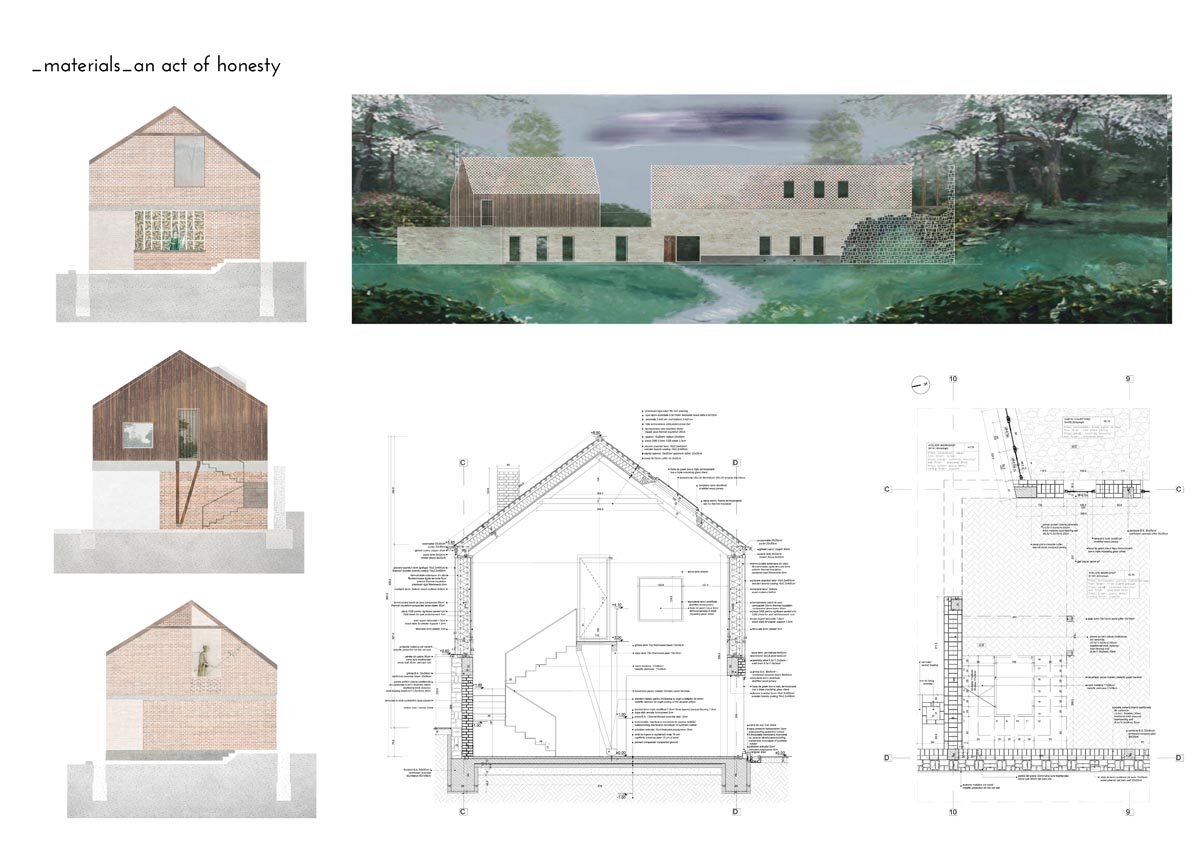
The school building, positioned on the left side of the land, as required by the Saxon land parcel, is a volumetric reinterpretation of the traditional Saxon farmhouse. The construction is made of local materials - the house is made of traditional brick, plastered in a thin layer on the outside, and the shed is made of wood, insulated with hay bales. Inside, both the wood and the brick remain exposed, like the old stone wall or the concrete belt linking the old walls to the new building.
On the hill opposite the painter's house, hidden behind the trees, is the guest house. The building, set on the edge of a meadow surrounded by trees, seeks to shape this place, not annihilate it. The guest house, with a kitchen, a dining area and 30 beds, is built, like the school, from local materials (wooden frame, hay bale insulation and tiled roofing).
Supervisor: prof. dr. dr. arh. Emil Barbu Popescu