
START-Ivry: Form follows life
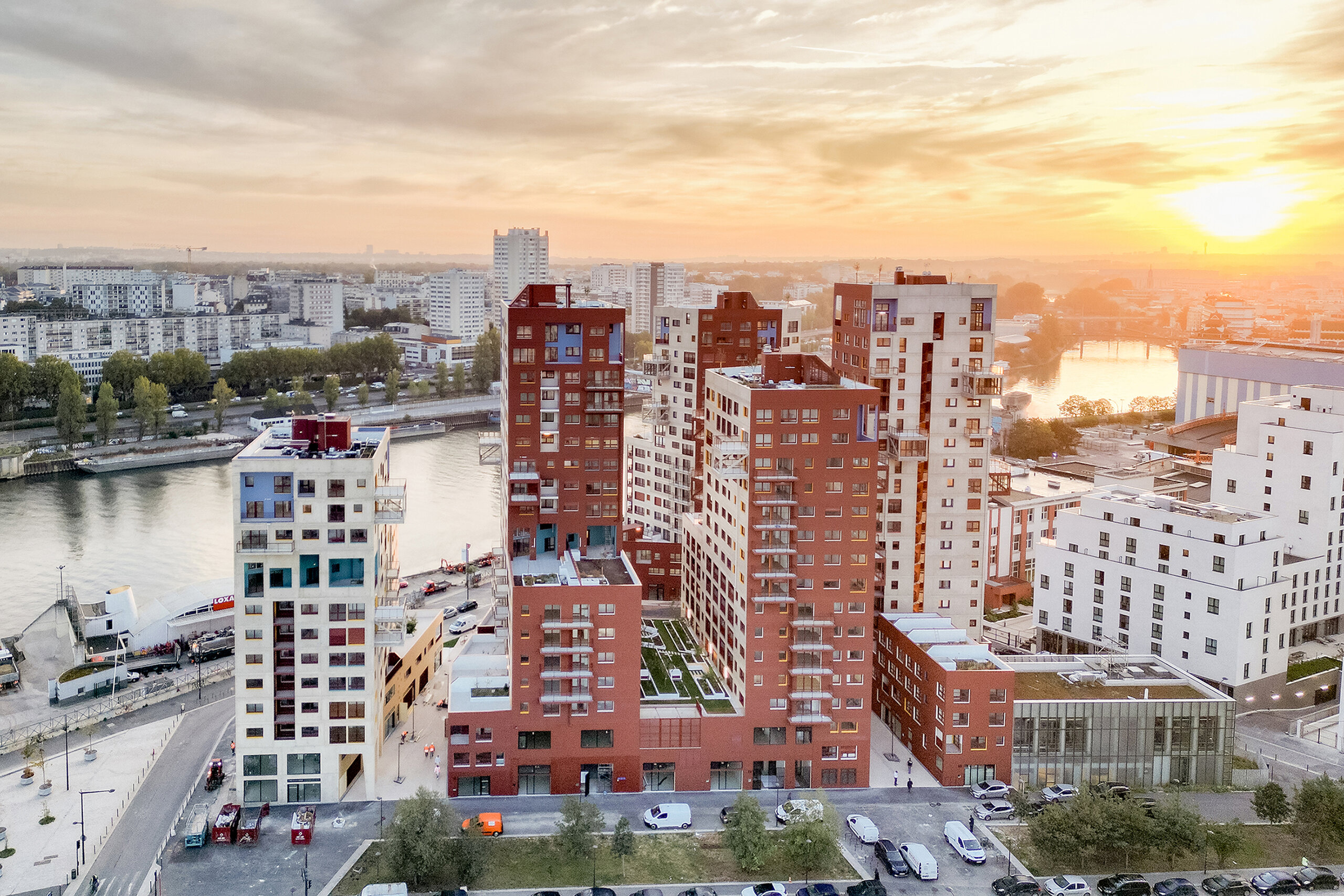
A new skyline for Ivry-sur-Seine and the banks of the River Seine. The slenderness of the towers, the modulation of heights and the permeability between volumes provide enhanced views, a multiplicity of orientations, and a rich diversity of housing typologies.
© Nicolas Grosmond
Rethinking housing from the inside out: a new generation of social and private housing, where the dwelling adapts to its inhabitants – and not the other way around
START-Ivry sets out to redefine housing culture. It rejects the prevailing standardisation of housing production and responds to the growing diversity of contemporary lifestyles. It rethinks housing from the inside — starting from the resident — restoring the central role of the floor plan, and boldly reversing the conventional process by starting with architecture: the architect is selected first, and developers are then invited to compete. START embodies a genuine paradigm shift.
START stands for Social, Transformable, Affordable and Resilient Typologies — housing solutions that respond to contemporary life. Located in Ivry-sur-Seine, a city historically linked to architectural innovation, START paves the way for a new cycle of experimentation in housing. START is both a manifesto and a demonstration: it proves that much better housing can be achieved without increasing surface areas and within very constrained budgets. A pilot project. A vanguard.
At the confluence of the Seine and Marne rivers, in Ivry-sur-Seine, within Greater Paris, the five START buildings enjoy an exceptional site, comprise 288 dwellings – including social, intermediate and market-rate housing – and shape a new urban skyline for the city.
Reconciling households and housing: a plural society faced with standardised plans
Households and housing have evolved along entirely different logics, creating a paradoxical mismatch between spaces and the people who live in them.
Households have become extremely diverse: single-parent families, blended families, unemployed young people, elderly requiring assistance, non-family cohabitations, remote workers, "boomerang" children...
Housing, meanwhile, has followed a different trajectory: standardised by numbers and regulations, it serves developer logic far more than the realities of how people live. Behind attractive façades, it often hides the poverty of ambition on the inside.
Contemporary society, with all its contradictions and diversity, cannot be captured in the uniformity of a standardised plan. START builds on this richness: a project conceived from the inhabitants and their ways of living, creating housing tailored to their circumstances and able to adapt to life’s changes. Dwellings are enlarged in anticipation of a child; a kitchen is relocated to create an extra bedroom; children’s rooms are transformed into a rental studio; a neighbouring unit is purchased to extend the current one; or, even in its initial state, the dwelling already accommodates a wide range of users and situations… In this project, it is the housing that adapts to its inhabitants, not the other way around.
START Founding principles
The project offers a wide range of typologies and solutions, from studios to five-bedroom units, including many intermediate configurations called "bonus" and "plus". It is structured around three complementary sets of principles:
- The 10 Adaptability Principles ensure flexibility and resilience in the dwellings over time. Examples include divisible large units, “plus” alcove rooms serving especially single parents or those working from home, modular living rooms, and super-adaptable two-bedroom units designed to accommodate all kinds of cohabitation.
- The 8 Quality Principles, such as naturally lit kitchens and bathrooms, maximisation of storage space, or the minimisation or activation of corridors.
- The 10 Principles for a Good Tower set out the conditions for a positive, desirable density that integrates well into its context — including quality circulation spaces, shared spaces and terraces, and rich encounters with both the ground and the sky.
A narrative architecture: when the inside defines the building
The geometry of the volumes, the rhythm of the windows, and the colour accents — all central to START’s identity — originate from its internal world. Here, the richness within shapes the exterior, not the reverse. The result is a vibrant architecture in which form, use, and meaning are inseparable — an architecture that transforms the ordinary into the extraordinary.
Geometry is in the service of dwellings: housing quality determines the depth of the volumes. Exceptionally slender — just 14 metres deep for buildings rising up to 56 metres — they maximise typological variety, natural light, ventilation, and views. Ninety percent of homes enjoy double or triple orientations, and most benefit from views of the Seine or the Marne. Each tower is structured into three distinct parts, offering three different readings: street, city, and sky, while a turquoise “band” of shared spaces at the seventh floor introduces a horizontal rhythm into the verticality.
The façades follow no rigid grid: windows, balconies, ‘plugs’, and loggias are placed to serve domestic use, from storage to adaptability. What might appear as “disorder” becomes the architectural expression of life, mirroring that of its inhabitants — at times controlled, at times unpredictable.
Colour accents act as an architectural code, with a palette revealing interior functions: from typology-coded doors to window jambs coloured according to the function behind them. The main façade treatments — raw concrete and red paint — echo the architectural history of Ivry, particularly its emblematic concrete and brick buildings.
Programme: surfaces and social mix
With a surface area of 22,863 m², including 19,700 m² of housing, START-Ivry spans five towers ranging from 13 to 19 storeys (including the ground floor) and incorporates a commercial plinth with 14 adaptable retail units, creating an active hub at the interface of several key facilities in the urban redevelopment zone. Restaurants, gyms, bakeries, pharmacies, supermarkets and hair salons are planned to serve both residents and the wider neighbourhood.
The programme includes 288 dwellings — up to 350 in case of future subdivisions — of which half are for homeownership, 34% are social housing, and the remainder are intermediate housing. Two of the five towers are mixed, combining different housing regimes, even on the same corridor — a configuration rarely seen in France, which START has chosen to explore.
All START dwellings – private, social and intermediate – share the use of communal spaces on the upper floors, including multi-purpose rooms and guest rooms, as well as more than 2,000 m² of shared terraces distributed at different heights.
START creates 2,600 m² of new public spaces at ground level: a central square facing the Seine, and two pedestrian alleys that cross the commercial plinth, link the square to the main avenue, and frame views of the iconic cable bridge over the Seine.
Sustainability: what is the point of climate-adapted housing if housing is not adapted to the people who live in it?
START achieves a 20% reduction in energy consumption compared to current standards and uses 20% low-carbon concrete for both structure and façades, reducing materials and embodied carbon. Heating is provided by geothermal energy.
But START goes far beyond environmental performance. Today, a building can collect “green” certifications while failing to respond to the realities of contemporary life. START reintroduces a dimension often forgotten in sustainability debates: the inhabitant and their evolving spatial needs.
The current obsession with labelling makes unmeasurable issues secondary: an adult child moving back in, a live-in carer, empty bedrooms after children leave, the difficulties of a single parent, a divorce, a blended family, remote work… Housing must adapt to these real-life situations to be truly sustainable.
START places the inhabitant at the heart of design, integrating the social and economic dimensions into sustainability. Divisible dwellings, super-adaptable homes, and “plus” or “bonus” typologies are proof. For example, a divisible dwelling (≥ 3 bedrooms) embodies all three pillars:
- Social: adapts to changing spatial household needs.
- Environmental: creates a new dwelling without consuming extra resources.
- Economic: generates additional income through renting or selling the new unit.
Inverse Method: challenging the status quo
Defying convention, START-Ivry began thanks to a pioneering process — the Inverse Method — devised by the municipal land developer and refined with the architect. Contrary to standard practice, the architect was selected first — based on a methodological proposal, not simply visual renderings — and the developers were then invited to compete based on the architect’s project. The brief was therefore not written by the developer, but by the architect.
For eight months, monthly design workshops brought together all stakeholders — the land manager, the architect, the municipality, urban planners, future developers (with their contractors and consultants) — around a shared project. All aspects were addressed collectively: design, construction, management, lifestyles...
The winning developer was selected for their ability to align with the architect’s project. The architect’s contract was transferred to them, while the land manager retained an active role to ensure continuity, embedding the design principles into the sale agreement and safeguarding the architect’s central role. Without the Inverse Method, START simply could not have come into being.
Ivry-sur-Seine: a pioneer in housing
START, located in Ivry-sur-Seine, is part of a distinguished legacy of urban experimentation and has always championed ambitious public architecture as a tool for social transformation. This context enabled the emergence of visionary housing projects — notably the work of Jean Renaudie and Renée Gailhoustet — and with START, continues today to support innovative approaches to housing production.
This tradition gave rise to the ambition of hosting a pilot project which, through a fundamental rethink of the design process and meticulous attention to the housing plans, would propose new housing solutions
Governed almost continuously by the French Communist Party since 1925, Ivry-sur-Seine implements a price regulation policy through “controlled prices”, allowing a broad range of households to access high-quality housing in an otherwise inaccessible market.
Project data sheet
START-Ivry by STAR strategies + architecture
– Name: START-Ivry
– Location: Ivry-sur-Seine, Greater Paris
– Date: 2015 – 2025 (finishing works ongoing)
– Architect: Beatriz Ramo / STAR strategies + architecture — Author: Beatriz Ramo López de Angulo — Project Lead: Danae Zachariaki — Team: Efraín Pérez Del Barrio, Ivan Guerrero, Geoffrey Clamour, Syeva Roest, Javier Cuartero, Bittor Arrillaga, Maria Castillo, Iris Ramas, Marc Coma
– Landscape / public space: Bernd Upmeyer / BOARD, Bureau of Architecture, Research and Design @bureau_of_architecture_r_d
– Sector: Collective housing (social, intermediate, and private) + Retail + Public Spaces
– Programme – Surface area: 22,863 m² NFA, including 19,701 m² of housing (≈53% private housing, ≈33% social housing and ≈13.5% intermediate housing) – 288 dwellings (up to 350 after possible subdivision); 3,163 m² NFA retail; 2,600 m² outdoor spaces at ground level; 2,000 m² outdoor spaces at upper levels
– Construction cost (2020): €43,367,730 excl. VAT
– Client – Developer: Phase 1: SADEV 94; Phase 2: SOGEPROM Réalisations
– Land manager: SADEV 94
– Municipality: Ivry-sur-Seine
– Housing coorporations: Coop’ Ivry, VALOPHIS, IN’LI
– Photographers: Nicolas Grosmond, Nicolas Trouillard, Kamel Khalfi, Vladimir Partalo
– Status: Delivered (latest interventions ongoing)
– Engineers: EDEIS (design phase)
– Works supervision: HOME
– Building control office: BTP Consultants
– Urban agriculture: TOPAGER
– Property management: FONCIA
– Surveyor: Gexpertise
– CERQUAL advisory: CITAE
– Contractor: BOUYGUES BÂTIMENT
– Notary: Cheuvreux Notaires
– Sale prices including parking (2019): very controlled price: €3,327 excl. VAT/m² living floor area (fixed price); controlled price: €3,638 excl. VAT/m² living floor area (average price); free price: €4,407 excl. VAT/m² living floor area (average price)
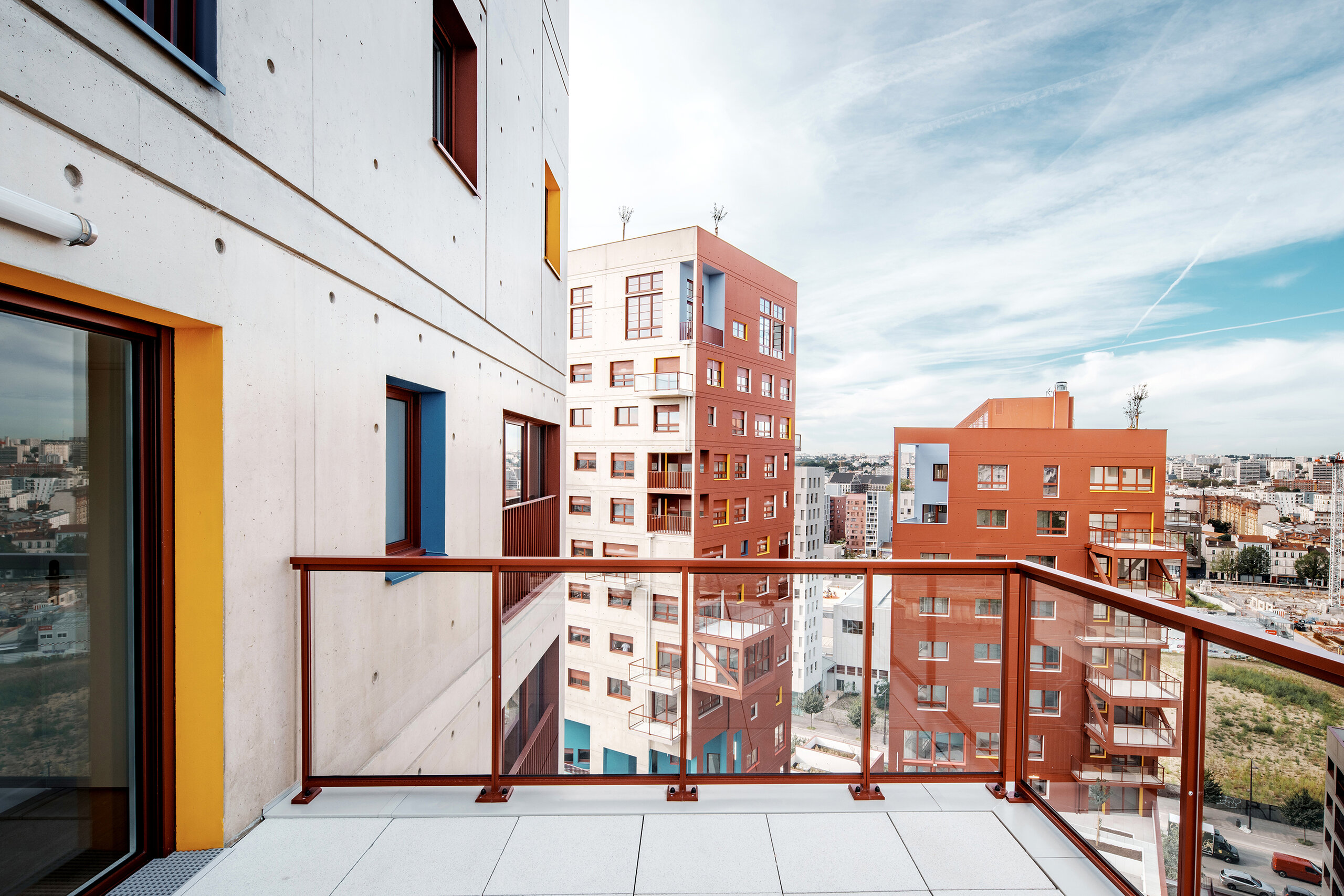
Narrative façades: window jambs follow a colour code reflecting the interior functions, while the colours of the loggias highlight the different parts of the tower.
© Nicolas Grosmond
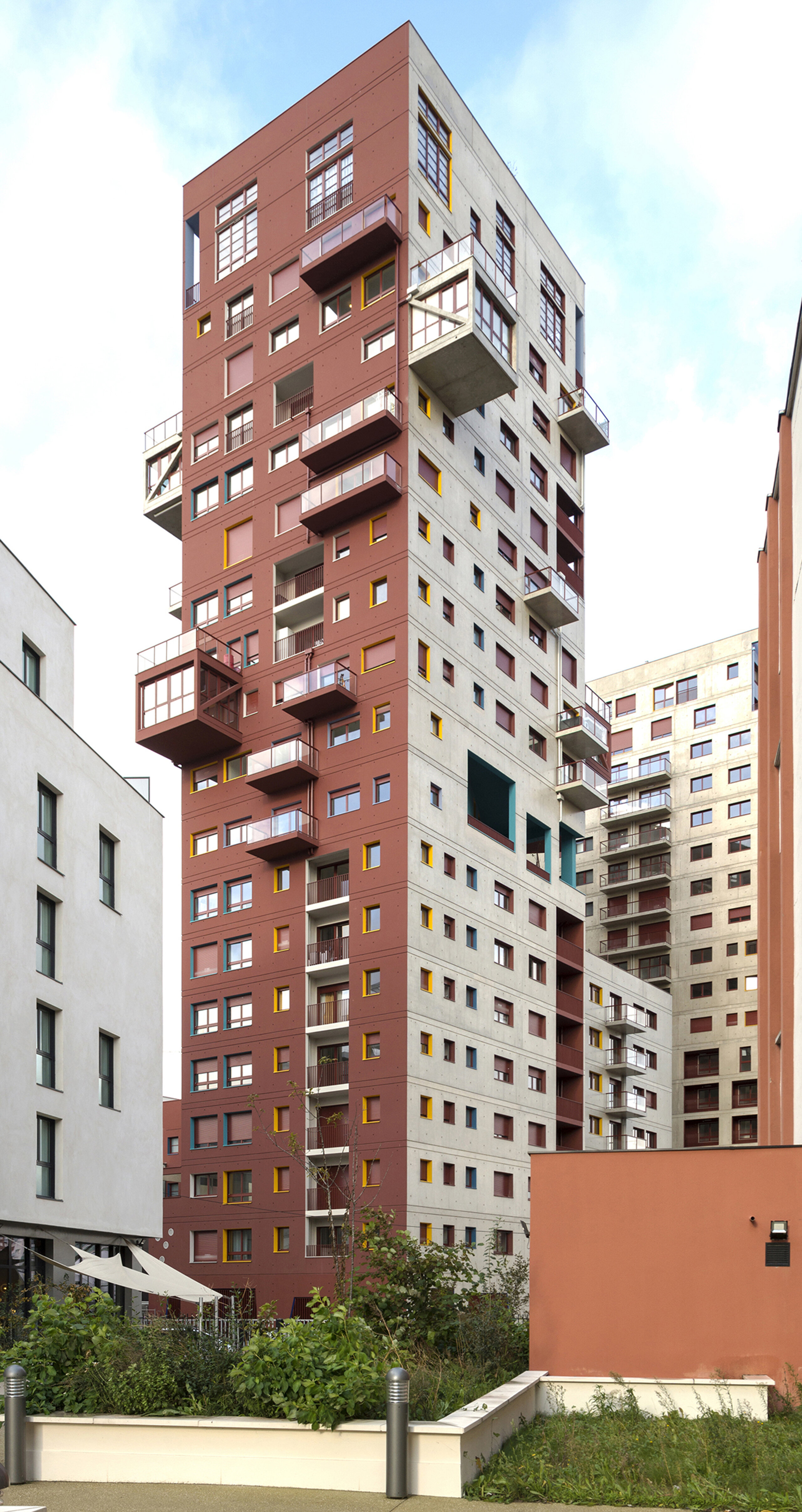
With a footprint of 13.5 x 16.5 metres, the social housing tower is the tallest and most slender of the five buildings.
© Kamel Khalfi
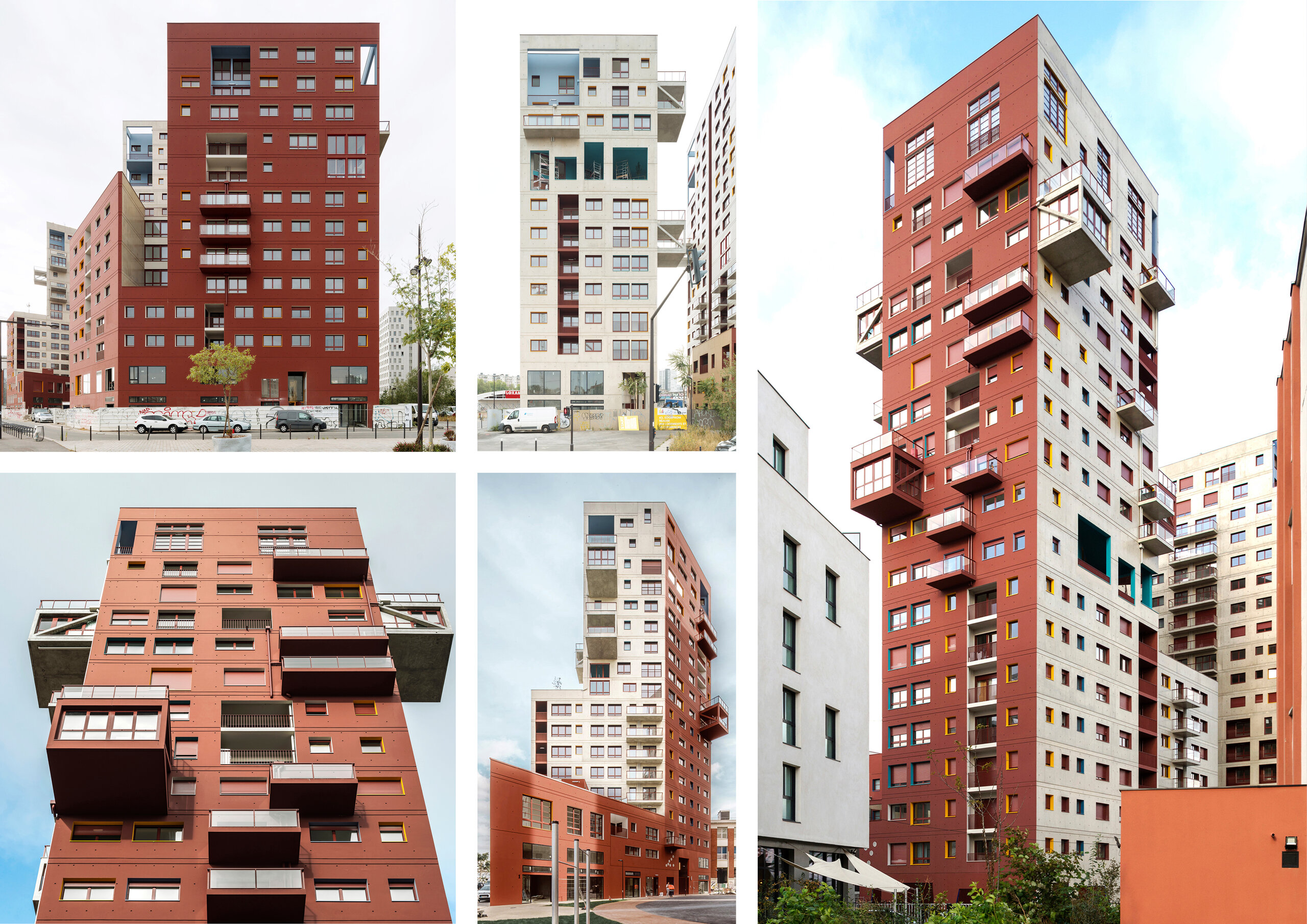
With a footprint of 13.5 x 16.5 metres, the social housing tower is the tallest and most slender of the five buildings.
© Kamel Khalfi
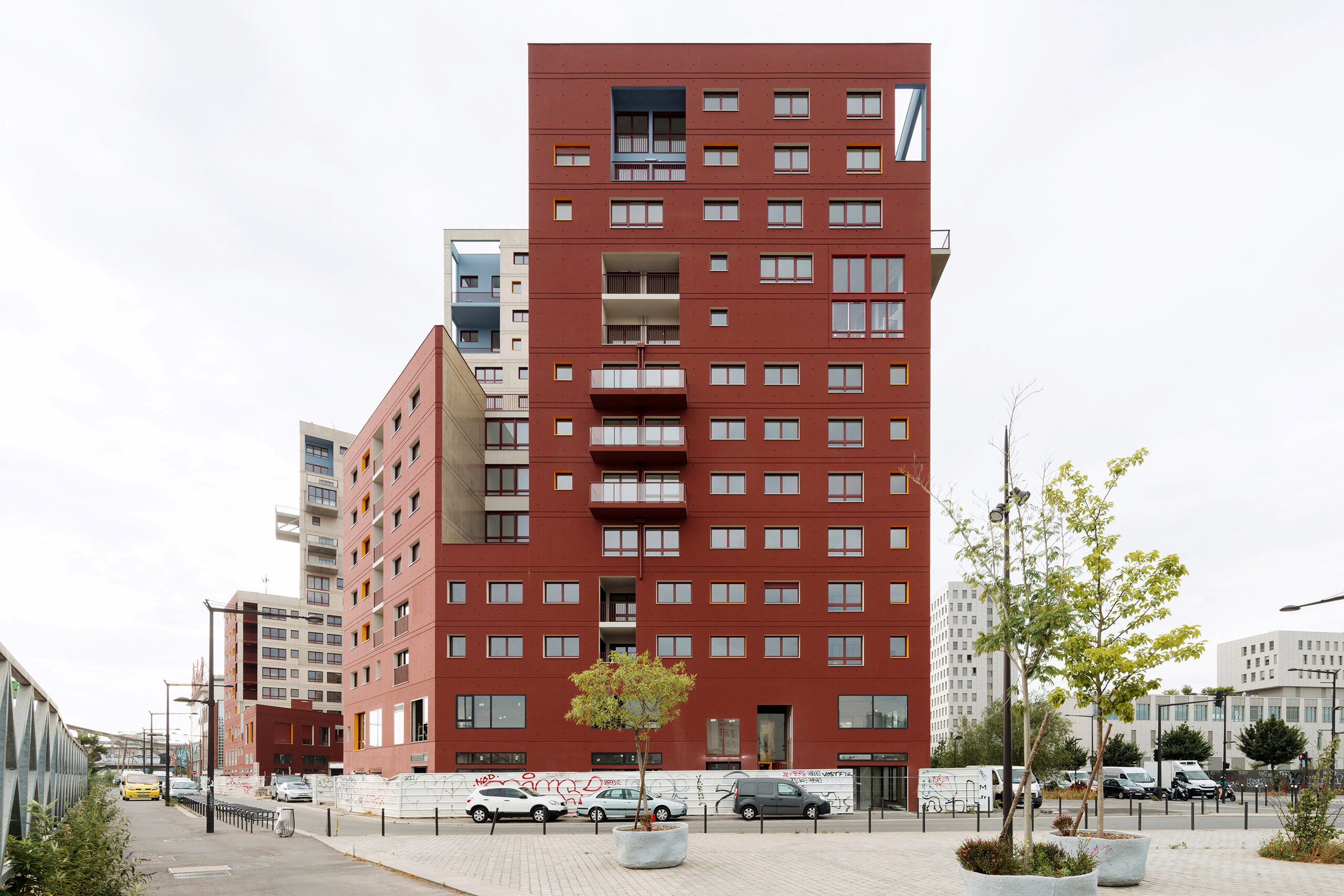
The façades convey the richness and diversity of the interior typologies.
© Nicolas Trouillard
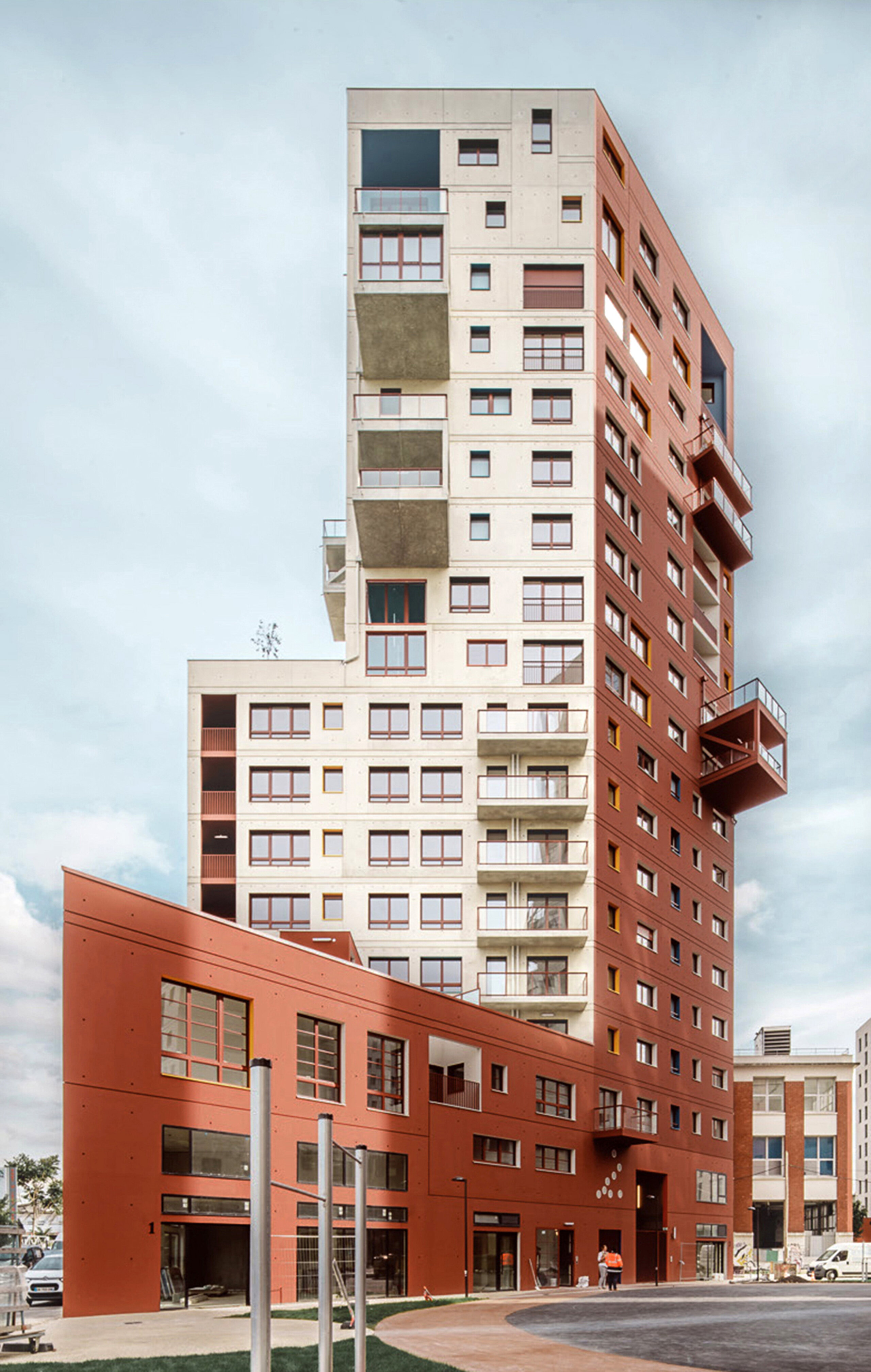
Each tower is structured in three distinct parts, creating three vertical readings to support its integration into three different contexts: the street, the city, and the sky.
© Nicolas Grosmond
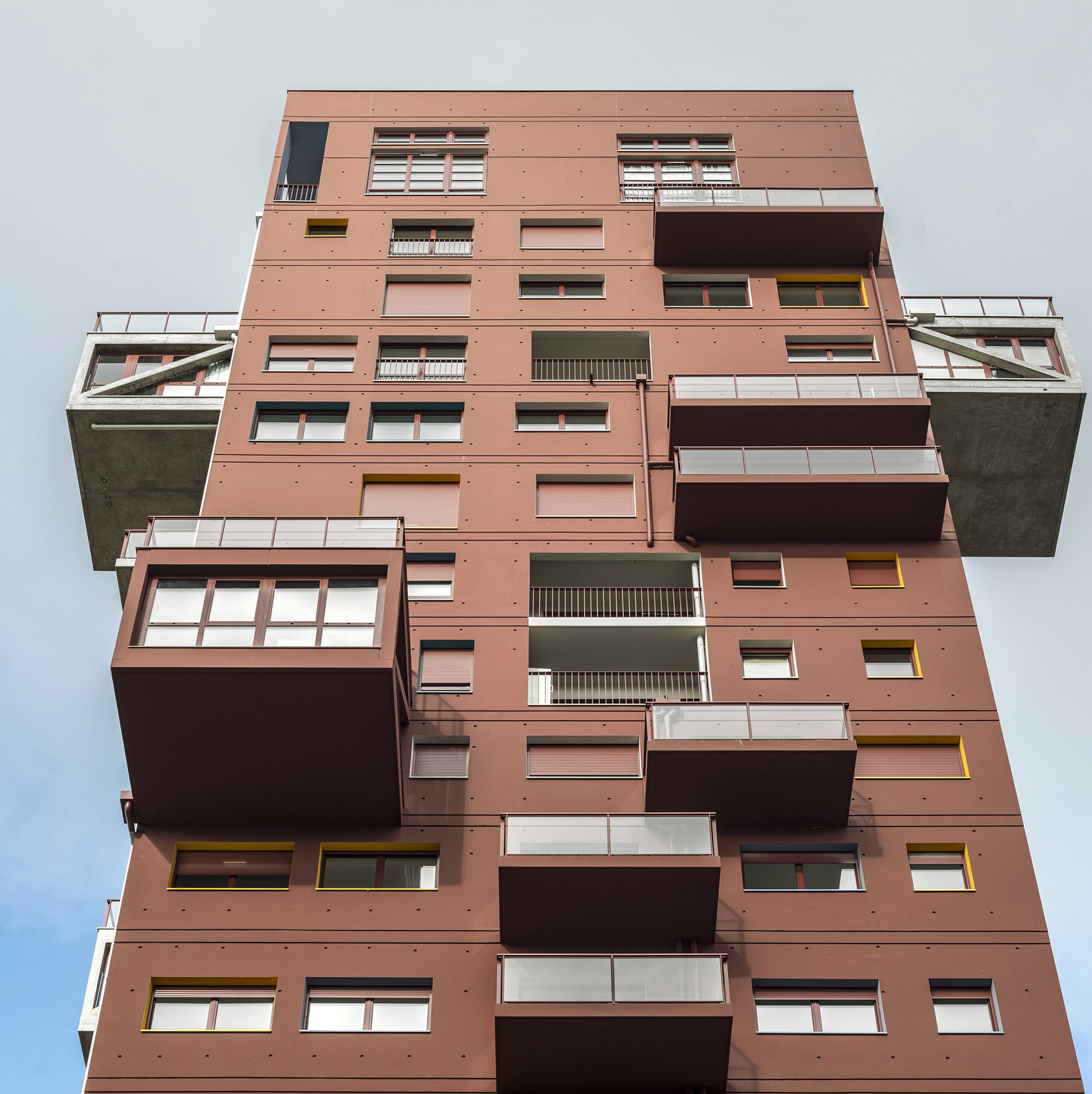
The façades follow a “narrative” logic, reflecting interior functions while integrating into the landscape and urban context.
© Kamel Khalfi
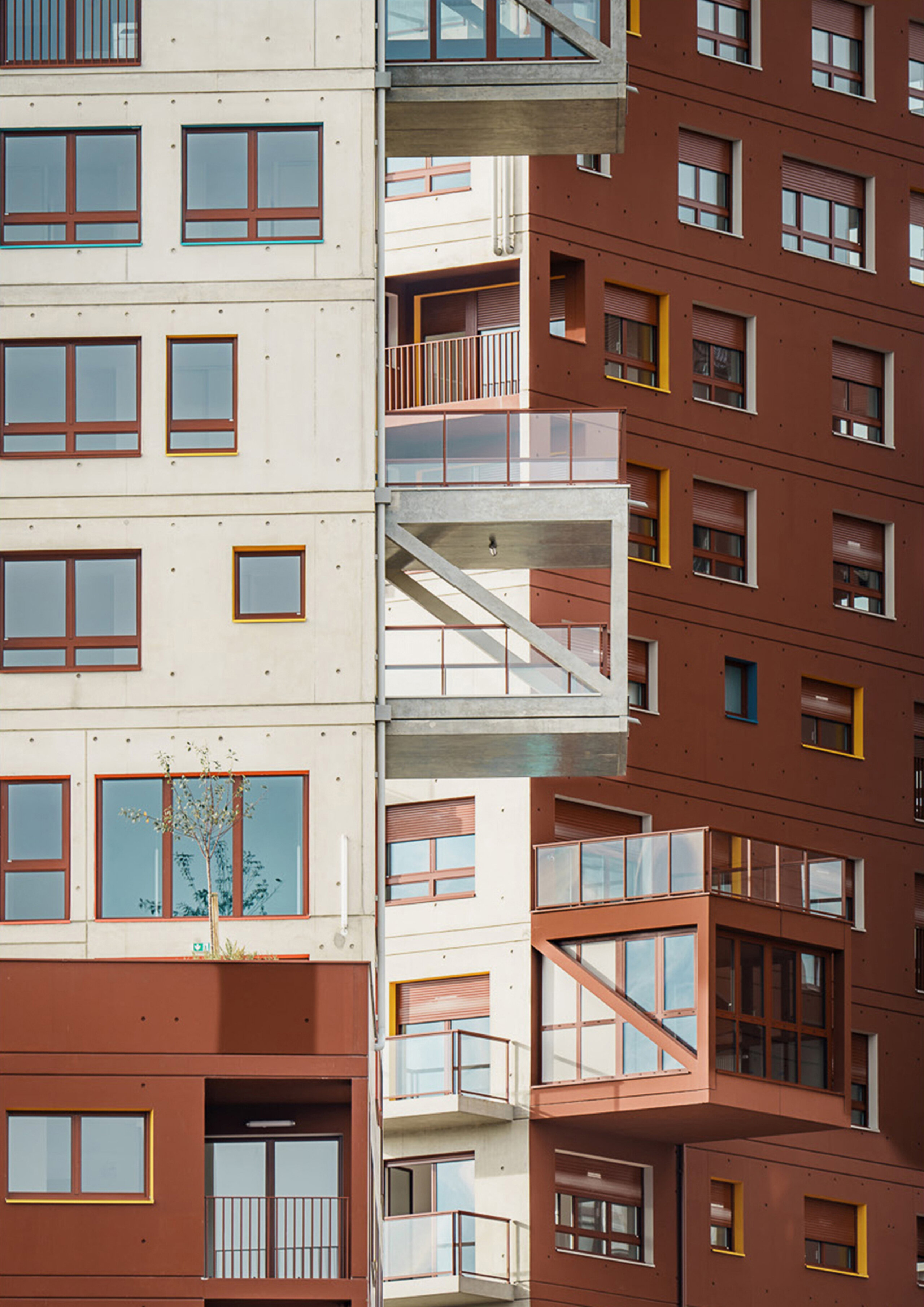
The main facade treatments — raw concrete and red paint — echo the architectural history of Ivry, particularly its emblematic concrete and brick buildings.
© Nicolas Grosmond
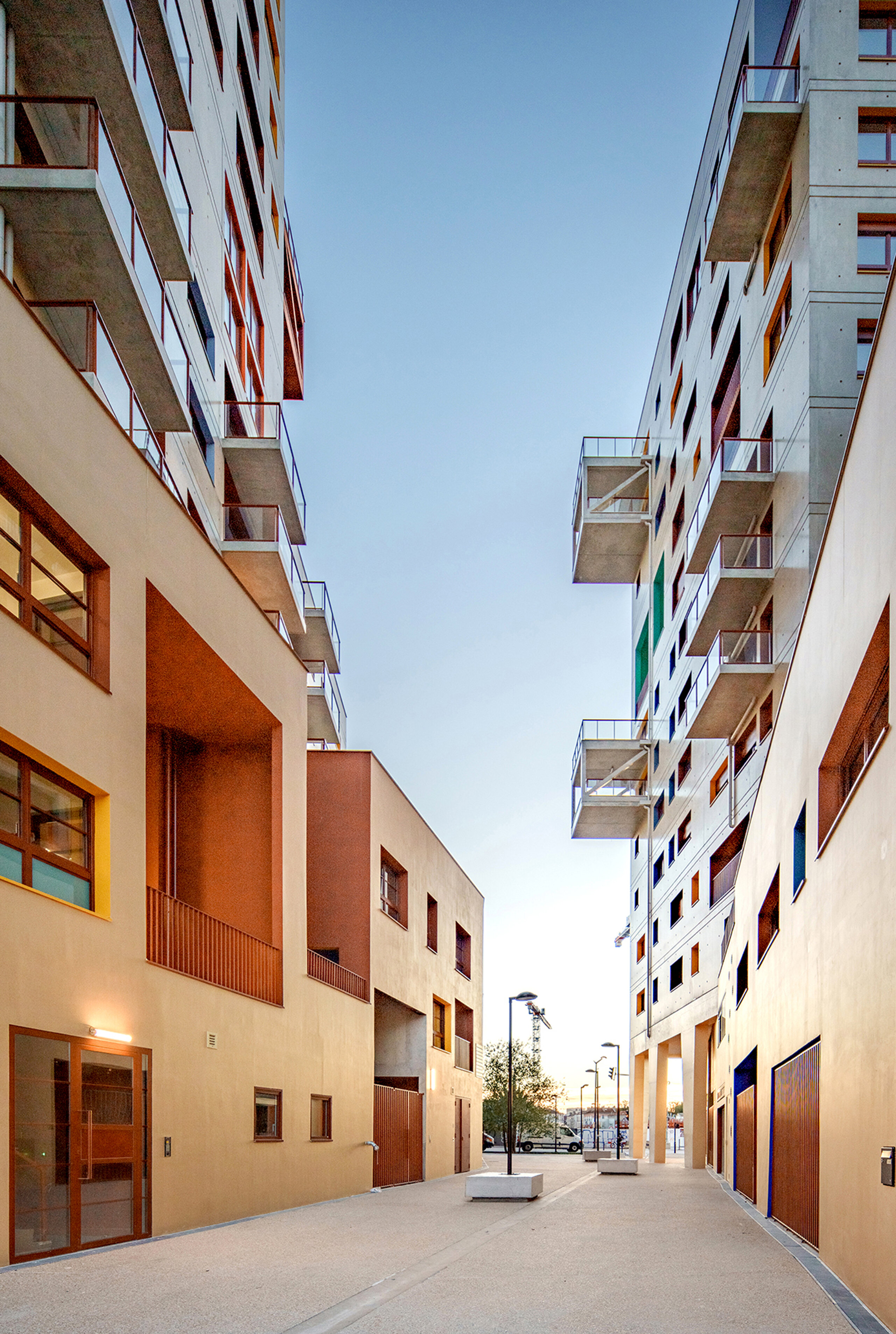
A densely programmed ground floor. The town villas and the commercial spaces face the two newly created pedestrian alleys.
© Nicolas Grosmond
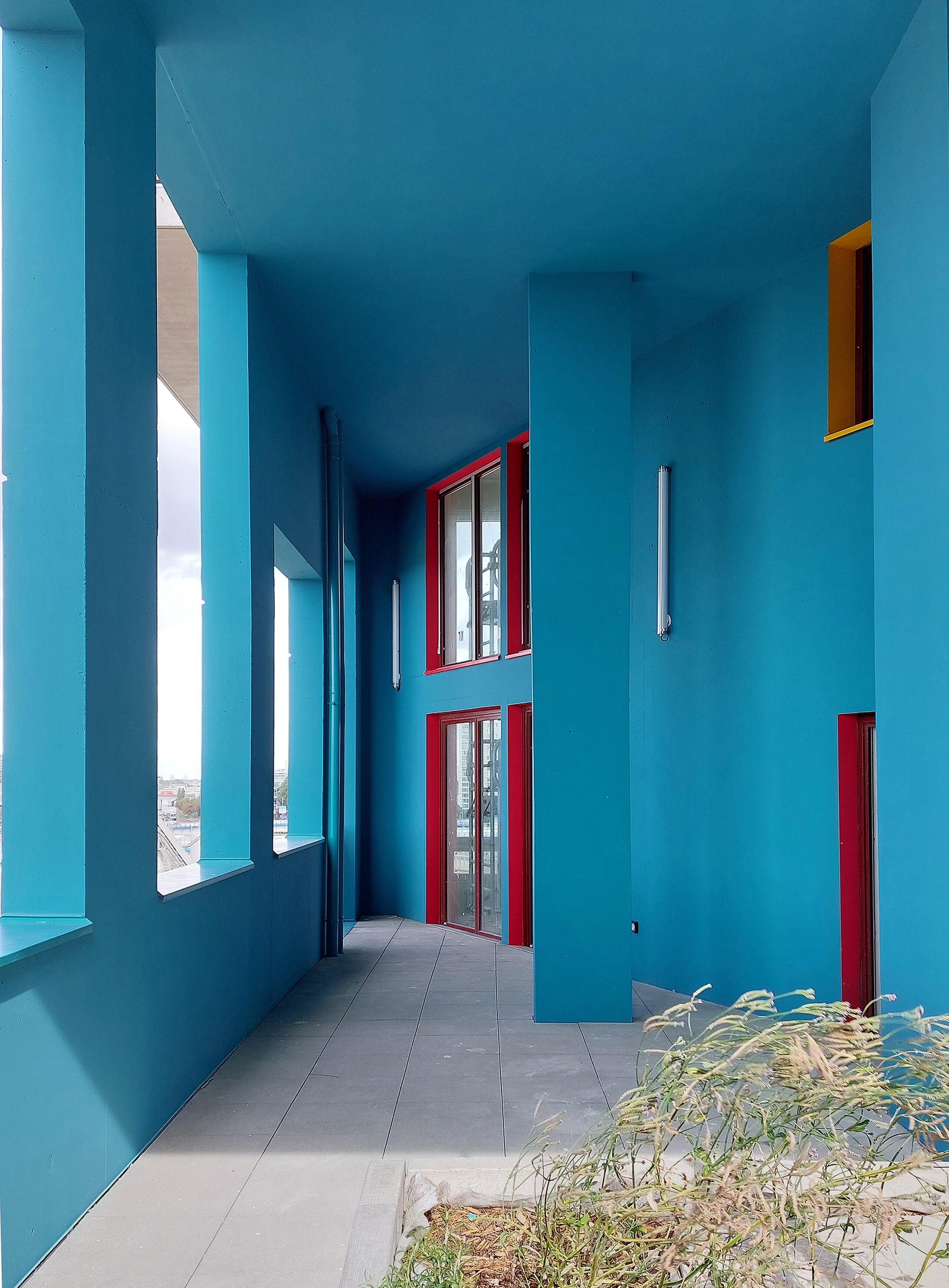
The common spaces and their turquoise terraces, are located on the 7th floor.
© STAR strategies + architecture
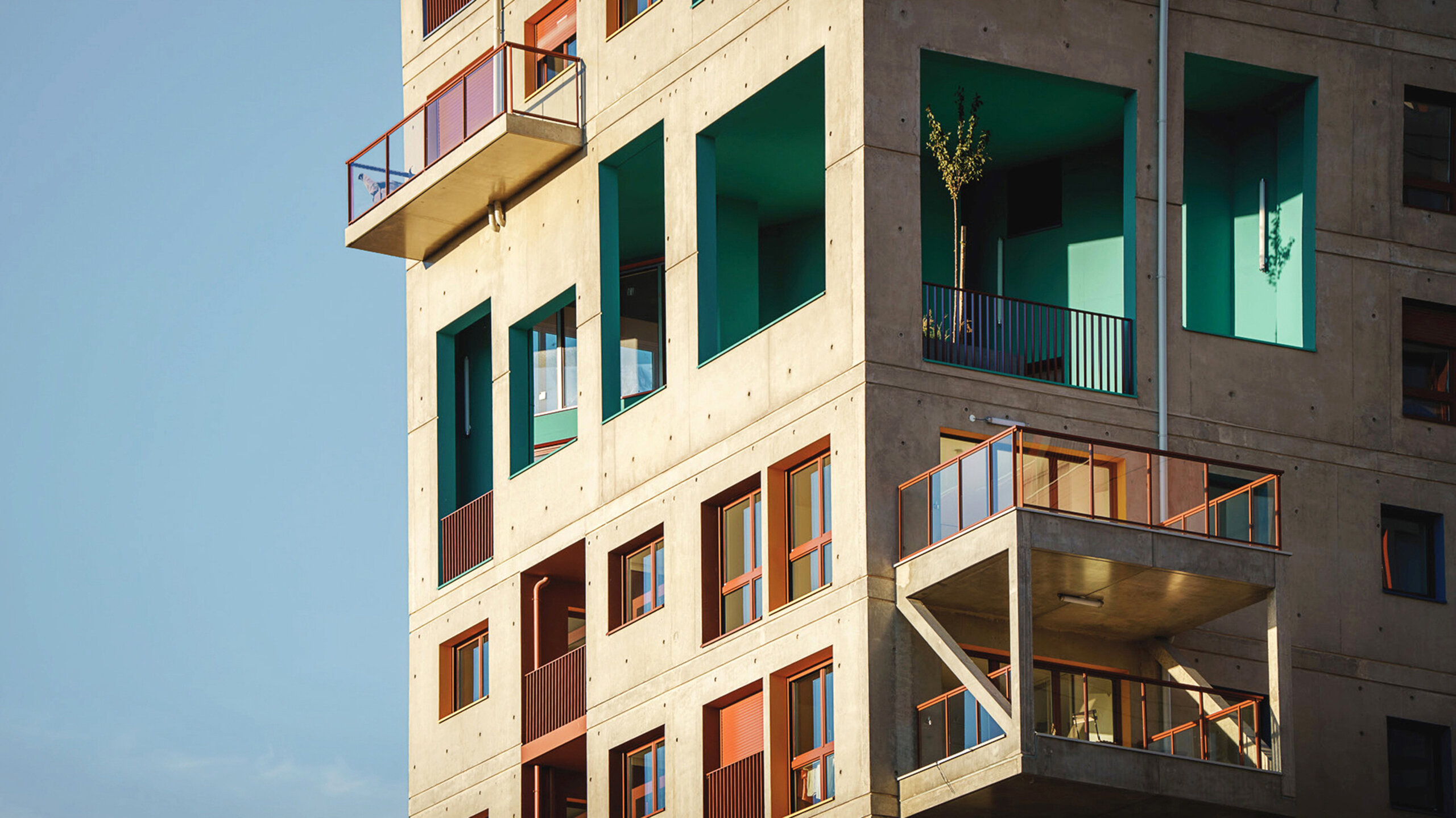
The common spaces and their turquoise terraces articulate the scale of the towers and create a horizontal reading of the volumes.
© Nicolas Grosmond
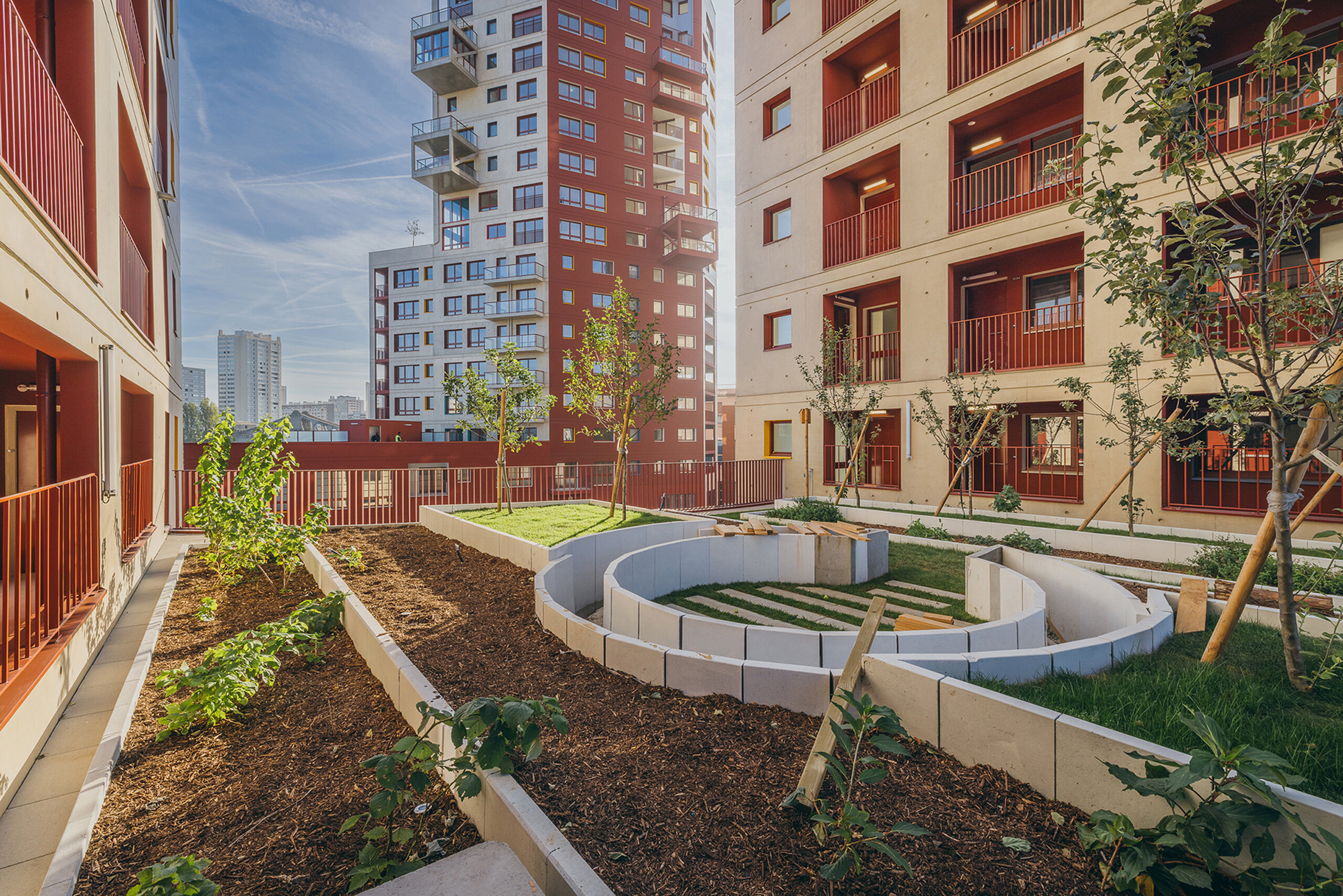
START offers twelve distinct common terraces distributed across several levels.
© Vladimir Partalo
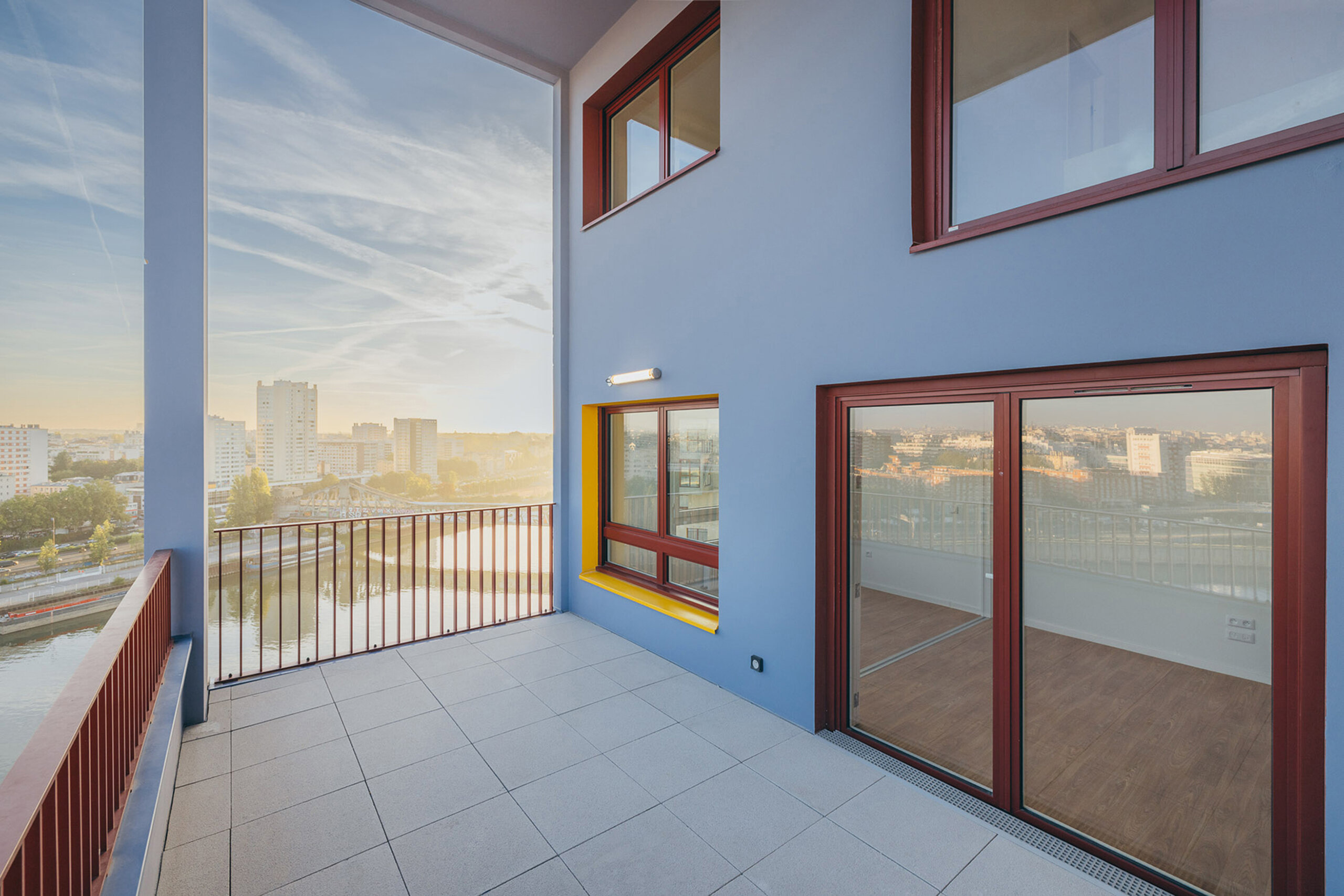
The light-blue loggias mark the meeting point with the sky.
© Vladimir Partalo
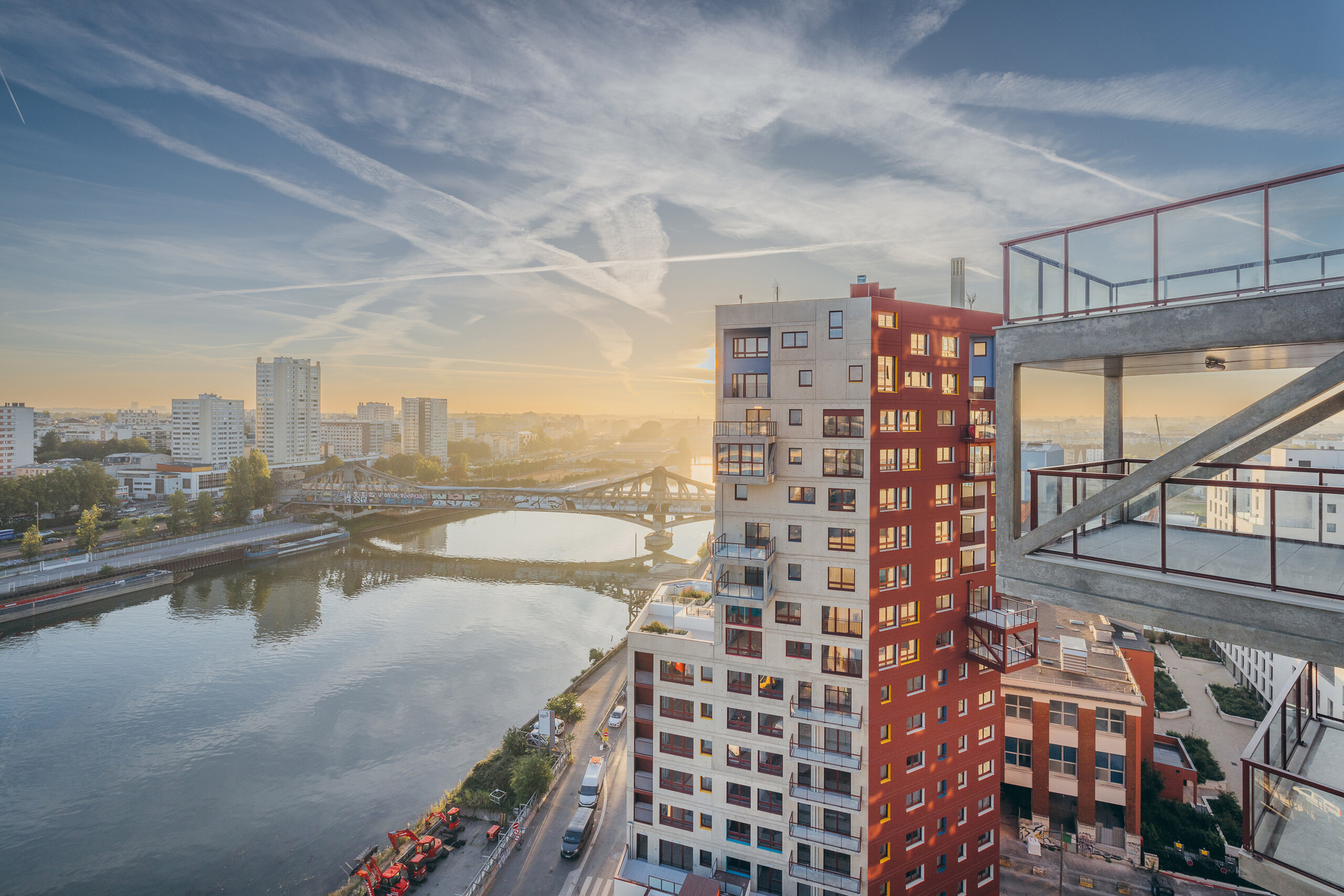
View from a Plug balcony in Tower 2 towards Tower 5, with the River Seine on the left.
© Vladimir Partalo
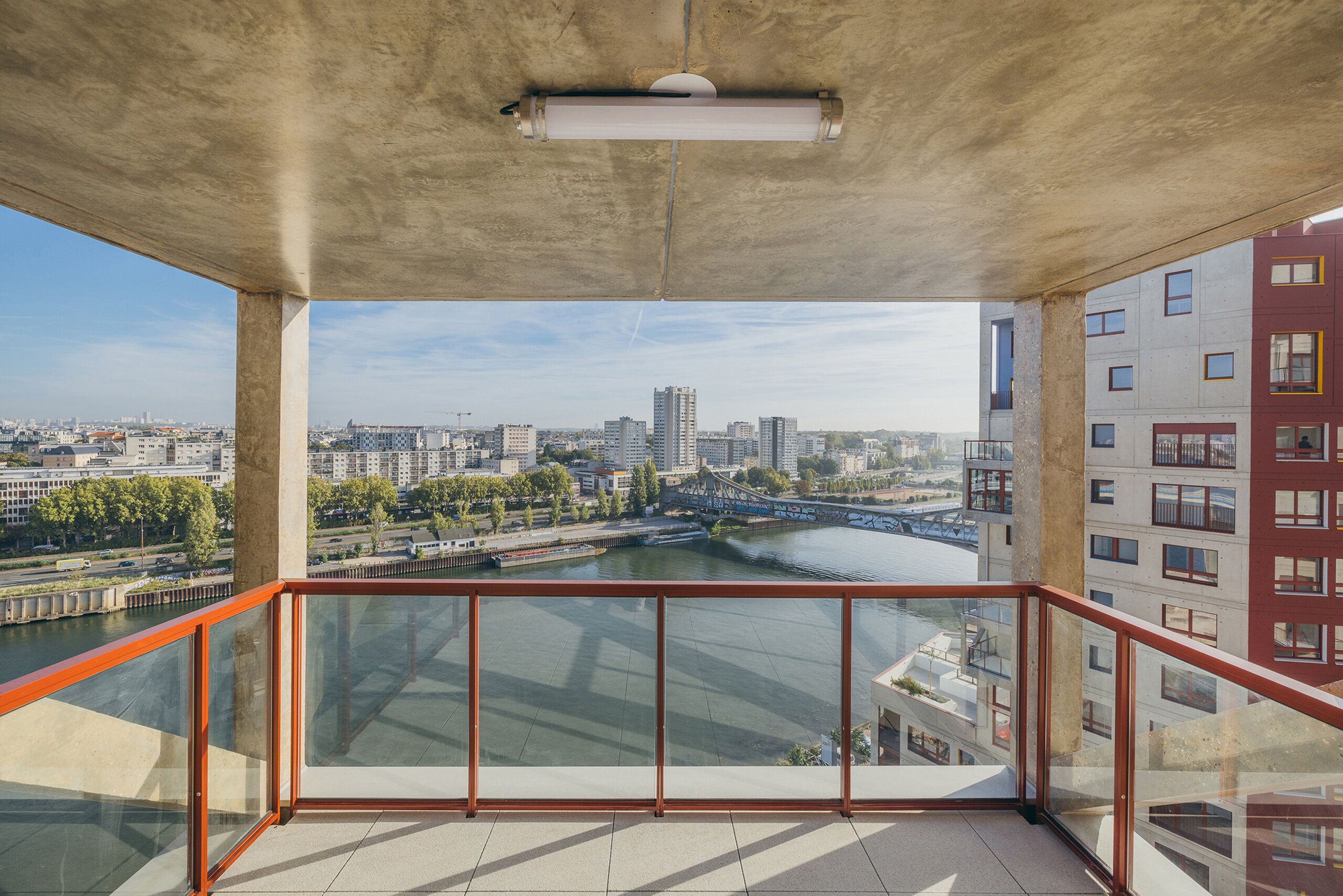
Inside a Plug (closable balcony) – view towards the River Seine
© Vladimir Partalo
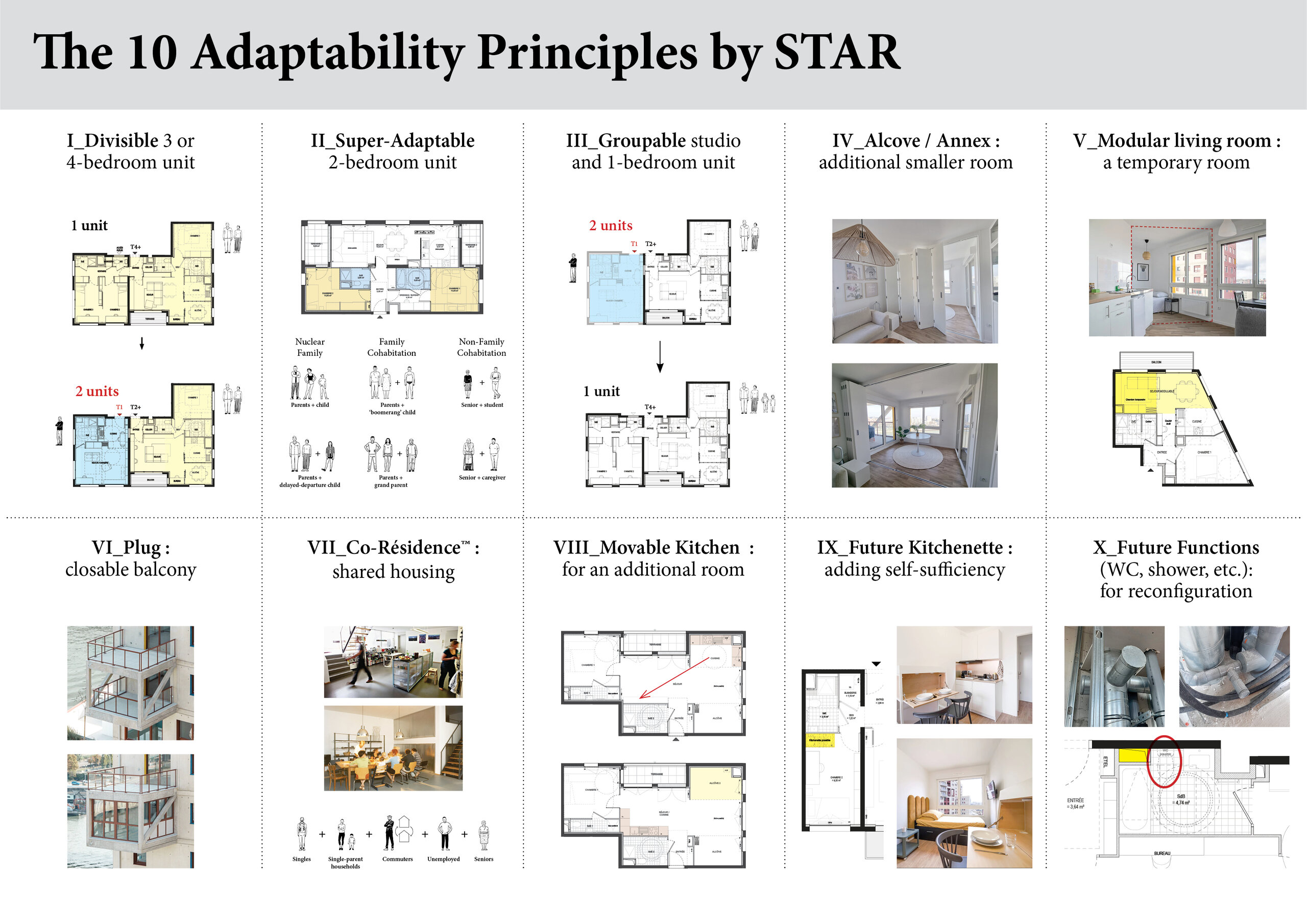
The 10 Adaptability Principles by STAR.
© STAR strategies + architecture
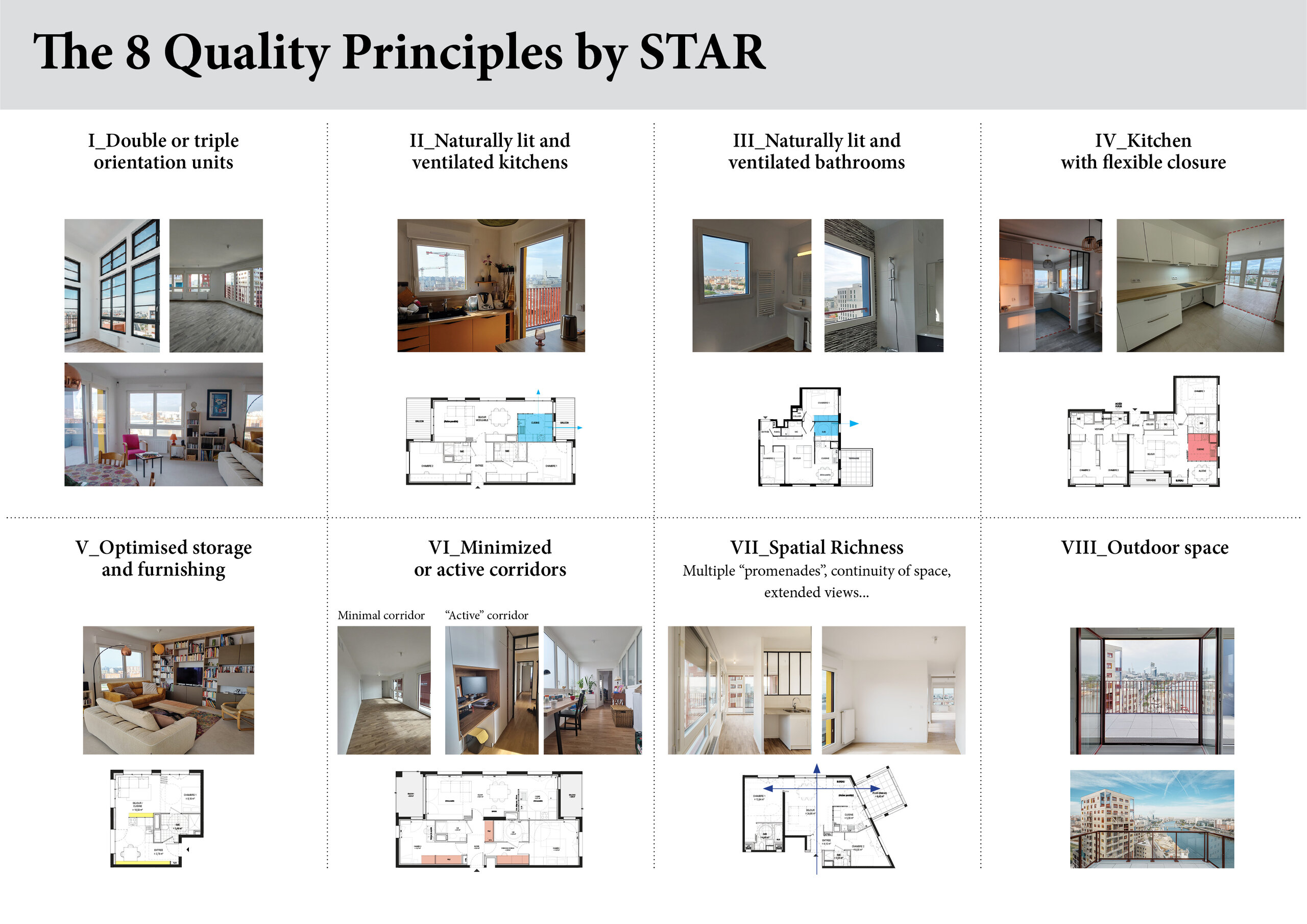
The 8 Quality Principles by STAR.
© STAR strategies + architecture
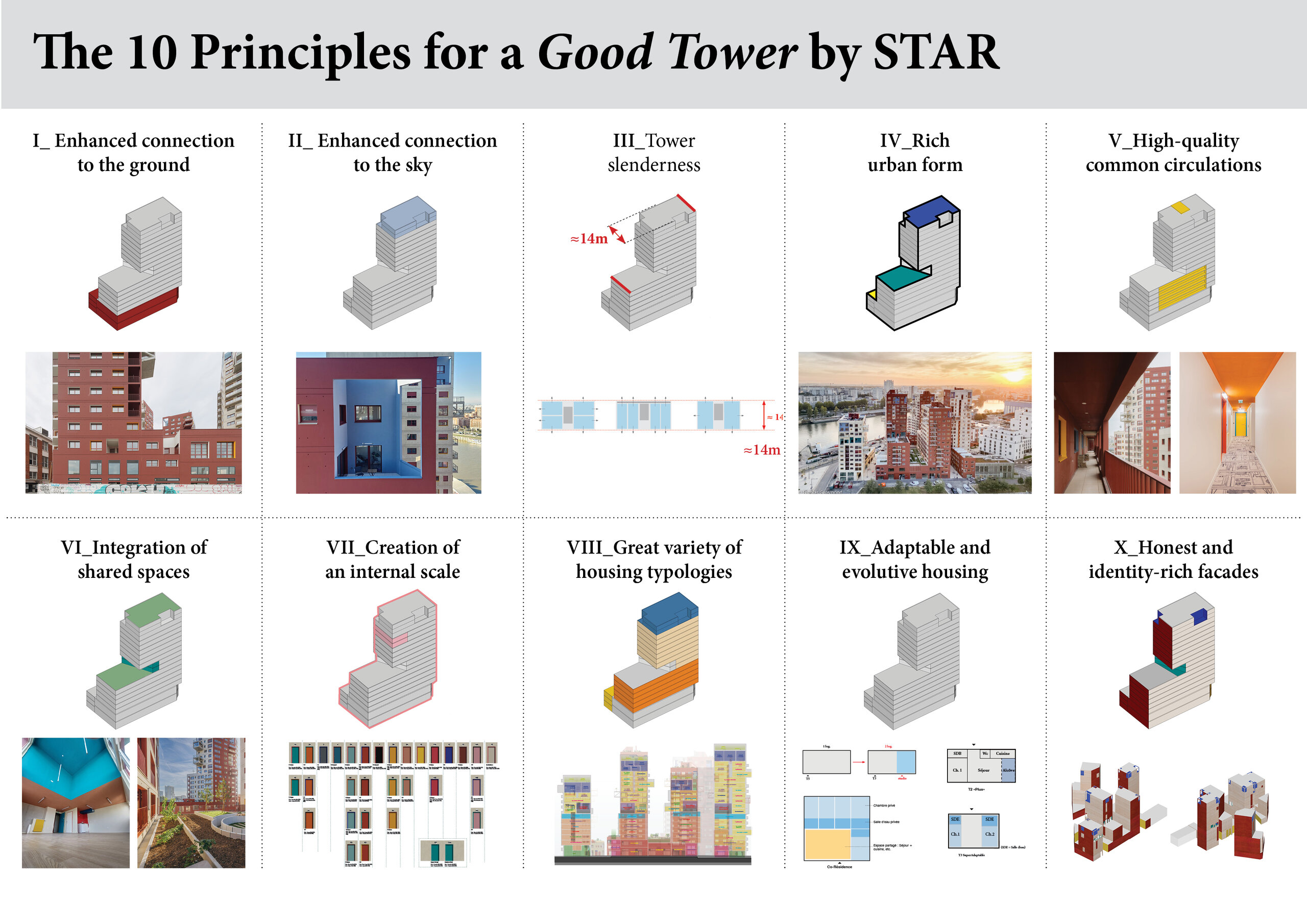
The 10 Principles for a Good Tower by STAR.
© STAR strategies + architecture
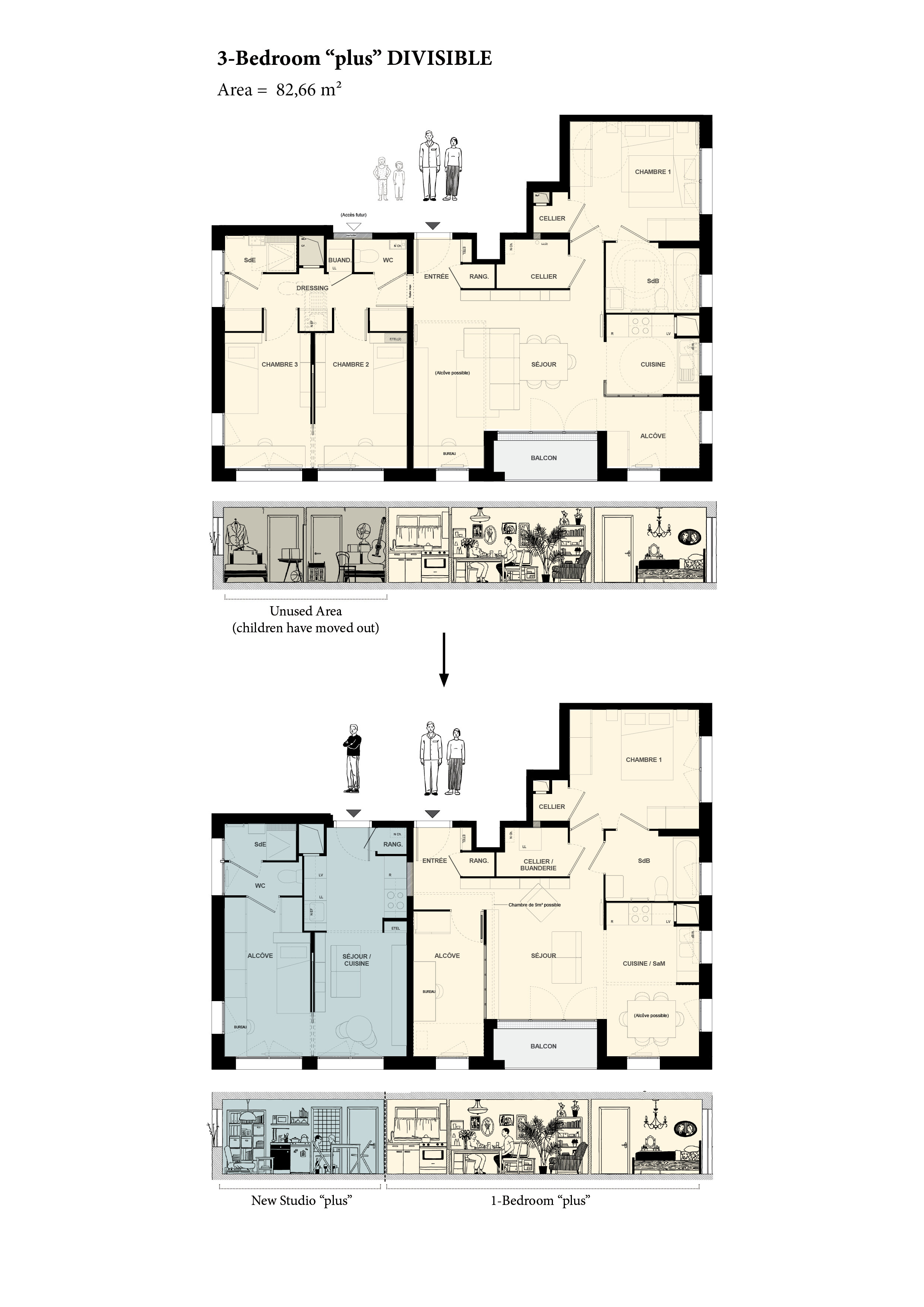
START – Example of a DIVISIBLE unit (≥ 3 bedrooms).
© STAR strategies + architecture
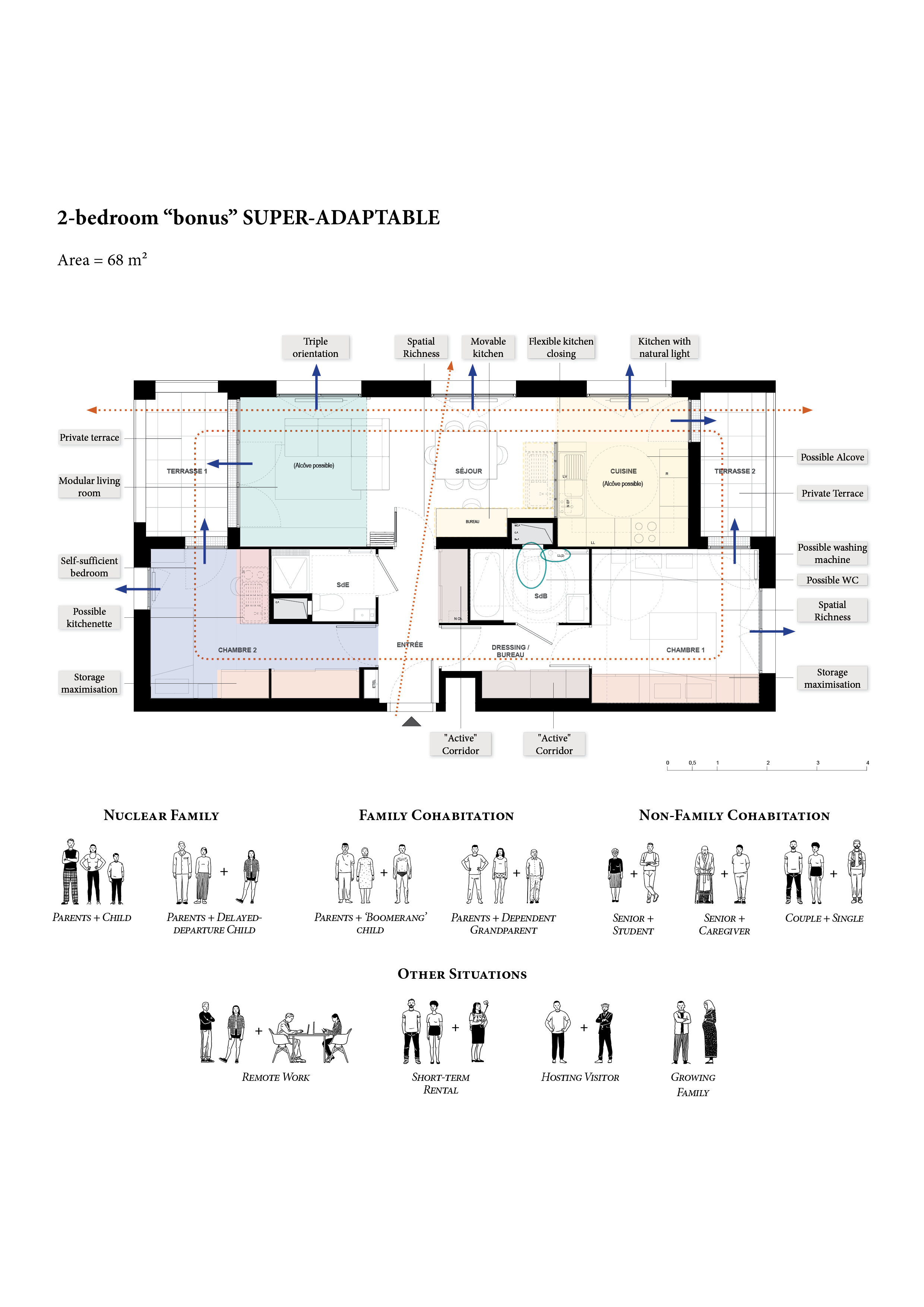
START – Analysis of a 2-bedroom “bonus” SUPER-ADAPTABLE unit
© STAR strategies + architecture
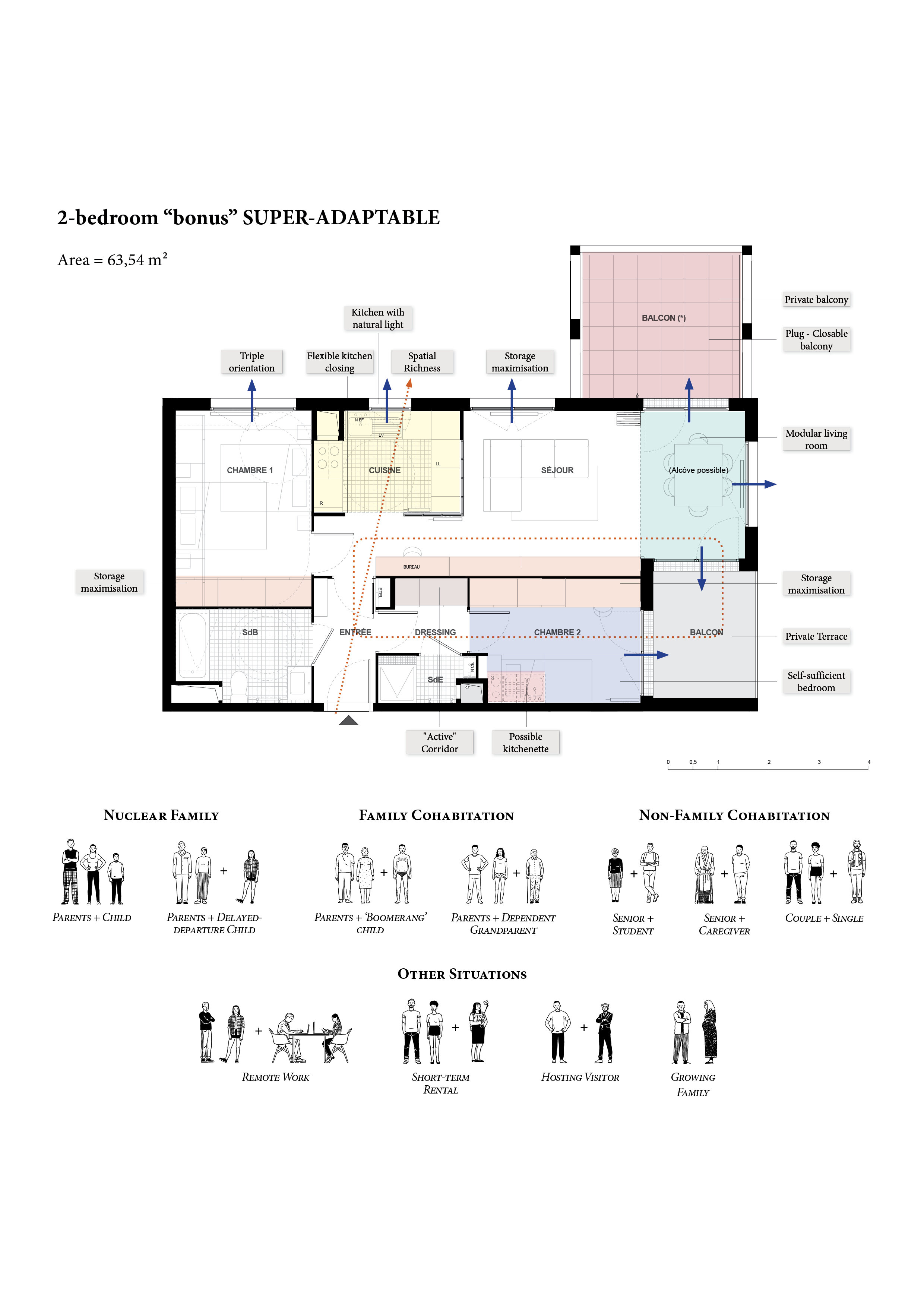
START – Analysis of a 2-bedroom “bonus” SUPER-ADAPTABLE unit
© STAR strategies + architecture
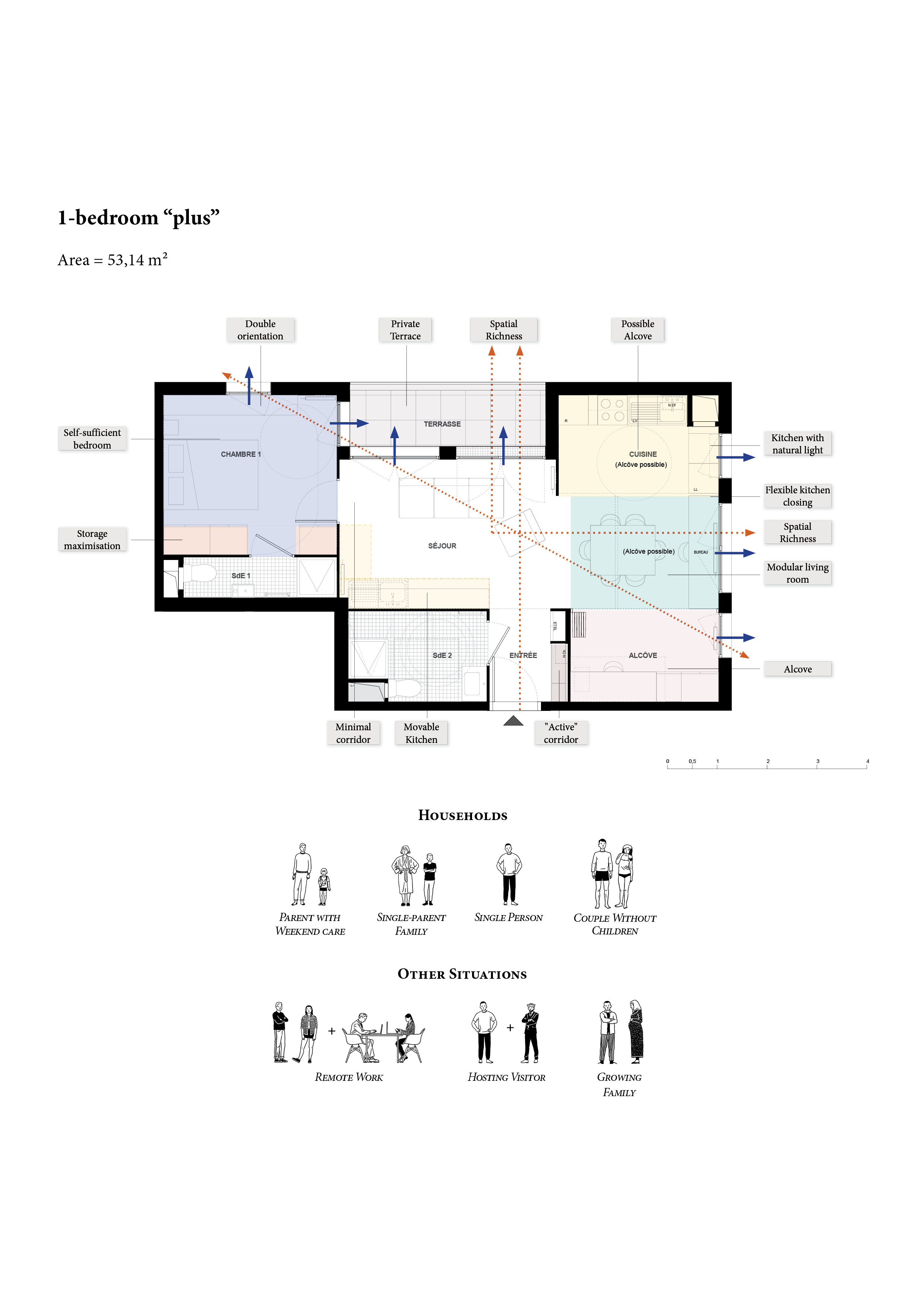
START – Analysis of a 1-bedroom “plus” unit
© STAR strategies + architecture
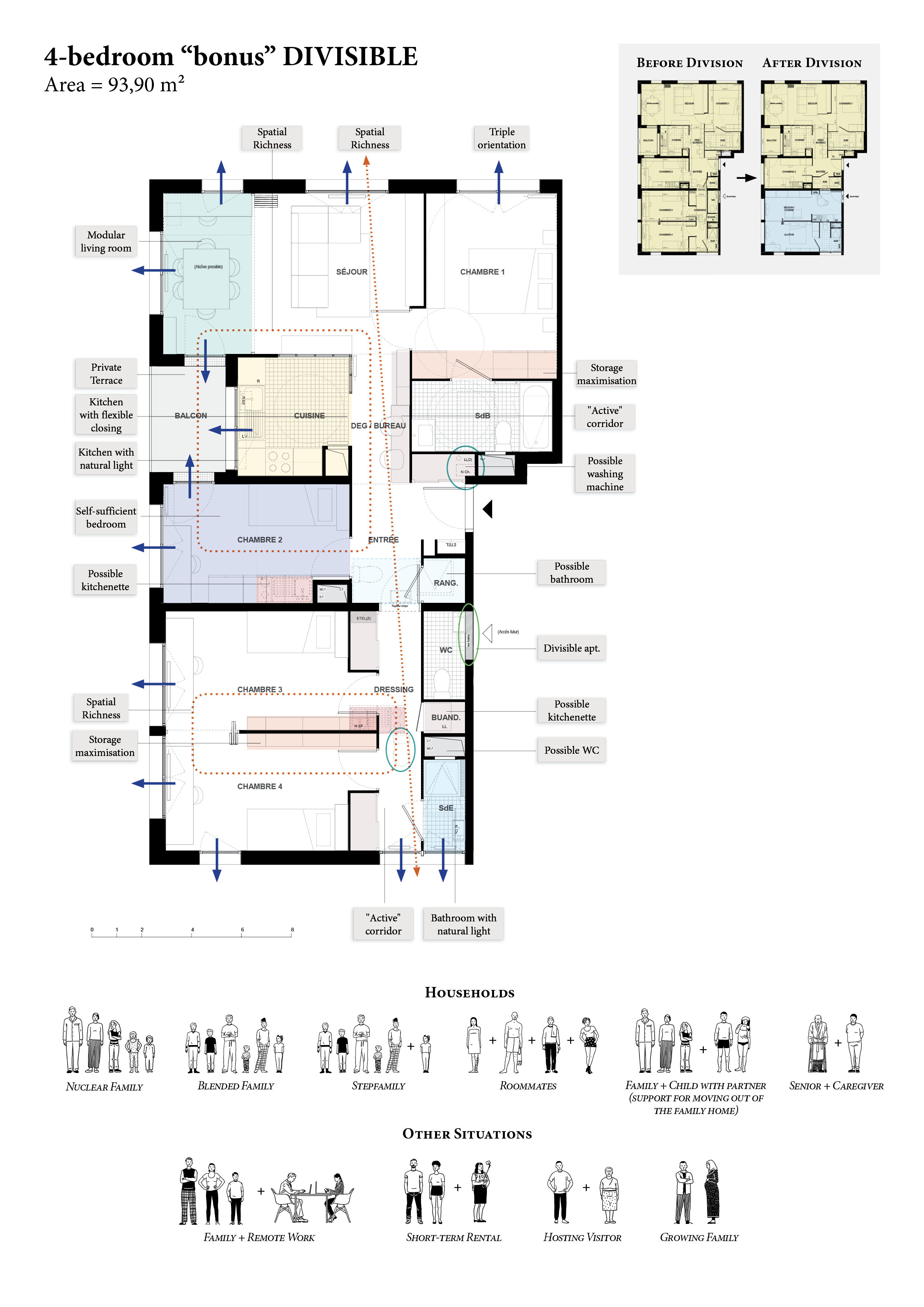
START – Analysis of 4-bedroom “bonus” DIVISIBLE unit
© STAR strategies + architecture
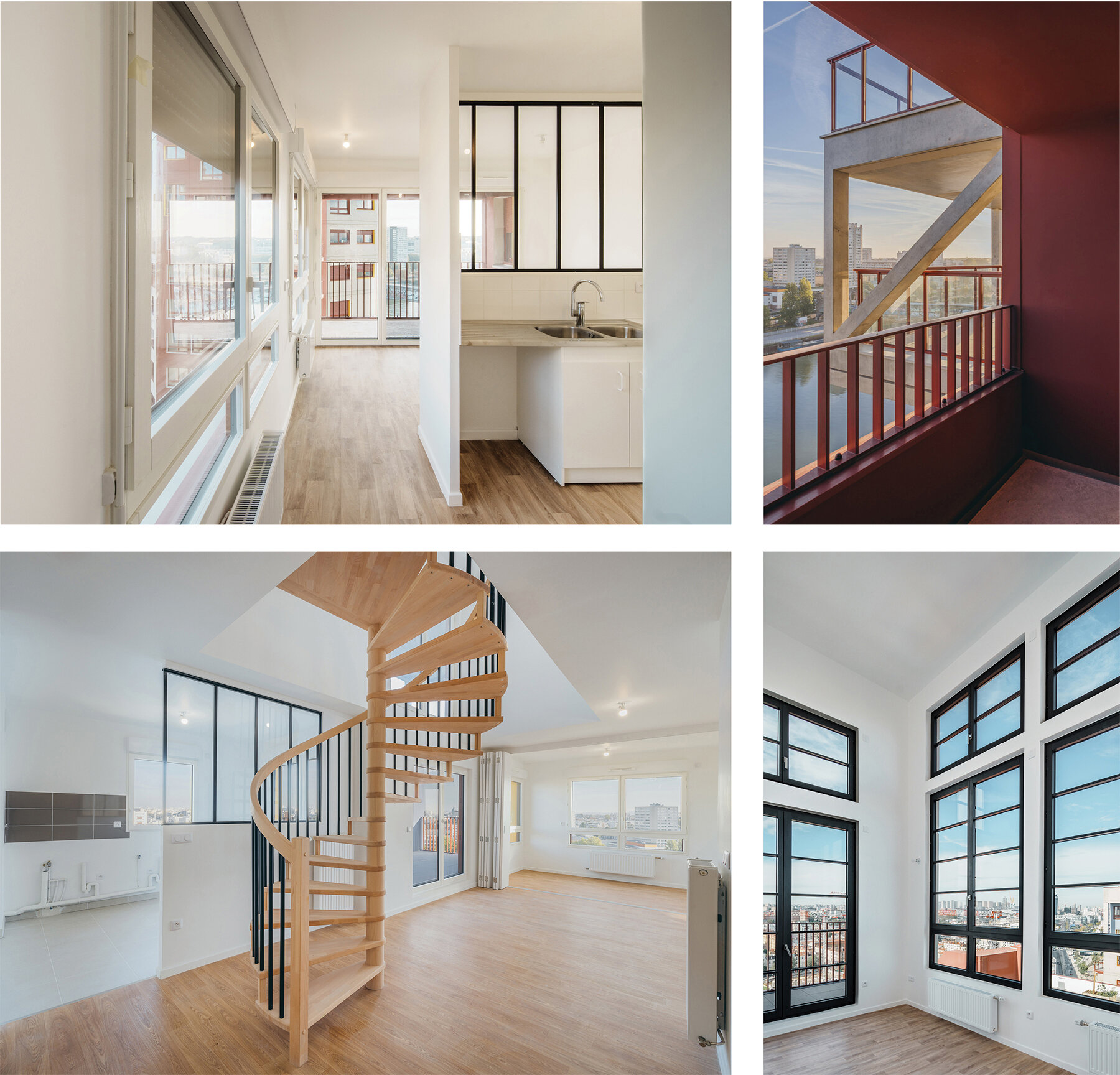
START interior views: apartments with double (88 %) and triple orientation (26 %), modular living rooms, private terraces, and spatial richness — qualities derived from STAR’s Housing Principles.
© Nicolas Grosmond – Vladimir Partalo
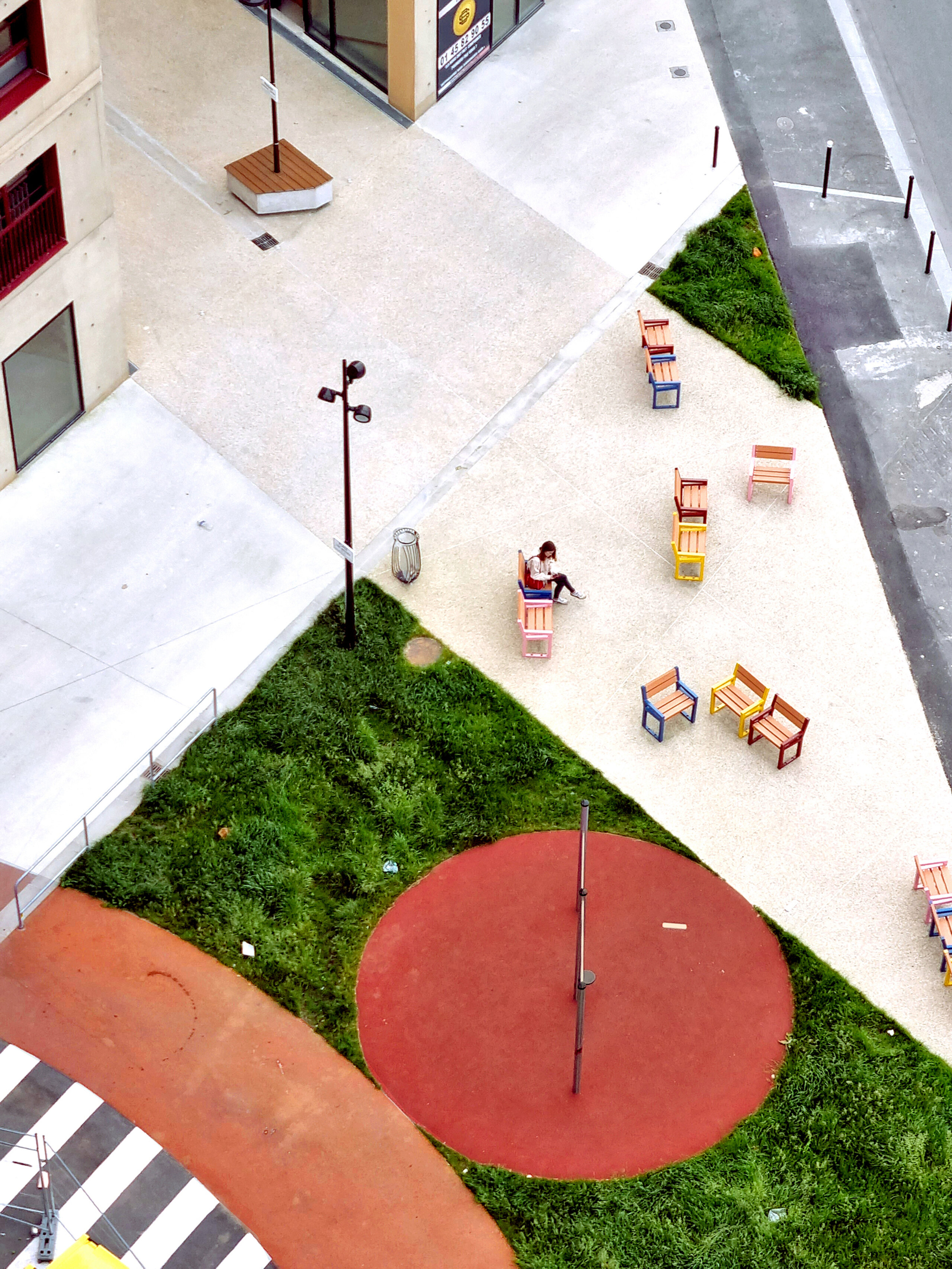
START – Lise Meitner Square
© STAR strategies + architecture
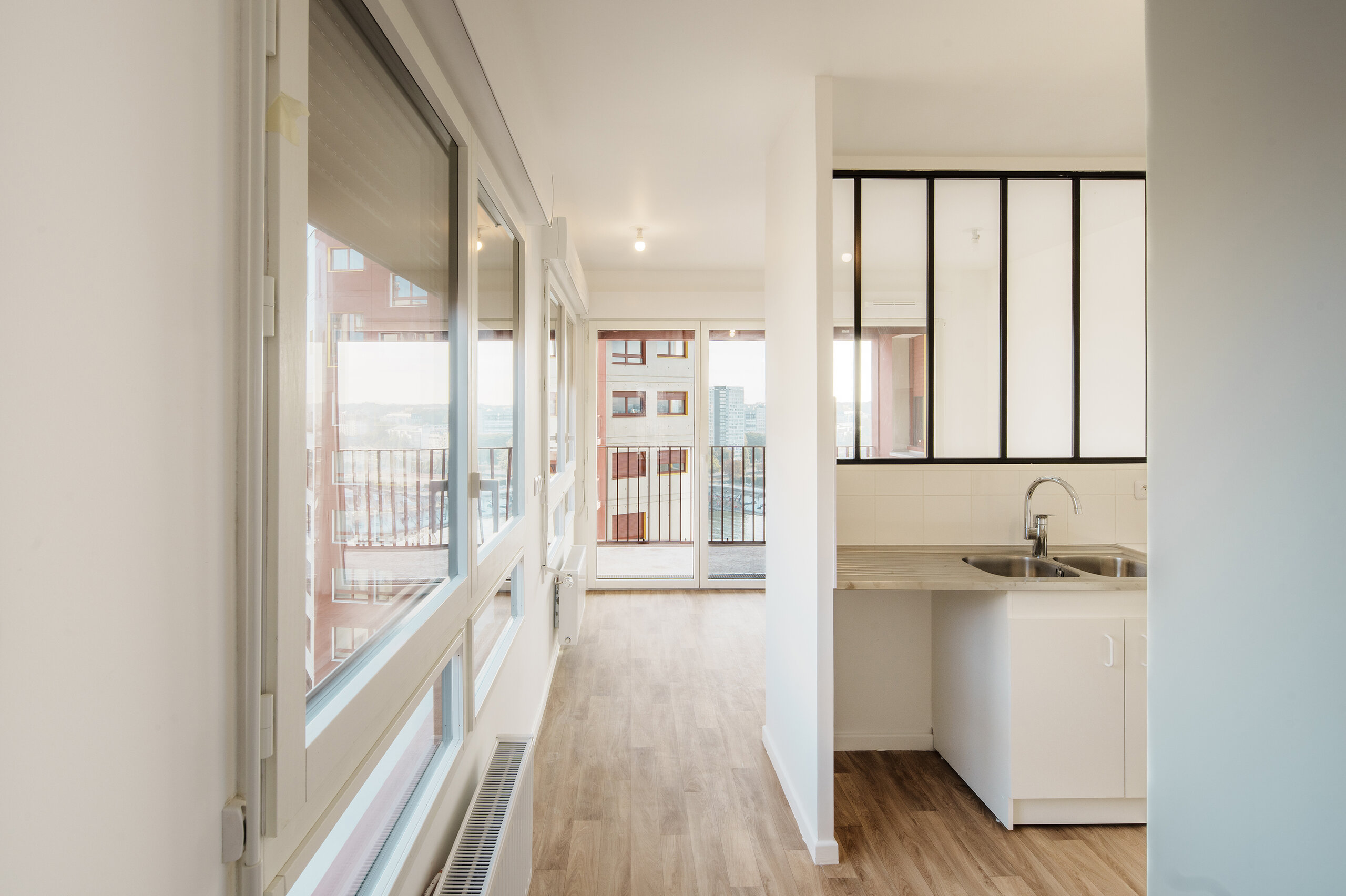
START interior views: apartments with double (88 %) and triple orientation (26 %), modular living rooms, private terraces, and spatial richness — qualities derived from STAR’s Housing Principles.
© Nicolas Grosmond
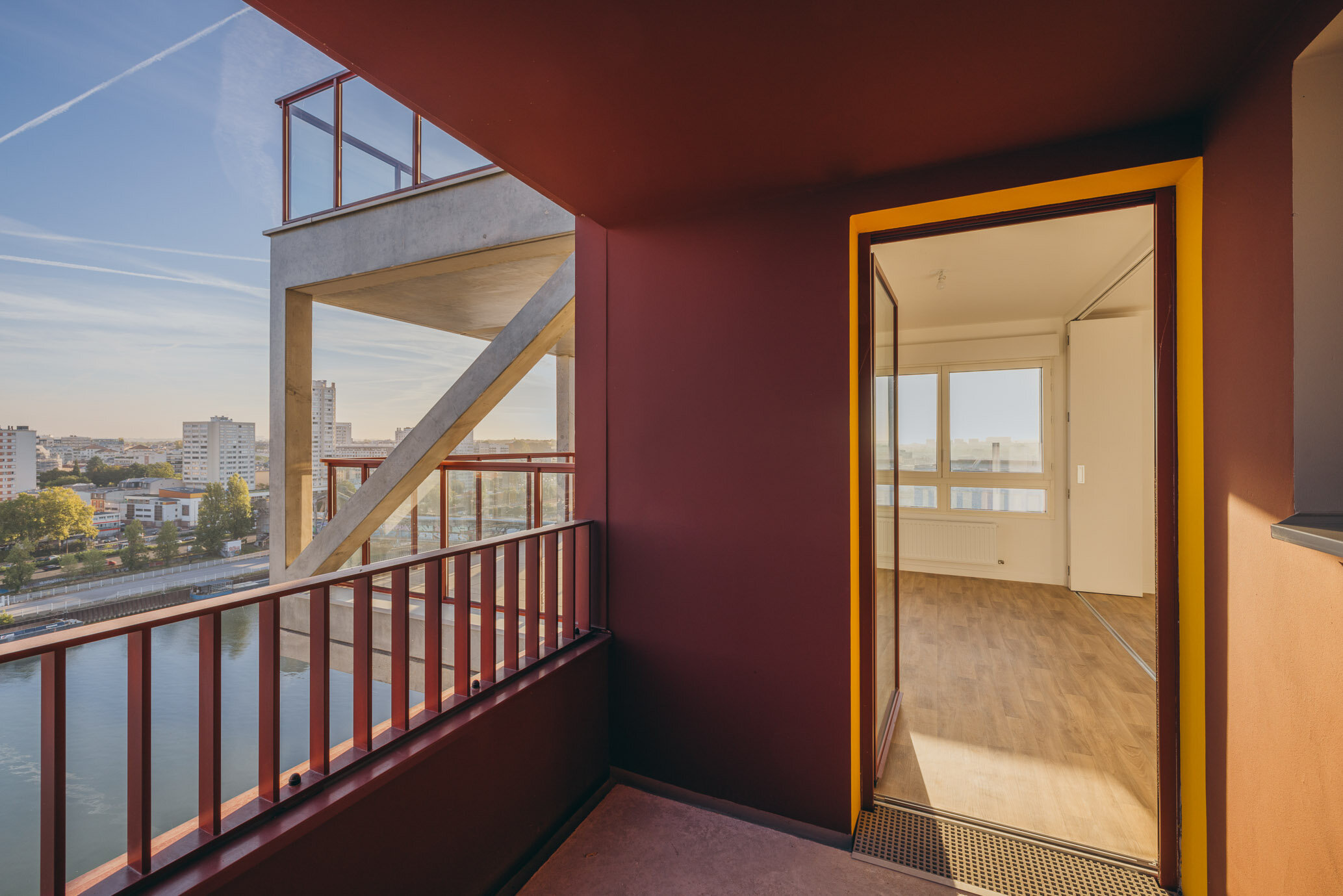
START interior views: apartments with double (88 %) and triple orientation (26 %), modular living rooms, private terraces, and spatial richness — qualities derived from STAR’s Housing Principles.
© Vladimir Partalo
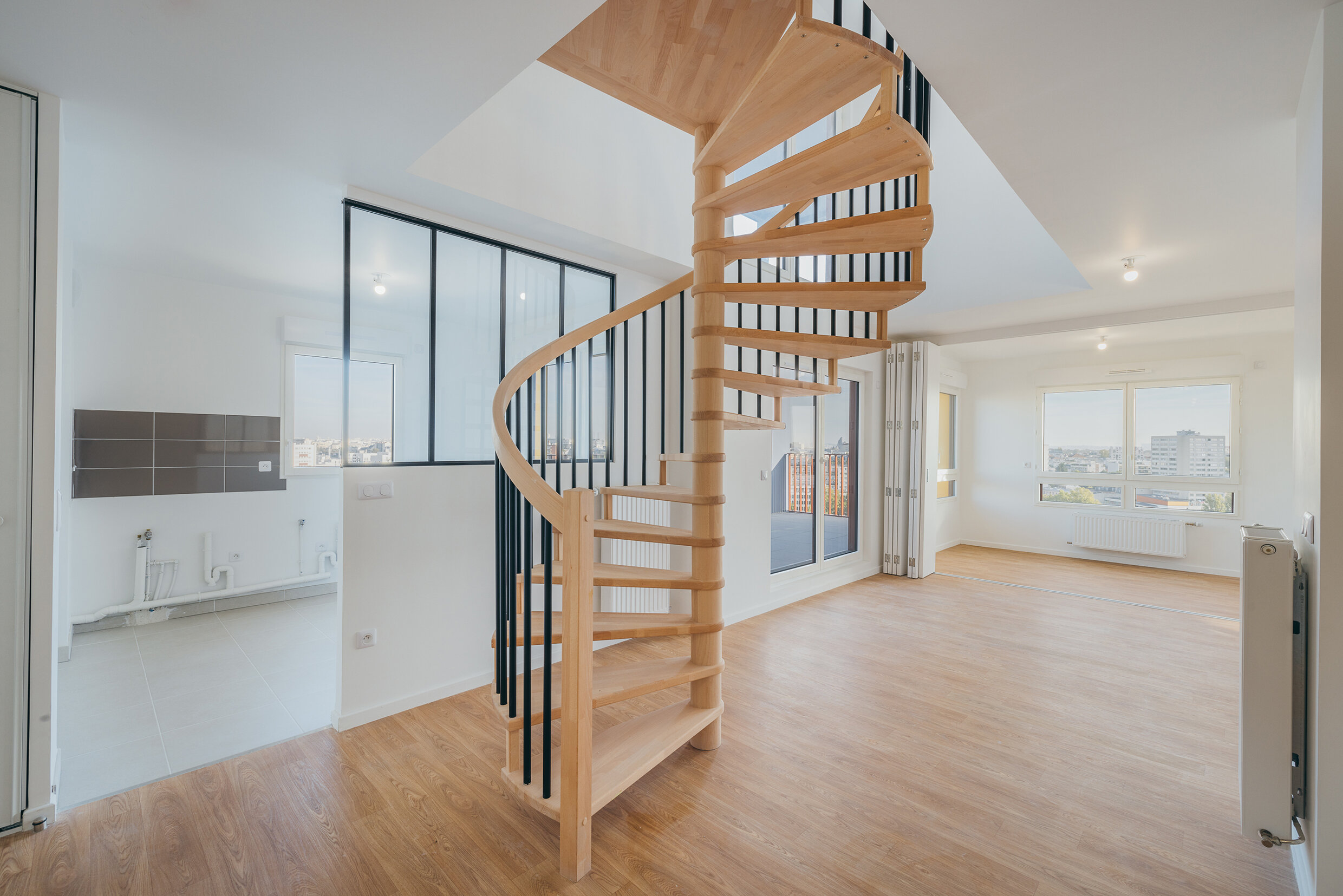
START interior views: apartments with double (88 %) and triple orientation (26 %), modular living rooms, private terraces, and spatial richness — qualities derived from STAR’s Housing Principles.
© Vladimir Partalo
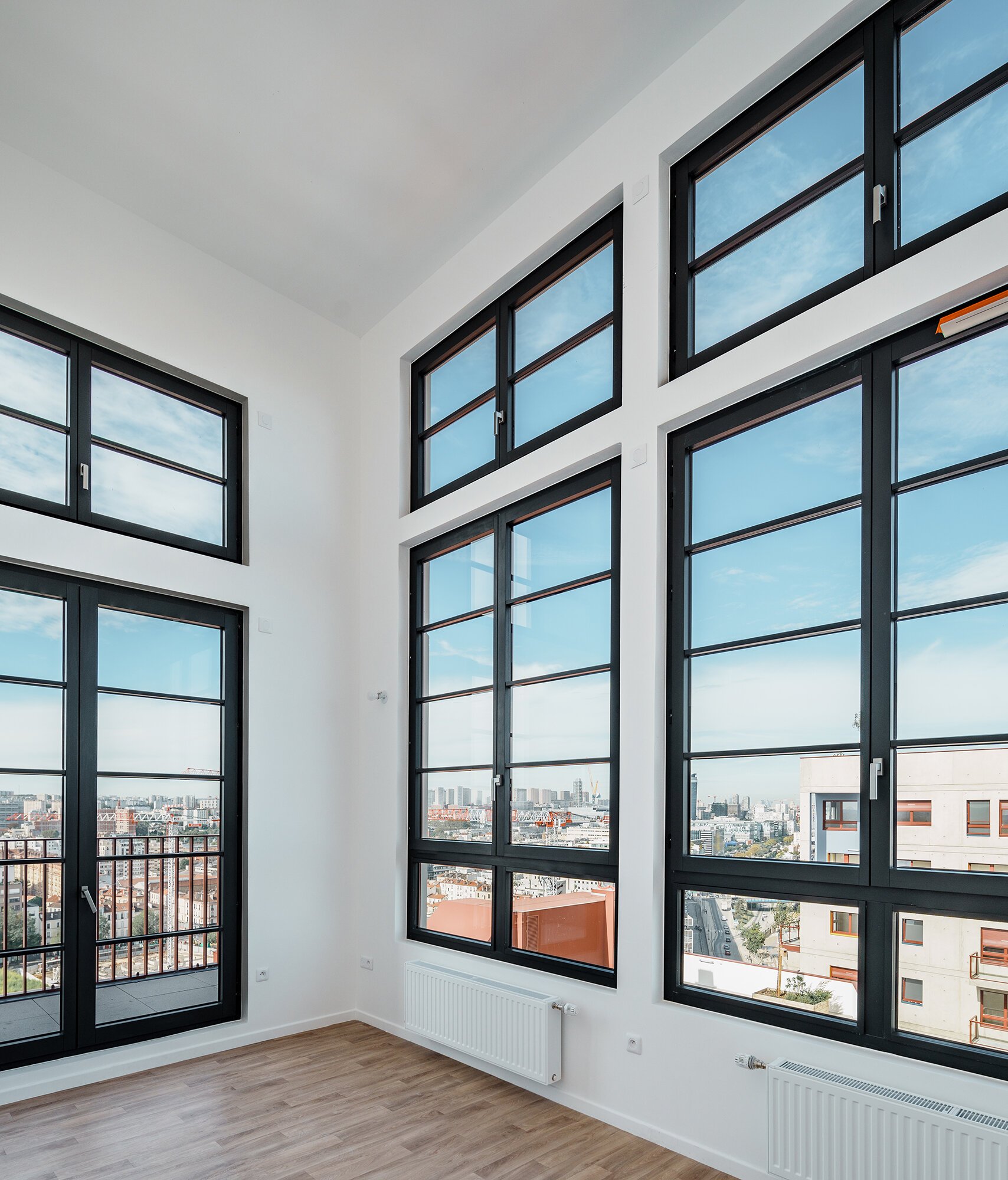
START interior views: apartments with double (88 %) and triple orientation (26 %), modular living rooms, private terraces, and spatial richness — qualities derived from STAR’s Housing Principles.
© Nicolas Grosmond
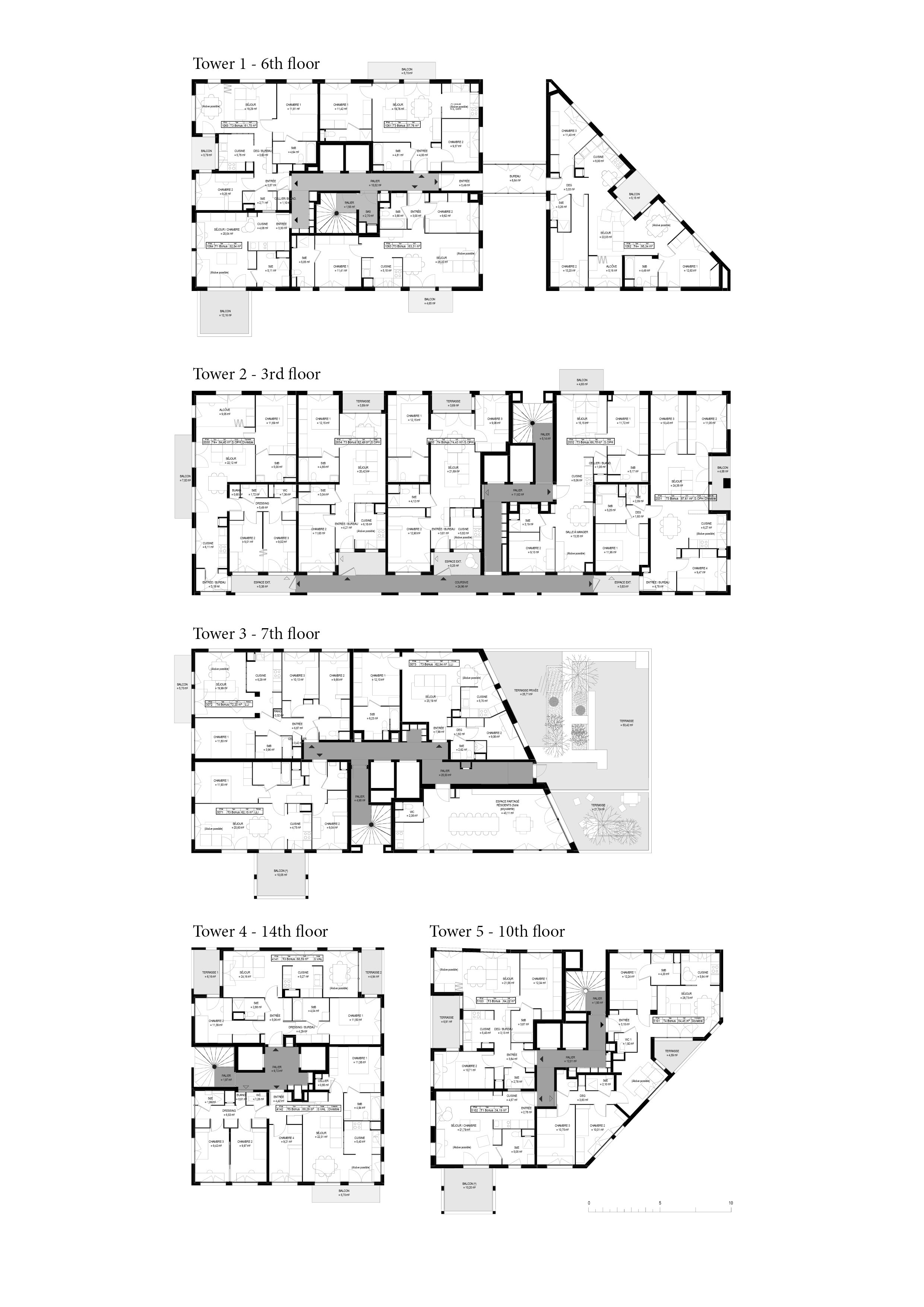
Examples of floor plans of the START buildings.
© STAR strategies + architecture