
Horia Creangă - The Creed of Simplicity
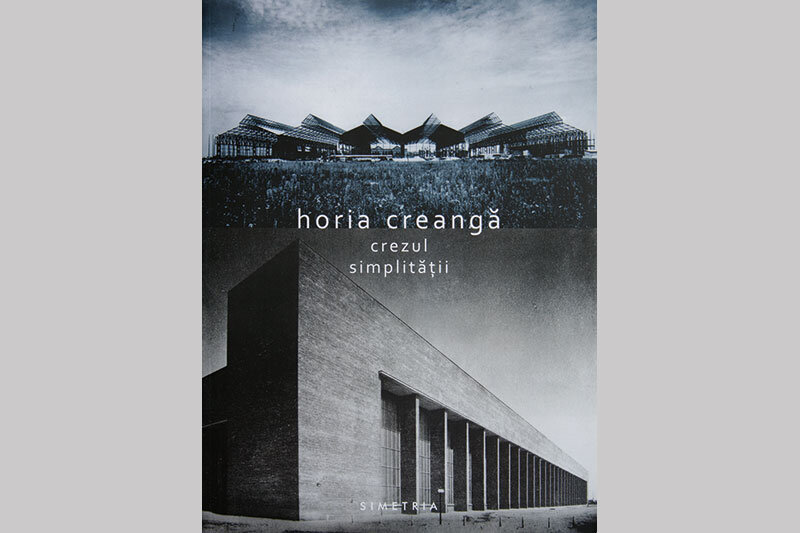
The bilingual catalog "HORIA CREANGĂ - crezul simplității" published by Simetria Publishing House, together with a short documentary film accompany the exhibition open at the National Art Museum of Romania, from February 16, 2012 to April 15, 2012. The book "HORIA CREANGĂ - the creed of simplicity" is an evocative portrayal of the work of this architect, a unique presence in Romanian architecture of the 1930-1940s. The authors emphasize from the outset that this is not an analytical, scholarly approach, but rather a cinematographic one, being a succession of images of his most important works in chronological order, which highlight his style - conciseness, purity, economy of means, beauty - as an expression of measure and balance.
This cultural project, coordinated by Milița Sion and involving Emma Pârlac, Irina Patrulius, Răzvan Luscov, Alexandru David and Emil Retegan, is the third major event on the architect Horia Creangă. Previously there were two events: a comprehensive monograph published in 1980 by the architect Radu Patrulius and a large commemorative exhibition accompanied by a catalog of all his works in 1992. Twenty years on, the authors set out to bring his work back to the public eye in a different way than before. The road remains open for reconsiderations, interpretations, revelations, for the subject is rich and will continue to captivate attention.
Horia Creangă had a short career, from 1927 to 1943, during which time he tackled with exemplary professionalism varied programs: from housing, social and cultural buildings to industrial architecture. In the volume "HORIA CREANGĂ - the creed of simplicity" are presented architectural projects, both period and contemporary photographs of buildings designed by Horia Creangă, as well as original drawings detailing functional and volumetric solutions and the elegance of details. In this catalogue are works attributed to Horia Creangă, unrealized projects, villas renovated by owners aware of the value of these buildings, as well as those disfigured or long demolished.