
Cluj / Tektum
Vernacular and contemporaneity establish a subtle alliance between the creations of the TEKTUM group. The strong and dignified spirit of the tradition from Transylvania inspires a vigorous plastic expression through its creations. Traditional in spirit, but modern in attitude and technical performance, TEKTUM ennobles and elevates to the level of art the materials of the old craftsmen - wood, stone, brick. The territory where TEKTUM feels at home is perfectionism. TEKTUM is the brand.
Tektum Architecture & Art was founded in the fall of 2005. The founders are TÓTHFALUSI Gábor and TULOGDY László György TÓTHFALUSI Gábor and TULOGDY László György.
We founded the firm with the thought that through our works we can carry on the architectural heritage acquired from our masters. We specialize in high quality projects, be it rehabilitation of historical monuments, urban planning, public or private buildings, interior design.
The company's name comes from the Latin word tectum - shelter, the primordial form of house. The firm's logo is the ancestral Celtic cross sign (a circle of a cross) and has multiple interpretations, from the planimetric shape of a shelter to philosophical-existentialist explanations.
We are a team of young architects, but our experience is enriched by collaborations with renowned architects such as Makovecz Imre or Sáros László Sáros and postgraduate studies in the rehabilitation of historical monuments. Over time, we have expanded our range of services: architecture, interior design, urban planning, project management. We have works in design or execution all over the country and cover the whole range of architectural programs.
Our concepts are always based on adapting solutions to the characteristic situations of each project, constant dialog with the client being the key to success. Throughout the execution we supervise all phases, emphasizing technical solutions and demanding execution details. The built heritage of Transylvanian towns and villages (and not only) is for us a model of inspiration when we design buildings, choose materials and construction techniques, but we also try through our language to create contemporary and durable architectural objects.
Our activity tends to expand both in the field of architecture and in related fields. In this process, as a larger number of collaborators is needed, the problem of finding a comfortable space adapted to the needs of the design has arisen.
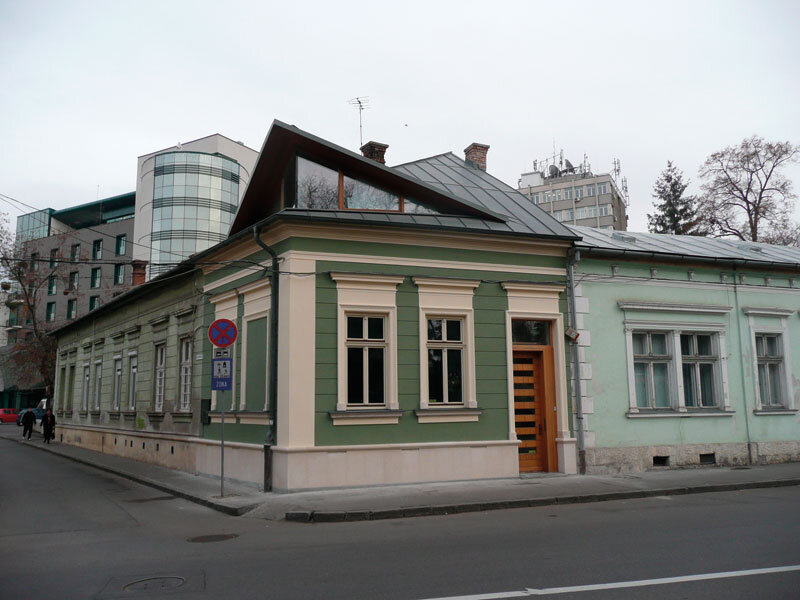
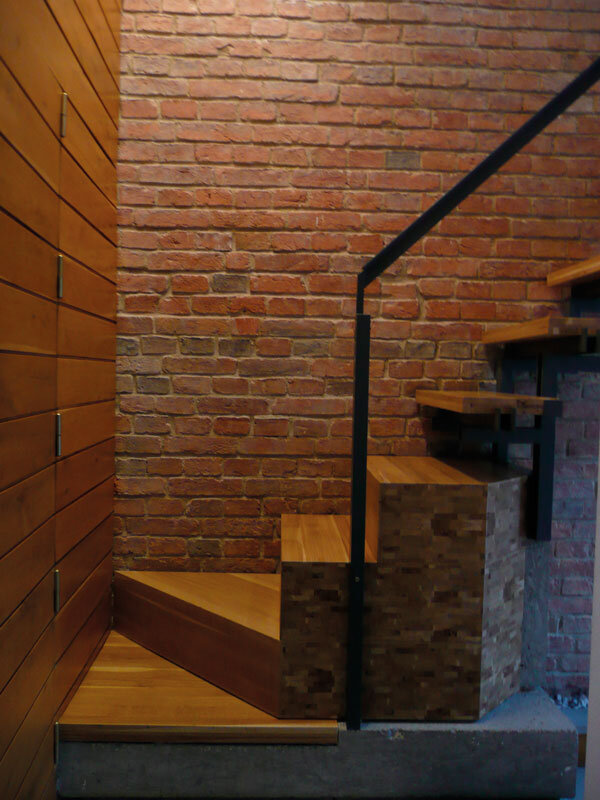
Tektum works in a house in the historical center of Cluj-Napoca. The location does not allow expansion on the site. We tried to maximize the space by reconfiguring the interior of the access area and modifying the roof. We kept the original volumetry of the house and we intervened only with a partial buttress in the roof, by which we obtained a good working light inside. The attic thus created allowed the installation of 5-7 additional work places. The intervention was a good reason to invent details for the interior design, which we wanted to be bright and clear in structure, realized in a dialog of white and wooden surfaces.
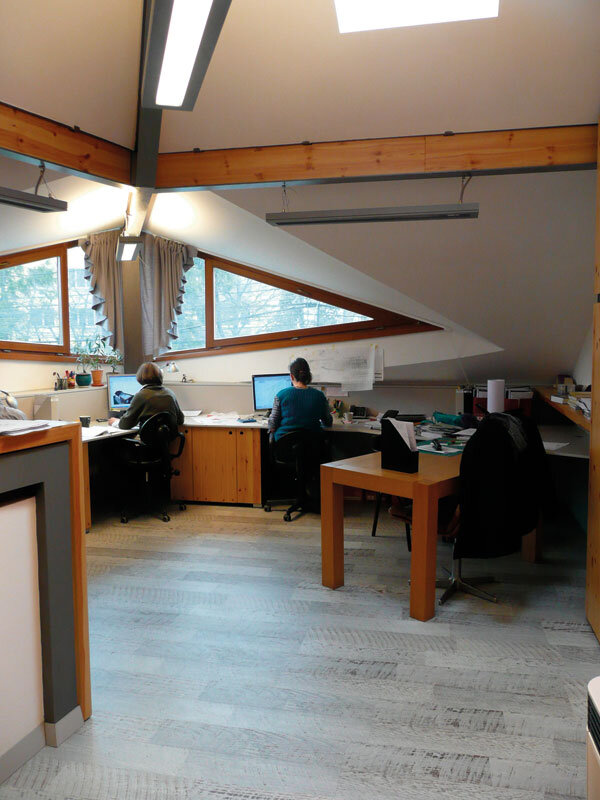
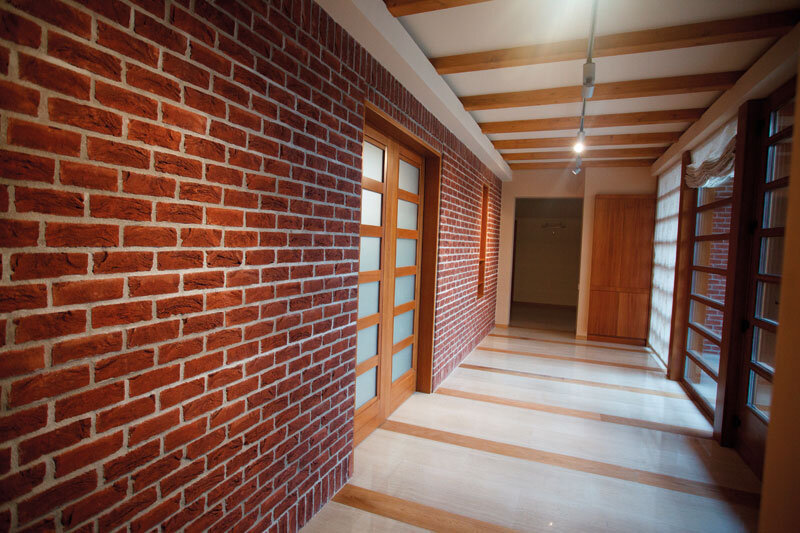
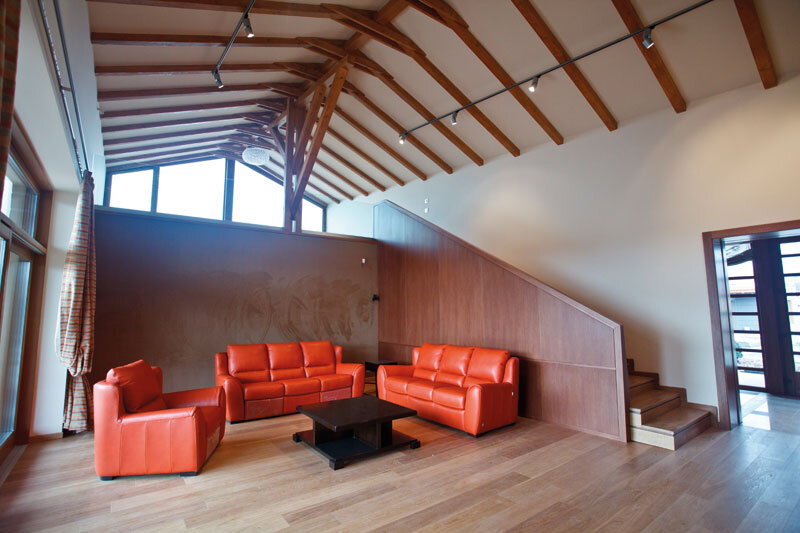
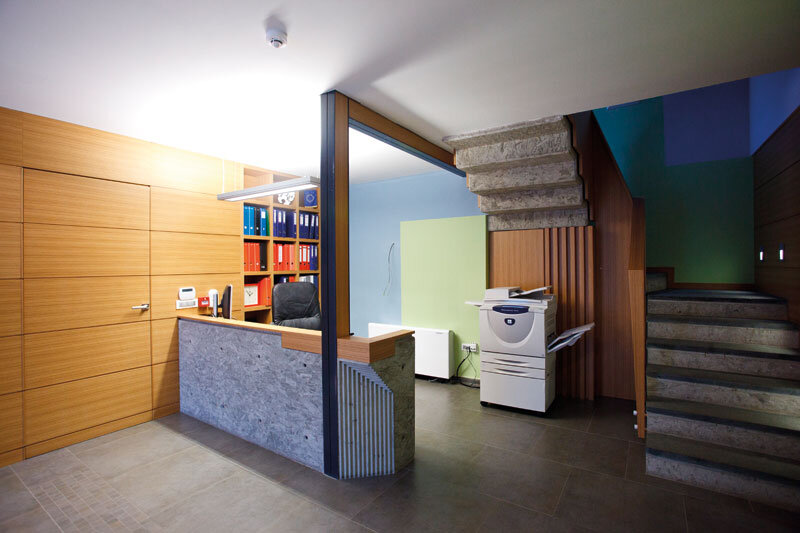
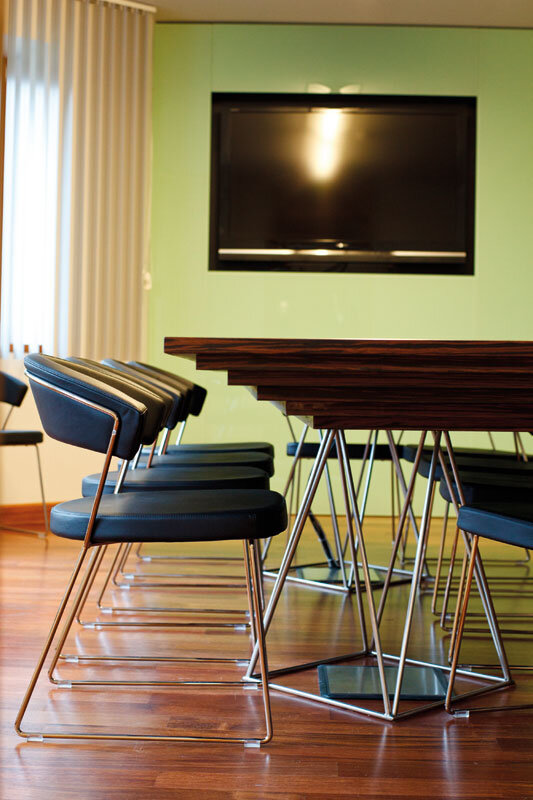
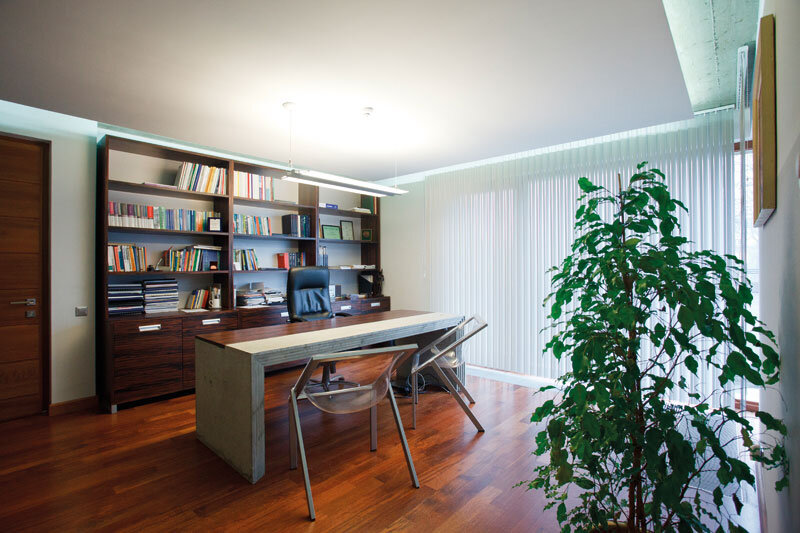
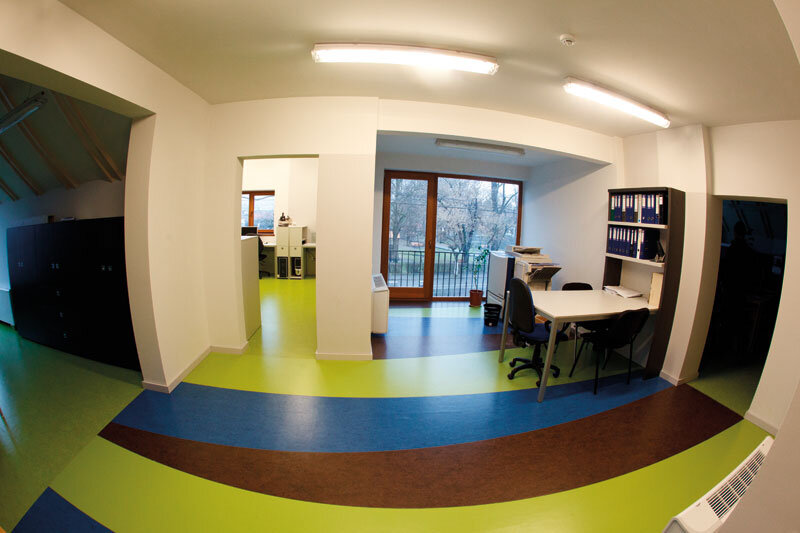
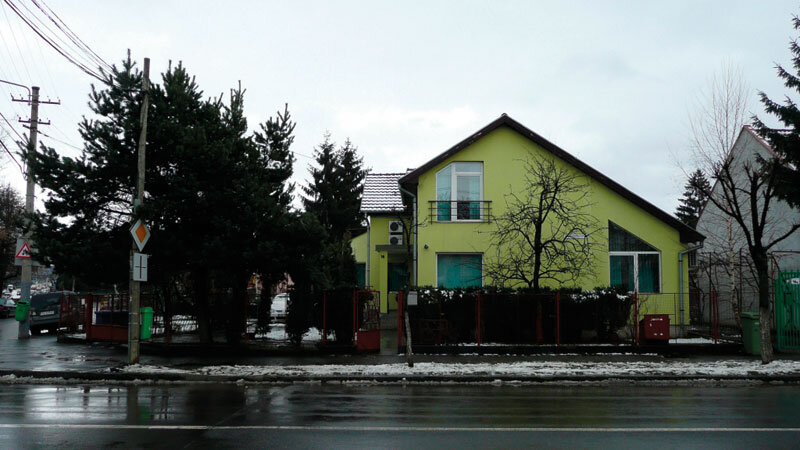
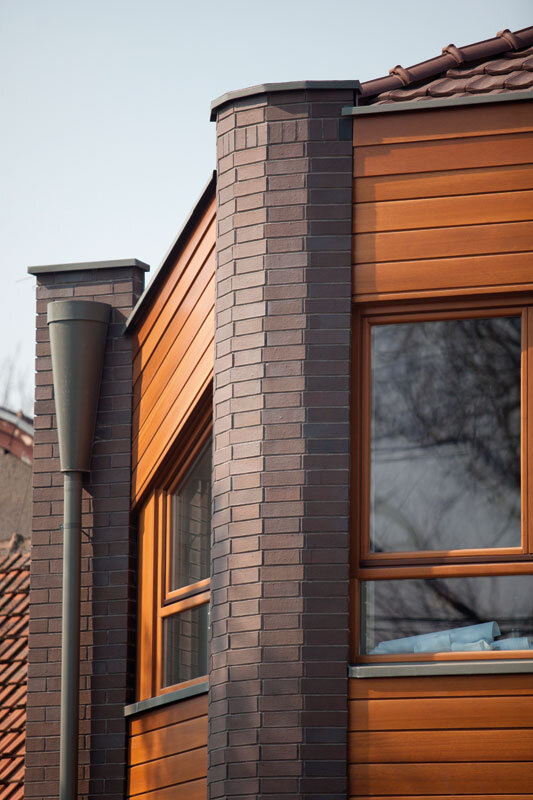
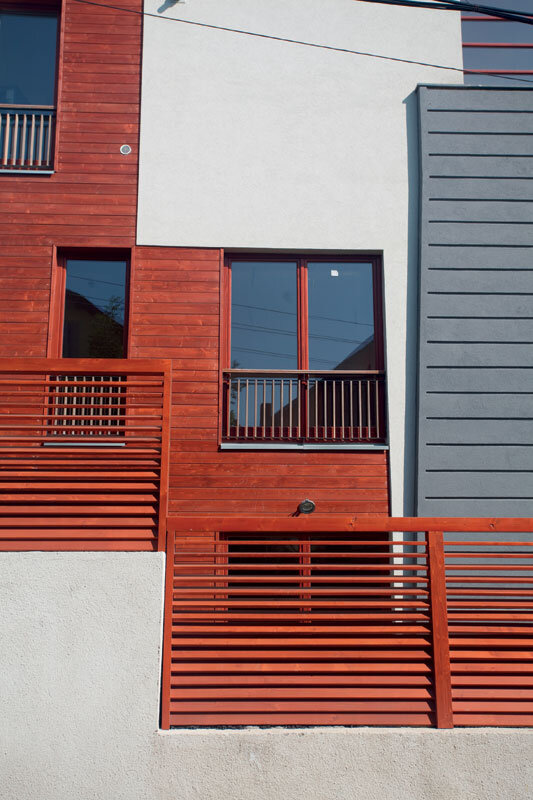
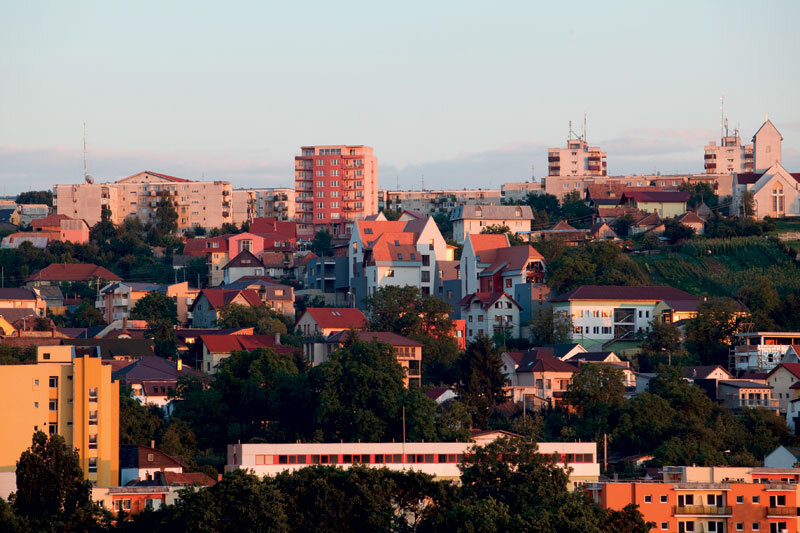
Tektum headquarters Location: 13, Cardinal Iuliu Hossu street, Cluj-Napoca Function: company headquarters extension Design/Execution: 2010 Built area/ Deployed area: 42,95 sqm/85,90 sqm
Team: Tóthfalusi Gábor, Tulogdy László György, Ioana Ramona Cecălășan, Syőcs István Levente, Bálint Ágnes Year of establishment: 2005 Address: 13 Cardinal Iuliu Hossu Street, Cluj-Napoca Contact: e-mail: info@tektum.ro www.tektum.ro Tel: 0264.450.038
Brick house
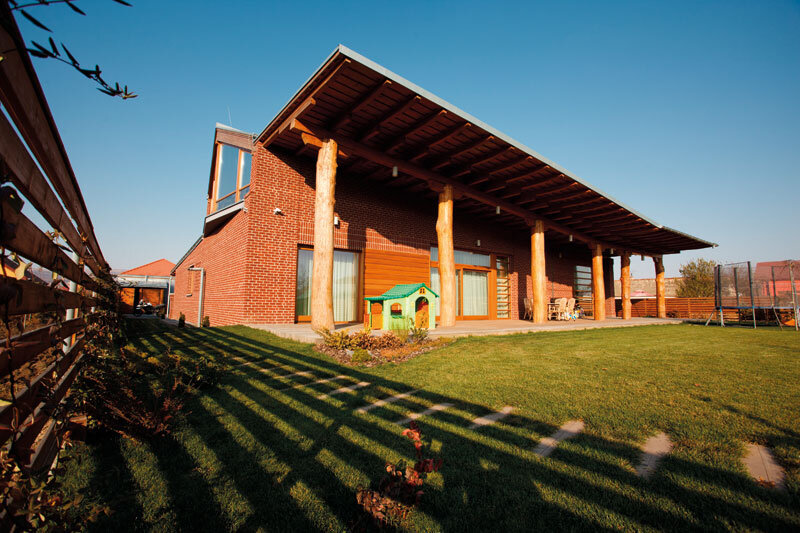
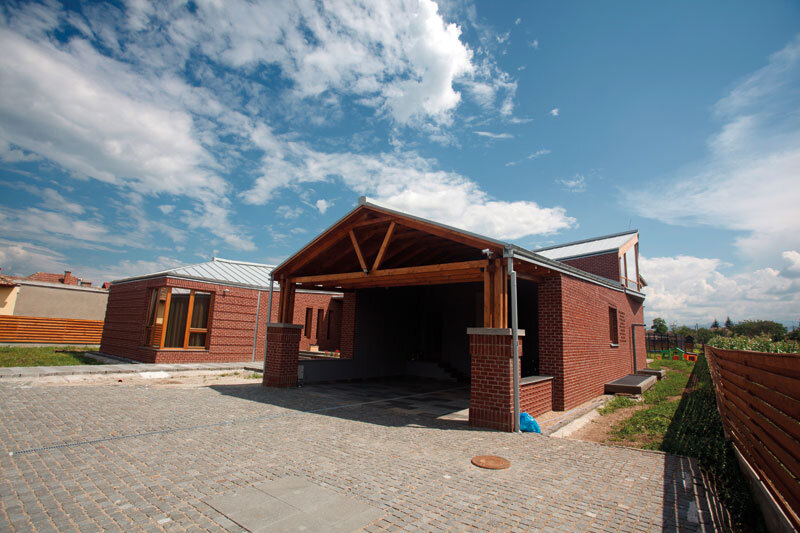
The location is in a quiet residential neighborhood of Cluj, with low houses. The land has a north-south orientation, with access from the north. The large surface of the plot allowed us to design a building with a partial basement, ground floor and a small gallery upstairs.
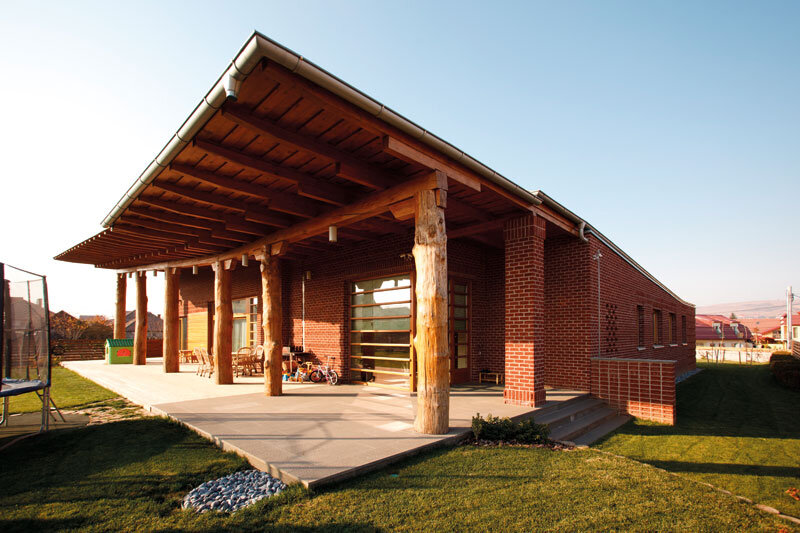
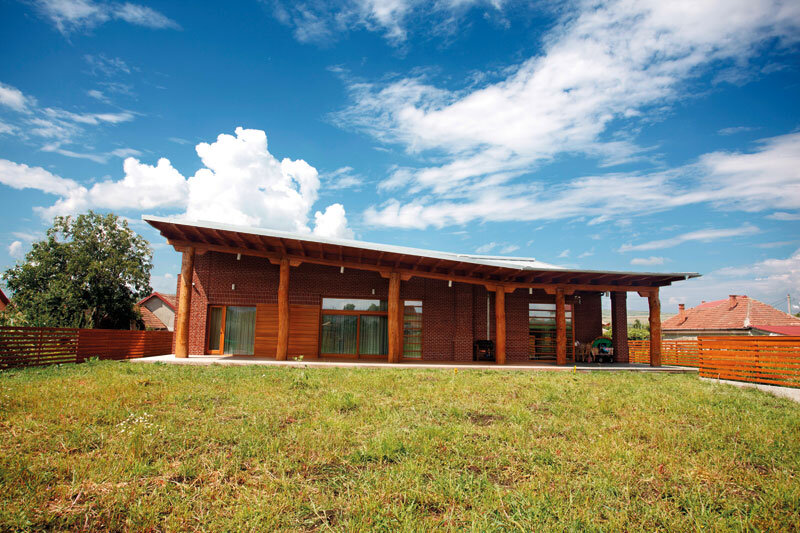
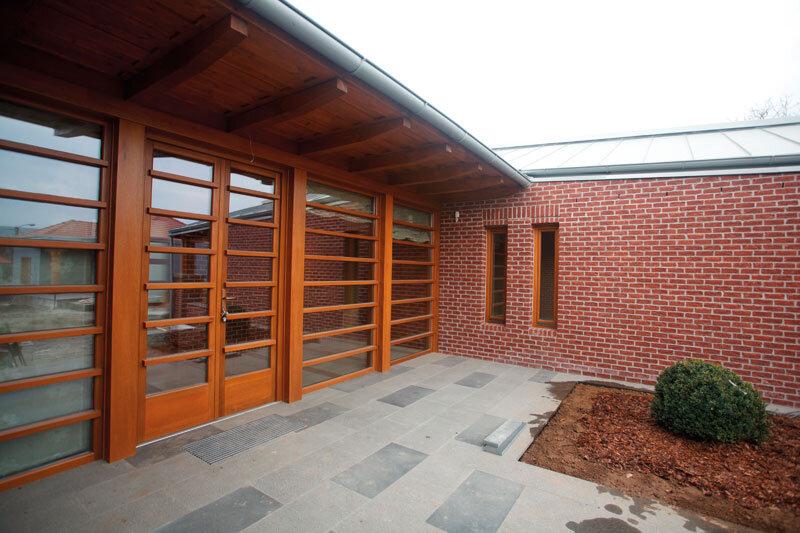
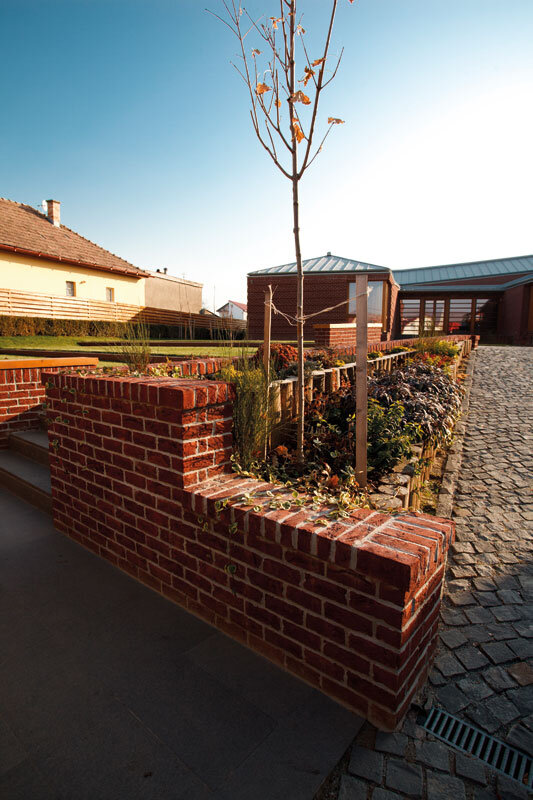
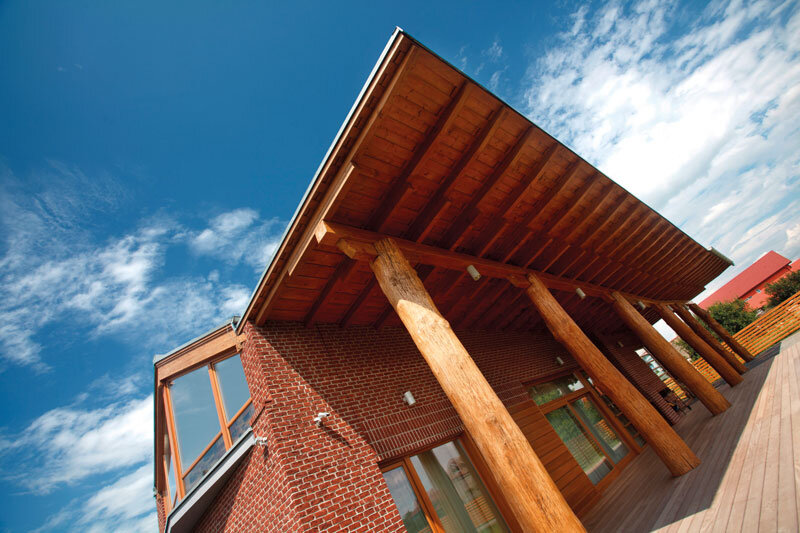
The building is set back from the street frontage. We opted for a plan around an inner courtyard (U-shaped plan), set back from the street, in order to minimize the impact and resolve the volumetric integration of the house in the context of the area. Access to the house is through the small inner courtyard. The house is built around the living area which subordinates the intimate, private family areas. The matrimonial area enjoys maximum privacy. The kitchen is optimally positioned in the south-eastern part of the house. This makes it possible to keep a closer eye on children's activities during the day. The southern part of the house benefits from the penumbra created by a portico made of massive oak logs. The south terrace, large and with a strong presence, is accessible from the kitchen, living room and master bedroom.
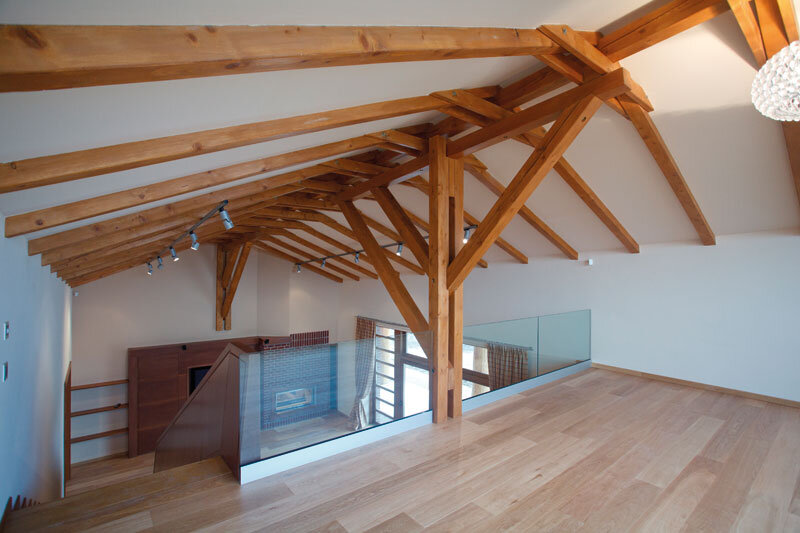
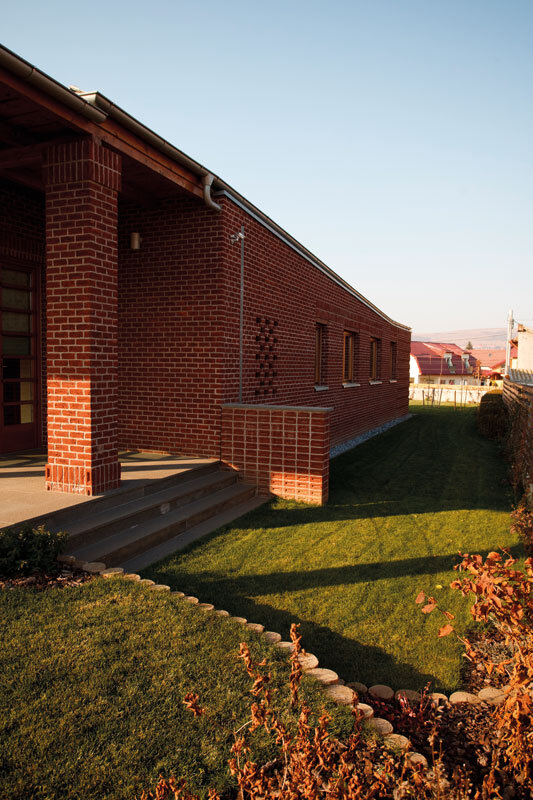
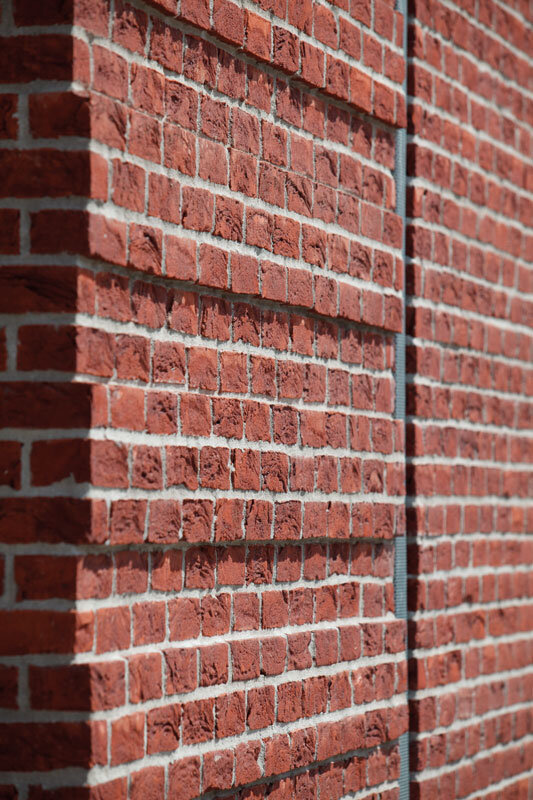
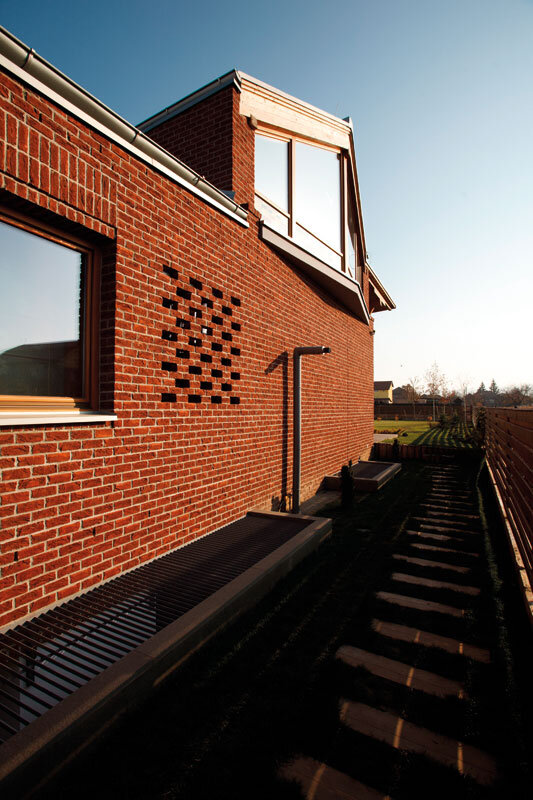
The facades are aesthetically defined by the textured and orderly appearance of the brick cladding, hand-crafted with great attention to detail. The south side of the house is marked by the strength of the terrace made of massive logs. The house has an upward dynamic that culminates in the gallery area through a panoramic window facing the sunset.
Brick house Location: Cluj-Napoca Function: Single-family residence Project team: Architecture/general designer: TEKTUM/Tothfalusi Gabor, Tulogdy Laszlo Gyorgy Structures: TOP PROIECT/ eng. Mihai Oltean, eng. Adrian Tutaș Installations: GRADINSTAL/eng. Paul Biriș, eng. Aurelian Marian Design/execution: 2008/2010 Constructed area/area: 464,55 sqm/535,5 sqm Photographer: Andrei Neamțu
Wooden house
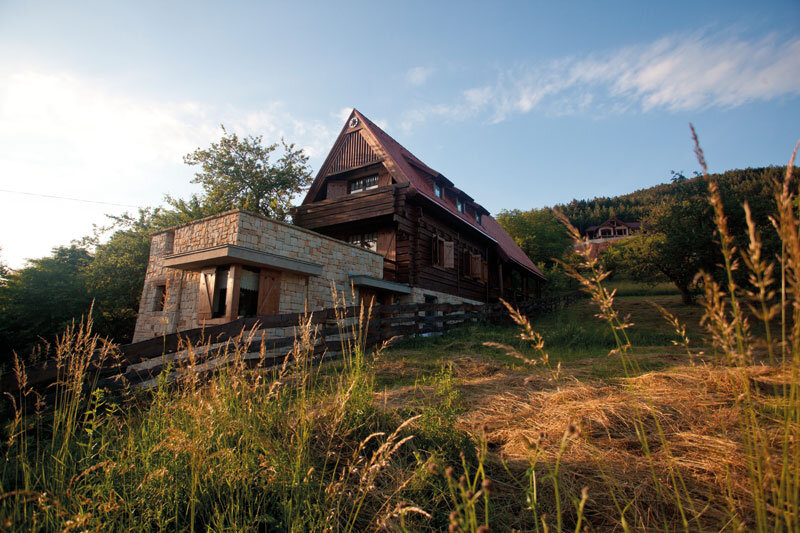
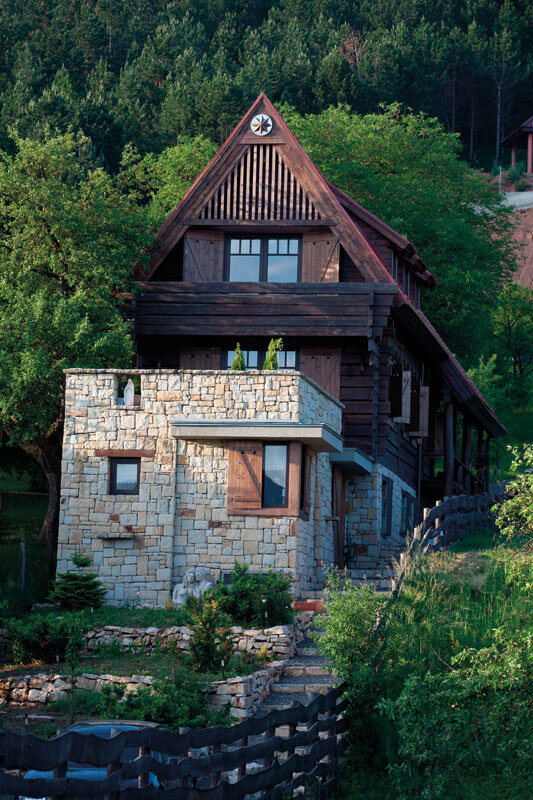
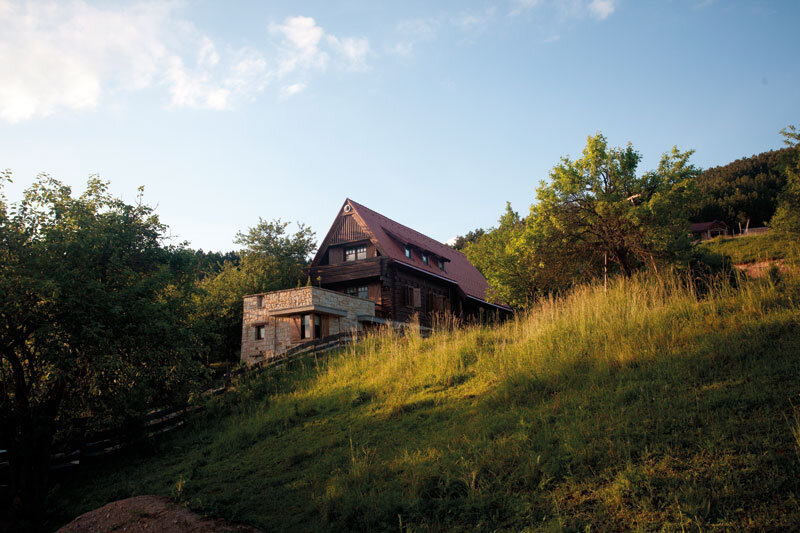
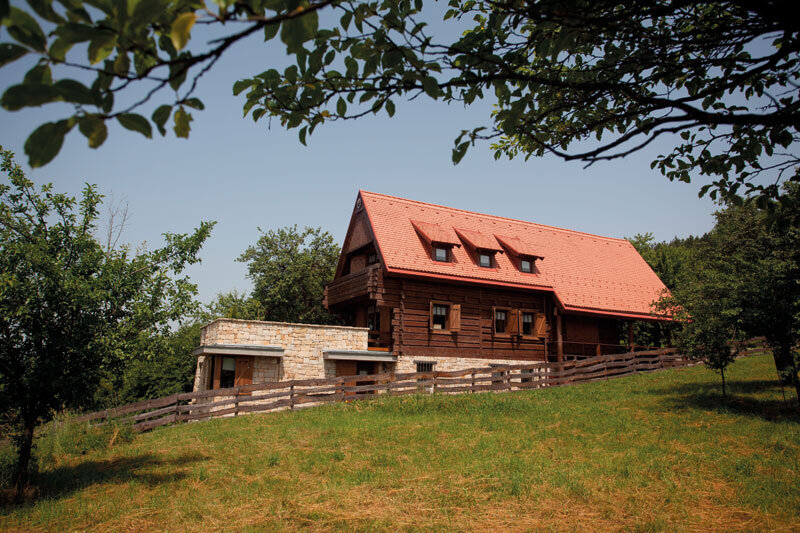
Nestled between sunny hills, in an ethnographic area with renowned wood craftsmen, the village of Vlaha is located on the road from Cluj to the Arieș Valley. The area is booming, being on the route of the new highway. The wooden gables of the traditional houses, adorned with ancestral symbols, invite new architectural interventions to respect the vernacular character of the place.
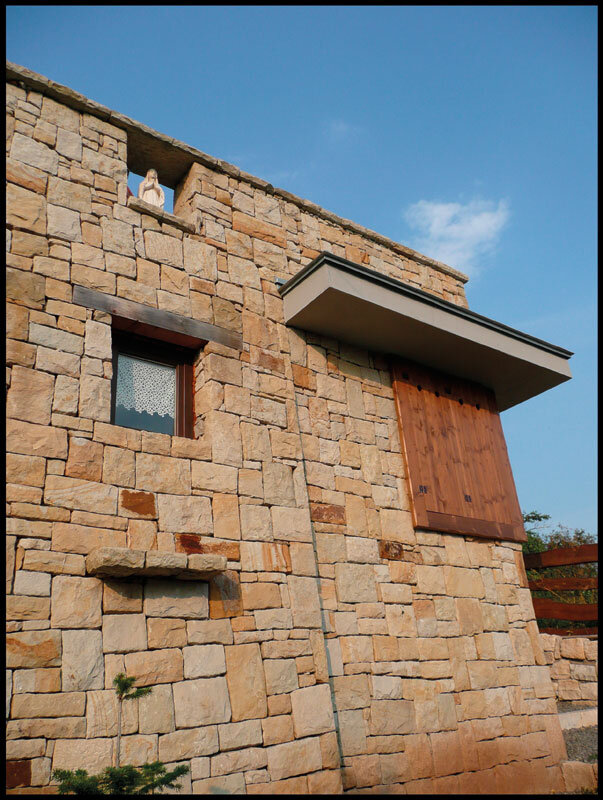
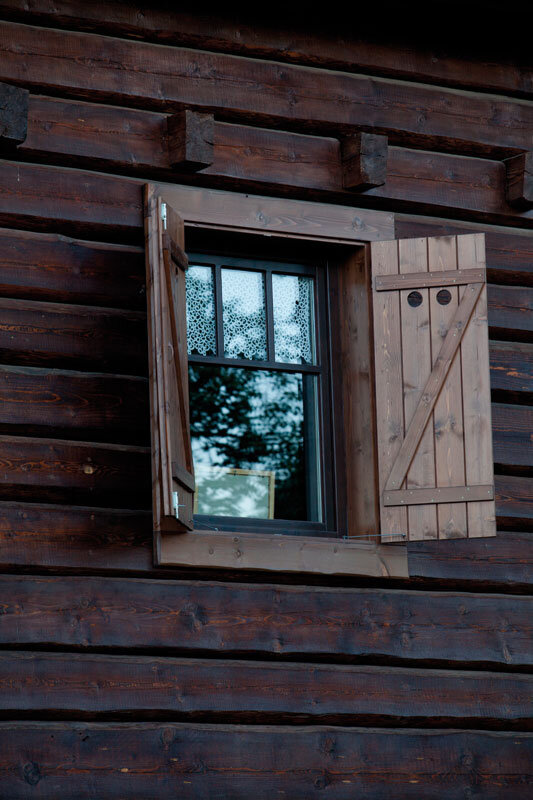
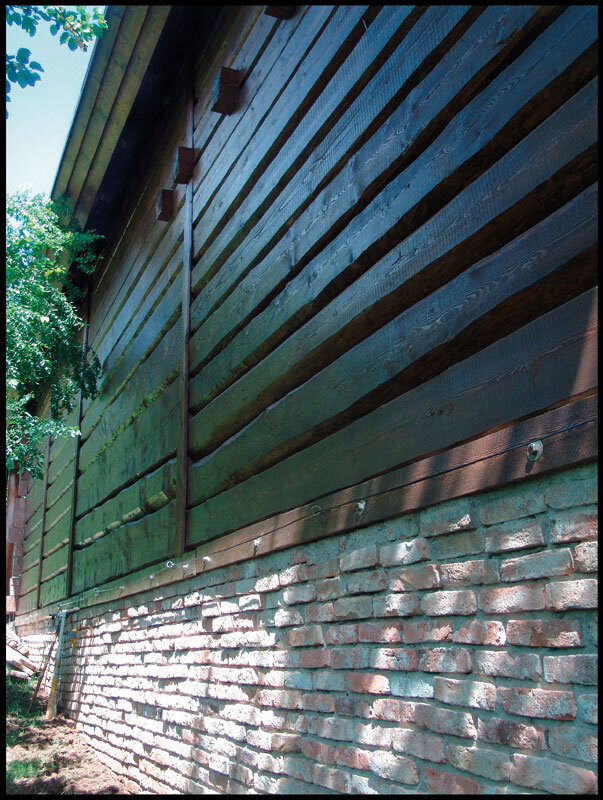
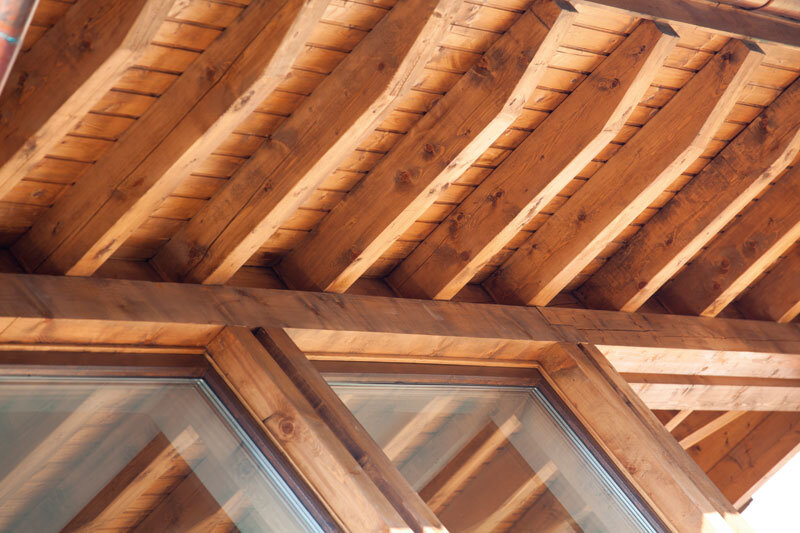
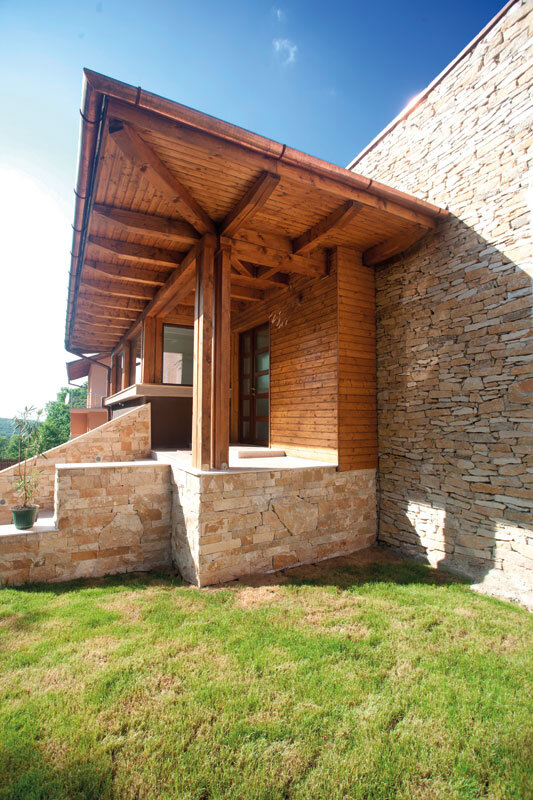
Although it is a replica of the traditional image, the TEKTUM holiday home bears the clear signs of modernity through its safe proportions and the right use of materials. The structural solution is also a technical achievement: a fully ventilated wooden structure. Integrated with refinement into the landscape and the local built environment, the 'wooden house' sets an example of discretion worthy of emulation. Using traditional materials and techniques, the volume is dominated by the stone sub-basement that anchors the building into the rising slope of the hill, and silhouetted by the triangular wooden gables of the roof. The accuracy of the volume is emphasized by the weight and character of the details: the wood of the shutters dialogues with the stone facing, the rhythm of the wood on the facades is tempered by the dense half-light of the terrace on the hillside. The house offers a neo-vernacular image that subtly and polemically accommodates a reformulated interior, in line with modern-day comfort.
Location: Vlaha commune/ Cluj county Function: Holiday house Project team: Architecture: TEKTUM /Tothfalusi Gabor Structure: TOP PROIECT-CLUJ/Mihai Oltean, Adrian Tutaș Installations: Aurelian Marian, Paul Biriș Design/Execution: 2006-2007 Built area/Usable area: 118 sq.m/170 sq.m Photograph: Andrei Neamțu
Stone house
We believe in the continuity of quality architecture, which can only be achieved through careful design and permanent on-site supervision.
Făget Forest, a traditional recreation and relaxation area for the inhabitants of Cluj, has changed a lot in the last twenty years. From a vast green area with just a few holiday homes, a campsite and a lot of peace and quiet, under the impetus of real estate development, Făget has turned into a favorite residential area for nature lovers. One chance to balance the natural and built environment is the area's inclusion in the 'Natura 2000' ecological conservation network.
In this context, on a small corner plot, with a 3.5 m long slope, our office was given the task of designing a house for a young, dynamic couple for whom contact with nature is more important than access to urban comfort.
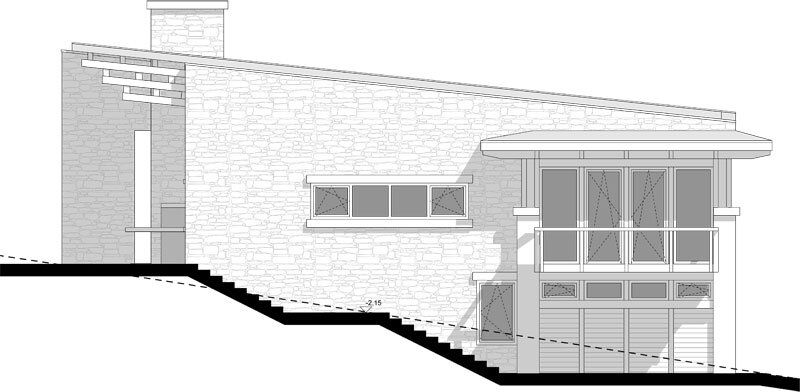
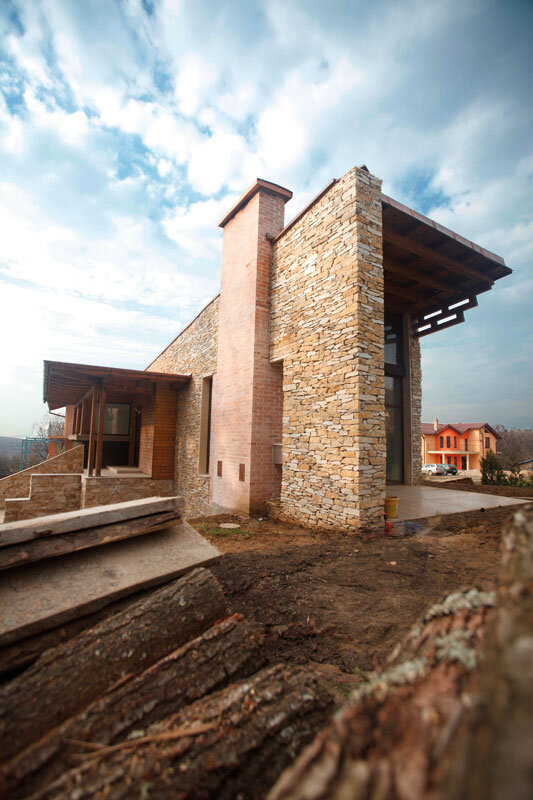
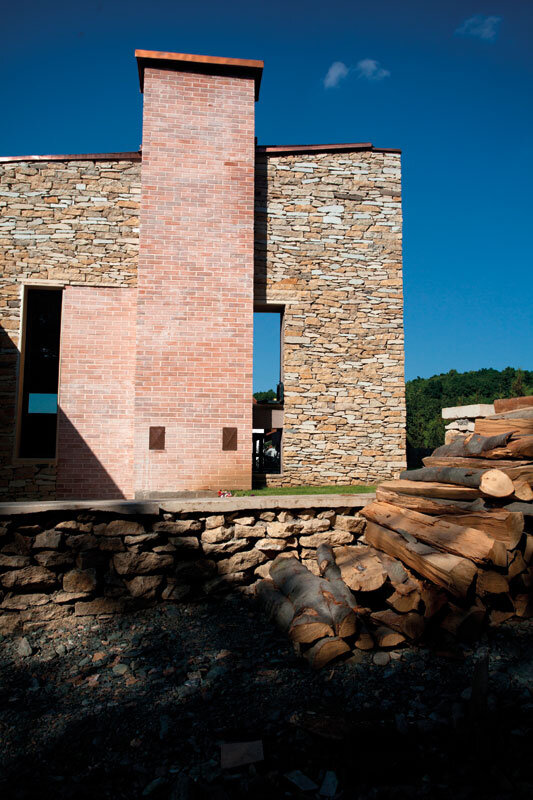
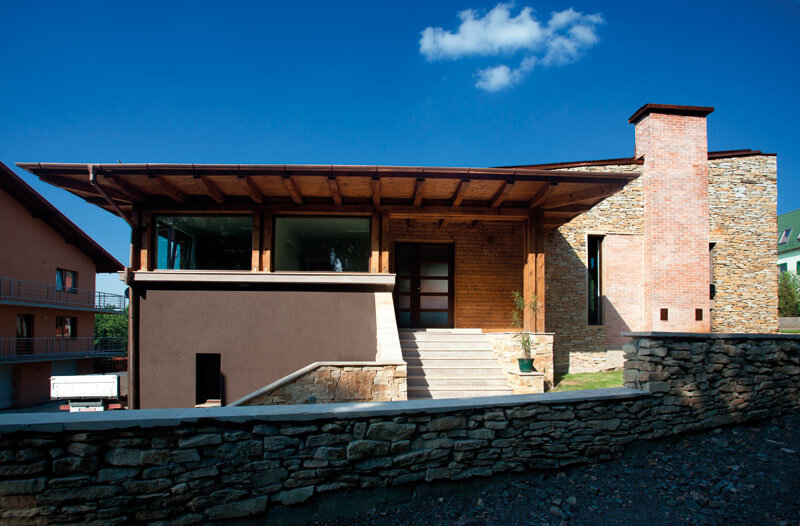
The volume of the house articulates two distinct units: the stone body - ascending, dynamic, following the slope of the land, and the wooden body - calm, horizontal, intimate.
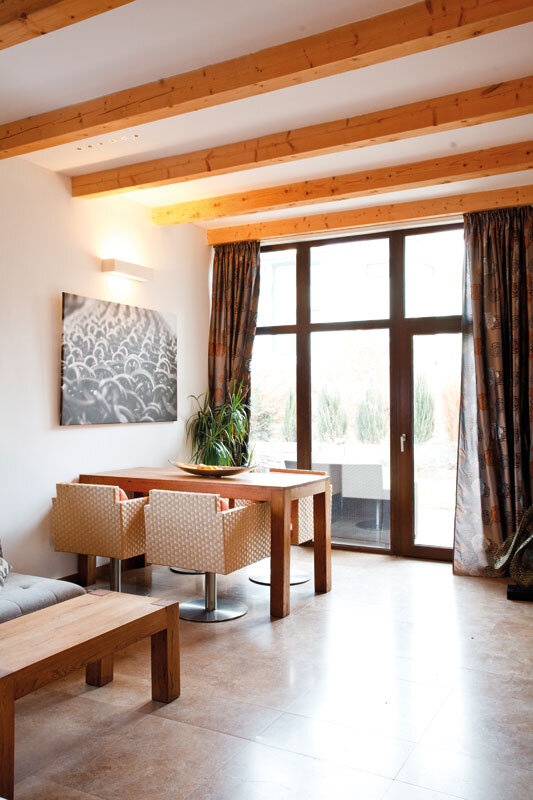
The living area occupies the stone volume and is configured as an open, fluid space with generous access to the south terrace of the house. The nocturnal functions, distributed over two levels by taking over the slope of the land, are expressed in the dominant horizontal, shady, warm, archetypal wooden volume. The stone volume is punctuated by narrow, vertical or horizontal slits of light, guiding the eye towards the landscape and bringing the forest into the house.
Location: Făget /Cluj-Napoca Function: single-family residence Project team: architecture/general designer: TEKTUM/Tothfalusi Gabor, Tulogdy Laszo Gyorgy Structures: IRODM/ing. Makay Dorottya, eng. Csaki Rómeó Installations: GradInstal/Aurelian Marian, Paul Biriș Design / Execution: 2008/2010 Built area / Developed area: 91,1 sqm/153,3 sqm Photographer: Andrei Neamțu
Black house
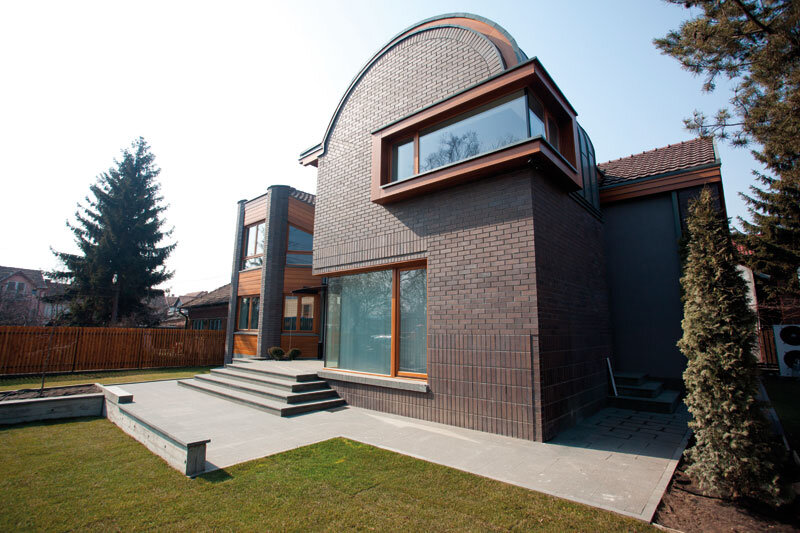
In the spring of 2009, we were contacted by a structural design firm in order to propose a quick solution for the expansion of their headquarters. Due to the increase in the number of collaborators, it was necessary to extend and modernize the entire house, creating clearly defined spaces for work, discussions, meetings and reception.
The way
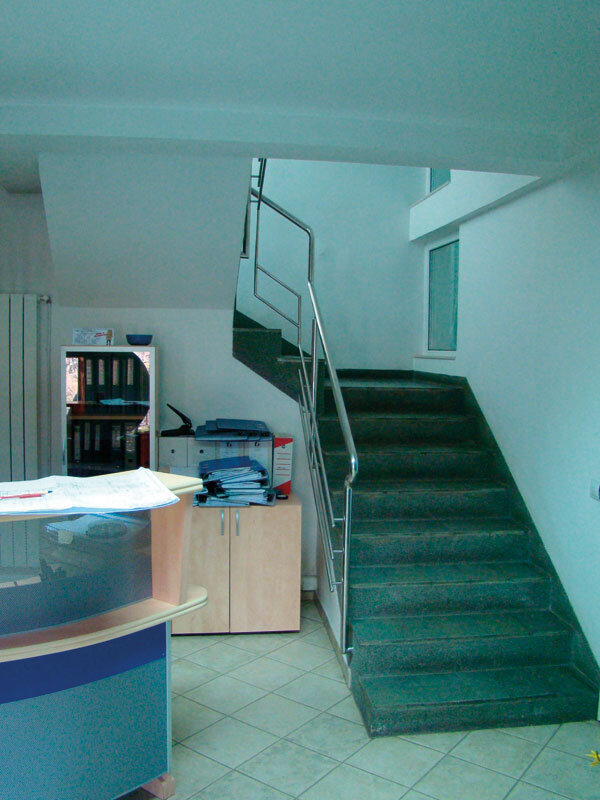
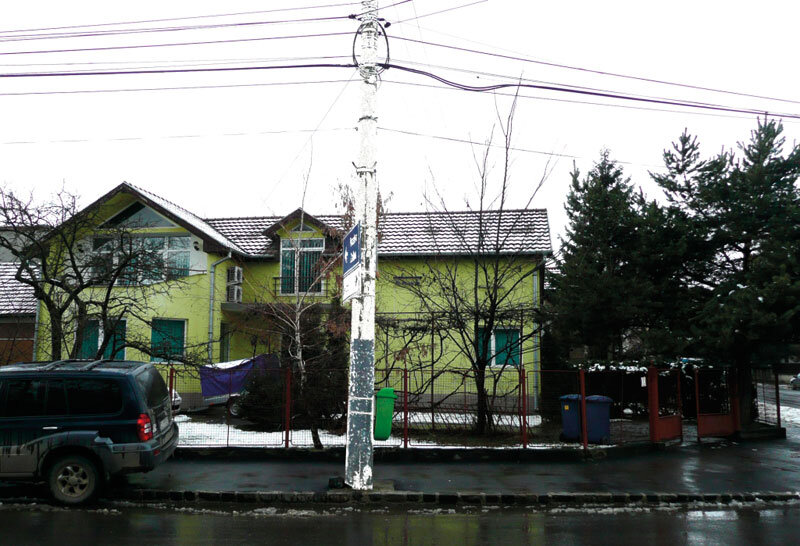
We started the design process with this data. I presented them the sketches. They agreed at first sight... In the meantime, the beneficiaries also realized that they had to give up on a quick implementation of the project because both the complexity of the intervention and the technical condition of the old house did not meet the requirements. In the end, they asked us to refurbish the whole building both inside and outside, down to the smallest detail (down to the doorknob). It was a lengthy process in which we rethought the whole building, we under-plastered, deepened the basement, demolished the staircase, etc., in the end only the exterior walls and the existing roof structure (which we finally reinforced) remained.
Concept
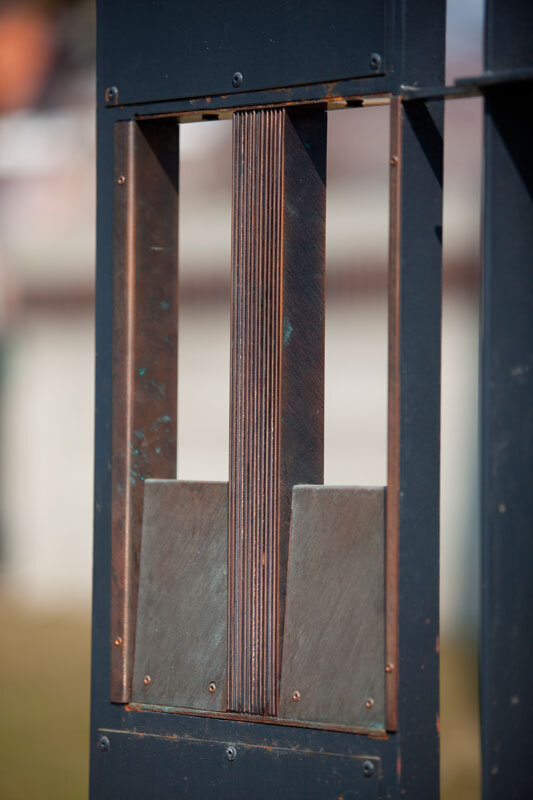
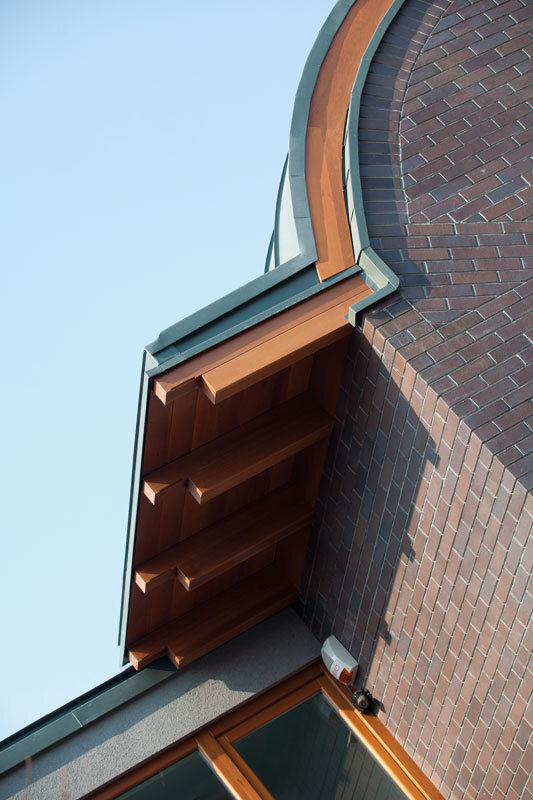
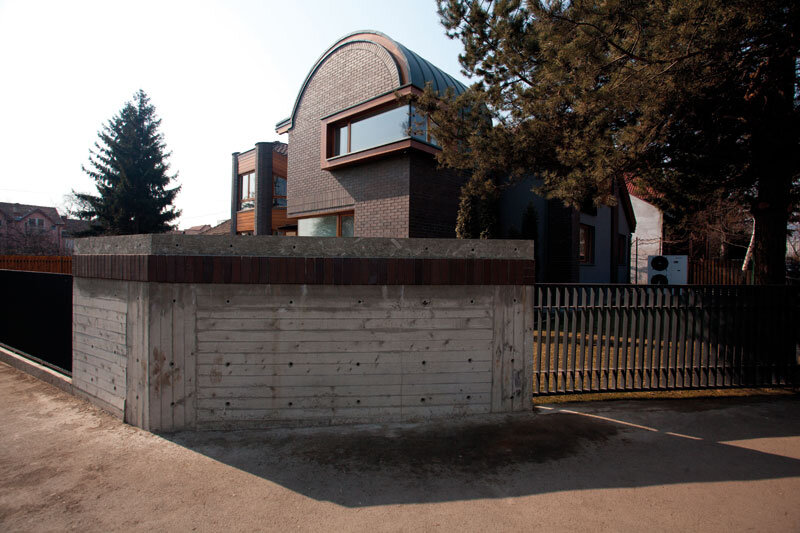
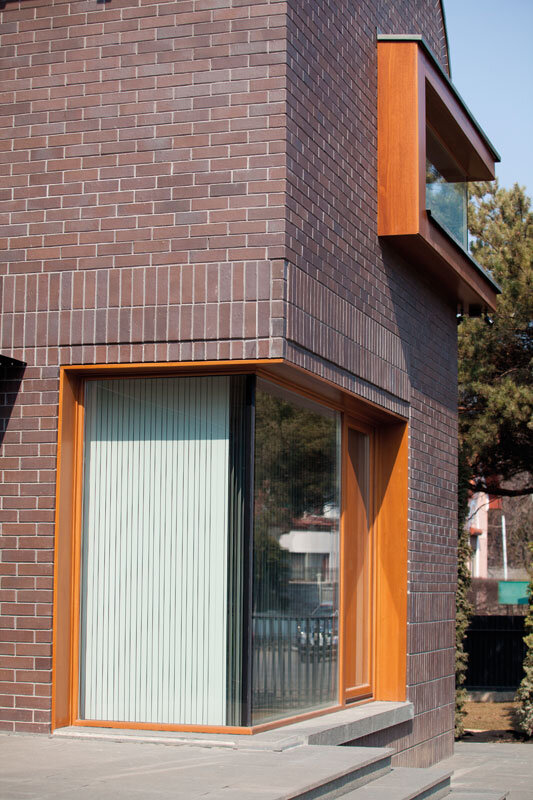
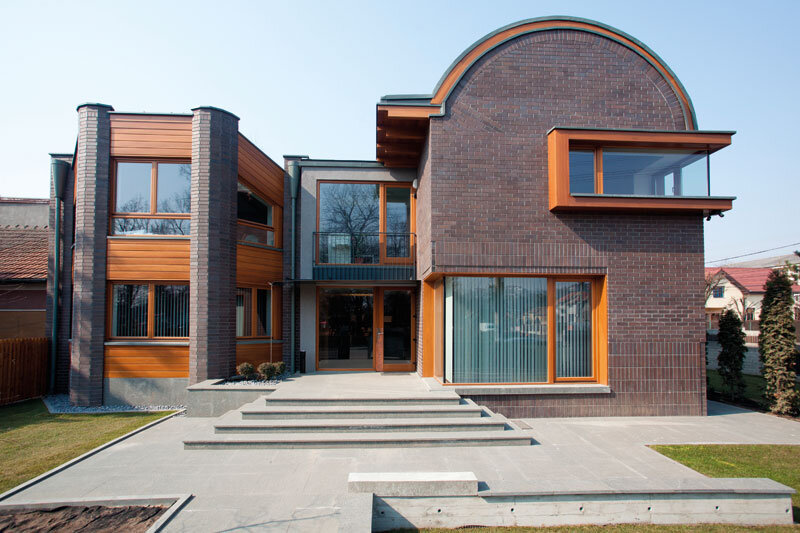
The land and the building are located in a residential area of the Grigorescu neighborhood, which still preserves many valuable buildings of the city, on a corner plot, opposite a small park. The concept of the house was determined by marking the corner with a simple gesture, detaching the current volume from the old building. The extension is a compact vaulted volume, with voids cut in a current proportion. The monolithic strength of the newly created volume strongly marks the main façade and gives character to the reformulated building. The rest is just the accompaniment music, so necessary in the realization of a work. The closing details of the façade, the details of the beams, the composition of the joinery, etc. are a consequence of the major gesture.
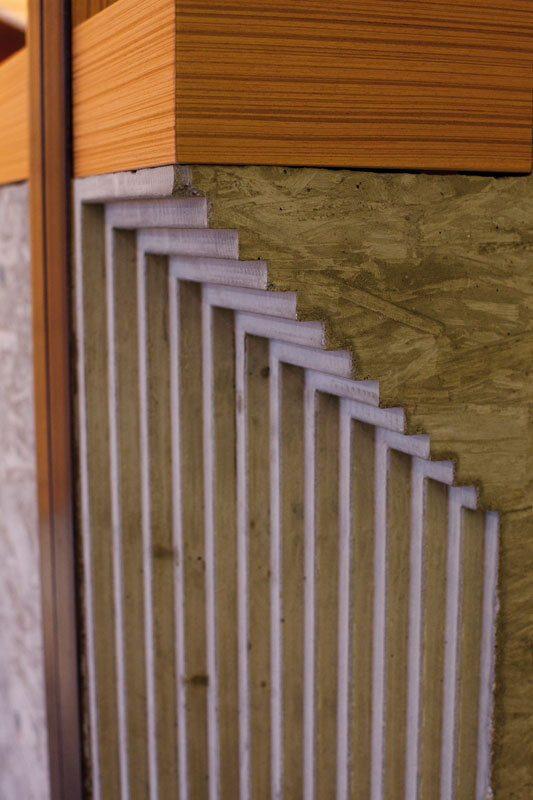
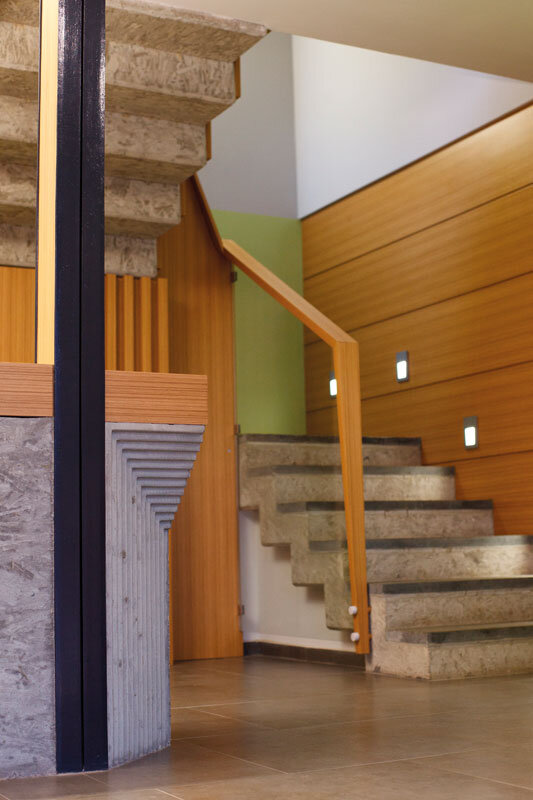
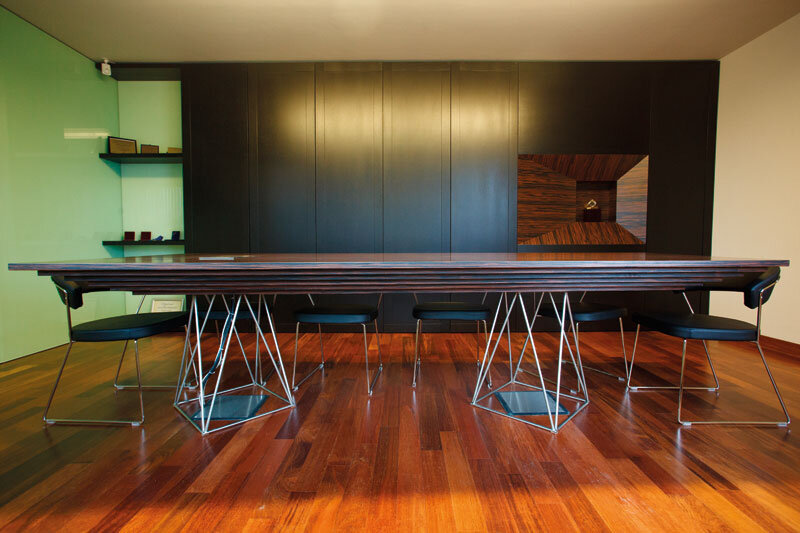
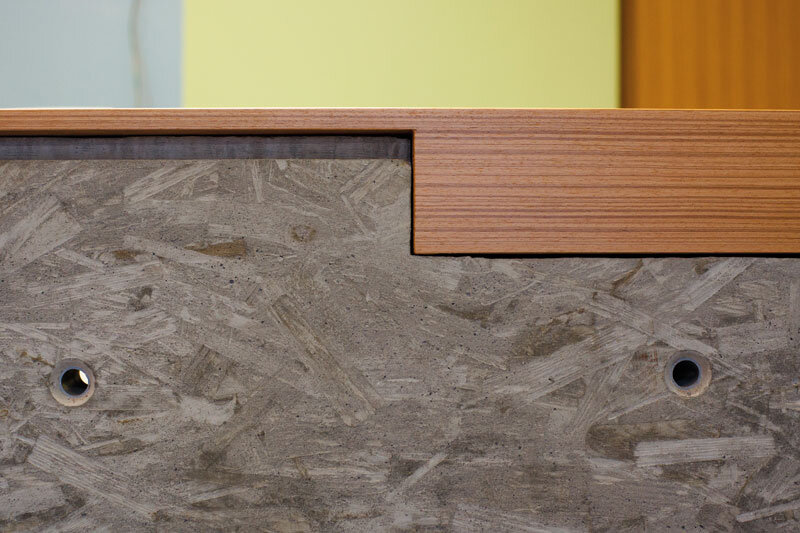
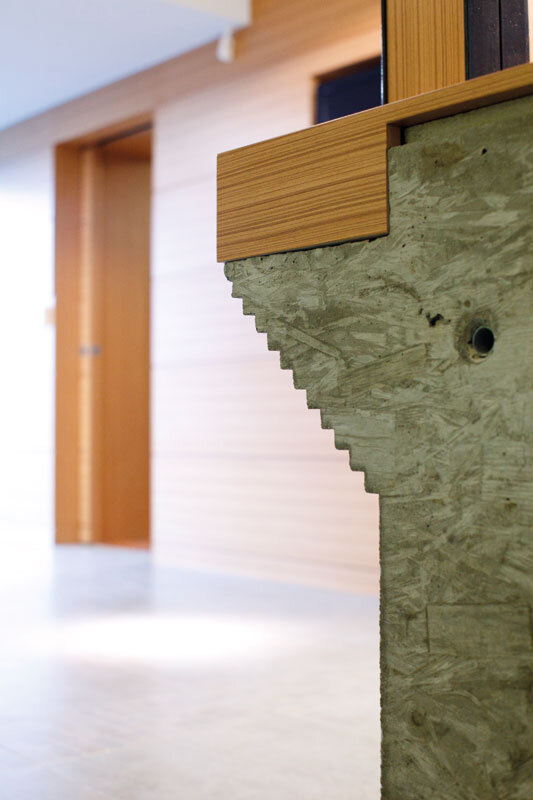
The design and redesign of the interiors was very important in establishing the brand and image of the firm. The beneficiaries have a dynamic working philosophy, many of the engineers are young. In general, they are focused on the design of precast concrete structures for domestic and foreign works. With this in mind, we considered it appropriate to keep the concrete structure (walls, staircase) apparent in some places. We decided to realize the table in the director's room and the one in the secretariat in apparent concrete, for which we used a language in memoriam Carlo Scarpa. Realizing the discussion table in the meeting room was a challenge. For the walls I used the blue color from the company logo combined with green and gray. Upstairs we combined the same colors for both finishes and furniture.
We believe that the execution was possible thanks to the desire and exigency of the client and, last but not least, thanks to his trust in our proposals and solutions.
Location: Cluj-Napoca Function: Design office extension Project team: Architecture/general designer: TEKTUM/Tothfalusi Gábor, Tulogdy László György, Ioana Cecălășan Structures: SC PLAN 31 SRL - Kiss Zoltán Zoltán Installations: SC GRADINSTAL SRL - Aurelian Marian, Paul Biriș Design /execution: 2009/2011 Built area/area: 174,44 sqm/334,15 sqm - extension 70,80 sqm Photographer: Andrei NEAMȚU
Residential complex 3 houses
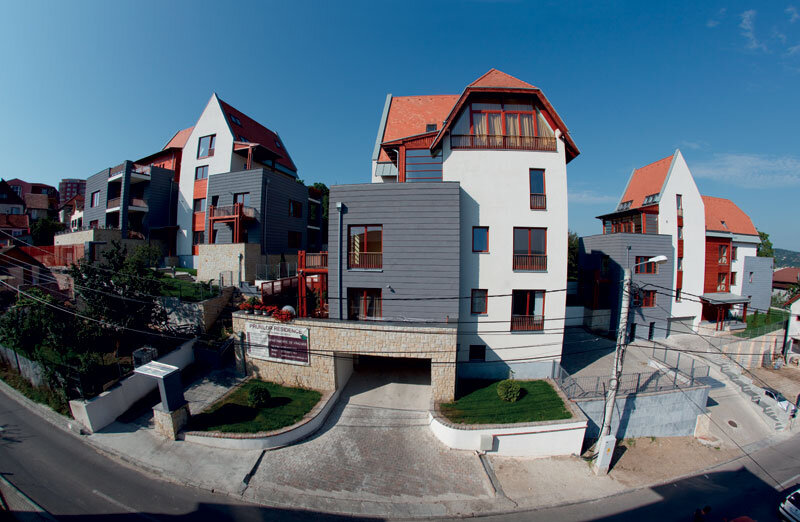
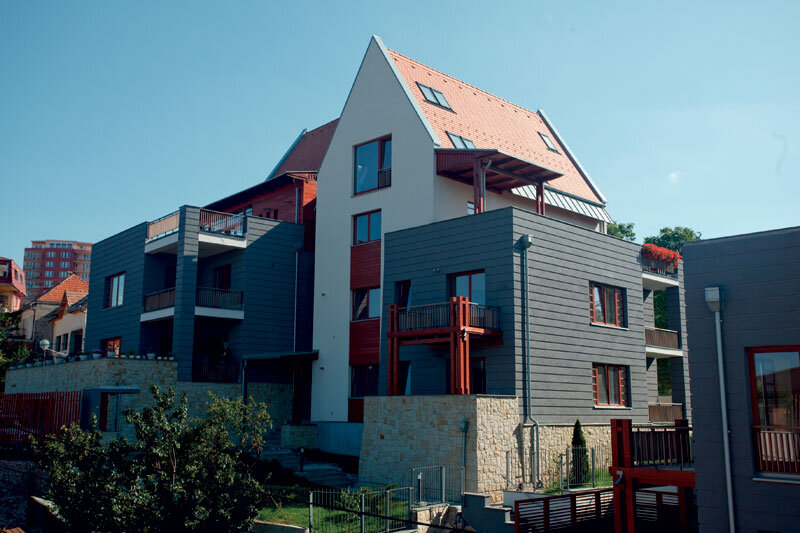
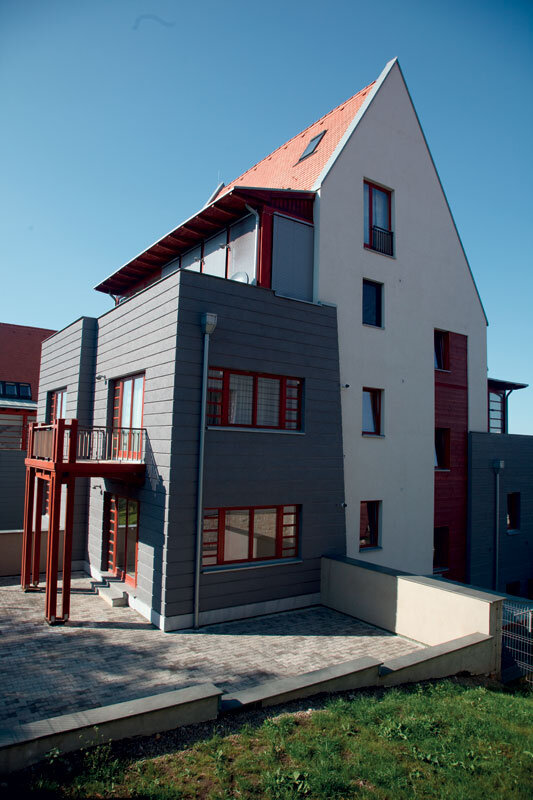
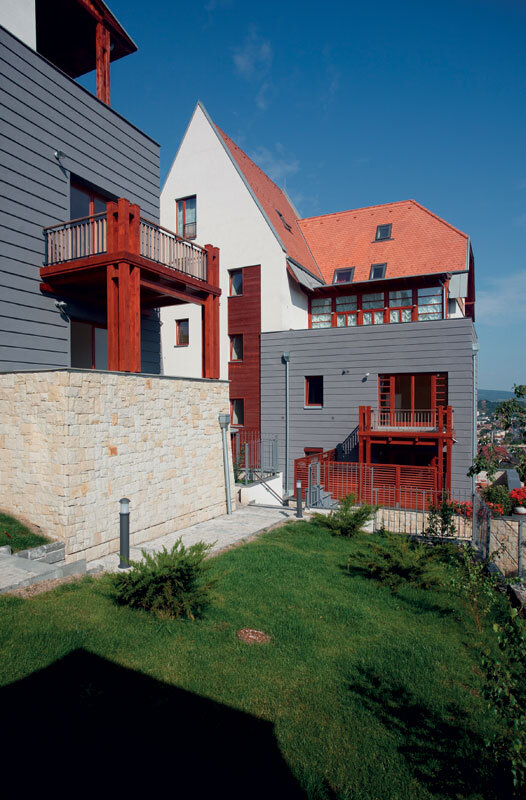
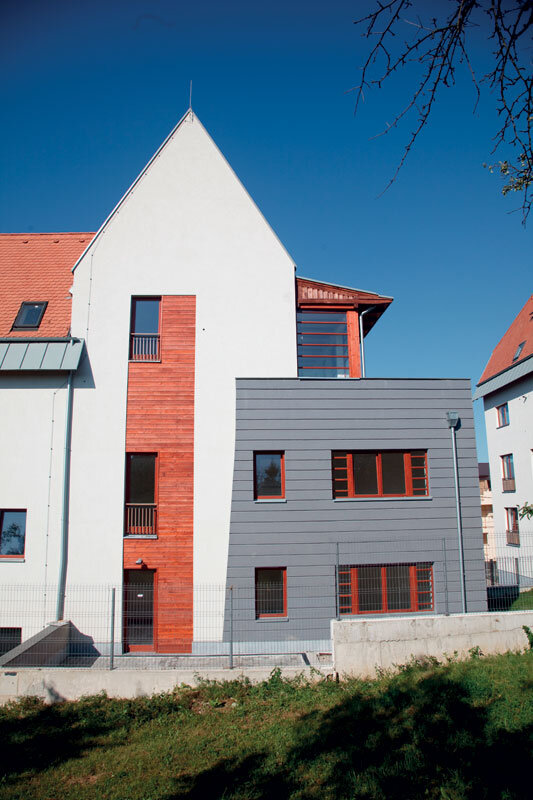
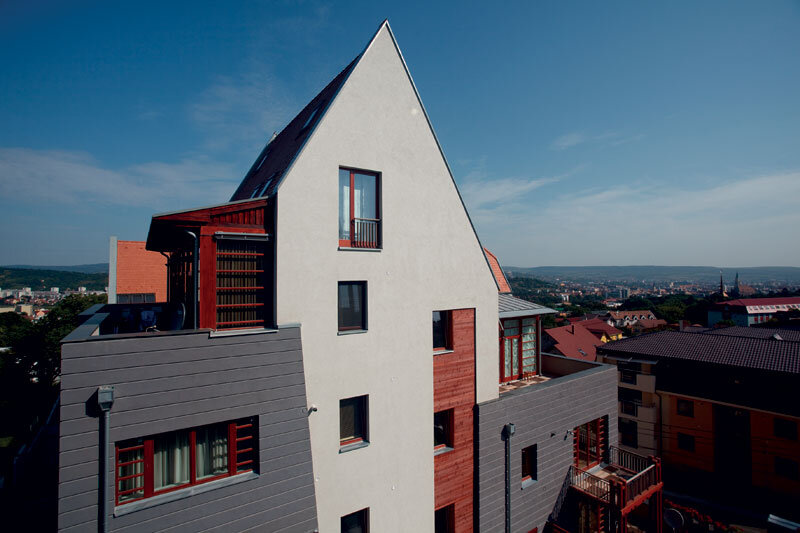
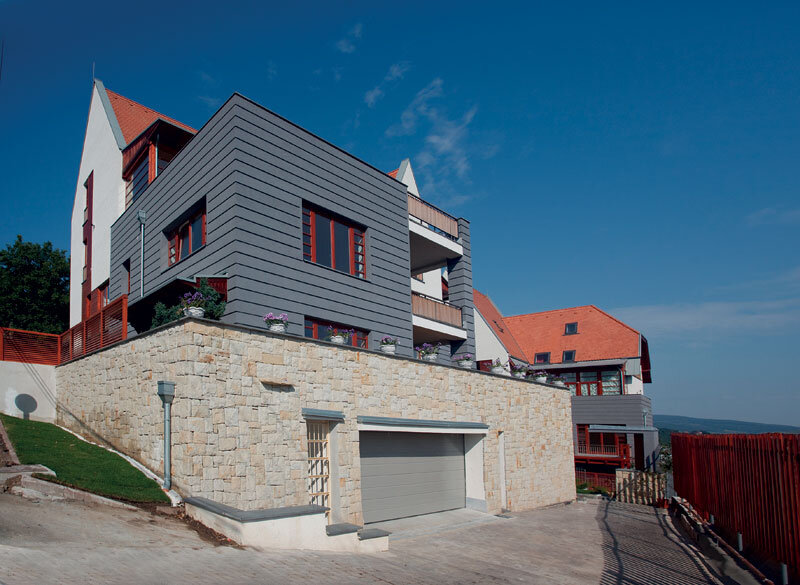
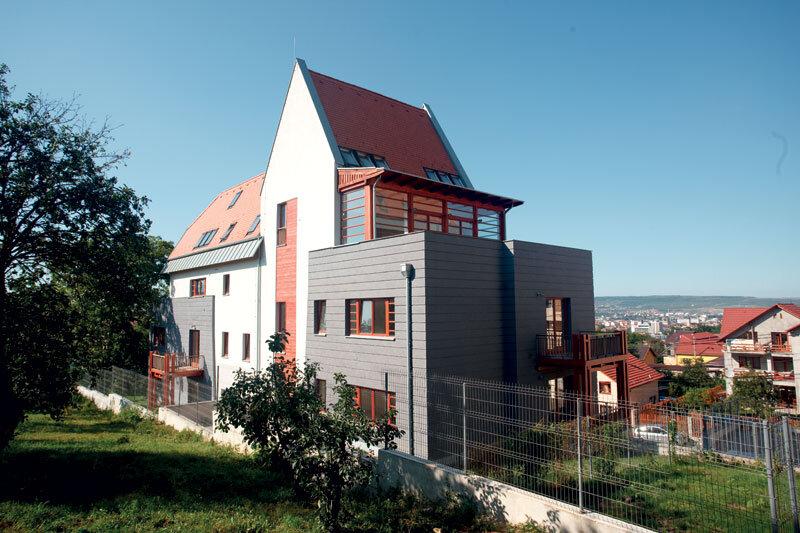
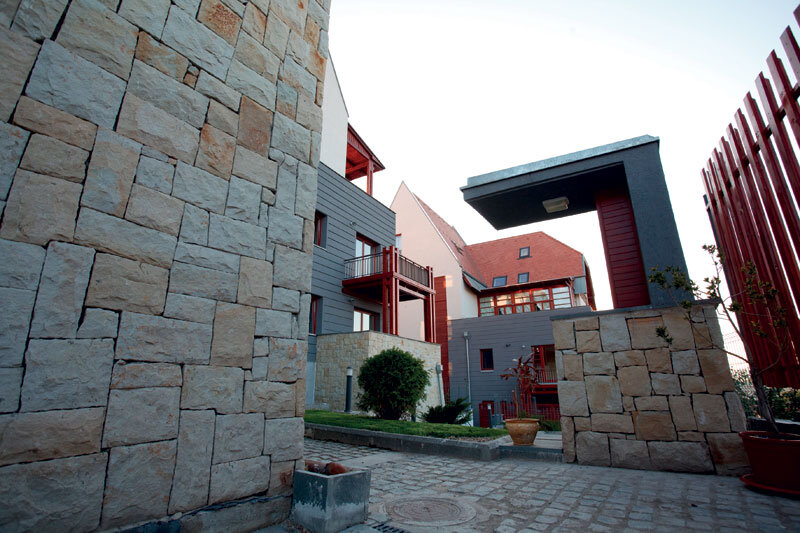
Located on a sunny hillside, in a residential area with large lots, the ensemble enjoys a wonderful view over the city and marks the landscape with the striking presence of volumes. The rising slope of the land from the street to the rear of the properties is speculated in order to organize the housing annexes.
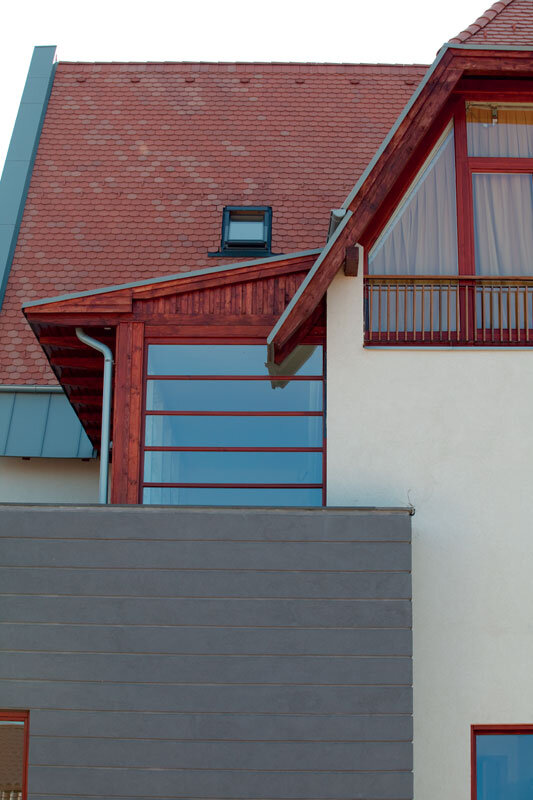
The character of the ensemble is reflected in the relationship between the three volumes, the proportion of the registers and the dignity imposed by the traditional pinion of the facades. The volumes rise nuancedly from the stone sub-basement that connects with the sloping ground to the amplified plinth on the ground floor and the first floor, which is hard, treated with sheet metal, detached from the white plane of the masonry. The upper area, allocated to privacy, enjoys the warm presence of wood and the picturesque shaded areas of the covered terraces. The two-storey gabled roof generates imposing pinnacles that shelter the attic and attic.
The overall impression is of a small private castle, a well-guarded residence that commands respect. The interior/exterior relationship takes on historical and aesthetic connotations through the use of contrasting materials to support the facades, which enhance each other. The ensemble of three houses gives an impression of strength and protected privacy.
Location: Strada Prunilor/Strada Mărginașă, Cluj-Napoca Function: 3 residential buildings; 6 apartments/building Project team: Architecture: TEKTUM / Gabor Tothfalusy, Laszlo Gyorgy Tulogdy Structures: TOP PROIECT - Mihai Oltean, Adrian Tutaș Collaborators: Oliviu Pop, Andreea Mureșan, Anikó Kiraly Design/Execution: 2006 / 2009 Built/built area: 854 sq.m/3.830 sq.m