Moldova / Gold Museum - Rosia Montana
stud.-arh. Mihai Alexandru Bucălău | tutor: prof. univ. dr. arh. Virgiliu Onofrei
The history of Roșia Montană is closely linked to the history of gold mining (washing of alluvial sands and extraction of gold ore).
In the center of the locality, in a favorable natural setting due to the slightly hilly terrain and an attractive perimeter panorama, it was proposed to create a museum dedicated to the presentation and historical research of the mining and processing of iron, silver and gold ores.
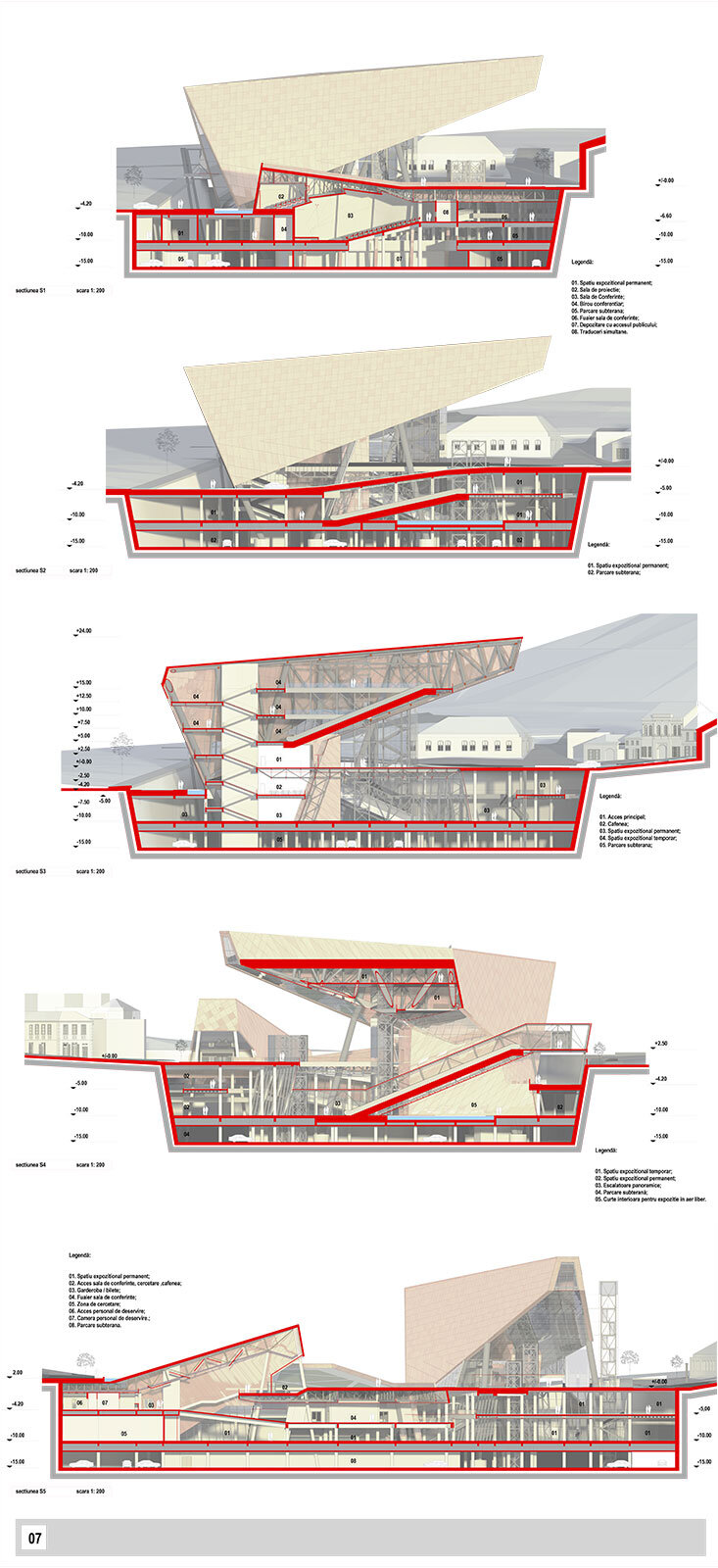
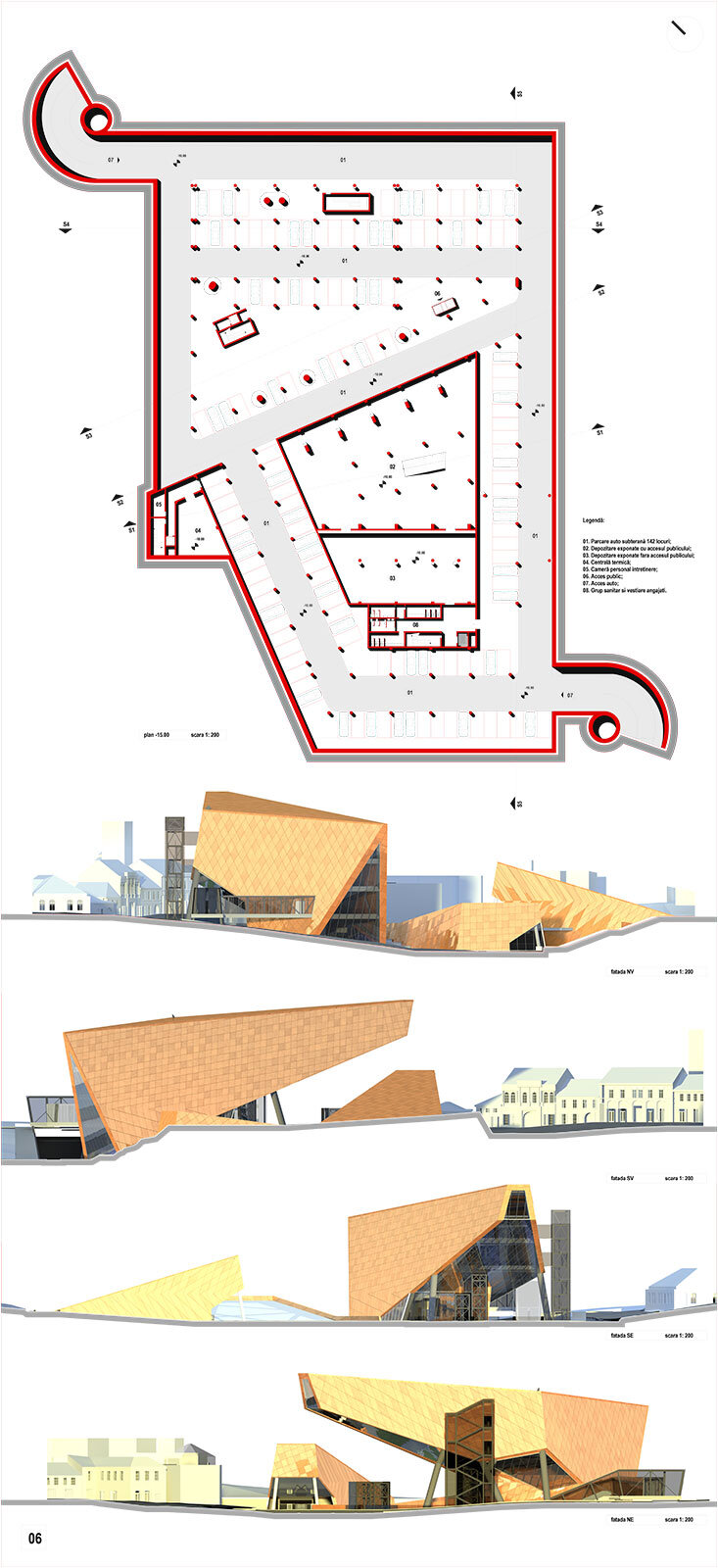
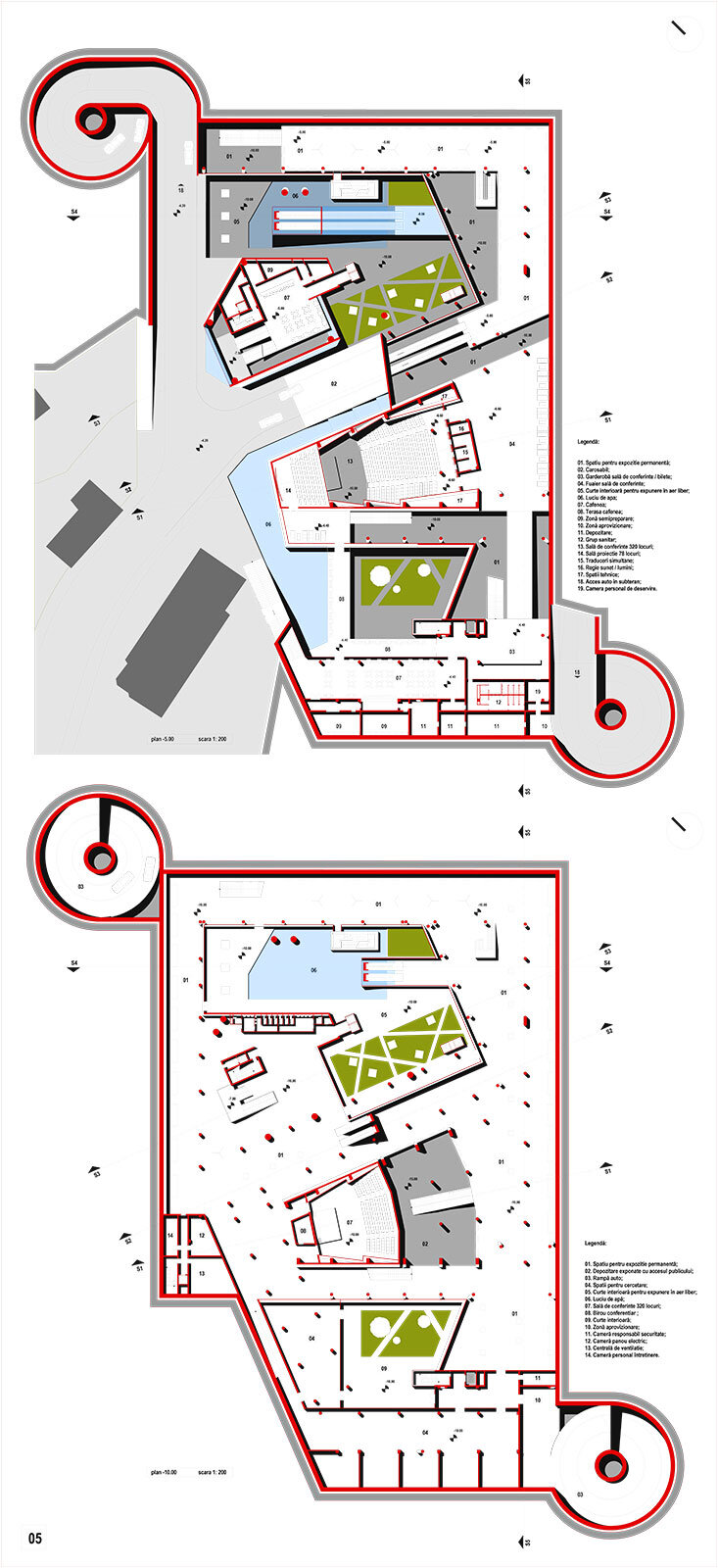
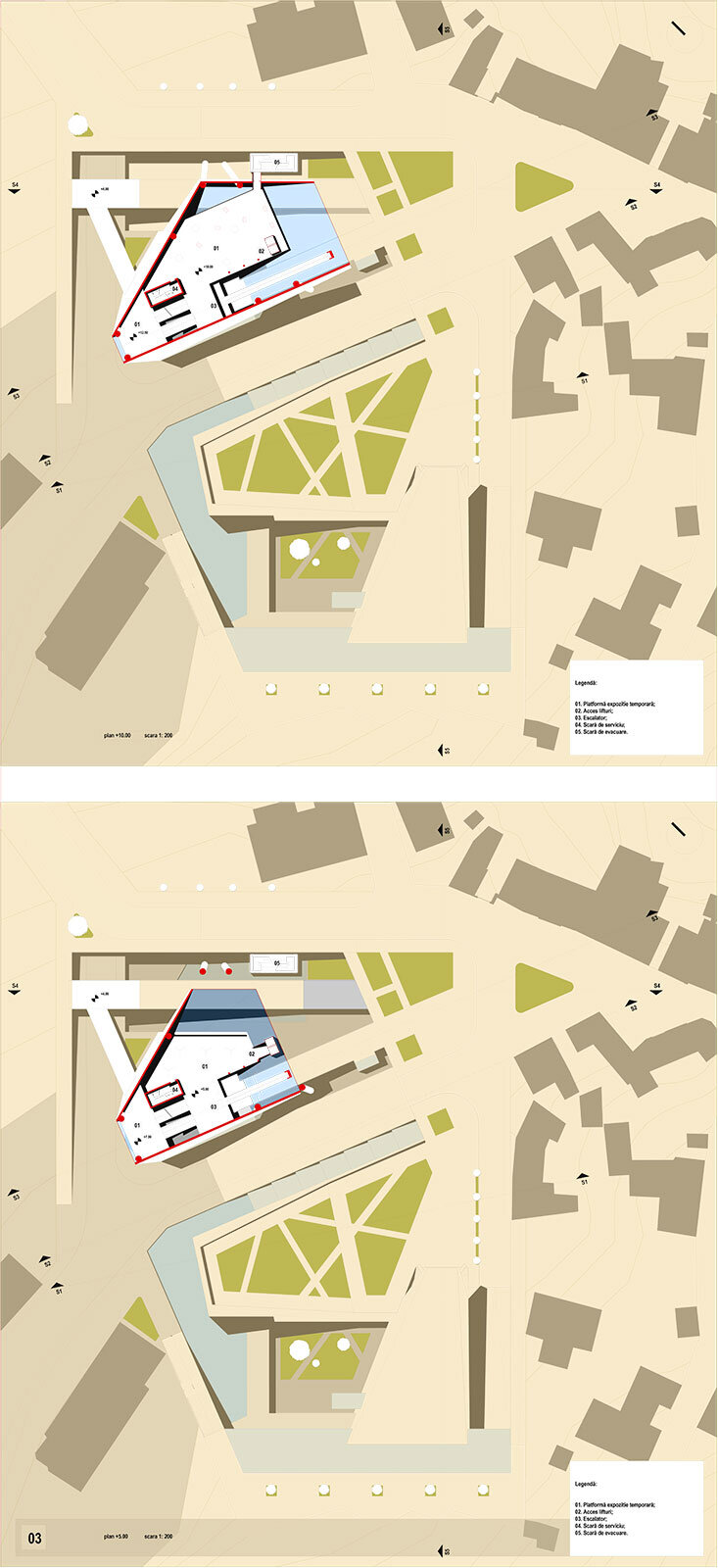
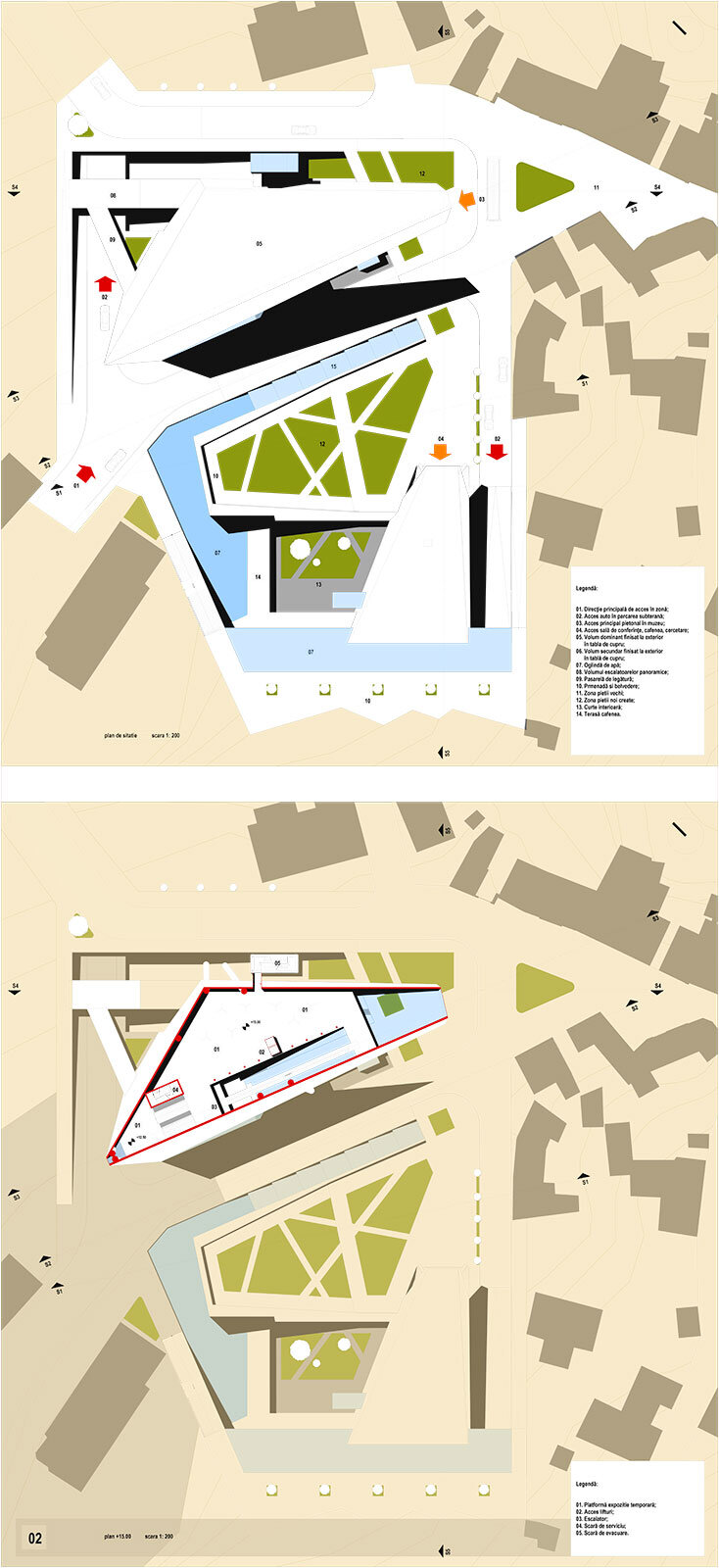
The complex, located in the vicinity of a fabric of old buildings of monumental value, is mostly developed underground, generating two inner courtyards, used for the protected open-air display of the waste processing equipment and decantation systems.
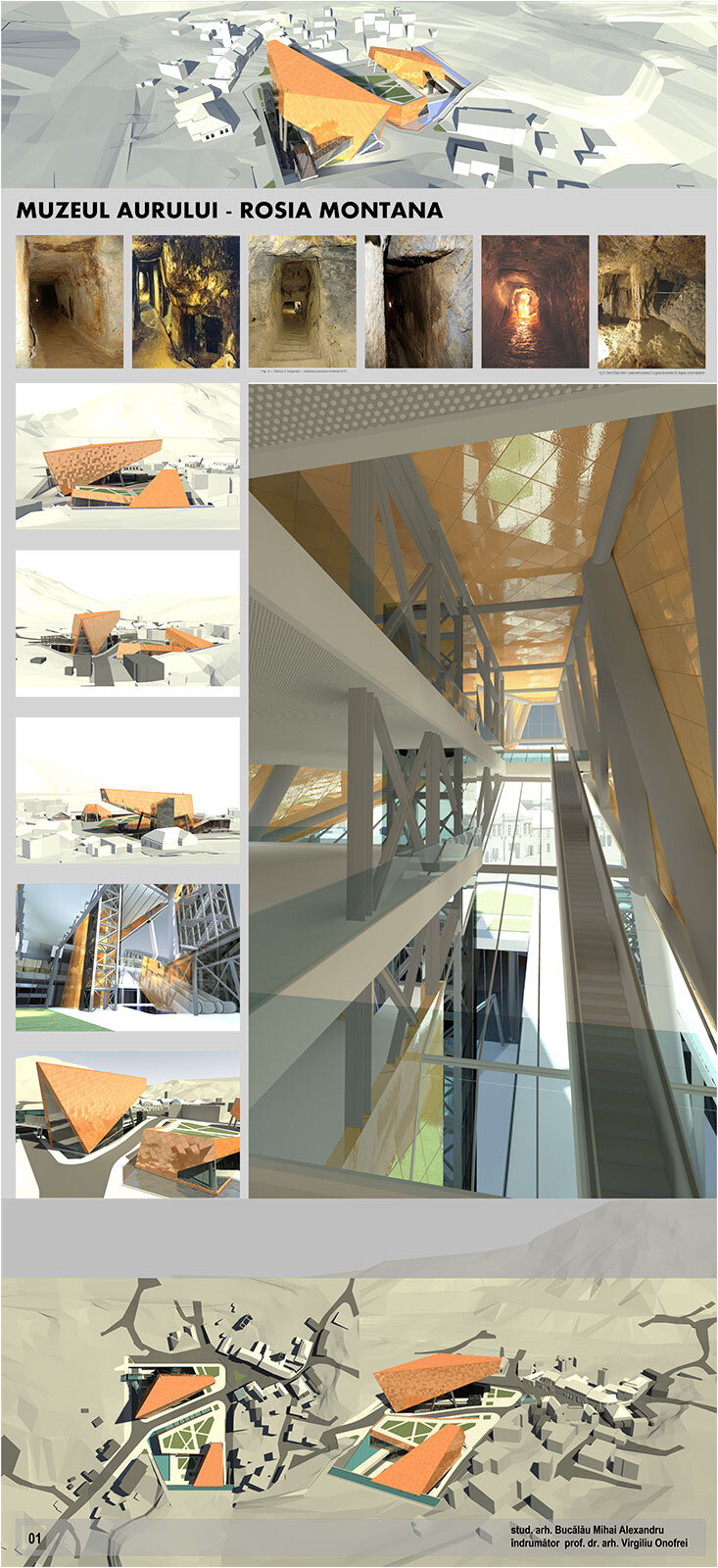
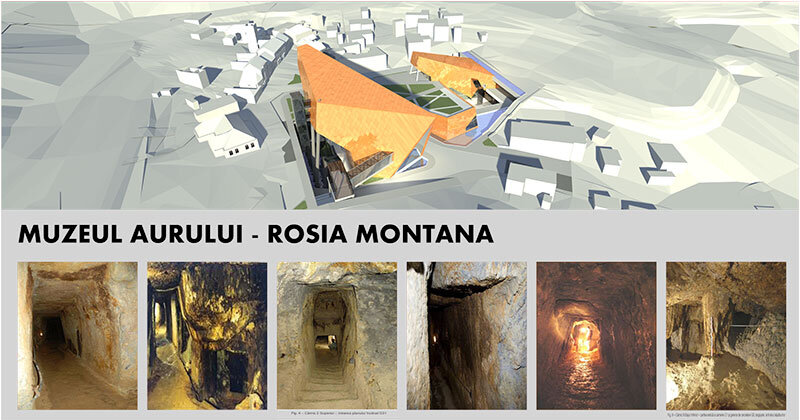
Above ground, the volume creates the impression of three distinct bodies, contrasting with the existing fabric.
Apparently an introverted volume in which the full dominates, due to the constraint of obtaining an optimal exposure surface, the composition develops a dialog with the market, this is made possible by the removal of the circulations. They thus become independent pieces in this equation and are embedded in glass volumes, facilitating the visual exploration of the surroundings from different elevations and angles of perception.
As a whole, the building envelope is analogous to the three dominant mountain massifs in the area, namely the three volcanoes that have favored the emergence of the gold-bearing veins in the earth's crust, and is modeled from polygonal surfaces, also recalling the trapezoidal section shape of the galleries dug into the mountain.
The metal structure, always left exposed, combined with the copper metallic patina on the facades, is reminiscent of an industrial complex, an idea also induced by the vertical and horizontal circulations placed on the outside of the opaque mass.
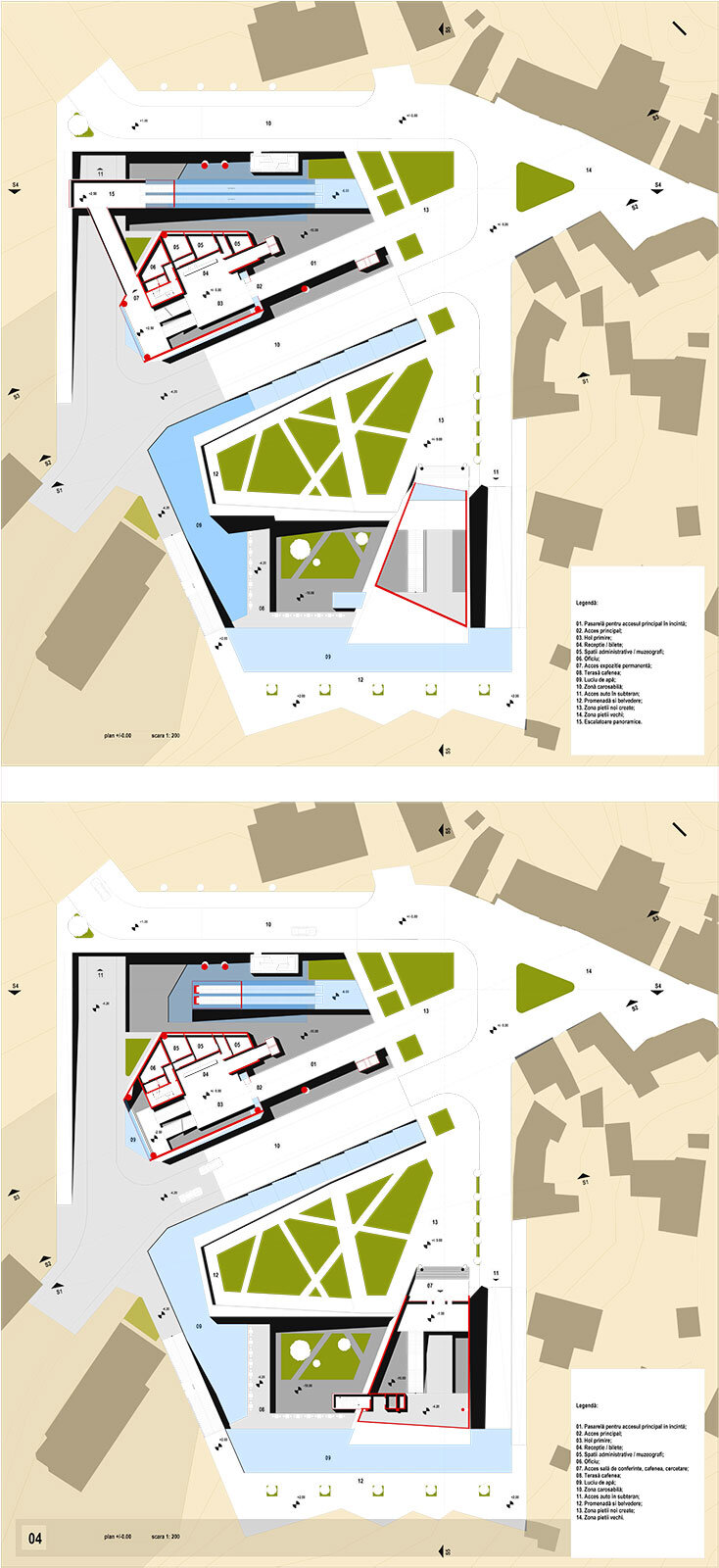
The height, shape and cantilevering of the dominant volume are intended to create a strong landmark in the area and to mark access to the enclosure. The link between the museum and the old square is realized through a metal walkway, a transitional bridge between new and old. The aim was to extend the public space in the existing square and to create promenades and belvederes to enhance the existing natural setting.
The central volume houses a space for receiving visitors, also acting as a distribution to all the other spaces. It houses a varied exhibition space inside or on the upper levels, intended for temporary presentations. The lower levels of the reception area house a large exhibition space for the permanent display of elements, objects and machinery used in different historical phases of mining.
In essence, the project proposes the revitalization of the existing square, its extension into a public space, a dialogue with the natural setting and, above all, the creation of a new interior space with a new function, which will bring about a cultural development of the area by promoting and bringing to the fore a tradition dating back to Roman times, which left its mark through hundreds of galleries that followed the gold-bearing veins.