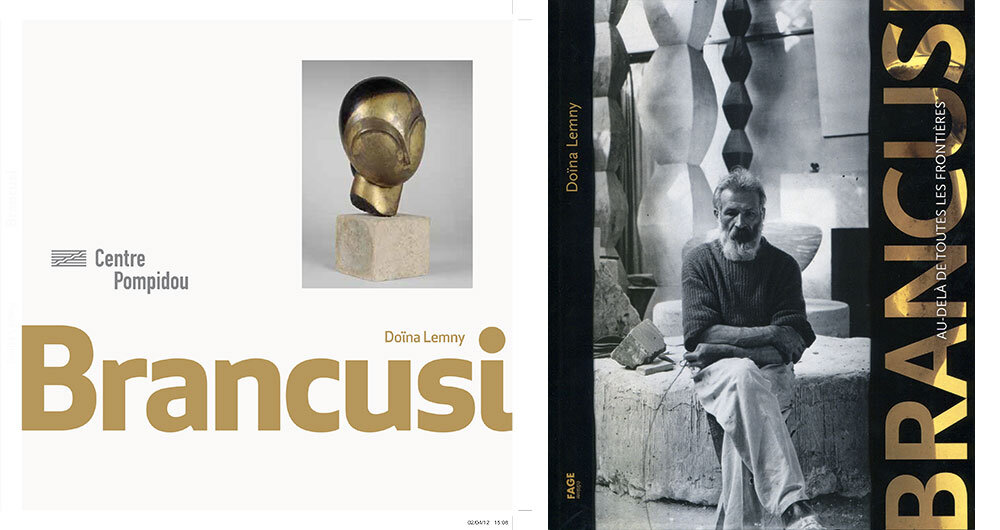
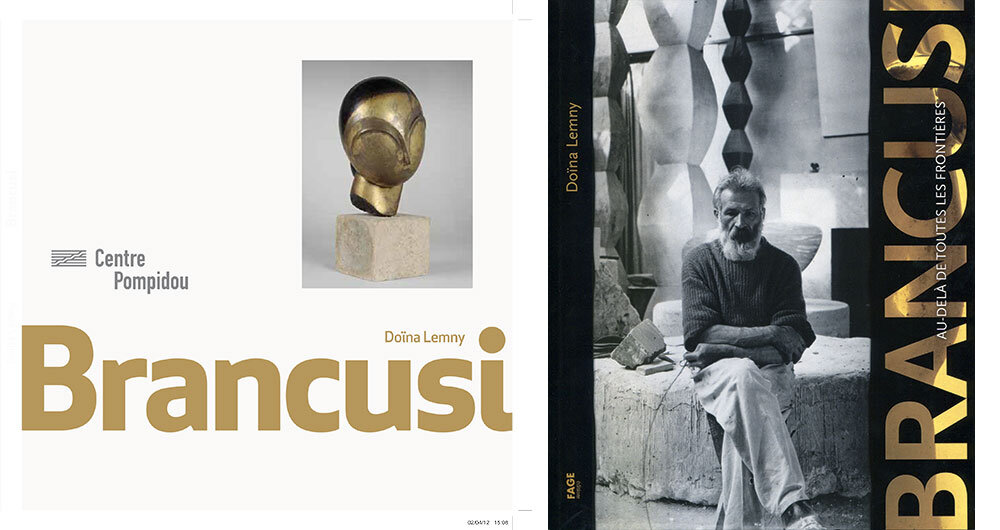
Brancusi - Éditions du Center Pompidou, 2012 / Brancusi: beyond all borders, Fage, 2012
When I moved to France more than twenty years ago, I met a Romanian artist who fascinated me and whom I adopted in my research. The discovery of the archives held by the National Museum of Modern Art in Paris - an inexhaustible source of information - and the closeness to the works that we had to prepare in order to install them in the studio that was reconstructed in 1997 in front of the Pompidou Center, designed by architects Renzo Piano and Richard Rogers, enriched me. Overcoming my natural emotions when I came into contact with these works and the studio notes, I realized that I had a moral obligation, coupled with a profound pleasure, to exploit this treasure.
The collaborative publication of two catalogs on the contents of the studio - works and archives - L'Atelier Brancusi. La Collection (Paris, Éditions du Center Pompidou, 1997) and La Dation Brancusi. Dessins et archives (Paris, Éditions du Centre Pompidou, 2003), was for me an important step in my long research of Brancusi's work.
Like any great artist, he does not reveal himself at a glance, but leaves in the shadows certain aspects that deserve reflection and interpretation. His work is extremely rich in ideas despite the relatively small number of works, compared to the great artists of the 20th century. His writings - studio notes in untidy handwriting - are full of hints of his intentions, feelings and aspirations. In 2004, I succeeded in publishing a volume with Humanitas, in collaboration with my colleague Cristian-Robert Velescu, containing all these workshop notes, including those in Romanian, which I wanted to make available to colleagues in Romania who were unable to research this collection directly. A year after this volume, I published a monographic essay with the Parisian publishing house Oxus, in which I exploited the most recent information gathered from the archives that had remained in the archives for some fifty years. This essay also followed several publications that I had produced in collaboration as part of the collection "Les Carnets de l'atelier Brancusi" (seven issues appeared from 1998 to 2002), volumes focusing on the essential themes of the artist's creation.
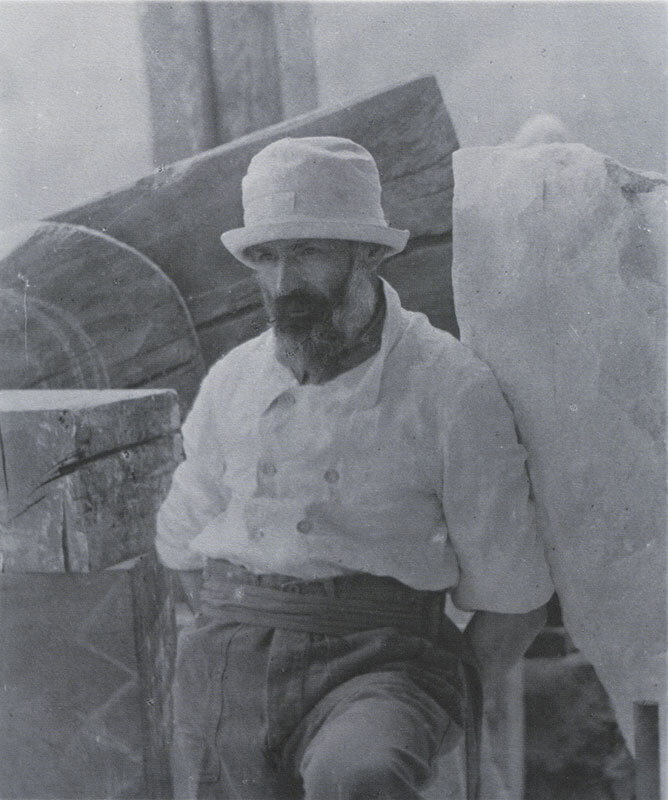
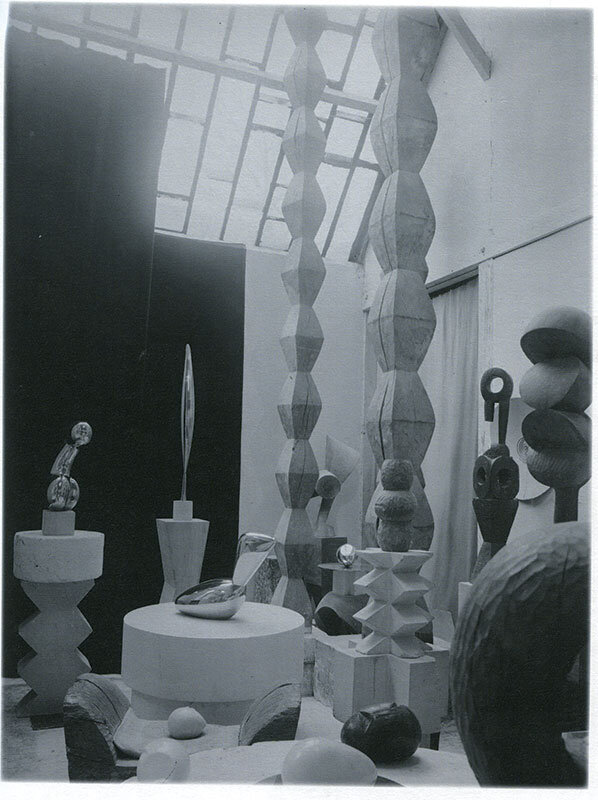
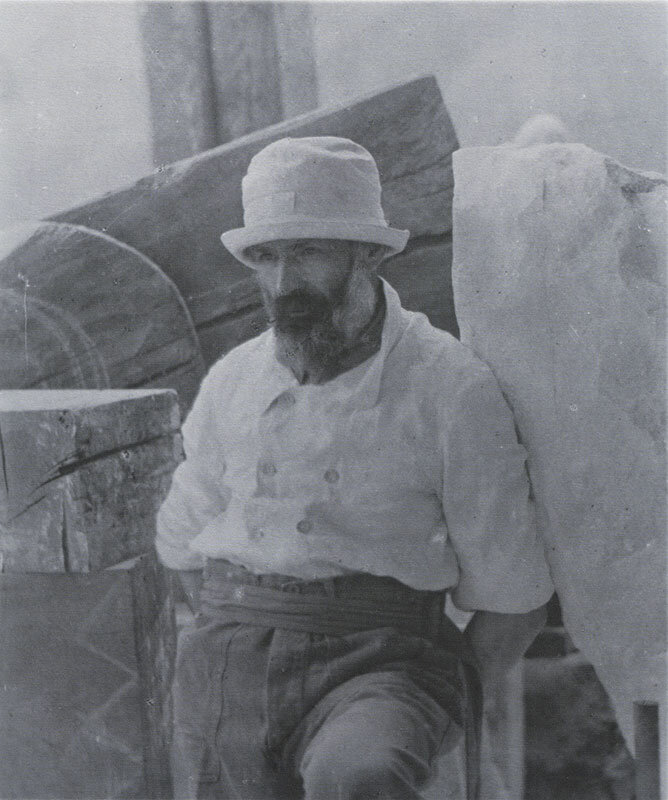
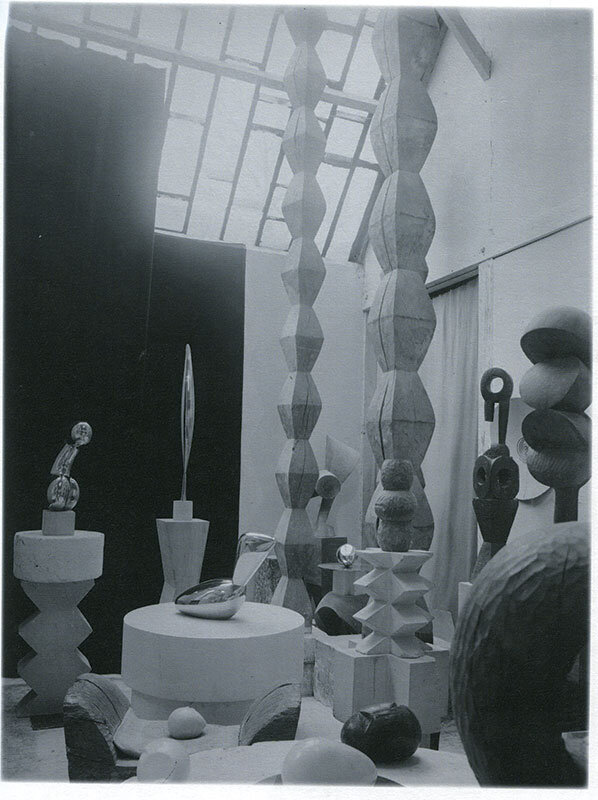
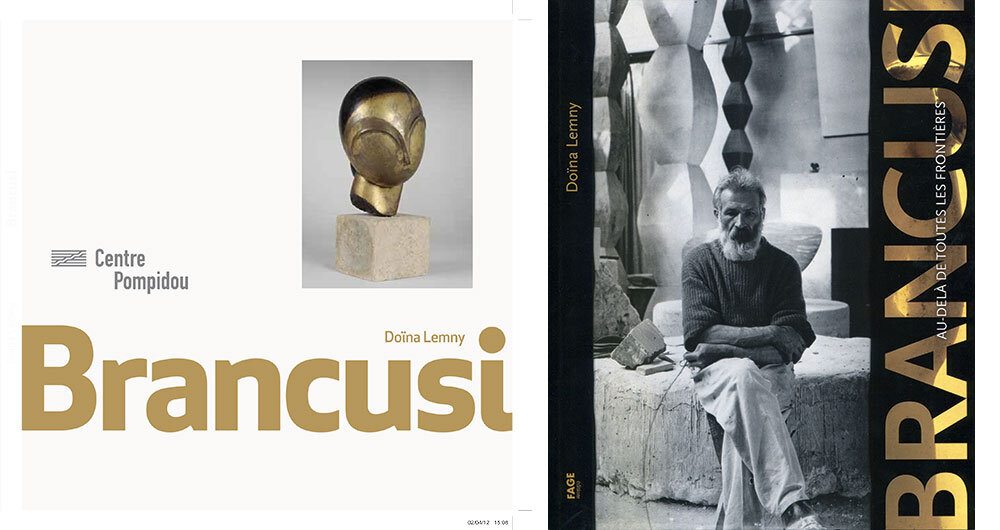
Anyone may wonder what else is new in the two volumes that I published in June 2012, one published by the Pompidou Center Publishing House as part of a collection entitled "Monographies d'artistes du XXe siècle", and the other by Fage Publishing House in Lyon, entitled Brancusi au-delà de toutes les frontières. The first, as I said, is part of a collection initiated by the Pompidou Center Publishing House, which has so far published two artist monographs - Matisse and Picasso - and two volumes on artistic movements of the 20th century: Cubism and Surrealism. This small-format monograph (18 x 18 cm, 96 pages) is intended, like the collection as a whole, for a general public wishing to penetrate the world of a major 20th-century artist through concentrated scholarly texts. Taking into account the requirements of the collection, we have summarized Brâncuși's artistic career, highlighting important events in the life of the Romanian sculptor, which we have collected from the above-mentioned archives. A glance at the summary reveals my intention to "narrate" this journey in a language that is alert and full of information necessary to understand the artist's masterpieces: "Un fils des Carpates", "A pied, vers Paris", "A l'ombre des grands arbres..", "Le chemin de Damas", "Le sculpteur "qui rabote les femmes"", "Désir d'espace, rêve d'envol", "La Colonne sans fin, du socle à l'œuvre", "Tentation de la photographie, fascination du film", "L'atelier: l'œuvre totale". For the illustration of the volume, we have benefited from a fruitful collaboration with the best specialists at the Pompidou Center Publishing House, with whom we have carefully worked on the photogravure of each illustration. From a graphic point of view, the illustrations, which are numerous, are very close to the real appearance of the works that we have in the studio in front of the Pompidou Center.
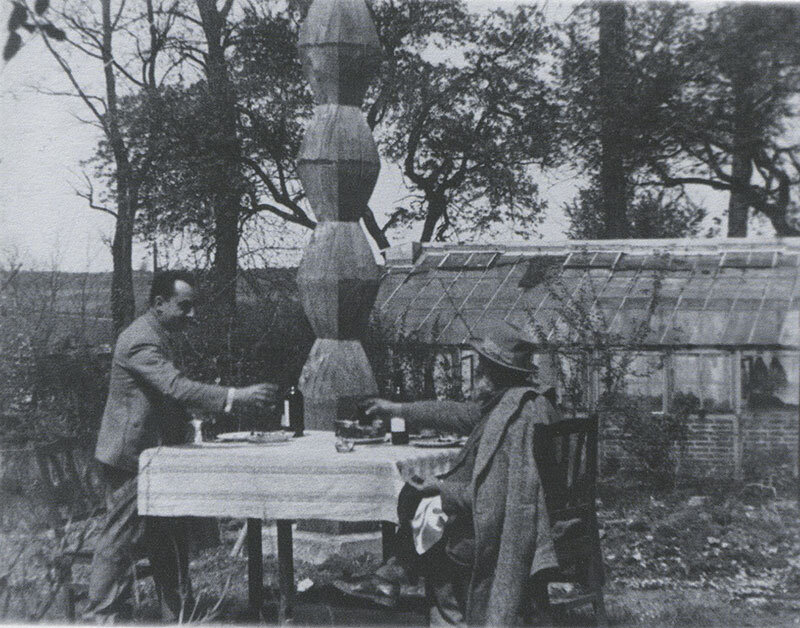
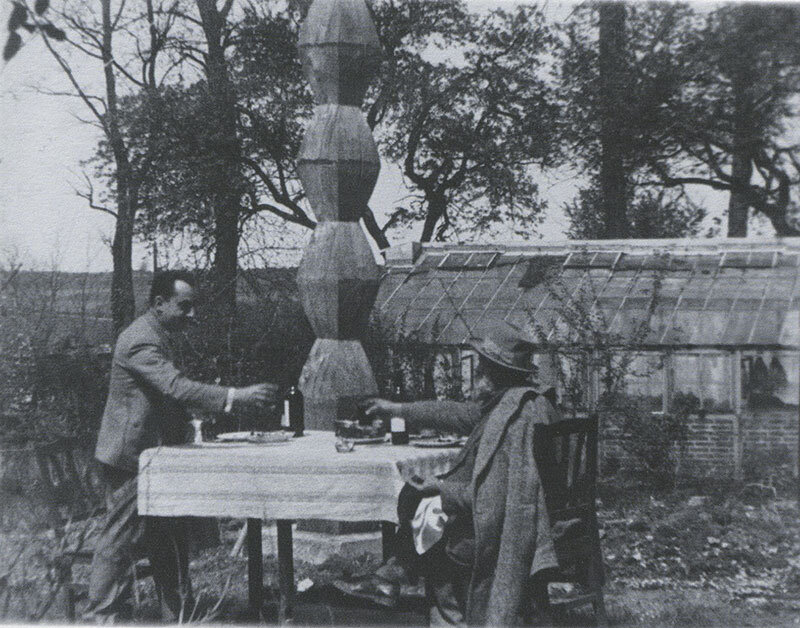
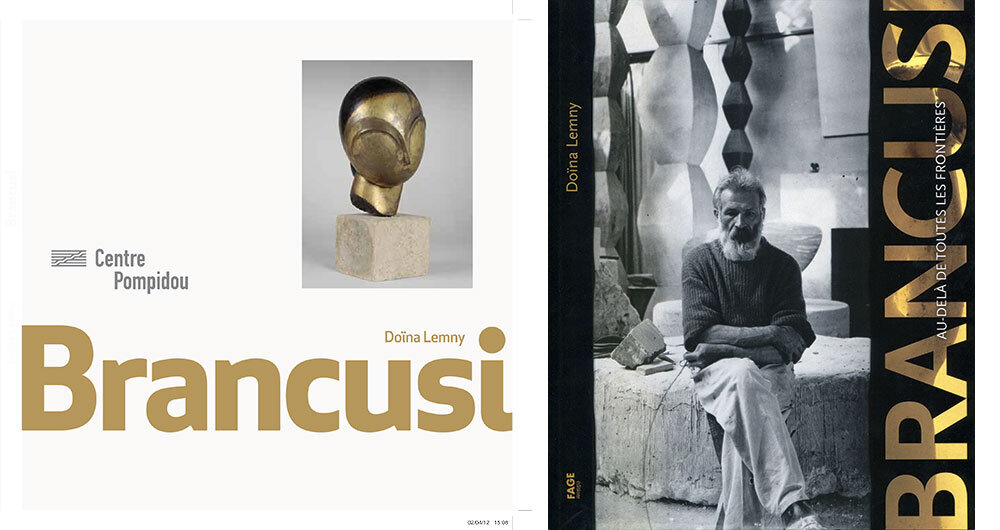
The second volume, published by Fage, Brancusi: au-delà de toutes les frontières, is, as the title suggests, a detailed essay on the universality of Brancusi's work. I was able to afford such an analysis after going through almost all the artist's documents and bibliography, after seeing almost all the works and after being able to take the necessary distance for an overall interpretation. I have taken up an idea that I had put forward a long time ago, according to which Brâncuși, engaged in the search for the 'essence of things', takes us, the spectators, on a long journey in which space and time are overcome. He thus invites us to transgress with him geographical, historical and formal boundaries in order to gain a better understanding of his own experience of where the masterpieces coveted by the world's greatest museums and collectors have come from. The book is a demonstration of this idea of transgressing limits of all kinds, starting with the young Gorjean's desire to go out into the world, carried away by dreams and thirsting for knowledge. The arguments used are the works themselves, the events in the artist's life that have enabled him to address a broad, international public, brought before new creations that give the impression of works that have already been seen. The titles of the chapters, which are not explicit, are rather evocative, my intention being to suggest to the reader from the very first page the itinerary of this 'adventure': 'Retour aux arts premiers. Source de modernité / Back to the primitive arts, source of modernity", "Du bloc au corps. La singularité de la sculpture / From the block to the body. The singularity of sculpture", "Du Baiser à la Prière. Affronter les conventions / From Prayer to Kiss. Facing conventions", "Des portraits sans modèle / Portraits without model", "L'Armory Show: le début d'une aventure internationale / The Armory Show: the beginning of an international adventure", "Du chant à l'envol. La magie à l'œuvre / From song to flight. Magic at work', 'De la difficulté de franchir les barrières de l'art américain / On the difficulty of crossing the barriers of American art', 'De l'ambiguïté des sexes / On the ambiguity of the sexes', 'De l'Europe à l'Afrique. Le bois / From Europe to Africa. Lemnul, material esențial", "De la Voulangis à Târgu Jiu et à Chicago. La Colonne sans fin / From Voulangis to Târgu-Jiu and Chicago. The endless column", "Un rêve d'Orient: Indore / Indore, dreaming of the Orient", "Des notes d'atelier au dessin. À la frontière de l'écriture / De la note de atelier la desen. La hotarele scrisului", "De l'art de sculpter sa propre image. L'autoportrait photographique / On the art of sculpting one's own image. The photographic self-portrait", "Un lieu sous le feu des regards: l'atelier / Un lieu dans le centre des attention: l'atelier".
We have therefore evoked, sometimes in chronological order - if one can follow a chronology with Brâncuși, the artist was working on several themes at the same time - his quest to capture the "essence of things", even if he had to go back in time to take up the working methods of the early artists. The transition from academic sculpture to carving stone or wood without having to go through modeling, the simplification of forms and the renunciation of unnecessary details, the intention to suggest an idea through a form and not to copy a figure, the desire to impose a personalized reading through photography, the extension of the installation of sculptures in the studio to urban spaces - an action in which he contributes his intuition as an architect and urban planner - are all acts of transgression that the Romanian artist has courageously taken on even before international courts. The perspective of the discourse of this book seems to me to be of particular interest both to the European and American public - I hope that an English edition will be published as soon as possible - and to the Romanian public to whom I dedicate the translation of this work, which I have taken on, rewriting certain fragments and which will be published by NOI Publishing House in November 2012.