Diplomas Faculty of Architecture - UPT 2012: Redevelopment of the Iosefin Food Market and urban regeneration of its neighborhoods

project author: Ștefana Bădescu
supervisor: arh. Codruța Nergulescu
The Iosefin neighborhood is one of the four historical neighborhoods of Timișoara, being, by tradition, a commercial area. Over time, this character has also been influenced by the presence of the Bega Canal, which played an important role in the development and support of commercial functions in the area. Thus, especially at the beginning of the 20th century, almost all forms of trade flourished in Iosefin, from small craft workshops in the side of individual houses to the representative offices of prestigious companies. Last but not least, the Iosefin district is home to one of the best-stocked food markets in the city - the Iosefin Market, which, in addition to its undeniable economic benefits, also brings social benefits to the community, as it is a "living" socializing point.
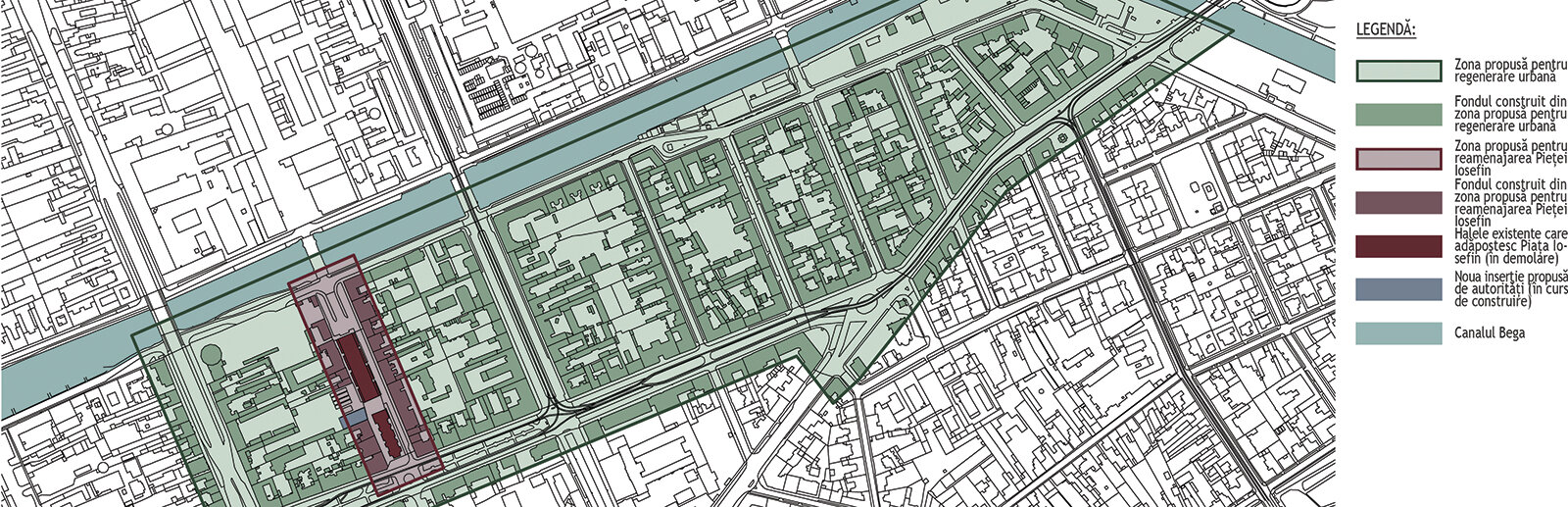
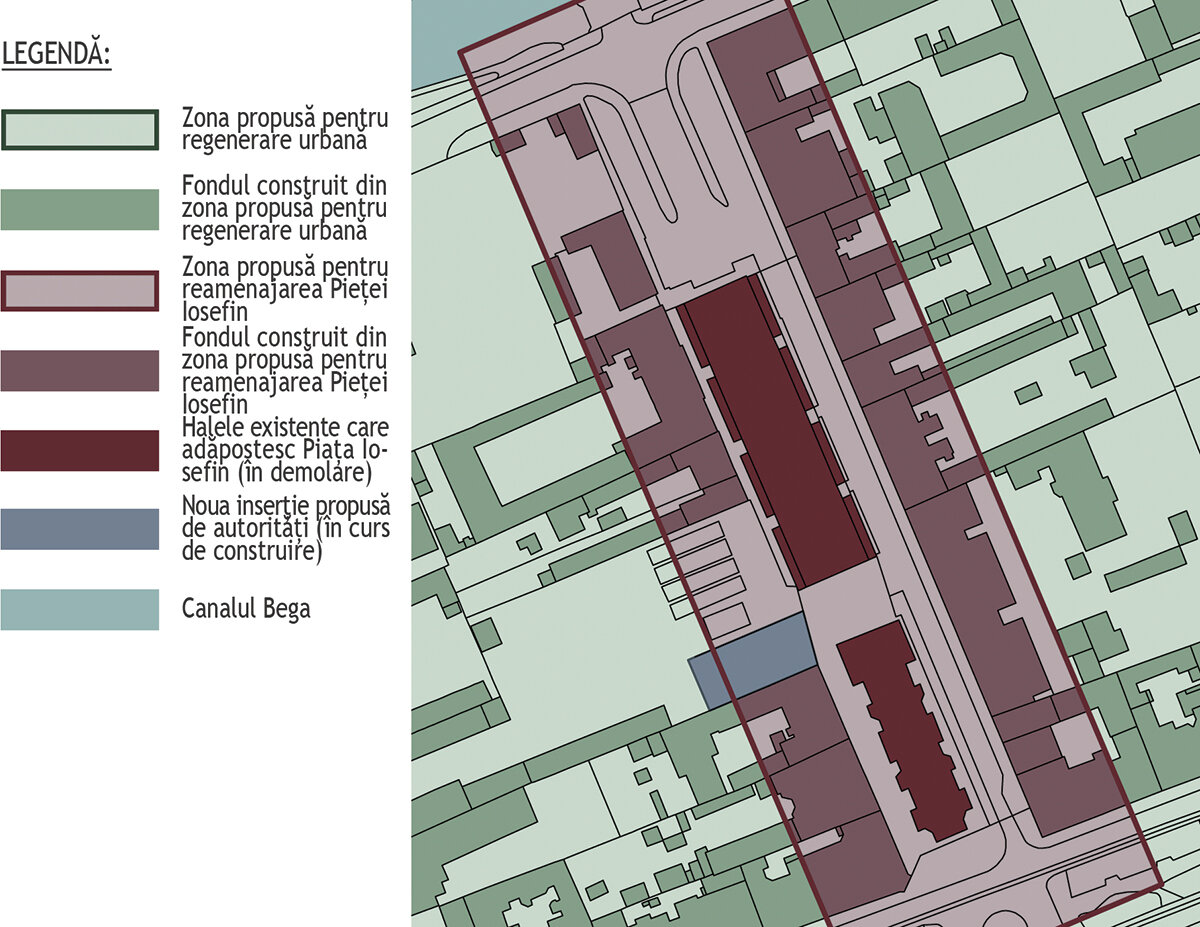
Recently, the Iosefin agri-food market has been undergoing rehabilitation works, involving the demolition of the existing halls and the construction of a new one, developed on 8,000 square meters and several levels, including underground, on the site of the former livestock market. However, the main disadvantage of the new insertion is that, although it successfully solves the problems of thermal comfort and other minor functional issues, it contradicts, in the proposed part, the principles of organization of agri-food markets, which come from the Eastern-Mediterranean tradition of open-air trade and which induce certain relationships between the seller (who is also a producer) and the buyer; thus, the new hall becomes more of an 'agri-food mall' than a market of this type. At the same time, the current strategy for the redevelopment of the Iosefin Market in fact eliminates trade - and therefore social activity - from Iancu Văcărescu Street, which will in future be transformed into a large overground car park, which will automatically destroy the lively character of the space in question, which has over time become an active urban center. As the new development will, however, consume significant funds and resources, which automatically excludes the possibility of demolishing it in the future, regardless of its shortcomings, it is proposed to include the new hall under construction in the redevelopment project for the Iosefin Agro-Food Market, with the suggestion to refunctionalize it and transform it into an administrative, storage or overground parking building.
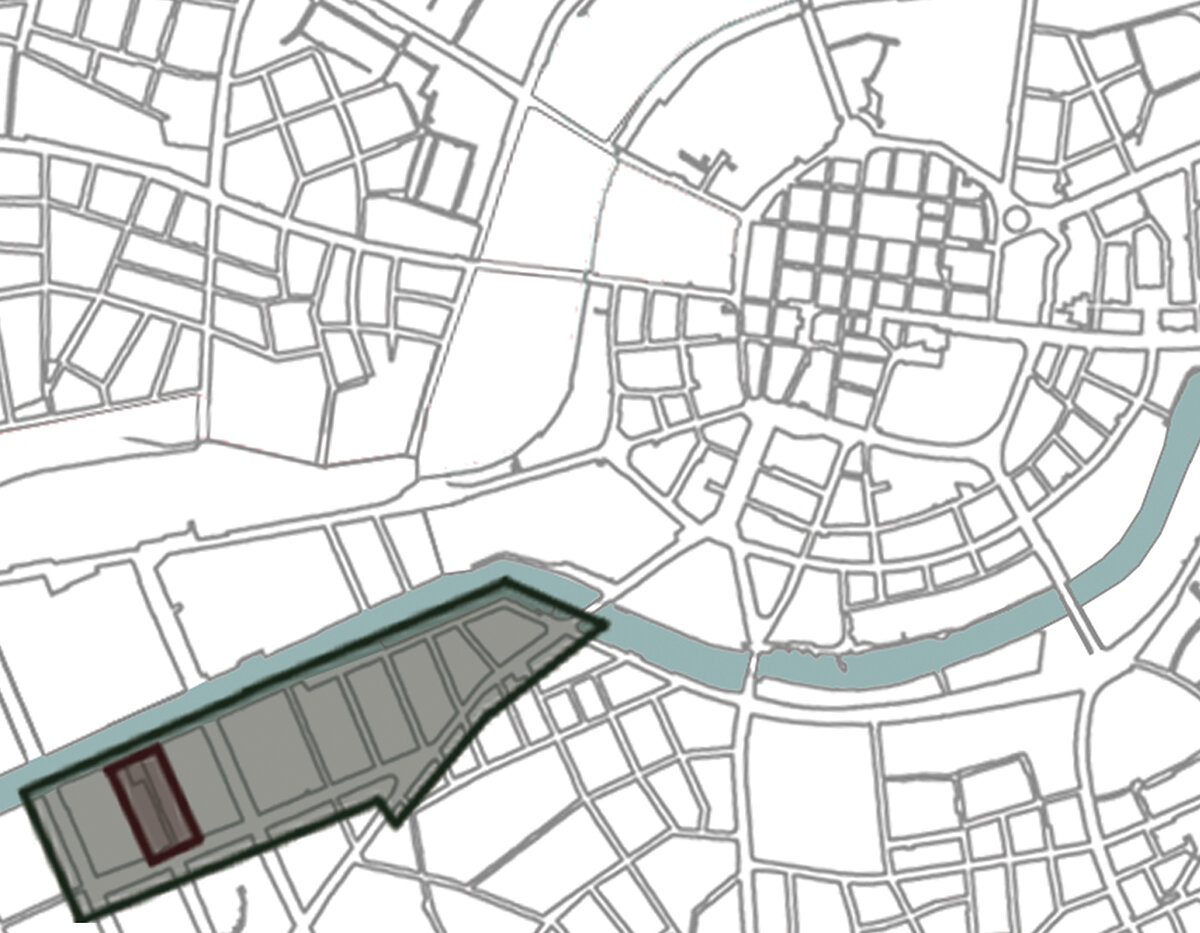
In this context, we proposed as a topic for the diploma thesis a study on the redevelopment of the Iosefin Agro-Food Market (including the new hall under construction). We also proposed for study the problem of urban regeneration of the vicinity of the agri-food market, namely a relatively large area of the Iosefin district, which is characterized by unity in terms of historical and stylistic evolution of buildings, the way of parceling and land use, alignment and height, functions and even the living standards or lifestyle of the inhabitants. This area represents an important part of Timișoara, both in terms of the historical and cultural values to be found here and because of the economic and social opportunities offered by the ensemble, which are currently not being developed and exploited to their full potential.
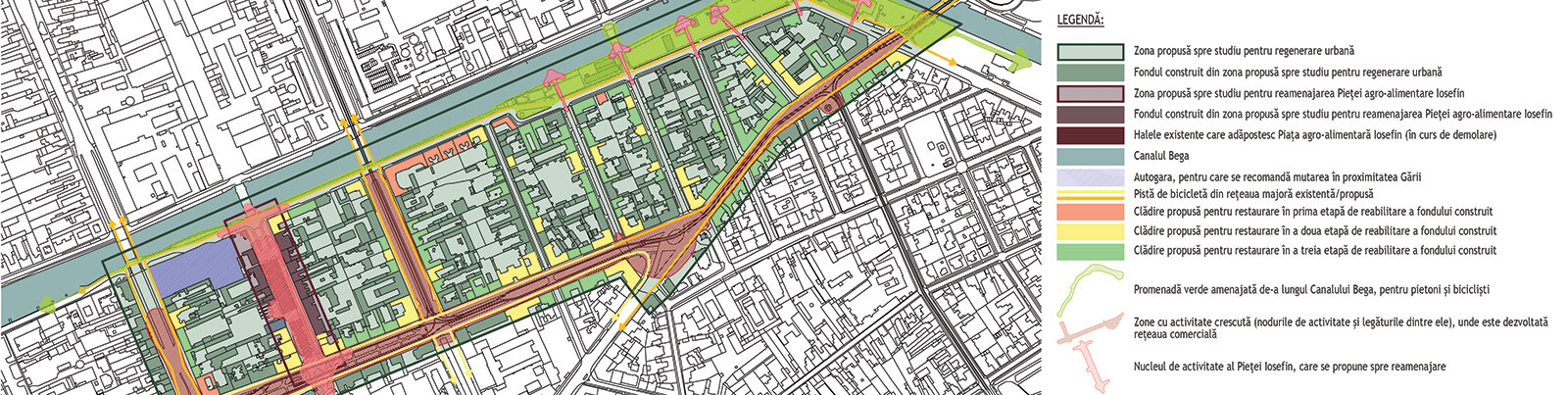
The proposal for urban regeneration of the area under study, based on the conclusions of the multi-criteria analysis of the area proposed for revitalization, is in fact a long-term integrated strategy, which aims at recovering the traditional character of the district and incorporating it as an active urban centre into the existing city network. The first and perhaps the most important step in this process is the discovery and assumption of the identity of the district, which defines the type of activity characteristic of the area and further dictates the specifics of the measures that can be implemented here. Thus, if the historic Cetate center is an "open-air mall" with luxury boutiques, cafes and restaurants, frequented by students and business people alike, and if Fabricul is becoming the "beer district" with an exciting nightlife revolving around the Brewery, the Iosefin district has been and will remain for a long time to come a commercial district, a place where the initiative of the small producer (whether craftsman, farmer or service provider) flourishes. From the numerous shops and workshops developed at the sides of buildings (especially those located along the boulevards) to the Iosefin Agri-food Market, trade is developing in a wide variety of forms and represents the traditional characteristic of the study area, which should be exploited and strengthened by the revitalization proposal.
Further, the urban regeneration strategy focuses on a series of specific objectives, which propose to solve the dysfunctions and to capitalize on the strengths of the study area, resulting from the urban analysis. Thus, these objectives aim to transform the Autogării into a key point in the public transport network, accessibility for cyclists, development of the Bega Canal bank and its transformation into a pedestrian and cycling promenade, rehabilitation of the built environment, encouragement and development of the existing commercial network, and redevelopment of the Iosefin Agro-food Market. Undeniably the most active and profitable nucleus of the area proposed for urban regeneration, the Iosefin Food Market must be maintained and developed in the revitalization strategy; the intervention of its redevelopment in an appropriate manner can become the driving force behind the whole process of regeneration of the area under study, which is why this operation is the most important objective of the revitalization strategy.
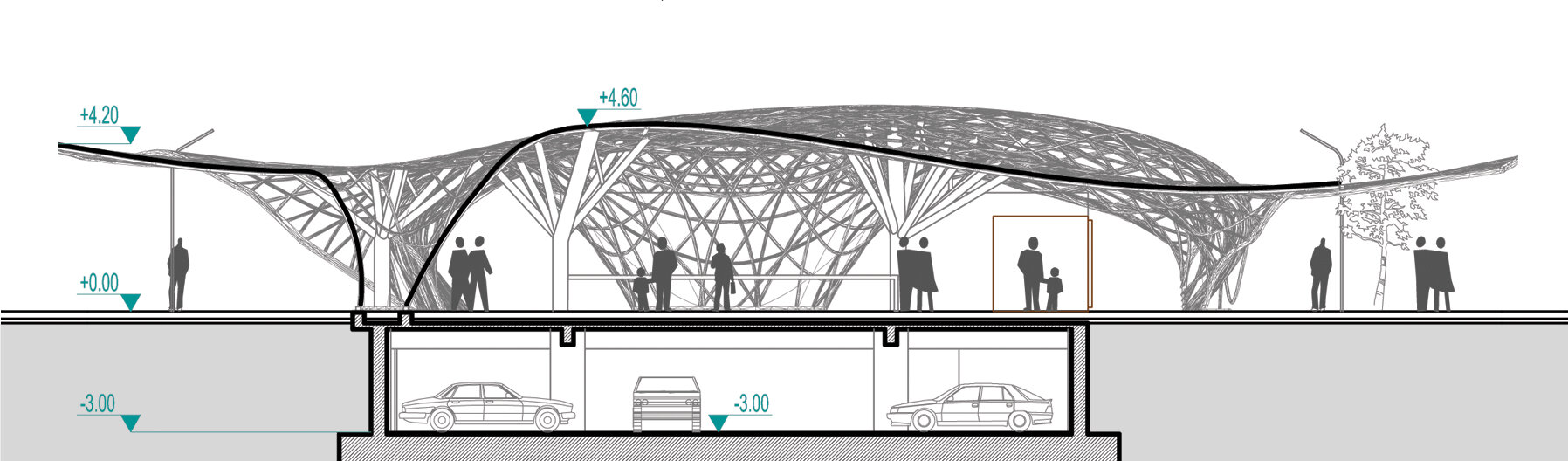
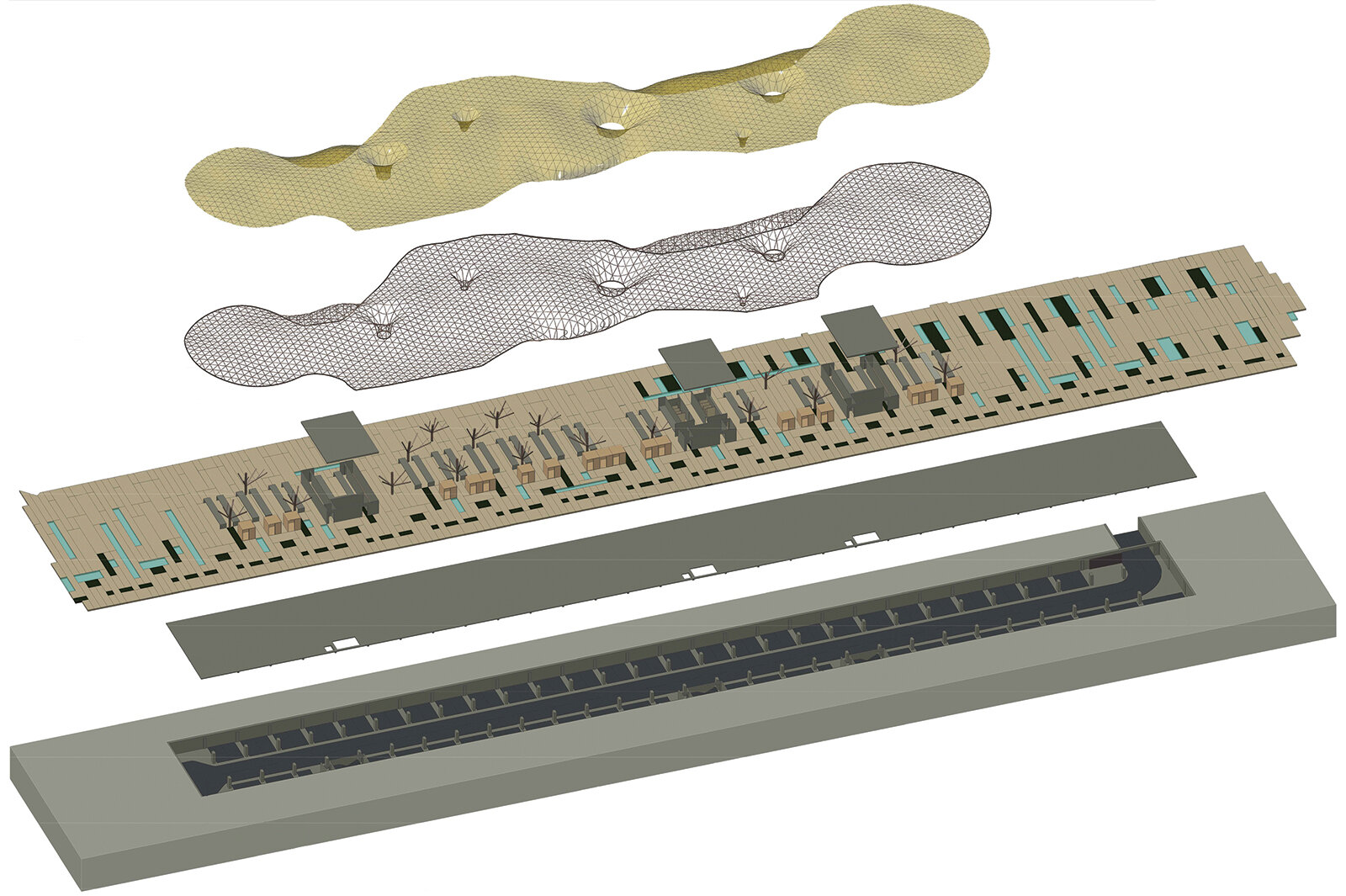
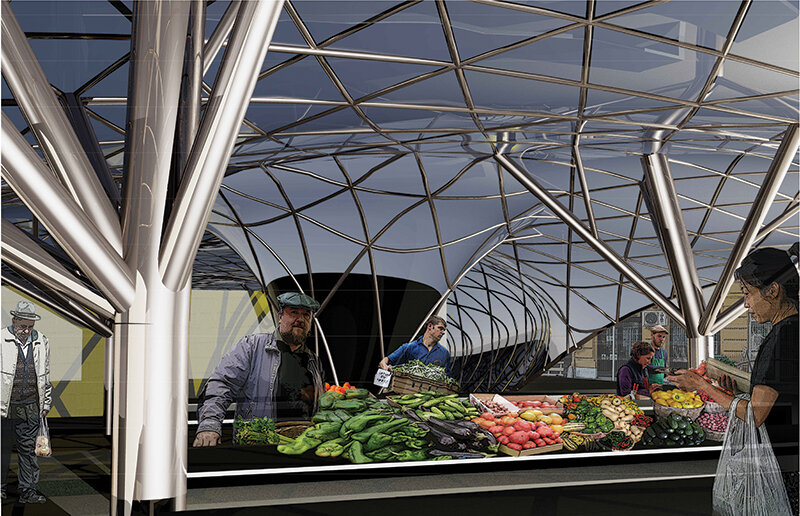
The proposal for the redevelopment of the Iosefin Agri-Food Market has, from the outset, focused on accessibility and pedestrian permeability, with the options leaning towards an open, light structure, designed according to organic principles of spatial organization, which, beyond economic profitability, would encourage social interaction and become a reference point for the proposed regeneration area. In the following, the three essential aspects that were at the basis of the urban and architectural design of the project discussed are presented:
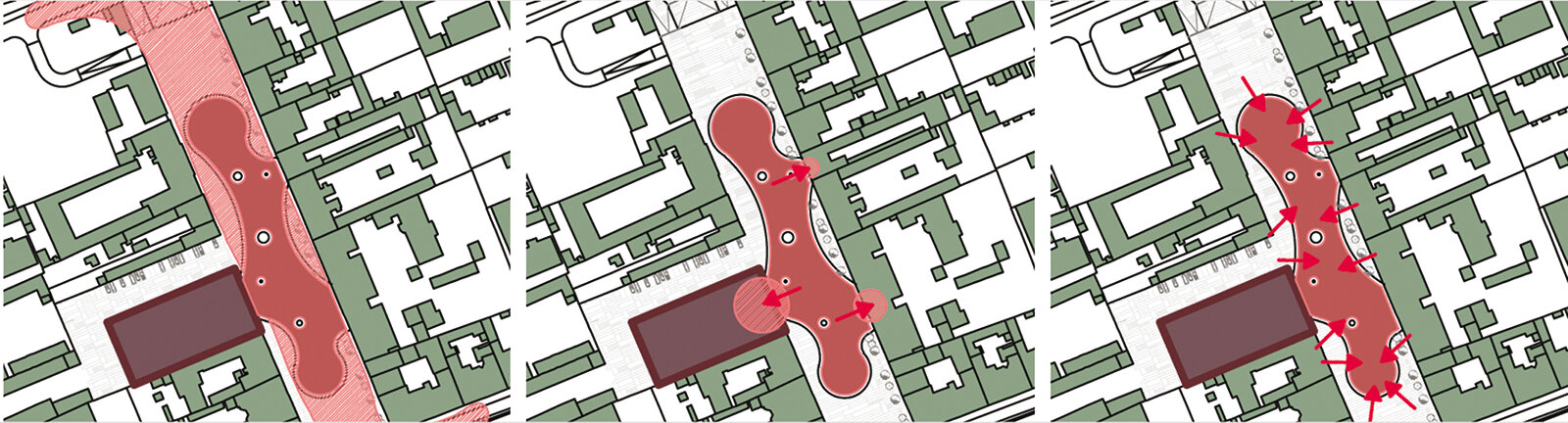
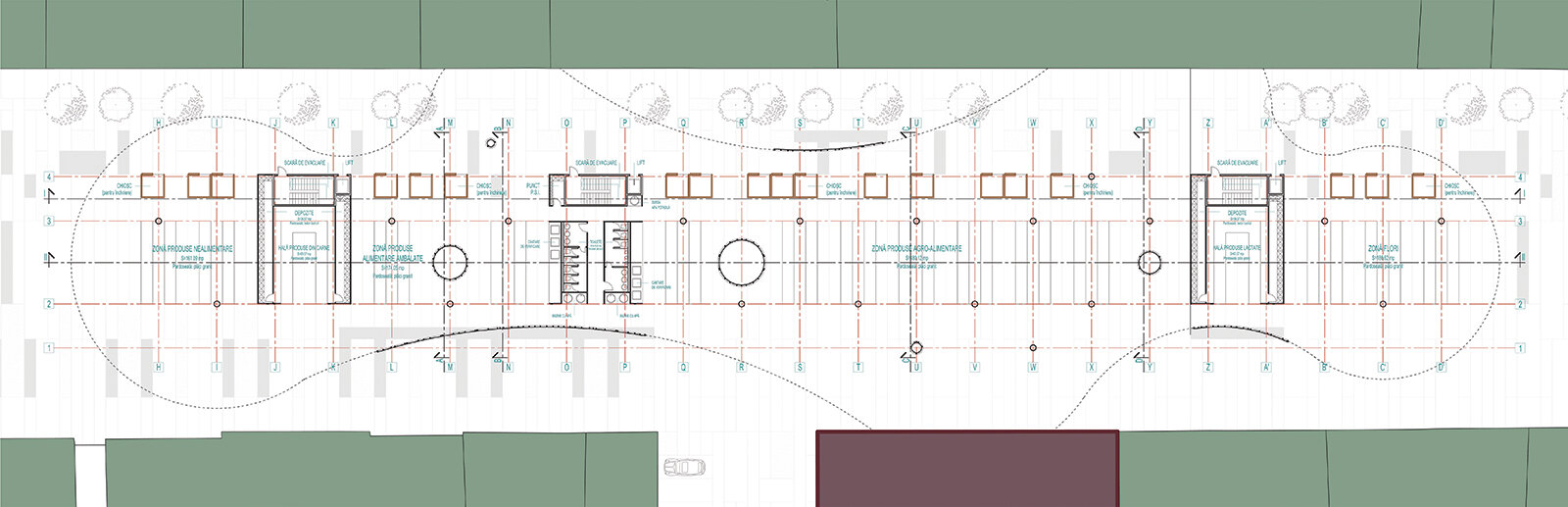
- The concentration of the activities related to the agro-industrial market in the public space, a concept that determined the location of the market itself on Iancu Văcărescu Street, in the space formed between the two built fronts. To this end, it is proposed to close the street to vehicular traffic, with the exception of a small area for mixed traffic, for groceries; thus, the market becomes a public place, a place of commercial and social exchange, while the street regains its character of a 'living' place, becoming an active urban pole.
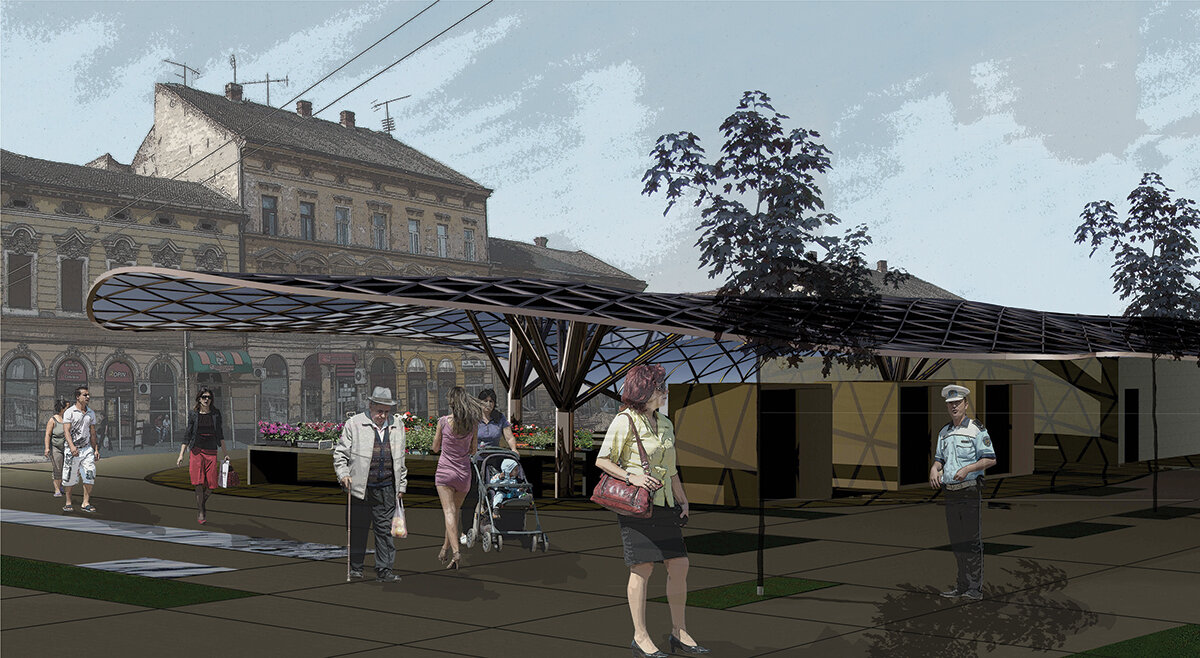
- Unification of the new with the old, i.e. the market itself with the commercial objectives already existing at the sides of the buildings located at the fronts of Iancu Văcărescu street; this gave rise to the free, organic form of the proposed shell, which unifies, in terms of architectural language, the new agri-food market and the fixed landmarks existing in the built fabric, such as the food shops at the front or the new insertion proposed by the authorities.
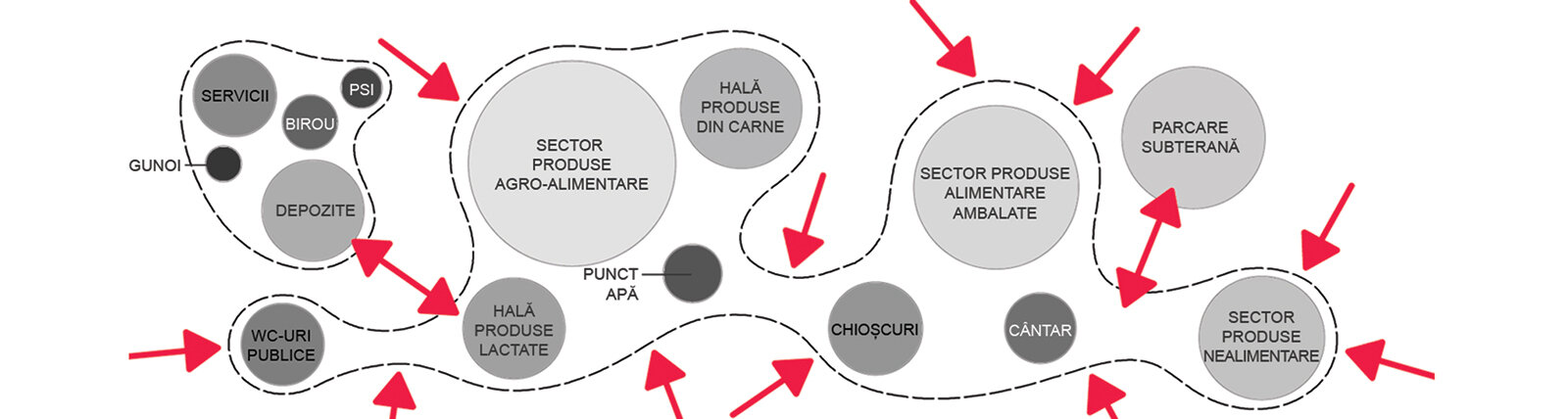
- Pedestrian accessibility and permeability, two essential concepts in the organization of the agri-food markets; these principles imposed the organization of the market as an open space, covered with a light structure, accessible from all sides to pedestrian flows, which, with the closure of the Iancu Văcărescu street to vehicular traffic, circulate freely throughout the area.
Consequently, in contrast to the closed, multi-storey and cramped space of the new insertion proposed by the authorities, in which the supply flows are unhappily intertwined with the pedestrian flows of potential buyers, the proposed redevelopment of the Iosefin Agro-food Market is presented as an open market, located in the public space, accessible from all directions for pedestrians and organized according to the principles derived from the tradition of open-air trade.