[White...] Black...? Corbu' (architecture with light) - (II)
[fragmented sequences]
Under the title White.... Corbu' (architecture with light), in issue 3 of Arhitectura magazine, a particular visual approach to the works of Le Corbusier was initiated. Counterbalancing the subject, part II, Black... Corbu' (architecture with light), would have allowed the antithetical representation of the images presented in the first part. Returning to the last image that accompanied the article, the traforum of Sainte Marie de la Tourette, we note the transition between the zone determined by the presence of intense white and that of deep black... a transition that transposes the spatial limits, between the exterior space dominated by the presence of light and the interior space determined by the presence of darkness, of chiaroscuro: 'Partial darkness recomposes interior elements by emphasizing their quality of absorbing light and reflecting their own luminosity. Objects passively receive light, becoming themselves light sources. The distinction between black and white remains somewhat imperceptible. Absolute black is the element emphasized by the presence of intense white". Light architecture was initially a counter-reaction to the evolution of contemporary society, which was no longer able to perceive the subtle in favor of the strictly formal. The specific elements of a language were translated beyond the belonging to a stylistic current and the representation resulting from volumetric conformity.
Talking about Le Corbusier and the perception of the architectural object transposes looking beyond the generalized image, into an individual, personalized space, causing a state of timelessness... a sensation that can frequently be transposed to the level of gradual preception within the temporal traversal of the causal space conformed architecturally. Atemporality cannot be measured... Sometimes along this route, predetermined or directed, you experience the demiurgic feeling of the recomposition of interior space. Perception results from the summation and superimposition of the assimilation of elements. This can often surprise you later, through the recollection of accumulated sensations. At this juncture, memory and the ability to put the sequences together in chronological order play an essential role... Constitutive fragments of a whole, re-evaluated beyond their punctual appearance, create the illusion of an integral object recomposing a specific scene. Fragments redefine the limits perceived a priori and often, by redirecting your attention, lead you to choose another route, different from the one initially proposed.
Architectural constructions by Le Corbusier often generate this feeling. The gradual discovery and perception of the inner spaciousness of the object is transposed to the individual... Each time, invariably, one must detach oneself from the collective that descends into discovery in order to experience the phenomenon of experiencing interior space in a private way... Architecture attracts you, seduces you by an element that focuses your attention. Beyond the reception of information, it is thoughts that make you linger. The fragments, parts of the whole, complement each other, recomposing the images in a sequentiality resembling that of a movie... A space in which the colors are lost, the grain is accentuated, the transparency fades, transposing the weight of the material onto the stage. Massiveness sculpturally reshapes perceptual space. Projections broken up in shades of gray emphasize the materiality of the whole. The elements (re)define a path in which spatial perception is more a search for the self, a reflection of an inner state.
Oneiric space is correlated to cinematographic perception through the sequential transposition of gradually assimilated planes. The dream, the symptomatic projection, translates into an imaginary environment the elements taken fragmentarily from recognizable reality. The chiaroscuro becomes the mediator, the referential framework par excellence that allows the transition between two worlds: the one represented by the luminous projection and the one determined by the presence of the deep black... But where do dreams occur? (where do the fantastic images, projections of the individual's inner space, originate? where is the delimitation between the inner spatiality and that caused by the representation of the architectural plane?)... dreams take place in the frame projected by each of us, in the chiaroscuro zone that balances the quantity of blackness in relation to the luminous flux.Absolute black is the final state, the background in which the elements of the film come to life through the fluidity of the information flow... the movie.
Invariably the connection is created with the projected world of static images, of pictorial representations. In the search for absolute blackness, in the transition zone, we find the characters frozen in time imagined by Rembrandt or those of Goya. They idealize the unnatural by aestheticizing the ugly... love the chiaroscuro. The photographic snapshots of figures appearing out of the darkness(The Sacrifice of Isaac, St. Matthew and the Angel, The Conversion on the Road to Damascus, etc.), of those reflected(Narcissus) or asleep(Cupid or Death of the Virgin) transpose the world imagined by Caravaggio into the intermediate space... between dream and reality. The projected images are frozen fragments of the dream space, individual projections transposing an induced state, emphasizing a perceptible limit.
Matisse, for example, used black as a color of light, not darkness. In Porte-Fenêtre à Collioure (1914) the juxtaposition is emphasized in which the closure brought about by the presence of darkness seemingly antithetically reformulates the representation of the dazzling light effect. Looking in the light transforms the principles of sensory perception. Contre-jour resulting in temporary blindness recomposes the cognizable elements by projecting the distorted images of Goya's works, the imperceptible silhouettes. We find similar circumstances in the spatial perception of the architectural object, in the interiors proposed by Le Corbusier(La Tourette, Ronchamp) or Luis Barragan(Barragan House, Tecubaya). In Luis Barragan's case, the dazzling white that shines through from the outside emphasizes the limit of the architectural element (the enclosure, the window), the effect being localized. Le Corbusier emphasizes the contre-jour, the dazzling effect, in the passage through the built space... closer to the image proposed by Matisse. The boundary, a space of passage, is marked by the presence of black light (the window-door to the central nave, La Tourette), paradoxically not by sunlight correlated with the outside space. The silhouettes perceived are no longer outlines geometrically delimited in the light (Barragan case), but detach themselves from the background, transiting the environment at the edge of chiaroscuro... similar to the figures of Rembrandt or Caravaggio. In conjunction with the manipulation of the flow of light, the elements of the architectural setting have the ability to transport you, through visual effects, into a state close to a dream, projecting a fantastic image. The ability to daydream, the connections, the multiple projections define the state induced in the timeless traversing of space.
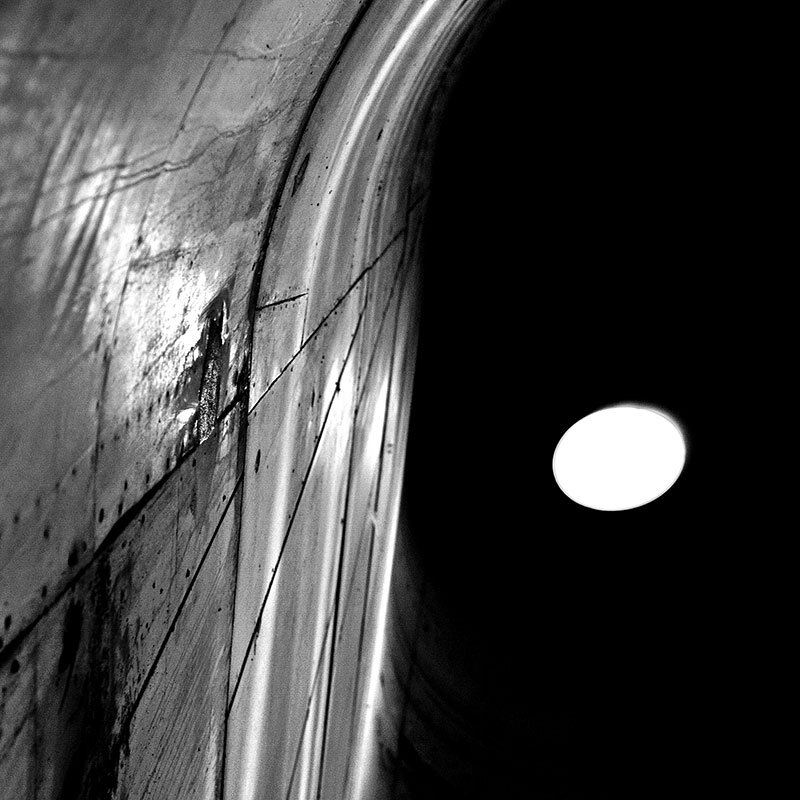
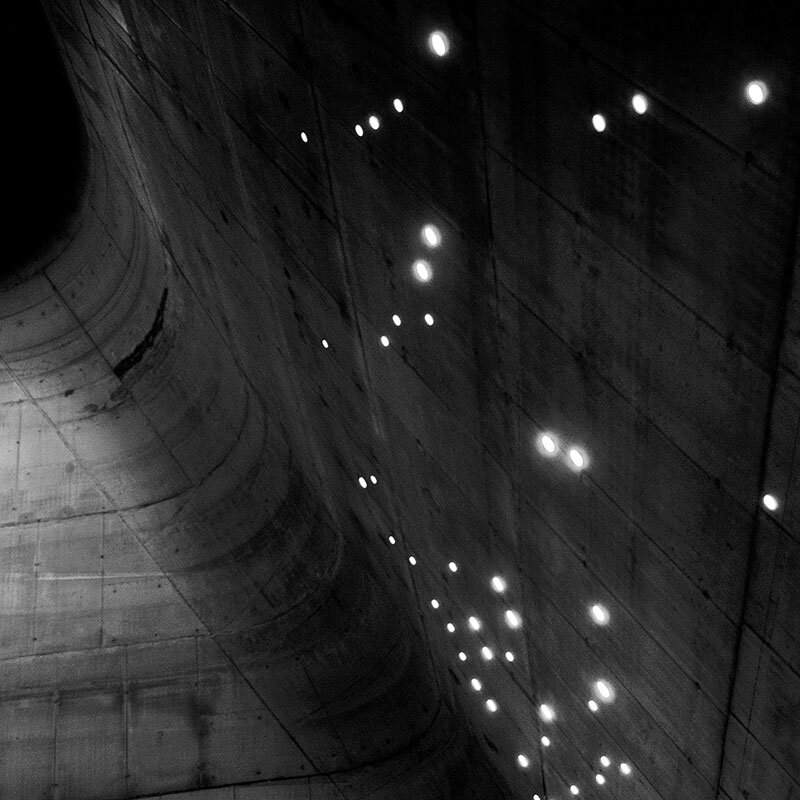
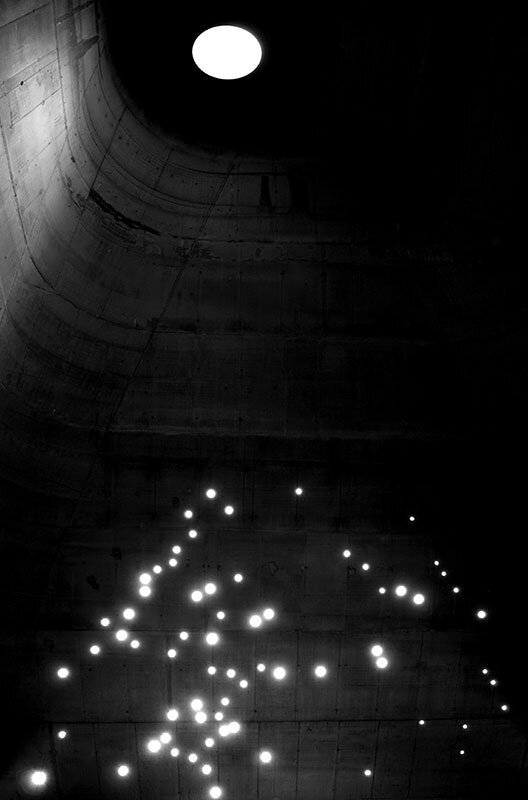
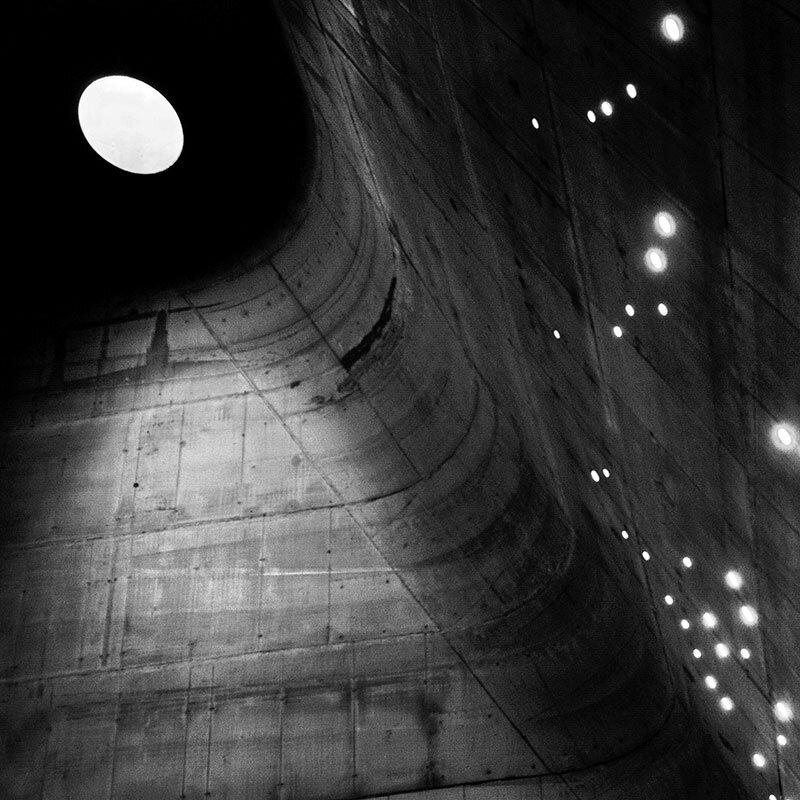
The assimilation of the image of the starry sky is a distinct element of the projection of the dream space. The interior of the Church of Saint-Pierre (Firminy) sequentially takes up recognizable elements of common space, thus appealing to collective identity. The individual representation and transposition causes the loss of the spatiality initially perceived, the loss of the object's proportions. In this spatial re-assimilation of coordinates, the confluence of the vocabulary of dreams gradually increases. The archetypal projection is later taken up again at the level of formal representation by Jean Nouvel (in the vertical plane, at the Institut du monde arabe, through the perforated filter) or Peter Zumthor(Kolumba Diocesan Museum), etc. The image of the starry sky is amplified by the architectural artifice of the approximation of the sensory plane (the inclined plane)... The assimilation of identity is linked to the proximity of the representation of the architectural object through common elements, significant details.
The differentiated interpretation of the architectural object through spatial perception contains valences that transpose the specific elements of a language. What do we perceive beyond representation? Perhaps... the light is black.
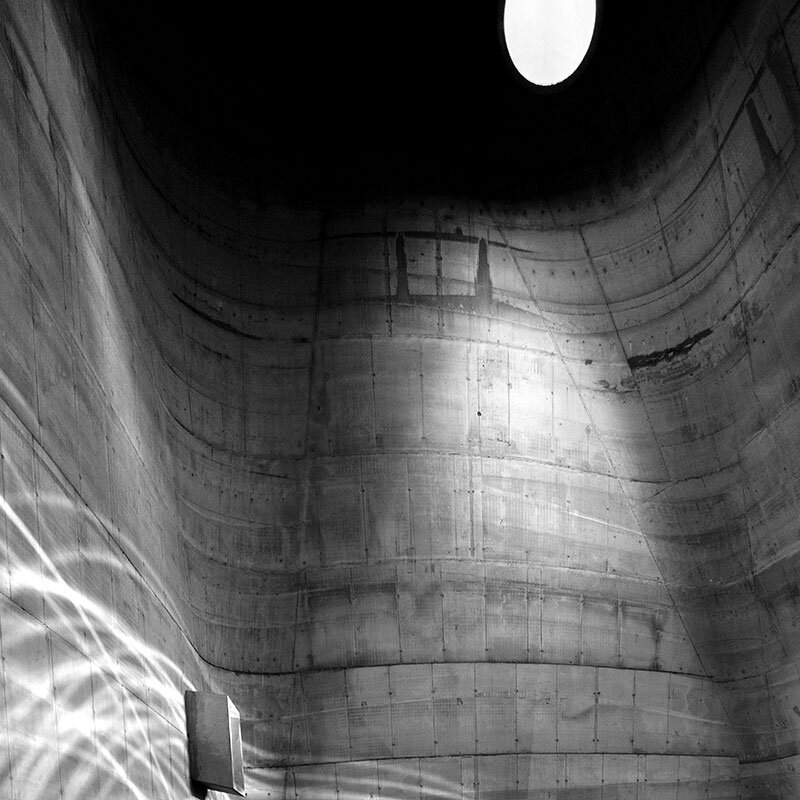
The images accompanying the text are by arh. Alexandru Crișan and belong to the series White [architectures with light], presented from June 3-18 this year, at Cărturești, within the photography exhibition of the same name, organized by the Romanian Order of Architects - Bucharest Branch, on the occasion of the 10th edition of the Annual of Architecture.