A corner of Beijing. Interview with architects Li Han, Wang Hongyue and Lu Wenhui
A Little Bit of Beijing
Interview with
architects Li Han, Wang Hongyue
and Lu Wenhui
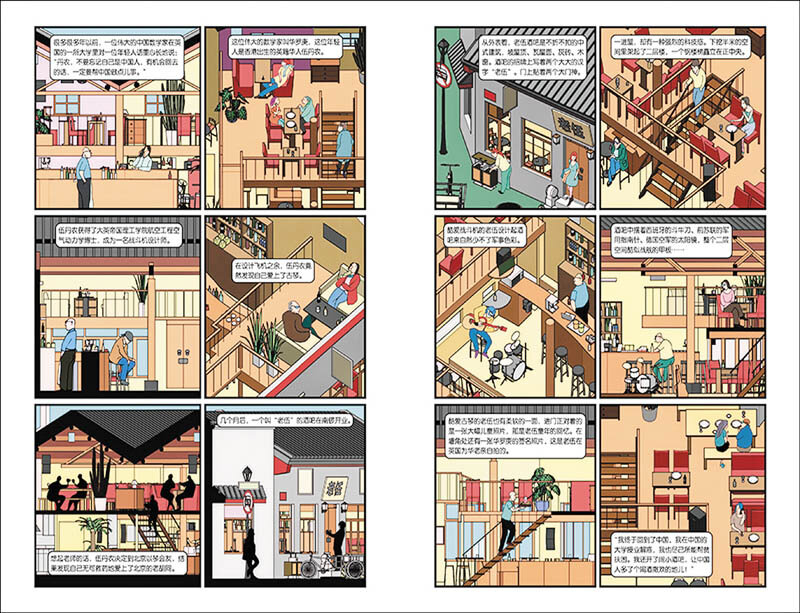
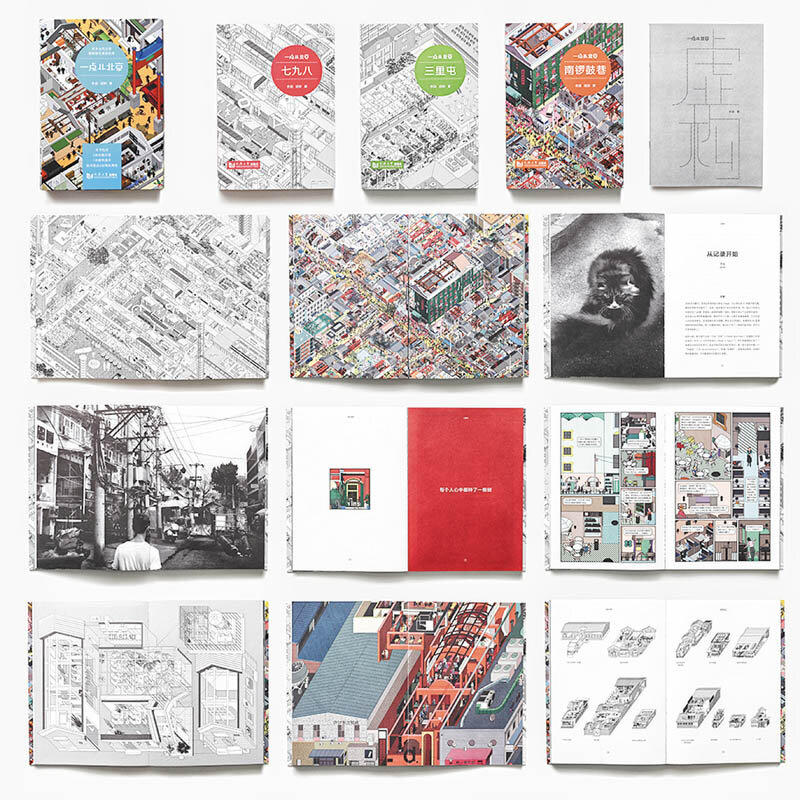
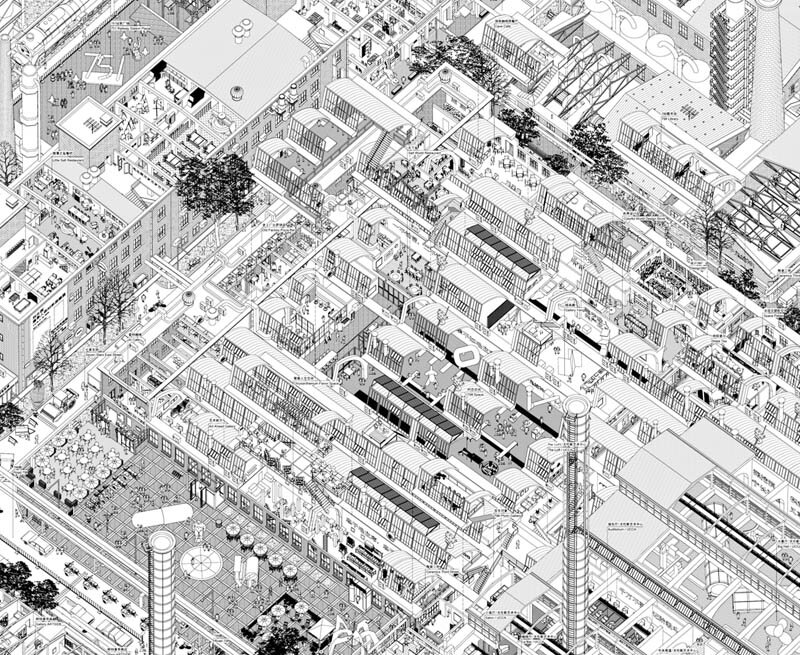
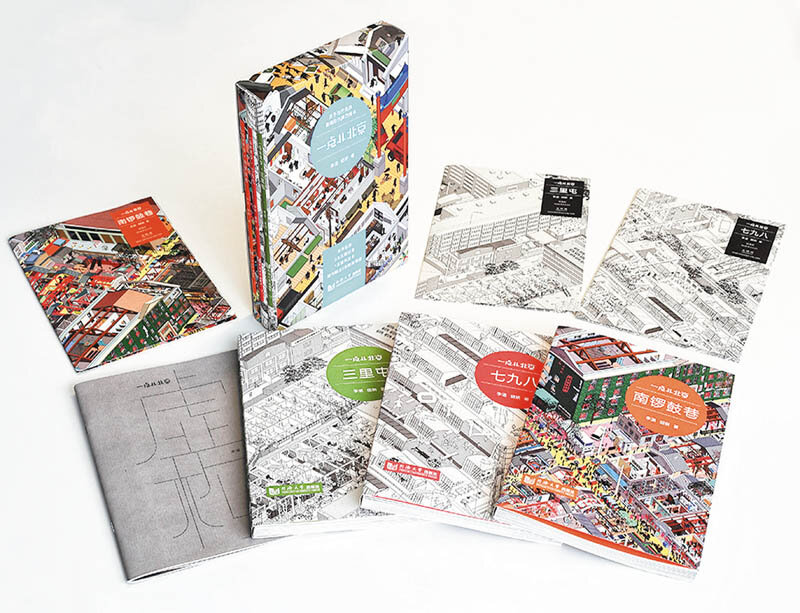
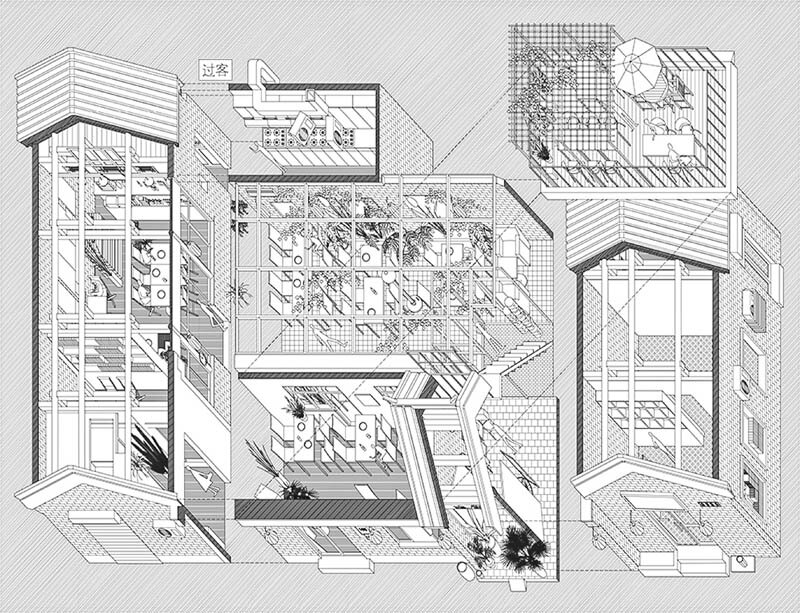
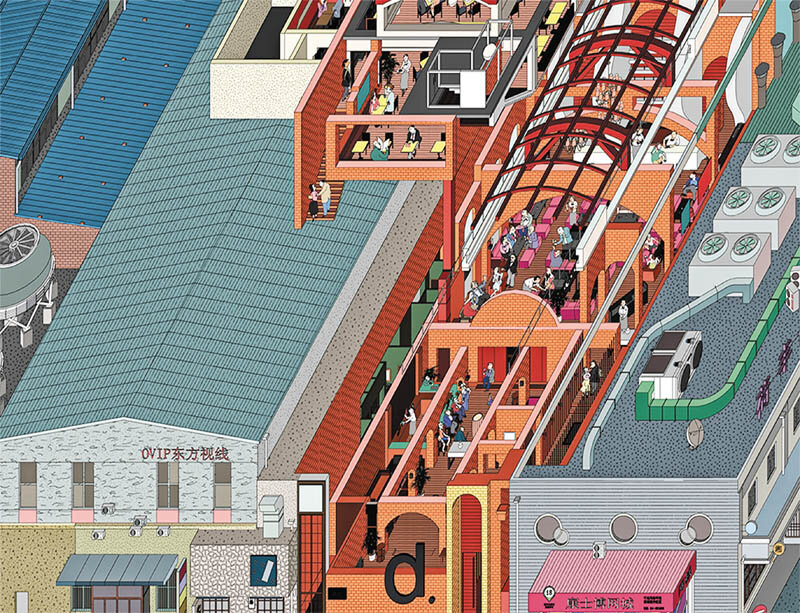
| A few months ago, I had the opportunity to chat about "A Little Bit of Beijing" with a group of young Chinese architects who recently published their book of the same title. The book is a collection of detailed axonometric images and photographs that capture activities and stories that co-exist in two major urban areas of Beijing: San Li Tun and the 798 Art District. The work is not only a detailed presentation of the ever-changing architecture, but also a description of the current trends manifested by human and social behaviors characteristic of urban life in China. |
| Kamilla Csegzi: Please introduce yourself and explain what inspired you to start collaborating on this documentary work? Li Han: I am a certified architect in love with design and drawing, but a slightly different kind of drawing than most architects practice. I worked at a state architectural institute in Beijing for a long time, then left and opened my own office this year. In 2006, when I came back to Beijing after graduating from university in Australia, I found that China was undergoing a very rapid urbanization process. I felt the need to record what I found interesting and characteristic of this process. At the design institute, my boss was Xu Lei1and my colleague was Wang Hongyue2, people with whom I shared the same curiosity about urban life and the same desire to do some autonomous research, so they joined me in this documentation project soon after I started it. K.Cs.: How did you choose the 798 artistic neighborhood and the San Li Tun neighborhood as the subject of your research? What are the similarities between these two areas? Li Han: Both San Li Tun3 and 7984are two areas that developed spontaneously. 798 was a factory producing military materials. After it was closed down, some artists rented the abandoned workshops to use as workshops. After that, more and more people joined the group and 798 became a kind of artists' neighborhood. You can see the calendar at the end of the brochure for a full history of the place. K.Cs.: In your book you describe the San Li Tun and 798 neighborhoods of Beijing through the "performances" that take place there. What do you mean when you talk about performance? Li Han: The word "performance" is rather a sarcastic expression. It refers to the various activities that take place in San Li Tun and 798, but in our opinion, these performances are more like performances on a stage than natural behaviors. For example, people spend a whole afternoon in a coffee shop, reading or surfing the internet, but not necessarily because they want to drink coffee or meet friends, but just to show how the so-called white collar spend their weekends. Or they flock to galleries to show their interest in artworks, but not all of them actually understand what art is or get involved in it in any way. They don't engage in these activities to show who they really are, but to show who they hope they are, seen through the eyes of others. K.Cs.: What are those "authentic" elements you look for behind these "performances"? Li Han: These two places are among the trendiest in Beijing, so people tend to "perform" especially there. Honestly, I won't try to identify any element of "authenticity" in these performances, whether "authenticity" here refers to true motive, true thoughts or something like that. We did not set out to judge or correct the behavior of others through our work. Anyone can be a performer. Even I could be one when I go to those places. Perhaps performance is a common Chinese desire in these times of impetuous change. |
| Read the full text in Arhitectura 6/2013 |
| Notes: 1 http://www.atelier11china.com/. 2 www.whyphiworkshop.blogcn.com. 3 San Li Tun (named after its distance from Beijing's old city center - "San Li" means "3 miles"): 1958 - State-owned residential property built in San Li Tun. 1959 - First embassy in Beijing moved to San Li Tun. 1960-1980 - First apartment building for diplomats built. 1988 - San Li Tun shopping street developed with government support. 1989 - The first bar opened in San Li Tun - South Street, becoming the birthplace of Beijing's bar culture. 1998-2004 - Peak era of San Li Tun's bar street. 2004 - Demolition work began. 2005 - The bars were demolished. 2006 - The "New San Li Tun" project was launched by the government to transform San Li Tun into a recreational, cultural and creative district. 2008 - San Li Tun Village opened and soon became one of Beijing's hottest shopping destinations. 4 798: 1952 - Factory 718 - or by its full name, the Hua Bei State Radio Equipment Factory - was planned for construction in the Jiu Xian Qiao area of Beijing. 1957 - With East German support, the 718 Factory was completed and production started, which was a landmark moment in China's electronic equipment industry. 1960 - The heyday of the 718 Factory, supplying ¼ of the nation's component production and ½ of its military products. 1964 - 718 was divided into Factory 706, 707, 718, 798, 751. 1970's - With the arrival of semiconductors, the demand for electronic tube products declined more and more, so Factory 718's business was reduced. 1980s - Following social changes brought about by reform policies, workers were laid off and factories were abandoned. 1995 - Sculptor Sui Jianguo rented a studio in 798 to create a "Group Sculpture for the Heroes Who Fought Against Japan at Lu Gou Qiao Bridge at Lu Gou Qiao Bridge", becoming the first artist to enter 798, but left after the work was completed. 2000 - "Beijing Seven Star Hua Dian Technology Group" was formed, bringing together the former 700, 706, 707, 718, 797, 797, 798 factories. 2001 - Artists began attending 798. 2002 - Extremely active year when artists moved into 798 and set up their workshops. 2004 - The "Seven Star Group" banned the renting of premises to artists, intellectuals and foreigners, expressing concern over its plan for the city's technological development. After inspections, officials supported keeping the arts district. 2005 - The Ministry of Construction issued the "Guidelines for the Protection of Modern and Contemporary Urban Architecture", and Factory 718 was included in the protection zone. 2006 - As 798 became increasingly well known, the "Seven Star Group" changed its attitude. 798 was officially named "Industrial, Cultural and Creative Arts Park" and the danger of demolition was removed. |
| A few months ago I had the chance to talk "A Little Bit of Beijing" with a group of young Chinese architects who have recently published their book with the respective title. The book is a collection of detailed axonometric images and photographs capturing coexisting activities and stories in two major urban areas of Beijing: San Li Tun and the 798 Art District. The work is not only a detailed presentation of a constantly changing architecture, but it also depicts current trends in the human and social behavior characteristic for the urban life in China. |
| Kamilla Csegzi: Could you introduce yourself and explain what inspired you to start working together on this documentation? Li Han: I am a registered architect who likes to design architecture and also loves to draw in a way that is different from most architects. I worked in a state-owned architecture design institute in Beijing for quite many years until I left and started my own studio this year. Back in 2006 when I returned to Beijing after my graduate study in Australia, I found China was undergoing an unprecedentedly rapid urbanization process. I got the urge to record the phenomena that I found interesting and typical in this process. Xu Lei1 was my boss and Wang Hongyue2 was my colleague at that design institute. We shared the same curiosity about urban life and interest of doing some self-motivated research works, so they joined me with this documentation project soon after I started. K.Cs.: How did you choose to focus on the 798 Art District and San Li Tun? What are the similarities between these two areas? Li Han: Both "San Li Tun"3 and "798"4 are two areas that developed spontaneously. 798 used to be a factory manufacturing military supplies. After its downfall, some artists rented the abandoned workshops to use as studios. After more and more people joined the group, 798 eventually became an art district. Please refer to the timeline in the end of the booklet for a full recap. K.Cs.: In your book you describe San Li Tun and 798 in Beijing through the "performances" that take place there. What are you referring to when talking about performances? Li Han: The word of "performance" is rather like an expression of sarcasm. It refers to different activities that take place in San Li Tun and 798, but we found that those activities are more like the performances on the stage rather than the natural life behaviors. For example, people will spend a whole afternoon in the café reading or surfing online. It is not because they want to have coffee or meet friends, but just to show how so-called white collars would spend their weekend time. Or they will flood into galleries to show their passion for art works, but actually not everyone understands or cares about what art is. These activities are not to show who they are, but rather to show who they hope others to think they are. K.Cs.: What are the elements of "truth" that you are looking to identify behind these performances? Li Han: These two places are among the trendiest venues in Beijing, so people tend to have more desires to "perform" there. Frankly I won't try to identify any "truth" in those performances, if the "truth" here refers to the true motive, thoughts, or something like that. We don't mean to judge or correct others' behaviors through our documentation. Everyone may be a performer. Even I myself would be a performer when I go to those places. Probably performance is a shared desire to Chinese people in such an impetuous era. |
| Read the full text in the print magazine. |
| Notes: 1 http://www.atelier11china.com/. 2 www.whyphiworkshop.blogcn.com. 3 San Li Tun (named for its distance to the old inner city of Beijing - "San Li" means "3 miles"): 1958 - State-owned residential community built in San Li Tun. 1959 - Beijing No. 1 Embassy moved to San Li Tun. 1960-1980 - Diplomat apartment buildings built. 1988 - San Li Tun shopping street developed with the support from the government. 1989 - The first bar opened in San Li Tun South Street, the area became the birthplace of Beijing's bar culture. 1998-2004 - Peak era of San Li Tun bar street. 2004 - Demolitions started. 2005 - Bars demolished. 2006 - "New San Li Tun" project launched by the government to transform San Li Tun into a district of leisure, cultural and creative industries. 2008 - San Li Tun Village opened, and became one of the most trendy shopping destinations in Beijing. 4 798 1952 - Factory 718 , or as State-owned Beijing Hua Bei Radio Equipment Factory, planned in Jiu Xian Qiao area in Beijing. 1957 - With the support from East Germany, Factory 718 was completed and put into production as a milestone in the development of China electronic industry. 1960 - Peak era of 718 with its supply to ¼ of the national component production and ½ of the military products. 1964 - 718 was divided into Factor 706, 707, 718, 798, 751. 1970s - With the advent of semi-conductor era, products with electron tube were less demanded and the business of 718 has dropped. 1980s - With the social changes resulted from reforming policies, workers were laid off and factories remained vacant. 1995 - Sculptor Sui Jianguo rented workshop in 798 to create the "Group Sculpture for the Anti-Japanese Heroes at Lu Gou Qiao Bridge" and became the first artist who entered 798, but left after the piece was completed. 2000 - "Beijing Seven Star Hua Dian Technology Group" was formed by the previous factories 700, 706, 707, 718, 797, 797, 798. 2001 - Artists started to gather in 798. 2002 - Peak year of artists' moving into 798 and establishment of their studios. 2004 - "Seven Star Group" prohibited renting the space to artists, intellectuals and foreigners with concerns about its Electronic City Development Plan. After inspections, the municipal officials indicated that the art district should be reserved. 2005 - The Ministry of Construction released the "Guidelines to Protect Modern and Contemporary Urban Architecture" and factory 718 belonged to the protection area. 2006 - As 798 became renowned, "Seven Star Group" changed its attitude. 798 was officially named as "Cultural and Art Creative Industrial Park" and completely escaped from the risk of being demolished. |