Three student projects in a complex urban landscape
A revitalization, revalorization and restoration of complex urban landscapes of social, economic, historical and cultural importance for a living or long-established city are some of the tools used to improve the quality of the cities we visit or live in. The aim of the three projects is therefore to regain values that have been lost, forgotten or difficult to regain for various reasons. We, as landscape students, understand these values and we allow ourselves to disregard administrative obstacles, trying through our projects to test alternatives.
There is much talk in urban planning about reusing scarce resources within European cities in favor of expanding green spaces, but in the case of Romania valuable landscape resources exist and need to be reactivated and recognized as important.
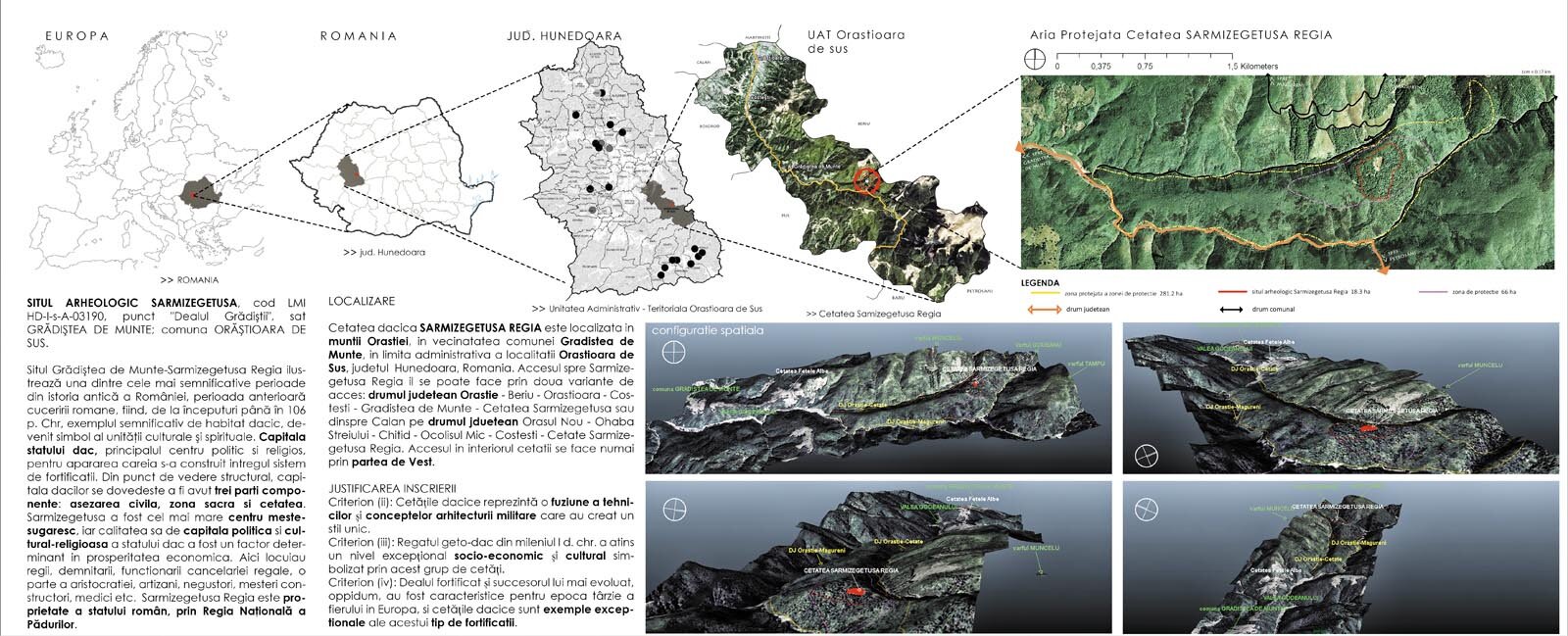
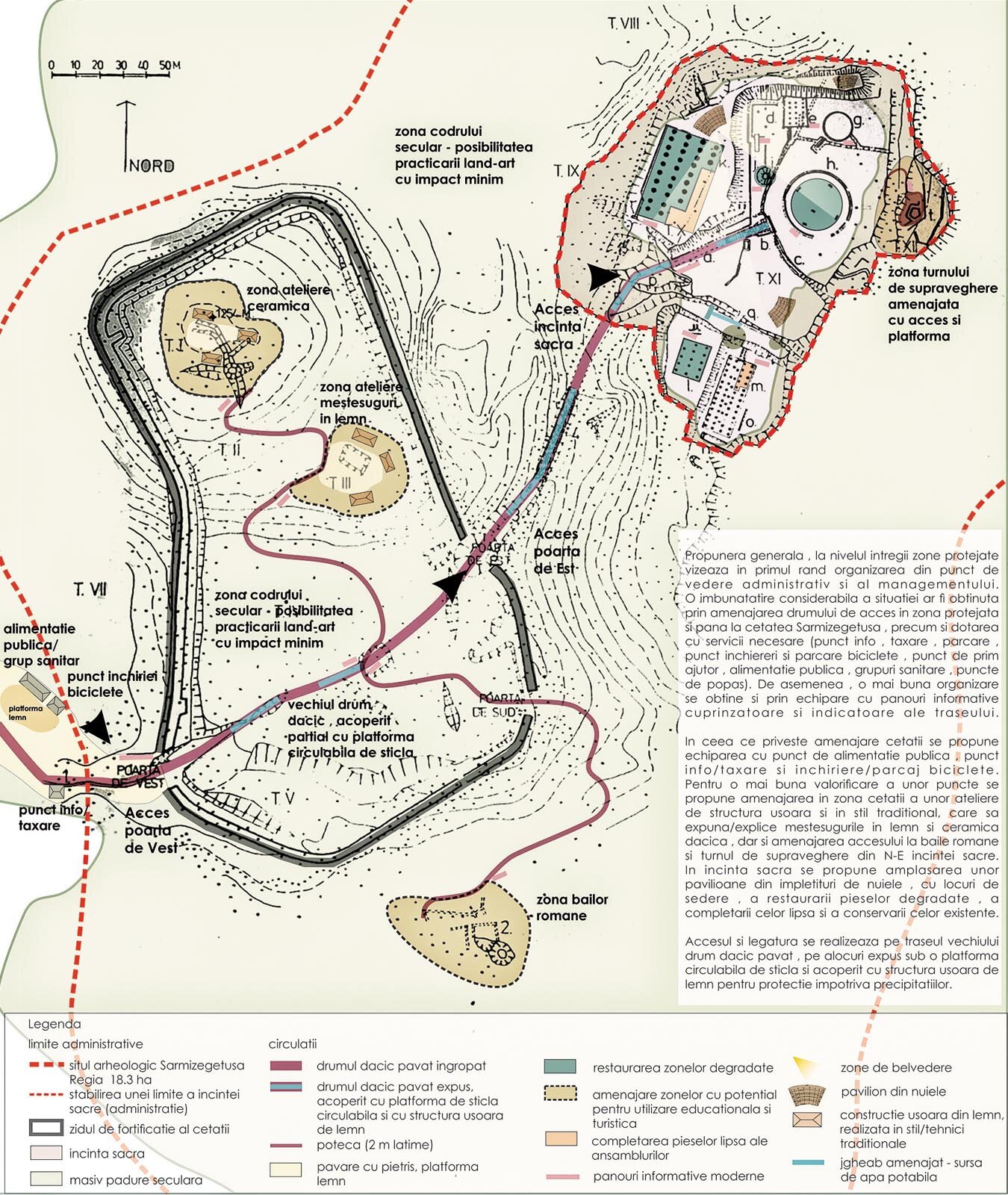
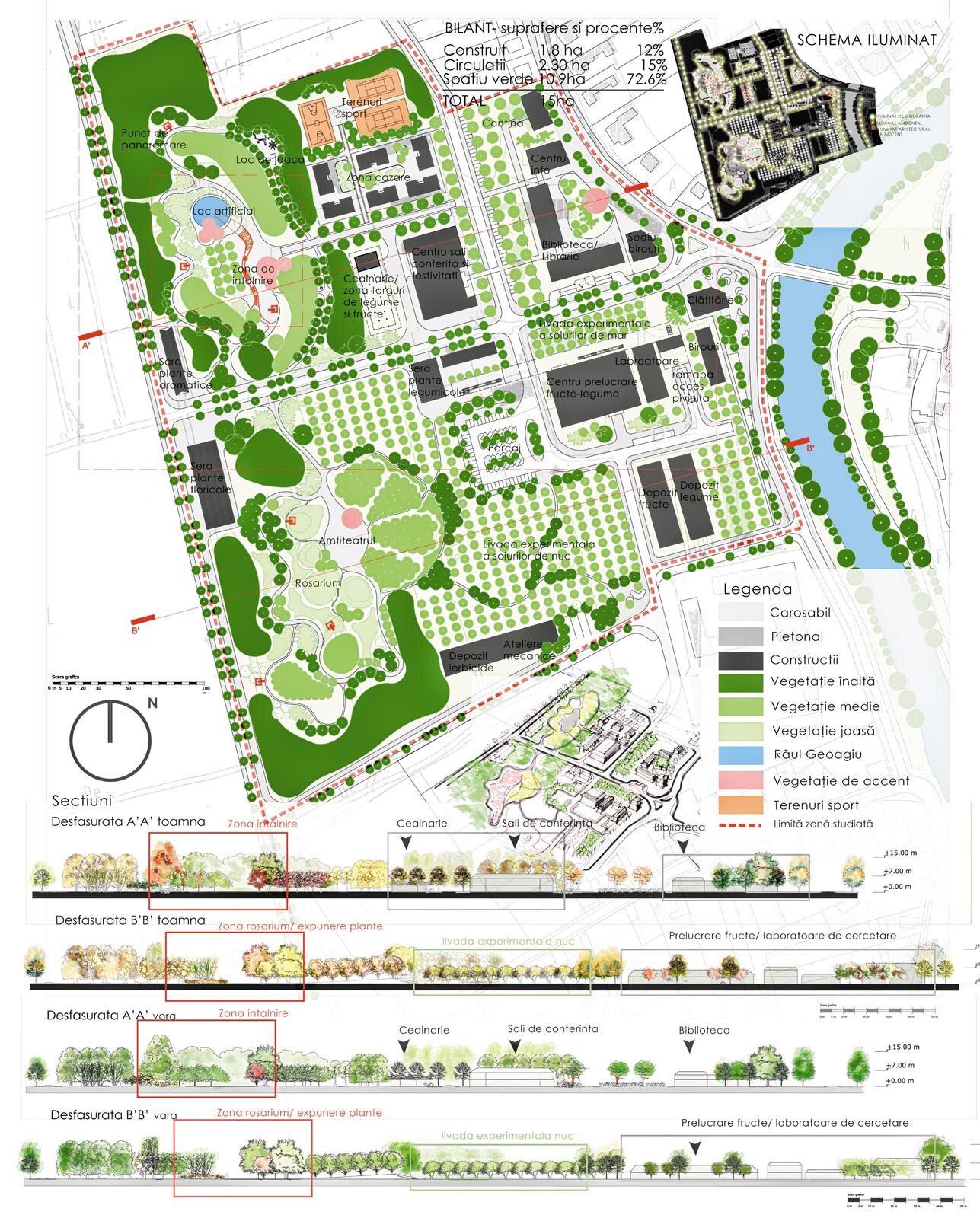
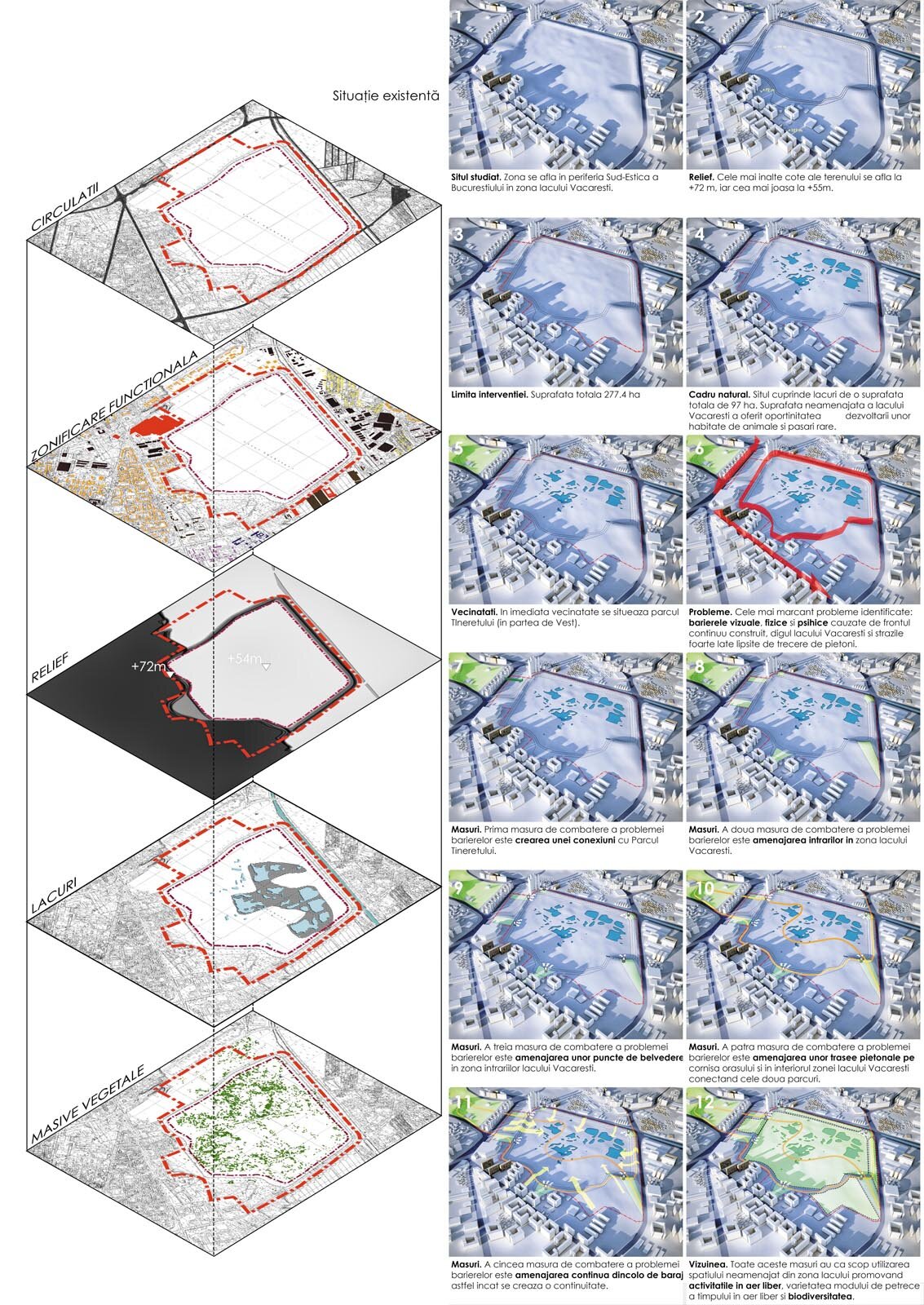
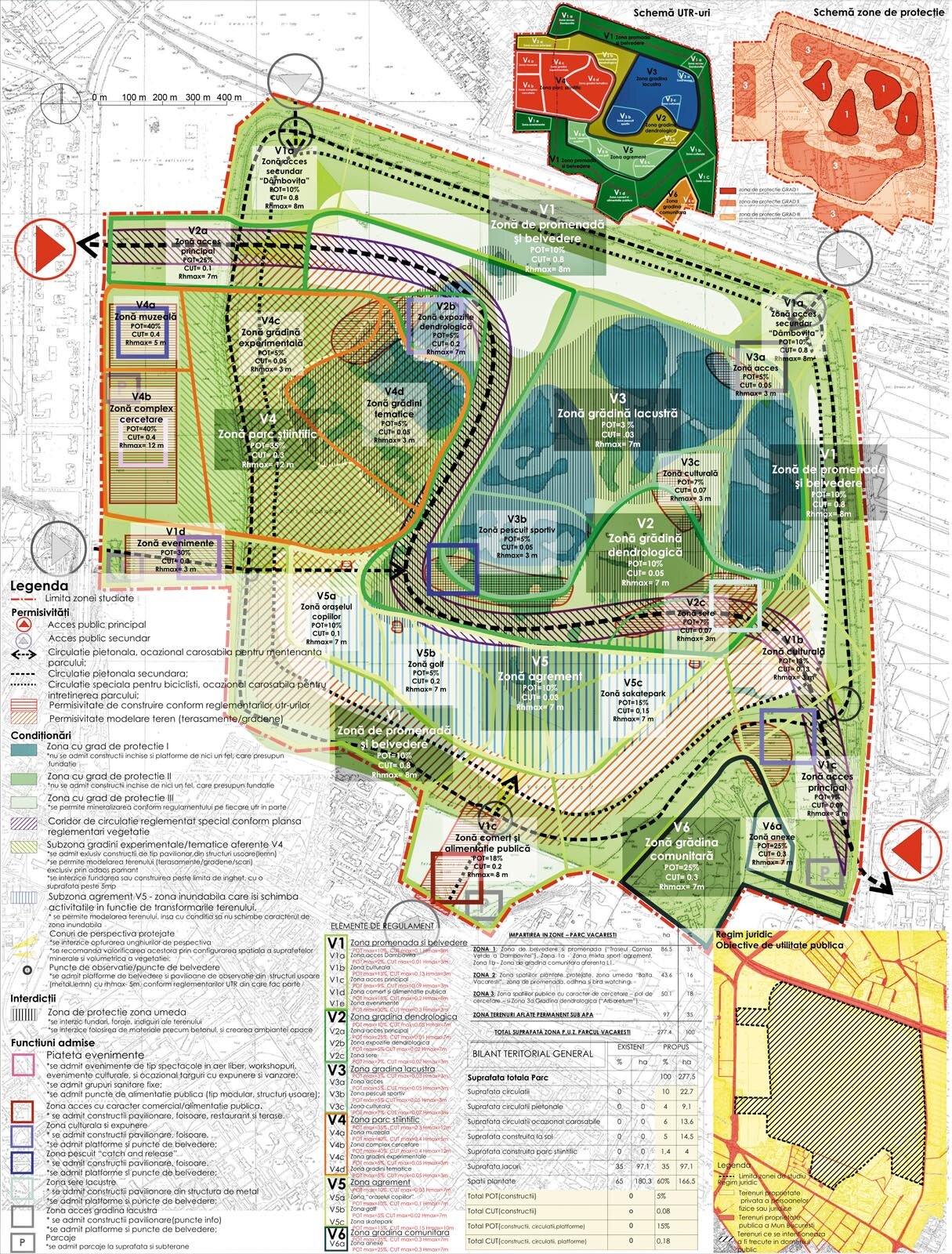
The cases of the fruit research station in Geoagiu (jud. Hunedoara), which had an important activity for the development of walnut varieties in the 1980s, but nowadays has to rent out its premises for growing plants for research purposes in order to survive; the case of the "Văcărești Delta" in Bucharest, which has gone through a successful process of renaturation due to the non-intervention of human factors, but which currently has an undisclosed status; and the case of Sarmizegetusei Regia, an archaeological site declared a UNESCO monument that is in a state of continuous degradation. All these sites represent urban landscape assets and economic, ecological and cultural resources.
Following a multi-level analysis considering: infrastructure, functionality of human activities, historical evolution of the site, hydrography, vegetation, natural and anthropogenic landscape studies, tailored to the needs of each site, we were able to identify specific requirements that led to proposals that respect the distinctive competences of the landscapes of which they are part.
More specifically, the Geoagiu pomicultural research station has to preserve the very cultural landscape component of its former activity - pomiculture, once thriving and still alive in the memory of the local people. The Văcărești Delta has to maintain a system of ecological processes, in a marshy landscape that has become valuable especially for its presence in a capital city. As for the Dacian fortress of Sarmizegetusa Regia, its distinctive competence is already recognized by its status as a UNESCO monument, part of the national cultural landscape.
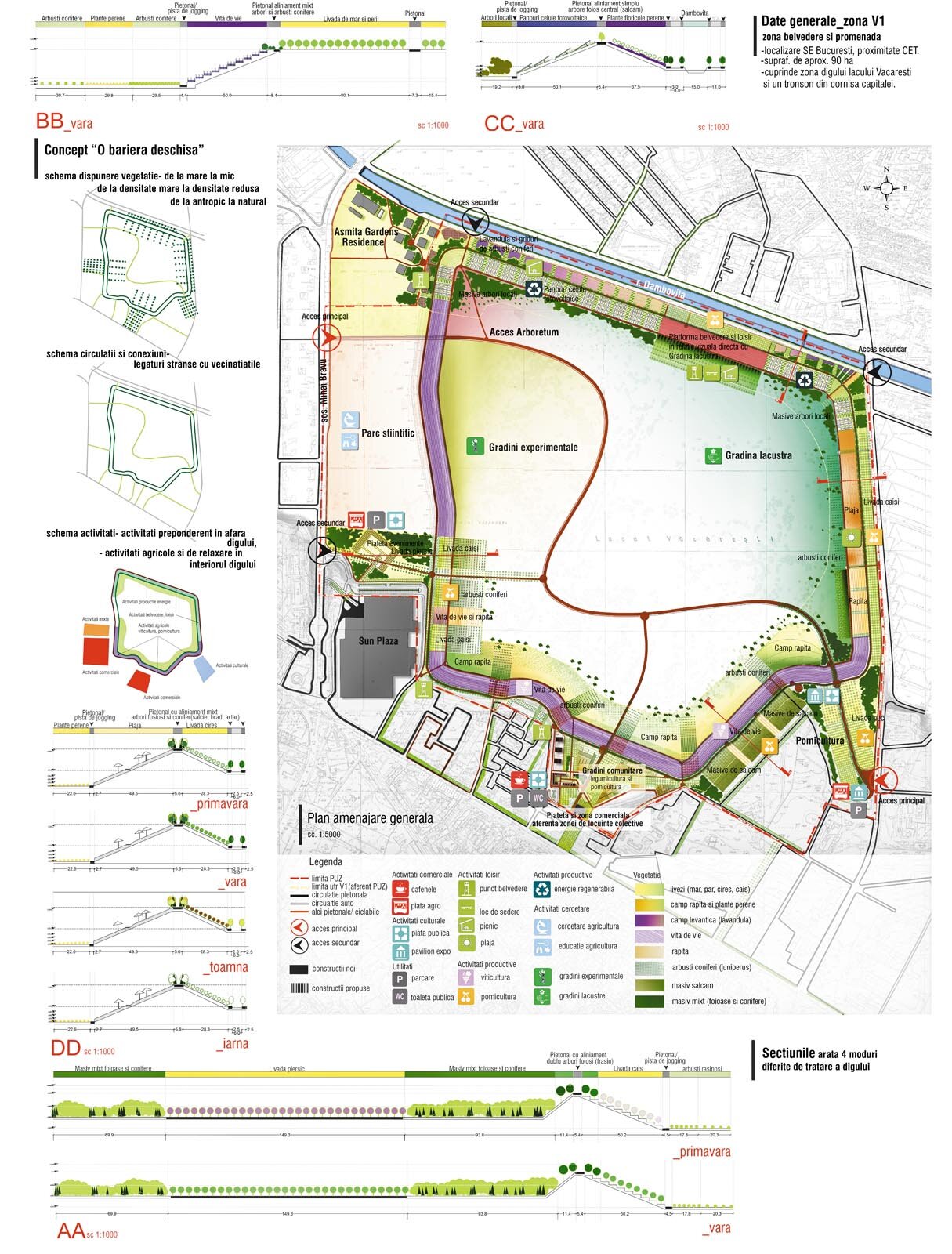
The projects aim to treat the link between the urban landscape and the natural landscape in a unitary and coherent way, through a gradual transition, inducing educational, leisure and recreational activities, often as a link between them. In the case of the research station, a garden open to the study of plants and fruit growing was proposed in the middle of the route between research activities in the laboratory-production and the hilly landscape of the extraurban area of Geoagiu. The project targeting the Văcărești Delta aims to create a promenade-belvedere area as a mediator between the urban landscape and the park area. And in the case of Sarmizegetusa Regia, the very tourist activity itself involves landscaping, together with the restoration of the monument, to encourage educational and cultural activities, walks and relaxation.
Ensuring the sustainability of the proposals in landscape design and planning is one of the priorities of the submitted projects. That is why the newly proposed economic activities within the Geoagiu research station (production and marketing of fruits and sweet specialties, organization of fairs, educational and professional practice activities) or at the junction with the "Văcărești Delta" (renewable energy capture and urban agriculture activities) and at the Dacian fortress of Sarmizegetusa Regia (tourism promotion activities and implementation of a charging-maintenance system) are necessary both for the self-sustainability of the landscape areas and for the human communities they are intended to serve.
Through our proposals we wanted to regain the functionality of each site and revalue their urban or landscape potential, starting from a broader strategy with a major external impact, such as the research station that through revitalization would have an impact on the education system in the city of Geoagiu and on the production of fruit in the area of Orăștie. Or in the case of the Văcărești Delta, which through revitalization would be part of a newly proposed green system along the Dâmbovița river's cornice, with an impact on the quality of life in the Capital. And in the case of the proposed restoration of the Dacian fortress, we insisted on the creation of trails and the streamlining of tourist mobility and accommodation facilities, with these measures having a positive impact on local and national tourism.
The projects therefore aim to reintegrate areas of landscape importance into an already existing complex, whether urban or natural, in order to regain cultural values, but at the same time to activate an economic engine to ensure the sustainability of the proposed activities.
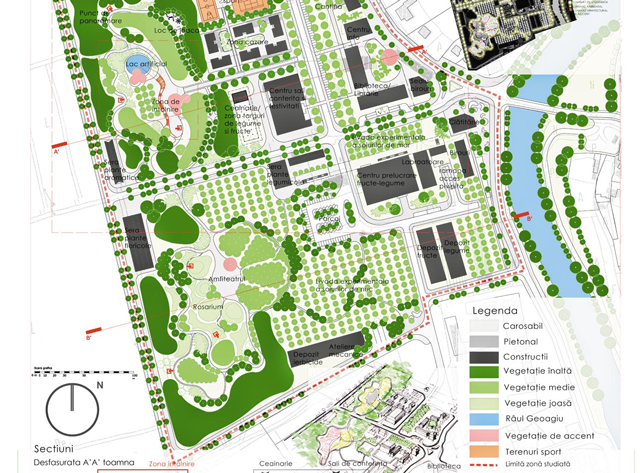
Project
"Revitalization of the Geoagiu Fruit Research Station"
team: Adina matroz

Project
"Delta Văcărești DeltaZonal Urban Plan"
Team: Adrian Berindei, Adina Matroz, Teodora Mihai, Gabriel Tănase
Project
"Sarmizegetusa Regia protected area study"
Team: Adina Matoz, Loredana Micu, Gabriel Tănase