
Project 5060 - West University of Timisoara
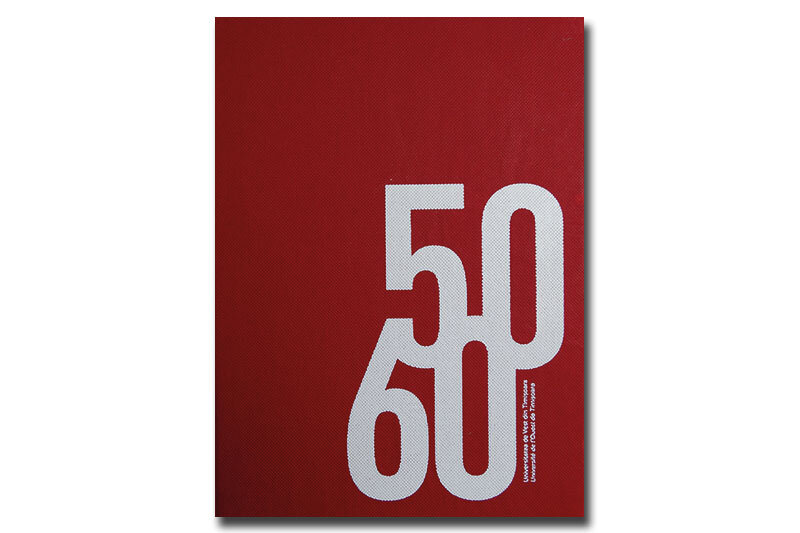

Authors: Vlad Gaivoronschi, Marius Miclăuș, Rudolf Gräf, Claudiu Toma, Otilia Hedeșan, Ramona Novicov
Volume Project 5060. West University of Timisoara, published in a bilingual edition in spring this year, reconstructs in photographs, plans and text the inauguration of the building of the West University of Timisoara. The authors are architects Vlad Gaivoronschi, Rudolf Gräf, Otilia Hedeșan, Marius Miclăuș, Claudiu Toma and art critic Ramona Novicov.
Considered by the authors to be a true heritage project, the album Project 5060 brings to the readers' attention the story of the beginnings of the West University, the design and construction of the building intended to house this institution of higher education, while at the same time highlighting the social and historical context in which it was founded, the factors that led to the appearance of the well-known building of today. The pages of this book retrace the effervescent period from 1961-1965, with the aim of bringing the personality of the architect Hans Fackelmann to the fore.
With the help of texts, plans, period and current photographs, the "founding" of this landmark monument, extremely important for the architectural landscape of Timișoara and the country, is revealed, its "biography" is reconstructed and its presence, if ever there was a need, in the universe of Romanian university architecture, is strengthened. Sketches, plans, structural variants, etc., direct or indirect testimonies, accounts by the young team of architects who contributed to the realization of this daring institution give substance to this small album which brings to the fore, on the other hand, one of the "first urban legends", that of the "Sorbone in the bower". Step by step, the reader steps through this album into the generous building of the University of Timișoara, learns about the currents of thought of the time, discovers the architects of the project, sees its 'skeleton', as the main sections of the building are described, the most representative spaces are presented, the innovative architectural or technical solutions are presented, the relationships between the closed and open spaces are studied, the impressive proportionality of the building or the relationship between the architectural body and the mural artworks are the themes addressed. All of them succeeding in redefining the trend of synchronization with the European space from an architectural point of view and the way in which it absorbs modernity.