
Beros & Abdul Architects - "Resilient design"
photo: Esenghiul ABDUL, Christian BEROS
| Beros & Abdul Architects (BA+) is an architectural practice established in 2014 by Esenghiul Abdul (from Romania) and Christian Beros (from Chile). Previously, we both studied and worked in Bucharest, Quito, Santiago and London. Our connection with Romania dates back to 2008, when Esenghiul opened the local branch of Space Syntax (based in the UK), advising both public institutions and private firms, particularly on large-scale urban planning projects. After a few years of advising our colleagues, we decided it was time to move a little further up the food chain and test our ideas with our own projects. This required a new entity, so we founded BA+, based in Bucharest. Our current team includes several young Romanian architects, as well as Italian landscape architect Cristiano del Toro, who coordinates the office's ecological approach.Thanks to our previous research and consultancy work with firms such as The Bartlett and Space Syntax Ltd in London, we have had the opportunity to work in a variety of scenarios, advising architects, planners, developers, municipal and government authorities in various countries and being involved in projects ranging from building design, including office buildings, to master planning, urban and spatial planning. These have all been projects where spatial configuration has been the main influence on human behavior and interaction. This experience continues to help us today in our projects to dialog and coordinate actors and various stakeholders and interested or involved parties. Our motto is one: in order to have a successful project, we must first understand people's needs and then design for them, not the other way around. Another reason for setting up our own office was also the need to have a space where we could put into practice not only our professional experience, but also our hobbies and personal interests. Some of our projects are directly related to our interest in food, wine and agritourism, for example, and some of them are even personal initiatives, where we try to discuss landscape ecology strategies, landscape architecture ideas or urban interventions. In this sense, our role as architects is moving out of the notion of the 'designer' who works independently, and is becoming more that of having initiatives.(And this will probably be the role of the architect in the near future; architects will have to generate new ideas and paradigms in order for the profession to evolve.) Ultimately, we believe that we need to be more accountable than ever for our interventions and the impact they will have and how they will adapt in the future, so we are trying to combine design work with the imperative for more resilient environments. We try to achieve this by adopting an ecological approach, which plays an important role in determining the final shape of a project. As a result, we are constantly on the lookout for spaces and strategies that are energy and economically efficient, respectful of society and the natural and cultural environment, and spaces that empower people, communities and organizations and enable better daily living, work, shopping and recreation. Current work We are currently operating in a number of public spaces in Romania, Europe and elsewhere, whether they are real public spaces at city level or private open spaces dedicated to cultural, recreational and retail activities. In these cases, our office takes projects from the conceptual level and takes them through to the stage of technical solutions and supervision of execution. We treat the landscape as an infrastructure, as a key design element that goes beyond the notion of "green space" with the role of "beautifying the city" to become a structural design element that can not only have aesthetic consequences, but can also help, from an economic and environmental point of view, by including specific actions that can improve biodiversity and resilience, reduce costs and optimize development potential. In terms of building design work, we envisage interventions that respect the image and identity of the place where they are to be inserted; the approach is not a historicist one and does not deny the need for the city to evolve over time with economic developments and social needs. For this issue we present three small-scale realizations: |
| Beros & Abdul Architects (BA+) is an Architecture studio founded in 2014 by Esenghiul Abdul (RO) and Christian Beros (CL) after previously studying and working in Bucharest, Quito, Santiago, and London. The relation with Romania dates back to 2008 when Esenghiul opened the local branch of Space Syntax (UK), undertaking public and private consultancy mainly at large scale urban projects. After several years giving advice to our own colleagues, we decided it was time to move one step further in the food chain, and test our ideas with our own designs. For doing this a new entity was needed and therefore BA+ was funded, a studio based in Bucharest. Our current team consists in a group of young Romanian architects as well as an Italian landscape architect Cristiano del Toro, which leads the ecological approach of the studio.Through our previous research and consultancy at The Bartlett and at Space Syntax Ltd in London, we had the chance to work in a wide range of scenarios, giving consultancy to architects, urban designers, developers, local municipalities and countries governments, being involved in projects from workplace and building design, public space, masterplanning, and town planning. All projects in which the spatial layout configuration was the main influence in human behavior and interaction. This experience is now helping us in our projects to dialog, and to coordinate different actors and stakeholders, and we work under a single recipe, which is that to have a successful project we need to understand people needs first and then to design for them, and not the other way around. One extra reason for setting up our own practice was the need to have a space in which we can apply not only our professional experience, but also our own hobbies and personal interests. Some of our projects are directly linked to our interest in food, wines, agrotourism, for example, and some of them are even our own initiatives, trying to put in the discussion landscape ecology strategies, landscape architecture ideas, or urban interventions. In this sense our role as architects is not enclosed in the bubble of "the designer" as a figure by itself, but moreover as an initiator.(Which probably will be the role of the architect in the near future, who will need to generate new ideas and paradigms in order to push the profession further). Finally, we believe we need to be more responsible than ever about our interventions and the impact they will have, as well as how are they going to adapt in the future, therefore we try to combine design with the need for more resilient environments, for which we work with an ecological mindset which plays an important role in the final project form. Consequently, we are constantly looking for spaces and strategies that are efficient in terms of energy and economics, respectful of society as well as of natural and cultural landscapes, and spaces that can empower people, communities and organizations in making better places to live, work, shop, and enjoy leisure activities. Current work We currently work in a number of public spaces in Romania, Europe and abroad, being actual public spaces at city scale level, or open private spaces dedicated to culture, leisure and retail. In these cases the studio takes over the projects from the concept level, until the technical solutions and execution supervision. We consider landscape as infrastructure, a key element in the design which goes beyond "greenery" as in "city beautification" but rather a structural element of the design which can provide not only an aesthetic result, but also help in environmental, and economical terms, including specific actions which can improve biodiversity and resilience, reduce costs, and optimize development potential. At building design scale we aim for interventions which are respectful of the image and the identity of the place in which they are inserted, neither with an historicist approach, nor denying the needs of cities to evolve according to time, economics, and social needs. For this issue we wanted to show you three small scale examples: |
Eco-Chilia
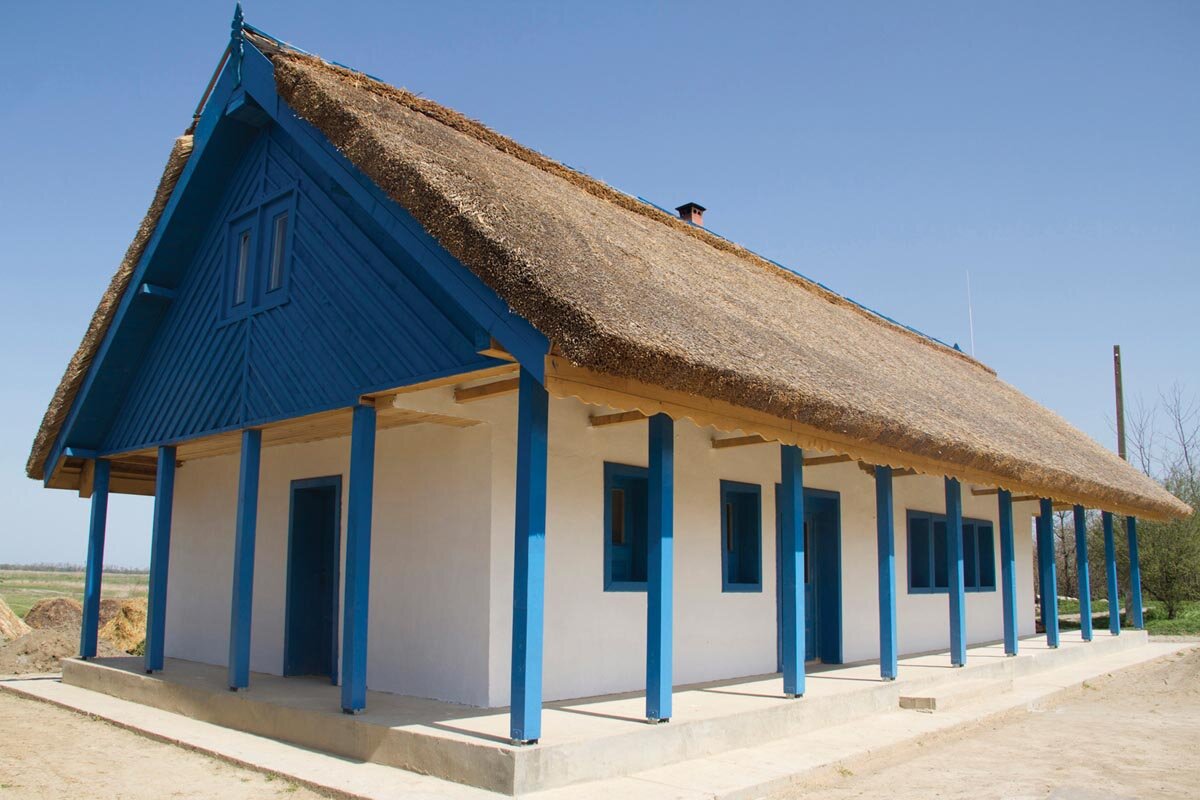
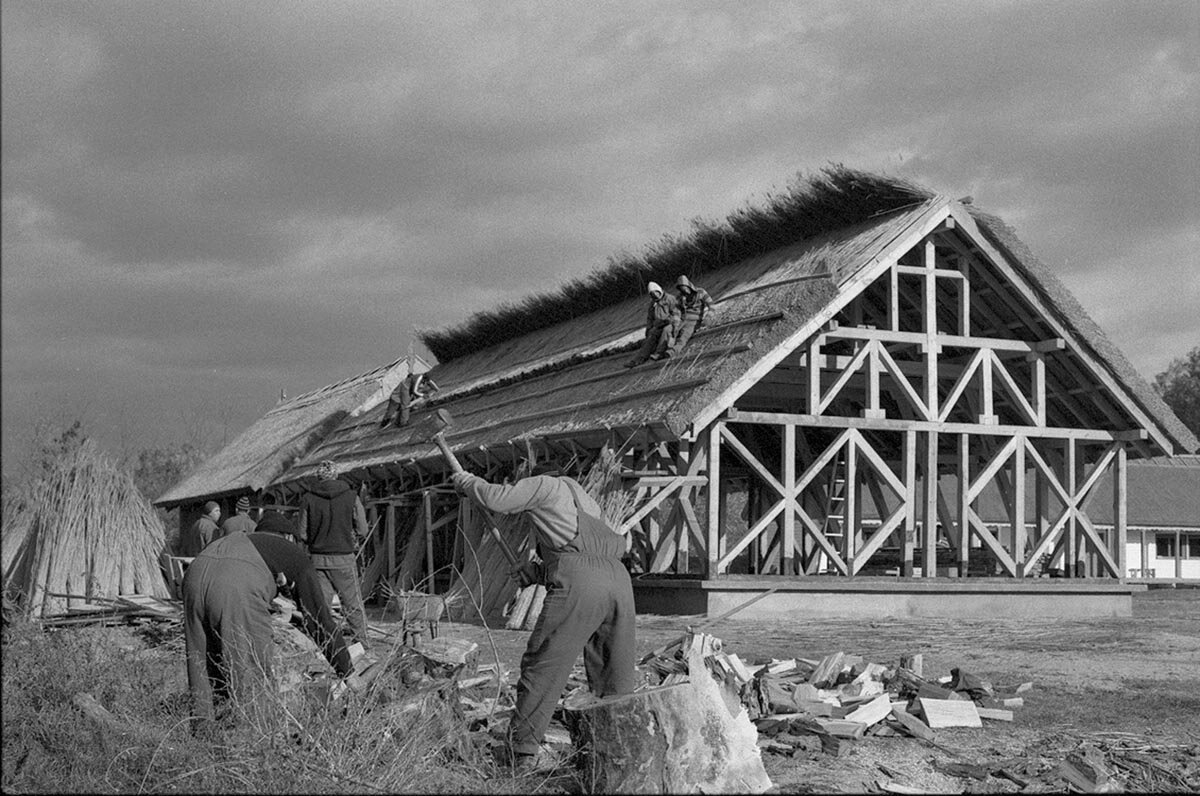
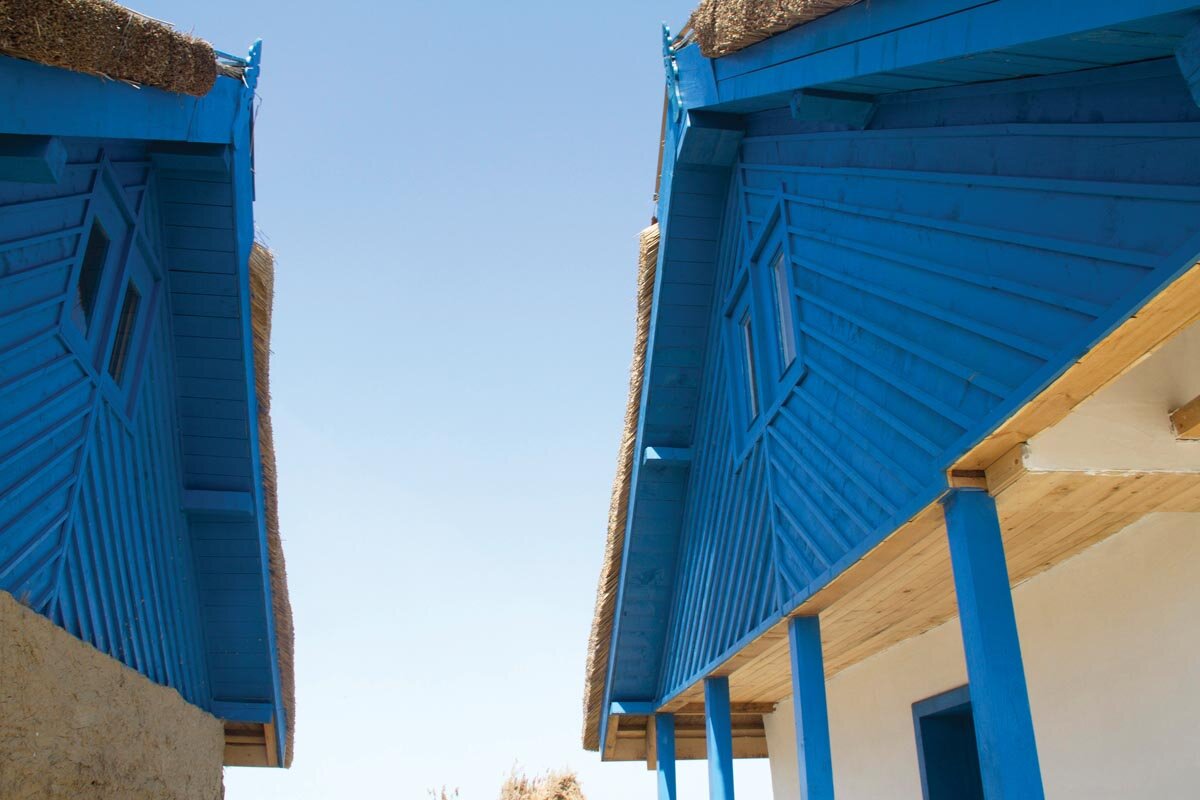
| Eco-Chilia is an ensemble of green buildings that is part of the project entitled "Creating a mechanism for the ecological reintegration of prisoners", a project targeting prisoners from disadvantaged backgrounds with low levels of education and aiming to facilitate their access to rehabilitation programs and their subsequent reintegration into society by equipping them with new skills in niche areas such as green construction, wooden boat building, wickerwork and pottery. As far as possible, the buildings were constructed from local materials with low environmental impact and using traditional building techniques, which was also the only financially viable option that reduced the costs of purchasing and transporting materials.This exercise was intended to be a model for local construction and to cover a wide range of techniques and materials; therefore, for each of the buildings a different material composition was used when incorporating timber frames to ensure adequate living conditions; a mixed system of mud brick laid in two layers, between which were placed reed bales or wooden boxes filled with sheep's wool or reed. The roofs were all made in the traditional cane roofing. Environmentally friendly solutions were also used to provide electricity, heat, hot water and sanitation. |
| Eco-Chilia, is an ensemble of ecological buildings which is part of the project "Setting-up an eco-reintegration mechanism for inmates" that addresses inmates who are coming from a disadvantaged environment and with a low level of education and aims to facilitate their access to rehabilitation programs and further their reintegration in society, providing them with new skills in niche crafts such as ecological construction, carpentry, wooden boats building, wickery and pottery. The buildings were realised using as much as possible local materials, with a low impact on the environment, and construction techniques inspired from the traditional ones, this being also the only financially viable option, reducing material acquisition and transportation costs.This exercise aimed to be a model for the local constructions and cover a wide spread of techniques and materials, therefore each one of the buildings used a different composition of materials to enclose the timber frames, in order to ensure the adequate living conditions: a mix system of adobe bricks sat in two layers with reed bundles in between, or wood batten enclosures filled with sheep wool or reed, the roofs being all traditionally made in reed. Environmentally friendly solutions were also thought for the provision of electricity, heating, water and sewage. |
Casa "J" /
"J" House
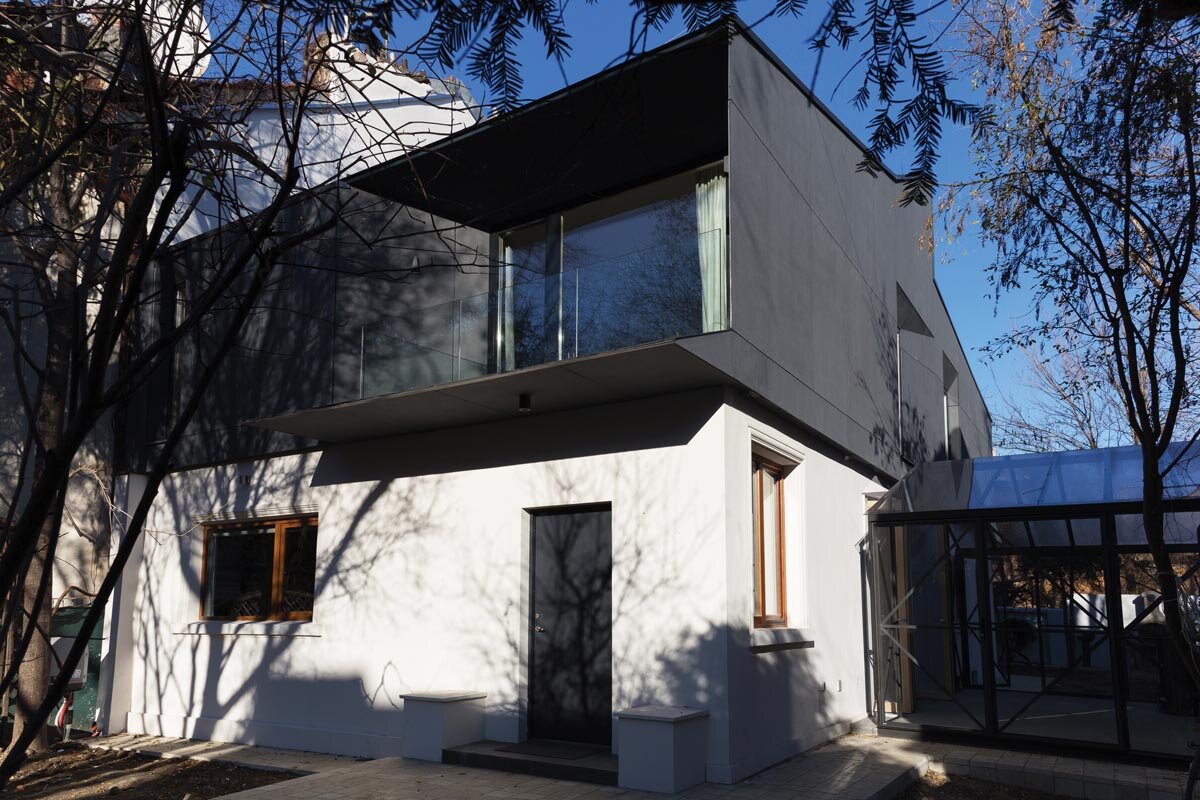
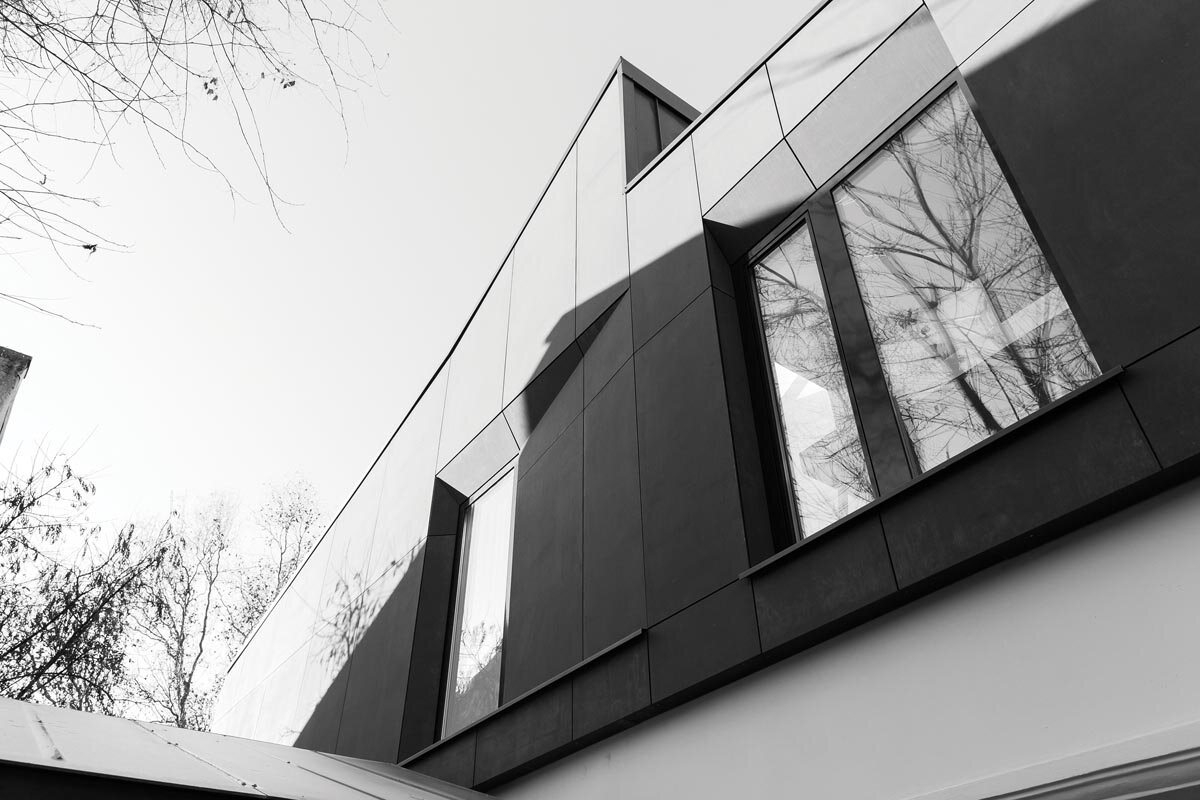
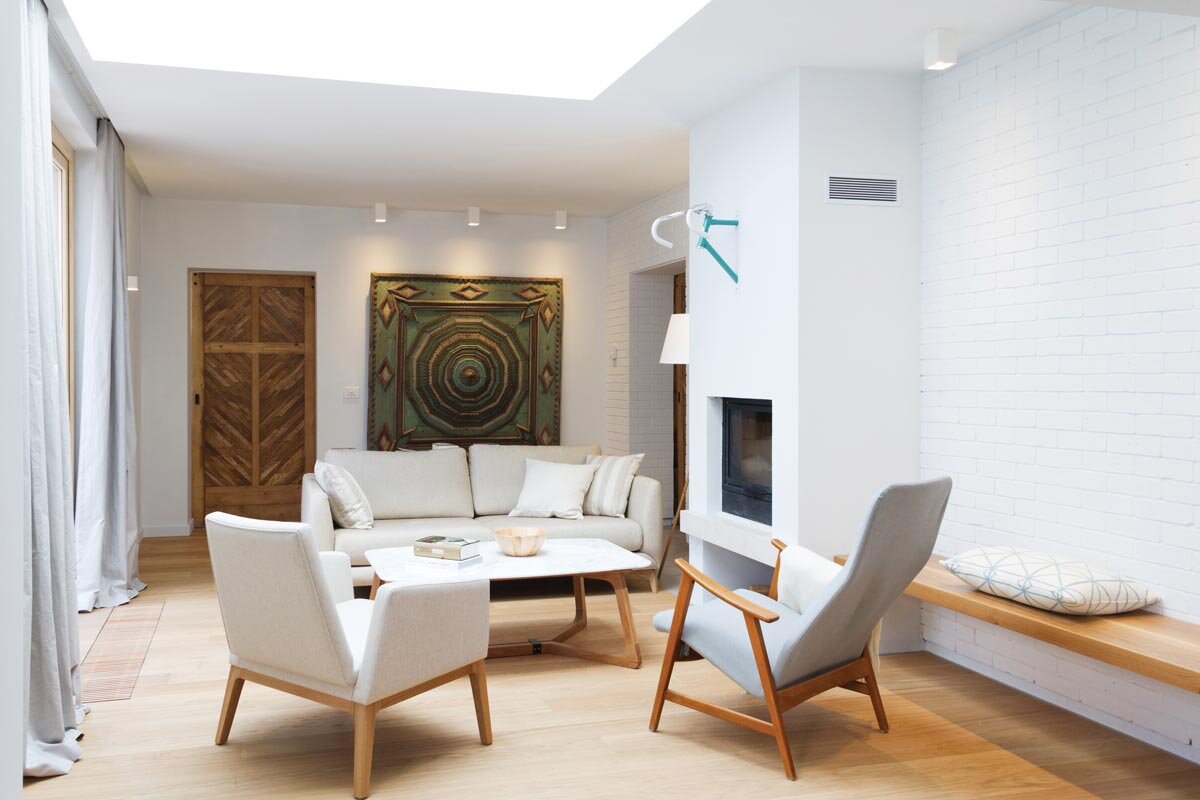
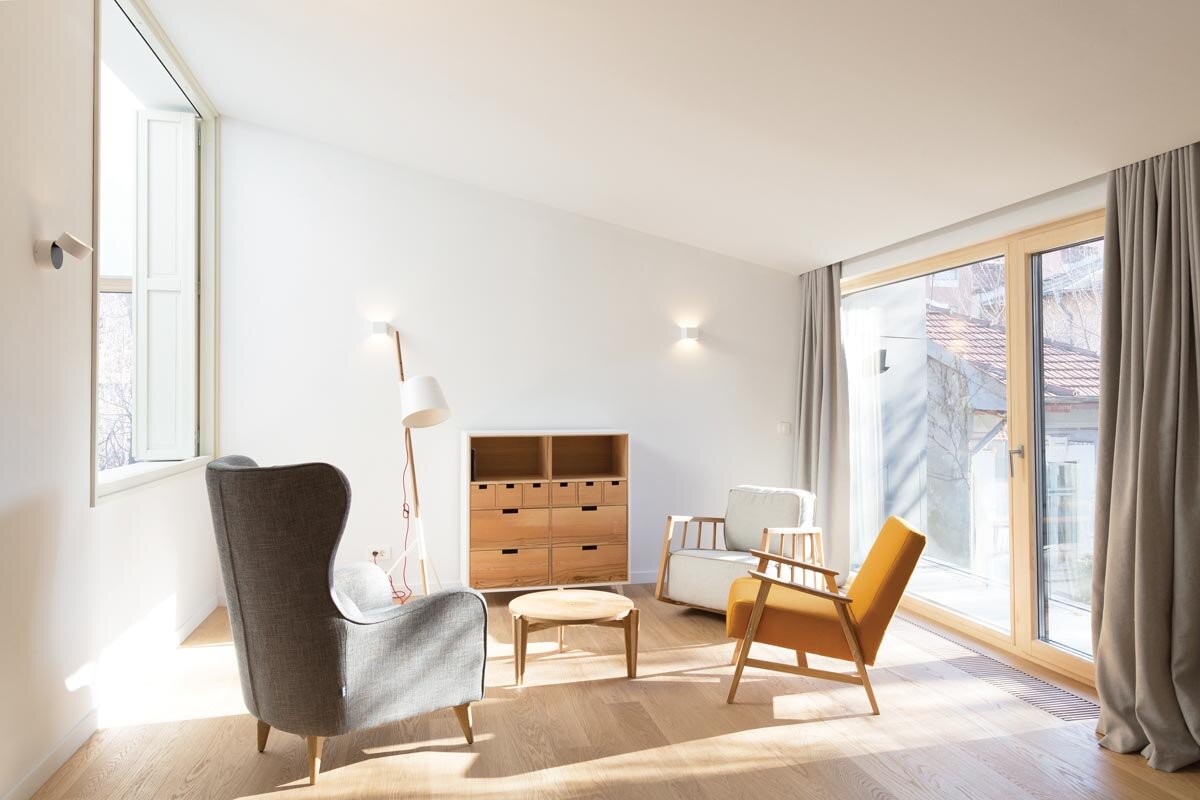
| The"J" House is a single-family house in the center of Bucharest and was a challenge for our office, as it was a project that we dealt with from the concept stage to the final interior design details, looking for an approach that would combine the various functional, ecological and aesthetic variables in the design process, with a unified vision. The house also respects the culture of recycling, conscious use of resources and environmental responsibility. A materials and energy use strategy has been adopted in an attempt to minimize the impact of the project and reduce energy consumption over the lifetime of the construction. |
| "J" House, is a single family residence in Bucharest city center, and it has been a challenge for the studio in terms of dealing with a project from its concept until the last details of its interior design, looking for an approach in which functional, environmental and aesthetic variables are combined through the design process under the same vision. The house pays also respect to a culture of recycling, conscious use of resources and environmental responsibility. A strategy for the use of materials and energy has been adopted, looking to minimize the project impact as well as reducing the energy consumption through the project life. |
Casa din Comarnic / Comarnic House
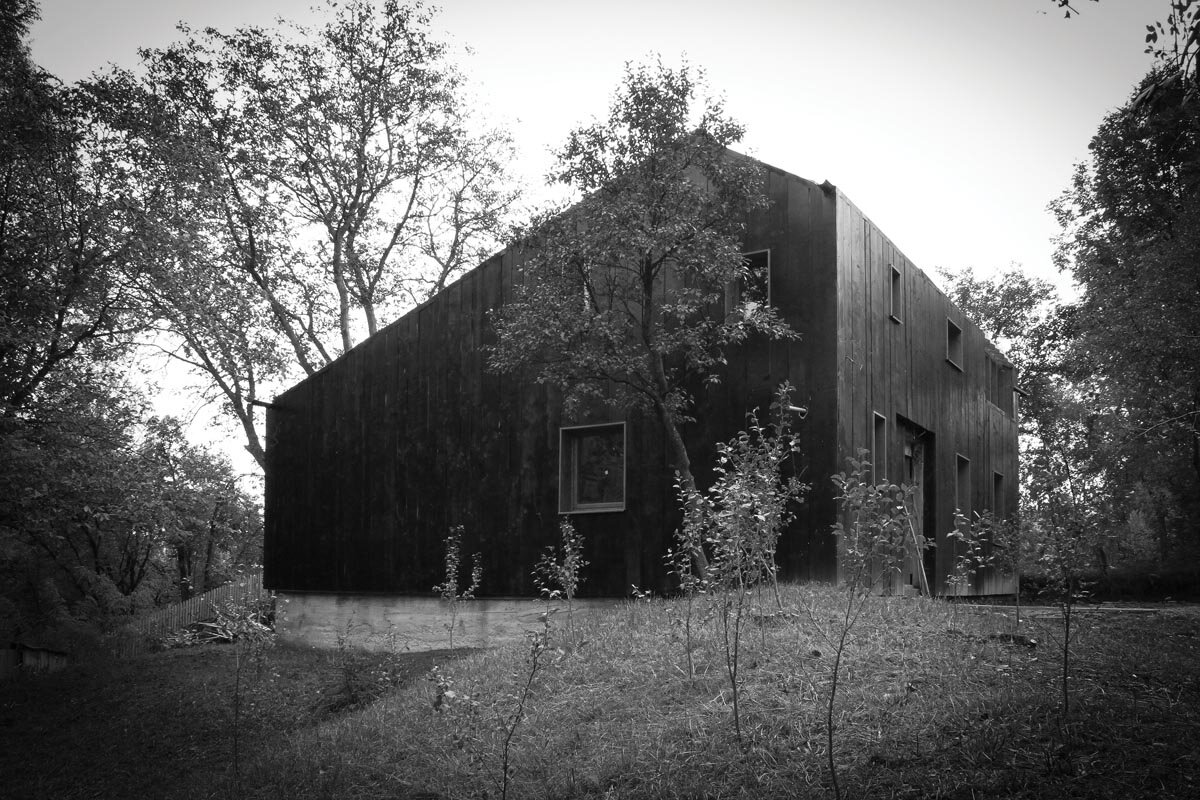
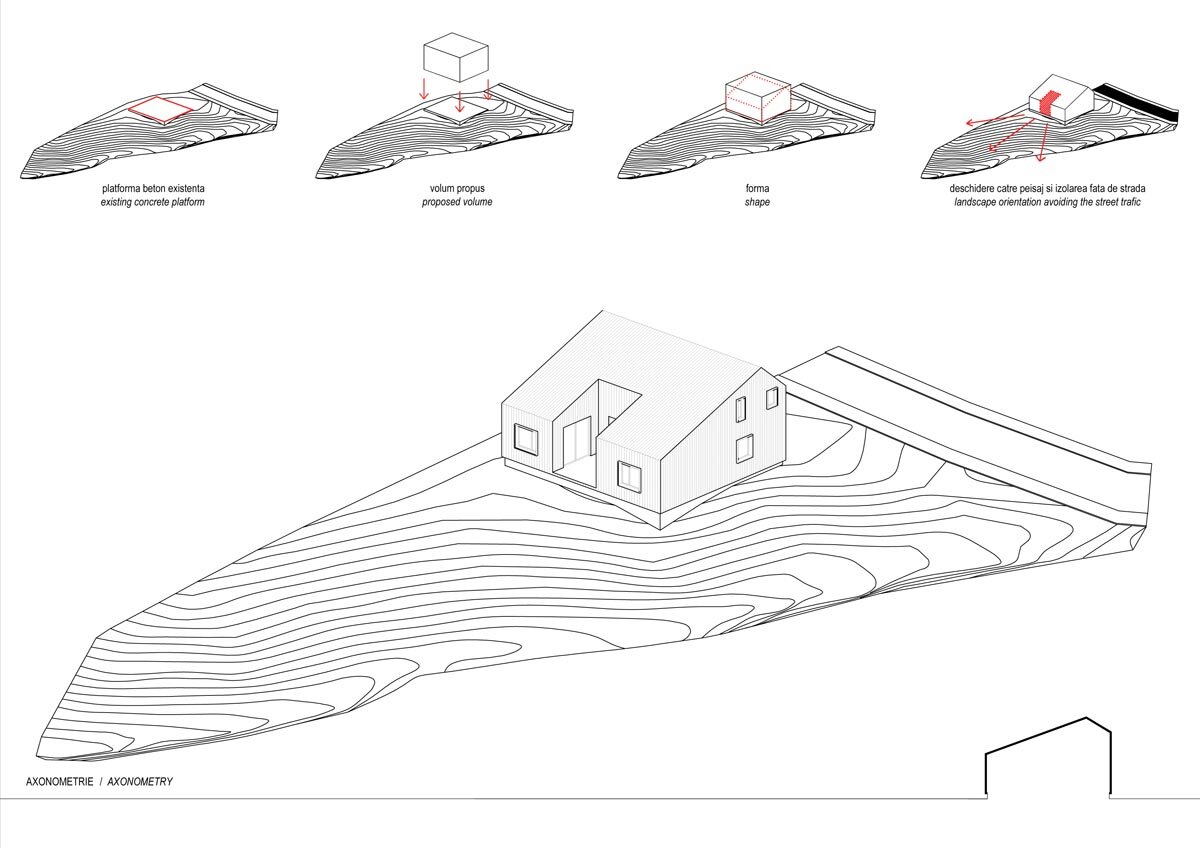
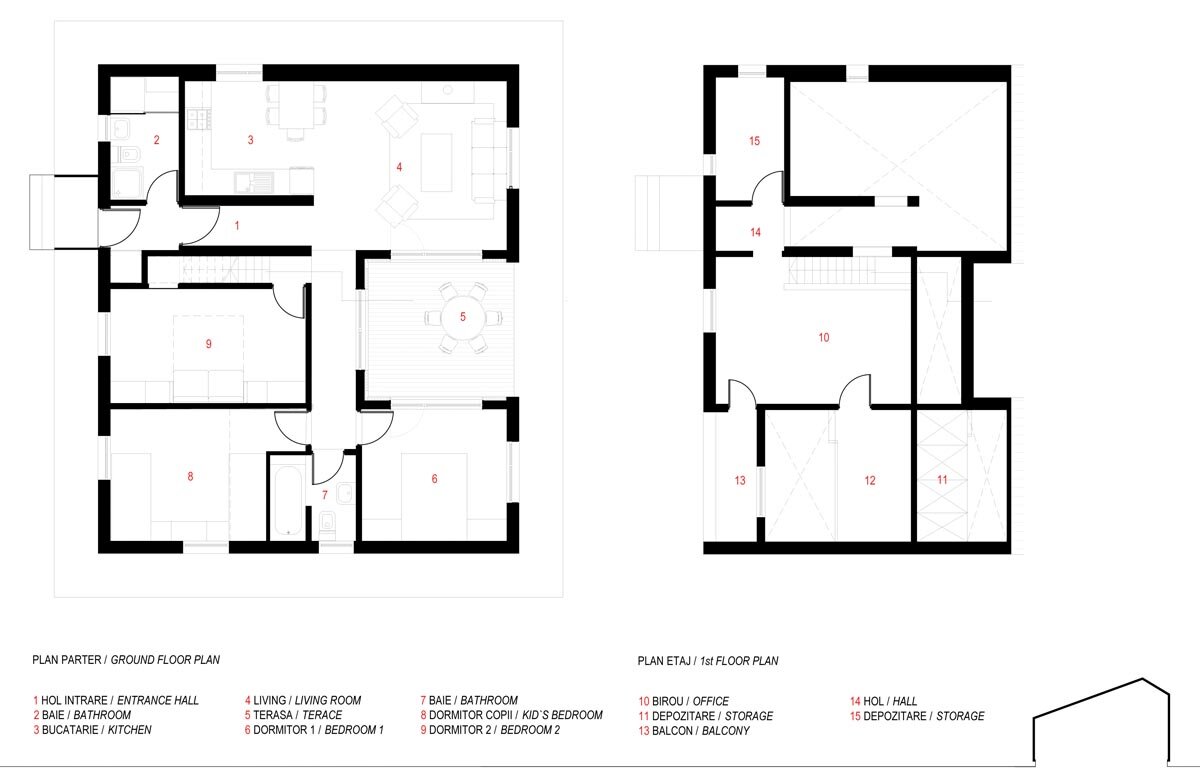
| Within the same design vision, our office also designed and built the family house in Comarnic. In this case, the project was realized entirely in wood, using local materials and traditional building techniques combined with contemporary finishes. From the outside, the volume appears as a simple, robust form; we reduced the number of openings and increased the size and thickness of the walls to provide stronger insulation inside the wooden structure to control temperature fluctuations in the mountainous area. The roof, which is perfectly insulated, is clad with a structure made of local wood, which has been impregnated with varnish to ensure waterproofing. In combination with the ventilated facade of dark-colored wood, this forms the outer shell of the house. In contrast, the interior of the house is bright, a combination of pure textures that directs the eye outwards. The relationship with the outside is also emphasized by the interior courtyard, which interrupts the simplicity of the volume, creating an intermediary space that provides more light and generates new perspectives on the outside of the house. |
| In the same design vision the studio has designed and built a family house in Comarnic. In this case the project has been developed completely in wood, using local materials and a mix of traditional handcraft with contemporary finishing. The volume appears as simple solid shape from the exterior, reducing the number of openings and increasing the size and thickness of walls in order to accommodate larger amounts of insulation in between the wooden structure to help controlling the temperature fluctuations in the mountain area. A highly insulated roof is covered with a local wood texture impregnated with oil for waterproofing, which works together with a dark wooden ventilated façade as the exterior skin of the house. The interiors of the house are in contrast light and clean of textures which helps focusing the views towards the exteriors. The relation with the outdoors is highlighted by an interior patio that breaks the simplicity of the volume generating an intermediary space that gives more light and generates new views towards the exterior. |
BA+ Team
Partner, architect: Esenghiul Abdul
Partner, architect, urban planner: Christian Beros
Landscape architect: Cristiano Del Toro
Architects: Claudia Trufaș, Roxana Dumitriu, Iulian Bindar