
Socialism on the periphery
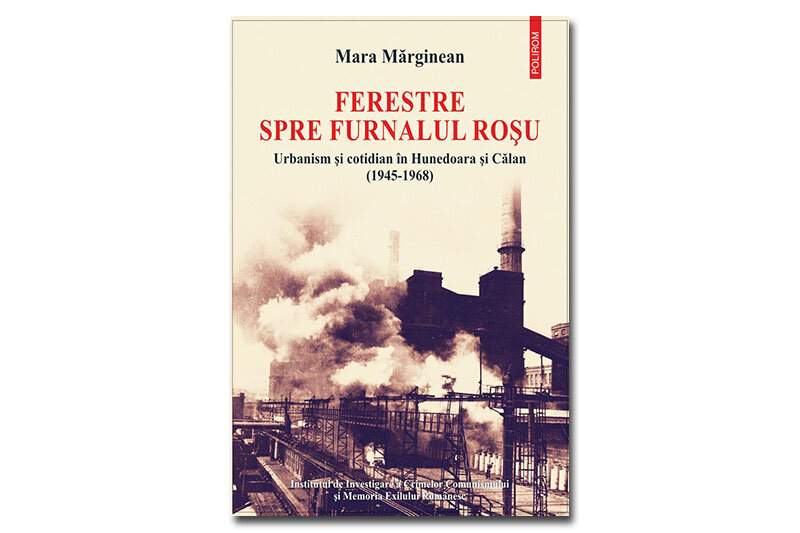
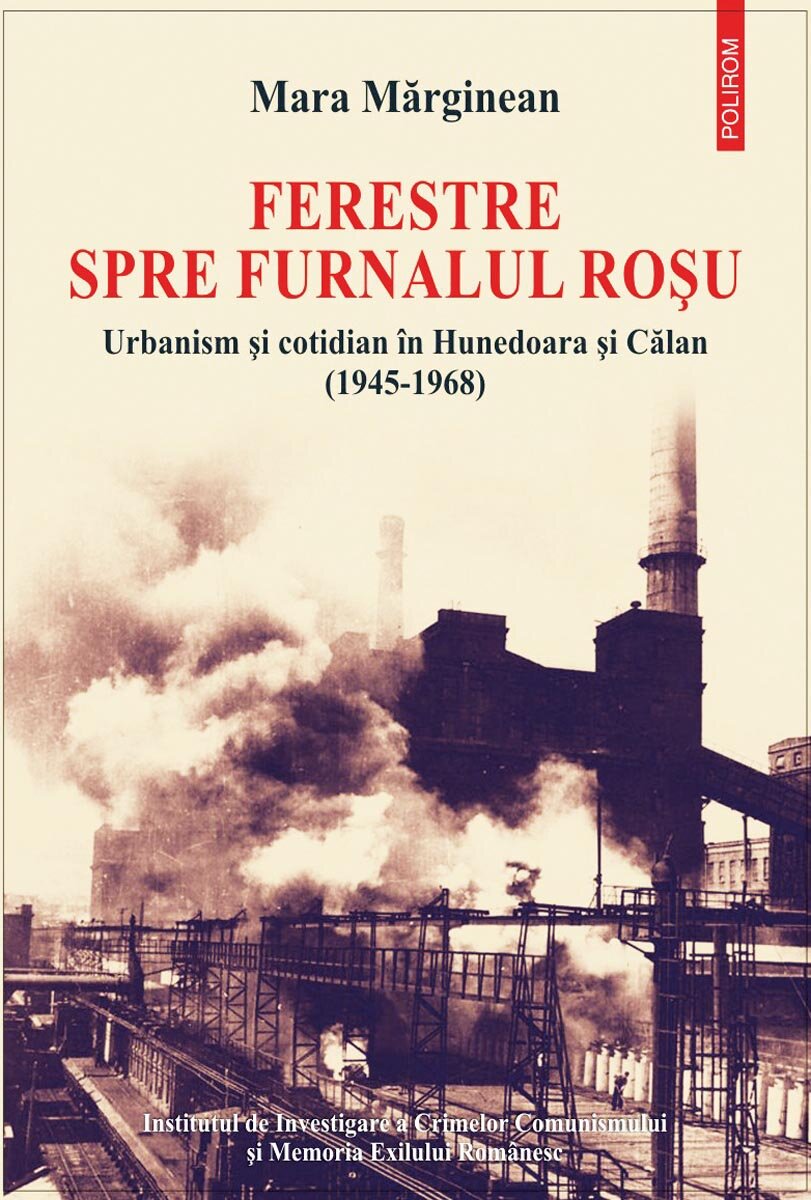
Windows towards the red furnace analyzes the urbanization process in the Hunedoara iron and steel area - made up of the cities of Hunedoara and Călan and their surrounding localities - between 1945-``68. Focusing on the actual process of urban construction and the social transformations produced by industrialization, I approached the issue from the perspective of the social modernization project assumed by the communist authorities. The study started from 3 materialized urban models: 1) The Garden City (1947-1949); 2) The Socialist-Realist Quarter (1951-1955); 3) The Microraion (after 1960). Originating in the tradition of European modernity, but reinterpreted through the lens of Soviet ideology, these models of urban construction sought to transform the existing social order in the name of the pre-eminence of institutional centralism and economics.
The book answers three questions: 1) What was the nature of the relationship between central and local authorities, on the one hand, and between the state and the representatives of various professions involved in the urban construction process, such as architects, engineers or economists, on the other? 2) To what extent did the heterogeneous urban communities of the Hunedoord steel-making area act as an agent of pressure, sanction or modification of the state project? 3) What was the professional value of the Hunedorene projects?
The central thesis of the book is that the process of urbanization in the Hunedorean iron and steel area is the fruit of the interweaving of Romanian realities with Soviet and Western influences, but at the same time it is also an expression of the evolution of Romanian society, both in the form of continuity with the period before the communist regime was established and of ruptures, often violent and irreversible, produced by the new political power. These trends were reflected both in the population's practices and in the urban planning solutions chosen. The day-to-day practices of the Hunedoonian workforce reveal a combination of theoretical ideas inoculated through discursive and educational strategies, values previously acquired in the communities of origin and personal priorities. Amid the dynamics of the Cold War, the appearance, function and organization of urban space underwent significant transformations from avant-garde to socialist realism and back to modernism, having a profound impact on everyday life. Thus, I aimed to establish to what extent socialist urbanization was different - exceptional - from similar processes in the rest of Eastern and Western Europe.
In methodological terms, this analysis is based on the interpretative model of ultramodernism proposed by James C. Scott. This concept refers to a social engineering project that aims to transform the whole of a reality by carrying out large-scale projects through which nature can be "mastered"; ultramodernism also refers to the imposition on society of all-encompassing "normative" provisions, classifications and standardizations that make all aspects of social practices quantifiable and therefore predictable for decision-makers. Ultramodernism was characterized by an exclusive preoccupation with the future, with the pre-eminence of science and technology having a strong visual character. Within this project, symbolic authority was transferred to architects, urban planners and engineers, whose professional-scientific expertise was essential to identify feasible solutions for the realization of state projects. The close link between the optimism of ultramodernism ideologies about the infallibility of the transformation project and the promise of permanent progress and improvement of living conditions of the population raises questions about its feasibility. The problem with such a "total" program was that, despite the restrictive mechanisms aimed at standardizing and regulating social relations at the formal, hence visible, level, the decision-making power did not identify levers to effectively regulate informal relations. In fact, as the first part of the book details, urban construction projects realized at the central level were often adjusted at the local level as a result of the actions of Hunedorenian bureaucrats or the management of industrial enterprises. As such, through this book I wanted to create a micro-history that describes the everyday experience both in terms of how the state influenced the lives of citizens and how they (re)acted.
This study is important because it analyzes the evolution of post-war Romania through the prism of local transformations of society, the experience of ordinary people, those anonymous people of history who were, after all, the main beneficiaries of the whole political project. In contrast to "macro-history", the book illustrates how the level of economic development and the dynamics of social projects influence the interactions between inhabitants, the perception of immediate reality, ultimately expressing a relationship between individuals and the state. From today's perspective, the subjective perception of the communist regime's modernization project takes on new, and often surprising, valences, as in the post-socialist years there is an increased incidence of nostalgia for communism. The reconstruction of the process of urbanization through a case study has a high degree of originality in historical research in Romania, as a result of the sources used, the interdisciplinary methods employed and the complex issues it analyses. The book employs several categories of sources: archives, press, statistics, memoirs, architectural projects, artistic or propaganda films, TV newsreels, photographs. The novelty of the study lies in the archival material consulted. Including almost fifty fonds, held by local and national archives, but also by the British archives or the OSA Budapest, a large part of these documents is for the first time introduced into the Romanian historiographical circuit.