
George Matei Cantacuzino or the classical attitude
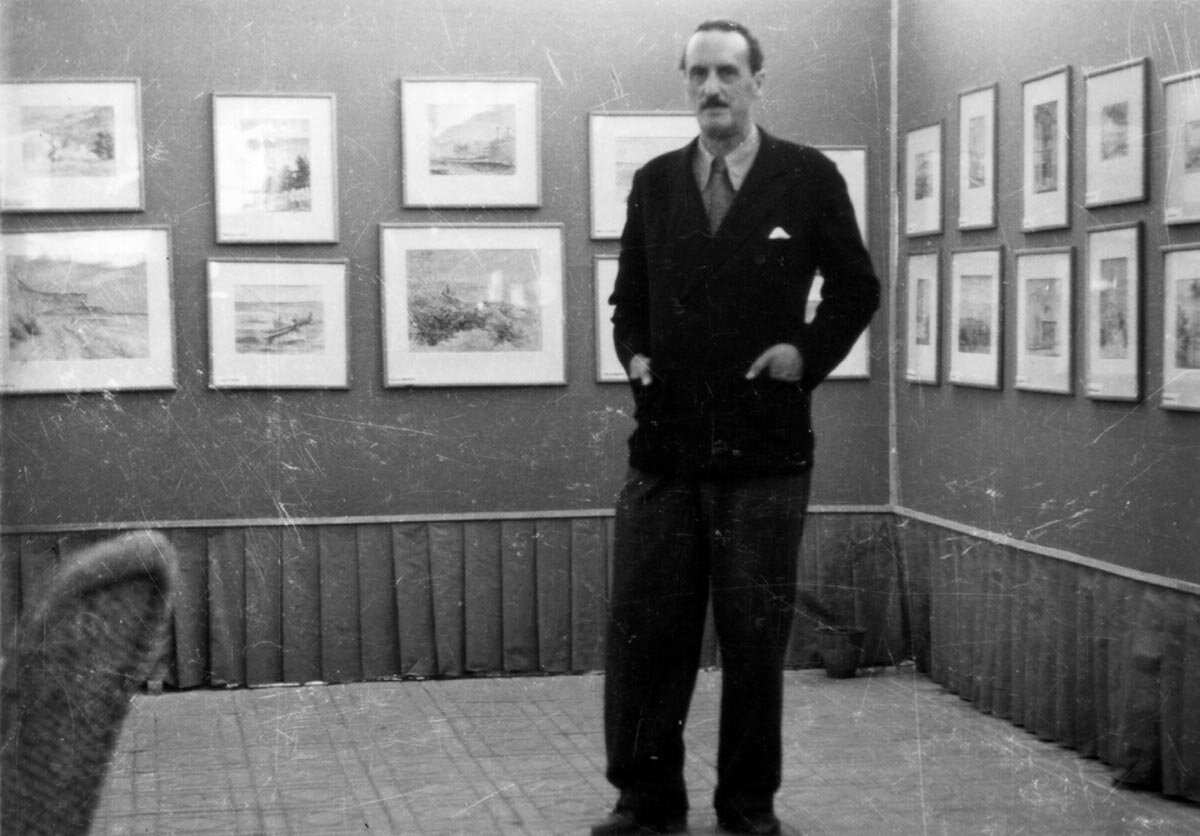
We live in the age of bureaucrats, specialists and technocrats. They are indispensable and welcome. But it is no wonder that we find it hard to understand the success of the abundance of professional activities of people like George Matei Cantacuzino (*1899, Vienna-†1960, Iași), a Romanian architect and cosmopolitan intellectual. Some of us regard that achievement with puzzlement, some perhaps with envy, others with admiration, and for a few it is a model. But it was not as dilettantes that Cantacuzino and his fellows devoted themselves to this abundance of activity - they were established public intellectuals who renewed the Renaissance ideal embodied by l'uomo universale.
Born in Vienna, Cantacuzino grew up there speaking Romanian, French and German (1899-1909); he returned to his homeland after studying architecture at the École des Beaux-Arts in Paris (1920-1929), where he became "le chef incontesté de la jeune école d´architecture"2 and an integrative figure of moderate modernism; the aesthetic-ethical quality of his writings led Virgil Ierunca to call him a "true chronicler of Romanian spirituality"3; as a liberal politician, Cantacuzino fought against the Iron Guard; as a professor of architectural history and theory (1942-'48) he renewed architectural education in Romania through his skepticism towards strict thinking in epochs or, to use the term introduced by the German art historian Erwin Panofksy, through "deperiodization"4; Cantacuzino was one of the few architects, perhaps the only one, to hold regular cultural radio conferences during the inter-war period; as inspector of the Directorate of Historical Monuments he led the restoration of churches and monasteries in Moldova, including Sucevița, now a UNESCO World Heritage Site; as a painter he participated in group exhibitions and had five solo exhibitions - the last, in Herăstrău Park in October 1956, was so overwhelmingly successful that the communist regime closed it after three days, fearing civic protest as an opponent of the communist regime, Cantacuzino had been imprisoned for six years (1948-1954) in Jilava, Aiud, Pitesti and the Danube-Black Sea Canal; in 1957 he was declared an enemy of the people; the last years of his life, until his premature death, were spent on the fringes of society.
After that he was long forgotten. A fate he shared with many of his generation, who contributed decisively to the building of modern inter-war Romania. Even after the change of 1989, this achievement somehow "vegetated" in the penumbra of the public image of the next generation - the "young generation" of the 1930s, with the emblematic figures of Mircea Eliade, Emil Cioran, Eugen Ionescu, who, after 1945, became famous in the West. A natural phenomenon, perhaps. After 1989, this celebrity seems to have been projected back to the time when members of the younger generation had begun their careers, enjoying their first public recognition, yet far from playing a leading role in the cultural life of interwar Romania.
The first picture inside our monograph, George Matei Cantacuzino. HybridModernism5, shows Cantacuzino walking in August 1940 in Berlin, on the famous boulevard Unter den Linden, elegantly dressed in a suit with waistcoat, hat, Derby shoes, walking stick and gloves, striding briskly and aiming with a determined and confident gaze at the photographer's lens. Cantacuzino was 41; he was at the peak of his career, his international consecration imminent. Only a year earlier he had designed Romania's official pavilion at the New York International Exhibition, receiving the title of honorary citizen of New York from the famous mayor Fiorello LaGuardia; in 1938 he was appointed honorary corresponding member of the Royal Institute of British Architects in London; in 1934-1936 he was the first Romanian correspondent of the modernist architecture and urbanism magazine in Paris, "L´Architecture d´aujourd´hui". In 1939, King Carol II had appointed him as the architect of the official Romanian pavilion at the International Exhibition in Rome in 1942, and together with Octav Doicescu, Cantacuzino had designed the headquarters of the British Institute and the Anglo-Romanian Society in Bucharest - the well-known political context prevented the realization of both projects.
But back to the Berlin photograph. It bears witness to Cantacuzino's last trip to that city as chief architect of the CFR in August 1940 - his last trip as a free man. As a liberal politician and Freemason, Cantacuzino suffered substantially when Romania slipped to the extreme right in September 1940 and Charles II was exiled to Portugal. While today's selfies are en vogue, in the inter-war period professional photographers successfully offered their services on the streets and parks of the civilized world, including Romania. In the background of the photograph is part of the left basement of Humboldt University, and on the right, Neue Wache, a masterpiece by Karl Friedrich Schinkel (1781-1841). Although he doesn't mention Schinkel at all in his writings, some of his designs and classical attitude show his admiration for the Prussian master - and in the photograph, Cantacuzino has consciously 'put himself in the picture', as if to say: with Schinkel behind you, you can build with confidence.
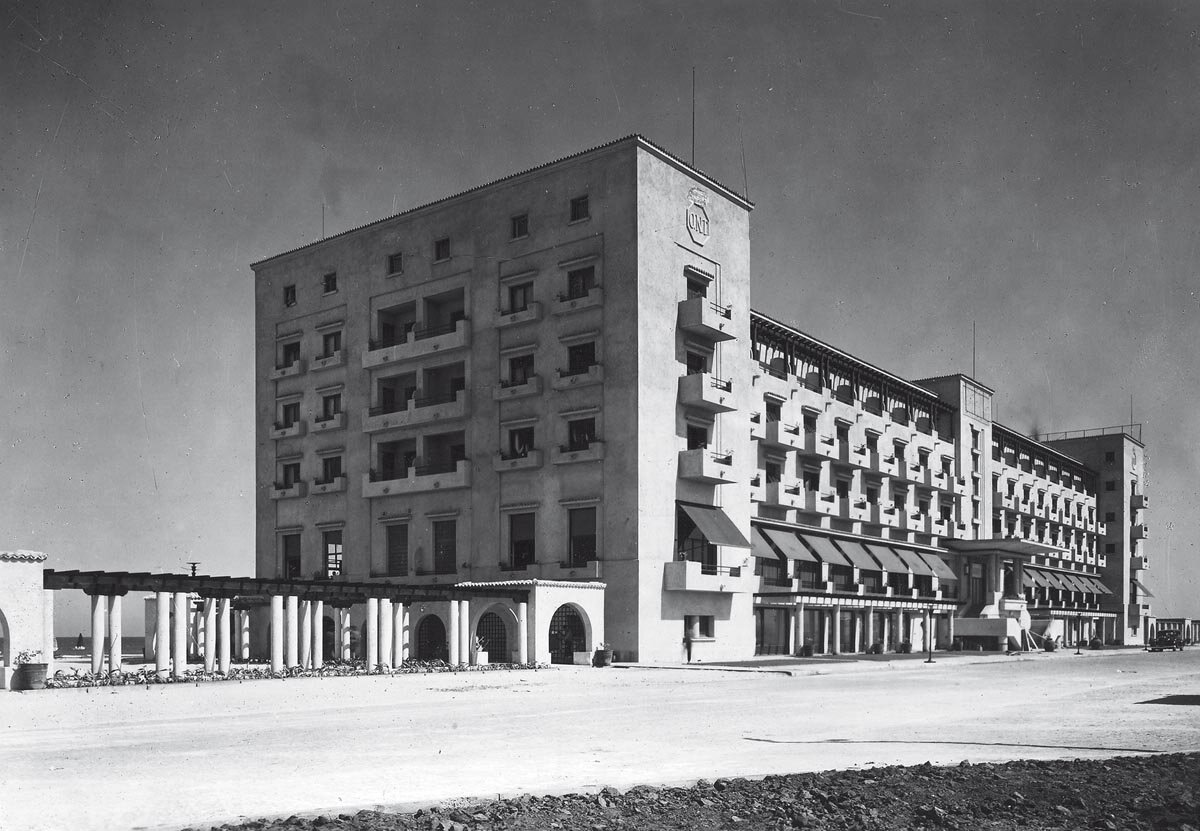

The Classical attitude can be read as an aesthetic-ethical compass, pointing the direction of his activities, while at the same time tying them together like a conceptual "staple" in a bouquet of creativity.
Like every architect, Cantacuzino went through an evolution, but sometimes, like Schinkel, he designed simultaneously in several styles. The subtitle of the book, Hybrid Modernism, refers to this aspect as well as to the classical attitude. It blends traditions with modernism and favors an aesthetic linked to an ethic based on measure, that is to say on the human scale, challenging unique solutions, "embedded", if we may say so, in the contexts of the respective project. Or, to quote the contemporary French philosopher Michel Serres: "The best solutions are local, singular, specific, regional"5.
But isn't this hybridity just an approach or opportunism? Those who favor the concept of strict labeling would answer in the affirmative. Cantacuzino took such reproaches seriously, but for him they lacked any substance. In his first essay, Introduction to the Study of Architecture (1926), Cantacuzino spells out the backbone of the classical attitude: "It is not the diversity of styles that has preoccupied us, but the continuous thread that unites them"6. An integral aspect of this continuous thread is the aesthetic triad of proportion-rhythm-harmony, closely linked to human measure. In addition, Cantacuzino wrote in 1934, in the "Journal of the Royal Foundations": "[w]hat we need is not a selection of objects and forms, but a whole ethic, from which an aesthetic is born"7.
This is why he spoke out strongly against the excesses of the neo-Romanesque style, more specifically against the way in which official architecture had abused aesthetically and propagandistically exploited the Romano-Byzantine architectural tradition in favour of an interior "colonization" of the regions, thanks to which the old kingdom had been transformed into Greater Romania after 1918. At the same time, Cantacuzino's constructive criticism was also directed against the excesses of modernism, when it did not take into account the contexts of the project. He was convinced that "[giving] a country a unified appearance does not mean the monotony of standard forms. By the use of local materials, by adapting forms to the conditions of climate, customs and traditions, a dwelling house or an institution blends more easily into the landscape, complementing it and giving it its true significance"8.
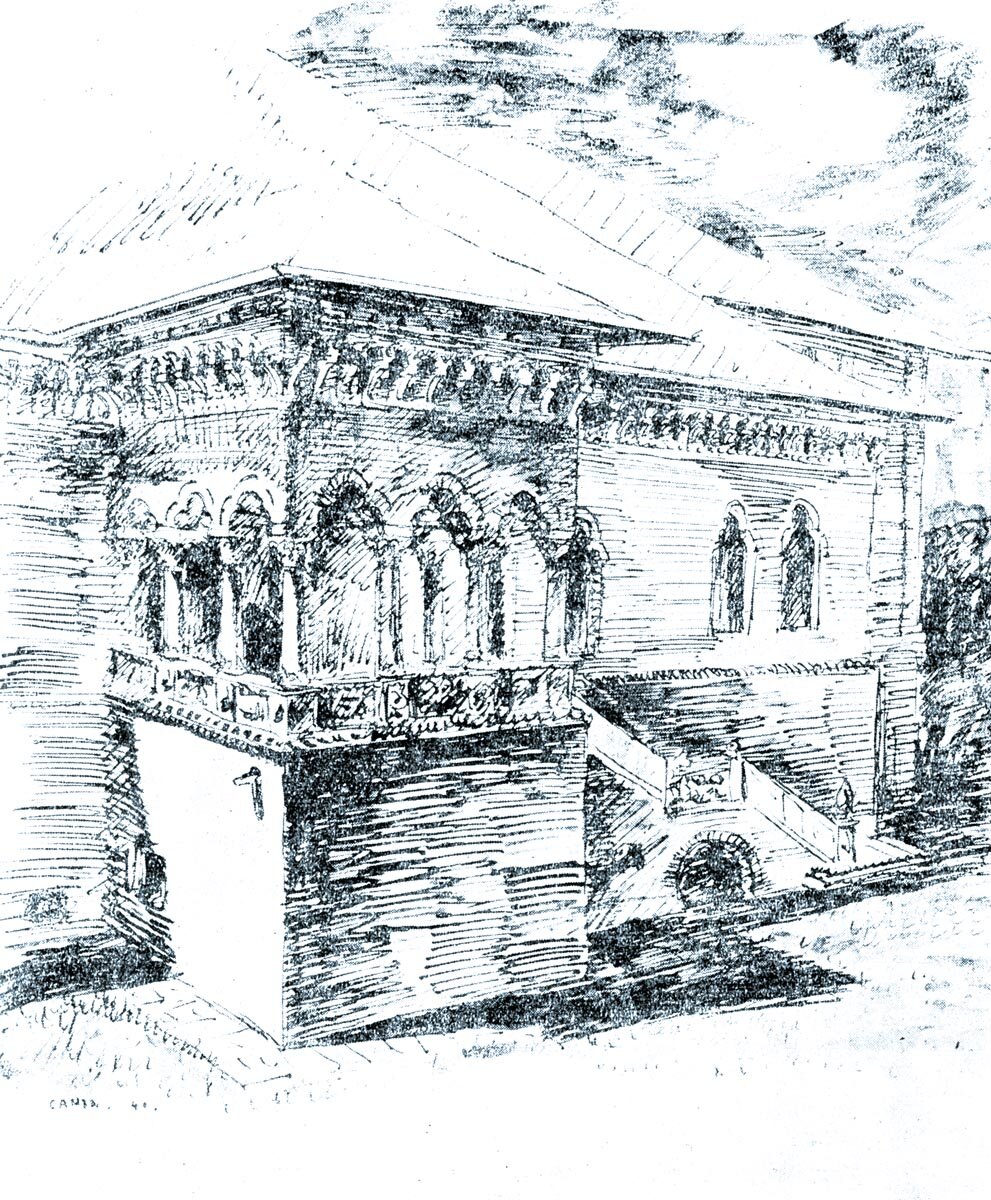
Cantacuzino develops his strategy in search of pragmatic and honest ways of renewing Romania's architectural culture in order to open it to modernity. This strategy takes into account the diversity and cultural polyvalence of the country's regions, alluding to the political concept of federalism. At the same time, Cantacuzino frees the aesthetic notion of classicism from a purely stylistic perspective to link it to ethics: "In our opinion, to be a classic does not consist in the dogmatic application of a style, but in a certain state of mind"9. The classical attitude or classicism "would be, therefore, [...], not a simple selection of forms, nor an established academic fashion, but the coordinated sum of human experiences which would maintain individuality within the boundaries of the laws arising from experience, or classicism would be a state of soul equilibrium between knowledge and feeling, between personality and tradition, an attitude of serenity of the present between the past known, judged, understood and the future intuited, prepared, challenged"10.
The classical attitude combines branches of tradition such as Romano-Byzantine architecture, classicism or Palladianism with modernism. Being linked to ethics, this complex aesthetic is also expressed, for example, in the way in which public cultural dialogue is conducted: civilized and, as far as possible, objective; on a human scale; in the genius loci - the multiple characteristics of a place, whether a landscape in the countryside or an urban fabric with all its historical layers. In 1947, Cantacuzino emphasizes:
"There are traditionalists, modernists and others. In the latter category are those architects who believe that it is necessary to find a balance on the basis of the classical disciplines, without disregarding any of the modern themes and without turning their backs on tradition"11.
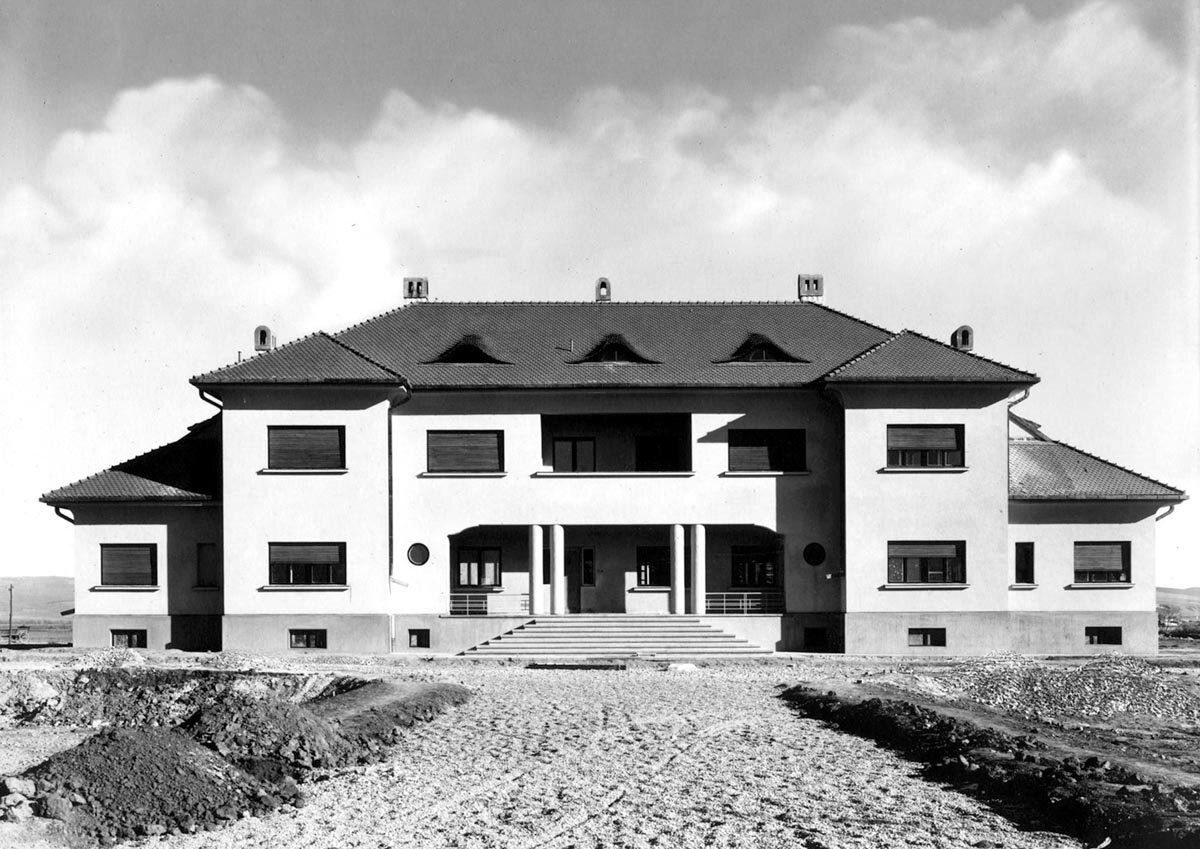
Just one example: the engineers' villa of the SRR Broadcasting Company in Bod/Brenndorf near Brasov (1933-35). This building can be interpreted as a synthesis of Palladianism and local traditions. For example, the imposing two-storey roof is reminiscent of the harsh winters in Transylvania. The compact volume of the building, calmly and axially symmetrically arranged around a portico with twin columns, a staircase at the front, two round windows and two loggias, clearly expresses the notion of intimate monumentality for which Cantacuzino advocated.
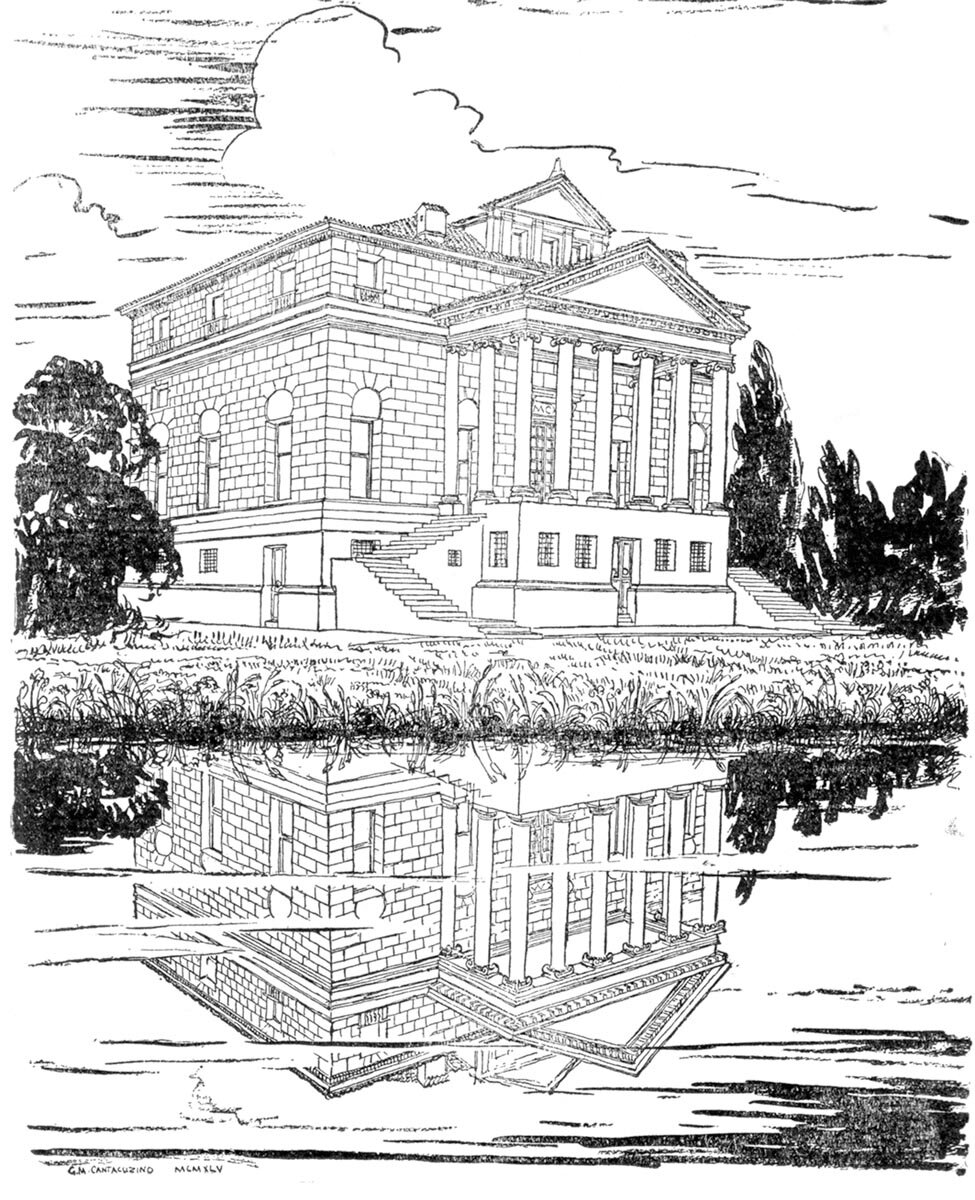
Among the sources of inspiration Cantacuzino drew on was the Groupe des architectes modernes - a moderate modernist movement which, under the baton of its master Auguste Perret (1874-1954), tried to link modernism with French classicism in the inter-war period. Another possible source: Schinkel's theory of fusing Greek antiquity with Gothic(Verschmelzungstheorie) to renew German architecture. But his most important model was Andrea Palladio (1508-1580). For Cantacuzino, Palladio's work, with its usanza nuova, masterfully expressed the poetics of architecture, and he dedicated the study Palladio. Essai critique avec douze dessins de l'auteur (published by Editura Cartea Românească in 1928).
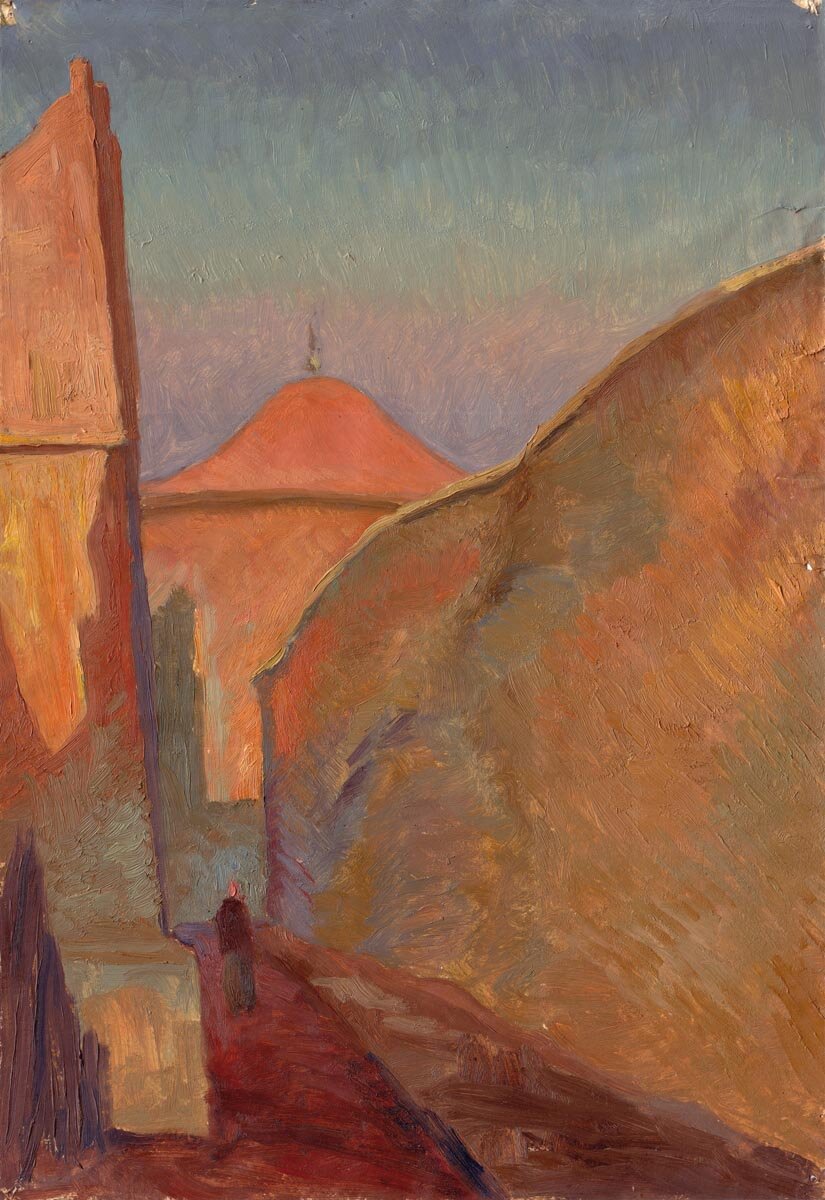
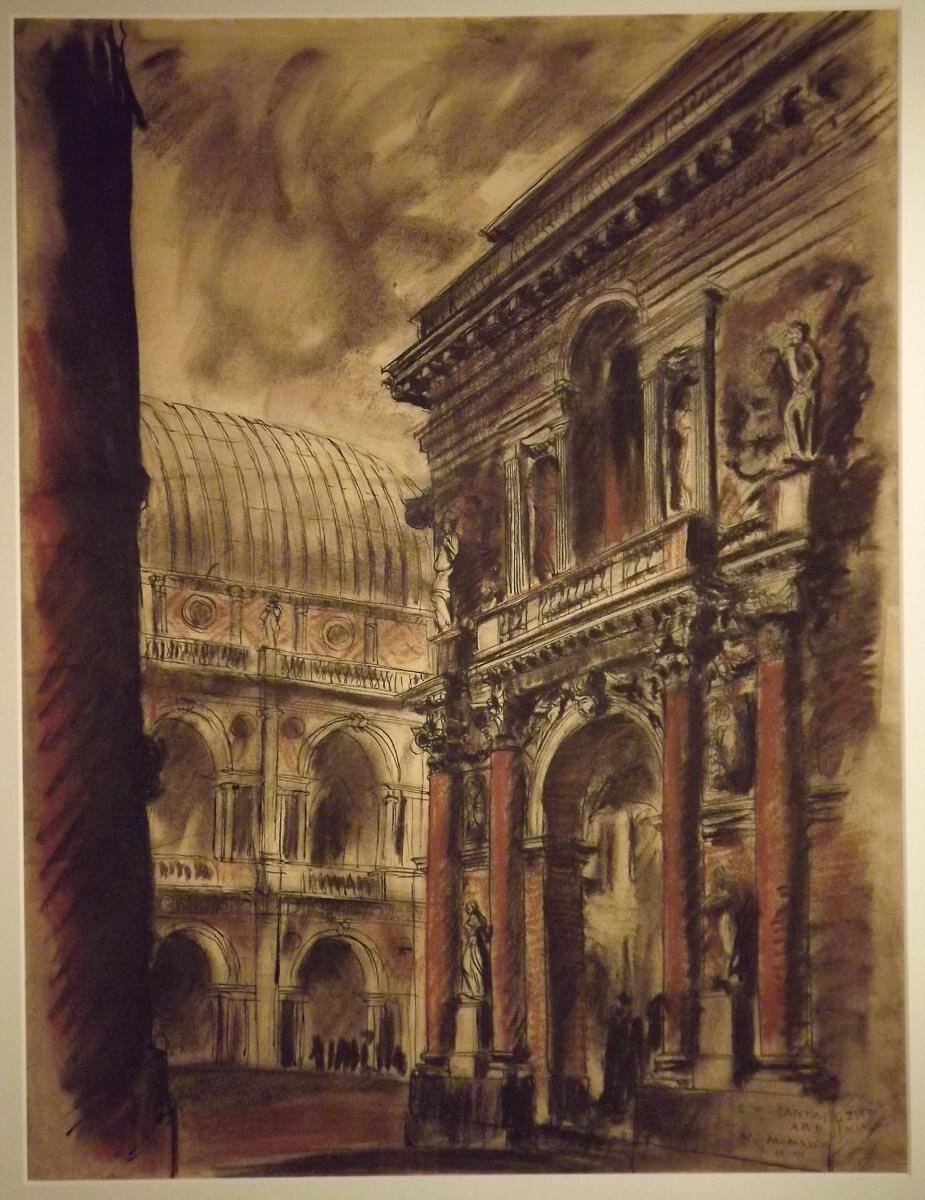
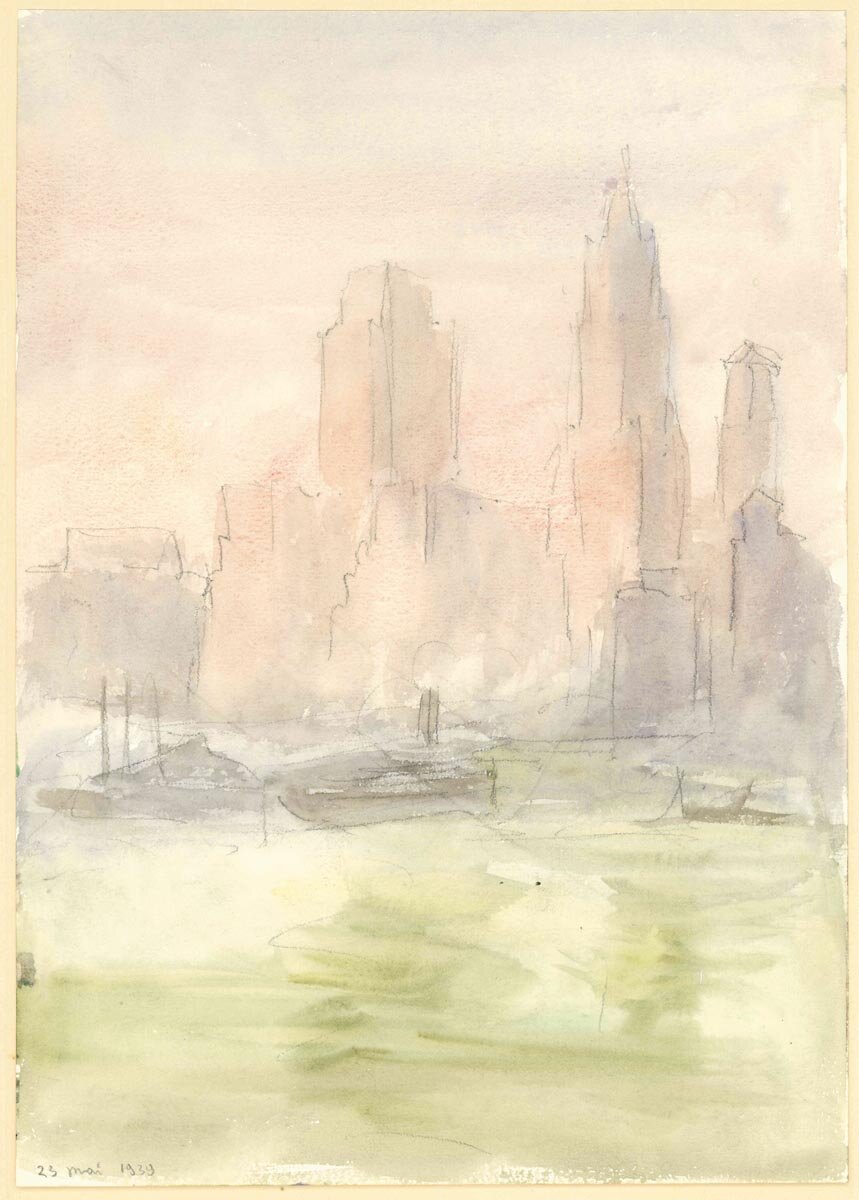
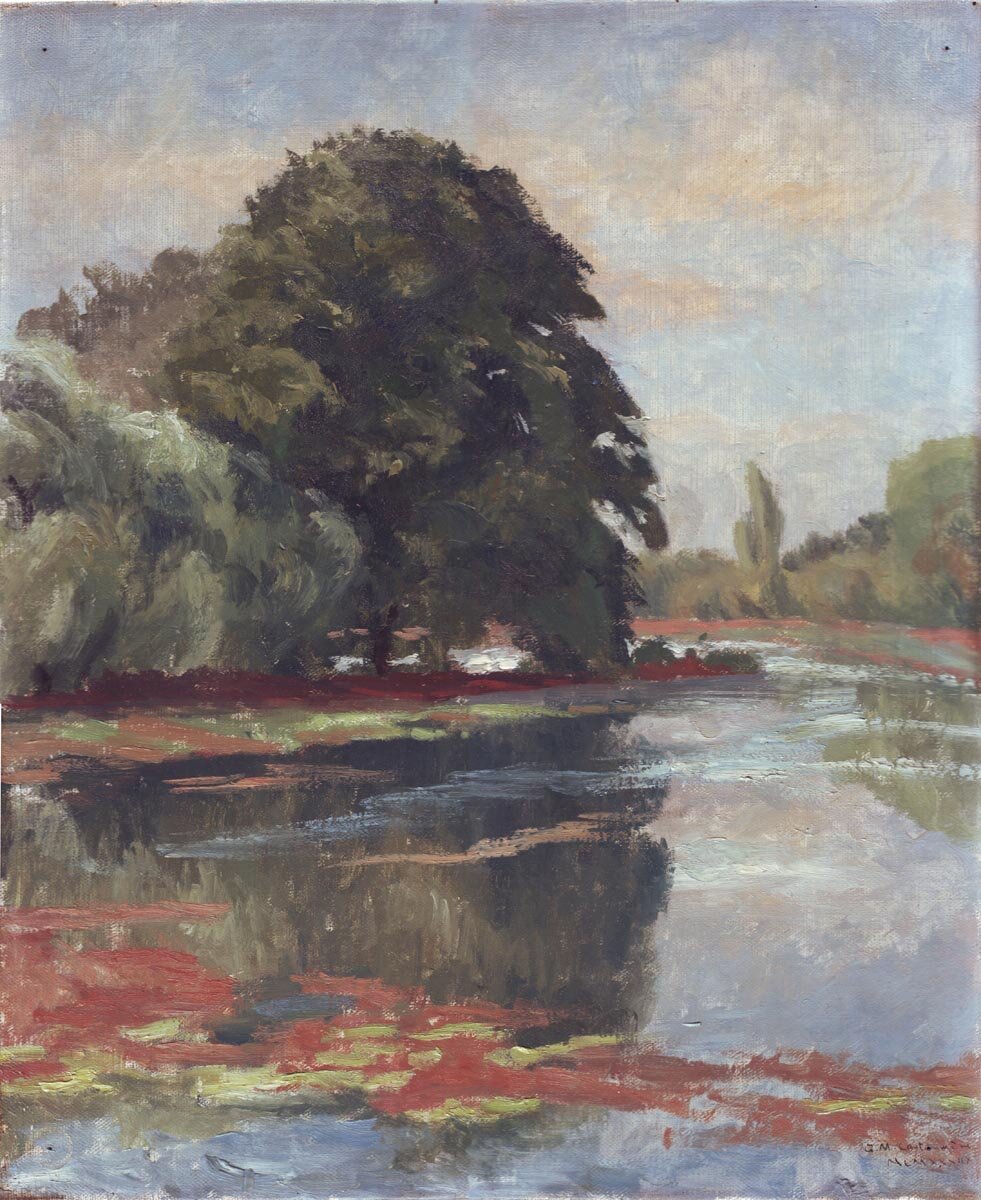
In an autobiographical letter to Simon Bayer, a boyhood friend from Iași and a Romanian-Jewish lawyer in inter-war Bucharest, Cantacuzino states that his childhood in Vienna opened his eyes to the poetics of architecture and "the discipline of Western aesthetic laws"12:"[Because] I had learned there to demand order and harmony from the framework of life, because I had observed upon myself the action of things accomplished by the long patience of a civilization, which always affirmed, through all forms and all means, the very expression of human dignity"13.
To express human dignity through architectural forms - Cantacuzino also pursued this goal, and the classical attitude helped him in this endeavor. It also expresses another fruitful phenomenon: Cantacuzino was rooted in Romanian culture and civilization; at the same time, he belonged to that group of people who naturally and nonchalantly loved other contemporary worlds - the Anglo-Saxon, German, French or Italian worlds, to name only those to which Cantacuzino felt closest. This closeness was also expressed in his friendships, which, based on shared cultural interests and civilizational values, defied borders.
Since the fall of the Berlin Wall, such friendships have started to grow again. The Classical attitude remains a challenge: in architecture and urban planning as well as in cultural and political life. It provides impulses for the revival and contemporary revival of an old European concept - the pragmatic concept of dynamic balance: "Symmetry, in its original sense, means happy proportion or commensurability"14.
1 This article is a revised and updated German translation of the article "George Matei Cantacuzino und die "klassische Haltung". Anmerkungen zum Werk eines rumänischen Architekten" (GMC and the "classical attitude". On the work of a Romanian architect), which appeared in the journal "Deutsch-Rumänische Hefte/ Caiete Germano-Române", Berlin, Summer 2016.
2 Paul Morand, Bucharest, Paris: Plon, 1990 (first edition 1935), p. 293.
3 Virgil Ierunca, 'Un cavaler al privirii', introduction to: G. M. Cantacuzino, Scrieri, Paris: Royal University Foundation Carol I, 1966, p. 9.
4 Erwin Panofsky, Renaissance and Renascences in Western Art, Stockholm: Almquist & Wiksell/ Gebers Förlag AB, 1960, p. 20
5 Dan Teodorovici, George Matei Cantacuzino. Modernismul hibrid, București: Editura Simetria/ Tübingen & Berlin: Ernst Wasmuth Verlag, 2016, monograph translated into Romanian by Olimpia Lykiardopol and launched on October 7 at the Center for Architectural Culture of the Union of Romanian Architects in Bucharest.
6 Michel Serres, Aufklärungen: Fünf Gespräche mit Bruno Latour , Berlin: Merve Verlag, 2008. Translated from the German by Dan Teodorovici.
7 G. M. Cantacuzino, Introducere la studiul arhitecturii, București: Paideia, 2002 (first edition 1926), p. 19.
8 G. M. Cantacuzino, "Cronică" in: "Revista Fundațiilor Regale", December 1, 1934. Republished by Virgil Ierunca under the title "Prejudecăți", in: G. M. Cantacuzino, Scrieri, Paris: Royal University Foundation Carol I, 1966, p. 64.
9 G. M. Cantacuzino, "Despre un program de reconstrucție", in Despre o estetică a reconstrucției, București: Paideia, 2001 (first edition 1947), p. 25.
10 G. M. Cantacuzino, Introduction to the Study of Architecture, op. cit., p. 30.
11 G. M. Cantacuzino, Dicționar, in: "Simetria" II, București: Cartea Românească, 1940, pp. 62-63.
12 G. M. Cantacuzino, "Points of View", in Despre o Estetică a Reconstrucției, op. cit., pp. 40-41.
13 G. M. Cantacuzino, Letters to Simon, Letter III: Simetria, 2010, p. 70.
14 Ibid.
15 G. M. Cantacuzino, "Simetria. Caiete de art and criticism. Motto", Vol I-VIII, București: Cartea Românească, 1939-1947.